
In short
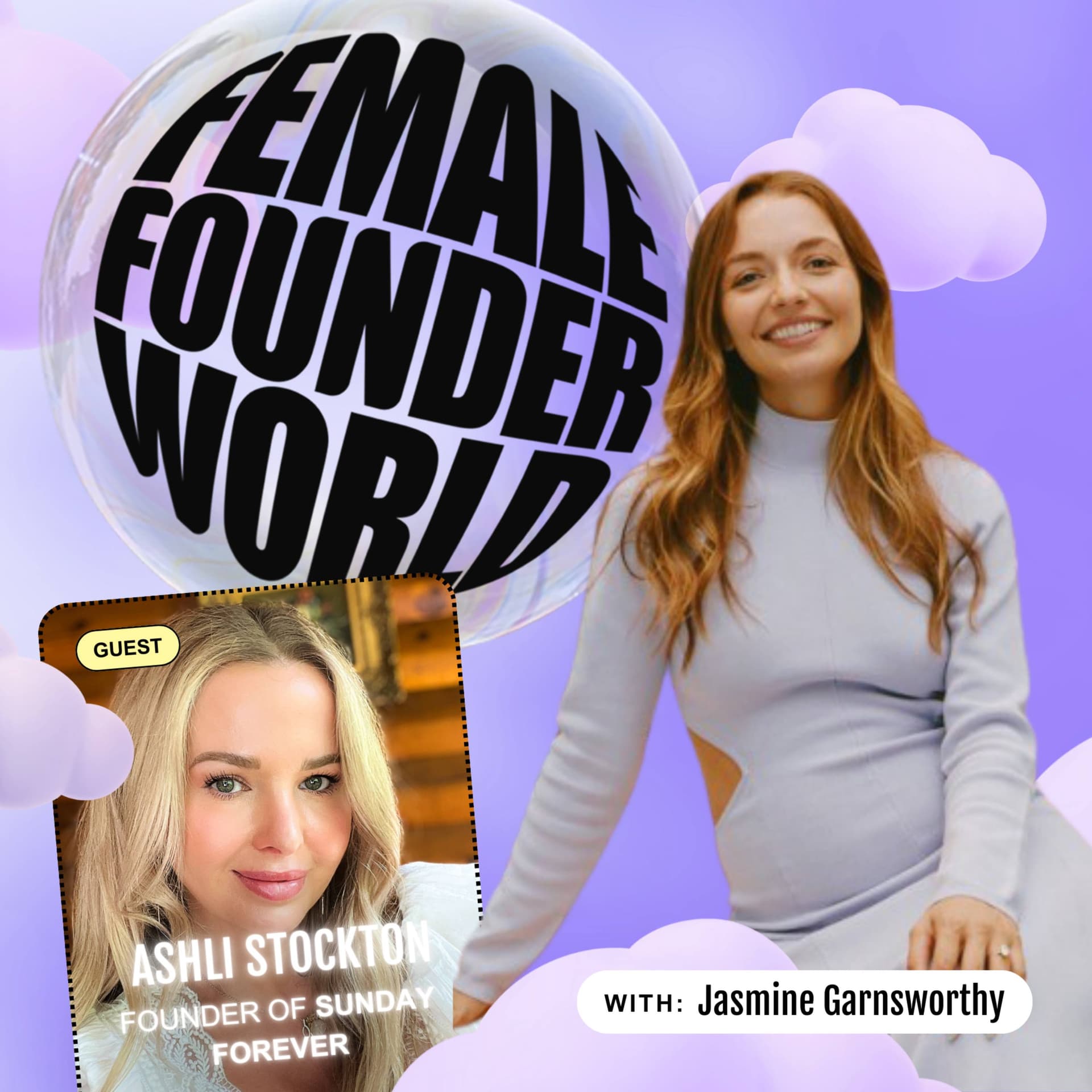
Episode Summary: Quit Your Dream Job and Keep Your Biz Small On Purpose
Podcast Title
Female Founder World
Host
Jasmine Garnsworthy
Guest
Ashli Stockton, Founder & CEO of Sunday Forever
---
Episode Overview In this episode, Ashli Stockton, founder of Sunday Forever, shares her journey from a corporate career at Victoria's Secret to creating an intentionally small luxury brand specializing in candles, perfumes, handmade jewelry, and gifts. The discussion emphasizes the importance of building a business on one's own terms and the challenges and decisions that come with maintaining a small-scale operation.
---
Key Themes
- Transition from Corporate to Entrepreneurship
- Corporate Background: Ashli worked for 12 years at Victoria's Secret, progressing from entry-level to head of creative concept. Despite this being a "dream job," she experienced burnout.
- Decision to Leave: Recognizing her dissatisfaction, Ashli began plotting her exit in 2012, ultimately launching Sunday Forever in late 2017.
- Building Sunday Forever
- Initial Steps:
- Bootstrapped the business with $25,000 savings.
- Started with robe production, inspired by Japanese culture.
- Spent initial funds on branding, reflecting self-doubt despite her branding experience.
- Growth Strategy:
- Focus on customer relationships and community building rather than traditional marketing or retail avenues.
- Limited initial production led to a strong, loyal customer base.
- Philosophy of Intentional Smallness
- Refusal of Big Retail Offers: Ashli shares her reasons for declining opportunities from major retailers, including Sephora, to retain the brand's intimate feel.
- Definition of a Small Business:
- Ashli emphasizes the value of creating a "magical" experience for customers, claiming that "you can't scale magic."
- A focus on high-quality, meaningful interactions rather than rapid growth.
- Financial Practices and Mindset
- Financial Discipline: Discusses the importance of saving and managing finances carefully, including not taking a salary for several years to reinvest profits.
- Realities of Small Business: Importance of profitability over scaling for the sake of growth. Ashli highlights that a business can thrive without external funding.
- Current and Future Aspirations
- Maintaining Work-Life Balance: Ashli's focus is on creating a fulfilling life, including spending time in nature and reducing the size of her business team.
- Creative Outlet: Ashli describes Sunday Forever as a creative expression, with a focus on designing products that resonate with her personal vision.
---
Actionable Insights
- Plan Financially: Save a cushion before leaving a stable job to support the transition into entrepreneurship.
- Build Community: Engage with customers personally through social media to foster loyalty.
- Define Your Business Goals: Understand what "success" means personally, whether that's financial stability, creative freedom, or community engagement.
- Embrace Your Identity: Recognize and reconcile your past experiences as they inform your entrepreneurial journey.
---
Conclusion Ashli Stockton's journey encapsulates the challenges and triumphs of building a small, intentional business. Her emphasis on community, financial prudence, and creative fulfillment serves as inspiration for aspiring entrepreneurs looking to find their unique path.
---
Additional Resources
- [Sunday Forever Website](https://www.sundayforever.com/) (Use code FFW20 for 20% off)
- [Female Founder World Content Camp 2024](https://www.femalefounderworld.com/content-camp-2024)
- [Retail Bootcamp Sign-Up](https://bestie.femalefounderworld.com/retail-bootcamp)
---
Feel free to add more specific details or notes based on your needs or interests!
Written by AI. May contain mistakes. Listen to the episode to check what was said.
Transcript
Automatic transcript. May contain errors.0:00Hey, business besties. Welcome back to the Female Founder World Podcast. I'm Jasmine. I am the host of the show and the person behind all things Female Founder World. Today, I'm chatting with Ashley Stockton, the founder of Sunday Forever. Ashley, welcome. Hi. You are now entering Female Founder World with your host, Jasmine Garnsworthy. For people that don't know Sunday Forever and what you've created there, what is it? It's a small business that I started eight years ago after leaving my corporate job that I was in for about 12 years. And it was a dream that I had and here I am. Amazing. I think this conversation is going to be different to a lot of conversations with other founders, and we're going to get into that in a minute.
0:38But talk to me about the decision to leave like big corporate job and start a small business. Yeah, I think this can help a lot of the corporate girlies out there who are sort of thinking the same thing, which I see a lot of on social media, struggling, you know, I'm in my corporate job and what do I do? It's toxic, this, that, the other thing, or it just doesn't work in your life. And that's sort of where I led to. When I started at Victoria's Secret, I was entry level in communications. I quickly moved up the ranks and moved into brand development, which is essentially sort of owning a brand category, and it was at Victoria's Secret.
1:15So my first brand that I managed was Pink Beauty. And so that entails literally building out an entire like beauty lineup and brand. So it was great. It was boot camp. Then by the time I left, I was head of creative concept. So that means I traveled the world essentially and shopped for ideas and inspiration for the company to then develop products into. So it was a quote unquote dream job. But sometimes when you have a dream job, you also have a target on your back and you have a lot of pressure. So I think I started really getting burnt out and that became abundantly clear on Sundays, which, hello, Sunday scaries, right?
1:55And this was probably 2012, 2013 when I started to feel this way. So I developed a plan in my head that I was going to leave and do my own thing. And I plotted and planned for a couple of years and then I bit the bullet and I did it. And I started working on Sunday Forever around 2014 and then officially put it out into the world late 2017, I would say. Very cool. When you said like put it out into the world, what were those things? Like what did you have? Nothing. So, you know, first of all, Sunday Forever is fully bootstrapped. I knew, as I mentioned, I made a plan that I was leaving my job.
2:37So I started saving. So the job that I had, and I think it's important to talk about money when we talk about starting a business because it's not talked about often. I think you need money to start a business, even if it's a little bit of money depending on your business, but you do. So I started saving, and I told myself when I have$25K that I feel like I can just put into the business without worrying, that's when I'll start to really put stuff out. So I actually started the brand by developing robes because I used to travel to Japan at home and was so inspired by everything Japanese in the culture.
3:15And I wasn't a designer of garments. I was on the beauty side of the business. So the first, I would say, I don't know, year of the business was me literally figuring out how to get the perfect robe made. Going to the garment district, running around, getting patterns made, investing all this money. And then I also spent$10 ,000 of that money on a branding agency, which was not the right decision because what I did for my career was branding. Yeah. But I think I was so unsure of myself and what I was doing that I thought someone knows better than I do. Classic. Right? Classic self-doubt. Not only that, my previous job was my entire identity.
4:00So when I left, I thought, who am I even? And, you know, after 12 years, I think I had a complex of just I can't do anything else but that. So I had to teach myself. Wow. Okay. What was your vision when you started the business? I knew I wanted to create a brand. Well, first of all, I wanted to leave and start my own thing because I wanted freedom. Freedom from everything. freedom from anyone telling me what to do, how to do it, judging my ideas and, you know, having to cut through all the red tape that you do in a corporate world. I just wanted to do what I wanted to do. And I wanted to create a brand that felt really comfy and cozy and calming.
4:45So it felt like there's a world in which it can feel like Sunday forever. So that's the inspiration behind the name of the brand because of all the terrible anxiety that I think a lot of us feel on Sunday nights, right? When you're thinking about the week and you're dreading things. So all of these things that I did to calm myself and soothe myself, like candles, robes, getting cozy, everything, that's what I started to design into and develop. And so it grew from there. It just started with robes, then candles, and then other things that I wanted. How did you get your first customers? Like you aren't someone, it's not like an influencer brand.
5:26It's not like you had like an in-built following? Where did those people come from? And I think the thing about Sunday Forever is you must have some of the most loyal customers of any brand ever. Like they're really sticky. They love what you're doing. And you can just see that in your social following and the way that they engage with you. How did you get those first customers? And then how did you kind of like nurture and develop that as the business grew? I'll never forget it. So I started the company in the corner of our New York apartment and I launched the robes. Like I said, first, I only made 75 pieces.
5:58And before, way before I even had a product though, this is something that I think everyone should do. Even before you have a product, you can start building out your quote unquote mood board vibe, whatever on socials, whatever platform that might be. And that's what I had been doing. So I had, I don't know, maybe a few thousand followers just kind of loving the vibe. And then when I launched the robes, I built the website myself. I think I did it on Squarespace. Like everything is, I shot them with my, it was ridiculous. Like I did, everything was DIY. And then I'll never forget the first order that I saw that wasn't an aunt.
6:39My mom wasn't like my mother-in-law wasn't a friend. I freaked out. And then I was like, whoa, okay. And that gives you just the bit of momentum that you need to keep going. And that's what happened. And before I knew it in a week, they had sold out for real, for real, not just like saying, oh, we sold out. We had 75 pieces and we sold every single one. And people still have them to this day. And that was what, 2017, I guess. And to your point, we still have customers and followers that write and say, I'm a day one-er. I have that first rope, which by the way, I'm sickened because I don't even have them.
7:19And I love them so much. I have others, but I don't have the OGs. But yeah, it's, um, and, and just, I've always known that I wanted to be very involved customer first without them or nothing. Yeah. When you think about like this kind of growth trajectory and how kind of like small actions add up over time and that's what it is. That's what it sounds like. You're like, I'm doing, I'm like consistently showing up, I'm creating the content, I'm communicating with our customers. And then it's kind of like culminated into this business that it is today. Is there anything else that you were doing over those first couple of years that helped to kind of like drive that traction?
8:02Like, were you in your DMs? Were you doing the email? Like email marketing? Like what were you doing? No email marketing. Okay. Okay. This is embarrassing, but I'm going to just say it. Yeah. Say it. Okay. I didn't, I didn't start collecting emails. Okay. Until 2019. Two years in. Maybe more. Wow. Didn't know. Right. No. Ads. What's that? Yeah. It was me being very much in my DMs, living in my DMs, and that's still where I live. And on stories, I, I remember in the beginning feeling really weird about being on camera and showing myself on stories. But like, that's when my business started to actually, I wouldn't say take off.
8:45Yeah. But like build. Yeah. And I started really having conversations. And I was like, I like this. I like making people happy. The reason why I make things and the reason why we painstakingly pack everything and do things the way that we've done forever is because I want to make people happy. There's not that much magic out in the world anymore to me. And so I thought if someone can get something and feel like human hands did this for them, it's amazing. I love that. Are you doing any wholesale retails at all through your website very very little we were very early on fair I'll never forget um probably year two when they were just getting started they reached out and we were one of the first vendors or whatever on fair and uh I thought okay I'll give it a shot yeah and it's nothing that we push yeah right or wrong we haven't done much wholesale at all What's the decision there?
9:48The same, I think it's the same reason why I declined big box retailers. Knocking at the door early on, I said no to many, including Sephora. Wow. Sephora we got pretty far with and I pulled out of that. Okay, business besties, let's switch gears for a second. Real quick, I want to talk to you about this season's presenting sponsor, Vistaprint. They are sponsoring this entire season of the Female Founder World podcast and we love a supportive sponsor. So much so that we're actually working with Vistaprint ourselves to create the merch and all of those beautiful event perks that you know and love from our in real life Female Founder World events.
10:34If you haven't heard of Vistaprint, here's what you need to know. Vistaprint helps all kinds of business owners print all kinds of marketing products like super professional business cards, fun merch, eye-catching flyers and brochures, and a whole bunch more. And it's all completely custom. So you can do whatever you want. Whatever you're imagining right now, Vistaprint can print it. And if you're wondering if you're ready to be a designer girly, their easy-to-use website makes it super simple. Plus, they have designers on hand to help you if you really need it. Right now, Vistaprint is giving all female Founderworld podcast listeners a little something, 25 % off your first order at vistaprint.com.
11:18Use the code FFW25 at checkout and step up your branding game. We put a link in the show notes if you want to learn more. So this goes into this whole, this is like what this conversation is going to be about. It goes into this kind of whole approach and ethos that you have where you genuinely want to build a small business. Like you don't want to create this kind of like big company. You've got a very, very clear idea of what you want and you seem to have not been like distracted by the shiny things. First of all, can you like define for me, like this is what you said to me beforehand. So can you like define for me what you mean by small business?
11:56Because like a lot of people be like, that feels really counterintuitive. Why would you want to grow and reach more people? So what do you mean by small business, first of all? intentional um intentionally small yeah I always say I don't believe that you can scale magic and I want to create magic for people and I think that there's plenty of big businesses out there there's plenty plenty you can go anywhere you can get anything anywhere um but uh I think what we do is is precious and I want to keep it that way I also think that our customer I'm not kidding like this isn't, I'm not just saying this, is literally the reason we exist and why I keep doing what I do, working my face off with a tiny team day after day.
12:42I don't have to do that. We could be big, but I want this to be a brand forever. Like it's not just, I'm not just doing it. I knew from the beginning, I'm not just doing it to sell. I never wanted to raise capital. And by the way, I had friends coming up with me at the time when I was starting Sunday Forever that were raising capital and going the VC route. And I thought, I knew that wasn't for me, but it's great. It's great, right? But I think what's important for people to know is that there's a million ways to build a business. And so the shiny thing, I already did that. Like I saw what that's all about firsthand and I knew exactly what I didn't want.
13:26I wanted to create, and not that brands that do that aren't meaningful. I'm not saying that at all, but I wanted it Sunday Forever to be a meaningful, emotional, almost intimate customer relationship kind of brand where I'm to this day, if you get in the DMs, it's me. I post every single thing, which is why I haven't been posting that much. I've been spread a little bit thin. So listen, there's good things about it and there's not so great things about it. But I also have full control and I can do what I want, what I want. And I'm not that interested in other people's opinions. And the thought of me sitting in a boardroom, which I did for many, many years at my corporate job in front of a bunch of men, getting their opinions, just didn't do it for me.
14:15And I don't want someone's money. I want to be in control of my destiny so what does your team look like like who builds this with you we've gone through iterations because I've been to yes like years ago I feel like I've been to an office there were people there yes oh so it's so we've been through iterations and there was a moment in time where I had a team of like nine or ten and I kind of let that's big Which taught me a lesson, right? I let it get away from me a little bit and I didn't like it. I started to become, in field, disconnected from the brand, losing our way a little bit. That's probably five years in.
14:56than I think when the pandemic and we all had to shut down. I either I had a decision to make, you know, you couldn't have employees and I wouldn't. Right. But I made the decision that I'm not going to let this just die. I'm going to go in and run the business 24-7 for however long it takes. And that's just what I did. When I think back, like about that time, I don't know how I did it. our business tripled oh wow and it was me myself and I my husband a little bit making boxes because he can't put a label on a candle okay with his man hands okay there's no delicate anything there when I had my beauty brand years ago which I sent shut down but my when we first started we were doing all the labels and printing with ourselves and my husband I made him a mug that said chief label officer because that's what we did he could do it from like seven o 'clock until like 1 a.m like labels on bottles.
15:56That's what we did. And we would have like the TV on and that was our night. So I totally resonate with the husband jumping in with the boxes. Yeah. Yeah. And I had a little wagon that because you couldn't even take Ubers. Thankfully, I only lit like our apartment. I'm sorry, you had a wagon? What, for delivering stuff? No, no, no. Well, hold on. Kind of. So not really. Well, during the pandemic, Like we – no one was in the building. It was me, myself, and I. And then like the drug dealers on the corner, like, hey, guys, it's me. Like we became like – it was in the Uber drive or bikes. Yeah, everyone's in the walk.
16:33And me with my wagon going to and from our apartment because I needed to take stuff, drop it off at the post office. And that's literally what I did. But it got so crazy that our candle maker, who I've been working with forever, they had to shut down. They're in Massachusetts. And so I'm like, okay, I have no candles. He literally shipped me the wax, the oils, the wicks. We did a FaceTime. He walked me. Hold on. When I tell you, it's wild. Okay, I need to understand. You don't have to give me numbers, but what kind of volume are you doing where you are hand making your own candles? How is that possible?
17:13At that time, it was – we were probably doing just over$100 ,000 a month. Oh, my gosh. And I was packing everything. It could be more. It could be slightly more. Yeah. Yeah. Yeah, yeah. Nuts. Wow. I think there was actually a piece, I think, in Beauty Independent that covered it because someone saw on Instagram and then an editor, like, covered it because it was that insane. But yeah, so I figured out and I would make candles like six hours a day. And Ted, my candle guy, he's the best, walked me through how to do it. Wow. Yeah. Okay, so what does the setup look like now? You said like you've gone through this and the learning there was we need to continue being intentionally small.
18:02Yes, because I believe after the, like many of us, right, the collective trauma of what that was didn't really hit me until probably six to eight months later. I'm like, I am so burnt out on the verge of like a breakdown. This has got to stop. So I stepped away and really started to think about it and decided, OK, I want to start to scale down. That's when I decided I wanted to start to scale down. And I have slowly but surely. and now the team so and we also had have a very big space so we still pack and ship every single order from our warehouse in Flatiron here in the city and then I have a showroom on the same floor next door so we have a lot of space so at that time I had around five or six I think team members one real right hand everybody else just sort of in and out doing random things which I love Because I – another thing about keeping a company small the way that I'd like to is being super intentional about who's in the space, who's bringing the vibes.
19:08I'm protecting my energy. It's a bubble. So I'm pretty selective about who's in the vibe. Love that. Who's in the vibe. And that was fine. and then my right hand who I really depended on a ton and she fell in love during the pandemic and got engaged and traveled the world and now she lives on the west coast oh god good for her but oh I'm so I'm so happy for her she she's gonna listen and she's gonna yeah but but it was tough because like that was my person yeah and once that happened I thought okay this needs to go into a new phase and then I really started to think about how to scale the team even further down and think about what we needed to sell to make a profit right because yeah I could go on and on but the thing is it doesn't matter how much money you make if you're not turning a profit this is like a revolutionary thing that is not spoken about and it's wild why is this so crazy but it's so we've all been like indoctrinated by tech crunch to think that this profit isn't important exactly and to want to be on the cover of this that other thing and those things thankfully don't get me excited not I mean it actually Forbes did cover us in 28 uh late 2018 which was a miracle it was just someone it was very just random and she loved the brand and did cover us.
20:45But like, other than that, you're not seeing super small brands. And I think it's, it's, it is, it's, I see why it would be enticing. But to me, there's nothing more motivating than being in control of my life and my time, my energy, and being able to make a living doing things that I love for people who appreciate it. I mean, that sounds really nice. And it's possible. That's the thing. I'm proof positive that it's possible. It's not easy. Yeah. But if you're willing to work really, really hard, which I am, and I always have been, and put in the work and do the right thing, then you can, you can make it work.
21:24Is your focus on, you know, you spoke about like profitability and, and staying small at the same time. Like, are you, are you motivated by, or do you really think about like, how much can I pay myself from this business? No. And I didn't start taking a paycheck until around maybe four and a half years ago at all. So you had like team members that you – Oh, yeah. And you went, why were you paying yourself? I just wanted to put the money back into the – I wanted to get – and this is how my mind works. I like to have a certain amount of money in the bank at all times to make me feel safe. Like your business bank.
22:07A hundred percent. I've never taken a dime from anyone ever. Yeah. And I don't intend to. But yes, I put my team before myself a ton. And I think I did learn a lesson there too, that that's not always the right way to go. Yeah. But now I have a certain amount of money that I know that I need to make to contribute to my family. Yeah. And that's what I go for. Yeah. I could pay myself more, but I don't. I put the money back into the business or it stays in my business bank account. Yeah. Are you – so you said like the end goal isn't selling the business. Like you want to continue to run this, which is I think a really great way to think about it.
22:52Even if a sale does come down the road, I still think that's a great way to think about it. But I'm looking at your face and you're like, no. Yeah. Yeah. I mean I would never say never to anything. Yeah. But I think right now I'm in the phase of wanting to just reevaluate and keep sort of getting smaller. This is just like blowing my mind. Keep getting smaller. Yeah. Is that like how does the keep getting smaller thing like how does that make your life better? Oh, my God, in so many ways. So when I first started the company and I would do interviews, people would ask, what's your goal, right? Is it to sell?
23:34Is it this, that, the other thing? And I said, I want to have a cabin in the woods where I have like baby animals and I'm just in nature. Okay. In October of 2020, that dream came true. Okay. So I have a cabin in the woods where I literally am in nature and I have wildlife friends. It sounds insane, but that is my. I love this for you. That is like what feeds me. You know, I read something recently where in the moments where you're not thinking about the past or being anxious about the future, you're just sort of there. That's happiness. And when I can get that, I just hold on to it. And I figured out that after 23 years of being in New York City, that's where I am at ease.
24:25And so that's my goal and just to keep doing that. but maybe even on a smaller scale for less people. Oh my goodness. Okay. I'm really curious about... And creating. I'm a creator through and through. I love to think of products that I miss and then create it. All of our fragrances, all of our candles, I've custom made for myself and then I'll usually pour like 10 or 20 pieces, offer it up. if it does well, then we go into a bigger production. So I will continue creating. Amazing. Yeah. It sounds like this business is just like a really beautiful creative outlet for you. And an income. Yeah. Yeah, absolutely.
25:09Sorry. As well as an income, of course. But it sounds like it's like very creatively fulfilling for you. For sure. It's a purpose. So for people who are listening, who are kind of in the early days and they're kind of maybe where you're at, where you're in this chapter of like not being able to or choosing not to pay for yourself like pay yourself um in the early days like what are some like practical yes things about this stage because some founders I speak to they don't pay themselves from the business and then they do some consulting work on the side which is like very common and sounds very exhausting but it's very common um what's some like practical advice that you have for people who are in this chapter yeah because money is a thing that we have to yeah we need some money right yeah it's a it's a concept that we have to live by, right?
25:53So, and I'm so glad you asked because again, I think this is something else that no one really talks about. Like whether, you know, no one really wants to say, oh, I got money from my parents or this, that, the other thing. I'm like, just say the thing. Just say the thing. Say the thing because - Nothing pisses me off more than someone telling you that like, rags through it to story. And then I'm like, your husband is a hedge fund billionaire. Thank you. And it's, the reason why it bothers me is because I think it's so misleading. Yes. to other people that want to do this, right? The same reason why I'm passionate about saying you can do it in a smaller way and still do it is the same way and reason why I want to talk, I like to talk about money.
26:34Yeah. So like I said, the job that I had before, meanwhile, just side note, I grew up with a single mom in Louisiana, very humble, humble beginnings, but I always knew I could work harder than anyone else. and I always had a huge chip on my shoulder. Like at Victoria's Secret, I was surrounded by people that had MBAs and I was the only one that didn't. So I'm like, let's go. And so that truly, if I'm honest, that's what's driven me to get to where I am. So because I did really well at that job and I stocked away my money and I invested it properly, I had enough money I knew for like three years.
27:14plus I'm married my husband has an income he works in the music business at the time I was definitely making more money than my husband so it's not like I was no that wasn't the case it's different now he's further along in his career but at the time no I was the breadwinner so I truly stopped getting highlights I'm not kidding my Pilates private like bye okay my toenails for It was so long. Okay. I had claws. Just kidding. But kind of. You know what I mean? I mean, I took it seriously because I respect money deeply. And I know what it's like to have it and I know what it's like not to have it.
27:56So that's what I literally parsed out my money. And, you know, it's something that I even had to teach people that work for me. You know, when you are finally able to get a printed note card, right, and not just a blank one that you have to stamp. You're like, why did you just... You mean for your business, right? Yeah, for your business. For collateral, right? That's a moment. Yeah. Because we all know what it's like not to be able to meet the minimum, like on Vistaprint, to get the printed note cards or whatever, and you have to stamp them. So, you know, it's little things like that. I took everything into consideration.
28:30Also, Vistaprint sells the stamps as well, guys. Just FYI. They do? I started all my collateral in the beginning was Vistaprint. Anyhow. Also, they're a sponsor. Do you know that? That's why I said it. Oh, okay. A little plug there for you. Thank you for that. I like the thing, the video they did with the card sticks on the heel. I was like, clever. That's nice. Super cute. So anyhow, but the point is I would say to the team, you know, let's use a post-it, not a card, because you're looking at 20 cents that you just threw down the drain, okay? Multiply 20 cents by five. You got a dollar. Do that 20 times.
29:08What are we looking at? So you actually have to teach people in your business and even yourself, look at the products on your shelf like stacks of cash. And so those are just practical ways. You're going to have to pull back. You might have to get roommates. Like if you wanted to, you would. Yeah. You know? Yeah. So you do what it takes. And I was like, I am never going back to that life. Yeah. I do not care what it takes. And so I was a woman on a mission. Yeah. I love that. I felt the same way once I left my full-time job and I was working in digital media and like I've had some good jobs. I've had some good bosses.
Read the full transcript
29:51I've had some bad jobs. I've had some bad bosses. But like when it was time to go, it was time to go. And I was never like, I was never going back to working for somebody else in that capacity ever again. And I feel like every dollar that like comes into my bank account for my business now, like I am so protective of my company because I'm like, I'm not going back to that. I'm not going back to that. Yeah. You have to respect the money. And I think, you know, one thing too, if you are in that place where you are in corporate, but you want to leave a mindset shift that might help, uh, listeners is that if you are there and you're in that place, treat it like you're learning and getting paid.
30:29So I literally learned how, like, there was no learning curve for me because I worked in, Victoria's Secret is obviously a retail company, even though I did branding, marketing, and creative. I knew how to, you know, create margins that were healthy, cost of goods. Think about that, you know, all those things that you wouldn't know otherwise. So you can treat that like your MBA if you're at a company like that. And if you just shipped your mind, I'm putting this in my toolbox for later. It's like you're getting paid to learn. Amazing. That's such a good way of thinking about it. Okay, so for, you know, this stage that you're at in the business, what does the next few years look like for you for Sunday Forever?
31:09Less but better. Okay. And I'm really excited. Right now, like I mentioned, we have a really big space in Flatiron and I find myself wanting to be in nature more and more. So that's something that I'm thinking about, wrestling with a bit. how I want the business to look. As I say, I want to get smaller, but better. And what that looks like, I'm not exactly sure, but I have a general idea. And I know that I can do anything I set my mind to because if I look at my past and my track record, there's never been a time where I haven't achieved that. And that's something that one of my therapists, like I have a whole team.
31:55Then a therapist told me, you know, she's like, you know, listen, you know, when you have self-doubt, look at your track record. Because if you've never really, really flopped or, I mean, I would have crazy talk, like, what if I lose everything? And blah, blah, blah. She's like, has that ever happened in all your years? No. She's like, well, the odds of it happening, it's very small. So I just remind myself that I can do it, you know. I love that. Yeah. Ashley, thank you so much for coming on Female Founder World. We're going to have a part two later this week with all of your resource recommendations, but it has been awesome chatting through your story and congratulations on this beautiful business that you built.
32:31Thank you. Such a pleasure. I just wanted to jump in and end the show with a quick thank you and shout out to all of our paid Business Besties subscribers. For$9 a month, Business Besties bypass literally years of networking by getting access to all of the people that you need to build your dream business. Besties get access to exclusive in-person meetups in cities all across the US, Australia, and the UK. You get access to our group chat and you get to bypass the waitlist. You also get invited to exclusive monthly group business coaching call sessions where you can speak to experts and founders and ask them all of those questions that you just can't Google.
33:13It's$9 a month. You can cancel anytime. Head to bestie.femalefounderworld.com or click the link in the show notes for more. Thank you.
From the publisher
Ashli Stockton is on the Female Founder World podcast with Jasmine Garnsworthy!
Ashli is the founder and CEO of Sunday Forever. After growing her dream career as a creative executive at Victoria’s Secret Ashli realized she was burnt out and wanted to build a career on her own terms. She left her “dream job” and started Sunday Forever, the consumer brand making luxury candles, perfumes, handmade jewelry and gifts.
Now 8 years later, Ashli has built Sunday Forever intentionally slowly, even scaling down at certain points. In this conversation Ashli chats about why she’s said no to big box retail, including offers from Sephora, lessons from building the biz bigger than she wanted, and what life looks like building an intentionally small business.
LINKS
Get 25% OFF your first VistaPrint order using the code FFW25 at checkout: https://www.vistaprint.com
Female Founder World LA tickets are on sale now: https://www.femalefounderworld.com/content-camp-2024
Sign up for Retail Bootcamp: https://bestie.femalefounderworld.com/retail-bootcamp
Get the Female Founder World resource roundup https://femalefounderworld.beehiiv.com
Become a Business Bestie subscriber: bestie.femalefounderworld.com
Check out Ashli’s business: https://www.sundayforever.com/ - use code FFW20 for 20% off


