
In short
Keith Andrews’ football journey and coaching philosophy, from youth in the Republic of Ireland to playing across England’s top tiers and becoming Brentford head coach, plus lessons learned from setbacks and managers.
Guest background
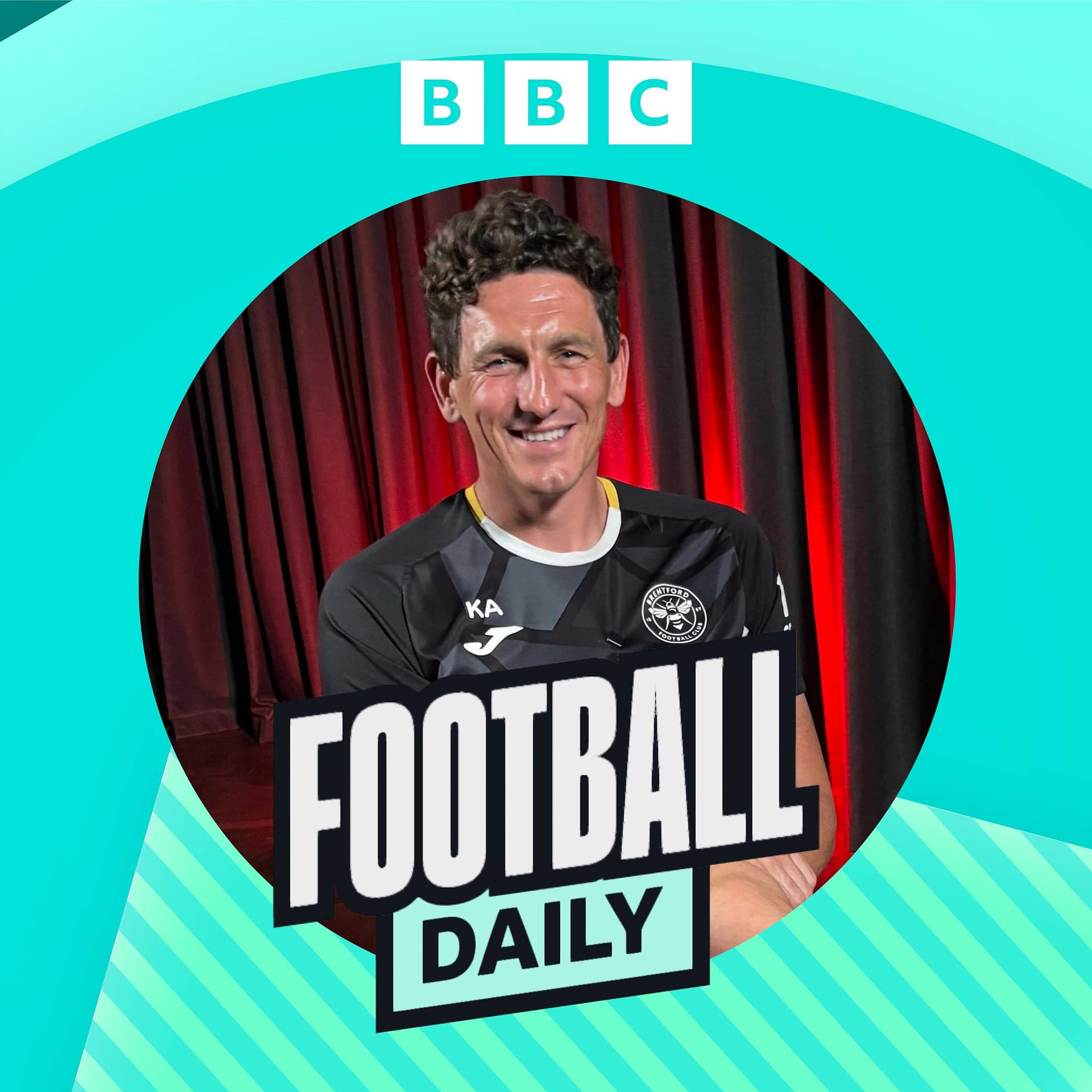
Andrews is an Irish former player who moved to Wolves at 15 alongside Robbie Keane; he played in all four English league tiers and earned 35 caps for his national team. He later became set-piece coach and then head coach at Brentford.
Key claims
His career was “snakes and ladders,” emphasizing resilience after drops (e.g., captain at 20 to League Two by 24–25). He prioritizes player development and staying calm, calculated, and professional.
Notable examples
Dublin District Schoolboy League at Wolves; Glenn Hoddle’s tactical professionalism; Paul Ince’s belief; Sam Allardyce and Roy Hodgson’s group management; international trust from “Mr Trappatoni.”
Written by AI. May contain mistakes. Listen to the episode to check what was said.
Chapters
Tap a time to open that second in VOKeith Andrews' Early Career and Aspirations
0:45 to 2:06
Keith discusses his journey from a young player in Ireland to playing in England.
“I'm so passionate about player development and trying to help young players and young people.”
Transition from Player to Coach
2:06 to 4:00
Keith reflects on his transition from playing to coaching and the decisions involved.
“I'm always intrigued and I'm always asking these interviews about how people started in their football journey, but for you, was it always going to be football or could it have been Gaelic football?”
Life at Wolves and the Early Challenges
4:00 to 6:41
Keith shares insights on his time at Wolves and the challenges faced as a young player.
“It's a huge decision for your family obviously.”
Football as a Game of Snakes and Ladders
6:41 to 7:05
Keith uses a unique analogy about the ups and downs of a football career.
“That's probably one of my favourite football analogies I've ever heard.”
Finding Passion and Leadership at MK Dons
7:05 to 9:10
Keith discusses rebuilding his love for football at MK Dons and what that meant for his career.
“I think for me at certain stages I didn't react to it in the best possible way.”
Influences from Managers
9:10 to 11:34
Keith reflects on the impact of various managers throughout his career.
“And I've been very fortunate to work under some really impressive managers.”
Becoming Head Coach at Brentford
11:34 to 13:46
Keith discusses his promotion to head coach at Brentford and the challenges that followed.
“going to be like as a head coach it's a reality you think you will be a certain way and you will do things in a certain manner.”
End of Interview and Future Outlook
13:46 to 14:00
Keith shares his thoughts on future expectations for Brentford and reflects on his journey.
“So I'm very positive about where we're sat.”
EFL Stories and Insights
14:00 to 14:28
A discussion on the latest developments and stories from the EFL.
“the home of the EFL from Five Live Sport.”
Transcript
Automatic transcript. May contain errors.0:06The Football Interview is back and each week again this season I'll be sitting down with some of the biggest names in the game to talk about their life on and off the pitch. Our next guest on The Football Interview came over to England to play for Wolves when he was just 15 alongside Robbie Keane. He's played in all four of England's top tiers and he's represented his national side 35 times. Now he's managing Brentford in the top right. Welcome to the Football Interview, Keith Andrews. Hi. When I list all of those achievements, of course, there's many more as well. I imagine as a young boy from the Republic of Ireland, it's not bad, is it?
0:42You'd have dreamt of that. Yeah, I speak to a lot of our young players. I'm so passionate about player development and trying to help young players and young people. Because I know how difficult it is to do that. Even you're just talking about it there. I think the fact that I played in every level of English football and international football and coached every age group, I think it's allowed me to be the type of person I am and coach I am, I suppose, because I've had so many different types of experiences. My journey certainly hasn't been straightforward, far from it, certainly in those earlier years, but I think that's what shapes you.
1:22You mentioned that what type of person you are. What type of person are you? A lot different to what people would have remembered me as a player. I was pretty aggressive as a player, I suppose. I think I had to be to be the best type of player I could be, depending on the level I was at. But then I obviously matured a little bit, I think, and then went on a journey to try and be a head coach. And again, that wasn't straightforward. I took different turns and directions that maybe people wouldn't have thought was the right direction. but I felt in my gut that they would be good decisions. So that journey was probably longer than anticipated on some levels, but I'm a lot calmer and calculated now than I was certainly as a younger man.
2:09I'm always intrigued and I'm always asking these interviews about how people started in their football journey, but for you, was it always going to be football or could it have been Gaelic football? I played both, yeah. I loved both. I think they're probably my two favourite sports, paddles running Gaelic football close to the moment. Oh, you're a paddle player too. Very seldom, but yes. I loved Gaelic football. I probably could have played for Mark County, which was Dublin, and then you had to make a decision when you get to 12, 13, which way you're going to go. Was it a tough decision? Not really.
2:41No, not really. Football was always my passion since I was a very young, young child. I was never going out of football, playing on the streets, It's a different era, obviously, where you're out with your mates till the sun goes in. Yeah, it was a pretty easy decision. But if it wasn't football, it probably would have been a chef. A chef? Yeah, I don't do much cooking this day and age. But, yeah, I was a passion for cooking. What kind of thing? How do you, because I think of youngsters, and maybe footballers, I suppose, are often, they come to training grounds, they get food made for them. But obviously, I'm guessing that wasn't the case for you.
3:22How did you get into cooking? When I went to Wolves as an apprentice, I wasn't getting the type of food that we're getting here now. So things have evolved pretty well on that front. But no, I've always been interested in it, enjoyed it. We're a family of foodies. Yeah, it's probably just always been the back of my mind. Whether I could have dealt with the heat in the kitchen would have been another thing, but yeah. Interesting, because I think we sat here with Nathan Collins, literally in his seat. He's into us cooking. He is, isn't he? Is it from where you're from? Is it like a Republic of Ireland?
3:53Featers aren't we? Irish mammies and all that. You mentioned there coming over to Wolves. It was 15 wasn't it? Yeah. What was that like for you? How did that come about? Because that's so incredibly young. You're still a child. Yeah it is. It's a huge decision for your family obviously. My mother was very against it because she wanted me to finish my education and go to university. and all the men in the family, my dad and my uncles, wanted me to pursue my dream naturally. But I kept my education going when I went to Wolves and made sure I got a few A-levels and bits and bobs. And if it didn't work out, I was always going to go back to education.
4:34Yeah, was that quite important to you as well? Because I know some footballers are like, it's football or nothing and they don't have a plan B, but it feels like you're quite level-headed. And I know maybe you weren't on the pitch always, but it feels like you're quite level-headed as a person. Have you always been like that? I just knew the importance of it, I think. Not that every decision was the right one, for sure, certainly in those early parts of my playing career. But, yeah, I think, again, the percentage of players that actually go on to have a career in the game is so small that you have to try and think of the eventuality that it might not happen.
5:09I mentioned Robbie Keane at the beginning because he's obviously another headline name that came over with you at Wolves. Was it nice to come over with him? What was your relationship like with him? We had this huge Irish contingent at the time at Wolves. It was a bit of a hotbed for scouts at that time. Why was that? The league was so competitive. It was called the Dublin District Schoolboy League. We were playing competitions against Man United, European teams, and we played in the Mill Cup and we would go toe-to-toe. We just had a really good side and the competitive nature of the league at that stage.
5:43So there was a lot of Irish players at Wolves, five of us came over at the same time. Unfortunately, three of the players didn't make it. Robbie obviously went on to have a pretty successful career, but it shows the percentages of players that unfortunately don't quite get to the level. What a move it was for you though, was it nine years you spent at Molyneux? Nine years, lots of long moves to try and develop. For the last couple of years I probably wanted to leave, but you're on the contract and you're a squad player and I needed to go elsewhere for my career really. But it gave me great grounding.
6:22The time of what it was, late 90s, it was a different era. You get schooled by senior pros that teach you really good lessons, some of which probably weren't needed. But yeah, they were amazing times that naturally taught you a lot. I heard you at one point in one interview, you described football and the career that you can go on as being a bit like a game of snakes and ladders. And I love that. That's probably one of my favourite football analogies I've ever heard. What did you mean by that? I think naturally you do quite well at certain stages. I try and say this to young players now, you break into the first team, everything's amazing, everything's easy.
7:00And then you might get an injury or I might start picking them. And then it's how you react to that. I think for me at certain stages I didn't react to it in the best possible way. It probably wasn't as professional as I should have been. And again, it was a very different era to what we're going through now with professional footballers. And I think it's the resilience and the grit that you have to show to go back up the ladder and can you do that? So I went from being captain of Wolves at the age of 20 to playing in League Two by the age of 24, 25. and I wasn't content with that so I wanted to go again and thankfully I got back to the Premier League.
7:38Yeah, it's an incredible journey and I like the way you've spoken about MK Dons in the past and the fact that you went there because you liked how much they wanted you and what was going on there. At that point, was coaching in your mind that early in your career? Probably not at that stage. No, that was probably a little bit before that. That was a case of falling back in love with football. I'd lost a little bit of trust in the game and it just wasn't fulfilling me like it did when I was that kid growing up in Dublin. I know that's not always possible, but I needed to get something back to give me the adrenaline and the energy to go again in my career.
8:15And I came across really good people. The bit of a project, I suppose. The club had moved from where it was, new stadium. They wanted to make me captain. They wanted to go on a journey. And I just thought, why not? let's roll the dice a little bit and thankfully it paid off. So when did management come into the real consideration then? Because I've heard you say before that you took notes on managers that you worked under. Yeah, definitely mental notes. I can still remember certain things that happened a long time ago. I have to be honest, I learned a lot what not to do from personal experience, how I was treated, whether that's right or wrong.
8:52It stood me in good stead. I wanted to be a head coach for probably when I was 29. Started doing my coaching journey, went on that path, started to develop, started to look at it a little bit closer. I retired probably a little bit earlier than I could have, should have, to focus on coaching and developing that side of it. And I've been very fortunate to work under some really impressive managers. Let's talk about those managers then, because like you said there, it's an eclectic bunch probably isn't it really you've worked under such a different range i'm intrigued as to which ones you've taken bits from and the ones that had the biggest influence on you yeah lots like you've said um wow glenn hoddle at wolves um first one who brought tactical game plans into our minds i suppose when i before that was just the same system versus the same system and Glenn was huge on how professional you would be around the game.
9:52Paul Ince, who was my captain at Wolves and then my manager, just instilled an unbelievable belief in me and confidence in me that I will never forget. Sam Allardyce, Roy Hodgson, two very different individuals, very different styles, but took a lot from both of them and how they would manage groups, how they would formalise game plans and put them into practice. and I suppose Mr Trapperton at international level, he was obviously a legend and again, the trust that he showed in me as a player and how effective he got a system to work for us was really impressive. And then of course your first head coach job comes here at Brentford a year after coming in as set-piece coach.
10:36There was a lot said, wasn't there, when you first got the job? Currently so, yeah. Yes. What was that like for you? Did you almost relish it, the fact that people were potentially saying things about you that you thought that's not what we're going to do this season and you proved them wrong. I joined Wolves in 1996 so I've been in this game quite a long time so I've seen the soap opera before because that's what the game is. There's stories, there's baddies. It's a very good analogy. There's everything goes on, there has to be storylines in it and there has to be talking points and I don't understand why I was that.
11:1312 months ago because if I was sat in Dublin having a cup of tea with my folks or my friends I would probably say something similar so I have to be honest I don't read a lot I don't I don't listen to a lot I'm very fixated on what I need to do I've been like that for a long time even as a player and so I understood it but again it didn't affect me in any way I didn't know what I was going to be like as a head coach it's a reality you think you will be a certain way and you will do things in a certain manner. What's different? How are you different to how you thought you'd be? I'm not that different, actually.
11:48I'm pretty calm and in this chair. I'm probably a bit calmer than I was 12 months ago, but I think what made me calm was the group of players that I would work with, having known them for 12 months, having had trust in what I'd seen from them as people that I knew I could develop some of them and help them and help us calm everything around it because there were so many changes last year not just me coming in and Thomas and Thomas leaving it was it was a lot more than that as everyone knows but it it was that that gave me the the calmness and the confidence that we'd be fine once the initial choppy waters calmed down a little bit we got a few results and then we could grow as a group.
12:29Did you have any mentors or anyone that you lent on at all? Yeah I've got a couple that advise me now and then, a couple of people in the business world. I've got Roy Hodgson, who lives not a million miles away, and Ray Lierrington, who I've played with his son for a long time and I've known him for 20-plus years. So, yeah, they're always there in the background and people here at the club, good people, with a lot of experience that have been here a long, long time, just saying the right thing at the right time and certainly in those early few months. What next then? Because Brentford last year quietened all the noise and went on to exceed a lot of what many people thought you could do.
13:09There's now a little bit of expectation, is there? It's the game, isn't it? Which is a good thing, isn't it? We want the noise. We've got so many good stories that we're not finished yet. It's just keeping that hunger and desire to go into the next chapter where I think we'll be better. You're not a bad story either, Keith. I suppose so, but it's always a team. I'm the one who's obviously in front of the camera more often than not, but it's always a collective effort. We've brought in good staff in the summer, a couple of additions. We've added some really good players to an already really good squad.
13:46So I'm very positive about where we're sat. Thank you so much for joining us today, Keith. Fascinating and the story continues. Thank you, pleasure.
14:03the home of the EFL from Five Live Sport. Aaron Paul and Joby McEnough tackle the biggest stories from across the championship, League One, League Two and beyond. A minimum of one week's wages fine. And we may even write to your wife and tell you why you've been fined if you carry on. And the biggest talking points from across the football league. Well, we spoke well at Joby and enjoyed working with him. It's my show too, Neil, but yeah, thanks for that. Sorry, Aaron, I'm worried about it.
From the publisher
In this week’s edition of The Football Interview, Kelly Somers speaks to Brentford head coach Keith Andrews. They discuss how it was moving from Ireland to England as a 15-year-old to join Wolves' academy and how he could've potentially been a chef if he didn't make it as a footballer. He also talks about his journey into management, who has helped him and how far he can take Brentford.
TIMECODES: 1’29 - What kind of a person is he? 2’20 - Could he have been a Gaelic footballer or a chef? 4’00 - Moving to Wolves aged 15 with Robbie Keane 6’40 - Why football is like snakes and ladders 7’50 - Becoming a coach and managers he’s learned from 10’30 - Getting the Brentford job & who he’s leaned on for help 13’00 - What next for Brentford?