
 Ask ChatGPT


- Podcasts
- FT News Briefing
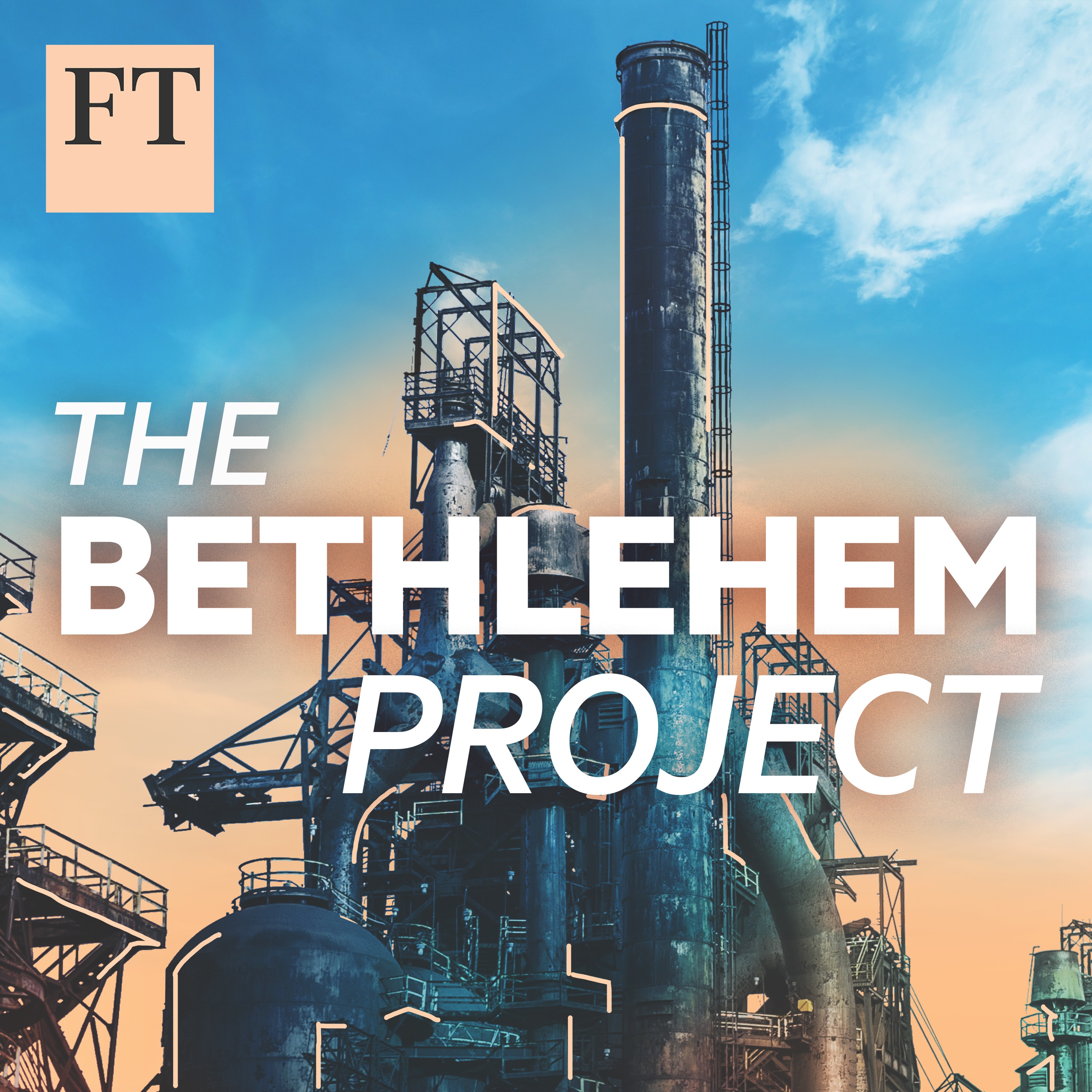
- The Bethlehem Project: Steel’s legacy looms large
In short
The episode “The Bethlehem Project: Steel’s legacy looms large” follows Bethlehem Steel’s rise and collapse and how Bethlehem, Pennsylvania pivoted afterward.
Guests
Bill Liner, 72, worked 20+ years at Bethlehem Steel (machine shop; helped make crane wheels; injured on the job) and later became a psychiatric nurse; Andrea Zaya, president/CEO of the National Museum of Industrial History, whose father Mike Zaya was a Bethlehem Steel executive; Roland Kushner, recently retired business professor at Muhlenberg College and Bethlehem resident.
Key claims
Bethlehem Steel was a “reactor” that failed to invest during 1970s–80s disruptions; mini-mills and foreign imports undercut it; pension/health costs grew as retirees outnumbered workers.
Notable examples
1959 steel strike; Bethlehem’s wartime peak (World War II); Bill’s 1982 layoff; his later work at Lehigh Valley Hospital and a mental health facility.
Written by AI. May contain mistakes.
Chapters
0:38
The Legacy of Bethlehem Steel
Explore the historical significance and impact of Bethlehem Steel on the local economy.
“The rusted out former mill looms over the city.”
4:07
Economic Shifts and Industry Changes
Understand the economic transitions and local adaptations following the decline of Bethlehem Steel.
“economic and political issues through the lens of one city.”
9:18
Personal Stories of Transition
Hear personal accounts of individuals adapting to job loss and new careers post-Bethlehem Steel.
“The company had evolved before, so why did this set of challenges prove to be too much for Bethlehem Steel to overcome?”
14:00
Bill's Transition from Steel to Nursing
Learn about Bill's journey from working at Bethlehem Steel to becoming a nurse.
“That loss of that job and me concerned, because I just bought the house in 1981.”

Ask about this episode
Get the gist, explore an idea or ask about something said.
 Claude
On FT News Briefing, what are the key points of this episode?
Searching your listeningTranscript
Automatic transcript. May contain errors.
0:00Sonja Hutson: AI pilots are everywhere. Scaling them? That's harder. Disconnected systems, siloed data. PwC Managed Services changes all that. We embed agentic AI into your core workflows, so your operations don't just run, they evolve. Continuously, intelligently, at scale. Because true advantage isn't experimenting with AI, it's making it real. PwC Managed Services. We evolve your operations from day one, so you can turn pilots into performance.
0:38Sonja Hutson: It's hard to miss the legacy of steel when you come to Bethlehem. The rusted out former mill looms over the city. The 200 plus foot tall blast furnaces are long out of commission. And they make their own unique skyline that's kind of like a memorial to a bygone industrial economy. When this plant was running, it was like a city unto itself. They had traffic lights, guards, security. They had a bus system to drive around. 72-year-old Bill Liner and I are standing just across the street from those giant towers. Bill's wearing a blue fleece jacket and scratches his salt and pepper stubble as we crane our necks up to look at an old industrial brick building.
1:24And this is the machine shop. This is where I basically worked in there.
1:27Sonja Hutson: All in all, Bill spent more than 20 years working for Bethlehem Steel in some capacity. I worked in first, second, and third floor over my career. It was old when I hired in in 1973. Of course, it's older now. Some of the windows have been knocked out, and others are yellowed with age. I just wish we could get in there just to walk around and see. Well, now there's nothing. Last time I was in there was a few years ago. It was all cleaned out. And it really was eerie because you walk into it and all your memories are there. And you can picture all these different machines where they were, walked upstairs.
2:01Sonja Hutson: Bill helped make wheels for the cranes throughout the plant. It was hard work, and it could be dangerous, too. Myself, I had an accident. I had eight stitches in my index finger and five on my thumb. It wrapped around a piece of string. I'm looking, and I said, whoa, and I just right to the bone. Ugh. Well, Bill's thumb is okay now. But workplace accidents aside, Bethlehem Steel was so significant to the national economy in the 20th century that it was one of 30 blue chip companies that made up the Dow Jones Industrial Average. It was important locally here, too. It was the area's largest employer.
2:42My dad worked here. My brother worked here in the summer. My brother-in-law worked here. And we talk about this all the time when we get together.
2:49Sonja Hutson: But the U.S. economy changed a lot in the 1970s and 80s. And it hit the company hard. They kept the buildings in good shape when they were making money. As the company slowly went down, you could notice they weren't painting as much. They weren't repairing things like that. They had to cut costs. Bill had a plan like a lot of other Americans from his generation. work 30 years at the same place, and collect a pension after retirement. But that didn't work out for him or for a lot of other U.S. blue-collar workers in the late 20th century. The Bethlehem Steel Plant shut down in the late 90s, and the company went bankrupt in the early 2000s.
3:30Sonja Hutson: As he saw the ship going down, Bill realized he needed a new career. So in his mid to late 30s, he pivoted to one of the major industries that would come in to replace steel manufacturing in Bethlehem. That's healthcare. Bill became a nurse and he still works part-time to this day. He's really a living example of how a local economy can adjust after a major disruption. In this episode, we're going to walk you through the life and death of Bethlehem Steel and what happened to the city after that. I'm Sonia Hudson, and this is The Bethlehem Project, the series where we look at U.S. economic and political issues through the lens of one city.
4:20In two miles, take the Pennsylvania 378 south exit toward Bethlehem. Bethlehem. Bethlehem. Bethlehem. Bethlehem. I'm from Bethlehem.
4:29Sonja Hutson: Growing up, I thought Bethlehem was just like your average small town. Recently, though, I've realized we're really in the center of a lot of things.
4:47Sonja Hutson: Andrea Zaya is shuffling through a stack of laminated archival photos. She's the president and CEO of the National Museum of Industrial History here in Bethlehem. And she pulls out a black and white picture of a young man in a 19th century suit. Is this young Charles Schwab? It is. It is. Yes. A very dapper young man born in western Pennsylvania. Charles Schwab, no, not the man who founded the financial services company, but this Charles Schwab bought Bethlehem Steel in the early 1900s. He pioneered the so-called H-beam that became Bethlehem Steel's specialty. Andrea's dad, Mike Zia, is a former executive at Bethlehem Steel, and he picks up Schwab's story from here.
5:34He got the patent and built the first large structural mill here in Bethlehem in 1907, and then another larger structural mill.
5:45Sonja Hutson: And the company just grew from there. Andrea says it really became a powerhouse in World War I and World War II when the military needed a lot of steel to fight those conflicts. And by World War II, Bethlehem became the second largest steel company in the country. About 180 ,000 people worked in shipbuilding. So they were also the largest private shipbuilder in the world. Outside of wartime in the 20th century, it was all about building cars and skyscrapers. The corporation helped build everything from the New York City skyline to my hometown's iconic landmark, the Golden Gate Bridge. Manufacturing was a big part of the national economy at this time, too.
6:32Sonja Hutson: According to federal government data, it made up 27 percent of gross domestic product in 1957. Today, that number is less than 10%. During this time of abundance for Bethlehem Steel, it was a huge player in the local economy. It meant everything to the local economy. This was a company town. Pretty much everybody had a connection here. Things were going pretty well. But then the first crack started to form. The 1959 steel strike. 500 ,000 workers across the country walked off the job because of a dispute over wages and benefits. You know, everything shut down. This was a national strike. And then we start to see foreign imports coming into the market at that time.
7:22Sonja Hutson: More disruptions came in the 1970s. The biggest being that a new way of making steel started taking off. Mini mills. They were, as the name might suggest, smaller. and they didn't make steel from scratch. They made it from scrap metal, which made things cheaper. Here's Mike Zaya, the steel executive, again. It was probably a downward spiral in the 80s and 90s because of that. I think another way to put it is I started in 1965 And the first 15 years I spent building the company and the rest of the time managing the downside of the company. Plus, these mini mills were largely not unionized, which brings us to the last big drag on Bethlehem Steel's finances.
8:22At one point, there were seven Bethlehem Steel retirees for every one that was working. So it's quite an expense from a health care standpoint and a pension standpoint.
8:34Sonja Hutson: So Bethlehem Steel began its slow descent. Mass layoffs started in the early 1980s, which cost the steelworker who we heard from earlier, Bill Leiner, his job. The Bethlehem plant shut down throughout the mid to late 90s, and eventually the entire company went bankrupt in 2001. Andrea saw the economic impact of that firsthand. There wasn't, you know, certainly an economic downturn. I have three older brothers and they all decided to leave the area. They thought that there was not an economic future. One of them moved to the Detroit area and then he might have questioned that choice because when he came back here, it had just changed so much.
9:17Sonja Hutson: So to recap, Bethlehem Steel faced a combination of cheaper foreign steel, more efficient domestic competitors, and a lot of pension money to pay out. The company had evolved before, so why did this set of challenges prove to be too much for Bethlehem Steel to overcome? I asked Roland Kushner. I'm a recently retired professor of business at Muhlenberg College in Allentown, Pennsylvania, and a long-term resident of Bethlehem, Pennsylvania. Roland points to a study that identified four types of companies when it comes to adjusting to changes in the market. There's prospectors, defenders, analyzers, and reactors.
10:04Sonja Hutson: And Roland says Bethlehem Steel was a reactor. Which sticks its head up and says, what happened? What should we do next? The study that coined these terms, Roland says, found that reactors are the only type of company that doesn't do well in the long term. Its behavior and its conduct as an enterprise, by not being out front with additional investment in the 1970s and 80s, that's the period when it started to go down. What Roland's saying here is that the companies that thrived, they were better engaged in the market, had better technology, and were more flexible. Reactors like Bethlehem Steel didn't have a consistent way they adapted to change.
10:52Sonja Hutson: So when disruptions came, they were caught flat-footed and didn't know how to respond. But when steel went under in Bethlehem, other industries took off, like transportation and logistics, and healthcare also became a major industry. The area's biggest employer went from Bethlehem Steel to two major hospital systems. So why was Bethlehem able to pivot and flourish economically after its biggest business disappeared? Roland says it was a combination of things. I think that some elements of how the city has done well have been luck. So one is location. Bethlehem is well-situated, accessible to metropolitan populations.
11:37Sonja Hutson: It's about an hour and a half from both New York City and Philadelphia. It had unusually helpful public spaces that could be converted into performing arts venues. He also praises local leadership. From the city and the business sector, even though Bethlehem, I don't think, has any really big businesses that are located here. It's also got a thriving small business sector. Bethlehem Steel shuttered more than a quarter century ago. But Andrea Zaya, the museum's CEO, says its legacy lives on, even for generations who weren't directly touched by the mill. I teach at some of the local colleges here, and I've been assigning an essay assignment.
12:27Sonja Hutson: What is Lehigh Valley culture? And after 25 years, students are writing that we have a Bethlehem Steel identity. How is that possible? You know, even in the shadow, these kids growing up in the shadow of a cold blast furnace, and somehow this is becoming part of who they are. We're going to take a quick break, and when we come back, we'll hear a personal story about what it was like to transition from steel to healthcare.
13:03Sonja Hutson: Bill Liner still remembers the day he was laid off from Bethlehem Steel. March 19, 1982. On that day, he came into the large brick machine shop where he worked and... All the steel chips that accumulate from the lays at the laborers clean, nothing was done. I looked around and said, what the hell is going on? And they told me, massive layoff. And a superintendent who was a great guy, may he rest in peace, great guy. He says to me, Bill, he had like a musical quality to his voice, Bill, what are you going to do? Now, Bill had been laid off a few times before throughout the mid to late 70s. But he always got hired back after a few months, so he figured it'd be the same thing again.
13:50I said, summer vacations open up, we'll be calling people back. And he looked at me and he said, Bill, there's no work coming in. That loss of that job and me concerned, because I just bought the house in 1981. And I'm thinking, oh, my God, I don't want to lose the house. And I lived in town all my life. My parents lived three blocks away. My brother-in-law and sister were up the street. And that spoke to me. That's why I worked so much. You know what?
14:18Sonja Hutson: Bill started working at a stove factory at night and then got a full-time job at a mental health facility. He was working a lot, which he says strained his relationship with his wife. And then what really killed the marriage was I was hired by Lehigh County Crisis Intervention Unit. I did that like one night a week on a Saturday night, 10 hours. And so you put basically three roles together, wife sitting around, what are you doing? Anxiety, anxiety, and tension. And before you know it, it doesn't fit. And then gone. Bill did eventually get hired back at Bethlehem Steel, but he knew that it wasn't going to last.
15:00You can see the steels going down. Now you're at like 1988, 89, 90. You can see this is not going to, this is sinking. So I thought, what am I going to do?
15:13Sonja Hutson: The answer to that, it turns out, was nursing. He realized from his jobs at the mental health facility and the crisis intervention unit that he was interested in psychiatric care. And I thought, I like what I'm doing. I enjoy nursing. in the 1990s, nursing was, in psychiatry, nursing was a very good job. Length of stays were 21 days or more. You go to work and you would have the same people you talked to over days. Bill went back to school in the evenings to get his nursing degree and eventually got a job at Lehigh Valley Hospital. Remember the big boom in health care that I mentioned earlier?
15:48Sonja Hutson: Well, Bill worked there for more than 15 years and now has a job at a mental health facility. So I went to see what his new life is like. How are you feeling? It's good to hear. Going out this way. Bill is walking me through the dining room at the mental health facility he works at. The room is an old chapel. The pews have been ripped out and replaced by tables. We cut out the patient's response to Bill's question in order to protect their privacy.
16:24Sonja Hutson: Bill and I sit down in a small office to talk more about what his life looks like now. I just gave a shot. I just gave someone a shot. He pulls out an empty box from a pile of papers on his desk and shows me the label on it. That's a long-acting psychotropic medication. We have a lot of our folks who are on long-acting injectables. That's like my role. How does a day working here compare to a day working at Bethlehem Steel? Oh my God, entirely different. Entirely, entirely different. It's a different structure. I mean, in this type of work, you're working with people, which is working, serving people.
17:05The steel company is more, you had a job to do, you had things to make. I ran a machine, a lathe. And it didn't really matter how you acted. I mean, somebody acted like a real idiot, thoroughly. As long as he was doing his job, the foreman said, let him go. He's working, he's a good guy, right? Here, it's a softer environment and more interactional. And that's, frankly, it's more important.
17:31Sonja Hutson: Another big difference? He's no longer in a union. Bill says that made him feel vulnerable. Well, I tell you what, you feel naked. And here's why. Because when you work at a place like Bethlehem Steel, Mack Trucks, cement companies, and all that, you never, it never entered your mind that you could get fired. How did the two working environments compare? We talked about the people, but what about the actual work itself? The dangers are different. I mean, you can have needle sticks. You can do something like that. Or when HIV arrived, I was working as a staff nurse on the unit. And it was like crazy.
18:09People were afraid. But yeah, the dangers are different. In a machine shop, the possibility of getting hurt, I mean, and even dead, was very real. We had a lot of guys killed in the Bethlehem plant since I hired in 1973. Was there anything about working at the steel mill and the machine shop that trained you or helped you in your career as a nurse? Oh, yeah, absolutely. Absolutely. What I learned at Bethlehem Steel, what helped me is you worked on what's called direct incentive in a machine shop, on machines. You got a base pay. you could potentially double your pay based on your output. All right.
18:51So that forced you to be efficient. You had to be efficient. How can I say this? How can I say that? That is one of the biggest takeaways, positive takeaways from working at Bethlehem still for me.
19:08Sonja Hutson: This episode got me thinking about how different work used to look. You were doing things by hand, working in massive factories that employed your neighbors, your parents, your siblings. So many people I talked to could list off several family members who worked for Bethlehem Steel. It was hard work and it was dangerous work and there was such a reverence for it. It reminded me of my own family who hails from the Midwest. My grandmother used to talk about how proud her family was when her father got a job as a welder for military ships during World War II. She told me that he was the best welder at the factory, and honestly, I'm not sure how to fact check her on that.
19:53Sonja Hutson: When she died last year, I found her father's work badge in a box inside her closet. Can you imagine keeping something like that for 80 years?
20:06Sonja Hutson: Bethlehem Steel was more than just a job for Bill, too. And that was evident as we stood in front of the old machine shop where he used to work. Every time I come down here, always, always stop and look. Always. Bill starts to get choked up and tears form in his eyes. I mean, he spent more than two decades at Bethlehem Steel. Because to a certain extent, I grew up here. I was 19 when I came in here. Didn't shave. 19 years old.
20:56Sonja Hutson: This was The Bethlehem Project, the series where we explore U.S. economic and political issues through the lens of one city. Our show was edited by Mark Filipino, and it was mixed by Breen Turner. Topher Forges is our executive producer, and Flo Phillips is the FT's global head of audio. I'm Sonia Hudson. Thanks for going to Bethlehem with me.
21:34Sonja Hutson: defensively. Avalara, agentic AI tax and compliance with confidence. Capital raising is being redefined in real time from macro disruptions and shifting investor expectations to AI-driven demand and the rise of private credit. When headlines can tilt markets overnight, how can companies stay on course? Strategic Alternatives, the RBC Capital Markets podcast, explores how corporates and investors are navigating new pathways to raise capital, create value, and drive growth. When conditions change, alternatives matter. Listen to Strategic Alternatives, available wherever you get your podcasts.
From the publisher
Bethlehem Steel was the lifeblood of Pennsylvanian town's economy, and a major contributor to American manufacturing during the 20th century. But when the local plant closed in the 1990s and the company went bankrupt in the early 2000s, Bethlehem’s economy didn’t crater. It pivoted to other industries such as transportation and healthcare.
Host Sonja Hutson takes us through the rise and fall of Bethlehem Steel and introduces us to steelworker-turned-nurse, Bill Leiner. He’s a living example of how an economy can adapt and rebuild after a major disruption.
Listen to all episodes of The Bethlehem Project here.
The Bethlehem Project is hosted and produced by Sonja Hutson and edited by Marc Filippino. This episode was mixed by Breen Turner. Our executive producer is Topher Forhecz. The FT’s global head of audio is Flo Phillips. Special thanks to Pierre Nicholson.
Hosted on Acast. See acast.com/privacy for more information.
More from FT News Briefing
All episodesWe use cookies.They keep VO running smoothly and help us improve it. Privacy policy