
 Ask ChatGPT


- Podcasts
- FT Tech Tonic
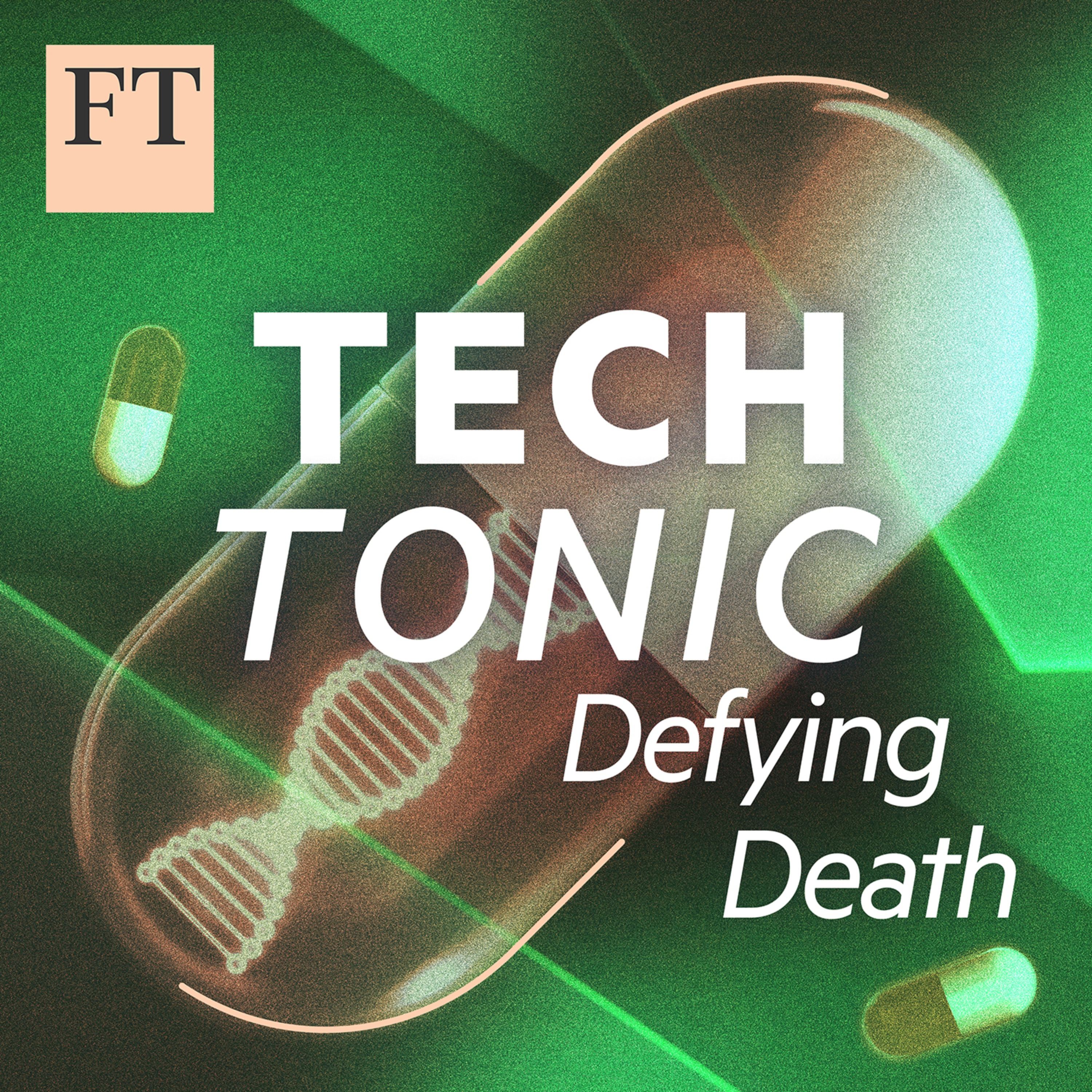
- Defying death: The future of forever
In short
The FT Tech Tonic podcast explores the evolving relationship between technology and society, delving into the promises and challenges of the digital revolution.
Main points
- Hosts: Michael Peel and Hannah Kuchler
- Description: This episode investigates gene and stem cell therapies as pivotal components of the longevity movement, raising significant moral and societal questions about extended life expectancy.
Written by AI. May contain mistakes.

Ask about this episode
Get the gist, explore an idea or ask about something said.
 Claude
On FT Tech Tonic, what are the key points of this episode?
Searching your listeningTranscript
Automatic transcript. May contain errors.
0:29So we'll begin here. IP pajamas for them that they can wear. This is Bill Kapp, the co-founder of Fountain Life. It's a longevity clinic and the upscale PJs are one way that the staff here hope they can change what it means to go to the doctor. The idea here is to kind of create an experience, you know, so it can be a little stressful sometimes. You're worried about, you know, your test, what your test results are going to be. Whereas most people go to the doctor when they feel unwell, Well, the premise here is that you can go to the clinic to catch diseases before they take hold. So while a trip is billed as an experience, Mountain Life is less about pampering and more about poking, prodding and diagnosing patients.
1:11So we do a retinal scan as well. Your eye is the only part of your body in the back of your eye that you can actually see a nerve. It turns out your eye is kind of a window into your health and we can see things there long before you ever develop symptoms as well. There are a lot of tests. A full-body MRI, balance tests, bone density measurements and cardiac scans. But as well as attempting to diagnose age-related diseases, the clinic offers treatments designed to delay or even reverse the aging process itself. This is our aesthetic suite, so we can do a facial analysis on you with that machine and basically look at areas for aesthetic treatments.
1:50These aesthetic treatments are not just skin deep. Bountain Life is claiming they can renew the cells in your body using cutting edge stem cell science. We use a lot of tissues that come from the placenta and from cord blood. These are stem cells and stem cell derivatives, and they have a huge regenerative capacity. They have the ability to kind of reset aging. And so when we basically can administer those to the face or to the scalp, for instance, for hair regrowth, but then particularly premature wrinkling, things of that nature, you can either inject them or you can actually just do a microneedle and actually recover skin, grows collagen.
2:24It's almost like a non-surgical facelift. It sounds almost futuristic. And Fountain Life is indeed something of a pioneer when it comes to trialing regenerative treatments. Since a law change in July this year, the clinic has started providing some of those stem cell treatments at one of their setups in Florida and Cap says his customers are keen to try them. And what's the demand been like since it's been allowed in the US? It's been pretty robust, as you might imagine. All of this technology will find its way out into the public because the public today is as well-informed as they've ever been.
3:02Now, there is a lot of stuff out there that probably isn't accurate, so that will have to be vetted through. But the days of being able to hide a technology under a rock just don't exist anymore. and people are looking for solutions for problems. For CAP and many others in the industry, this really is the future of longevity healthcare. Radical new treatments geared towards regeneration, readily available to anyone who wants to live longer.
3:34This is Tectonic from the Financial Times. I'm Hannah Kuchler, the FT's Global Pharma Editor. And I'm Michael Peel, the FT Science Editor. In this series, we're exploring the longevity movement, from its origins decades ago through its obsession by the Silicon Valley elite to today as efforts to extend your life are going mainstream. So in this final episode, we'll be asking, what does the longevity industry have in store for us? Will regenerative anti-ageing treatments become the future of healthcare? And if they work and we all start living longer, what kind of ethical issues will we have to grapple with?
4:13Part three, the future of forever.
4:27So Michael, Bill Kapp at Fountain Life was talking about stem cell therapies there, which is one of these really big trends in longevity right now. What's your sense of how widespread they might become? Right, Anna, it's a really exciting area. A lot of people might be familiar with the idea of using stem cells to tackle potentially lethal diseases. And there are all sorts of companies that are sprouting up and they're active from Southeast Asia to the Caribbean. And they're a really mixed bunch. Some are conducting trials to see whether stem cells really can help restore everything from our knees to our brains.
5:01others are working more in the shadows and that highlights really that there are big questions about how this industry is regulated but what we're seeing with this interest in longevity research is harnessing them to renew parts of the aging body so stem cells are part of this broader category of what's called regenerative medicine there's another field of research that's emerging in part sparked you know by the work in stem cell science around gene therapies which the longevity industry is increasingly interested in. The hope is that genetic tinkering could help turn back the biological clock on a cellular level.
5:37And one of the people working in this field is Daniel Ives. He's the co-founder of Shift Bioscience in Cambridge. Ives quit his academic lab to launch the startup and he told me that gene therapies could one day allow us to treat aging with a single pill. The end mission of the company is that at some point in the future you will go to bed, you will take a pill just before you go to sleep. As you're sleeping, this medicine is distributing across your body and it's bringing back the age of cells across your body by weeks overnight. And so you're on this rejuvenation trajectory where over a month you're going back years and over a few months you're going back decades.
6:18And that becomes entirely mundane. It certainly doesn't sound mundane. It sounds miraculous. So how do you turn back the dial by altering genes that can reverse aging. Where is aging coming from? The answer is every cell in your body. You never have a young arm and an old arm at the same time. It's actually like remarkably uniform. So we focus on the cell, the idea being if we can get one cell to go back, so become younger, we could perhaps spread that across all the different cell types of the body eventually in something that looks more like a normal medicine. These therapies use drugs to turn on and off certain genes, and they're already used for specific, often rare diseases.
6:58But the idea that you could manipulate your genes to make yourself younger came out of discoveries made by a Japanese scientist named Shinya Yamanaka. Back in 2006, Yamanaka was trying to make stem cells, special cells in the body that can renew themselves or turn into other types of cells. Yamanaka was searching for ways to transform regular mature cells into stem cells by manipulating the cell DNA. Miraculously, it worked, but it had an unexpected side effect. The new cells appeared to have gotten younger. They were supposed to make stem cells, right? And they did make stem cells, but it was shown that the aging clock reversed to zero, which was completely beyond anyone's expectations.
7:49Jamanaka's research showed that it was possible to reprogram a cell to make it younger. You can reverse the age of cells all the way down to zero in just a few weeks. So you can actually take a super centenarian cell, so above 110 years, bring it all the way down to zero. The fact we could slow or stop aging was exciting, let alone reversing it. The Japanese scientist who managed to transform mature cells into stem cells has been awarded the Nobel Prize in medicine. L 'équipe du professeur Yamanaka a réussi un exploit qui semblait impensable en biologie.
8:28Yamanaka's work won him a Nobel Prize in 2012, and it generated a huge amount of interest in using gene therapies to combat aging. The idea that there could be some kind of pill or IV drip that could effectively roll back the age of ourselves and make us younger. Ives and his startup Shift Biosciences are among the companies now working on these treatments trying to figure out which genes they need to target to reverse aging. This summer we made a breakthrough against expectations so we found a single gene that we could inhibit to rejuvenate cells and multiple cell types so having something you can inhibit it makes it more likely we could develop a drug that could benefit your whole body at once.
9:17Developing a molecule becomes within the realm of the possible. It's very energizing to realize you might have knocked out five or 10 years from this development process. That must have been such a moment. Yes, there's a lot of struggle before we get these data readouts coming in. Like my experience of a PhD is basically three years of nothing working. We don't expect things to work, right? That's our default mode. So when things do work, it's very rare. It's very few and far between. There is still a lot of research to do. Shift is nowhere near testing this type of therapy on human subjects, and genetics is complicated.
9:54There could be unintended consequences of messing around with gene function. It might disrupt the sequence for a protein. It might push the cell towards more cancer. We don't want to take old people and make young cancer patients. That's like dystopian vision, right, of this medicine. To avoid that dystopian vision, the experimentation needs to be very, very controlled. But if it works, Ives says the implications are, well, profound. From very early ages, we have been trying to cope with the reality that we're on a slow path of decline and eventually we will cease to exist on the Earth. And that's a pretty dark thing that we have to essentially bury from our day to day because it's hard enough to sort of struggle through the day, let alone have to sort of confront this.
10:42It's a completely sort of different future in front of you. It's not like just managed decline. The idea that you could sort of reverse that trajectory, for me, that's infinitely more exciting than anything else. For Ives and the scientists he works with, that prospect of managed decline or of ceasing to exist altogether, it's a very real preoccupation. and it's that preoccupation that drives the company forward. We have this sort of A4 sheet and we have 52 squares across at the top and then we have 90 squares down, which is basically every week of your life. Assuming you reach 90 and so we tick off a square every week, right?
11:21So just, you know, you sort of keep this reality in your peripheral vision. So this isn't just a question for us as a company. I think this is a question everybody should have, like, what is it you love and you've got to keep that fire alive. So we actually have a big placard, which is what would you do with an extra 10 years? And so we list out all those different things. And there's some really nice answers. And there's obviously selfish indulgences, get a feature. Like what? I don't know, more holidays, do more exploring. I mean, maybe I don't want to frame it as a bad thing. But I'd go chasing tornadoes, which is slightly reckless.
11:56But I think one thing about tornadoes is it's the adrenaline, but also just the awe of, I don't know, just physics, you know, that sort of stepping back, this sort of phenomenon, just being that tiny little person, seeing the power of nature, it's quite compelling.
12:17The idea of giving your genes a tornado twist to turn back the biological clock might still be a distant dream for shift bioscience. But there are those who don't want to wait, and that comes with ethical implications.
12:40So Hannah, you follow this industry pretty closely. When it comes to biotech investors, how big is regenerative medicine? Well, it's definitely attracting a lot of money in Silicon Valley. Jeff Bezos has a company that he's backed called Altos Labs. Sam Altman has backed a company called RetroBio. And it's seen as a really exciting area for biotech right now. And what about this vision of having a daily pill you can pop that will reprogram your cells and make you younger? Is it really going to happen? Oh, I mean, I don't have a crystal ball on that. But, you know, this research is very, very cutting edge.
13:16Scientists haven't done large still human trials that would actually be needed to show that these were effective and make you live longer and actually safe to use. But that hasn't put off some people from experimenting with gene therapies on themselves. People like Liz Parrish. Ten years ago, she founded a company called BioViva in Seattle. We became kind of popular around 2015 when we started the company as myself being the first recipient to take gene therapies to treat biological aging. Parrish is quite a controversial figure because she claims to have spent the last 10 years using unapproved gene therapies on herself.
13:54We came up against an ethical consideration of who should be the first patient, and I decided that I would. The reason that I took the gene therapies is because there really was no person who understood the risk as much as I did at the time. And so that's how we launched the company. Unlike Daniel Ives, Parrish isn't a scientist. The way scientific startups normally work is that the company conducts lab research, followed by experiments on animals before carefully monitored human trials. Parrish wanted to skip straight to testing gene therapies on humans, with Parrish herself as patient zero. But that presented challenges.
14:36Tell me sort of step by step what happened. Well, first we had to find an investor. And when you go and you talk to people about the humanitarian use of medicine and why we need to move more quickly than we are, and that you would be willing to be the test subject and you needed their money to make that happen. That was an interesting conversation to have. We had a lot of people walk away mid-conversation, and finally we found an investor that totally got it. To be clear, what Parrish was hoping to do to herself was potentially lethal. This science is very, very novel, and it's little wonder that most investors weren't comfortable with funding something that might kill the company's founder.
15:25But eventually, she did secure the money. The problem then was Parrish couldn't get FDA authorization to test the treatments in the United States. So to find someone who would actually administer the drug, she had to do it in secret, far away. So we went to Columbia. So every one of the gene therapies I've taken, I've taken in a clinic with a licensed doctor or in a place that is internationally neutral. I did take one set of gene therapies in international waters. And then, of course, I needed to sign consent that I was doing something that I chose to do and that the doctor consented to treat me.
16:06So it was many, many months in the making, but we did it and achieved it. And I guess that made history. Her first experiment was with a therapy targeting something called telomeres, the caps of our chromosomes that shorten with age and are associated with aging diseases like dementia. As our cells divide, they get shorter and shorter. And when they get to a critical length, which is the shortest length that we know in a human, we typically are then diagnosed with the diseases of aging. The treatment was supposed to reverse this shortening. and as a result, in theory at least, reverse ageing. And according to BioViva, the therapy worked.
16:51In 2016, the company reported that Parrish's telomeres had increased in length by 9%. That's equivalent to reversing 20 years of biological ageing. Parrish's results gave her a taste for trialling these treatments and she has gone on to try several other gene therapies, including one that targets muscle mass and another aimed specifically at staving off Alzheimer's. And that Alzheimer's drug has even been tested on other people, again, without FDA approval. We were the first group to move forward to treat patients with dementia with suspected Alzheimer's. We saw their cognitive scores go up. I took it before they did to make sure it was safe.
17:32And we see IQ scores go up, so I'm no genius. but I definitely saw cognitive function benefits. Parrish says that her gene therapies seem to be working but it's a small cohort made up mostly of retirees and she admits there are some caveats. What they're showing now beneficial therapeutic effect that's pretty amazing but we know in the dementia study one out of five subjects had no benefit so it's definitely a work in progress. Parrish's self-experimentation with repairing her telomeres wasn't peer-reviewed, and there's scepticism from the scientific community about BioViva's methods. But Parrish justifies her experimental approach with the argument that gene therapies could save lives, and it's therefore critical to get them into the hands of people as quickly as possible.
18:26We push for these being approved in a pre-regulatory route in the United States and in the EU that allows terminally ill patients to get access to new technologies, more advanced technologies than what are in clinical trials, in a more affordable way so that these drugs can get to the masses faster. Pre-regulatory route might be something of a euphemism, but for Parrish, the FDA approach just isn't working. Historically, the US FDA has been a very politically run endeavor and it's been mostly driven by the pharmaceutical companies who are the heaviest lobbyers. This is transformative medicine.
19:08This is next stage curative medicine. It has been a challenge for the regulatory system to create a fast track and multiple approvals. So a lot of countries like China are going to be moving very fast on this. They're going to be making affordable gene therapies for the entire masses. And I'm hoping that we will see the US and the EU step up. Whether or not you agree with Parrish's approach to testing new longevity treatments, and many people don't, she says it all comes down to access. And as longevity treatments become more mainstream, ethical questions like this are likely to become more and more urgent.
19:47Questions like, who should get access to longevity treatments? Should we be spending money on developing drugs to help us live longer when there are so many other healthcare issues that need the funding? And if effective drugs that extend our lives are developed, what impact is that going to have on us, our lives and on society as a whole? We sent Michael to talk to someone about these thorny issues. Right, I wanted to understand how investors are thinking about these ethical dimensions. So I spoke to someone from Hevolution, the massive Saudi Arabian-backed funder of longevity research we touched on in the first episode.
20:24I'm Art Kaplan. I am the head of the Division of Medical Ethics at the NYU Grossman School of Medicine. I have been working with Hevolution as their ethics advisor for about, I would say, five years now. Kaplan is a giant in the field of medical ethics. His role on the Hevolution Ethics Board is to consider the moral basis for investment in projects. It's heavy duty stuff with huge implications, but he does it with a light touch. Not everyone may want to live extra, extra years. I've jokingly said to my colleagues here at NYU, if I have to spend an additional 20 years going to faculty meetings, then I'm going to reject any intervention that might make me live 20 years.
21:13You know, those could be the most boring 20 years anyone has ever experienced. We've all been in those meetings. But for Kaplan, we're talking about life and death. He admits some of the scientific theories that come out of the longevity industry, well, raise eyebrows. He even mentioned telomeres, the target of Liz Parrish's gene therapies. There are many people with pet theories about why we age. ideas that cell division has limits and that involves the ends of chromosomes called telomeres. But trying to figure out a technique that would slow every telomere that looks like it's associated with aging doesn't make much sense.
21:55It's maybe true, but it's not something that we know and are going to know how to do anytime soon. There are other theories, you know, that may involve exposure to all kinds of electrical transmissions of high power line provision, showing wear and tear at us. Some of that science is just kooky. Start scrolling through social media and you're going to get a whole host of alleged reasons why your body might be breaking down, from your 5G phone to seed oils. And soon enough, the algorithms will start serving up loads of treatments to counter these purported health hazards. But who is regulating all these supposed therapies?
22:38There is no national body that sits there and says this guy is kooky and what he's proposing as a special food or nutrient is wrong because you don't really regulate very much foods and nutrients for their efficacy claims. So it is kind of a wild west with lots of bad guys running around trying to take advantage of the kind of universal human interest in living longer. But imagine if those cowboys do find safe, effective treatments that can really make us live longer. What would that mean for our lives and society as a whole? How would we cope with living decades longer? It's challenging to our sense of self-identity.
23:21I think it's also going to be important to extend and rethink our notions of career. If we lived 20 more years and functioned well, I think a lot of people might think, well, Then in that case, at some point in my life, maybe I'll go back to school and change my career, do something different. Maybe I don't want to be an architect or a plumber or whatever it is for 90 years. It would also mean a wildly different idea of the social safety net. If someone wants to retire and then have another half a century or potentially even longer receiving a pension, how do our economies deal with that? And then there's the impact on our personal relationships.
24:01How might our family life change as we start living longer together? Things like having a partner for 90 years, the odds are less that those unions will endure. So what does that mean for understanding marriage and vows to be with someone no matter what, for as long as forever? How do you deal not only with great-grandchildren, but great-great-grandchildren? even your sense of who's in your family if you undergo, let's say, four marriages and have a flock of great-great-grandchildren. It's just a different conception I think we have to accommodate too. So a massive family tree, but everyone is still alive.
24:44Ultimately though, there was one question that Kaplan kept returning to, and it was central for Liz Parrish too, and that's the question of access. The more radical the promise of these anti-aging and regenerative technologies, the more likely it is that inequality will intensify between those who have access to these medicines and those who don't. The world may sit around and say, well, we know there's a two-class healthcare system out there. The rich country is getting a lot more healthcare than the poor. But when it comes to saying my kid's going to live 20 years longer and healthier than your kid and you're in a poor nation and I'm in a rich nation, but sorry, you just can't have it because you can't afford it for whatever reason.
25:29I don't know that the world is going to be so accepting of that gap. So Hannah, we've heard a lot there about the risk that some of these developments in longevity are going to increase existing inequalities on health we see in populations around the world. This must be something you come across a lot covering the farmer industry. Yeah, I mean, drug companies have often been criticized for not distributing their medicines equally. I think listeners will probably remember during COVID, it really came up a lot with the vaccines. People saying, why does the West get these vaccines months or even years before the rest of the world?
26:06I think this idea of regenerative medicine could exacerbate that even further. And so it is something that needs to be addressed. But it's interesting because the industry has this argument that it's basically like, well, the rich will pay for these innovations, for these leaps, and then eventually everyone will get access. And that's kind of what Daniel Ives, the scientific researcher I spoke to at the beginning of the episode, said to me when I chatted to him. The first generation of the technology will always be the worst. It's like the first iPhone. So the iPhone was amazing, but it was instantly improved in the second generation.
26:43So what tends to happen with early medicines? The worst version of the medicine is what the rich people get and they end up paying for the development of the second generation which is much better it's more effective and it's safer the the potential consequences for inequality it's a theme that's come up repeatedly in this series hasn't it and what else has stood out for you yeah i think inequality is is an important one i think that there's this question about longevity going mainstream which i think we've really tried to show obviously in your trip to Singapore, for example, and your own sort of sampling of the IV drips on the London High Street.
27:22And I think on that front, I've really come down on this position that actually, if it's going to go mainstream, we need it to go sort of boring and mainstream. We need regulators to be much more involved. They need to buy into the idea that aging is a disease. And then hopefully what will happen is health systems insurers will pay for it. If regulators don't say these drugs are safe and effective, then it's never going to be paid for by the main ways in which we pay for healthcare. It's always going to be this side thing, this wellness issue, which is sometimes just harmless but unproven and is sometimes, you know, basically snake oil.
28:00Yeah, I mean, I think my reflection going from drips to workouts to frontier therapies is that the prospect of big health improvements brings with it also the potential for much greater consumer jeopardy. and that regulators don't seem to have got to grips with this at a national level, never mind on any international way. And as you say, I think it's really important we don't lose sight of the fact that we've got so much we know about that really will help improve people's lifespans. And there's the usual mix of diet, exercise and sleep, the kind of personal stuff, but also structural points about the environment and economic inequalities.
28:37Yeah, it's kind of funny that longevity has got sidelined at this specific industry of supplements and drips and then obviously, you know, hopefully developing much more sort of sophisticated treatments when, you know, as you point out, we do actually know how we're going to live longer. And sometimes we're just not so good at doing it. Yeah. And I think we can all agree that we're in a massive moment for longevity. But the big question really is, will it work? Are we going to be living regularly to 120, 150 or even beyond? And if so, is that a good thing? Well, yeah, I mean, I think your second question is really important there because we could all reach our 150th birthday, but being incredibly poor health and costing the economy loads and loads of money and no one will want to pay for those medicines to get us there and no one will want to experience that.
29:27I think that question that we've kind of touched on a lot in this series of like health span versus lifespan is going to be important. I'm afraid I don't have an answer for whether it's all going to work. What do you think? You disappoint me, Hannah. I think that what you say is absolutely spot on. And the thing is, biology is still so complicated, right? That we've had amazing advances in our ability to analyze how the body works and use artificial intelligence and other technologies to really get down towards the cellular level and how individual proteins interact. But it's still a massively, massively convoluted system that we don't fully understand.
30:06We're not anywhere near to fully understanding. So it might be one of those things that the short-term excitement might be a bit overdone. But in the long term, there are going to be big things happening. Well, Michael, if we take a bet on the odd treatment or two and they work, we might still be alive to see how things pan out. Great. So I'll meet you back here for the sequel in 30 years time.
30:33You've been listening to Tectonic from the Financial Times. I'm Hannah Huchler. And I'm Michael Peel.
30:59The next video is Manuela Saragossa. Subscribe to Tectonic to make sure you get our next series, due out in January 2026.
From the publisher
Gene and stem cell therapies have been touted as the next phase in the longevity movement, with promises to rejuvenate the body at the cellular level and reverse the effects of ageing. But, as the prospect of life extension moves into the mainstream, it presents big questions for society as a whole. Are we ready for a world where people live much longer lives?
In this final episode, the FT’s Michael Peel and Hannah Kuchler dive into the tough moral questions at the heart of the longevity movement. Hannah speaks to the team at Fountain Life, a longevity clinic trying to bring stem cell therapy to the middle classes. We meet Daniel Ives, founder of gene therapy company Shift Bioscience, and Liz Parrish, who has self-experimented with gene therapies through her company, Biovia. Finally, Michael speaks to Arthur Caplan, the head of the ethics board of longevity fund, Hevolution.
Free to read:
From immortal jellyfish to elephants: scientists probe secrets of long-lived animals
Inside the billion-dollar quest to live beyond 100
Gene editing breakthrough promises to boost fight against disease
This series of Tech Tonic is hosted by Michael Peel and Hannah Kuchler. It is produced by Josh Gabert-Doyon. The senior producer is Edwin Lane. Flo Phillips is the executive producer. Sound design by Breen Turner and Samantha Giovinco. Fact checking by Simon Greaves, Lucy Baldwin and Tara Cromie. Original music by Metaphor Music. Manuela Saragosa is the FT’s acting co-head of audio. Special thanks to Michela Tindera.
Clips: Al Jazeera Balkans, TV France Japon, ABP News, Rome Reports, @Sciencerely
The FT does not use generative AI to voice its podcasts.
Read a transcript of this episode on FT.com
Hosted on Acast. See acast.com/privacy for more information.
More from FT Tech Tonic
All episodesWe use cookies.They keep VO running smoothly and help us improve it. Privacy policy