 Ask ChatGPT
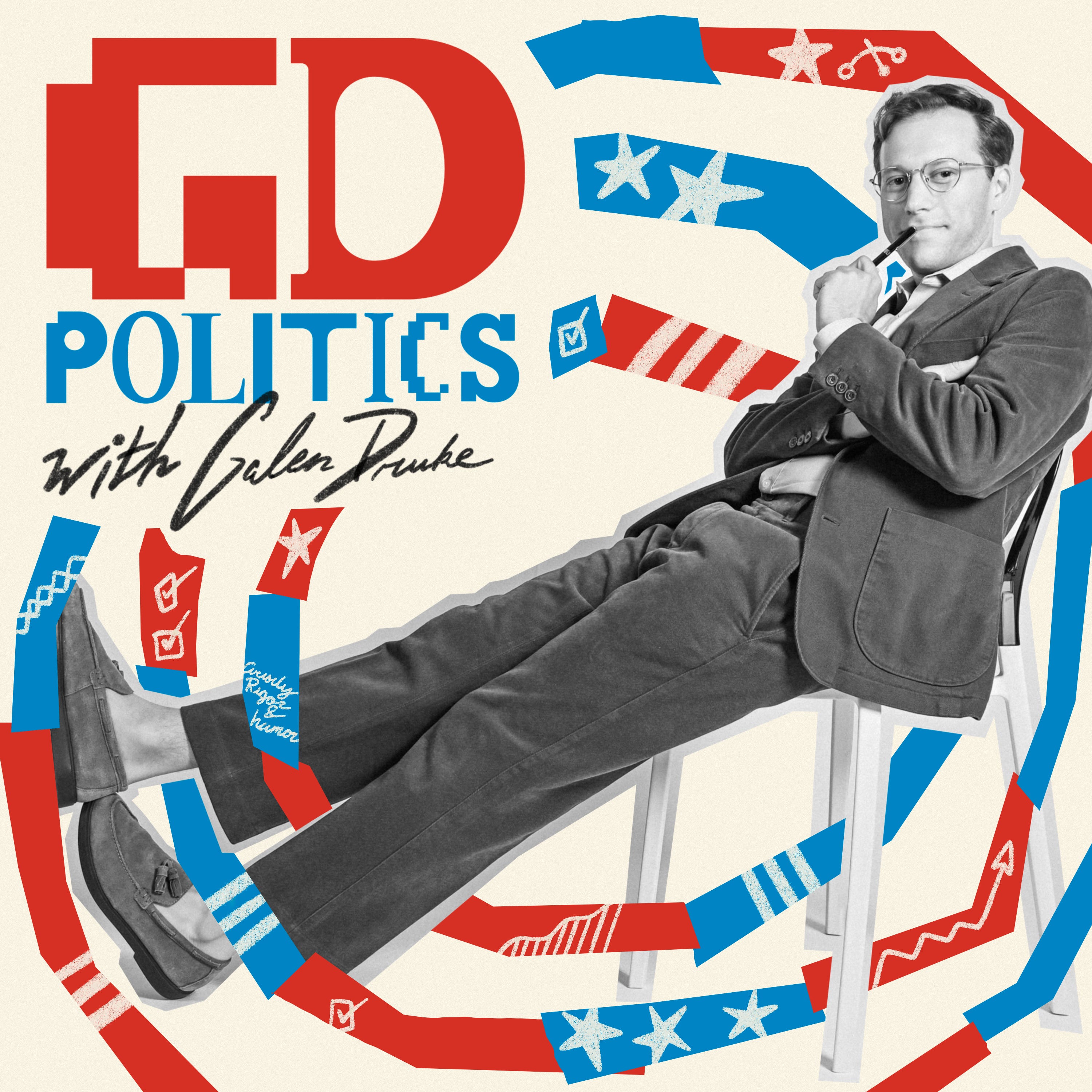
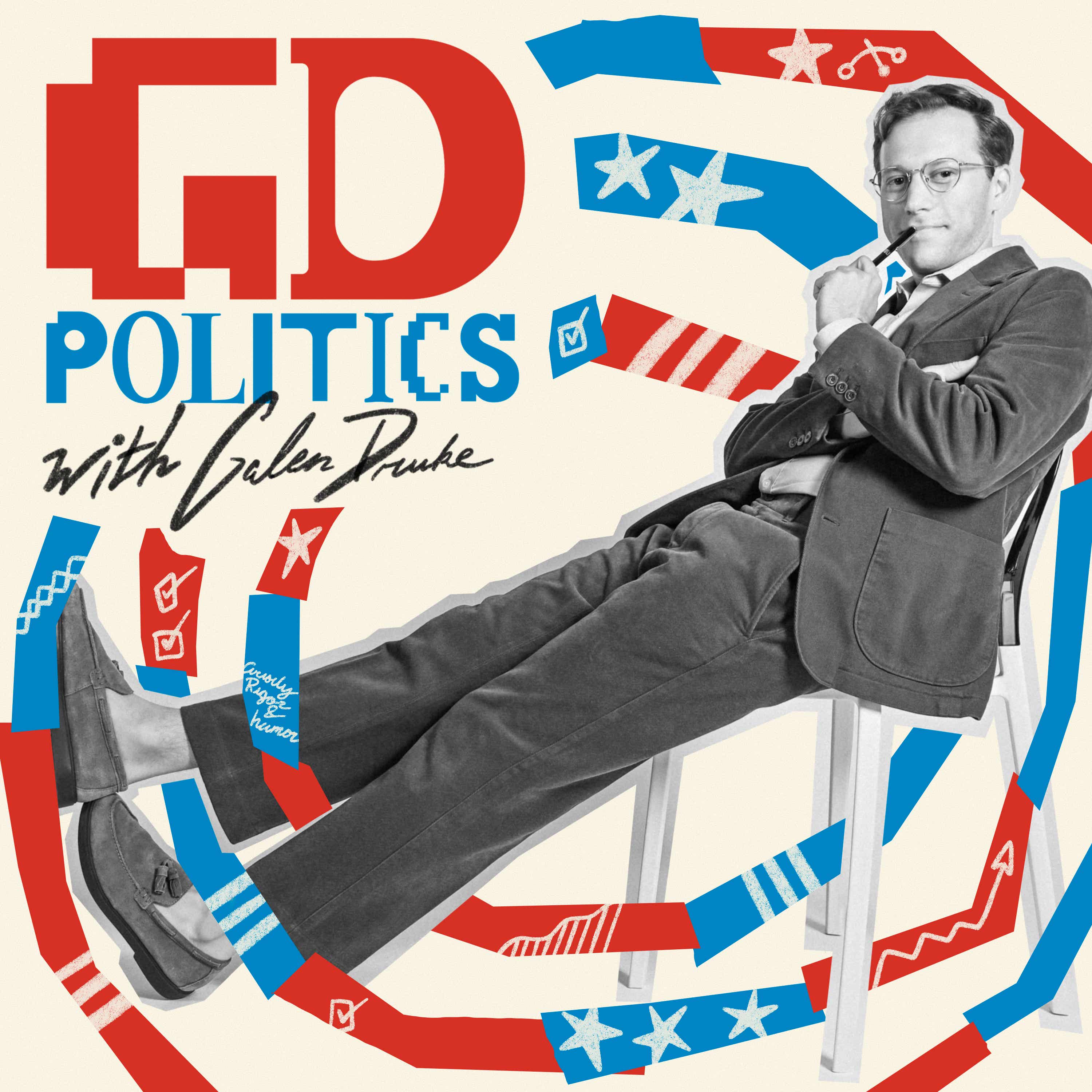

Two pollsters debate whether a national Democratic “wave” in 2026 will translate into Senate seats, focusing on polling error, uneven wave effects by region, and early voting signals.
Patrick Graffini, Republican pollster and co-founder of Echelon Insights; author of Party of the People about a multiracial populist GOP coalition. Lakshad Jain, co-founder of Split Ticket; leads polling at The Argument; released his final cycle poll this week.
Democrats likely win the House; Senate is closer. Graffini argues Democrats could win the Senate but may fall short in the Midwest due to historically worse polling misses in red/Midwest states. Jain expects Democrats around 52 Senate seats in the median case, citing Trump approval around -23 and generic ballot around D+9, plus candidate overperformance in key races.
Ohio as a coin flip; Texas as a likely Democratic pickup; Alaska as possible; Maine and Michigan as difficult for Republicans; Mississippi and deep South as highly inelastic (Mississippi Trump +22, South Carolina +18); North Carolina described as a likely Democratic Senate outcome due to early vote/black turnout.
Written by AI. May contain mistakes.
Discover the current political climate five days before the election and polling data.
“At the end of the day, you kind of, I think, have to choose a theory of the case for if the wave is going to break unevenly, right?”
Meet the guests and learn about their differing views on election outcomes.
“The generic ballot is sitting at around D plus nine, and forecasters give Democrats strong odds of taking the House.”
Explore Patrick's take on the election dynamics and potential outcomes.
“whether to trust the polls, and what it all means for the parties, that multiracial working class coalition that we all have been talking about so much.”
Understand Lakshad's optimistic outlook for Democrats and his reasoning.
“presidential election by more than 10 points since Doug Jones in Alabama in 2017.”
Delve into discussions on key battleground states and the reliability of polls.
“But I think the Senate is really the battleground.”
Gain insights into the final predictions and considerations for the upcoming election.
“You can make sure you're reaching the quote-unquote right number of Trump voters.”
Explore how electoral waves impact different states and the factors influencing outcomes.
“And I think certainly a lot of people on election Twitter have been, I would say, maybe a little bit too invested in this idea of, okay, well, you know, in this political environment, anything can happen.”

Get the gist, explore an idea or ask about something said.
 Claude
On GD POLITICS, what are the key points of this episode?
Searching your listeningAutomatic transcript. May contain errors.
0:00Hey there, listeners. Before we get started today, I wanted to give you a heads up about our election night plans. GD Politics is teaming up with Silver Bulletin, The Argument, and Slow Boring to bring you live coverage throughout the evening. I don't know, think of it as like the Nerd Super Bowl or something like that. We're going to have a live stream starting at 5.30 p.m. Eastern on November 3rd. We also plan to have a live blog, a bit of a throwback to those 5.38 days, which will be available to paid subscribers of GD Politics. So come and join me and my co-hosts, Nate Silver, Jerusalem Demsis, and Lakshad Jain, who you will actually hear on today's episode in just a couple minutes.
0:41Plus, we're going to have guests like Claire Malone and Lenny Brawner. I am very excited, personally. I think you should be, too. And then, of course, we will have a late-night pod at God knows what time on Wednesday morning, I assume, that will come out in the early hours of the morning for paid subscribers in the feed. That's the rundown. Those are the plans. But for today, here is our wonky pollster on pollster episode. At the end of the day, you kind of, I think, have to choose a theory of the case for if the wave is going to break unevenly, right? In which way will it break unevenly? And I think we have a pretty good indicator from the polls themselves.
1:30Hello, and welcome to the GDPolitics podcast. I'm Galen Druk. We're five days out from election day, and the national environment looks rough for Republicans. The generic ballot is sitting at around D plus nine, and forecasters give Democrats strong odds of taking the House. The Senate is a closer call, and that's where today's guests part ways, perhaps a little bit. Patrick Graffini is a Republican pollster and co-founder of Echelon Insights. He also wrote the book Party of the People inside the multiracial populist coalition remaking the GOP. His argument this fall goes something like this. You can read the environment right and still get the map wrong.
2:10He sees Senate control as a coin flip with Democrats potentially falling short in the Midwest. Lakshad Jain is the co-founder of Split Ticket and heads polling at the argument. His final poll of the cycle came back this week, and he says he's never seen the bottom fall out this badly for a party. We'll get into that. The arguments forecast puts the median outcome next Tuesday at Democrats winning 237 House seats and 52 Senate seats. So who's right or closer to the final answer? Today, we're going to dig into the state of the race, what the early vote is telling us, whether to trust the polls, and what it all means for the parties, that multiracial working class coalition that we all have been talking about so much.
2:55Patrick and Lakshad. Welcome back to the podcast, both of you. Thanks for having me. It's great to be here. I'm really excited about having you both on together. So let's start with my framing. Did I frame your base cases correctly? And more to the point, let me allow you to describe what your base case is for the 2026 election. Patrick, why don't you go first? I'll say what my base case isn't. I did an interview with Politico a little bit, and which they chose to frame as, you know, along the lines of the Republican pollster who thinks the Democratic wave will wash out. I don't think that that was their framing of it.
3:33And I think it's totally reasonable that Democrats could win the Senate if they do. James Tallarico in Texas is probably the 51st seat. Where I would differ a little bit from maybe the conventional wisdom is that we've seen election cycle after election cycle, polling misses specifically concentrated in the Midwest and in states where we happen to have some pretty competitive races. So look at Ohio, look at Iowa, potentially Michigan, although that starts out as much less likely for Republicans because it was just a very close state in the 24 election. But because we have a Senate battleground that is unusually slanted in the direction of red states where the median Senate state, you know, was carried by Trump by 12 points in 2024.
4:21You haven't seen a non-incumbent win in a state where the other party won the last presidential election by more than 10 points since Doug Jones in Alabama in 2017. And that was pretty extraordinary circumstances, you know, against Roy Moore. You saw it in 2018, but you saw it with incumbents. But before then, in a regularly scheduled election, we haven't seen it since 2012. I'll shamelessly steal from Sean Trendy. Democrats could very well have a good night, will have almost certainly have a good night. But how does that translate into actual seats? They also have to overcome a track record of polling error that has been worse in red states than in blue states and has been worse in Midwest states than it has been in other states.
5:07Democrats, 51 seats. I think that's totally reasonable. And I think it probably runs through Texas and it probably runs through the Sun Belt where polls have been a little bit more reliable. I think if there is a case for it not reaching 52, 53, 54, it's just that we see a recurrence of the polling error that we have historically seen in the Midwest. And we're going to get into a lot of what you've touched on there throughout the podcast. Lakshad, your base case and perhaps where it differs from Patrick's. My base case is that I do think Democrats win the Senate in the median case, people talk about like what the worst case outcome is for the Democratic Party.
5:47I think elections have a very, very wide range of what is and isn't possible, right? Like you could sit here and you could tell me the Democrats would be at 48 the day after the election. And I'd be like, oh, OK, like I've seen stuff like that before. What do I expect to happen? I expect Democrats to be at 52 after the election, just based on everything we're seeing with wide bounds of uncertainty. I would remind people that Trump's first term had him at negative 11 approval on the day of the election and Democrats won the House vote by about seven and a half, right? Polarization has risen since then and I would not expect that a negative 23 approval rating would result in like a negative 16 generic ballot.
6:31That's like crazy. But I do think that, you know, when Trump's approval is at minus 23 as it is in our polling and the aggregates, etc. Even accounting for extra polarization, plus nine in the national environment is not a stretch. And when it's plus nine, or maybe a little bit more, maybe a little bit less, you start getting into the place where that's like a double digit swing away from 24. So Patrick is right that in red states, polls do traditionally undershoot Republicans, and in blue states, they undershoot Democrats. What I've also noticed, though, is that, you know, if you take the baselines and you shift them, Ohio isn't really that red of a state right now, right?
7:12Just based on the way the nation behaves, you would expect Ohio to be like a flat, competitive, even state, right? Texas, when you account for the Hispanic states, are generic ballot and Texas is R plus one. And look, maybe you want to say there's some error there. Maybe you want to say like polls overshoot them. Okay. But now in Ohio and Texas, For example, the two seats Democrats probably need to win for a majority. You're going to be at, you know, maybe R plus three, R plus four generic ballot accounting for error. And every ounce of evidence we have suggests that both Sherrod Brown and James Tallarico usually run that far ahead of the generic ballot relative to their opponents.
7:51based on that it's why i think democrats would win the senate in the majority of cases i do think there's a clear way republicans could hold the senate and i would not be surprised if that was the case i would be shocked if the house went republican like i think that would be the single biggest shock that i have seen in years of making these forecasts i think that would be maybe the biggest upset in like modern electoral history if republicans were to somehow hold the house like i think that is gone. But I think the Senate is really the battleground. It seems like both of you are somewhat bullish for Democrats in Texas, but I'm curious where the other states come into play.
8:28Patrick, you said Texas is the 51st. I assume you'd say they're also holding Georgia, winning North Carolina. Where are the other states that they're picking up? I think Alaska is still a Democratic pickup at the moment. Even after all of that ballot stacking, investigative reporting that came out last night from the New York Times? We will see. I tend to discount that a little bit. I tend to discount these October surprises or these like last week, last minute narratives that come in. I would actually say the same thing for the Vivek, Ramaswamy ad, right? I think that if he loses in Ohio, which I think he very well could, there's many reasons to believe he's an electoral underperformer, he will have lost before that ad, right?
9:12Not because of that ad. Yeah, I interrupted you slightly, But I want to hear your sort of case for why Alaska and which other state you're targeting as a flip. Look, I think you have a case for Alaska. You know, she was ahead by eight points in the primary. That's not obviously that does shift. There has been a track record of that shifting right in the fall. I think that maybe the votes for other Dan Sullivan were at least partly Democrats who were, you know, not confused Republicans, but Democrats who are trying to get him into the top four, which would provide her with a little bit of extra cushion.
9:47So I also think that that's a unique state. It's a unique environment and it's a little bit higher variance than your typical state. So I would grant them potentially Alaska with the asterisk of a last week of media coverage, potentially. I'm assuming, frankly, that Republicans do not win Maine or Michigan just on the basis of they are close enough to the 2024 margin in Maine being, you know, a highest plus seven state. You know, we obviously remember the 2020 polling miss. If there has been a bright spot for Republicans, it's been, you know, Susan Collins remaining competitive and, you know, potentially still having the opportunity to overshoot her polls.
10:28But I think we do over-index on the thing that happened last time happening again, right? And I just think that this being a terrible environment for Republicans in a way that 2020, you know, didn't turn out to be at the end of the day means that I think she's probably a little bit behind. So that's my math, but I could be wrong in either case. And if you have a miss in either Michigan or Maine, then I think you're back to 50-50 and you're back to potentially Ohio. I would agree with Locke's basic analysis of Ohio. I think that, though, that takes us to it being a coin flip. Republicans should be up by about two or three on the generic ballot in a state like Ohio in the current environment.
11:13You know, maybe Brown outperforms that somewhat. People have talked about John Husted not being, you know, despite his apparent physical prowess, right, being a candidate who, you know, isn't less than lighting the world on fire, but nor is he a candidate who should be a dramatic underperformer like Ken Paxton. So I think like all those factors to me make Ohio a coin flip as opposed to maybe the three or four point race that, you know, a lot of polling has been showing. You know, in states like Maine, the reason that I would probably have actually disagreed with Patrick and said that I'm a little bit, I think base case Democrats probably take it by a point.
11:57But like, that would be the state that surprises me with an upset the least. Maine and Alaska both are really difficult to pull. The more crossover appeal becomes a thing, the harder a race generally gets to pull. Because then it's not just about do you have the right amount of Harris or Trump voters? Do you have the right amount of Republicans or Democrats? It's about the type of Republicans or Democrats you're sampling, right? So in Maine, for example, if you struggle to reach some of those ticket splitters, which generally tend to be lower education and, you know, less urban, despite what election Twitter likes to say, right?
12:32Like ticket splitting usually goes up as propensity goes down. Because of that, like, I just wouldn't be surprised if Susan Collins pulled it off. Like, our forecast will tell you Jackson should win. But our forecast will also tell you that Jackson is less likely to win on our analysis than Tallarico or Brown or El Saeed. It's just because of historically how difficult it has been to pull Maine and consistently has missed in the Republican direction, unlike in Texas. Yeah, we talked about this a little bit the last time you were on Laksha, which is you You can make sure you're reaching the quote-unquote right number of Trump voters.
13:08But if you're reaching too many Trump voters who are defecting to Democrats and not enough Trump voters who are staying with the Republican candidate, then your poll can end up being off. Even if you wait to pass the vote, use some of these more heavy-handed tools, you could say, to try to ensure that you're getting enough Republican support. I will get into sort of whether or not we trust the polls and the different mechanics behind the polls that we're seeing right now. It sounds like the difference between your 51 and 52 base case scenarios is Ohio. We haven't touched on Iowa, Kansas, South Carolina, some of these states that Nebraska that are getting a little more attention down the final stretch.
13:56Patrick, as somebody who's probably more skeptical of the bullish scenario for Democrats, what do you make of the attention to those states in the final stretch, even Mississippi? It's very easy to get caught up in a wave and once everyone's sort of pointing in the direction of a wave, well, we have uncertainty on either side and a wave could turn into a tsunami or it could turn into less of a wave on either side. And I think certainly a lot of people on election Twitter have been, I would say, maybe a little bit too invested in this idea of, okay, well, you know, in this political environment, anything can happen.
14:32And I would just point to, you know, a state like, I mean, if we're even talking a state like Mississippi, right? Because I posted something yesterday that it's like, well, actually, black turnout does look good, right? And I think, you know, to the point where obviously the North Carolina race is gone for Republicans in the Senate, you know, I think they are strong underdogs in both competitive North Carolina races because of the, you know, what seems to be high black turnout, good Democratic turnout in the early vote. But there's a difference between a state like that, which is close at the presidential level, a state like Georgia, which is close at the presidential level.
15:08And then you go into the deep South where voting has been inelastic, to say the least. People don't ticket split much. They don't change much. and a state like Mississippi, it's the most racially polarized state in the union. The best case we've ever seen in modern history for something like that to happen would have been the Barack Obama era. I think Obama, I think, in 2008 came within eight points of carrying Mississippi in a historic wave where he won the popular vote by almost eight points and where you saw historically high black voter turnout and support for Democratic candidates. in these more Republican, Southern-leaning states.
15:47I think they have more of a shot. Like, look, I think if they win in some of these states, I think you would really point to candidate quality, environment, and turnout. But even then, right, even if all of those things are going for them, I just think when you get into the Trump plus 20 states, I think that turns into a little bit of wish casting, you know, in terms of, yes, All of these things can go against you, and you can still win being on the wrong side of all those things because it's just too big of a hill to climb. I get that those inelastic states in the Deep South. Mississippi voted for Trump by 22 points.
16:27South Carolina voted for Trump by 18 points, I believe. What about Kansas, Nebraska, Iowa? I mean, Iowa, it's a very white state, but it's not as religious as white voters in the Deep South. And we have seen big swings in Iowa over the past decade, which would suggest that there's still some elasticity there. Yeah, sure, there's some. And I think Democrats have an excellent, obviously, an excellent chance of winning the governor's. It's probably very strongly favored to win the governor's race. But of course, you know, of course, polarization and gubernatorial elections is a lot less than federal races.
17:02But what I would say about Iowa, right, in both Nebraska and Iowa, is that like both both very red states. Obviously, Dan Osborne is an independent, can overperform, but both have relatively strong Republican candidates. So the Republicans do not have a candidate quality issue like they had even in Nebraska in 2024, where, again, you have many polls showing Dan Osborne ahead and, you know, Deb Fisher wins by six points. You know, I was just in Iowa. You have some family ties to Iowa. So you are seeing, you know, Ashley Hinson, she is actually doing these direct to camera spots, which you don't normally see because she is a former newscaster.
17:41Right. She has a pretty compelling public presence, even responding to some of these Democratic attacks. having followed Lakshas work on wins above replacement pretty religiously. I just don't think they will have that kind of a problem in the same way that what they would potentially have in Ohio, right, with candidate quality differential in either state. Now, Kansas is a little bit different. I was going to say, I noticed that you didn't mention Kansas because Roger Marshall might have a there might be a differential there. Yeah, there's that sits further to the right. And, you know, you have a combination of a good Democratic candidate and a weaker Republican candidate.
18:19I just think that puts Kansas and Iowa on level footing in terms of being maybe one to two, three point Republican wins, where you have the combination of Kansas went for Trump by 16, Iowa went for Trump by 13. but you have a candidate quality differential in Kansas that you don't have in, you know, either, let's just say Iowa specifically. Lakshya, what do you think about what you're hearing? The chief thing I would say is that waves don't wash evenly. That's the end of today's preview. Head to gdpolitics.com to become a paid subscriber and catch the full episode. It was one of our longer and wonkier podcasts.
18:58Lakshya, Patrick, and I talked for over an hour and really got into what's at stake in the data that we're seeing. We talked about why electoral waves hit different states differently, what early voting can tell us. We talked about the Republican Multiracial Working Class Coalition that Patrick has written about and whether 2026 is a test of that theory. We talked about writing that Lakshya has done on religion as a political dividing line and why it's oftentimes overlooked but ultimately so important. and we talked about where the conventional wisdom could be wrong and why polls keep struggling with rural Republican voters.
19:35Like I said, head over to gdpolitics.com to catch the whole thing for$8 a month or$80 a year. You'll get twice the number of episodes and we'll help ensure we can keep making this independent podcast. Plus, you won't miss a thing in the run-up to the midterms. Again, that's gdpolitics.com. Hope to see you there.
Are you excited for Election Day? Well, get even more excited, because GD POLITICS is teaming up with Silver Bulletin and The Argument to bring you live election night coverage starting at 5:30 p.m. ET. There will be numbers, maps and probably an upset or two. Mark your calendars and join at gdpolitics.com!
The full episode is available to paid subscribers. Once you become a paid subscriber, you can connect your account to your preferred podcast player here.
We’re five days out, and the national environment looks rough for Republicans. The generic ballot sits at around D+9, and forecasters broadly agree that Democrats will take the House. The Senate is where the real argument lives, so that’s what I wanted to dig into on today’s episode with two pollsters who read the same data a little differently.
Patrick Ruffini, a Republican pollster and co-founder of Echelon Insights, sees the race for the Senate as a coin flip, with Texas as the potentially decisive pickup. His caution comes from the map and the track record: The median Senate battleground voted for Trump by about 12 points, and polling misses have clustered in red states and the Midwest, including Ohio and Iowa.
Lakshya Jain of Split Ticket and The Argument puts the median outcome at Democrats winning 52 Senate seats. His case: In a D+9 environment, Ohio plays like an even state, and Sherrod Brown and James Talarico tend to run ahead of the generic ballot.
Both expect Democrats’ biggest gains to come among Hispanic and Black voters, which favors the Sun Belt over the Midwest and prairie states. But both are skeptical of the late buzz about Mississippi and South Carolina.
We also get into what the early vote can actually tell us and whether this election is a test of the GOP’s multiracial working-class coalition. Patrick, who wrote the book on it, says a 70–30 Democratic split among Hispanic voters would put his thesis in trouble. And we talk about why religion may be an underrated dividing line in American politics.
Plus, each names a race where the consensus is most wrong, and we take a listener question on why rural voters are still so hard to poll.