
In short
Podcast Summary: Generative Now | Episode with Anu Atluru
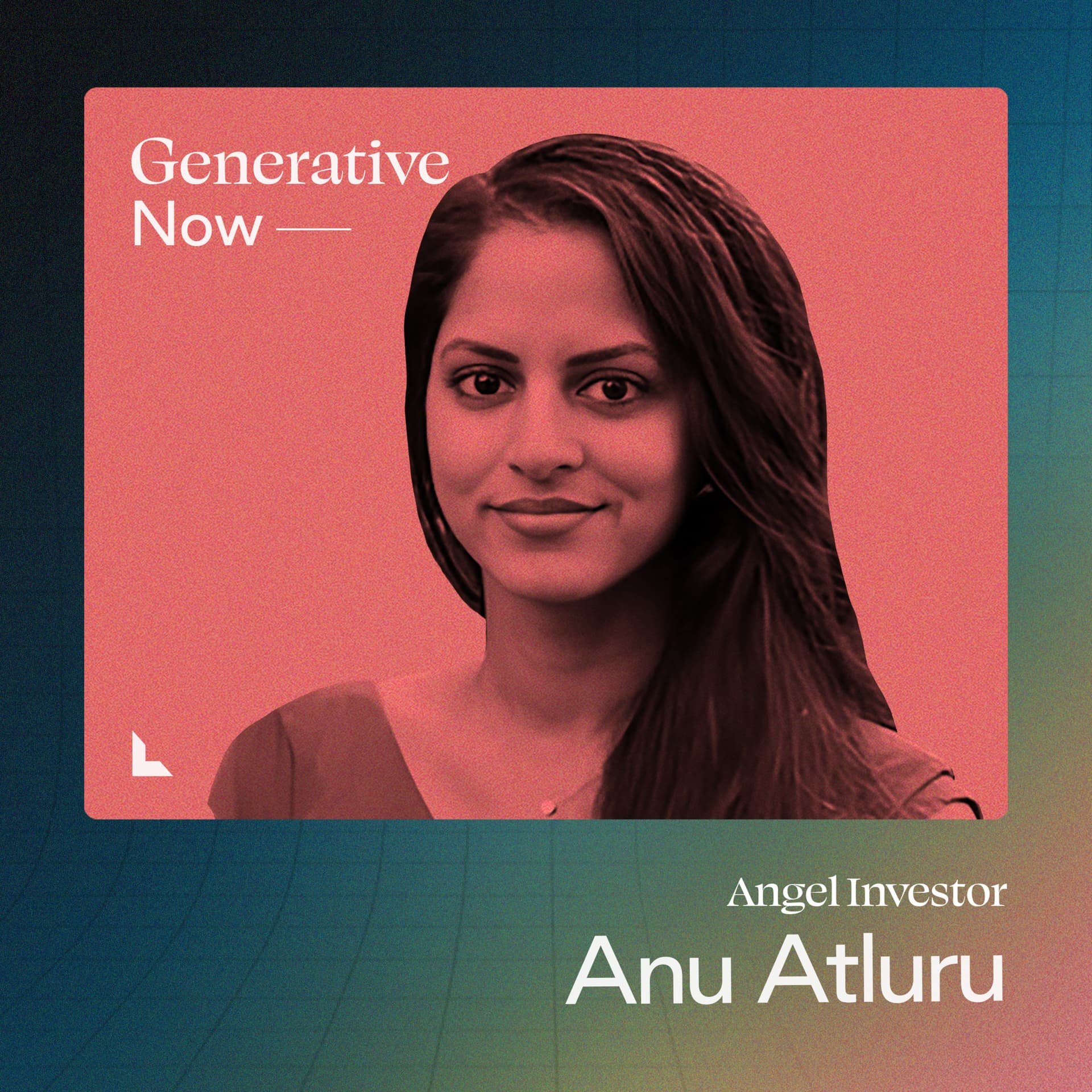
Podcast Title: Generative Now Episode Title: Anu Atluru: Will AI Change How We Use Social Utilities? Host: Michael Mignano Guest: Anu Atluru
Episode Overview In this episode, Michael Mignano speaks with Anu Atluru, a startup founder and operator who co-runs Slang, a product studio focused on social consumer products. They discuss the evolving landscape of social utilities compared to social networks, the impact of AI on healthcare, and the future of software creation.
Key Topics Discussed
- Social Utilities vs. Social Networks
- Definitions:
- Social Networks: Platforms requiring a pre-established network of friends for engagement.
- Social Utilities: Tools designed for social interaction without needing a built network.
- Example: Partiful as a social utility that allows users to create event invitations without needing to build a friend network.
- Importance: Anu emphasizes the need for products that serve as utilities first before potentially evolving into networks.
- Trends in Subscription Services and Consumer Behavior
- Discussion on how consumer behavior is shifting towards subscription models.
- Challenges in subscription fatigue, where users are overwhelmed by multiple subscriptions.
- Anu shares her approach of committing to yearly subscriptions only for high-value products.
- AI's Role in Social Utilities
- AI's potential to enhance user experience and provide better insights into consumer behaviors.
- Current limitations of AI in social utilities, with a focus on how it can assist but not dominate the interaction.
- The Future of Software Creation
- Anu predicts an increase in non-professional software creators, leading to a rise in localized and personalized software solutions.
- Emphasis on the importance of ecosystems that support software creation and distribution, potentially leading to a new marketplace for small, personal applications.
- AI in Medicine and Healthcare
- Anu discusses her medical background and insights into how AI can improve understanding and diagnosis of diseases.
- Predictions of a shift in healthcare roles, where knowledge work becomes more automated and therefore more procedural.
- Speculation on the future of AI doctors and the potential for AI to handle a significant portion of healthcare interactions.
Lightning Round Highlights
- Recent App Installed: Nikita's app for social utilities.
- Annual Subscription: Copilot, a financial management tool.
- Favorite Substack Writer: Astral Codex, known for insightful commentary.
- Current Favorite Series: "Severance".
Key Takeaways
- The distinction between social utilities and social networks is critical in understanding current and future product development.
- AI presents both opportunities and challenges in various fields, particularly in healthcare and social product development.
- The future of software creation is likely to see a democratization where more individuals can contribute, leading to a diverse array of personalized solutions.
- A cultural shift in healthcare may lead to broader acceptance of AI-driven interactions, particularly for routine or non-critical health inquiries.
Conclusion The conversation with Anu Atluru provides valuable insights into the intersection of AI and social utilities, the evolving dynamics of consumer behavior, and the future landscape of software development and healthcare. The episode encourages a forward-looking perspective on how technology can reshape our interactions and engagements in various sectors.
---
For further engagement, follow Lightspeed on [X](https://twitter.com/lightspeedvp), [LinkedIn](https://www.linkedin.com/company/lightspeed-venture-partners/), and [Instagram](https://www.instagram.com/lightspeedventurepartners/) or subscribe to Generative Now on your favorite podcast platform.
Written by AI. May contain mistakes. Listen to the episode to check what was said.
Transcript
Automatic transcript. May contain errors.0:05Hey, everyone, and welcome to Generative Now. I am Michael Magnano and I am a partner at Lightspeed The social product landscape feels both saturated as well as ripe for disruption. My guest today believes the way we think of social products is evolving, along with the style of company that can build these products. Anu Adluru is a startup founder, operator, angel investor, and many of you may know her as a writer on Substack. She was formerly the head of community at Clubhouse and currently co-runs Slang, a product studio that focuses on building social consumer products. She's also a doctor, an MD, a physician who founded a startup around women's health during her time in med school.
0:45Anu and I talk about building social utilities with slang, roadblocks to subscription services, and the role of taste in this current wave of generative AI. Hey, how's it going? Good. We meet again in the recording booth. I know. Glad we could finally do this. I kind of feel like at this point, if you're on a Zoom, you should assume that it's recorded. Yeah, I agree. Unless you say otherwise. It's almost like default recording. I will tell you if we're not recording, this is like off the record Zoom. Yeah, I think that's fair. And I think you're right. I think I probably feel the same way that all Zooms are being recorded.
1:22I guess where it will get tricky is Granola is working on an iPhone app and lots of other companies are doing this as well. And so, you know, we're going to start getting into real world situations where people are recording and they're not disclosing. And I wonder at what point in the future you and I will have this conversation again. And you say to me, I assume all IRL conversations are also being recorded. Once I get my friend pendant in the mail. Yes. Yeah, I'm waiting for mine as well. I'm waiting for my friend and oh, Limitless. So, you know, there's this app Wave. I don't think so. So Wave is an app by this guy, Josh, who ran Uber in New York City for many years.
2:08And I guess the story is over the past year or two, I don't know how long, he like taught himself how to code, I think using AI and just built this note taking app on his phone. It's got I think it's got like 10 million ARR. It's fully bootstrapped. One person, 10 million ARR. It's like granola, but it's just on the phone. really impressive story and really impressive guy. But I've heard that people are just quietly using this app in person meetings and not telling people. That's not to criticize that behavior. I'm more just saying, I think the line is going to increasingly get blurrier. I think so.
2:46It's like, oh, in this state, you're not allowed to. It's like one party consent, two party consent, like all those things that will get cited on Twitter in arguments back and forth. So you're doing you're doing slang. that's like that's your studio right yep you're building just social apps right now i have kind of always and still call them social utilities okay which i kind of juxtapose to you know social media which is really not social per se it is just broadcast media then there is you know social networks which are truly about like i need to have friends and they need to follow people and that actually is a constraint on what i'm able to see or use in the product and then i think social utility is the way I kind of more technically define it is it is a product that you can use with people, i.e.
3:33socially, but you don't need to already have built a graph on that product. So I think one of the best current examples is partyful in the sense that it is explicitly not a landing page you're creating for a party and sharing it out to people. It is an invite that you're creating to have some engagement around. So RSVPs, comments, and then a follow through on that action. So it is social in that way. It's not like a single player utility, effectively. But you don't really need to have a graph on that product before it is useful to you. So I don't need to first add friends and build out a network before I can start using this product, which is what most social apps, as we think of them, are like.
4:19It's like a utility or a tool for existing networks. Obviously, over time, all tools can become networks if they choose to be, which I think Partiful could do that now. They have a lot of back-end data that will allow them to construct the network graph, even if they're not asking you to explicitly do it by adding friends. They're doing it through sending out these invites, getting people to RSVP. and then over time they start showing you hey these are your mutuals based on events that you have attended together and they can kind of build out the whole graph they can start suggesting events for you to attend and so it kind of like takes on normal social network life in some more mature stage but i think the utility aspect of it is a more interesting place to start when we're in the world of like saturated social media or social networks.
5:17That example sounds exactly like the old sort of adage of come for the tool, stay for the network. You do some tool that takes over your network. I think it's on the spectrum. It's like in the middle. So there's like single player tool utility on this left side. Then there's social utility and then there's social network. So the single player tool could just be where there's no engagement actually with the product it does not need people to engage with it to work it's just i'm creating a party page and i'm like posting it on twitter yes and anybody can kind of look at it so i would consider that more strictly a tool whereas kind of the happy medium of it is a social utility there's nuances of course but even like a product like Lockit, I would call a social utility.
6:05You can call it a social network now, but by that I mean like to start using Lockit, I only need one friend that I already have. And I just say, hey, want to use this tool with me socially, but I don't need to actually build new connections in order for this product to be useful. I don't need to construct a graph on this product to be useful. I think like Saturn was another one that was kind of like this. I think they're more in schools so it is a different use case it's like a social calendar right for schools right right it's a different use case but it's like i'm putting a tool in a multiplayer context where that network already exists effectively right so you know these are all nuances you can think about the spectrum of things but at least i think when it comes to trying to build things it's helpful to have constraints on what you're actually focusing on i like that you probably in terms of if you want to create value maybe you're a venture-backed company like you probably want to keep sliding closer and closer to network network i think i think is clearly the most value valuable for sure it's always contextualized with where's the wedge in the context today yeah not overall where's the most enterprise value long term which i think we largely at least in a web 2 mobile model have consensus on but yeah where is the wedge i think keeps changing.
7:27I don't think it is in trying to speed run a social network from day one today, which we have seen happen or attempted and not necessarily stick, even though there can be very compelling short-term aspects of them. When you pick that wedge, I think to your point, assuming you want to be able to move from wherever that wedge is, you got to make choices that don't block your ability to move. And you have to make choices. I think without naming names, or maybe we'll get into naming names, but you can get into the phase where you are successful in, you know, either on the center of the spectrum or the middle end of the spectrum and you never really make the shift over here.
8:07And in that process of delaying those decisions or just not really knowing what decision to make, I think you can lose some of that momentum and not actually be able to get there if you'd make that decision a year later. So it's very, unfortunately or fortunately, with social that's aspiring to go to this direction, I do think it is very time centric in a way. And I think at the one year time frame, you really have to be thinking about what is your second act, because there's kind of like a limit to how long the magic moment is, depending on how big the surface area of what you're doing is. Yeah, I think that magic moment goes away.
8:42I also think the fewer of these formats you can own, the more likely you can be copied. Yeah. Right. If you're Snap and you just have disappearing photos, like you can somebody's gonna steal that really quickly if you have disappearing photos stories whatever else and they're all connected yeah you can't rely on like one simple format yeah there are a couple that you could argue are having you know some success right now blue sky comes to mind um maybe that whole class of x twitter clones i think blue sky is the only one you know out of those. I can't think of any others that have really lasted.
9:23I know there's this new movement. I don't even remember what it's called, Free Our Feeds or something. I thought it was like a separate conglomerate that is wanting to build on top of the same protocol that Blue Sky is using. It's almost like a social movement, not just like a product that has already come out. And I think there might be a lot of maybe celebrities or other folks involved in it. I think that's tough. This notion of sort of like this decentralized graph, it's a noble mission, but I don't know that enough users actually care about it to be able to port some real measure of density or value in the protocol, in the distributed graph, such that there will be true differentiation and thus for value in that thing.
10:09So I hate to say it, but I think centralized is like, it just always wins. Even if we don't want that. And in many ways, I don't want that either. There's just such an advantage to having a centralized end-to-end platform. I feel like the biggest pitch these days for decentralized is something around privacy or security on the consumer side, primarily, and on the creator side, ownership. Independence ownership. Independence ownership. And so I think we've seen over periods of time that the consumer desire for privacy or security may not be as strong as we would like it to be or think it is. So I think on the consumer side, that's at least my opinion for now.
10:53I think on the creator side, you know, even with TikTok right now going through the potential ban cycles and all of that, there is a better argument for creators that they should want ownership or they should want a more decentralized structure that is not kind of prey to the whims of the centralized platforms. However, I do think it is a still hard sell. And here's the problem. The long tail of users will probably always trade convenience for privacy, right? Or, you know, lack of friction, convenience. And for the creators who actually really, really do care about ownership, right? Not the privacy thing.
11:33They want to reach the consumers. Where they get the distribution is on the platforms that do jeopardize their ownership. You have this catch-22, and I sort of just feel like the two things are not compatible. You know, Substack's making that same argument right now. And especially with the TikTok ban kind of looming, like this is the safe haven where it is. It's not decentralized, but the argument is there is ownership, direct ownership in the form of a failsafe of an email list, effectively. You wrote about this. Isn't this one of your recent pieces? Yeah, a couple of months ago. It's a little bit like, you know, feeling it from the inside where Substack is going.
12:13But I think with the TikTok stuff recently, it's become even more loud. Because obviously, whenever a platform implodes, like you want to acquire as many of those. Well, I don't know whether you should want to, but in general, you want to acquire as many of those users as you can, which I think happened to Blue Sky, you know, when there was the whole, the Twitter piece with Elon. So the sub stack point is really interesting. And I think once again, it highlights attention. The tension is this is a safe space for creators to create to own the cost of that to the user is payment, right? Direct payment to creators.
12:52And I think once again, similar to the privacy thing we were just talking about, the revealed preferences of creators are actually that they don't mind ads, is that they're actually okay with ads. As much as we all say, myself included, that I hate ads, they fund probably 90 % of the things I do on the internet, you too. It's kind of perverse because I don't mind ads in a way, but in an ad-based world, I want to choose the products that I care about the most and pay to go ad-free. So I guess I'm a power user. There's the non-power users that will just accept ads and prefer it to paying. but every product that i'm a power user of i want to unlock ad free you know whether it's twitter less ads or whether it's i mean it's not quite the same but sub stack effectively by paying for things or youtube premium which i love it's probably like my favorite product um and so i think that actually people don't want to pay but if you give them the option to pay to remove ads i think that actually works quite well yeah i agree with that and i think youtube premium has like tens of millions of paid.
14:04It's great. I mean, I'm sure they're getting close to 100 at this point. So obviously there is scale in that direction, but only for a very small number of products. Yeah, I mean, Spotify is another great example. Hundreds of millions of paid subscribers. You can get all the same music for free, but you got to listen to ads. I'll say something blasphemous. I am not a paid Spotify user. Tell us about this experience. I've never experienced Spotify free. This is the other blasphemous thing to say. I am not a habitual music listener. YouTube premium or podcasts or interviews or kind of more that genre is my choice of background content.
14:44I've also kind of been on this wave where I don't want to subscribe to a lot of things that I don't use a lot. You know, it's like the typical subscription fatigue thing. And I'm kind of trying to push myself, especially like away from monthly subscriptions. Like, I want to go binary. Like, am I not subscribed? Or am I almost like the highest tier of subscribed to that thing? Because I get so much value out of that thing that I should actually pay the marginal extra amount to get the best experience on that thing. And Spotify does not make that binary cut for me, at least yet. But the exception, I will say, is that I have started using it a lot more since video podcasts have become bigger on Spotify.
15:32And that is the thing that I think could push me in the direction of becoming a paid premium subscriber as a non-heavy music consumer. I'd like this rule that you have for yourself with subscriptions, sort of being all in or out completely. I do think it's a slippery slope right now. It's very easy to just add one more monthly subscription. Every couple of months, I go through all of them. I'm like, holy shit, I can't believe I subscribed to this. So I like this all or nothing, like I'm committing to a year. And if I can't commit to a year, I'm out. I've been doing that with my like sub stack subscriptions as well.
16:10Oh, do you do the, so you do the yearly? Because they most don't meet the yearly bar. Yeah, they don't. These are the ones where I'm like, I'm looking forward to getting. People have been doing more interesting things too. I think I'm starting to see more like lifetime subscriptions or pay once. Do they have that? Substack? Not on Substack, but people who do it elsewhere, they have like a custom site or new products. They're starting to offer lifetime or pay once or pay what you want. Like, obviously, these are, I think, more palatable for early users than they would be for at some big scale. But I think they're kind of nods to the idea that people are just psychologically pretty resistant to the like umpteenth monthly subscription for something right now.
16:55And that is like another way of saying, hey, if you think you're going to get use out of this, just like let me capture your lifetime value right now. I mean, at least on the creator side and on the user side, it's probably going to be much cheaper in some capacity if you're actually going to be using it. And you don't have to think about the fact that it is recurring, which is like a big value. Let's go back to slang, building social utilities, and then also the blurring of the line, recording conversations, whether it's on Zoom or in real life. That, to me, when I think about that, that notion, that feels like almost a new battleground or sort of surface to build in.
17:31When you think about building social utilities in 2025, what are the new battlegrounds or services you're thinking about utilizing or building in? And maybe some of these things have to do with AI. Just to throw out one example of what I'm talking about, yesterday, I don't know when this episode will go out, but yesterday Nikita launches this new thing that takes advantage of AppClips. Again, that's another battleground surface area that, you know, maybe it was underutilized. So when you're thinking about building social utilities right now. That is a good example. Nikita's app is a good example, actually.
18:08And I, you know, I will get around to it, but I haven't looked into what are all the under the hood kind of, you know, things that he did to make his activation funnel as pretty as it is. with the current state of, you know, Apple's friend finder contacts, all of that stuff that's gotten a little harder. And I don't know how much AI is involved there versus just like, you know, smart growth hacking within a new context that he's doing. I don't think it is at all. Okay. Yeah. Yeah. So in that case, I would say, like, with the assumption that it is not very AI based, I would just call that strictly a social utility, which suggests that, I think it's even listed in the utilities category, you know, whether it's strategic or not.
18:54I would say there is still a lot of room for things that are not AI front and center or even AI that heavy, to be honest. And probably most of the things that I've been working on, it's not the sexy answer, but like aren't very AI based. I think AI is more useful for the strict utility side of the spectrum, which is like basically what Granola is. and a lot of other AI, like even chat GPT in the current instantiation is a strict utility. It's obviously not about social, but just a utility. It's like getting leverage on your time. Yeah, it's like giving you leverage in some way, like helping me do something that I wouldn't otherwise be able to do or do it better than I otherwise would able to do.
19:38And on the other end, you know, integrating something like AI profiles and that sort of thing into meta or like there was that one product social AI. There's AI kind of in that sense, but I'm still much more of the opinion that AI is going to run in the background for most things, even if it's like a social network or a media network, or there's going to be the attempts that they reel in your face like, okay, your limitless pendant or the friend necklace or, you know, a replica or character or any of these other kind of really, this is a AI centric product. And so with social utilities, I guess, more specifically, I don't think it is that much about AI unless the AI is actually helping you in the background.
20:30Yeah, that's probably not where the world currently is most excited. But I think there's still a lot that can be created that isn't really based on AI, but is assisted by AI. And more so than that, I think like just people building startups or products now is just, like you said, you have way more leverage because of AI. So it's not just what you're building that's going to be different in the world of AI. Of course, it's how you're building it, how much it costs to build it, like, you know, how many people you have on your team, like whether you take venture funding or not. I think a lot of those things are where I think the AI conversation comes in for a lot of categories.
21:07not just like in the product you're actually putting out. Yeah, even taking something like Grok, which is so deeply embedded into X right now, thinking about all the ways it is, they all do actually kind of check the box of leverage, right? They're helping you summarize things. They're helping you rewrite your posts in a way that is better by some measure. They're helping you search, right? And so, yeah, it's all just additional leverage. My favorite non-leverage thing about Grok, for example, is the idea or capability to help new like creative memes. So there are these things going around for a while, which is like, oh, I asked ChatGPT to like illustrate what it thinks my workplace looks like based on everything I've talked to it about.
21:54And some people were doing that with Grok, like draw a picture of me based on my tweets. and it's like becomes a self-propagating creative hook for people can natively come up with these little prompts illustrate that prompt and then turn it into like a self-propagating meme and so that's probably the most non-leverage more content or creative thing that i have seen with the integration of grok and how it actually manifests like in the mainstream twitter feed not just like when you go to the side and you ask it a question. Have you seen status? I feel like there's 10 products named status. Yeah.
22:32So this is another one somewhat along the lines of this social AI thing you mentioned. It's like a Twitter feed in a sense, but it's a game. It's not real. I think that's a really interesting concept. The challenge I had with social AI was that there's like no stakes. These are all fake people, fake accounts interacting with you. and the problem with real Twitter or real X or real TikTok is the stakes are too high, right? So if you take this sort of like fake, fictionalized world or scenario and you make it more like social AI, but you actually like get points and earn things by doing certain things, that, I don't know, that's a fun concept to me.
23:14And that seems like a fun use of AI. It's basically just, you know, there's real life, which is a game but it's a much more exposing game you know real stakes but it's like it's still a game we're all playing games in real life at least that's that's kind of how i think about it and then there's a game that you call a game which is what i think status to some extent is being like it's kind of at least to my understanding kind of trying on different like personas and trying to win with those personas whether it's that or some other kind of game you know more traditionally how we think of as games games are they always have been and they perennially will be an interesting category um and a lucrative category yeah i think it's one of the best categories to be building in now actually even though there's this conversation about abundance i think the way i think about games versus other types of products is there's like strictly competitive and there is not strictly competitive, like strictly competitive products.
24:18I will only use one of them. And if I'm using one, I therefore won't be using another. And so it's somewhat zero sum in that way. Whereas, you know, non-strictly competitive or more positive sum, I think like all content type things fall into that bucket. The more it's like content, the more it goes in that direction. So if I watched a great film, I would like to watch another film that's similar, probably. You know, obviously there's in the long arc of things, time is like a limiter. But I think, you know, if we just kind of let that kind of constraint go for a second. And if I like a game, I'm probably willing to play another video game, you know.
24:55So even though there is abundance, and obviously there's still quality and taste and all of these, you know, great filter related words that will come into play. um i think it's still a really good place to be placing bets right now if you have some conviction and you actually have some sense of quality same for podcasting you know same for even producing more high quality or more scripted type shows which i think a lot of podcasters are actually going to move towards i think games or things that are like games uh are very appealing still and they will be. The tough thing about games, especially, well, more so in the traditional sense, is they're really expensive and they take a long time to build.
25:40Less now. Less now. Still hard. Still hard, depending on how sophisticated and how big you want the ecosystem to be. You said the T word, taste. I should not have said the T. I feel like, I feel, I feel both. I know what you're going to say. All right. Sorry, say it. I mean, it's yeah, I think it is both intriguing that this has, you know, kind of taken over the discourse or took over the discourse and then will not die. But it has now taken on somewhat of a pejorative connotation, unfortunately, as a topic. So I don't quite know what to make of all of that. But I still do actually have conviction in the underlying concept.
26:26so i think the concept makes 100 sense and i think the point of of your piece for for those who don't know what we're talking about taste is eating silicon valley i think it makes sense i think it's going to become even more true especially as the barrier falls to make stuff games whatever else um the problem is as you quickly saw is like now everyone wants to co-op taste and say that they have taste and say the taste is the thing. Now we have too much taste or too much of what people are defining as taste. I don't think it validates your point. I think it's just the word itself is being bastardized.
27:07It's almost like taste is meant to be a word that is scarce as a marker of the scarcity of taste. And the minute you start talking more about it, it invalidates the scarcity of it. And it makes the conversation around taste much more, you know, pedestrian. It's been funny to watch all the threads, all the threads about taste. Threads, essays, podcasts, signals, counter signals. I've been thinking about every time I see that, I'm like thinking, I'm like, oh, I wonder what Anu thinks about this right now. Yeah, I also do feel, frankly, I'm, you know, it's just a part of the whole sphere. I feel like I've lost the ability to comment on some of these because it's almost like a, in some way, commenting on something that you have introduced into the discourse is like, it cannot help but seem self-serving and subjective.
28:06and we're already talking about something highly subjective like you know it's hard for people to even say what they think the one-line definition of this word you know is it requires a long treatise to talk about it so I think it is very true I think in a world of abundance there are going to be things that will filter out to what we ultimately end up using and liking and investing in. Selfishly, I like the subjective aspects of product building, of company building, of art. I wonder how the means of discovery evolve to support this. Maybe they don't. Maybe it's just the same as it always was.
28:47You've got platforms that are algorithmically pushing stuff for you, and then you've got people, and you've got conversations, and you've got discourse, and that drives adoption of stuff as well. I think that's pretty much it. I hate to not have a contrarian take but i think those are the two kind of avenues just like how people actually show up and express will obviously evolve and what those platforms are and how they actually reveal or suggest or recommend which i think people are thinking more about with ai um things to people as a form of discovery will change um everybody wants there to be new platforms hopefully there will be and not just like apple you know and amazon basically competing into affinity but i mean it is hard to see a big new platform for discovery whether it's a physical product or a digital product the other word i've been thinking a lot about uh so funny to me it's taken on so much meaning is uh slop you know and just this notion of is it human made is it not human like i wonder if that factors into taste in the future like oh that was made by a human Great.
30:00You know, get some taste points. Not human made loses some taste points. I mean, in some ways, I think taste actually is a very human value. Like, I don't like so you might ask the question of like, will AI have eventually be able to have good taste? I would say that I think AI will be able to have aesthetic judgment and it will be able to have selection or it will be able to demonstrate selection. But I don't know that those two things, aesthetics and selection, necessarily add up to taste. Right. Which is why I think taste inherently then has a human element, which is what you were talking about.
Read the full transcript
30:43the most pithy way I can think about taste is that it like taste is discernment, probably discernment expressed in some way. That's a good quote. Have you written that? I don't, I don't think I've written that. I mean, here's the, here's the benefit of all the discourse. It has made me refine my own thinking about this topic. Kind of where I was with that is I think AI will recommend things to us and that we might say, hey, this AI is recommending me things that I think are quite tasteful, you know, or align with my taste. But I don't think the AI itself will have taste. I think discernment is like a very human quality, at least in how we think about it.
31:27And it's different than judgment or selection. Discernment is more like I'm able to tell the differences between a lot of things and the nuances between things and with the awareness of those references i am both assigning a value judgment of better or worse and i am also assigning a personal weight of like or dislike and so that's where the human element comes in and so i don't really think you might have similar aims like a person can recommend you something based on taste and an ai can recommend you something based on its understanding of quality and aesthetics and judgment and cultural context, which we will teach it.
32:10But I don't know that they will ever be the same, which is maybe the meta conversation about AI and human in general. You can't make some like overall score based on the current state of culture or whatever. You have to take that and then run it through the lens of an individual. Exactly. Because otherwise it is just trend forecasting or trend spotting or anti-trend or future trend. Like, you know, if you're talking about what's niche or what's pre something or early to something. So, you know, I think on the creative side, there's a very fascinating conversation there. I don't know how much all of it is required in terms of building a quality product that people will like.
32:49I think that's probably like a slightly lower bar because, I mean, not to go on a tangent a little bit, but I think technology itself in general is aligned with the value of scale and so if we're talking about building tech products and we're talking about taste with reference to tech it is somewhat a bit like butting heads by nature because at least with venture related companies we're trying to think about scale and like i said earlier with like it's almost like taste feels like it's more personal and more specific. So maybe at the early stages of company building and craft, tastes and technology are more aligned, but probably or can be more aligned.
33:34But at later stages, I think there is a discordance, which is maybe why this is somewhat of a hard topic to pin down in this community in general, because I think if you took the taste conversation to fashion or took the taste conversation to art, like it would be a much different conversation and people would be talking about it much more as a local or narrow interpretation. Whereas when you're putting taste next to scale, I think it creates a lot of conceptual and practical discord. One thing you wrote about, which I've also been thinking a lot about, other people have talked about, thought about, is this notion of software creators and how they will change as a result of AI.
34:19AI is obviously making it way easier to write code, thus to create software. What shape does this take? I kind of analogized it to content creators in the sense that, you know, in the last era, content creation was much more gated, was more expensive. You needed tools that are not as easily accessible. You needed a place to publish it that's not as easily accessible. And obviously, UGC has kind of blown that out the water. Everybody is a content creator now. And I think I make the similar parallel to software, which I don't think is necessarily itself, you know, not something a lot of people have talked about.
35:00Like for probably 10 years plus, there's been like a wave of low code, no code, which is kind of the bridge, I think, now to, okay, actually just making it a lot easier for people to build from scratch. It's kind of like content in the sense that just by the nature of the lower barrier to entry, there will be a lot more people creating it. And I think we also have lived in kind of a software-nominated world. I think tech has become much more central to culture and everyday life in the past 20 years than it was before as well. So maybe 20 years, I wouldn't say the democratization of tools for software would have necessarily made it as abundant as I think it would today.
35:37So I think there's like a timeliness aspect to that as well. And so then the question becomes, okay, if everybody can create software now, who will create software and for what purposes and how valuable will it be? And I think that's where people differ more on what shape they think that's going to take. One thing that I will plant down as a flag is that I think that there will be just like a non-professional class of software creators or builders, however you want to term it. And that means they are not the people who could get jobs at companies building software or who would get jobs at companies building software.
36:14So it's like expanding the base of like hobbyist builders. And what will that result in? I think it'll result in people using more software for personal use cases. I think it'll result in more like local kind of in-network software. So there's some few barriers here still. But for example, like if I were to make Locket, but just for you and I to use, I still have to go through the whole, you know, Apple app development process, get it reviewed, publish it to the App Store, you know, share, get you to download, like the whole, you know, we know the whole kind of process. Whereas it'd be nice if I could just like do a share link to you and you could automatically start using that software.
37:00I think there has to develop, like a whole ecosystem has to develop that kind of enables that. But I do think that will be a hot center for people to explore. I think there might be, I don't remember what the company is called, but there's this, you know, everybody's been tossing around different words. One of them I think is like spontaneous software. I don't know. There's somebody building a company around this where I think it might be in the vein more of these like utilities for like close networks and thinking about how to do that kind of from like a bottom-up perspective. um so there's that and then i do think the question of how valuable is all of the software that's going to be created is a is a good question and worth meditating on um what i don't think is that we're all going to be you know using n of one software and we will no longer be using you know software that is common to a lot of people because even with software I think there is like a network effect of you know even if it's not a network-based product there is like a network effect of confidence or like a network effect of brand or trust or just like you know it's like we all want to watch the same movie because we can talk about the same movie and we have a shared experience in understanding like how we engage with this thing there is like a high barrier still to make a little tinker software that you can now make and then have a lot of people use it, there will still be competition for what people end up using.
38:32So I think what's more interesting, maybe to me, in terms of like an enterprise value perspective is not like the small piece of software that is going to be made, which there will be millions of, but more so what is the ecosystem that will develop around that to enable creation and distribution of that software. And so it's kind of like, you know, is there going to be a new Apple App Store or something like a new Apple App Store? But for these like, you know, software creator little apps that are made at the marketplace level, basically, there is some big potential company or platform that I think will be the most interesting in terms of investing potentially and then obviously on the creation side you know things like replet and whatever the future versions of replet are going to be uh i think are interesting as well so like it's always at the end like what are the big things that help people create and what are the big things that help people distribute will be where a lot of big company value is created um and then i think kind of more on the artistic side it's like there's this conversation of like oh is there going to be like an Instagram for software, like where you're sharing, putting software in like a grid instead of like pictures in a grid.
39:47I don't think it'll be quite that easy. Like I think a picture is instantly consumed. And so I don't really need the user to do much to deem that to have been a successful thing that was created and put onto the world. A piece of software, if I'm intending to share it and it's not just for personal use, then that means that it is intended to be used by somebody else. And so, you know, just putting it on my like software shelf, you know, if I'm making a Goodreads analogy or just putting it on my Instagram like feed, media feed, if I'm making that kind of like spatial analogy, it does not like achieve an end unless somebody actually wants to use that thing and get the utility out of that software.
40:34And so I think that's where there's a bit of a gap where I don't quite see that it's going to be this exactly like content creation in terms of like how you share and build a following or get status from it. But there will be a lot more people experimenting with which one of the 10 or 50 things they might want to create can be the thing they would actually want to build more on top of and get it to a quality level and a utility level that a lot of people will use. The first part of what you said, which I totally agree, was there's going to be an ecosystem that sprouts up to support this. And maybe that's a marketplace and maybe that's tools for distribution, marketing, whatever.
41:13And then taking it all the way to the end of what you just said, you don't think there's going to be sort of an Instagram for software. The one way I would just like, maybe challenge that, not that I believe there's going to be an Instagram of software, but it does seem like in the past when these things have gotten democratized, the things that end up being the most successful are the platforms that own the sort of end-to-end creation all the way to consumption, distribution, because then there's this flywheel, right, that happens, which one side drives the other side. So I could see that happening.
41:47I don't know what shape it takes. I kind of agree with you. Like, I don't think it's like, I'm going to add this piece of software to my grid, you know? I agree with the like, you know, end-to-end kind of like consumer marketplace. Yeah, create in the same place that you consume. Yeah. Yeah, I agree with that. aspect um the question is more around what the nature of consumption looks like to me and i don't think it's the same to like consuming a piece of software is not the same as consuming a picture that's put up or a video and so i think that's the part where i think about okay if consumption looks a lot different then it probably by nature doesn't look like instagram you know maybe looks more like a good reads in some way where it's like more about discovery but you're actually going and now downloading this book somewhere or buying this book, and then you are consuming that book elsewhere, right?
42:38With Goodreads. And by nature of that, the attention is not all accrued to that platform in terms of like time spent, which makes that much more niche in a way, in terms of like eyeballs equaling dollars. Yeah, that makes sense. We're not just like sitting there consuming it on goodreads as it were so that something between those two i think and of course things that we can't anticipate like it'll look a lot different than we think but that's the distinction i make with the instagram thing it's more about the the nature of consumption than it is about the end-to-end thing which i do agree with yeah it doesn't feel like in this future you're just gonna have this dock of apps and you're sort of like launching launching apps like sort of in the same way you do now it has to take a new shape or a new format for this analogy, the sort of Instagram or the platform sort of analogy to hold?
43:33I think a lot more creative people are going to be creating things that require code. And so maybe it'll look more like art, but it actually just has code in it. And so we actually blur the lines between what we even call software versus art. And so like, then maybe it's not this like kind of rigid paradigm of an application that we download and use or we use in a browser or something like maybe it's actually just about that there will be code you know or programming or however we want to think about that embedded in more things that we are consuming that's probably another area where i think there will be an expansion but we might just like talk about it differently i'm pretty excited about all this it feels it feels inevitable like the notion of the software creator changing feels inevitable i think the thing that is like all of this is very exciting i think what's putting a damper on it and you know depending on who you are maybe like it's very exciting and inspiring or dampening is this lack of certainty about where value of creating anything is going yeah the whole abundance thing we were talking about earlier and like the whole AI singularity, like human jobs.
44:45Like I'm like zooming out one level, which is like, if this was simply an evolution on tools that humans can use and will use to create, there would be like one reaction. But I think this evolution comes with another evolution on top of it, which we are kind of thinking about and grappling with, which is like, okay, cool, everybody can create software but so can it like all the bots so why would even why would we even be doing it or like you know i can now be sure yeah well that implies because human because humans will value human things yeah that's what that implies and there will be economic value in the things that humans value yeah so if we don't believe those two things which is up for debate then the thing preceding it wouldn't necessarily matter um but i think that's a whole like what is the future of human work is a big theme and i think even like yc's you know recent requests for startups and stuff like are all like they've zoomed out so much not not that they are the only you know kind of standard barrier of where the world is going but what was the request well you know they put out like a list yeah of a lot of things and i think there was one about like the future of human jobs and wanting startups that will in some way be thinking about what this is going to be.
46:13And maybe it's, you know, they don't know what it is. They're just saying, this is a thing that we think are going to be important. So a request for people who are thinking about that. And then I think a lot of the other requests are around, you know, they're moving to a lot more tangible, real world things like government, like regulation, like space, like defense, like all these things that have obviously become popular. But I think anything in the digital realm is quickly being intermixed with the AI conversation. Rightly so. So I think that's a little bit of like the asterisk to, we will be able to do so many things, which is, will it actually matter?
46:50I want to jump to a topic that I don't know if you'll want to talk about. I guess I'm about to find out. Sort of along the lines of artificial superintelligence, the singularity, the asterisk, I guess. You are, I believe you are an actual medical doctor. That's accurate. Is that right? That is. I am a licensed physician. Yeah. I do not practice. By the way, fascinating that a licensed physician is making social utilities. Yeah. I think, you know, without unpacking my entire origin stories here, I would say that all of my interests that I have today in the abstract sense predate, you know, the previous paths that I was in.
47:32So it's, I feel like it's coming back around to something as opposed to going to something new, but obviously the world has changed. So things look different, but. Makes sense. Do you, even though you're not practicing, do you think much about the future of medicine and healthcare and personal health as a result of AI? Yeah, I do in an abstract sense From the human level, I think AI is going to be great for understanding of diseases that we only have a marginal understanding of today. I think it'll be very useful for rare diseases that we haven't had enough of a population and enough of an economic interest to really be able to fund often.
48:15So I think the long tail of health will get better as well. scientific research, this upstream part is going to get very good, very fast. And there's already, you know, a lot of things that are suggesting that. I think one of the, I'm not sure if it's a Nobel Prize winner this past year or something was related kind of to this movement in this direction. Broadly, I'm very optimistic about what it's going to do for our ability to understand health, to understand diagnosing it, and somewhat to understand, like, treating it. I think that's harder than the actual understanding of the problem, which will get a lot better.
48:50I think on the side of being a doctor as a profession, there are a lot of things that are going to change. Some welcome, some not, depending on which side you're on. Like what? Overall, I would say that I think AI is going to make a lot of knowledge work, which I would consider historically doctors, lawyers, a lot of that to be. In many cases, much more like a trade profession. Historically, we think of trades as kind of like the they require less education and are more physical in nature than the non-trade professions which tend to require far more education and tend to be more cerebral in nature and i think the mix of that will shift a little bit in a world where ai is doing a lot of um a lot of the kind of like information gathering with more information than we would have had before.
49:45A lot of the computation, a lot of the analysis, so like, you know, all the differential diagnoses, the probabilities, the, you know, the likelihood of a therapy to work, and in particular for a specific person in terms of personalization. So I think there will be a lot more data given to us by AI or whatever we want to call that container that will then be kind of assessed and applied by physicians. And so from that perspective, physicians will do less of that cognitive work themselves. And also because we're going to learn so much more, it's going to be impossible for humans to learn all of that, like as rote memory and then compute all of that.
50:24So I just think that it'll become a little bit more trade-like in the sense that a lot of what you're doing is more the implementation aspect as opposed to like a holistic assessment independently it's almost like more like service oriented and yeah i mean like because you are doing you know the relational aspects will become much more important especially like i mean this is a great thing scribe like ai scribe or whatever and all that stuff i think is going to come in which will relieve like the burden of documentation which has been like terrifying for physicians for the past 10 years at least, but probably like 15 or more.
51:02It's terrifying that the burden of documentation has gone up. They have to document more. They don't want to have to do that. Right. It takes a lot of time more than anything. I mean, I think, and there's always argument about, oh, my doctor's never talking to me. Well, it's because they're documenting most of the time because they have to for like insurance purposes and for medical legal purposes. So AI will do really good things in terms of reducing the burden of those things, but it'll also provide tools that'll offload some of the cognitive stuff they're doing. It's like autonomous vehicles or something.
51:33With healthcare and with physical health and safety in general, we are very skittish about adopting tools if there is one death that we're going to see to that. And so whether it's autonomous vehicles or healthcare, I think the same thing will apply. So I do think this is somewhat of a long arc of implementation, but I do think over the long term, yes, it'll become much more like a service profession. And that's not necessarily bad, but it'll change a lot of dynamics. So we started like zoomed out. Then we've talked about interaction with the physician becomes more assisted, becomes more of a service.
52:13Is there a world in which the human doctor goes away for 80 % of interactions in the near future? Like maybe just much more simply, like how soon until we have the AI doctor on our phones that we're interacting with for, you know, 80 to 90 percent of most times we would have previously scheduled an appointment with our physician. I might argue we already have the AI doctor on our phone. Yeah. You know. That's ChatGPT or that's Dr. Google? Or that's Dr. Google? Well, Dr. Google was pretty bad. So I would say, yeah, chat GBT or whatever the future model of it, or, you know, pick your LLM that's going to become specialized for this thing.
52:52I would argue we already have that in the sense of the decision points are really when do you choose to seek healthcare within the healthcare system? And the system today is a people driven system. So the question becomes like, when will some authority say it's OK for you to use this chatbot or LLM instead of going in to see a physician? That can happen culturally, though, right? I mean, that doesn't have to happen through the rubber stamp. Culturally, I think it is already slowly happening for very low acuity or, you know, as generally we talk about acuity of like how serious severe. like for triaging, like low acuity things like a cold or do I have strep throat?
53:36I think right now what it's actually doing is telling you on some probability basis, should you go seek hair? And I think that actually people have been working that for a long time, but it's just AI is going to be so much better now. It really just seems like the only thing stopping it is nobody's just built, nobody's built the great consumer product yet. Somebody can do it. And I think what they will have to do is kind of what telehealth did, which is have experts or credible, trusted people who are in on kind of quality control or something for this product. Like it can't just be a bunch of Silicon Valley.
54:14You know, and some of this is optics and trust-based. And trust is very kind of fluid. It's obviously not very scientific. And somebody probably will do it. I don't know why someone has not done it yet or maybe somebody is working on it. I'm not skeptical about the value to the user. I am a little skittish on the ability for this to be executed as a consumer product. It will take the right team that knows both sides and cares about both sides. And usually it's just one. You can kind of pull this off now if you're willing to put up with some hacks and sort of like an imperfect consumer experience.
54:53I've personally been doing it with Claude. for just health stuff. What's a non-private query that you... A non-private query? Well, I mean, you're welcome to share the private queries as well. My time in healthcare rearing its head, not wanting to violate patient confidentiality. I don't mind sharing this. Let me take a step back before I share the query with you. I have created a Claude project inside of Claude. I don't know if you know what that is, what a project is. It's basically like a contained workspace where you can not only prompt it and ask it questions and it retains memory of those questions, but you can also stick a bunch of files and things in there that it will be able to reference and know about when you're asking questions.
55:38And so I have a Claude project and I've uploaded all of my health data to it. So my recent physical blood work, medications that I'm on, I recently, like not that long ago, did all of this like longevity stuff, like VO2 max, all that. And so it kind of knows what I want to accomplish from a health standpoint in terms of, you know, whatever, like levels of fitness and things like that. And so one of the things that I've been doing, again, we need, we need a great consumer product built for something like this, but sometimes I'll take photos of my food and it'll immediately make assumptions about, you know, calories, protein, things like that.
56:25And it will tell me whether or not it recommends it based on my health history and the goals that it knows I'm trying to accomplish. But this is after you've already chosen to eat it, right? No. You're taking a picture of food where at home? Yeah. Right before I eat it. It's like, Hey, tell me about this. I'm about to eat it. I'm about to have this meal. like tell me about it how often are you then making a decision about whether you do eat it or not afterwards well the thing i learned about this specific use case and there are other things that i've done but this has been great at helping me learn about kind of what i'm eating and my patterns and my behaviors and how they fit in to my overall goals such that in future meals or whatever i don't have to always whip out my phone.
57:13Well, there's that Cal AI app, right? That's been on a tear as a single purpose, kind of doing the similar thing. I think take a photo and I'll tell you all the nutrition facts. Want me to give you one more example? Yeah, absolutely. You know, something showed up on a test, not a bad thing. And I was able to prompt Claude about this thing that showed up and it was able to answer me and make recommendations based on other things about me, like my age, my weight, my overall fitness level, whereas the recommendation might be different for just like a pure sort of generic sample of the population.
57:54Does that make sense? It makes total sense. I guess my, so this, I think, already works. And again, sufficiently motivated, curious, health-conscious people in certain communities are probably already doing this yeah it's a pain to set up by the way to be clear like it's a lot of work yeah i believe it well yeah that's where the custom you know customer experience would be helpful of course the wrapper around whatever the scary wrapper but that actually is very useful for specific use cases but the question is like how does this modify the care you seek within the quote unquote healthcare system.
58:34That's like the leap of the question that I have. Okay. Not that I would do this today, but if you play this out, and again, let's assume that there's this great consumer experience wrapped around this and it's way easier and maybe it somehow gets the data automatically. So I don't have to go chase these things and upload them like you could imagine a world where my annual physical and all of the questions and comments they may have about that can happen strictly between me and the ai yeah with the exception of like actually getting the blood drawn that that seems like a very near-term possibility what time frame do you think is near-term two years outside the system to be clear.
59:21I'm sure it could happen now if somebody builds the product that is the nice experience that, you know, has memory. Maybe not, though, because they have to prescribe the blood tests and stuff, right? Right. So then you're actually saying what you want is the AI to become a licensed, quote, quote, licensed physician that can do what only physicians can do, which is, or often prescribe lab tests and prescribe medications and prescribe interventions that require the healthcare system. Like, it's funny because, you know, there are these, um, these companies that are independent right now that allow you to get like order labs for yourself without seeing a physician.
1:00:05But the way that it is technically set up is that they actually do have physicians that work inside their company that are effectively signing off on these labs, which are just like general purpose labs, you know, like they're not really collecting any information about you. It's not like a serious liability for them. And so in some ways, it's the technicalities of like, you just need the doctor to sign off. And that's what all these like Rho and HIMSS and all of these things in telehealth have been doing for a long time. And there was some controversy about that at the beginning. Obviously, there's less about that now.
1:00:37But for the lower acuity, more standardized treatments or diagnostics for things, they have already been outsourced into these specialized consumer companies where there is a physician or a group of physicians that work inside that to sign off effectively and assume any risk or liability that might come along with it. And so what we're talking about is just abstracting it one more level, which is set up that company, but then actually have the interaction not be with a person through telehealth, but just through an AI. I think that is not that hard to kind of extend that. It's people these days actually just like they're kind of offended if they're like, oh, I don't even get to see a provider or something.
1:01:24But then there's obviously, you know, like flip on a dime that people are like actually irritated that they have to talk to someone. Convenience. Okay. So that's the like small transition. Otherwise, I think it's actually a lot of what some of these consumer companies are already doing. But it's just not as generalized as what you were talking about, because they're focusing on very narrow use cases and very narrow diagnostics, very narrow prescriptions. And this is much more general. I think it'll just like the burden of making sure the quality is good across all use cases will just be higher.
1:01:58But yeah, I don't doubt at all that it already can be done today. It's just a matter of like the company is feeling comfortable to assume the burden of quality across all use cases or a broader range of use cases. I just think that to become truly general purpose, it's just like a much higher burden. And then on the flip side, will like hospitals actually start using this stuff? That's going to be much harder. I don't know. Because that I think is less about capability and just more about, you know, systems. the systems that they are. I feel like the interpretation is that it is possible today.
1:02:33It's just a matter of putting it in the right form factor and giving it the right trust, whether it's that physicians involved or some, you know, randomized control thing eventually somebody decides to do and then selling that to people, of course. I think that's right. I, yeah, I'm very bullish on the technology. I hope it happens. Like I just, healthcare is just really hard. It's really hard. But if you come across a person who's doing this, I don't invest in that many healthcare companies, but consumer healthcare is the one area I still have the soft spot for because I'm just like, man, it's like if somebody can actually unlock things there, I think it's like a big service.
1:03:13I will definitely let you know. On the physician using it for scribes and things like that, which we were talking about a little while ago, it does feel like it would be wise if possible let logistically legally anyone in this field it feels like should be experimenting or utilizing these tools in some way a just to get leverage on their time and be also kind of like to mentally prepare for the future i'm sure somebody is or a multitude of people are making granola for physicians a bridge is is the big one they've been there for a while right they've been around for a while yeah yeah but they've you know past couple of years they've really uh landed on this and it's it's it's been really successful yeah yeah i know them from when they were around before a lot of people were doing this and i'm sure the things that have come out have only helped them like you know it's kind of like if you're already there you can ride the wave when it when it comes out so um no doubt but i think like that's just a matter of time and the reason hospitals will adopt this stuff is because it'll make their physicians more efficient.
1:04:15And so they can actually, you know, presumably get more value out of the physicians without having any issue as far as like who's signing off or doing these things, you know. It's like in many ways, like in teaching hospitals or academic hospitals, you know, there's like attending physicians and then there's residents. Like AI is going to be the residents, you know, residents or PAs or what have you. And the attending physician will just be a physician who's kind of signing off on what's being written there, what's being suggested there and that sort of thing. I wonder if there will be adoption of like unsanctioned tools, you know, just doctors being like, oh, you know, my friend told me about this, whatever, a bridge or granola for X and they're, or just Chachipi tea, right?
1:04:58And they're just like sort of using it. And if that groundswell is the thing that gets the hospital or, you know, the system to adopt some of these things. You're talking about bottoms up software in hospitals? Yes, exactly. Bottoms up AI adoption in hospitals. I think, never say never. Let's do a quick lightning round. I'm actually just going to make up these questions on the go. So it's a little bit of lightning for me as well. What is the most recent app you have added to your home screen? It's like the all in or all out question. That is true. Okay, fine. Most recently you've installed, period.
1:05:33Most people that I've installed is probably Nikita's app. Hate to give him more, more juice than he already has. He definitely doesn't need it. He doesn't need it. Okay. What is the most recent annual one year, you know, commitment subscription that you have subscribed to? There's an app called Copilot. Do you know it? It's kind of like Mint. I was going to say Microsoft Copilot. No, it's like a, it's kind of like, you know, Mint, like managing your finances. like you hook up your bank accounts credit cards whatever it's just kind of like a nice easy dashboard like on mobile that i just find easier than logging into my credit card and my bank account often and and then the dovetail to that is i used it to look at all the recurring charges that i've been getting um on credit cards because i kind of did this like over the holidays or whatever i was like okay i'm gonna purge the recurring subscriptions and i probably like purged like 200 plus dollars i mean i hate to say that it's kind of like unfortunate but you know i'll throw your past employer adobe in there as like a as a as a subscription that is pricey that i did not even know that i was paying for um and so i purged a lot of other like subscriptions a lot of streaming and then i i said unsubscribe or go annual perfect perfect transition into what was going to be my next question what current favorite sub stack writer there's two things too that are very popular so there's a long time popular one this like astral like what is it called astral codex like i don't know they had a previous blog astral codex 10 okay what is that um it's just a blog that's actually like it's been it's funny enough written by a physician but it has nothing to do with medicine okay you know recently they kind of write about anything to be honest but recently they've had some really good posts around like the future of kind of ai and like Like, just like it's, you know, the archetype of person that is a really good synthesizer of everything that's happening in the world.
1:07:33And like they seem to understand tech, culture, economics, geopolitics. Like this is a particular archetype of person, actually. Like I kind of call them synthesizers, like just in my mind. Those type of people, I feel, are very interesting to read in times of change, whether it's like political change or technological change or what have you, because I think they have a nice way of pulling a lot of things together in a cohesive and still like nuanced way. So that's one example. And then on much more on the like cultural fun side, which this has become a very popular blog, but there's this blog called Feed Me that Emily Sundberg writes.
1:08:15You know, links based newsletters have become quite popular. Like I love links. It's the links, but it's actually commentary on what's happening in the world in topics that I care about. And I think that's actually still quite an underexplored. like I've always loved commentary on content even like YouTube channels that are like reviewing TV shows or reviewing films like I think that is like a very compelling form of content favorite New York City neighborhood other than the one you live in probably Flatiron Flatiron yeah I don't know if that's probably not like some niche unorthodox answer doesn't matter but i like how centrally located it is i kind of like the mix of nice and not all nice things that are there two last questions favorite you said you listen to music on youtube and it's like background music favorite you know passive music experience on youtube so this will be like a deep cut i don't even know if do you know this like song called intro but it was like it's old like it's it's intro and it's like by the xx have you ever yeah of course it's the intro to the first album right first album it's instrumental there's no vocals right like that's one of my very long-standing like deep work type music just put on repeat well there's like there are many versions of it that are just hours long okay so it's like it's like a lo-fi girl situation or something but it's like got it so there's like maybe 10 different tracks or something that are kind of in that vein that I have like a playlist for.
1:09:54And I just like, you know, maybe I'll choose one over the other depending on the day. But that came to mind as like an example. That's like kind of an old one. I saw Jamie XX in the city over the weekend. Very good show. As a premium and frequent Spotify music listener, what's your artist and genre of choice? Well, if you were just to look at like what's probably on my recommendations, It's probably Taylor Swift because my daughters just are obsessed and we just listen to it constantly. But no, I mean, because I went to that show over the weekend, I've been listening to a lot of Jamie XX and the XX.
1:10:30Let's see. I just pulled up and looks like the last song I listened to was Barry Can't Swim. I'm a child of the 90s. I listen to a lot of 90s alternative hits, whatever. I'm also very generic. I listen to like whatever. So I'll ask you because I care about this film and TV or series. Okay. What have you recently watched that you liked or currently watching? Yeah, this is probably going to be really cliche. I feel like everyone's talking about it right now. I am obsessed with Severance. I just rewatched it because the new season's starting. It's incredible. And I rewatched it. It's even better on the second watch.
1:11:09It's really good. That's a series. So I guess a film. I watch a lot of kids movies with my kids. We watched Wicked. We watched Moana too. What about you? Series and TV or series and film. This is niche cliche. I still watch Survivor. Nice. The reality TV marooned on an island tribes people out show. And the 47th season just wrapped. 47? Yeah. I guess it makes sense because they do multiple per year. Yeah, they do multiple per year. yeah yeah um and it's still really good you know i mean i'm not ashamed to say it it's the microcosm of human nature you know and so still very good probably still one of my favorite shows and the most recent like full series that i just finished watching um and then films i have a bunch of films to watch like i usually always try to watch most of the like you know oscar best picture like nobody cares about the oscars anymore but it's still like an interesting filter through which to decide.
1:12:13Anu, this has been awesome. Great conversation. I appreciate you doing this. Thanks for carving out so many hours of your day. I hope that was enjoyable and not a long monologue. No, it was great. Thank you so much. Thank you for listening to Generative Now. If you liked this episode, please rate and review the show. And of course, subscribe. It really does help. And if you want to learn more, follow Lightspeed at LightspeedVP on X, YouTube, or LinkedIn. Generative Now is produced by Lightspeed in partnership with Pod People. I am Michael McNano, and we will be back next week. See you then.
From the publisher
In this episode of Generative Now, host Michael Mignano, Partner at Lightspeed, chats with Anu Atluru—a startup founder, operator, angel investor, and co-runner of Slang—a product studio dedicated to social consumer products. Anu shares her insights on the evolving landscape of social products, the difference between social utilities and social networks, and how AI could reshape the healthcare landscape.
Episode Chapters
(00:00) Introduction to Generative Now
(02:55) Exploring Social Utilities and Networks
(10:21) Subscription Services and Consumer Behavior
(17:14) The Role of AI in Social Utilities
(34:06) The Future of Software Creation
(37:34) The Value of Software Creation
(38:34) Ecosystem and Marketplaces for Software
(39:34) Artistic Side of Software
(47:42) AI in Medicine and Healthcare
(52:21) Will we have AI Doctors?
(01:05:19) Lightning Round
(01:12:13) Closing Thoughts
Stay in touch:
X: https://twitter.com/lightspeedvp
LinkedIn: https://www.linkedin.com/company/lightspeed-venture-partners/
Instagram: https://www.instagram.com/lightspeedventurepartners/
Subscribe on your favorite podcast app: generativenow.co
Email: generativenow@lsvp.com
The content here does not constitute tax, legal, business or investment advice or an offer to provide such advice, should not be construed as advocating the purchase or sale of any security or investment or a recommendation of any company, and is not an offer, or solicitation of an offer, for the purchase or sale of any security or investment product. For more details please see lsvp.com/legal.


