
In short
Podcast Notes: Generative Now | Episode with Johnny Ho: Perplexity’s Opportunity to Reinvent Search
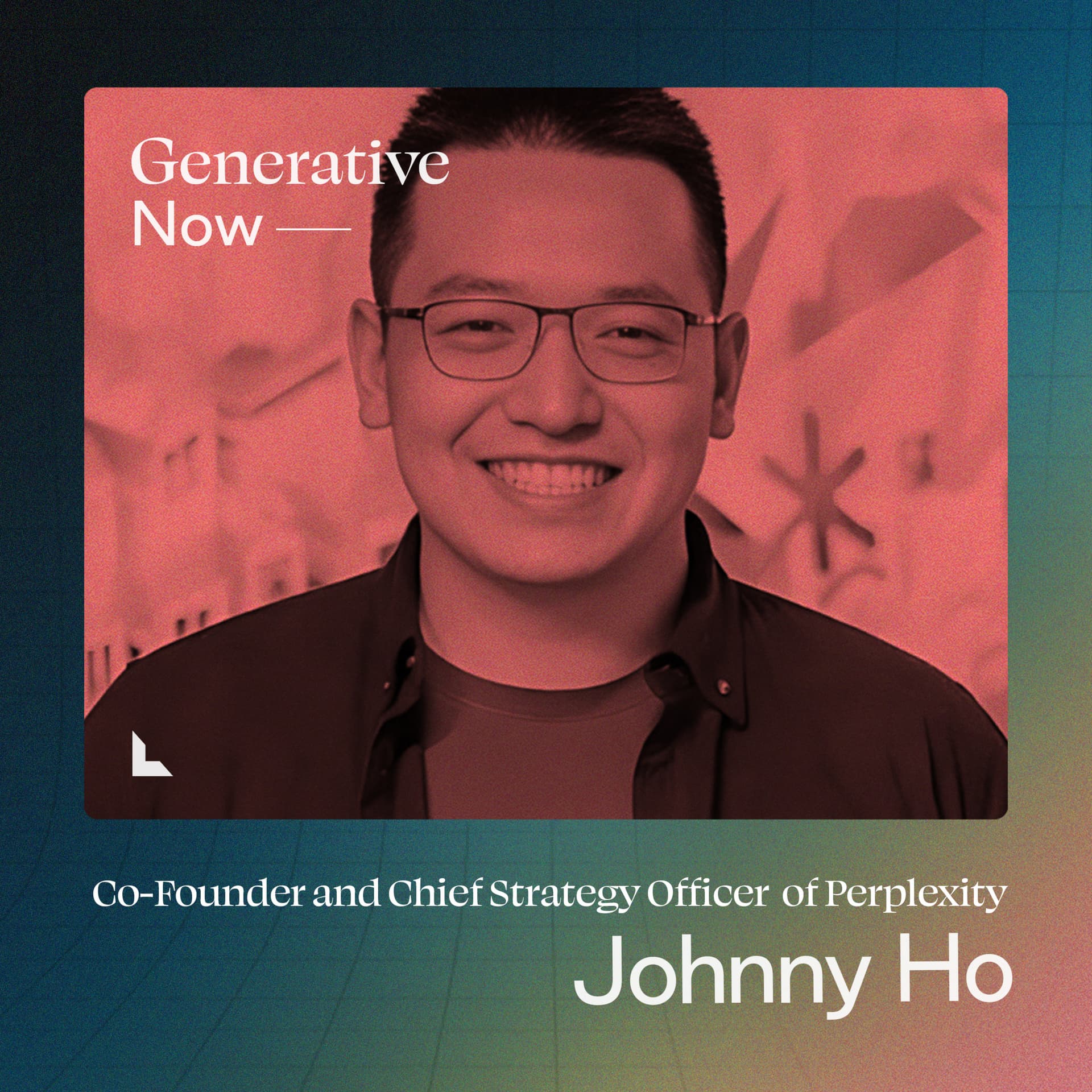
Overview Podcast Title: Generative Now Episode Title: Johnny Ho: Perplexity’s Opportunity to Reinvent Search Host: Michael Mignano Guest: Johnny Ho, Co-founder and Chief Strategy Officer at Perplexity Description: This episode discusses the innovative AI-powered search engine, Perplexity, its business model, and the future of search in the context of AI technology.
Key Themes and Discussions
- Introduction of Johnny Ho
- Background:
- Competitive programmer, ranked number one in the world as an IOI medalist.
- Experience at Quora as a software engineer before returning to Harvard for further studies.
- Transition to Product Strategy
- Shift from engineering to focusing on product strategy and user experience.
- Importance of understanding user needs and motivations for product improvement.
- Perplexity: The Answer Engine
- Definition: Defined as an "answer engine" rather than a traditional search engine.
- Goal: Aims to replace traditional search behavior with a more user-centric approach.
- Technology and Functionality Behind Perplexity
- Combines traditional search elements with advanced AI and language models.
- Utilizes an in-house fine-tuned LLM named Sonar to enhance answer delivery.
- Growth and Distribution Strategy
- Current growth through organic methods rather than relying on traditional search engine distribution.
- Focus on user engagement and retention through unique features and value-driven experiences.
- Challenges and Future of AI Models
- Discussed the complexities of AI interaction and user experience.
- Acknowledgment of challenges in model latency and the evolution of language models.
- Publisher Program
- Introduction of a revenue-sharing model for publishers based on usage of their content.
- Aims to align incentives for content creators and ensure high-quality answers for users.
- Advertising and Business Model
- Current reliance on subscriptions, with plans to incorporate advertising that aligns with user intent.
- Discussion on the potential restructuring of the internet’s business model with AI technology.
- Multimodal Experiences
- Perspectives on integrating voice and other media formats into the user experience for broader interaction.
- Importance of retaining the source credibility even in voice interactions.
Key Takeaways
- Innovative Approach: Perplexity is positioned to disrupt traditional search engines by focusing on providing direct answers rather than driving clicks.
- User-Centric Model: The goal is to adapt to user needs by evolving from basic query responses to more complex, interactive AI functionalities.
- Publisher Support: Establishing a sustainable model for content creators is vital for maintaining a wealth of information and credible resources online.
- Iterative Improvements: Continuous, small updates to the platform will lead to gradual enhancements in user experience and functionality.
Conclusion Johnny Ho’s insights highlight a transformative approach to search engines through AI, emphasizing the importance of user intent, reliable content, and evolving technology in shaping the future of information retrieval.
Contact Information
- Website: [Lightspeed Venture Partners](http://www.lsvp.com/)
- Social Media: [Twitter](https://twitter.com/lightspeedvp), [LinkedIn](https://www.linkedin.com/company/lightspeed-venture-partners/), [Instagram](https://www.instagram.com/lightspeedventurepartners/)
- Subscribe: [Generative Now](http://generativenow.co/)
---
For further learning and insights about the intersection of AI and search, consider subscribing to the podcast and following the discussion as it evolves.
Written by AI. May contain mistakes. Listen to the episode to check what was said.
Transcript
Automatic transcript. May contain errors.0:05Hey, everyone, and welcome to Generative Now. I am Michael McNanno. I am a partner at Lightspeed. And today in the podcast, we've got a very, very special guest for you. We've got one of the co-founders of Perplexity, Johnny Ho. Johnny is the chief strategy officer of Perplexity. And in this conversation, we covered everything from the product to the strategy to the business model and how they're working with publishers today and in the future. It was an awesome conversation. I hope you enjoy it. So check out this conversation with Johnny Ho, chief strategy officer and co-founder of Perplexity.
0:37Johnny, thank you so much for doing this. Yeah, of course. It's great to be here. Your background, if I understand correctly, is actually in engineering, right? And research. You were an IOI medalist, if I understand that correctly. The reason I know that is we're also investors in another company called Pika. Demi, the CEO, she's an IOI medalist as well. I saw some tweet online that like, basically, there's this concentration of IOI medalists in AI right now. And if basically, if you're an investor like me and you come across an IOI medalist, you should just invest in that company based on your track record and Demi's.
1:11Tell us a little bit about what it means to be an IOI medalist and a little bit about your background. For sure. For sure. Yeah, I think the IOI medalist population is standing on AI, especially like on the founder side. It's a bit unusual actually, right, to see that technical side show up and, you know, be heavily represented there. So it's really, really good to see that progress. To be an IOI medalist takes a lot of training, honestly. So usually like a few years of just like working on very difficult lead code problems, basically. So lead code problems are usually like 10, 15 minutes, but these problems go up to like hours, right?
1:51And it requires just a different mindset. said, it's like, you know, you're building up skills every day that may or may not actually be practically useful, but, you know, you kind of just work on them for fun and you just invest in yourself. And these are like coding challenges. Yeah, like lead code, but kind of more performance-based, like you have to have basically an optimal solution to get full credit on any of them. Got it. And is this something that happens in high school, in university? Typically, most people start in high school, I would say. Yeah, and then they try to kind of develop their skills over years.
2:25And then it culminates at the international competition, which is called IOI, International Olympiad of Informatics. Or there's a related one called ACM ICPC. Did you do that one as well? Yeah, we did that one as well. Nice. You know, in college you have less time, so we didn't prefer as much for that one. And so you were, early in your career, you were an engineer at Quora, I believe. but then you actually left to go back to school, to go back to Harvard. I'm curious to understand that decision, like being in the workforce, building clearly at like an amazing company, an amazing role, and then going back into academics.
3:02Like what was the decision like there? The decision was pretty interesting at the time. It was like a great talent pool at CORE. So I love the talent pool that you're mentioning. Also went to CORE at some point, at one point or another. Demi was there. At the time, it was like the knowledge-based company to work at, right? Whereas now there's kind of like several cool ones to work at, right? If you're interested in developing humanities knowledge. At that time, that was like the cool place to be. It's the place where everyone learned like how to build products for the user, how to build these building blocks I mentioned.
3:32And then it was interesting to take that perspective and go back to school and understand what actually can you learn that's practical and has real world applications. And what are some examples of what you learned there that you could apply to real-world applications? Ever mentions big data as a thing. So back in the day, it was actually really hard to get your own big data pipeline started up. And it was very manual. You had to build all these foundational infrastructure building blocks yourself. And nowadays, it's much easier. It's like 100 times easier, probably. But the core lessons ran the same.
4:10It's like, you know, you have to really understand what you're doing every day and how it translates into metrics, right? So if you're optimizing a certain metric, you know, you make that your goal for the month. But then you think about, you know, are you over-optimizing that metric? Is the problem truly only quantifiable versus qualitative, right? So there's all these factors that you learn to balance over time as you get more experience so that you're not just gaining one metric. Right. Yeah, that makes total sense. And then so how do you go from being an engineer, being an IOI medalist, to now, like we were talking about in the beginning of the conversation, it sounds like you've shifted completely to being more about product and strategy.
4:50And that's not a common transition. Definitely not a common transition, but it's good to see the IOI community kind of branching out and trying new things, right? I think at first it was mostly just a passion, right? So it's just understanding the product really well, just using the product a lot myself. Just understanding that in the company there always had to be some motivation to improve the product and think about things from the user perspective. I think over time it's just grown more and more focused on that side rather than the low-level development side. But I still try to stay in touch.
5:28I still try to review the code just to try to understand what every engineer, at least on my team, is working on. Are you committing code yourself at this point still? Yeah, still. That's awesome. Okay, so perplexity. Let's talk about the product. I think you all refer to it as an answer engine, not a search engine. But I think most people that use it, they're probably using it to do something that they used to do in more of a search context with Google. Give us the big picture. What are you trying to accomplish long term? Is this trying to replace the search engine behavior? The big picture is that it's still additive, right?
6:05So it's introducing new behaviors. We have this list of all the kind of verticals and use cases that we think are unlocked with AI. And a lot of them just are not possible with traditional search, right? That's why we term it an answer engine, right? So maybe like 30, 40 % of queries are longer than a few words, right? Are just not possible, not answerable with old tools, right? And so within those domains, there's still a lot of original, very old search technology that's relevant, right? You know, pulling up sources, trying to find the right graphs, the right visual representations to answer your question.
6:45But the key difference is now you have to understand that the user has very complex intentions. There might be multiple steps in the queries themselves. there might be a more sophisticated, less general answer that you need to render in order to satisfy the query. So it's a much more difficult problem, but at the same time, it's exciting to work on. You mentioned intention. Do you feel like users are coming to perplexity with a different type of intention that they would normally take to Google? And is that a conscious decision you are expecting the user to make? or do you see it more along the lines of users slowly over time replacing more and more of their behaviors or their intentions with perplexity for something they used to do with Google?
7:32Right, so it's additive, right? So the user has these old queries that they're doing, just a few words long, and we do hope to replace those, but we also hope to extend those, right? And so the user is learning. They can actually start to do their own work with perplexity. They can break code with perplexity. Things like that are just not possible in the old regime. But in the new regime, it's best to have one answer engine that satisfies both at the same time. And like I said, it's a very challenging problem, right? But it's one that we're excited for. If we take the three things, Google search, perplexity, chat GBT, like search seems to be about scanning the field.
8:12Perplexity seems about getting a specific answer. Where does something like chat GBT fall along the spectrum? I think perplexity is somewhere kind of bridging both worlds, right? So there is a way in perplexity to find and surveil the links and click on a particular one that you're looking for, if that's your intention, right? But it turns out that that's actually really the intention, right? Because, you know, 80 % of the time you do get a good answer. It's just that last 20 % of the time where you have to go deeper, maybe perform some actions, maybe verify the answer using the source. So having that fallback mechanism is very important to us.
8:52That way, the answer always has this origin, right? That has some trustworthy source behind it. You mentioned about 80 % of the time the user kind of gets what they want right off the bat. And then 20 % of the time they have to go deeper. Is that a ratio that you actually want to maintain because it sort of puts you in a good position strategically between the two? Or do you want to get the 80 % up so that the user can get the answer they need quicker and more immediate, which would obviously lead to like a positive user experience? So we're always going to be trying to push that up, but maybe not in the way that might be obvious, which is to just only give the answer, right?
9:30And instead of only giving the answer, we think about it more as almost a video game, as our head of design calls it, basically having ways out of the answer, right? So you have currently the ability to follow back to sources, also the ability to follow up to your question, as well as click on a few interactive elements, right? But I think over time, those interactions are going to increase. The user is not going to be happy with just the textual answer, you know, 20 % of the time, right? 20 % of the time they're going to want to follow up with actual actions, things that interact with their personal life, things that interact with the real world.
10:08So it'll be exciting to see how AI adapts to that, right? Because that'll be the next step of AI. Like, how does it actually help my everyday life? So it almost sounds like what you're saying is today the 20 % is there to help the user get the answer they're looking for. but over time you want the 20 % to be sort of more additive or more supplemental and sort of continue the experience and maybe they get smarter or they learn more that they weren't expecting to learn or they weren't expecting to just get in the answer they were looking for. Is that kind of how to think about it? That's right. That's right.
10:40I think that 20 % is going to be hard. There's an 80-20 principle where the last 20 % is the hardest, right? I think just making small headways like 1 % of the time into that direction will be very important and will be the proving factor for whether AI can be really consumer product. Yeah, that makes sense. That's really, really interesting. Speaking of ChatGPT, OpenAI, can you talk a little bit about how this technology actually works? My understanding is you're not training your own models. This isn't a search engine. It's something in between where you're leveraging search, but you're also leveraging large language models to help synthesize the quality of the answers.
11:23Maybe talk a little bit about how it actually all comes together under the hood. So at the core of complexity, there's the ability to ground your answer in the sources, right? So there's a lot of offline crawling of the web. And then there's a lot of online retrieval of the right paragraphs and snippets in order to answer a question. And it's a tricky balance of how much context from those snippets to include. And it's a tricky balance of which snippets from which sources are the most relevant. So there's a bunch of machine learning going on underneath the hood before it even gets to LLM. And when it gets to the LLM, we pick the right LLM for the right scenario.
12:04So we do actually have an in-house fine-tuned LLM as well. It's called Sonar. and over time we've adapted that model to first of all answer your question quickly and also have the proper formatting at all times consistent with our brand and our conciseness demands. I think having this language model over time will be very strategic in being able to modify and adjust the language model's behavior and direct it to that concise answer experience. The other part of the technology that we're looking at now is how to then also direct that to those actions and those real world interactions. And that'll be another challenging problem in itself.
12:53But you can think of it as a parallel track. So there's the answer and then there's also interactive elements that could be presented with the answer. Like going and doing something on behalf of the user. Is that what you mean? That's right. Doing something on behalf of the user. what some people hype up as agents, but also interactive elements for the user to interact on. Because as of now, it's actually very difficult for the AI to act by itself without human assistance. Right. So should we think about, before it gets to Sonar or the other LLMs that you're leveraging, should we think about the first step in what Perplexity is doing is actually like a traditional search?
13:32In some ways, it's like a traditional search, right? But traditional search is interesting in that It's always trying to get you to click. So the value function is purely based on clicks, whereas we're trying to have the value be more determined by the user, right? So determined by what the user is looking for. And that may or may not be a click sometimes, but for our product 80 % of the time, it's not, right? So oftentimes it's just the most factual piece of information, the most trustworthy source, the most relevant source to the user. And how exactly do you do that search? Are you leveraging Google under the hood?
14:10We're leveraging a variety of APIs and signals that we then kind of combine together to determine what is the optimal snippet and source to use. I think where this is interesting is, for example, in traditional search, you can only get like one URL for an entire massive domain, like Wikipedia, for example, right? So you only get like a very small information, piece of information. whereas on Wikipedia there's a wealth of information for example across multiple pages embedded very deep within the page and we can then kind of synthesize and use many of these together Got it. So the mental model in my head is like this two-step process where you're doing some sort of traditional search maybe it's using some APIs, maybe it's some things you guys have done yourself and then you're using an LLM to almost like synthesize that information and give it back to the user in a very kind of like succinct and readable way that also sort of exists within the tone and the brand of the perplexity answer.
15:15That's right. Yeah. So we actually started putting together some kind of conciseness and kind of brand and kind of user-defined objective function for perplexity. That's a little bit different from traditional search. and I imagine also a little bit different from Chachuk-T, right? Where we're more focused on the answer being more concise, well-formatted, right to the point, and then offering those kind of jumping off points to the user to expand their answer and to interact with the real world. Got it. And one thing that, you know, all this makes me think of, especially like this 80-20 rule we talked about a few minutes ago, is how all of this might be impacted by this next generation of models, Like, for example, the, you know, GBT-01 family of models.
16:03You know, my understanding is these things are doing sort of a deeper level of, you know, what seems like reasoning in a sense. And I know that's not the same as what perplexity is doing. But as we talked about earlier, that 20 % is sort of giving the user options to kind of do their own reasoning. And so does this new family of models almost do some of the job of what you're trying to do? And maybe if so, like, are there benefits you get from that? Or are there actually drawbacks? With every model release, we always see some sort of benefit, right? So, for example, as the open source models Lama came out, we saw a lot of benefit in incorporating those into the products and fine-tuning those for our purposes.
16:47I think with the O1 model, it's interesting because it's obviously a different kind of mechanism, right? There's a long chain of thought that's not 100 % transparent to the user before it actually outputs the answer. So that between, let's say, five seconds and 20 seconds of latency for our product makes it hard to incorporate for the average use case. I think there might be use cases, for example, in coding or in more action-based interfaces where then that latency is okay, right? If you're coding, it's probably fine if you're waiting 30 seconds for your answer, right? And obviously, as more companies adopt this technology, as more people work on this, it'll get faster, right?
17:36So whenever we see that drop in latency, that drop in price, we see that the use cases for those stronger models just keeps expanding, right? So I wouldn't be surprised if a large percentage of coding answers are powered by something with a longer chain of thought in, let's say, six months, right? I think it's just very early right now to call it with the current iteration of Ocon. Yeah, that's super interesting. So it's almost like the model itself, well, so today, I guess the analogy I have in my head based on what you just said is the user is almost doing the chain of thought today through the extra 20%.
18:18But over time, you're saying the model will actually take care of a lot of that chain of thought for the user, especially in topics like coding. And so for context, the O1 model is going to optimize for an objective function that's completely objective, right? Just accurate or not, right? That's why it's so good at multiple choice. And that's why it's so good at coding, right? So I think for objective topics, that'll be the case. It'll be very appropriate to use one are very appropriate to use a long chain of thought for legal questions, scientific questions. I think where it becomes difficult is when the user wants to express their preferences or if the user wants to then dive deeper within the chain of thought.
18:57I think it becomes tricky because then you have the AI assuming things about the user that may or may not be true. Like if I forget to tell the AI that I live in New York and it starts thinking for like 5 to 10 to 20 seconds, it's not a great user experience. That's why you need these like ways for the user to jump in and interact. Right. So it's almost like either the user has to do the whole chain of thought or the AI has to do the whole chain of thought. But sort of putting those two things together can get really messy. It can. And that's why it's really important to have the understanding, the opinion of which topics are suitable for which language model.
19:32Right. Right. Right. And I think that's just only something that we're going to keep improving on and understanding better over time. Yeah. Yeah. So maybe jumping back to search a little bit. So, you know, if the goal over time is to win more and more of the behavior and go from sort of searching to just more just getting answers, I'm sure you've been asked this question a million times, but it strikes me that perplexity has a challenge to overcome that the traditional search engines have and that they have this sort of embedded distribution in Safari, in Chrome, in all of the traditional OSs and browsers.
20:11Yet despite that, perplexity seems to be growing really, really, really well. How is that happening? And how do you eventually overcome these inherent distribution advantages that the traditional search engines have? This is a very difficult question to answer in the amount of time we have. But I think the core reasoning behind all the AI products being successful is that they're disrupted, right? So having an opinion about which use cases you're disrupting and which cases other companies are not going to be working on as much as you are. Like not going to have that same obsession. Yeah. The counter positioning to what they're doing.
20:49Right. And then having that opinion and pushing just as hard as you can on that, first of all, in the product. second of all having some ways of being more retentive right so I think there's a lot of traditional plays that you can make like you know sending notifications you know trying to get the user to read more passive material but I think the interesting thing is that propensity it's really easy actually for us to build these building blocks with AI right because traditionally in order to have a feed, you would need to have a massive social network like millions and millions of people, right?
21:27But we were able to get off the ground quickly, working scrappily with AI's help, kind of hand in hand. A lot of manual work, of course, as well, but working hand in hand to build products that wouldn't be possible with such a small team. And I'm really proud of the team for trying just their hardest every day to work what they have, right? Just being resourceful, just iterating quickly, not worrying about, you know, the long-term future sometimes. Sometimes it's just, you have to just worry about zero to one. And at this point, we're more in the polishing stages of some of these products, right?
22:03Our Discover feed, our iPhone app are actually well polished at this point, but you have to remember those products started off being extremely scrappy at the beginning. Yeah. Oftentimes it's just like one engineer working on them, no product managers, no engineering managers, nothing. Yeah. So how do you, maybe from a team sort of goals and culture standpoint, how do you drive that growth? What I'm hearing from you is like, there are no silver bullets. Like you're not going to have default search and Chrome anytime soon. And so you just have to like kind of keep pushing and being scrappy every day.
22:38How do you actually drive those results as a team? We have a lot of organic ideas that appear across the team, right? So recently we had the back to school campaign. I think everyone knows that back to school is an important time, but very few companies are thinking about it from the student perspective and like reaching out to individual students like scrappily, right? They're all thinking about kind of like running marketing campaigns and spending lots of money on it. But, you know, we took the opposite approach of just going back, understanding that, you know, students love swag. They love competing against each other, right?
23:09That's why the programming contents are so popular in the first place. So never losing sight of the users at hand, right? Understanding their motivations, just having a bunch of individual people, just a couple engineers, like one engineer working on the integrations, one engineer working on the UI. Not having a bunch of people managing the engineers, but rather just having the engineers come up with their own thought processes for how to develop, how to iterate quickly. And then oftentimes, mistakes will be made and then you have to kind of recover in that last 10 % before delivery. But it's much easier to let everything grow and then dial down than it is to apply red tape as something is growing.
23:52Do you set as a team, do you set, I don't know, like weekly or monthly growth goals? At this point, the goals are at a very high level each quarter. And then it's broken down weekly. So every week, each individual has their own goal and tries to deliver at least 75 % of that goal by the next week. that way there's that momentum and velocity. I think not every individual has the same attitude of how to accomplish that goal, right? Sometimes they'll do a lot of experimentation. Sometimes they'll just try to ship really fast. But I think either way, the cadence is the same. Yeah. So like there's many paths to get to that final 75%.
24:34Is the goal sort of more input-based, like ship X feature, or is it achieve Y week over week growth? There's a lot of qualitative goals as well. It's not just user growth, right? Because user growth at a high level is not completely actionable, right? So you have to break down into smaller milestones. You have to think about if I do this experiment and it fails, which it will 75 % of the time, right? What did I learn, right? Or if I built this prototype and it's not quite good enough to ship, you know, it's still something, right? It's still a building block that I can then use to develop either slight pivots or just another iteration before it's then good enough.
25:18So there's at least concrete milestones that get you some satisfaction, even if you're not probably increasing user growth or retention. Yeah, makes sense. So let's say you are all very, very successful in growing this product. And so far, the trajectory suggests you will be. Um, let's talk about the broader implications of that. Um, you know, one of the things that I really think a lot about with, you know, products like perplexity taking over more traditional searches is that kind of the entirety of the internet, uh, in, in, in many cases is works and works for free for most of the users because of the business model of search and advertising.
26:02And so the more that perplexity pulls away from traditional search, the more that business model is challenged. Maybe starting at the top, how do you think about the business model of perplexity both today and long term? Obviously, you have subscriptions today, but my guess is that is beginning to expand. Maybe you could talk a little bit more about that. The core business is currently subscriptions, so either consumer subscriptions or enterprise subscriptions. I think because it's a very kind of focused productivity tool right now, it makes sense that that's where the majority of disruption is happening, right?
Read the full transcript
26:42Like it's getting your work done a little bit faster. So, you know, for every hour that you're saved, maybe perplexity captures like 1 % of that value for somebody, right? So maybe we capture like a dollar every couple hours, something like that. So it's not trying to extract the value directly from the user on every single query. It's more just how much value do we add across the course of the month. I think the next step will be eventually advertising. Because not everyone wants to pay for the subscription. right and there's actually ways to advertise that are aligned with the user right so having good recommendations that are either passively or actively discovered for you right and having that mindset and understanding that we're never going to for example change the answers we're never going to bias the answers we're always going to be building business models that are aligned with the user and what they want this is really interesting actually so you know if you think about Google, more traditional search, the answers to an extent are biased, right?
27:54Because you have, you know, certain links at the top that were maybe paid for. In the case of perplexity, you're saying the answer is always going to stay the same. I'm guessing maybe you'll put ads near the answer or around the answer that are related. But the incentive of perplexity feels very, very different than the incentive of Google in that you're trying to get to the right answer. And as you mentioned earlier, you're trying to get the 80 % up higher. So perplexity is always going to have less kind of time, almost like time spent, the way I think about it, than something like a traditional Google search, which probably will fundamentally have an impact on the format of the ad, the targeting of the ad, the pricing of the ad.
28:37How do you think about those differences and how like an advertiser's expectations over time changes as far as what they're paying for. I mean, we're coming in this from a very fresh as well as humble perspective, right? So we have a lot of experience building this consumer products without thinking about advertisers at all, right? But as we're thinking about this new party of experiences, there's going to be a lot to learn. We're going to have to launch many versions. We're going to have to iterate quickly and respond to both feedback from the user and the advertisers. And that's going to be easy for us because we have that muscle memory of how to iterate quickly.
29:19I think a lot of the questions that you're asking, we don't actually have concrete answers for. I think just sticking to that core mission of not diluting the answer, of not biasing the answer is what we keep working around. But I think you're right. There's a lot of areas in the products where ads may feel more organic or may be more actionable by the user that we just don't know about yet. Yeah. So do you think a dollar of advertising spent on something like a traditional search will translate cleanly to a dollar spent on an answer engine? Or is there going to be some loss there? I think it's very early to tell.
30:00I think the users that are very, very important to advertisers are hopefully moving to complexity. And as that distribution of users changes, I think that'll change how the money flows. I think, for example, if you're looking for the best API to accomplish something, that's a very expensive query because you have to end up paying thousands for that API potentially in traditional search right now that only delivers value if the user is being baited on clicking an ad or doesn't have an ad blocker installed or something like that so as users get more picky about that and understand that they don't really enjoy clicking on the wrong link just because it was at the top then that distribution will change and users will enjoy and vote with their queries.
30:59Do you think Google, I mean, obviously they're trying to do some of this stuff as well. They're starting to surface AI answers, the top of search queries. Do you think they can pull off this transition to a new format or would that be severely disruptive to their advertising model? It's hard to say. I think bigger companies move slower for a variety of reasons. There could be legal issues, existing partnership issues. I think with perplexity, just rethinking all these things from first principles, just trying to think what delivers the most user value. And even for advertising, what delivers the most user satisfaction, right?
31:39I think big companies will always have a lot of red tape and just, at least for the next two or three years, it's going to be hard for big companies to radically change their business models. Yeah, that's for sure. I guess one of the things, you know, going back to this notion of sort of everything on the internet is kind of paid for by advertising. One of the things I often think about with products like Perplexity, but also even ChatGPT, other AI products is that, you know, publishers, the way that they're able to offer their content for free is because of this, this business model that we talked about with Google, right?
32:15I visit a random blog. I see an ad. The blogger, you know, makes some money off the ad. They can afford to just keep the site free for me. Now we're going to have these agents or, you know, AI products out there scanning the web and sort of intercepting some of that traffic and disintermediating the experience that would normally happen. What does that do to the business model of the internet? Does that publisher, like, can they still afford to serve it up for free and if not, how does that actually impact what AI products can go and get if they can't afford to just keep it open for anyone to grab?
32:52Yeah, I mean, it's a good question. I think that's exactly why we started the publisher program, right? That's the only way to have the incentives to be aligned all the way down, right? So first of all, there being good content on the internet, that content being surfaced and ranks between the sources and then the user consuming that content, right? So currently in the world, it's kind of just a line based on how much you paid for your ad to rank between your ad and the second most paid ad. I think having that incentive model and understanding that the query should be driving the result rather than just the keywords of the query.
33:34Right. So making sure that the right snippet is brought up to the user's attention between all the different URLs rather than just ranking purely on a bidding system that doesn't necessarily capture the user's core intent. Got it. So I guess, how do you think about the publisher program then? Is it actually maybe taking a step back? Can you explain the publisher program just for the listeners? No, no worries. Yeah, so the publisher program at Perplexity grants an equal amount of credit to every single source that's used to generate the answer. So, for example, as I mentioned earlier, if your snippet is used, you would just get an equal distribution.
34:14As I mentioned earlier, the snippets don't always come from different sources, right? they can come from, let's say, if a few of them are from one source and then a few of them are, like less of them are from other sources, then that publisher would get more credit. Sorry, based on like length of a string or like character count, like how do you break down sort of the amount of the source? Right now it's based on a very simple formula. It's just how many times the source was used. Okay, got it. Just to make the math easy. I think over time it may get more sophisticated, but I think just starting from there, make sure that the publisher whose most content was used for the answer gets the most amount of credit.
34:59Okay. Right. So I think the list-incentred model enables the publishers to continue creating high-quality content. It also enables the user to keep seeing the most relevant snippets and sources for their query rather than the publisher or the snippet that receives the most bids. Got it. So publisher produces a piece of content on a random website. Perplexity goes out. captures that information in trying to generate an answer. And it probably does this for a couple of different sources. And then all of those sources that it uses to generate the answer, it basically does some simple rev share based on how many times that source appears and just pays out a revenue share.
35:45Okay, got it. And so how do I, if I'm one of those publishers, how do I get my content served up as a source? I think just having high quality content that's verifiable, that's trustworthy, that kind of is original as well. Yeah. Will enable those interactions and those snippets to be surfaced more frequently. And I have to imagine there's going to be, or maybe there already is like a new form of SEO where like people are optimizing their content to get picked up by perplexity or any of these services. Is that right? Yeah, I imagine so. I think it's going to be a hard problem to kind of deduplicate and kind of throw away all the content that's just a rehashing and that's not original.
36:33Yeah. But I think over time, it's not going to be a human solvable problem. Yeah. You're going to need AI to fight that battle. Right. Right. So it's going to be some kind of machine learning that maybe takes into account, you know, which article is published first, which fact has a real human behind it, which publisher has the most domain authority in that area. right so even though that formula is not perfected yet it's it has to be done right yeah or else the internet will just devolve and just have an infinite plethora of like unverifiable untrustworthy information yeah yeah it almost like increases the level of credibility or trust a publisher needs um in like this new world like the demand for trust probably goes up i guess overall um when you're not the one actually viewing and sort of assessing the source of the content right previously it was kind of possible to just click on a bunch of links and verify with your eyes like how well designed is the website how many invasive ads there are but now with that model being less relevant I think it's going to be more about the information that's on the page right more about the actual text the actual high-quality reporting that was done to get that information into the page right I think the next ones here will be interesting to it right and like as people generate images as people generate videos like how do we prevent those from also dominating right that's like even harder in my opinion because those don't have that kind of well-structured format to them right when you have an image it's not clear who made that image when you have a video it's getting harder and harder to tell where it came from there's metadata but people can always just remove that metadata right i'm guessing on text like ai generated text, you could probably verify if that was sort of like human generated or AI generated and maybe like downrank it if it was AI generated?
38:27At least with text, there's a well-structured precedent for how to structure the page, right? There's a title, there's a publisher, and then most importantly of all, there's the author, right? I think as long as authors exist as a precedent, it's going to be much easier to at least tell where all the information's coming from. I think where it starts getting dangerous is if people, you know, start ignoring the authors, start not surfacing the authors as much, then, you know, just a dangerous precedent, right? People are not going to know where the information came from. How do citations factor into all this?
39:03Because obviously, or at least pre-publisher program, my guess is that citations were the real value that the publisher is getting. It's like, hey, if you're using this, we're going to prominently link you, we're going to say, you know, where this content came from, and we're going to send traffic to you. Does that remain part of the value exchange for the publisher in the partner program? Yeah, so regardless of either being clicked on or not, the publisher always gets credit. So it's more based on the snippets rather than the clicks. That way, you know, we're not incentivized to make the clicks areas bigger or smaller, right?
39:43As you can imagine, with ads or with citation-based models, you might be incentivized to demote or promote certain sources. We're not incentivized to do that. We're just incentivized to provide the highest quality answer for the user. What do you see as the potential for multimodal models inside of Perplexity? Obviously, everyone's really excited for the new voice mode on ChatGPT. These models seem like they're going to offer lots and lots of new capabilities in terms of communicating with your voice or through video or image. How does that apply to perplexity? I think voice is interesting because it actually loses a lot of context that perplexity usually provides.
40:25That's why in the design for voice, we actually have still the sources being surfaced and various media being sources surfaced. That way the user understands the provenance of the answer instead of just being fed a very concise audio snippet. I think with voice, it becomes also challenging in that the user does not really expect to be able to follow up very easily on that because you can't click on anything. I think still having some elements of UI in the equation might be interesting, like having at least some way to follow up with a non-voice query or some way to click on some interactive things that act on the answer.
41:04I think having that approach as opposed to just like a pure like telephone call, a kind of very frustrating kind of customer service experience will be our focus. Got it. So even in a voice first experience, like you want me to be looking at the foreground. You want to create a multi sort of format experience. You never want it to be like just voice or just text. It's better when it's like fully immersive. That's right. I mean, the user should always have the option for what they want to do next, right? So if the next thing they want to do is, you know, check if the answer was correct, they should be able to, right?
41:44And, you know, you can probably have the same experience with or without it, but it's very important for our products and our brands to continue showing the origins of those facts. And it's important for the publishers as well, right? To see that they're not getting completely disintermeded. Right. Yeah. Yeah. What else is coming up? What can you share about what Perplexity's got coming up soon? It seems like you're shipping kind of like new features, new platforms like all the time. What can we look forward to? I think, you know, keep looking out for exciting things. I think the thing that perplexity is always known for is really announcing things when it's fully ready, right?
42:27So we may have a lot of experiments and demos cooking in the background, but only if it's like fully production ready will we announce it. If you're looking for a radical change, it's not going to appear on one day, right? It's going to be a lot of small incremental changes that make the product more consumer friendly, that add small interactions. that bring the AI closer to your daily life. It's not going to be just, you know, one day it was un-entered, but the next day it's all of a sudden part of everything, right? I think having that iterative mindset enables us to move faster and also just enables us to focus, right?
43:04So instead of trying to just knock something extremely large out of the park on one shot, we're doing a lot of small things. Johnny, this has been fascinating. I've learned so much. I'm sure the audience has as well. Thank you so much for the time today. Yeah, thank you so much. Thanks. It's been great. There's a lot of interesting questions that we don't always get the chance to think about and reflect about. Yeah, well, I learned a ton. Thanks so much. Thank you so much for listening to Generative Now. If you liked what you heard, please do us a favor and rate and review the podcast on Spotify and Apple Podcasts.
43:35That really helps. And of course, subscribe if you haven't already so you get notifications every time we come out with a new episode. And if you want to learn more, you can follow Lightspeed at LightspeedVP on X, LinkedIn, Instagram. Generative Now is produced by Lightspeed in partnership with Pod People. I am Michael Magnano, and we will be back next week.
From the publisher
Johnny Ho, co-founder and Chief Strategy Officer at Perplexity, joins Lightspeed Partner and host Michael Mignano for this week’s episode of Generative Now. Perplexity is the AI powered search engine that is rapidly growing and challenging the industry status quo. Johnny and Michael talk about his background as a competitive programmer, the business model of search, and Perplexity’s Publisher Program, where publishers earn a share of advertising revenue.
Johnny has been ranked number one in the world of competitive programming. He previously worked at Quora as a software engineer – he accomplished all of this before graduating from Harvard.
Episode Chapters
(00:00) Introduction
(00:40) Johnny Ho's Engineering Background and IOI Achievements
(02:44) Transition to Product Strategy
(05:39) Perplexity: The Answer Engine
(11:06) Technology Behind Perplexity
(15:47) Challenges and Future of AI Models
(19:41) Growth and Distribution Strategy
(23:54) Setting and Achieving Team Goals
(25:35) Perplexity's Business Model and Future Plans
(31:01) Challenges and Opportunities in AI and Search
(32:55) Publisher Program and Content Credibility
(39:59) Voice and Multimodal Experiences
(42:04) What's Next for Perplexity?
(43:12) Conclusion and Final Thoughts
Stay in touch:
LinkedIn: https://www.linkedin.com/company/lightspeed-venture-partners/
Instagram: https://www.instagram.com/lightspeedventurepartners/
Subscribe on your favorite podcast app: generativenow.co
Email: generativenow@lsvp.com
The content here does not constitute tax, legal, business or investment advice or an offer to provide such advice, should not be construed as advocating the purchase or sale of any security or investment or a recommendation of any company, and is not an offer, or solicitation of an offer, for the purchase or sale of any security or investment product. For more details please see lsvp.com/legal.


