
In short
Podcast Notes: Generative Now | M.G. Siegler: VC’s Crisis, Defensible Startups, and Hack-quisitions
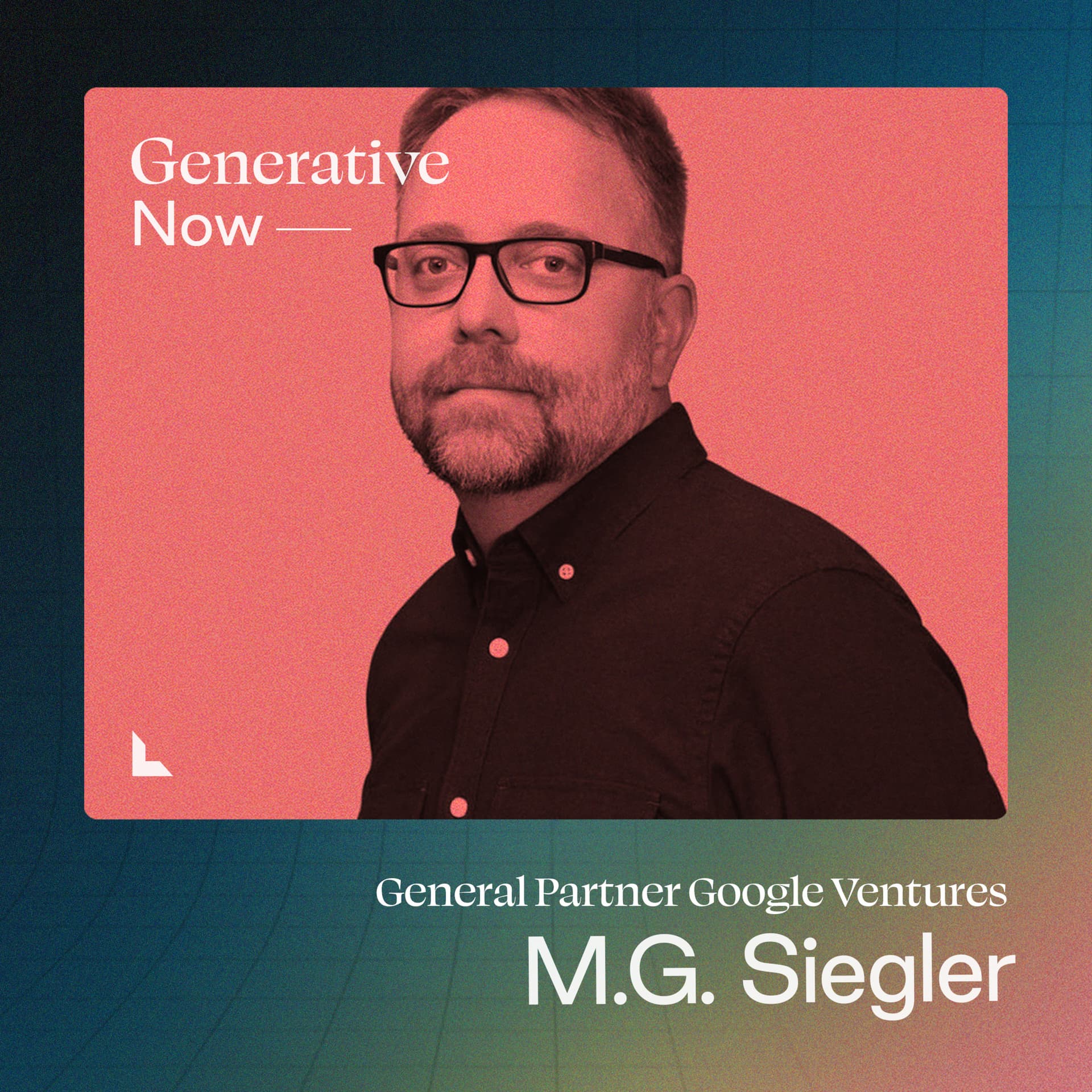
Overview Podcast Title: Generative Now Host: Michael Mignano Guest: M.G. Siegler Episode Description: M.G. Siegler discusses the European tech scene and shares insights on the current 'VC Crisis', the M&A landscape, and perspectives on investing in people versus ideas, and the evolution towards AGI.
---
Episode Chapters
- Introduction (00:00)
- M.G. Siegler's Background and Move to London (00:32)
- Investing in London vs. San Francisco (01:07)
- Exploring the London Tech Scene (03:56)
- Venture Capital’s Crisis (10:32)
- AI and the Future of Startups (13:26)
- The Role of Acquisitions in Tech (18:03)
- Challenges and Opportunities in Venture Capital (22:15)
- Current M&A Environment (36:06)
- VC Funds and the AI Market (39:17)
- Scaling AI and Future Breakthroughs (42:01)
- Is the Consumer Market Dead? (54:00)
- Apple's Position in the AI Race (59:39)
- Closing Thoughts (01:11:26)
---
Key Takeaways
M.G. Siegler's Background
- Formerly with GV (Google Ventures) for over a decade, recently relocated to London.
- Taking time to understand the European tech ecosystem before reinvesting.
Insights on the London Tech Scene
- London is growing in AI and fintech, with strong educational institutions producing talent.
- While behind Silicon Valley, the tech scene is maturing with notable successes like DeepMind.
The Current VC Crisis
- Discussion on CRV Ventures returning funds to LPs, signaling a shift in the VC landscape.
- The impact of macroeconomic factors on investment cycles, especially following the Zerp (zero interest rate policy) phase.
The Future of Startups and AI
- The importance of defensible startups with unique data advantages, network effects, or first-mover advantage.
- Emphasis on investing in people over ideas in the context of rapid technological evolution.
M&A Landscape
- Current M&A environment is stagnant, with regulatory scrutiny hampering acquisitions.
- Discussion on the shift to aqua-hires and licensing deals as a workaround for traditional M&A challenges.
Consumer Market Sentiments
- Contrarian view against the notion that the consumer market is dead; potential for new opportunities driven by AI.
- The idea that AI could free up time for consumers, leading to increased engagement in entertainment and leisure.
Apple's Position in AI
- Debate on whether Apple is behind or strategically timed with their AI initiatives.
- Speculation on potential acquisitions in the AI space to enhance capabilities and market position.
---
Discussion Highlights
Investing Trends
- People vs. Ideas: Siegler emphasizes a shift in focus towards the capabilities and resilience of founders.
- Investment Opportunities: Discussion about new business models emerging from AI applications, particularly in media and consumer segments.
Regulatory Environment
- Current regulatory challenges limit M&A activity, with implications for startup growth and investor returns.
- The potential for regulatory changes to revitalize the tech landscape.
Future of AI
- Potential for AI applications to transform industries, but concerns about the sustainability of current funding models without clear exit strategies.
- Exploration of AGI (Artificial General Intelligence) and the implications for the workforce and societal structures.
Apple's AI Strategy
- Analysis of Apple's cautious approach to AI, questioning whether it may hinder their competitive edge.
- Consideration of partnerships with companies like OpenAI as a strategy to bolster their AI capabilities.
---
Conclusion The episode provides a deep dive into the evolving landscape of venture capital and AI, emphasizing the need for startups to focus on defensibility and the importance of strategic investments in people. The discussion on Apple's position underscores the competitive pressures in the tech industry and the potential consequences of regulatory environments on innovation.
Host Contact:
- [Michael Mignano on X/Twitter](https://twitter.com/magnano)
- [Lightspeed Venture Partners](http://www.lsvp.com/)
Podcast Production: Generative Now is produced by Lightspeed in partnership with Pod People.
Written by AI. May contain mistakes. Listen to the episode to check what was said.
Transcript
Automatic transcript. May contain errors.0:04Hey, everyone, and welcome to Generative Now. I am Michael Magnano. I'm a partner at Lightspeed And this week I sat down with my good friend and none other than MG Siegler, the tech writer, investor and former VC from GV. That's Google Ventures. We dove into the London startup ecosystem, venture capitals, potential crisis and opportunity, the current M &A environment and Apple, a topic that MG knows really, really well. So I hope you enjoy this conversation with MG Siegler. Hey, MG. Hey, Mike. your background i don't know maybe it's all the paraphernalia maybe it's the michigan football like it looks like the u.s michigan got fort point beer from san francisco yeah this doesn't look like london some gv stuff some james bond stuff uh yeah i brought all my stuff with me i would i would hope so you know we had lived over here 10 years ago when i was helping to set up gv's operations uh in europe all that all those years ago um so we were used to it but yeah it's pretty it's pretty smooth sailing now.
1:06Awesome. Are you missing the bay at all? So I have not been back amazingly since we left in June. My wife went back and actually our older daughter, they took a trip back for, I think she had a board meeting for a few days. But I have not gone back since then, but it sounds like it's getting a little bit, I don't know. Have you been there recently? I assume you've been there much more recently than I have. I go there a lot. Yeah. I feel like I'm going there every couple of weeks. I'm going there two days from now. Do you still stay in the city or do you stay down south or how do you do it? Well, man, I guess I'm about to reveal a big life hack of mine.
1:43You're going to reveal your helicopter? No, no. I stay at the airport often at the Grand Hyatt SFO. It's actually like a really nice hotel and it being right in between just makes it very easy. That's a great act though, because then you can get out of there. You can leave your stuff there and then just, yeah, get out of there quick. yeah and sometimes i land really late at night because i'll like i'll leave after work and i'll land at you know 10 or whatever 11 and i just like get off the off the plane and like you know walk 10 minutes or not even and i'm in the hotel so it's pretty nice i kind of like it i've like just organically learned that other people like some founders i know also do this yeah um it's like a little sort of secret club uh to stay the grand high at sfo well i like it i'll take it into take it into account the next time i'm planning to go but so you don't miss it at all though it sounds like no i mean again so i lived there 15 years my wife lived there since college so it was 20 some years um she's at stanford and um so both of us i just felt like we're ready for a change Honestly, from the 10 years ago when we had lived in the UK back then, we both knew that we wanted to come here sort of in a full time capacity.
3:00It was just a matter of timing at all. When COVID hit, it was really sort of a forcing function to just take a look at everything and figure out like, well, we're here in our San Francisco place, which is great. But we can't really take advantage of anything in California. We can't really go outside. I mean, you can go outside, but you can't go to the parks, the playgrounds. They were all closed. and it was just like you know is now like the right time to try to make a move obviously there was there was a lot of tbd in that and as we were sort of coming out of the pandemic then uh once we figured out um you know that we were pregnant with second child it was like if we don't do this now we're probably you know gonna wait a few years it's a little bit time compressed but i think we should see if we can make this happen and so that's what we did it all worked out in the end so I'm pretty happy with it.
3:50And yeah, it's relatively nice and calm over here. It's a pretty good environment. I know you're not actively investing right now. We'll get into that. But do you have any sense of what London is like as a sort of tech scene or maybe even more specific to AI right now? Or is it just hard to get a grasp because you're not really in it? I am getting a better grasp. So it's part of the reason why I'm sort of pausing right now. So I left GV in July on my 11-year anniversary to the date of being there, of being part of Google. And I knew when I left both, I didn't want to sort of jump back into anything, certainly immediately on the investing side.
4:34Certainly didn't want to go to another big fund and sort of go through that cycle again. But on the investing side, it was more like, yeah, I mean, if I'm going to invest, it likely makes sense to invest over here versus back in the US. I mean, obviously, there would be part of both, but getting to know the ecosystem here more. So I'm taking time to do that. I still take meetings and try to get up to speed on what's going on on the ground here. But it's very different than it was 10 years ago when I mentioned we were setting up operations for GV back then. It was so much earlier in the cycle. and even yeah it's like 10 years is not that long but in this you know environment and in technology obviously it's a long time and it already feels like there's been diasporas of people who have sort of moved on um obviously spotify you know where you were uh you know has a giant presence here but then like the deep minds of the world right obviously google acquired way back in the day and there's just people who naturally leave those types of places and then start their own things.
5:32And so it feels like it's, um, it's naturally happening. Obviously it's, it's behind where Silicon Valley is, but in some ways it reminds me of as an outsider, when I would come to New York all the time and you and I would talk about this, I love coming to New York cause it just had such a different energy. It was earlier in the cycle than the Bay area was in terms of, um, tech and entrepreneurship, but it's just different vibes, right? It's just different place. And, and London, like New York is not just predominantly tech. There's all different sorts of industries and, you know, very different, diverse people from all around the world.
6:10And it's just much bigger, right? San Francisco has 700 ,000 to 800 ,000 people who live in the city, obviously bigger in the broader Bay Area, but still nothing compared to what New York or London are. It's nice to be outside of that proverbial bubble and not have everything be tech all the time, not have to go to Blue Bottle and see every single person, you know, and have to, you know, like some people you want to catch up with, some people maybe you don't. And it just, you know, sidetracks everything you're doing for the rest of the day. When it comes to tech, like where, where do you find London is kind of like overweight versus underweight in terms of either like sector or category or maybe talent?
6:48Is it very like engineering heavy versus design heavy? Like how would you categorize it across you know different dimensions in my early sort of you know being here in exploration um so there's people who are a thousand x you know more expertise in this than i am but i would say like from an outsider still vantage point it feels like they're well positioned in ai right obviously we mentioned deep mind and there's several other uh both startups and you know all the universities here seem to be um have a pretty good capacity to output talent in that field and in machine learning. And that's been the case for a long time.
7:26And so I think that they're well positioned there. There's been a bunch of startups in fintech, obviously, because also, you know, the financial sector here in London is massive and, you know, has been the biggest industry for a while. There's definitely not the same level of engineers, the same capacity of engineering talent that there is certainly in the Bay Area. Again, it's like, it feels like it's positioned well. It also feels like it's positioned well in Europe because it's out, you know, one of the, I guess if, if you want to call it a silver lining of the fiasco that was Brexit is that they don't have to adhere to all of the EU, um, and EC rulings.
8:01And some of those are seem like they're onerous and, and problematic. You know, they were one of the first to put out sort of some AI regulation, right. And, and a bunch of people were up in arms about that, that it might, you know, strangle, um, you know, some of those early startups before they even got off the ground. And so, you know, the UK is has its own mandates and some people agree. Some people disagree with those. But at the very least, they don't have to follow what everyone else in the EU is doing, which I do think benefits them. But, you know, there's downsides to it as well, as I think everyone's well aware in the post-Brexit world.
8:39With different cities, maybe less so San Francisco, because there are just so many of them. And, you know, you tend to almost identify certain early stage startups in these waves with their cities. Like what are if you can even think of any, like what are the startups where you're like, oh, yeah, London's the home of X, Y, Z. Or is it still just like too early in this cycle to identify? Yeah, I mean, again, I just go back to like DeepMind being the key success there. It's like imagine if Google had not bought DeepMind, what DeepMind would be worth today, right? It would be, certainly it would be up there with OpenAI.
9:16You have to imagine it would be over, well over 100 billion valuation at this point and everyone trying to pour money into it all the time. And so that would have been, you know, the key thing and key what if, right? If you're looking back, but Google was very smart. I think it was 2014 when they did that deal. So it's 10 years ago. All of the big companies now have massive, massive presence. and you know like google's getting ready to open this new office which is like right next to king's cross and i think it's going to be the biggest building square footage right wise in all of london um even bigger than the shard the giant skyscraper but just in terms of um volume because it's so big um and so when you come you got to see this it's not open yet and i've not been inside but from the outside it's just an absolute behemoth and and yeah it feels and again i i hate to keep going back to this, but it sort of reminds me of New York when all of those places were opening like Hudson Yards and everything, right?
10:10And now there's these tech areas like in King's Cross and a few other different spots where the massive, you know, giant tech behemoths are all moving in and sort of the startups are filling in the cracks in between there because they need to be sort of around and in between. Yeah, that's cool. Obviously, there's so much going on with AI, and we'll get into it, but like, how does it feel for you to have kind of left venture? You left GV, you mentioned in July, 11 year anniversary. If I think about the arc of your career at GV, you kind of, you almost got to like go through a full cycle, right?
10:48I think that's right. Yeah. You know, we're at the beginning or depending on where you feel we are in it, like we're in the middle of this crazy, crazy time and you're on the sidelines. Like what, what's that been like? Like, is that fun for you? It is. It is fun for me. I feel very, I feel fortunate. Honestly, I think I timed it well because I, to your point, like, I feel like I went through a full cycle of VC. So total investing. So I was at GV 11 years. I was doing crunch fund. And then crunch fund before that. Yeah. Yeah. A couple of years before that. So basically over that 12, 13 years, I saw what I think was sort of a full cycle.
11:26obviously it was it was made more strange exacerbated i don't know how you want to frame it by covid right and zurp and all this stuff that that came in at the end of that um but it felt like post the initial wave of like social networks but it was still the ramp of a lot of mobile right and um and a bunch of companies such as anchor you know that that came out of that So it felt like good timing because, to your point, it was just ahead of when AI was starting, right? Obviously, people have been talking Google, et cetera, had been talking about machine learning forever. But it felt like, yeah, I mean, ChatGPT was basically the moment that I think crystallized and catalyzed a lot of movement on the startup scene, it seems like.
12:14and so I feel good watching it from afar I would love your perspective being in the middle of it but I feel I would have stayed even two years longer it would have been very hard to leave right because you're like in the middle of it and it's almost like starting an entirely new yeah cycle from scratch and then you you have like these inherent things of like you don't necessarily want to leave or you don't feel like you can leave because you want to see how this place out. And, and yeah, I mean, it takes a long time, as you know, to, to both know, you know, how, how these things are going to play out for the companies, how it's going to play out for yourself as an investor and everything else.
12:53These are decade long things. And so, yeah, I feel good about being out of it now. And I feel like I have a step back vantage point. That's, that's maybe a little bit different than what you have. Yeah. I mean, you were a GV for 11 years And even now, like you said, you picked a good time to exit. But, I mean, you still have companies that are going. Like you were an early investor in Stripe. And I think you mentioned you're still on the board of Matter. And there are probably a number of companies that are still going. The hope there is that AI, I guess, tying the two cycles together, past and present now, is that all these companies figure out their ways to leverage what's been happening from the behemoths on down within their cloud services and whatnot to hopefully just augment.
13:48I've always been a big proponent of even leading up to this AI cycle. It's like, should we pivot the whole company to be around AI? It's like, no, probably don't do that. can you figure out a way to again leverage it to do what you were already trying to do like stay focused on that certainly uh everyone knows by now like you know not to build not to try to build a new lm from scratch but but even you know trying to yeah just reconstitute the entire company to be uh predicated around ai i just like i think you know you set out to do something you should figure out if there's a way to leverage it rather than try to change what you were doing you mean all those companies that pivoted to web three that didn't work out that's gonna work out somehow i mainly managed to avoid um that part of the cycle um and part of that was maybe because just pure luck i mean honestly i was not just a big believer in most of what was going on there i mean i think again there's there's interesting technology you know under the hood that can probably be leveraged.
14:53And, you know, Stripe is doing interesting stuff, you know, made a big acquisition, you know, in the space. And so I'm sure that there's there's ways to leverage it. But a lot of that just felt like pure gambling. There had never been a sector that was so closely tied to making money. Right. So much of what we had seen in the previous cycle was all about like growth, growth, get to scale, get as many users as you can and then figure out how to make money. You know, the crypto cycle was basically the opposite. It's like, let's make money and then figure out how to get users in there, which just didn't work for most.
15:26Yeah. And like I said, as an early Stripe investor, again, you're no longer involved. But yeah, this acquisition of bridge that just happened, maybe like what was your take on that? Was that a surprise to you? Was that something that, you know, you had maybe thought would happen for a while or that type of acquisition and the strategy? Yeah, I don't know too much about that company in particular. It It seems like they had good investors. Obviously, the price that was reported is up there. It's good to see that type of acquisition, if nothing else, happening again. And we could talk more about that because I think that that plays a part in everything that's going on.
16:00But yeah, I mean, in general, Stripe had gone down the path with crypto before. There was sort of a fit and start of trying to see if this was a real thing and something that they needed to have as a tool. And it was probably too early. And I think that, you know, again, they sort of paused it for a while there and probably at the right time, honestly, right? Then it seemed like everything blew up. And now that things are settled and it's not just pure gambling startups and all these crazy things going on on a daily basis, I think it's probably, yeah, a smart play to get back into the get back into the world and see how they can leverage it just as another tool for everything that they're building just, you know, with regard to payments.
16:43Yeah, for sure. what has been your involvement, I guess, with some of these some of these companies since you left? Yeah. So I sort of move now to formally stepping off boards. And I'm more just like a hopefully useful phone call to people when they need advice on things. Do they do it? Do they take you up on that? Oh, yeah. You're not formally involved. Nice. Yeah, yeah, for sure. Everyone's super nice about it. And they're like, hey, do you have a few minutes to chat? And, of course, I'm more than happy to do that. And, you know, it's a lot it's a lot of what you would expect fundraising advice in this environment, especially when they're not, you know, necessarily an AI startup.
17:23And and also just advice on intercompany, you know, stuff and and, you know, having again, leveraging that step back, you know, mentality. So like you saw how the company X was working for a few years, you know, on the inside, you know, from what you would get from investor updates or if you'd come by or if you were on the board. And now what do you think from the outside? And so in some ways, I think it's interesting because some entrepreneurs seem to trust my opinion more, it feels like, because I have, you know, yeah, I have like a different vantage point. Yeah, less conflicted. So hopefully that's useful.
18:03so we're talking about you having stepped back from gv we're talking about this ai sort of insanity we're talking about how you left sort of at kind of like at the end of this whole zerp madness um you wrote a really thoughtful piece on um your blog are you calling this a blog spyglass we didn't we didn't really talk about spyglass this is sort of like your new your new place to write yeah yeah you know like you and i talked about this years and years ago i think in the from the writing perspective, but it's just like, I knew when I was leaving that one of the main things I wanted to work on was getting back to building up the muscle again to just write in a more full-time capacity.
18:41And so I felt like in order to do that, I needed to launch something new in order to be a vessel for that. And so that's what Spyglass is. So yeah, it's sort of like a combo of a blog, a newsletter, uh, and a link blog. Like it's just anything that I want has sort of put out there. Yeah, I've been using it for. So yes, this piece that you're talking about is one that I wrote about a little bit ago, a month ago. Yeah. Actually, I'm looking at the date on it. It was exactly a month ago. Venture Capitals Crisis. And basically, just to summarize it and then we'll get into it. I think you write about maybe this sort of shifting dynamic within VC, where for many years we saw funds getting bigger and bigger and bigger.
19:27Now maybe we're seeing some get smaller, maybe very intentionally. And it's also happening at a time where an insane amount of capital is being deployed. And AI is obviously, you know, a core thesis of so many of these funds. In your own words, I'd love to hear you sort of summarize the thesis of what you think is going on right here. Yeah. So the jumping off point of this particular post was a New York Times report, and it was interesting the way it was framed. So it's CRV, you know, another venture fund, a well-known longtime venture fund, you know, decided that they were going to be returning some of their fund to their LPs.
20:08And in particular, it was their, you know, later stage opportunity fund, so not their core fund. But they had raised it like so many different VCs had in the time of Zerp in the time of sort of the, you know, the peak craziness and funding cycles. You know, I think to take advantage of, you know, the opportunity to see if there was ways both that you could put more money to work in, you know, your quote unquote winners of companies, but also to protect. I think that that's something that a lot of people don't talk about, or at least that I hear people talking about a lot. A lot of what felt like it was happening as well as the opportunity of putting more money to work in these larger fundraise cycles, you also, as an investor and as an early investor in some companies, you obviously have a desire and a fiduciary duty to keep that level of ownership intact.
21:07And so in order to do that, when these companies were continually raising, you know, in very short clips, you needed more capital to be able to do that. And so, you know, I felt like that's a little bit of an under discussed element of this whole thing that fed into the cycle as well of like, yeah, it's like imagine if you're a, you know, relatively early stage fund and you own, you know, 15, 20 percent of a company. And then they're all of a sudden raising every, you know, 12 months and at higher and higher valuations and bigger and bigger rounds. like, you know, it's a lot of capital quickly that you need.
21:41And so anyway, so the jumping off point was, yeah, the notion that CRV was returning capital. Now, this had happened before. This isn't exactly a brand new thing. Obviously, it happened, you know, after the dot-com bubble back in the day when things got overheated and just returns were not happening. And so you needed several VCs thought that they were doing the right thing from, again, a fiduciary responsibility standpoint to return capital. So this one is similar, but it feels a little bit more nuanced than that because, again, a lot of what we've been talking about. We're exiting this Zerp period where craziness, insanity fueled a little bit by the crypto thing at the end there.
22:21But then we're entering this AI cycle, right? And so there are, you know, I frame it in the famous sort of JFK quote, which may or may not be apocryphal, but a lot of people use it. And it's, you know, essentially the Chinese character for crisis with danger and opportunity. And so it's, you know, the notion that we're exiting this period and it feels like no of the none of these late, really late stage companies, which has raised mega fundraising rounds. A lot of them are just sort of stuck, for lack of a better phrase. Right. They can't exit to the public markets because the IPO window is largely closed and they can't exit to big companies as they might because the M &A window is largely closed.
23:03And so they either, you know, are just sort of literally burning through cash and trying to conserve cash and stay alive for as long as possible. And at the same time, you have these AI companies now coming in, which are raising money. I mean, OpenAI's new fundraise was the largest ever for a VC-backed company at over$6 billion in capital raised. And so you have these two very different worlds going on. And again, I thought that that article about what was happening within CRV was super interesting because it's in the middle of these two worlds going on. And my, you know, not having spoken to them about it, just my read on the situation from this article was basically they must believe a few things, one of which is that the late stage companies which they had raised that opportunity fund to invest in were just not going to be able to make returns that would make it worthwhile to deploy that capital in those companies.
24:03at the same time you would think well why not just then deploy in ai and figure out you know a new there's no mandate presumably there's no mandate that they had to invest in um you know certain companies maybe there was some guard rails but let's assume that there wasn't and so i think they're also implicitly saying that uh they just don't believe or don't yet know uh what the exit potential will look like for at least some of these ai opportunities that are out there right now Yeah, I think it's super interesting. I want to go back to something you said a few minutes ago that you mentioned was under discussed because I actually think you're totally right.
24:41And I almost never hear of people talking about it this way. But this notion that, you know, I think there's a lot of belief that venture funds. the cynical take is that the reason they get bigger is because the business model for the venture funds is to keep getting bigger with fees. But you pointed out that there's sort of this virtuous cycle here that's related to the companies that they're funding also needing more capital, right? As the businesses get more expensive to run, to scale, they need more capital. The only way for venture funds to get that capital is to raise more. And so they really kind of feed off each other.
25:19It's not just like one versus the other. That's actually a really interesting nuanced point that I actually haven't heard a lot of people mention out loud. It's both things, right? Like there is there's certainly some elements of a lot of funds going out there and raising bigger and bigger funds because, you know, there is financial incentive to do so. But I don't think these people are nefarious. You know, maybe there probably are some, but I don't think that in general, you know, VCs are trying to to pull one over on LPs. because it is a relationship game, just as much as, you know, VC and entrepreneurship is, and you want those LPs to stick with you for a long haul.
25:55And so I do think that, you know, they're trying to say, like, the new situation is that, yeah, we just need more capital to be able to either keep up with the Joneses. And, you know, like, this was happening at the end of last cycle, right? Because the Tigers of the world came in, and the SoftBanks of the world came in, and they were just deploying at incredible rates that had never been seen before. And so you could either say, I'm going to sit this out and not do anything. But that's a lot easier said than done and certainly a lot easier said than done if your mandate is to deploy capital as a VC with money from LPs.
26:34And so I think, you know, a lot of this is sort of the natural outgrowth of everything else feeding into these things. And yes, part of it is definitely then on the entrepreneur side and on the company side, it's also it's the same dynamic, right? Like from from the Uber and Lyft battle on down, right, you saw like capital could be used as a weapon. And so if you're if your main competitor was raising all of this money, you really needed to unless you had some other amazing insight to figure out how how to do better with with less capital, which is my knowledge. which no one has been able to figure out.
27:12And so, you know, it was, again, keeping up with the Joneses. A couple of firms seem to stay really small and still be successful. So on the VC side, yeah, like the benchmarks of the world are great at, yeah, like sticking to their mandate and sticking to the size, USV. And there's a few others. And certainly on the earlier stages side of things, you know, there's a business model of reason, I think, that you need to stay smaller and can't raise multi-jillion dollar funds. But but, yeah, just on the company side, it's like, again, you needed to to raise that capital to be able to keep up with your competitors.
27:46And I think, I mean, the same thing is obviously now playing out in AI. But the interesting thing there is it's also playing out from, you know, these mega public companies in Google and Microsoft, et cetera. Yeah. Right. You know, I mentioned a minute ago that, you know, there's this sort of like cynical take about VC funds getting bigger. you know, another potential cynical take I saw on Twitter in response to this CRV article that was that some people believed that it was to actually shrink the size of the fund to drive to drive better performance of the fund. What's your take on that? I mean, I'm sure you saw those tweets, maybe even when you wrote the article.
28:24At a high level, I would say, I think a lot of firms are thinking about it, thinking about things along those lines, right? Because if you have a naturally going to be easier to return it. It's easier to, you know, to get into carry exactly. And so those things are, I'm sure, being discussed behind closed doors. I think with the CRV one, and again, I'm not privy to any, you know, inside knowledge about what their fund structure is and whatnot. But if it's an opportunity fund, you know, there's, and I put this in there as a little, you know, disclaimer note. Again, I don't know if this is a situation, but it could be that they don't even take fees off of it and off the capital there unless it's actually deployed.
Read the full transcript
29:08So it's not just fees. It's not just the money that was promised, but actually fees deployed. And so that is a little bit better of an alignment, right? Because then obviously you're only getting paid for the money that you actually put to work. There's a little bit of a weird alignment there, though, because you're then incentivized to put the money to work more. But anyway, I do think, though, in CRV's case, if that was the case and they were returning capital to their LPs, you know, it's probably a little bit less of, yeah, trying to, you know, make their own returns look better. Though, again, that comes into play.
29:45But it's also just like, yeah, telling telling the LPs like, look, we didn't deploy this capital. We're not going to take fees off of it. You guys just take it back. Yeah, that makes sense. Now, you know, one of the one of the things about this whole thing and you and you and you touch on this is that there's sort of danger and there's opportunity. Right. We just came out of this period. You mentioned Tiger. You mentioned the soft banks. And now like we're right back into this new period of AI where even the public companies are investing so much in AI. How do you think this ends up playing out for venture?
30:21Like, will there be exit paths to support the size of funds we're seeing? Or are we just like never we're just never going to get there? So, and that I think is the other key element of, of, you know, the article I wrote, because it does feel like even if you believe in AI and, you know, and I think I know you're certainly in that camp and I'm in that camp, it's not like the crypto thing. I do believe that there's like real, both interesting technology, but also interesting uses of it. And I think it's already sort of proving out usefulness in a number of different ways. But even if you believe that, there's a weird dynamic happening in that the M &A environment is just not really going at all right now.
31:06I mean, we talked about the Stripe acquisition, which was nice to see, in part because there has been nothing else that's happening. And that has largely been driven because of the regulatory fears from the US, but also in the EU. Any acquisition that's over a certain threshold is going to get looked at. Any acquisition that's in AI in particular, no matter the threshold, I think is going to get looked at. And that has caused a chilling effect on the entire industry. And so it means that whereas before the metas of the world and the Googles of the world and the Microsofts of the world, they would have naturally acquired, scooped up a bunch of these companies, some, you know, some I'm sure for, you know, multi-billions of dollars, but even just the smaller scale ones for them, at least in the hundreds of millions of dollars range, they're just not even doing them because it's such a headache.
31:53Like if they think it's not going to pass, you know, regulatory muster, it's not worth it for them to try to go down that path. It's such a headache. It ties up lawyers. It's just cost an insane amount of money to try to get a deal done. So we've seen sort of this. Yep. Breakup fees for sure. We obviously saw that with Figma deal. And so so instead, you're seeing these these what I'm calling acquisitions. But, you know, there's there's many funny, funny ways to frame them where it's basically like, you know, aqua hires that are being done and companies, quote unquote, licensing the technology, you know, of these companies.
32:31But really, they're just trying to obviously bring the team and the talent on board to be able to do these deals. And they're deals that in normal environments, I believe, would have been regular M &A deals. And those deals, I think it's important, like to underscore, those are very important to like the whole just flow and lifeblood of the industry, because it's everyone knows about the mega mega deals, the WhatsApp deals and, you know, multi-billion dollar deals, which are obviously, you know, great and much ballyhooed and are life changing for many, many people who work at those companies. But just as important, I think, are the smaller scale deals, which can also be life changing, obviously, for many people, but also just, again, lead to these sort of natural diasporas of then people who are within these companies who then, yeah, they made a decent amount of money, but not necessarily life-changing money, but they want to go out and found their next thing.
33:25And it also just creates like this natural exit point for a lot of talent to, yeah, go and figure out to do what's next rather than being, for lack of a better phrase, I mean, this sounds negative, but trapped inside of companies, right? Because they just, there's no natural exit path. Again, IPO window is shut. M &A window is not just is shut as well. And so what is the outcome there? The outcome is either a company going under, unfortunately, or people just leaving, which will probably just speed up a company going under. Right. And so it's a really, really bad situation right now. And the unfortunate reality is that even as exciting as AI might be, it's beholden to that because, again, unless regulations start to change and start to thaw and you have to believe that at some point, even, you know, slow moving bodies such as government recognize that that's an issue.
34:16But right now it's been like that for a few years. Yeah. Yeah. It's a good point about like why, you know, why these types of acquisitions keep, keep the sort of entrepreneurial spirit alive. I mean, you know, even the, the aqua hires, the small aqua hires, I mean, if you don't, if you don't have those, it can be, it can feel really risky to start a company, right. Or to join a startup, right? Because it's like IPO or bust, nothing in between. And when you do the math, it just becomes a lot harder to convince yourself to do that thing. And the weird side effect of that is it helps, it ends up helping the incumbent, the big companies, right?
34:52Because they know that both employees are less incentivized to leave, to go start whatever it is that, you know, that they want to start. Because again, it's just a much tougher environment out there, IPO or bust and IPO closed. So, you know, yeah. The flips, the counterpoints of this that, you know, I've heard a lot of people talk about, even people in tech who are incentivized to have the opposite, you know, say, well, at the same time, when the biggest companies in the world can do M &A, that also leads to incumbent advantages, right? We're talking about Facebook acquiring Instagram, acquiring WhatsApp, you know, many people, again, even within tech, talk about how Google or Alphabet should be broken up.
35:32I mean, how do you view like the flip side of all this? Yeah. And I mean, obviously, that's that's a lot of the stance that the government, the US government and the European governments have taken to date. I mean, my viewpoint, which is, you know, just guided by my own beliefs, not really any any, you know, super economic knowledge beyond sort of layman's terms would just be like what I've lived and breathed for the past 20 years is just like, I believe that markets naturally sort of sort that element out. Like, yeah, there are deals that happen, like meta acquiring, and I mean, what it was still called, obviously Facebook acquiring Instagram back in the day.
36:10Like, yeah, in hindsight, and we talked about the other one of DeepMind earlier, like in hindsight, obviously, you know, those companies should have stayed independent and they could have grown into the new behemoths, the new, you know, multi-hundred billion dollar companies. But the reality is too that like, That's obviously easy to say in hindsight. And you don't know, like, how much would Instagram really have grown without, you know, Facebook at the time's infrastructure and talent and everything else and helping to basically, you know, get it in front of, you know, hundreds of millions of more people.
36:43One that I was smaller ones that I was involved in back in the day was Vine and Periscope. So those were both acquired by Twitter back in the day. And it was very, you know, both were sort of a debate about like, you know, do you sell now versus keep going? Right. They thought they were tapping into something that was interesting. You know, obviously, Vine could not have foreseen what would come with TikTok, but it was basically TikTok in those early days. And, you know, there was all sorts of reasons why Twitter might have screwed that up. But regardless, you know, it's like the decision ultimately came down to do we believe that we can go farther with the acquiring company?
37:24And, you know, you could even speak to that better than than anyone. Right. As as as someone who had your company decide to go down that path with Spotify and, you know, would love your take on that. But I think, you know, when we were when we were discussing various options like that was a debate, right? Yeah, no, for sure. I mean, look, I have no regrets about Anchor being acquired by Spotify. I think that the podcast ecosystem benefit from it. After having spent years in the podcast ecosystem, I don't think Anchor could have survived independently long term for a number of factors that would probably take up a whole podcast.
38:03So obviously I feel good about it. At the same time, when I see deals that come to me in the podcasting space, I look at them, you know, with an initial wave of sort of apprehension because I'm like, oh, well, that market, the market's already sort of cooked, you know, like we sort of know what that's going to be. Very hard for me to imagine that a company will come and disrupt, you know, Spotify and YouTube in terms of podcasting. So it cuts both ways. It's really, really complicated. it's not black and white it does it does i agree with that but i again i my mentality just goes back to i think that the government really is messing up with oh i totally stopping the this m &a uh environment now certain types of m &a sure like you know massive method like should google be allowed to acquire another search company like you know these types right okay that's one thing but like even like amazon and the the robot vacuum one robot that was bizarre that was so yeah like And Meta acquiring the VR fitness one.
39:05Like, why are they spending time looking at this? Yeah, what are we doing? Exactly. Oh, man. Yeah, it's crazy. So what do you think happens as a result moving forward? Do you expect we're going to see more funds returning part of their funds? Do you think on this next sort of fundraising cycle from VC funds that we'll see smaller funds? Or do you think we're just going to keep, you know, the trajectory of bigger and bigger funds is just going to continue? It all, in my mind, at least, it all ties into exactly what we're talking about. If the IPO window opens again, if M &A starts happening again, and sort of in particular within the AI world, like things start to thaw, exits start to thaw.
39:51And then I think that it keeps sort of the cycle supercharged and going. I think there's a number of other things at play, though. Like if that doesn't happen, I think it becomes a lot more complicated quickly in the next, say, two to three years from a fund perspective on down. Like, do you keep investing in companies even when there's no obvious exit potential? The answer would probably be no, but there's still going to be opportunities. I would have to imagine playing this out of my head because there will be like the people who start to leave open AI. I mean, there's already, as everyone knows, a lot of people leaving open AI.
40:30But as more and more as the company gets bigger and bigger and, you know, and continues on its path, there will be more people that spin out. And VCs will obviously be fast to fund a lot of those people, sort of no questions asked type stuff. Same within Google, within Meta, within all of the companies, there will be AI talent that is still spinning out. And so VCs will jump on these would be my guess. but from yeah just the pure pure new startup ai plays i think that they start to slow more again naturally and i think that that's probably a healthy thing but the funds themselves again it all depends on what the exits sort of start to look like and if there's opportunities to get money just flowing back into the system because remember we talked about like yeah like It's good for diasporas and people leaving companies and figuring out what to do next.
41:26A lot of money is just locked up on the investor side in various companies that they haven't been able to return capital to LPs. And it's leading to all sorts of different other dynamics within the market of like secondary sales and different SPVs and all these different things that are coming into play in order to just free up some liquidity on the investor side as well. And so just a lot of unnatural dynamics that feel like they have to play out. And again, if I had to guess, if I had to extrapolate out how this goes, and I would love your take on this from the opposite angle. But I think that from the top down, the biggest companies, I think you're already seeing it, are starting to sort of slow in terms of where the next models are coming, right?
42:12Like it's now sort of being reported that like GPT-5 and whatever Google's next Gemini is and all these things are sort of like being a little bit elongated out and coming into next year. And it's taking such immense compute resources now to actually make these things come into play. Like, is there some sort of new breakthrough in chips or whatnot that actually re-accelerates it? Or are we sort of going towards the tail, you know, the long, slow sort of move into like, this is where we are. And it's just, you know, we're going to keep making breakthroughs in AI, but they're not going to be what they have been for the past two years.
42:51And so if that does slow to sort of those points, I think that that has trickle down effects on the entire ecosystem. And I think in some ways it'll be very good because it will allow things to slow enough where real companies can be built on top of that technology. But at the same time, I think it changes the funding dynamic of what those look like. I think in terms of sort of pure scaling laws with sort of the existing architectural frameworks and the existing data sets. Yeah, like we may have we've sort of like it seems like we've tapped we've tapped all the sort of natural data that exists, at least in the digital world.
43:30We haven't explored sort of the physical world. but I know that there are a lot of really smart teams working on algorithmic breakthroughs which I think many people believe would just keep this thing it would just send this thing further further up and I know there are a lot of people obviously really smart people thinking about obviously synthetic data and new sources of data from kind of like the physical world and so you could see it going both ways I think is the answer and yeah I think you're going to continue to see a lot of capital follow some of those follow those some of those trends for sure um but it's hard to know and and like you said if there are no exits and there's no path to exits what do you do i mean one of the interesting things is like yeah maybe there are fewer uh companies that can seek exit paths at the same time the cost of fund this stuff is still so expensive so those two things like almost cancel each other out in some way right where it's like maybe it's just more concentrated in terms of the bets.
44:33But then you obviously need really, really, really big outcomes to pay off those bets. So when you're investing now, what do you look for in these? When you meet a new company that's sort of in the AI space, like what is it that you're looking for? Yeah. I mean, I think number one, something you said to me a long time ago that has only recently crystallized for me is first of all, people like not that, you know, didn't value people really early on. But I think like when I was a very new investor, I tend, I tended to gravitate more towards ideas. Obviously I still place value on ideas, but now I place even more value on people.
45:09So obviously people look, I think given the new capabilities that are being afforded to us as a result of AI, just like always, I'm looking for great products that have the potential to accumulate users, retention, revenue. of course, in a way that is hard for incumbents to follow. And I would say with that last piece, it has probably less to do with AI because obviously, as you mentioned, all these incumbents are investing in AI as well. So it can't really be about AI. It actually has to be more about the same things that always made startups defensible and have a moat, right? Which is like either a unique data advantage or network effects or a first mover advantage.
45:57that locks in a user base very, very, you know, in a very, very sticky way. The other thing I'm thinking a lot about is sort of the new business models that are being created as a result of AI. So a recent investment that we announced was one in this company called Tolbit. I don't know if you've seen this company, but, you know, sort of all these AI agents are sort of increasingly and we think much more increasingly will lead into ad revenue because we're getting less sort of human eyeballs visiting web pages. You know, Tolbit is trying to figure out, okay, how do you create a new business model and compensation structure for publishers in a world where the existing business model of the internet starts to fade?
46:40So I think there'll be stuff like that. And then, yeah, truthfully, also the foundation model layer, which we just talked about, I think that tends to focus, again, on companies that are seeking new algorithmic breakthroughs, not just taking the sort of traditional scaling laws of transformers and just throwing more data at them, more compute. And then maybe some companies that are taking some new and unique approaches to data that they could feed more of the traditional architecture. So it's a lot of things always. Are you a believer that we get to AGI? Are you a non-believer in that? I think it's so hard to know what AGI even means.
47:24But I do think that we, I do believe that we will get to a point, even with the current scaling laws and the current architectures and the current sources of data, that we will get to a point where these things are much more intelligent than humans and potentially, you know, infinitely replicable. at least within, you know, the parameters of like cost and compute and that sort of thing. And I think, you know, if you assume these things are agentic, that creates like a pretty interesting world, a pretty interesting future. I'm not necessarily saying that like robots are going to come and kill us tomorrow and, you know, find a way to make us extinct.
48:06But I do think there's going to be probably some pretty massive disruption to the job markets, especially for, you know, things, tasks that probably could be handled by, you know, sort of an average digital knowledge worker. Again, I don't know if that's considered AGI or what, but to me that feels like that's coming. What about you? Yeah, I mean, I think I'm roughly in the same camp. I think the biggest problem I have is with the definition of it because it's the moving target constantly. And so it's like, what does that actually mean? I do think to something that you brought up earlier, you know, and again, sort of in my layman's understanding of this, I do think like we will hit that wall with LLMs and you need to figure out either if it's a new algorithmic breakthrough or like real world data, I think, yeah, it's become super interesting, right?
48:59Is it's not just like, yes, we've tapped into the entire written, you know, works of humanity and that's amazing. But there's still, you know there's like is there um is there like varying degrees of nuance and yeah like how you look at something and you know all these all these different things which are part of the human experience which how they would play into uh actual intelligence yeah we learn from more than just reading right right of course we learn from looking at things from hearing things from hearing intonation of people's voices you know i think as these things become more and more multimodal and they get distributed to more and more different endpoints, there's naturally more real world data it can take in and learn from.
49:43So what's your view there? Because that's like a natural, you know, segue to talk about the basically new devices, like our new devices needed for AI stuff. Because, yeah, I mean, my general viewpoint was like when the humane and rabbits of the world were coming out, right? It's like there's interesting things about them for sure. I think their timing is totally wrong. And I think that they're too complex to really make it in the way that they sort of came out to market. And some of it was PR and bad branding or whatnot, but it also just felt too early. But I do think that those types of things are interesting.
50:18And now, of course, what we're seeing with Apple, while I think their early stuff is a little bit too rudimentary, as I think the point has been made very much so. But I do think the visual intelligence stuff that they that they can do because they have a billion devices in everyone's hand like and they can tap into that whereas like who else can do that i mean obviously google i guess with with android but even they're like are they going to be able to fully tap android or can they only do that on pixel phones and then well you know what does open ai do with whatever the johnny ive thing is and like um like what's what's your viewpoint on how hardware comes into play in those yeah i mean i think there's there's probably like way more uh mileage these companies can get out of the current form factors to feed into you know ai sources of data for ai right like i have to imagine that the capabilities of the watch get more advanced as these things get llms on them same thing with the phones obviously same things with the airpods you know i know there's and talk, oh, will there be cameras on the AirPods?
51:25Maybe. Obviously, Orion and the glasses that Snap have been working on, you know, less so Apple because we haven't seen what like a more organic and useful device looks like from them. But I think like I say that because I'm not convinced that a new form factor emerges unless it's so obvious and convenient to users for why they should or people for why they should use it. Right. Like you mentioned some of these new devices. I don't think people just pick up and adopt new devices because they're new and cool, right? They adopt them because they're really, really useful. And they solve something for them in terms of convenience or entertainment.
52:03And that was the smart framing of both Snap and Meta in their cycles, talking about their AR. They both make the point. Evan Spiegel and Mark Zuckerberg both made the exact same point, which is like, people already wear these, even if you don't wear glasses, you wear sunglasses at times. And so it's like you're not trying to make them wear pendants or make them wear something that's like, yeah, that they would not do. Yeah, I think we're going to see these companies lean into the form factors that we already have and have adopted to find new and new ways to wedge in AI, to collect more data, to then obviously get smarter.
52:37But then I also think like it'll come from other devices and other interfaces as well. Again, maybe not in terms of four factors that we as sort of human beings walking around adopt, but, you know, from our cars, as an example, obviously, like my Tesla has however many cameras on it. I'm assuming more and more of that data will be sort of ingested and adopted. You know, you think about a few years ago with this like Internet of Things, how there's like, I don't know, AI in my refrigerator or obviously like the smart speakers. Like I think like these companies are going to lean more and more into the devices that we've already adopted.
53:19Maybe maybe refrigerator is a bad example. But like, I'm sure the speakers in the home, there will probably be a reinvestment in all the speakers or devices, smart home devices. There'll probably be a reinvestment of all those things. Even the refrigerator example, as silly as it sounds like, again, going back to like, that's all interesting data for something, right? Even if it's not explicitly used, like it's going to be, it takes into account different things. And you never know if there's intangibles that that helps out with in some training of some algorithm. to help all this do better. The one last thing that ties into that is, what's your current view on consumer startups?
54:00I get asked this all the time. And so I'm assuming you do. I mean, I know like it's trendy to say consumer's dead, but I completely disagree. I've never agreed with that. I think like certain opportunities are gonna be really, really hard to break into. Maybe ones that were much easier to break into eight, 10 years ago. So I think oftentimes when people talk about consumers dead, it almost seems like they're referring to social media, right? Which I'm not even willing to say that. I think it's obviously way, way, way, way harder to build and scale a social network effectively in 2024 than it was maybe in 2014.
54:41Obviously, the current players have these graphs that are impenetrable and these algorithms that are really, really good. You can't get them unless you have a bunch of data. So like maybe traditional social network is going to be really hard to do. Counterpoint, like we've got AI now. AI can do things that we never really could do before. So maybe there's going to be some interesting and unique form factors that emerge that you and I haven't thought of yet. But I'd say like consumer more broadly outside of social as a category, super bullish on. My take is if this AI really gets agentic and is really sort of augmenting all these workflows for us, especially in the workplace, Like we're probably we probably will have some incremental time to reinvest.
55:24And like, why wouldn't we invest it in the things that bring us entertainment, joy, health, happiness? Like. We spend our time on the things that we like to do as much as possible, we would like to not do the things that we don't enjoy. Right. And I think to me, that's just much more synonymous with consumer than it is enterprise. And so I'm bullish on consumer, especially in sort of like a post-AI world, what that means exactly. I, you know, I'm sort of, when I say that, I'm being sort of category agnostic. I don't know. What do you think? I think that that's, that your point is a really good one that I haven't heard sort of phrased that way, which is that it's something I thought about a lot in regard to, you know, going back to the last cycle again, where it's like COVID times.
56:15Looking at sort of the consumer landscape, you could see why exactly the rise of Clubhouse happened, right? Because all of a sudden you're locked, everyone's locked at home. You have this time that sort of opened that you have nothing but time. But it opened and it opened in sort of this unique way, which was uniquely advantageous to Clubhouse because we had these devices. We had AirPods and right. And so everyone's sort of used to that. And the time unlock was the key, though. And then COVID went away and the time went away. And so it's like, that's unfortunately how that played out. But with these AI changes that you're talking about, if it does unlock time, you know, time saved from doing rudimentary work or whatnot, that's potentially going to be unlocked and doesn't go back.
57:02um you know it doesn't go away you don't lose that time and so there's there's pockets of time that are freed up where there's things that can fill that that void now all of a sudden and what does that look like and i think that that's super interesting for sure i also think um you know entertainment media as categories i think that stuff gets i think that stuff has major tailwinds one for the reason we're talking about like we as humans we like to spend our time uh entertaining ourselves, watching Netflix, scrolling TikTok, whatever. But not only that, we just talked about a few minutes ago, you know, I mentioned this idea around the business model of the internet changing as a result of agents.
57:43You know, we also, there's also this dynamic where there's probably going to be an abundance of content as a result of generative AI. And so the best stuff, I think there'll be a premium on it, right? Like the best content is going to be even more valuable because you want to invest even more of your time in it. And the best stuff will be sort of rare, right? It'll be rare compared to all the slop and junk that's out there. And so, yeah, look, I'm bullish. I'm consumer. I don't know where it goes. I'm, you know, but I think I think I think saying anything in like a really binary way right now is probably a mistake, like consumers dead or social media is over.
58:28That's how the internet works, Mike. You gotta. Yeah, exactly. No, but I do think that's a very good point on consumption and creation of new types of content, too. I did write another post maybe even longer ago than that. But it's like, I look at the fears around Hollywood and generative AI and stuff. And I just like that's in my mind, at least that's going to play out the same way that all technology coming into Hollywood is played where it's like, yes, it's scary at first. And then and it and it will display some level of jobs or change them at the very least. But it will end up being such a benefit to that entire industry.
59:10And I think the most important point is the one that you made. It will also raise the value of human creation higher because it will be valued, you know, as a more bespoke experience, you know, versus the full on generative stuff that comes out. And so it will actually help people in those industries in ways that they just can't possibly see right now. 100 % yeah I totally agree I feel I would be remiss if we didn't spend at least a little bit of time talking about Apple you are one of the world's uh I don't know leading opinions of Apple I feel like that's just I don't know about that but if there's anything it's just from being a reporter back in the day covering it for years and years and so I've been on like the Apple beat for 20 years or whatever of course yeah so we got to talk Apple and we got to talk apple intelligence uh if we're talking ai maybe just to start like i would love your high level take on where apple stands as a company with respect to ai are they behind are they ahead um are they right on time and then we can get into some of the more specifics around how is apple intelligence what is this going to look like etc etc so my general view has been before they launched any of the new stuff recently.
1:00:34I think that from a technical standpoint, my belief, and again, I'm not inside the company, so I don't know, but my belief is that they're behind. But I think from a product perspective, they're not necessarily behind. I think that it's still so early with things moving so fast that I think their strategy, while I think it could use some tweaks in terms of like the stuff that they initially rolled out, they probably could have rolled out more, you know, and it sounds like they're going to fast follow with some other stuff that looks a little bit better soon in the 18.2 beta. So I don't necessarily agree with their exact cadence of it, but I think at a high level, conceptually, what they're doing is pretty good.
1:01:17I think about, yeah, parents. And, you know, again, it's a billion plus people using these devices. Like they don't necessarily want, yeah, like some sort of, you know, wild auto-tune, you know, something in their voicemail inbox to be able to have fun with and make AI generative stuff in there. But I think that they do like the idea of, you know, like notification summaries and things like that that are actually tangible and usable. Some of the work there needs some work, but you get what they're doing. And so again, I think that they're not off on their timing in terms of bringing the products to market.
1:01:57But I do worry that they are behind in terms of technical talents and capabilities if this stuff starts to move faster. So just as we were talking about earlier, if there is indeed this sort of slowdown happening in LLMs and we get to the point where you can build all sorts of stuff on top of those much more quickly because there's not the ground shifting under your feet all the time in terms of like capabilities, I think that, you know, Google and Microsoft OpenAI are situated very well to quickly pounce on those and roll out really interesting stuff. Whereas Apple, I think, will be too cautious, would be my read of how they would do it.
1:02:37But again, that that is a certain world. So I think that they're situated fine for now. But again, if we get to a point where people are sort of looking for more advanced uses of AI quickly, then it becomes a little bit more problematic for them. Yeah. Did you find it strange that they shipped the new iPhone without any Apple intelligence in it? To me, that is an indication that they were pressured by, and they would never admit this, but that they were pressured by Wall Street into having answers. They look at their peer group. They look at what happened with Microsoft stock, thanks in large part to the OpenAI investment.
1:03:20They look at what happens to Google stock. They look at what happened to Meta stock, all because it's all AI all the time. That's what they're talking about on these earnings reports. And so if they didn't have a credible answer for that, and look, you could take the cynical viewpoint of that entire situation, but it's also just like reality. Apple is one of the most important stocks in the world because it's owned by mutual funds And like it's in everyone's 401k, right? It's like, you know, it's a huge portion of Berkshire Hathaway. They have a reality of the size that they're at that they have to have credible answers for that type of stuff.
1:03:53And so it's in their fiduciary responsibility in some ways to do have credible answers for what their AI answer is going to be. And so, again, I think that they rolled this stuff out before they were ready. I think in a perfect world, they probably would have waited another year. We probably would have heard about it at next year's WWDC, and it would have been much more fully baked. And the devices obviously would have had it from day one. Because, yeah, they just look sort of silly by doing all this marketing for all these features that aren't even out yet. And a lot of the Siri stuff sounds like not even coming until well into next year.
1:04:26Yeah. What do you make of the partnership with OpenAI? Obviously, that was part of their keynote, I guess, at WWDC in June. they were supposed to invest they didn't yeah so what do you make of that what's going on there i do think again i think in part you could probably chalk that up to the you know notion at least from wall street's perspective that they were behind and how do you get sort of up to speed really fast beyond what you're doing internally you can partner and apple has a history of doing this right like they they bring they brought on um google to do maps within the original iphone right and and youtube and and they have and yahoo for uh for stocks and all sorts of stuff so they've done this historically and then of course you would imagine that as time goes on as they build up the muscle internally they go and roll out their own version of you know what they were partnering on previously um but this with open ai in particular is interesting because open ai is a very interesting company as everyone's very well aware at this point um it does feel like maybe Maybe they, you know, thought, you know, wanted to do a bit of a bake off and see, you know, what which they should use.
1:05:40And, you know, there was talk of potentially using Google and maybe that still comes down the road with Gemini stuff. But but it felt like, you know, open AI was probably the right one optically for, you know, from a Wall Street perspective for them to use. And then I was always curious in those reports. And again, no real knowledge, inside knowledge about any of this stuff. But it felt like it would be very strange to me if Apple was doing that type of partnership and if OpenAI and Microsoft was OK with that type of partnership. If Apple was just totally freeloading on OpenAI, because when they turn that on to a, you know, it won't be a billion devices because it's going to be relatively muted in the U.S.
1:06:18and blah, blah, blah. but when they turn it on to tens of millions hundreds of millions of devices that's gonna that's gonna fry open ai servers even more so than it already has um because i don't know if you've used it at all in the betas like it's in the newest uh ios 18.2 beta oh uh the chat gpt integration is live it it defaults to it pretty quickly it's not like it's not like oh uh yeah you have to like you know summon it via some special incantation there is ways to do that I think you could say like, hey, chat GPT, and Siri understands that you want to talk to chat GPT. But it also like if Siri doesn't understand something, she will quickly flip the switch over to chat GPT.
1:06:58And, you know, they obviously, as you know, prompt you to say like, would you like to use chat GPT for this query? And so assuming that that happens at the same sort of scale as my limited usage so far, again, it's going to hit their servers hard. and those are Microsoft servers that Microsoft has invested in OpenAI to pay Microsoft for and yada, all the circuitous stuff going on there. And so I would have just been very surprised if there was no financial agreement and obviously it was reported that they didn't have financial terms in the early days. But again, that's why when it was reported later that Apple would be investing, that to me made a ton of sense because it's essentially a way for Apple to pay for the chat GBT usage.
1:07:39But they're not now, which is obviously a surprise to them and everyone else. At the last second, maybe because of the Miramarati stuff, maybe some other reasons they got cold feet. But so that whole dynamic is just really strange to me now. And I have no idea how that ends up playing out. It seems like, you know, obviously they're going forward. Again, it's in the beta with the ChatGPT integration. Do they bring in Google or some of the other or Anthropic or someone else faster to try to offset some of that? I don't know the answer to that. But that will be really fascinating how that plays out over the next like six months when they roll out ChatGPT.
1:08:12Could you see them bringing in other models? And what would that experience be like? Would it be a setting in iOS where you sort of pick your default? Yeah. So it is already like because you can go into the settings in 18.2 beta right now. So they have this new thing that they rolled out. It was ostensibly, it sounds like built for the EU because of the new mandates that you have to set new defaults, right? Like you can set a new default browser and a new default messages app. But they also have in the settings a way for you to log into ChatGPT if you have a premium account. And so you could easily see a world in which they just basically have, you know, you set your preferred LLM for that purpose.
1:08:58And yeah, so Gemini or Claude and, you know, all the other things. And maybe they even like just have those as payloads in in their individual apps where you could do it that way. And is there is there any sort of in the beta? Is there any sort of like cutoff that pushes you to a sort of like chat GBT paywall? That's a good question. As far as I know, no. And that's, again, why I think, yeah, this is now maybe they implement something like that because it feels like, yeah, you could easily that could easily spiral out of control. Like, yeah. um so maybe they yeah like but as of right now no there's no like you don't get like 10 free queries to just let you go yeah it's fascinating i mean back to our earlier conversation it feels like if there was ever an opportunity to make an acquisition in this space which maybe they can't for all the reasons we discussed apple would be wise i think that they will acquire something here um maybe not open ai maybe perplexity maybe who knows my bet would be that they will um they will if they can how can they though right well you're right so and i think like the information is is written they wrote specifically about i think they just threw out an idea i don't think it was like a reporting element to it but it's like should they buy mistrawl i think they were like yeah throwing out potential m &a in next year for ai it's like mistrawl is interesting because it's in europe um you know it's it's open source in the same way that i guess llama is so you know open weight more um but uh it's a smaller team um and would they be able to you know spend overseas cash on it and and bring in a team there um again maybe that's easier maybe that's harder because it's in the eu and they have their own you know war going on with with that with those entities but um i would i would bet that they i think that one of the next big acquisitions that they make and they only make very rarely right they made like beats and they made siri back in the day and and um uh you know a couple others like the one that ended up with that became apple silicon um i think that they make a an acquisition in the ai space basically for the reasons we talked about earlier to to fully catch up and yeah something yeah well we shall think amazon will too they seem to be closely tied with anthropic anthropic yeah that's what I've heard.
1:11:22Yeah. Trying to get that through regulatory. Good luck. But yeah, you can't get a robot. You can't get a robot vacuum acquisition through. MG, always a pleasure catching up with you. We got to do it more often. Thank you so much for coming on the podcast. And I learned a ton. I'm sure the audience did as well. So really appreciate it. My pleasure. It was great to chat and we'll have to do it again and come to London. Come visit. Let's do it. Let's do it. Awesome. Thanks a lot. Thank you so much for listening to Generative Now. If you liked what you heard, please rate and review the podcast. That really does help.
1:11:58And of course, subscribe to the podcast so you get notified every time we publish a new episode. If you want to learn more, follow Lightspeed at LightspeedVP on YouTube, X, or LinkedIn. You can follow me at Magnano, M-I-G-N-A-N-O on all the same places. And Generative Now is produced by Lightspeed in partnership with Pod People. I am Michael Magnano and we will be back next week. See you then.
From the publisher
Writer and investor M.G. Siegler joins Host and Lightspeed Partner Michael Mignano from London to discuss the European tech scene and his experiences stepping back from venture capital after a decade with GV. The discussion covers the current 'VC Crisis', including CRV Ventures' decision to return funds, and the complex M&A and IPO landscape. Siegler offers his perspective on investing in people vs ideas, the defensibility of startups, and the anticipated evolution towards AGI.
Episode Chapters
(00:00) Introduction
(00:32) M.G. Siegler's Background and Move to London
(01:07) Investing in London vs. San Francisco
(03:56) Exploring the London Tech Scene
(10:32) Venture Capital’s Crisis
(13:26) AI and the Future of Startups
(18:03) The Role of Acquisitions in Tech
(22:15) Challenges and Opportunities in Venture Capital
(36:06) Current M&A Environment
(39:17) VC Funds and the AI Market
(42:01) Scaling AI and Future Breakthroughs
(54:00) Is the Consumer Market Dead?
(59:39) Apple's Position in the AI Race
(01:11:26) Closing Thoughts
Stay in touch:
LinkedIn: https://www.linkedin.com/company/lightspeed-venture-partners/
Instagram: https://www.instagram.com/lightspeedventurepartners/
Subscribe on your favorite podcast app: generativenow.co
Email: generativenow@lsvp.com
The content here does not constitute tax, legal, business or investment advice or an offer to provide such advice, should not be construed as advocating the purchase or sale of any security or investment or a recommendation of any company, and is not an offer, or solicitation of an offer, for the purchase or sale of any security or investment product. For more details please see lsvp.com/legal.


