
In short
Podcast Summary: Mike Krieger: Product Building Lessons from Instagram and Anthropic (Encore)
Podcast Title
Generative Now Generative Now is a weekly series from Lightspeed, focusing on the stories, strategies, and insights of today's leading AI companies and their transformative impact on work. Hosted by Michael Mignano, the podcast features conversations with founders, engineers, and designers pushing the boundaries of AI innovation.
Episode Overview
- Host: Michael Mignano, Partner at Lightspeed
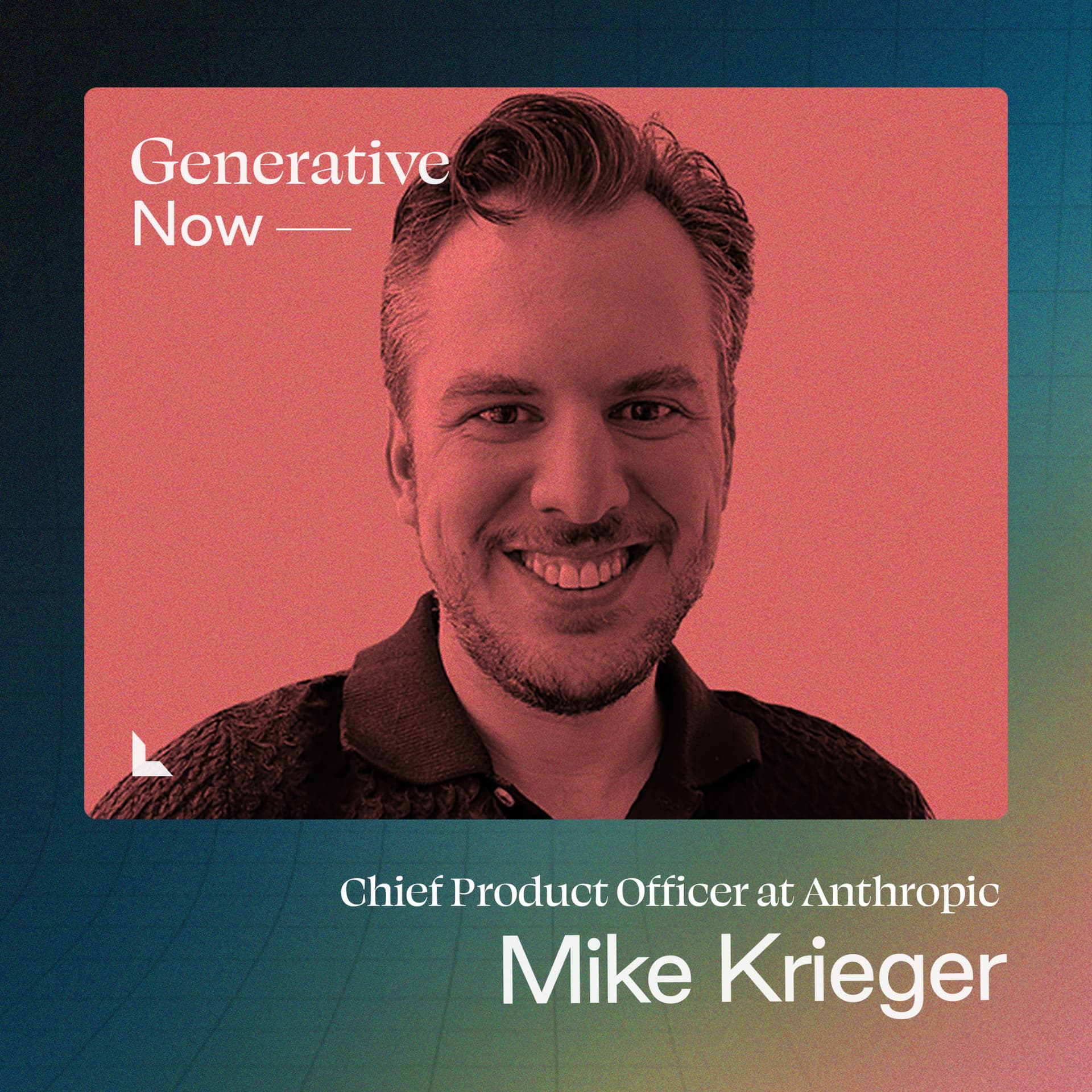
- Guest: Mike Krieger, Chief Product Officer at Anthropic, Co-founder of Instagram
- Focus: Challenges faced by AI product builders, the evolution of product innovation, and parallels between the social media revolution and today's AI landscape.
Episode Chapters
- Introduction (00:00)
- Overview of Mike Krieger's background and significance in tech.
- Mike Krieger's Journey to Anthropic (00:54)
- Transition from Instagram to Anthropic and motivations behind this move.
- Building Product Strategy at Anthropic (03:17)
- The unique challenges of crafting product strategy amidst constant AI model innovations.
- Rapid Iteration and Safety (07:43)
- Balancing speed of innovation with safety and ethical considerations.
- Differentiating AI Models and User Experience (10:58)
- How unique AI models create distinct user experiences.
- Impact of AI on Consumer Products and Business Models (17:57)
- The changing landscape of consumer products due to AI integration.
- Enterprise vs. Consumer Product Strategy (24:39)
- Differences in product strategy and user engagement between enterprise and consumer markets.
- AI in Personal Life Management (29:19)
- Applications of AI for personal productivity and life management.
- Open Source and Claude Integrations (30:15)
- Discussion of open-source initiatives and integrating Claude into various applications.
- AI-Assisted Product Development (33:09)
- How AI tools aid in product development processes.
- Scaling Teams and Processes at Anthropic (37:13)
- Insights into team growth and operational scaling in a rapidly evolving company.
- Reflections on AI and Future Prospects (42:17)
- Mike Krieger's vision for the future of AI and its societal implications.
Key Takeaways
Mike Krieger's Transition
- From Instagram to Anthropic: Mike transitioned from a successful career at Instagram to Anthropic to be involved in AI product building, citing a desire to engage in team-oriented product development in a fast-evolving field.
Product Strategy in AI
- Dynamic Product Strategy: Building product strategy at Anthropic involves adapting to rapid advancements in AI research, requiring constant reprioritization and close collaboration with research teams.
- Safety vs. Innovation: Emphasizes the challenge of innovating quickly while ensuring product safety, reflecting on the need for a careful approach in AI deployment.
Differentiation in AI
- Unique User Experiences: Different AI models offer varied user experiences, with personality and interaction style being key factors in user preference.
The Impact of AI on Business Models
- Shifting Landscapes: AI is reshaping consumer products and business models, indicating a transition towards more efficient and automated processes.
Enterprise vs. Consumer Strategies
- Feedback Loops: Distinct strategies are required for enterprise versus consumer products, with enterprise engagements providing richer feedback opportunities.
Future of AI
- Human-AI Collaboration: Envisions a future where AI enhances human potential, enabling creativity and productivity without significant barriers.
Reflections on AI's Future
- Optimism for AI's Role: Mike expresses hope that AI can help people reach their full potential, enabling creativity and innovation across various domains.
- Ethical Considerations: Stresses the importance of designing products that positively impact society and the need for responsible AI deployment.
Conclusion Mike Krieger's insights provide a comprehensive look at the intersection of product development, AI advancements, and societal implications, showcasing the potential for future innovations that prioritize user experience and ethical considerations in technology.
---
Stay Connected
- Lightspeed Ventures: [Lightspeed Website](http://www.lsvp.com/)
- Social Media: Follow Lightspeed on [Twitter](https://twitter.com/lightspeedvp), [LinkedIn](https://www.linkedin.com/company/lightspeed-venture-partners/), and [Instagram](https://www.instagram.com/lightspeedventurepartners/)
- Subscribe to the Podcast: [Generative Now](http://generativenow.co/) on your favorite podcast platform.
Disclaimer The content shared in this podcast does not constitute legal, business, or investment advice. For more details, visit [Lightspeed Legal](http://lsvp.com/legal).
Written by AI. May contain mistakes. Listen to the episode to check what was said.
Transcript
Automatic transcript. May contain errors.0:05Hey, everyone. Welcome to Generative Now. I am Michael Magnano, a partner at Lightspeed. And this week, we're revisiting a conversation with the one and only Mike Krieger, Anthropics Chief Product Officer and former co-founder and CTO of Instagram. Mike has one of the most impressive resumes imaginable in tech in Silicon Valley. And so this was an awesome conversation. Mike and I talked about his journey to Anthropic, the lessons he's taken away with him from Instagram, and how he thinks about differentiating Claude from their competitors. Here's the conversation. Hey, Mike. Hey, good to see you.
0:41Good to see you. Thank you so much for doing this. Thanks so much for having me. Man, I have like so many things I want to ask you. And we have limited time. So I'm sure I'm just going to like rapid fire at you. The biggest question I have had since I learned that you were joining Anthropic was, how did you go from building one of the most beloved consumer apps in the history of technology to building at a place like Anthropic? so focused on research and technology and building sort of state-of-the-art AI models. It was such an inspiring and surprising move. I would love to just start with the story of the transition.
1:18So I lasted two months in semi-retirement, which was not as long as I lasted. Between Instagram and the second company I did, which is called Artifact, a year and a half off. This time around, I think the difference was Instagram, I kind of felt complete at the end of that journey and needed some rest. It was like a very intense, like eight years. the artifact was like, you know, the product was really good. We didn't hit product market fit. So I was like, like champing at the bit, like, I want, I want to get back in the seat and I want to, I want another swing. But I'm a builder. I love building, I love building both products and teams.
1:49And so as that was ramping up and I was thinking about what was next, realized like, I mean, those things I absolutely love about doing that zero to one startup journey, this huge sort of uncertainty bars on whether you actually get to work with a bigger team at any point of that journey, right? Like if you do it really well, then you get to hire up and it's great. We got to do that on Instagram. Didn't really get to do that article. I could be at 13 people. And I realized I just missed being in that sort of larger, you know, multiple teams doing multiple things at the same time, like feeling like you've got all these parallel threads happening.
2:19And I started seeking out where will I get to do, and I thought it might be impossible, where do I get to do zero to one product building, but in the context of something that is more of like an existing team and a company that's already got some momentum and some energy going. And and a culture that I'm aligned with. And the kind of two options that kind of leads to is you go start a brand new initiative at a much larger company, which has its benefits, but then you always have to ask the question, like, why hasn't this existed before? You know, like, why is this company finally investing in this now?
2:52And, you know, their trade-offs. Or, you know, in Anthropik's case, which was company existed, the research team was already world-class and product was still really early. And so there's a really good confluence of what I wanted to do next. I wanted to get closer to AI. the kind of company I wanted to be at, which was one that, you know, had some momentum, but was still really nascent on product. And then just the need from Anthropic, like they'd been looking for a head of product and it kind of all coalesced really beautifully. Like, you know, it was meant to be. When I think about a company like Anthropic, especially as someone who has also built product and led product strategy, I feel like it must be challenging to build a product strategy around just constant model and research innovations, right?
3:33Like you're working very, very closely with the founders who are researchers and you're building strategy based on whatever is state of the art, whatever is cutting edge, which I imagine was probably much different than building, say, an Instagram or an artifact where I think probably in real time you're sort of inventing, you know, product dynamics and new social experiences and new UX paradigms. It feels like a different type of innovation. Just talk us through some of how that strategy comes together, working hand in hand with research. Well, the closest parallel, I think, of the Instagram days was like the yearly drop of things that would happen at Google I.O.
4:12or WWDC. We're like, OK, this is this has been delivered to me, you know, from Cupertino. And now I got to go figure out if there's some product to be built around that. This is like that, but on like a monthly basis that it's inside the building. So it's as that similar sort of in the WWDC case, you kind of plan around those moments, right? Like there's going to be a new phone or there's new OS. Here it's unfamiliar and unpredictable timelines in both directions, right? Sometimes you say, great, I'm going to have, you know, my beautifully lined up, you know, three months, like three months. And something on research hits sooner than you expected.
4:45And, you know, computer use, for example, for us, like it was October, November, as we were getting ready to launch the model refresh for Sonnet. we realized computer is actually at the point where we wanted to at least put it in the API as a beta. And we went from, yeah, that's probably like early next year to, yeah, let's actually get this out once we get through all the safety testing in like three weeks. So, you know, that sort of can pull forward, but also it's research. So it also could take longer. Right. So it's it's it's a lot of sort of dynamic reprioritization. And I like to joke with the product team that like if we froze our researchers, we shouldn't.
5:18We love them and they shouldn't be cryogenically frozen. But if we did, like we should still have like a year of roadmap ahead. Like I think the models still have a tremendous amount of sort of juice left in them, even for the current generation. And so what it's meant is a sort of portfolio approach where we've got a team we call Labs, which is paired with early research. And the idea there is if research hits sooner than expected or on the timeline we expect, we're not waiting for them and starting the product process. To that point, you're, you know, months behind where you could be. Let me have like model dependent or model adjacent features that are either in the current model or upcoming features, but still require a lot of research product collaborations, something like artifacts, which we launched last year, you know, ongoing improvements that often require some fine tuning of the model.
5:59So you got to stay close to doing research and product. And then there's stuff that's just like good product work that is like probably using the model in some way, but not requiring some model leap or some model like customization. And I've learned, you know, over the last year, you're just having a portfolio of those is healthy because at any given moment, you'll either need a spike on one that you didn't expect to, or if something's taking a little bit longer, great, you can put that time into product polish or rounding out our mobile features or doing some other work that is a little bit outside of the model work.
6:27So would you say like the biggest steps forward in the product often come from, you know, a certain product vision that then drives the research work or is it the research, you know, there's some breakthrough and then you and the team are like, hmm, what's something amazing we can do with this? Oh, it can write code. Let's turn this into artifacts. In what What direction does it normally go for the biggest product innovations? The way I would put it is the sort of model gets you to like another sort of like level of capabilities. And then it's a loop of what product ideas do you have and can you fine tune them into the model?
7:01So I'll use an example of like agentic capabilities, like in cloud three by Sonnet, especially the refresh, which unlocked a bunch of coding startups doing a lot of interesting work around agentic coding and code editing. And then, you know, even for us within Cloud AI, like artifacts and improving artifacts, we could do that in a tight loop with research. So it's sort of these step changes that happen probably at model release time. And then you can do some incremental work, sometimes even in just prompting examples, but often in customizing the model as well. And so it ends up going in both directions, but the research team has more of, you know, sort of a three, six, nine month roadmap that they're trying to deliver on.
7:38And then we can do tight loops on top of each of those. Speaking of tight loops, another thing I was thinking about with building product at a place like Anthropic is I have to imagine, given all of the safety considerations I'm sure you all are constantly making, it's probably really hard to do the type of rapid iteration that products and companies like Instagram and Meta were famous for. Like, you know, ship fast, move fast, break things like, you know, Meta is famously testing, you know, however many different variants all at the same time. I guess with the constraints of safety, that's got to be really, really hard to do.
8:13Is that right? The way we think about it is there's kind of two ways in which I think that ends up being plays out in the day to day. Like one is for like model releases. You know that there's like a safety sort of testing and responsible scale and kind of evaluation that happens there. And that's, you know, when you just think about timelines, you know that model releases anyway don't end up happening so quickly that that ends up being like the difference between being able to do like one or four in a month. you know, they're more deliberate anyway. And so there's that component there. Then there's the piece that I think is also really interesting around the relationship people have with the model.
8:49And what I mean by that, and this goes into the testing question, you know, because in some ways you can imagine, well, maybe we train like five model variants and we A-B test them and we do some of that. But we also find that people become very attached and attuned to how the model reacts to them and like how it talks to them. And so people will catch, I love there's all these, you know, sort of cloud related Reddits. and you go on Reddit and people are definitely like, are they testing a new model? And sometimes we aren't, sometimes they're not and people are just like looking for changes when they don't exist.
9:15But it means we have to take an extra level of care in terms of like how we treat experimentation and the sort of like commitment people have or relationship people have with some of these things. The other piece is, you know, versus an Instagram where people, you know, some people rely on it for business, but the vast majority are using it for more of like a, and consumption and entertainment use case. And here people are getting like work done And if you change too much about the model or even the UI from one day to the next, it really breaks their workflow and you've gotten in their way. And so I'm still trying to find that balance between, you know, at Instagram at any given point, we probably had like 50 different A-B tests running, right?
9:53That combinatorial thing of like, have you sliced the possible universe of users into like enough slices where you know you're not intersecting different treatments with the like extreme of like, hey, we ship software once a year and we don't want to mess with people's workflow. And the answer is definitely neither extreme. And maybe there's more UI experimentation we can do on this rapid iteration. And then maybe model releases form a nice cadence of, right, this is a time where we're like getting people to see that there is a different way that they might want to get work done, or we're okay disrupting work, or at least like offering an upgrade about how we might do things, but know that there's a reason and there's like a name that we're putting around those things.
10:30But if you identify something that is definitely true, which is the nature of experimentation looks quite different here. Yeah, it has to be. And that's surprising, but also, I guess, not so surprising that your users are noticing even the slightest differences in the model. It makes sense. I mean, one of the reasons I love Claude and I use it is because of the personality, the tone, the way it speaks to me. These models, they seem to have different flavors in some sense. Yeah. One of the things I've been thinking about, especially as it relates to models coming out of different labs and we'll talk about things like DeepSeq, it feels like the pace of model release and leapfrogging, it's such that it's moving so quickly.
11:13And so I guess my question for you is, do you think we end up in a place where there actually is not a lot of difference between all the different models in the end? Or do you think the things that make something like Claude unique or, you know, a ChatGPT unique will remain and that will become a key differentiator between the models? Yeah. And I think it's probably worth talking about like models and products. We had Instagram's kind of most interesting kind of like competition with Snapchat at the time. And people would ask like, well, like, you know, you took, you know, the stories approach that they took and made it more Instagram and put it in Instagram and things with the other way as well.
11:51And I had this like non mathematical formula. I always joke by non mathematical formulas here as like the non researcher in the room. Like what makes a social network? And to me, it was like formats. At first we had fee and then we had, you know, stories, which we had reels. Now they have like, you know, shopping. And then there's audience who's actually, you know, visiting your network. And then there's vibe, which I realize is a fuzzy term, but is also really important. And so I would compare us and Snapchat, where formats were similar in a lot of places, right? The audience, maybe they skewed younger, but in the fullness of time, there was quite a bit of overlap.
12:26And the same people would actually use both. But the vibes could not be more different between the two, right? Instagram, we had started from a place that would be more curated, polished. And then with stories, we maybe took that out a little bit. But you took the stories from Instagram and Snapchat, and they still felt quite different, right? I think there's a similar thing and I haven't formalized my non-mathematical formula yet for LLM and AI related applications. But I think there's something similar at play where I see people go on X and talk about how Claude is their therapist or Claude is their like, you know, trusted friend or like they delegate decisions to Claude because it's like a trusted person.
13:01Right. our friend was having a medical situation and Claude eventually like all caps was like, go to the hospital now, like shut up, leave. And like Claude just has like a bit more personality than perhaps than some of the other models. And so I think that'll continue to be really important, which is even as, you know, we'll all co-evolve what the right UI is around these things. I think, you know, like artifacts, ChantyPg is canvas. I think we'll both like continue to evolve it. Like we'll see what Gemini does. I think there's lots of Google teams experimenting with different ways in which they could use use these models of different product applications.
13:34You see a deep seek come in and have a different take on whether you show the reasoning versus not. These things will all happen. They're not absolutely different. And sometimes the team here is like, well, how do you think about differentiation? Any kind of product differentiation in the short term is fairly short-lived because you're going to see different ideas get borrowed. I think that that's fine and actually probably healthy for the ecosystem. I think what is different over time is probably two things in this case. One is actually Vibe, which is like, what does it feel like to use a Claude versus a Gemini versus a ChatGPT versus a DeepSync?
14:04Those things, I think, should probably evolve to be quite different over time because the people that gravitate to one or the other will want more of that. And I think that will naturally lead the product to lead in that direction. And then the other part is capability, where at any given point, I think you'll see different models spike on different things. So right now, Claude's your Vibe Sonnet and coding is like one really clear sweet spot. Claudine, creative writing is another one that we hear a lot where like the model does a good job of producing output that way or even just content creation.
14:33I think over time, it's likely that those differences become more acute rather than less acute. And even if on the eval side of things, you get a lot more parity where we're all chasing some, you know, similar evals. I see the disconnection between what the evals are measuring and what's valuable to individuals or even companies like get wider over time until maybe we have some different way of evaluating these models. The eval is super important for the training part, so don't get me wrong. They'll continue to be really important, but they're not in the full picture is what I've experienced on the product side.
15:05So you're saying customers more and more will come to associate certain products and models with certain capabilities. Like, oh, Claude is great at programming and ChatGPT is not. I'm making that up as an example. You think that actually becomes more pronounced over time? I think that's what will happen. And this is how I feel when I use this versus the other. I want this experience versus the other one, too. Right. The vibes, the vibes. That's super interesting. I mean, I do feel like you said formats are easily, you know, ported over to different products. But I do feel like Anthropic has done a really, really good job sort of at the presentation kind of application layer.
15:43I feel like you have in many ways out innovated or at least outpaced in terms of innovation at the product layer. Things like artifacts, projects, computer use. How important is that to you and your strategy? And I guess in the context of what you just said, will that remain an important part of your strategy? The way I see it is, are you unlocking something novel that somebody can do? This journey is 1 % finished. Like, I think we're even less than that in terms of like how these AI products kind of manifest. Like we're so early. And so can you build these sort of product primitives that are going to unlock some novel behavior?
16:18I'll give you like a specific example. We have projects and everything you can do with projects you could cobble together either with just regular chats or you're doing your own thing. But the fact that we have this container for it means that we hear from people that say, hey, I have a project for all my health records. It's like one place where I know to go put like every single thing. I definitely do, too. I got to talk with Claude all the time about, yeah, I've got this new blood work. Like when it was in me, I was having low blood pressure for a while and I was like tracking all that. It gives people like sort of like a container and a shortcut for how to use it.
16:47A lot of what we're thinking about over the next couple of months in the product is what are the sort of surfaces or capabilities we unlock that help people like take what is a expert use case or something that if you absolutely know how to prompt it and get the right data and it's great. And then just get cloud to do it for more people so that it can unlock value for for for others. And like that's like a lot of what I think we need to be doing on product overall, not even just that in traffic, like industry wide around like lowering that barrier and like the state of the art on lowering that barrier.
17:16mid last year was like suggestion, you know, chips around like ask them all about these things. But even that without the actual right context, you're actually not going to get a satisfying answer. You're going to get some like fun entertainment use case, like tell me a joke or write me a poem. Sure. That was great. And like the beginning of 2024. Now I think it's much more like, and it's a challenge because this is like not an instant thing, but you know, is it connected to the right data sources? Does it have the right context about you? Do you know how to then use it? Like, is it producing useful work on the other end that you can then port or use into whatever actual like daily work you have?
17:49Like those things become much more important. And like we build products in service of that versus just, you know, as additional ideas on top of cloud AI. Shifting gears a little bit, arguably one of the most successful ads based products ever with Instagram. it feels like something that is happening with the internet and sort of the business model of ads and the internet up until this point is it's shifting as a result of AI and agents. Is this something you all think about, especially you, again, given your history and given your background, like how do consumer products, especially those that are ads based, start to evolve when more and more non-human agents are starting to access the world on the internet?
18:32Yeah, I think you can look at it in a couple of different ways. In one way, if we deliver on the promise of these tools collectively as an industry, it should ideally save people quite a bit of time that maybe now can be spent on more entertainment use cases. So ads and that sort of set of media might actually become more important because maybe we have more free time. We'll see how that ends up working out. Then there's the other piece, which is how does the web evolve without primary user, if not the primary user of the web ends up being like more automated agent wise. And we started seeing this with Artifact.
19:04Artifact was an AI powered news recommendation app on iOS and Android. And I think we're experiencing there was like peak, like overly, you know, and nobody's individual fault, just like the way things have emerged. But like the mobile web is just, you know, you land on a website, it's like full screen video ad, pop up, subscribe to a newsletter. And ultimately, like an interesting question, like why didn't Artifact work? I have lots of thoughts on that. One of it is like as polished as we could make the raw feed experiences. Unfortunately, like the kind of like content behind the click was not very like easy to consume or good.
19:40There's systematic reasons why that was the case. You know, I think local news is, you know, really hollowed out. I don't think anybody at these local news that wakes up and is like, how do I put more ads in here? They're like, we've got to do it to stay afloat. So I absolutely get how we got we got there. But then I think the next leap is like from, you know, different sites that can browse the web and summarize them, et cetera. Like you're not even seeing that content. And so regardless of whether it's agents or whether it's, you know, perplexity going and doing summarization or, you know, any number of these search places, we're going to have to see a shift in business models for these sites anyway.
20:14We're going to have to see a shift from this relationship between a writer, publisher and an individual around what does it mean to have, you know, even if it's not a pure agent, it might be like a short. term browser. And I don't think anybody has the answer there yet, but also a world where we're so detached from the writers. But in the content, I think it's a not great world. And so how can AI products actually be better conduits? I tweeted about this email product called Quora built by the folks at Every. And I get newsletters in my inbox and it does summarize them, but I actually find it really valuable because before, you get like, no opinion, the latest no opinion, and you're like, okay, there's a subject line in the first line.
20:52Like, do I want to read this? like, I don't know, I've got a lot going on. But actually, now I get like a paragraph of what it's about because it's like summarized around with the rest of my email. And I'm finding I'm reading more because I'm like, oh, that actually sounds great. I actually am going to click through. I'm confident that like, it's going to probably be worth my time because it has a lot of things that I'm interested in. So there is a way in which it's symbiotic. I'd be foolish to believe it's like purely going to be additive in terms of like read time and clicks, but there's a way it can be more symbiotic.
21:17Do you think that publishers on the web, whether, you know, writers, publishers, or really just anyone that's hosting a website or a service on the web? Like, do you think there's going to be resistance to agents or computer use going out there and browsing on behalf of users, either because, you know, whatever, it's going to break their business models or, you know, it's going to overload them with traffic. Like, do you think they're going to try to fight that maybe like at the CDN layer? The tactics we'll have to sort of see and see how that evolves. I think that like the relationship one is really the question I come back to, which is like, you know, I read The Verge a bunch And I saw that I started subscribing to their sort of monthly subscription.
21:55And like the impetus for it was like, I want to read one of their newsletters. But now it's like, I feel like I have a different relationship to that site or a big defector for sports news, right? And so I think there is that like evolution happening. And while that's happening, maybe there's, you know, resistance on some sides, innovation than some other places, you know, different sort of approach to monetization, a different approach to meeting people where they are. Email's actually been an interesting one. We're like, that's where a lot of content gets consumed now. We'll be in shifting sands for sure over the next couple of years.
22:25Speaking of this topic and Artifact, you know, I know Artifact was somewhat recent. I think it was only, you know, you started only maybe two years ago, but it feels like the world was completely different. Do you think you would have done things differently if that company had been started today? Like, do you have, are there far more capabilities today through AI that maybe would have made that product and business work as you originally envisioned? Yeah. And it's interesting just watching how quickly things evolve. I think the final version of Artifact, we eventually sold it to Yahoo, but if you take the version that we had right before we shut down, it had started incorporating a lot more of what had become available just in those previous years, like LLM APIs.
Read the full transcript
23:02So we could do summarization, we could do clickbait rewriting, we could add AI and hopefully value add and user focused ways. But you're doing it off a base that doesn't assume that, right? So the product has to evolve. was playing with particle.news, which is like another take on like AI power news. And they feel like if you had started Artifact in 2024 rather than in 2021, like we did, where would you start? Well, you'd have a lot more around like AI aggregation and you'd have even the ability for AI to read you like the top news of the day. Like you would approach the product in a different way.
23:38But I think the really fascinating question is like, is that going to be true on like a yearly basis? Like a year for an hour, like, oh, that was like great for 2024. before and maybe it continued to evolve. But like, actually now we've got this, you know, this different approach. It's just the capabilities that you have access to that previously might have taken you like years to build out as a startup. It might not even been achievable without a much larger research team or a much larger data set are now available and like they get cheaper by the month. It feels like, so like, how do you like think about that in product and be willing to like actually question a lot of fundamental assumptions about how a product works?
24:10Like I think I would have been interesting to do with Artifact was like in the last few months, like actually like pared down completely. Actually, that's great. Because at this point, we'd ingested like three years of news data. We had like a really rich corpus. We had one prototype that was fun, which was, right, like what if it was more around like conversing with that knowledge base and asking questions and maybe some of the canned questions and some of them aren't. And it was fun. It was very different. Super fascinating. So Artifact, obviously consumer product, Instagram, obviously massive, massive consumer product.
24:39We talked a little bit about product strategy inside of Anthropic, but overall, like what's it like for you to be building inside a product that I think in many ways is now catering to enterprise customers, completely different type of customer than say Instagram in some respects. What has that been like? Yeah, it's interesting to kind of build both at once because, you know, there's plenty of people that go to Cloud AI, sign up for, you know, free and a pro subscription. You learn from them in some ways, but what's really interesting is our enterprise customers, because two things are happening simultaneously.
25:09Like one, you know, it's often not the individuals at a company that are making the decision about like which LLM like enterprise, you know, software are they adopting? And instead they might get CIO or CTO buys it for them. So the buyer is a bit different, but then what's really interesting is actually the opportunity for feedback and engagement is much greater because you're really, you know, hopefully mutually invested in the success of that sort of partnership. And so in some ways we're getting richer, like actually much richer, like feedback on the ground from, you know, some of our enterprise deployments.
25:40And it's great because then you could send our applied AI team and go on their troubleshoot or go learn from those things. In the way that like an Instagram data science team and they could try to like find the in aggregate what's happening across all of the United States, which is an interesting like societal question, but it's much harder to get at that texture of the individual product. And so that was a difference in what I expected. I was like, oh, like one of the things that's going to be hard with enterprise is like you're going to lose that touch of the customer because it's going to be like the buyer is different.
26:05But actually it's been quite different. We were able to lean in there. The other piece too is you start from a different place of, all right, your company is paying for this for you. At least it will be while they're doing this either trial or this engagement. How do you prove value to people there so that it's actually become successful? The worst thing would be a year in, be like, I guess we subscribe to Cloud for Enterprise and not that many people are using. That's a failure on our part. And so shifting the balance of what user education looks like and what, it's a term I didn't even know before I really started here, which is enablement.
26:38You know, there's a lot of like sales and enterprise terms that I've like ramped up quickly on or I'd heard, you know, tangentially. The principles are the same. You want to build things that are useful to people and learn from what they're using and then iterate on that. But the like approach is a bit different. Do you think about products and the product strategy? Do you separate it by sort of consumer and enterprise or are you sort of building stuff and it's like, oh, let's now build the enterprise version of this or maybe vice versa? How does that all work? It's flowed the other way in a couple of ways.
27:06I think it's interesting as well. As an example, like we enterprise first, we built out Google Drive and Google suite integration, we've GitHub integration. And those are great starting points for enterprise because hopefully like the admin can configure that once and then everybody the company has access to and there's like some onboarding that you can do there. But ideally, like individuals can use GitHub just as much or connect their Gmail, right, or connects their Google Drive. And so it's flowed sort of in both ways where some more like general purpose features mentioned projects and artifacts, like those started like fairly general purpose and then managed some customization for the enterprise.
27:40But then also like these like knowledge integrations, I think are ultimately like how we succeed is like, can we connect cloud to the knowledge at your company and actually help you do real work? That's a company problem. That's an enterprise problem. But like individuals are trying to do that as well, just as much. And so you'll see that cross pollination for sure in the product and in an active product strategy question I have on the team brings up is, you know, right now there's manifestations of a similar product, but maybe with different feature sets, do they drift further apart over time or do they stay fairly similar?
28:10And there's differences of opinion internally. I think for the coming six months, they stay pretty similar. I think where they might start to diverge is in the kinds of work you might delegate to Cloud over time, where if you're actually automating parts of your workflow, we think a lot about how Cloud can be a virtual collaborator for you. That looks quite different, I think, for somebody working in marketing or somebody you know, working as an engineer versus somebody using cloud for their, for their personal life. Yeah, totally. I mean, even if you think about when I've tested computer use or, you know, some of the other products that are doing, doing this, like the ideas of things I want to test it for always jump to more productivity or work oriented stuff.
28:47Like it feels like the things I want to do as a consumer or things I actually want to invest my time in. It feels like in work, I have all this stuff I want to delegate. So yeah, it feels like that would be a surface area that would get far more investment in the enterprise. Yeah, I think that that's right. And I think there's also sort of a modality to it as well, where you're like, you're doing work to probably like have an organized task list. I try to do it in my personal life. I don't always succeed. I do a better job of it at work. It kind of lends itself a lot. All right, these are the kinds of things I want to carve off or like help me organize my thoughts on this.
29:16I actually think there's a lot that can be done in people's personal lives as well. Like we have two kids. They go to two different schools because they're different ages. and I was talking to a founder of a successful like sort of productivity company that uses a lot of bunch. And he's like, he's like, let me share a pro tip for you. I've got this whole workflow that ingests, we've got kids go to the same school, ingests all these emails because the emails are very, very dense, very long and like actually produces an action list out of it. I'm like, that's really smart. I should use AI for more things in my personal life just around like family life management as well.
29:46That's fascinating. By the way, I'm in the same situation as you. Two young kids, two different schools, two different like school newsletters and all this, it's surprising. We haven't really yet entered that moment where products easily integrate with our personal life, like AI products specifically. Like nothing yet is summarizing my email. I imagine Google will have some wedge there. But yeah, that level of productivity hasn't really crept into personal and home life yet. I imagine that's coming soon. In October or November, we open sourced the model context protocol, which is our take on how do you bring data into LLMs and how do you get data out of them?
30:20And we made it open source We want to just sort of foster an open ecosystem of people building on top of it. So you can use them with Cloud. You can also use it with like several editors that have integrated MCP as well, like Block just open source there, Genetic Coding Tool called Goose, and also has like an MCP compatibility built. And so it's gotten adoption even beyond Cloud. What's really cool is seeing what are the MCP servers that people build. So if you get Cloud for desktop, you can write your and integrate your own MCP servers. And if you look at the sort of things that people have built, it's things like Apple notes.
30:52So being able to talk to your Apple notes using cloud, like Google calendar, like these things are actually personal, you know, even if they're like productivity oriented, they're still like, they're pretty personal in nature. And I think that's pretty neat. And like, especially as these models, like we think a lot about these models coding and maybe in the first instance, people think, oh, great, it's going to help software engineers write code, but actually it's going to help everybody solve problems that can be uniquely solved by writing code. Right. And so that might be today writing an MCP server or like a pretty technical term, but like helping you connect to something that you already use, like Apple reminders or Apple notes.
31:26Right. But in the future, it could also be, hey, I'm like, you do some data analysis on this, you know, things I collected. Cloud can actually write code to do that data analysis and give you that response. And that is cloud coding, even if you're not producing software. Well, yeah, that's what I was going to say. Like, yeah, these things sound technical and challenging for your average person today. But also creating software and creating products is going to get far easier as a result of of cloud or AI writing code for you. And I haven't yet been able to fully wrap my head around like what shape and what format that ends up coming in.
32:00Like at what point does somebody who is not technical at all start creating these workflows out of software using AI? I'm really fascinated to see what that looks like and where that all goes. I mean, is that is that something you're all thinking about? like for sure what does claude do when consumer behavior intersects with software creation exactly or what you know one like what problem we can solve for people um and then two how do you help people sort of take an idea in their head and express it visually um i think that the thing that was really fun over the the holiday break is um a couple of people on our go-to-market team so non-engineers like people without a coding background started using things like v0 by or sell to like put ideas they had for Cloud.
32:42And then they came back from a break and they were like, yeah, I've never written a line of code in my life, but I actually built a fully functioning web application. Like let's talk about like what Cloud could do in this situation. I think that's really interesting, right? I think like the ability for AI, not just like LLMs, but also like more of these media creation ones as well to like help take ideas in people's head and then bring them to life. So they can then either become sparks for further like human creativity or something else downstream, I think is like a very cool flywheel. Speaking of that, like how how has AI assisted you in your role as CPO?
33:13I mean, obviously, you're dogfooding Claude all day long, but maybe in what ways and maybe what other AI tools are you using? So I'll talk a little bit about core. I think it's like a really interesting take on like how LLMs can like break up a traditional workflow. But even in the CPO role, I think two of two things that really stood out. One is being a great sort of like critic slash sounding board slash, you know, just external voice. So I'll often be writing alongside Claude, so maybe I'll write an outline and have Claude produce something for a requirements doc or just a product strategy document.
33:47But even if I'm writing my own things, rely on Claude now to be like, all right, what am I not thinking about? What did I forget? Or what are the holes in this argument? And I think it does quite well. It's not at the point right now where it's going to produce a flawless strategy from whole Claude. But it is very good at seeing what you've written and saying like, Hmm. You know, you haven't thought this through. You know, we actually did this as a leadership team. We did our whole like OKRing process late last year. And the first thing I did like fed it to Cloud. And I was like, great. What are we not going on that we should be going on?
34:18Like, what are we missing? And I had three very good answers. Like, this is really interesting. So so cool. Critic and then we're filling in. Also, Accelerant. I use this. We have our, you know, Google Docs integration now. And I was filling out a table. It was actually relevant to your question, which was how can Claude help accelerate product development itself? And I started building out this end by end table and I did half the cells. I was typing, I was like, I bet Claude can actually do the rest of these cells. It's got great examples now at this point. And I was basically just like, please just fill out the rest.
34:50And it did a great job. And I was like, okay, great. And then add to the cells I added, again, it had better ideas than I had in a lot of cases. So this companion assistant piece has been absolutely valuable. And I use that all the time. But some of our newer knowledge integrations, even stuff that we have internally, those have just been valuable in preparing for the day. You know, I was like, Claude, help me get ready for the day. You know, we've got these MCP integrations. And I was actually talking to this morning. It's like, you've got this podcast recording. And here's the briefing doc. Better review that ahead of time.
35:20I'd be thinking about this. I was like, great. Now I'm in that mindset as well. So as I'm increasingly aware of my work and the conversations that we're having, is just a very valuable, like additional sounding board. Do you find a lot of people on the team are doing similar things? Like are people using it in this way or is it mostly just you? It's been interesting because, you know, three months in I wrote like observations about Anthropics so far. And one of the things was like, we need to do a much better job of like using Claude internally to accelerate our own selves because it's not that it's not happening.
35:53It's very unevenly distributed. It actually goes back to the conversation we're having earlier around like, what's the role of product design and product strategy and improving the ability of people to use these models to their maximum capacity. I think we could do that just even internally. And so we had a really fun hackathon in November. And one of the things that was really cool is that we took one of the go-to-market people and they had a whole workflow around like, all right, I'm meeting with these three prospective prospects that I want to talk about Cloud for Enterprise to. I go through the same process every time around, like researching the people who matter, getting more context on this company, what's going on with them, reading their S1.
36:30like all of these things, like a lot of that can be done really well. And by Claude in terms of like summarization. And so they partnered with an engineer and they basically built that out in an automated way. It was awesome. And it was like, that's so cool. We need to do those kinds of things to like take the seat of like, what is a good use of LMs in the workplace and then make it so that it's like, you don't have to think about it. It just actually happens for you. And that's like a push I've been having actually shifted a lot more of my own attention towards internal products and internal productivity more recently, because I think there's a lot We can learn from, hey, have we actually made our sales team more productive?
37:03Have we made our engineering team more productive using some more like cutting edge things that we can do with cloud? And then can we externalize those ideas into like actual products? That's really, really cool. I meant to ask about the team. I mean, obviously, after you all sold Instagram to Facebook at the time, probably experienced massive hyper growth, not only in the product, but the team, scaling up the team. I imagine you're experiencing something very similar right now. anthropic has gotten very very big very very quickly you know still scaling uh massively it seems all the time what's that been like scaling up the team inside of anthropic also while you're still you know i'm sure acclimating in some sense this new type of company a new type of product um yeah tell us a little bit about that journey yeah i mean i think there's a few things that are different even from the compare contrast like one is um you're scaling a team that is more distributed than Instagram was.
37:55Like with Instagram, we were doubling basically year on year, but for most of that growth, it was all in Mellow Park, right? We moved to Mellow Park post-acquisition and we wanted like stay close to other technical teams that we were collaborating with. It just gave you, you visually saw how big the team was getting. It's much harder to see that when it's primarily growing in like Google meets Hollywood Square style or like Slack, you know, sort of participants for better and for worse. Like in some ways, like one sort of ritual that I did at Instagram with Kevin was we had product reviews. We realized that like too many people in the product review room started feeling a lot more.
38:29It was like a presentation rather than like a place where you could have like deeper, like nuance, like kind of like hard talk about like whether this thing was on the right direction or not. And here what I found is since a fair amount of people are like in New York or joining remotely, the room can actually feel smaller. You get a different feeling of scale with this like remote aspect of it. That's like one very notable difference that we've had here. And then the second piece is even the product has grown a lot. It is like a small chunk compared to like our research teams of people working on trust and safety, the people thinking about all of like the threat modeling and like societal impacts.
39:07There's a lot more that gets into Anthropic. And so as much as we've grown, I think I still feel like, oh, we're like, we're a small part of the company, even though, you know, proportionally we're growing similarly and it's a different feeling to have that as well. Have you been able to take lessons from Instagram, either in terms of building out the team, like we're talking about now, or even, you know, specific product lessons that you've been able to apply to Anthropic? Yeah, I think one of them has been, you know, thinking about like, what is the ultimate problem that you're solving and like remaining obsessed with that?
39:37I actually think it's much harder to do. It's hard at Instagram to have people that internally that would come up with fantastic ideas that were interesting applications of technology, but weren't on the path of what we were like fundamentally wanted to solve for like the most people as possible in AI. I feel like it's even more tempting because there's no shortage of like very cool ideas that you will come up with, you know, in prototype using Claude. And I think if we like staff teams are on all of them, we'd like to have like, you know, one, a pretty complex product, but two, I don't think we'd make enough progress because we'd be like sort of like peanut buttering ourselves over a lot of things.
40:11And so it's harder to say no, but even more important, you know, and having that focus within the team. And it's a discipline we've had to build up. And I don't think we've gotten it quite right yet around harnessing bottoms of excitement. I think it's really important. And I'm definitely not going to have all the best ideas. I might not even have most of them. They're going to come from the team. But retaining that user focus and adherence to what problem you're fundamentally solving, it is just as important, but maybe twice as hard in this space. That's, I think, one lesson that we've carried.
40:43The second one is something that I I learned, you know, at Instagram and somebody told me like, every time your company doubles, like your processes will break and your culture will break in some way. And Instagram, we basically doubled every year in engineering. And so it kind of like we had to evolve and unbreak ourselves like constantly. We've grown even faster at Anthropic in the last like years since I've grown on the products that offer a smaller base than, you know, Instagram's growing, but still. and I think we're probably like one organizational and process refactor wise away from like things really humming and I'll really get any given point I'm like oh that part's feeling good that part's not feeling good one thing I learned at the time at Instagram was you could put all the processes and like organizational stuff in place nothing beats like either getting on the ground and trying to do some work yourself like I would still IC engineer at Instagram until the year I left or just like having really high, like bandwidth communication with like, I'd seize on the ground.
41:39Um, and so like immediately after our conversation, like I have like a couple of, uh, one-on-ones with people that are like, you know, all over the place on the yard chart, but like, I want to hear from like, what is it like on the ground building product at Anthropic today? And like, how can we make that better? And I think you need to bring, like maintain that contact. It's harder as a non-co-founder, like Instagram, I knew who everybody was that I started there. I hired up a lot of that team. I was still engineering. I think one of the challenges coming in is like, I don't know everybody yet.
42:05Still, I probably know most of the people that, you know, I'm going to interact with. But two, like, I don't have as much that on the ground tactile feeling of like, what is the state of our code base? And like, what's it like building an anthropic today? Yeah, that's fascinating. Maybe zooming out a little bit, you know, thinking a little bit broadly about AI and sort of the future. Obviously, you know, one very topical thing is DeepSeek, especially in the beginning of the week. It seemed like the only thing anyone was talking about. What did you take away from that whole moment for, I guess, the state of AI and sort of model development moving forward and maybe Anthropik more specifically?
42:38My wife's great aunt texted us and I was like, OK, let's definitely. Oh, yeah. My parents were asking me about it. Crossed over to something. Three takeaways, like in no particular order, like one, open people's eyes up. You know, Claude, I think we've gotten great business penetration. and our API is used really well, but I think we saw a lot of ways to go on just getting the word out about Cloud AI and getting people to at least experience and make a choice for themselves. I think it was interesting for people to see that there was more to the world than just chat GPT, transparently. I think that's a good thing that people experiment with these different tools.
43:11So I think that I see some positives there. Two, like many sort of personal opinion, like overreactions that I've watched in the market over the last 10 years, it's just fascinating watching it. like one of my favorite writers is John Adley. He writes for Bloomberg and, you know, he's like a finance writer. And he had this great column once where he was like, if you had like fallen asleep two weeks ago and woken up today, and it had been like some like market swoon. And he'd be like, wow, the market moved like half a percent, like not that much. And like if you're awake for all of it, it was like the whole like sort of like bumpiness.
43:43I really try to take that perspective, which is like the short-term ability to like overcorrect and snowball is like very real, you know? And so now that now I just do those things, like, okay, let's write it out. What's actually changed? We need more compute than ever over here. So the role of chip companies and the role of scaling up on, if previously it was purely on pre-training, now more on the RL site is absolutely more important than ever. And then Derek made this point this week and really resonated with me too. And just, if you now have an even more sort of high value scaling opportunity around RL, you should be incentivized to do that for even longer.
44:23you know and like if you can train for five times as long now and have you know five times the intelligence that's a very worthwhile investment to make so that fundamentally has not changed at all um but the third piece is like just perhaps the four sort of like the geopolitical implications of all these in a way that i've been bubbling over and is now like unignorable and like it's great let's have that conversation now because you know as timely as time has ever to have um and um i think like it's sparking the right company by whatsapp groups or anything to be seen and beyond just like the the the broader you know sort of reach that it's had for society like it definitely sparked some some real i think very timely conversations around that and i think that's that's a plus on the last point like it it it definitely seems like it's forcing conversations and forcing people to kind of like confront how or why this happened and and i agree like that's probably a conversation we we should have and yeah it's forcing people to ask questions like you know did a major distillation happen and what's your thinking on that it's really hard to say i I mean, I think the whole separate topic that I think is interesting on like model tells, like we, not the refresh sonnet, but the previous one used to start a lot of answers, but certainly it became like an internal meme where we'd be like, so we tell if a model has been distilled from it.
45:33If you ever saw like, you know, instantly start like, certainly like, that sounds like sonnet-ish. So I don't know the OpenAI models well enough to know like some of those kind of tells were present or not. But yeah, I think it's on all the labs, I think now to be like, okay, great. Like if there's things that we need to lock down and protect or at least detect like that work to be done. And then like the imperative to continue innovating and scaling is like more important than ever, I would say. And then, yeah, I totally agree on the second point. And as far as like the overreaction goes, Anthropic, OpenAI, like these are companies, they're products, they're more than just models.
46:08And yet it feels somewhat reductionist to be like, oh, there's another model here. Let's wipe a trillion dollars worth of value off NVIDIA just like that. Like there are lots of other factors here. I spoke to the CEO summit on Monday and people were like, well, what do you like? What do you think the sort of impact is on the enterprise? And like, my honest answer was like little to none, because every enterprise conversation I have is not we want to buy your model or like we want to exchange input tokens for output tokens. Like that's not what people are looking for. Like they're like, we want an AI partner that will help us like co-design our big bet on our internal transformation and like also assist with like getting like our products to be more, you know, AI focused and also like be part of your customer advisory board.
46:50So we're like also part of like the community of excellence around using AI. It's like that is the relationship that you want to have. Like you're picking an AI partner, which just transparently, the list that you're going to choose from is going to be quite small. And like, that's a lot of the capability that we've been building up in the last year is going beyond that. Tokens in, tokens out and being more of like a partner that can connect you with the right, you know, solution as things evolve. And that's going to continue to be more and more important. And like if you look at like the, you know, valuations of these AI companies and you think it's just purely on model quality, like model quality absolutely matters.
47:22But it's also like the company and the sort of support and the infrastructure that you build around that is like equally important. Yeah, I feel like this has forced a big conversation in recent days. People have not only recognized and acknowledged exactly what you just said, but it feels like it's put a whole new spotlight on like the product, which obviously you're in charge of and the application layer in general. Do you think like now is the moment in AI where the application layer is going to start getting a lot more attention and people will be more and more excited about the products, which is something I think people have been waiting for for some time?
47:55I think there's a lot that will happen there in two ways. One is, as the models get more and more intelligent, especially as they think for longer, the things that they excel at, like competition math and what a lot of people are using them for, are going to be more and more disconnected. I think we have a really interesting product challenge just to find what are the real problems we can solve for people that are solved by models that use more test on compute. Nobody has an answer to that. That's really solved yet. If you talk to most people, how are you using these reasoning models in your day of life?
48:27They're like, I don't know, ask them to think about something for a long time. That's an unsolved problem. So I think it's an exciting problem still. But then the second part is how do these models actually start playing longer and longer roles in people's lives? Because it's not just the ability to reason about something for a while, it's also the ability to sort of agentically act and then reflect on that action and go off and do things like our computer use thing or operator that that uh open ad put out like that's really interesting that's a whole new front on on the consumer and business product that we'll definitely see over the next few months looking back your former life building in the age of social media you know you experienced that whole whole cycle and now like you're right in the center of this sort of next cycle around ai again sort of with a zoomed out view like what what parallels are you seeing between these two eras?
49:18A Cambrian maybe explosion of companies that happen in social media kind of mirrors a lot of what's happening somewhat in AI as well. Like either companies like doing their own models or building software, take your incubator startup accelerator, like AI, AI, AI, AI, right? And like we saw that actually in social media as well. And definitely some breakthrough and become sort of a important long-term company that is like self-sustaining. and then lots like get absorbed and good ideas end up somewhere else or they consolidate or they sell. Like I think that parallel is definitely real as well. You know, I remember like, who's going to be the Instagram of video and it turns out Instagram and it being the Instagram of video, but also like - Not social cam.
49:57Not social cam. Yeah, exactly. But like other apps like did emerge and carve their own space. And so the moment I think is definitely one of like the sort of outward sort of ideation and creation I think is great. And there was inevitable consolidation that we saw on social media. I don't know if you see it in every way, but like we'll see an AI as well. And then another one of these and we'll expose that. That's one piece. The second one is like, and in some ways the deep seek part contributed to this too. Like you would have these moments of like greater awareness, right? Like for us at Instagram, it was like the first time Instagram was in like a major hip hop song.
50:31You're like, this has now emerged beyond like early adopter, you know, Instagram photographer. It's now culture beyond that. Right. And so that's cool. Like, you know, the first time it's not in a movie, you know, it's in a trailer. So we're like, OK, great. You know, and I think it only ratchets up because like it gets ever sort of wider reaching implications and like the name Deep Seat did that, but like not the usage. Right. Like regardless of where they were in the store, I don't think like, you know, then your answer might be super technical, but like, you know, it didn't break through like usage.
51:03Like they're not like everyday people being like, I'm going to compare and contrast the chain of thought between, you know, three, five, five, five, and I don't know what it's like not happening. Right. But like that will happen. They'll continue to happen. And I think the really exciting part being in product, in person, social media, and now here is that you get to play a part in shaping what that sort of looks like and how you introduce it to people. And then also like one of the reasons I joined the topic was like hopefully shaping in a way that is like really positive for people and solve their problems in a way that they feel is like really serving them.
51:33And that sort of, you know, step by step is, it mirrors it. It's probably gonna happen faster than it did in social media. I mean, that whole journey for me was about eight years. And it obviously continued afterwards. But, you know, I'm a year in here. And how do you feel like we've got like four of those moments in the last year? Last question. If we were to look out into the future, maybe 10 years as we sort of race towards AGI or ASI or wherever we're going to end up with that, what role do you envision Anthropic playing in that future? There's two things I think a lot about. One is, have we helped people be their maximal versions of themselves?
52:09So if you're a person that is creative and you want to explore that creativity 10 years from now, is there basically no impediment to realized ideas or realized creations other than your creativity, your time, your effort, et cetera, and multiplied by Red Drompick? I think we'll be serving people well if we are doing that piece. and then like i often joke you read machines of living grace which is an essay that dario wrote like he's like in some ways it's like manifesto or sort of you know like visionary piece and like i joke with him i'm like i also think of it as a roadmap like it's not going to be one of your roadmap but it is like what i want to get to like we should be helping in life sciences we should be helping in civic society um and we should be helping and like helping the economy thrive and all of those things.
52:57And that's not today, you know, but, uh, I think the greatest challenge, I think the, the, the reason I am here is can you translate the model capabilities and potential? They're not going to magically have societal impact. They need products. They need people using them and they need to be put into the context that they're actually going to be successful. They need the right guardrails. Um, that's how we succeed. You know, like there's The word I learned last year is viscosity, at least as applied to society. The world has a fair amount of viscosity and the way that you get ideas to penetrate.
53:33And so it's not just the future is here to just unevenly distributed, but actually evenly distributed or more evenly distributed. I think it's through good design and good product and good building. That's how those two things coalesce. Love ending on optimism. Mike, thanks so much. This has been a blast. Really, really appreciate you joining. Same. Really enjoyed it as well. Great to see you. You too. Thanks so much for listening to Generative Now. If you liked what you heard, please rate and review the show on Spotify, Apple Podcasts, and YouTube. And of course, subscribe. All that stuff really, really does help.
54:05And if you want to learn more, follow Lightspeed at LightspeedVP on X, YouTube, or LinkedIn. Generative Now is produced by Lightspeed in partnership with Pod People. I am Michael Magnano, and we will be back next week. See you then.
From the publisher
This week, we are revisiting a conversation between Lightspeed partner Michael Mignano and Anthropic’s head of product, Mike Krieger. Mike is known for co-founding Instagram, one of the most beloved pieces of consumer technology, and now he has taken his talents to Anthropic. They discuss the challenges AI product builders face and the evolution of product innovation and draw parallels between two transformative eras: the social media revolution that gave birth to Instagram and today's AI renaissance.
Episode Chapters:
(00:00) Introduction
(00:54) Mike Krieger's Journey to Anthropic
(03:17) Building Product Strategy at Anthropic
(07:43) Rapid Iteration and Safety
(10:58) Differentiating AI Models and User Experience
(17:57) Impact of AI on Consumer Products and Business Models
(24:39) Enterprise vs. Consumer Product Strategy
(29:19) AI in Personal Life Management
(30:15) Open Source and Claude Integrations
(33:09) AI-Assisted Product Development
(37:13) Scaling Teams and Processes at Anthropic
(42:17) Reflections on AI and Future Prospects
Stay in touch:
LinkedIn: https://www.linkedin.com/company/lightspeed-venture-partners/
Instagram: https://www.instagram.com/lightspeedventurepartners/
Subscribe on your favorite podcast app: generativenow.co
Email: generativenow@lsvp.com
The content here does not constitute tax, legal, business or investment advice or an offer to provide such advice, should not be construed as advocating the purchase or sale of any security or investment or a recommendation of any company, and is not an offer, or solicitation of an offer, for the purchase or sale of any security or investment product. For more details please see lsvp.com/legal.


