
In short
Global News Podcast covering Spain’s Ceuta migrant surge (about 60,000 people from Morocco in 24 hours), FIFA’s backlash over selling World Cup stakes, Hamas’ claimed Gaza disarmament-for-withdrawal deal, a Broad Peak avalanche rescue in Pakistan, Myanmar refugees in Thailand, a humpback whale birth in Australia, and a history of declining kissing.
Guests
Gerald Knauss (European Stability Initiative chair; negotiated EU-Turkey migrant deal in 2016). Sarah Rainsford (BBC Europe correspondent). Johnny Diamond (BBC interviewer). Adam Wilde (BBC sports reporter). Yolande Knell (Middle East correspondent). Sebastian Usher (Middle East analyst). Caroline Davis (Pakistan correspondent). Jonathan Head (Southeast Asia correspondent). Katie Barclay (Macquarie University historian of emotions). Alexander Forrest (whale photographer). Kylie Pentelow (interviewer).
Key claims
Ceuta arrivals are “an attack” blamed on traffickers; at least 40 drowned. Spain says regularization doesn’t incentivize Moroccans; EU calls returns “swift.” FIFA plan faces UEFA/CONCACAF/Asian FA opposition; advisor Carlos Cordero quits. Hamas says it will disarm if Israel withdraws fully. Broad Peak avalanche killed at least four; six still missing. Kissing in public is declining.
Notable examples
Ceuta beach with inflatables; Broad Peak climbers thrown 500–1,500 feet; Mesot safe houses for Myanmar teens; whale calf filmed during humpback birth.
Written by AI. May contain mistakes. Listen to the episode to check what was said.
Chapters
Tap a time to open that second in VOSpain's Migrant Crisis Overview
0:00 to 0:17
An overview of the migrant influx into Ceuta from Morocco.
“This BBC podcast is supported by ads outside the UK.”
Spain's Migrant Crisis Overview
0:24 to 0:37
An overview of the migrant influx into Ceuta from Morocco.
“Their advanced search filters allow you to explore 2 million new and used cars so that you can find the perfect car.”
Spain's Migrant Crisis Overview
1:23 to 2:21
An overview of the migrant influx into Ceuta from Morocco.
“Spain's Prime Minister and the European Commission have condemned the influx of tens of thousands of migrants from Morocco into the Spanish territory of Souta.”
Prime Minister's Response
2:21 to 2:55
Spain's Prime Minister condemns the migrant situation as an attack.
“which has been overwhelmed by an influx of around 60 ,000 migrants entering from Morocco.”
Migrants' Perspectives
2:59 to 3:58
Personal stories from migrants attempting to cross into Ceuta.
“Officials say at least 40 people died trying to swim around the border.”
Analysis of Migration Policy
3:58 to 6:00
Discussion on migration policy implications and responses from authorities.
“It is quite a significant moment, let's say, in terms of migration policy and migration activity around that border.”
Criticism of Spain's Migration Policy
6:01 to 8:02
Exploration of criticisms regarding Spain's handling of migration.
“The number of migrants who crossed into Souta is almost three quarters of the entire population of the territory.”
Political Dynamics in Migration
8:02 to 9:16
Examining political narratives surrounding migration in Europe.
“from Latin America, who arrived legally, visa-free, and then stayed on to work.”
Teaser for YouTube Channel
9:16 to 9:34
Encouragement to follow BBC News on YouTube.
“And the way to achieve this is through agreements with third countries that send a signal to irregular migrants.”
Backlash Against FIFA's Proposal
9:40 to 10:34
Discussion on FIFA's controversial proposal to sell World Cup stakes.
“There's a new story available every weekday.”
Show all 18 chapters
Consequences for FIFA Leadership
10:34 to 12:40
Implications for Gianni Infantino and FIFA's reputation amid backlash.
“that is commensurate with the damage that such a proposal would do to our game.”
Hamas Disarmament Agreement
12:40 to 14:03
Details of Hamas's proposed disarmament plan for peace.
“And his role as the most powerful man in football, I think will undoubtedly be under considerable pressure.”
Gaza's Humanitarian Crisis and Disarmament Talks
14:03 to 18:40
Learn about the dire situation in Gaza and the potential path to peace through disarmament.
“In Gaza, there are currently 2 million Palestinians living in tents without basic sanitation, and there's an acute shortage of medical supplies.”
Sponsor Message from You're Dead to Me
18:41 to 19:50
Discover a new history podcast that combines humor with serious historical discussions.
“We kiss on the cheek or two or three times when we're getting enthusiastic.”
Rescue Operations for Missing Mountaineers
19:51 to 28:00
Follow the ongoing search for climbers missing in Pakistan after a deadly avalanche.
“Teams searching for 10 missing mountaineers in Pakistan say bodies have been recovered, but estimate that six people are still missing.”
Challenges in Myanmar's Civil Conflict
28:00 to 28:30
Explore the ongoing civil conflict in Myanmar and its impact on the population.
“because they are fighting a war against the entire country, against the civilians they are supposed to protect.”
Dramatic Whale Birth Captured on Film
28:30 to 31:36
Hear the extraordinary story of a filmmaker capturing a humpback whale giving birth.
“20-year-old Alexander Forrest, who lives and works in New South Wales in Australia, has displayed all three with his drone footage of a humpback whale giving birth.”
The Decline of Kissing in Modern Culture
31:36 to 35:13
Examine how kissing has evolved and why it's less common today according to historical studies.
“Now, when was the last time you gave someone a kiss?”
Transcript
Automatic transcript. May contain errors.0:00This BBC podcast is supported by ads outside the UK. This is Danielle Robay from Bookmarked by Reese's Book Club. A new car is kind of like a new book. It takes you places you never thought you could go. What will you drive into the next chapter of your life? It's fun to dream about your next car, but when you're done dreaming, you need to head to Cars.com. Cars.com has the tools and expert advice to help you find your dream car. Their advanced search filters allow you to explore 2 million new and used cars so that you can find the perfect car. Start your search with Cars.com. Where to next? My Lowe's Pro Rewards members.
0:42Save big during Lowe's Pro Savings Days. Get your member volume discount plus an extra 5 % off eligible orders with a quote of$2 ,000 or more. And buy more and save more with up to 20 % off in-stock molding when you spend$250 or more. Members get more at Lowe's. Valid through 731. Exclusions, more terms and restrictions apply. Can't be combined with any contract or special pricing. Loyalty programs subject to terms and conditions. Visit the ProDesk or Lowe's.com slash terms for more details. Subject to change. This is the Global News Podcast from the BBC World Service. I'm Valerie Sanderson and at 15 Hours GMT on Friday the 31st of July, these are our main stories.
1:23Spain's Prime Minister and the European Commission have condemned the influx of tens of thousands of migrants from Morocco into the Spanish territory of Souta. A senior advisor to FIFA's boss quits over plans to sell private stakes in the World Cup amid widespread condemnation of the proposal. Hamas says it's accepted a peace deal for Gaza which would see it lay down its arms on condition Israel withdraws from the territory. Also in this podcast... We had an unfortunate incident at Broad Peak. Some of the climbers have been thrown 500 feet, some 1 ,000 feet, some 1 ,500 feet down. Rescuers have recovered bodies near the site of an avalanche on the world's 12th highest summit.
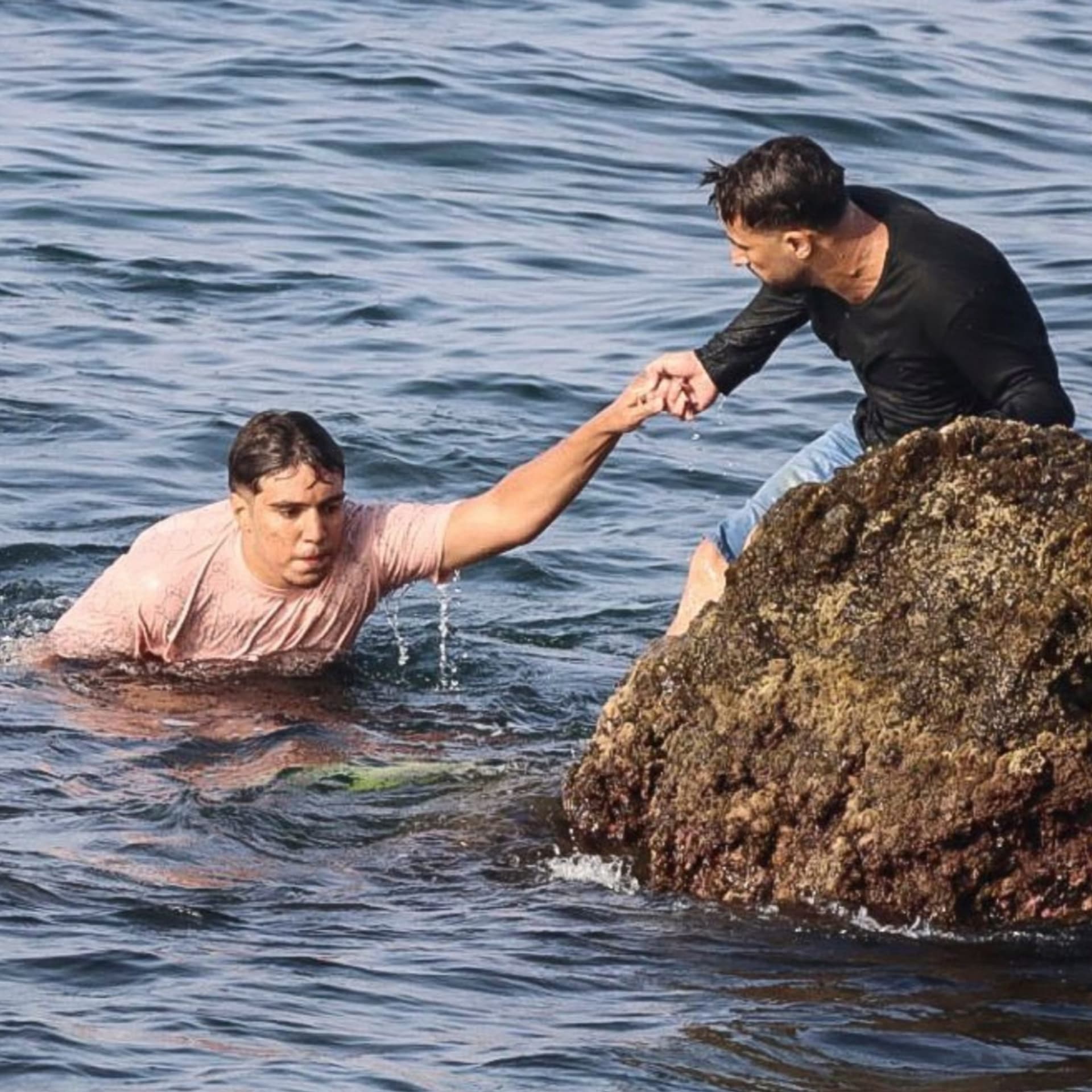
2:16We begin in the Spanish territory of Suta at the northern tip of Africa, which has been overwhelmed by an influx of around 60 ,000 migrants entering from Morocco. The Spanish Prime Minister, Pedro Sanchez, who's travelled there, described the arrival of so many people as an attack on Spain and blamed human traffickers. Ceuta is a Spanish city and the scenes we saw yesterday I condemn in the most energetic way. I reject them, I condemn them, I condemn them as deplorable. They were a violation of the territorial integrity of a Spanish city, the Spanish city of Ceuta. Officials say at least 40 people died trying to swim around the border.
3:04Those attempting the journey said they felt they had little to lose.
3:11I was in Tangier where I was working. I woke up that morning and heard several young people, boys and girls, saying that Ceuta had opened at 10pm. So I told the people who were with me that we should go to find work. We're already working here under terrible conditions, and our rights are not being respected.
3:31This morning I heard the news and I came here, but I saw hell. We walked 14 kilometres through the mountains, but we told ourselves it didn't matter as long as the border was open. Once we got here, we were told to take the road to the sea. Then I found myself completely submerged in water. I was choking. That's when I backed away. I remember that I had two children and I couldn't risk my life. I got more on the situation from our Europe correspondent, Sarah Rainsford. It is quite a significant moment, let's say, in terms of migration policy and migration activity around that border. It is a route that migrants have used previously quite a lot, but the numbers have been always much, much lower, apart from in 2021 when there was a similar situation, but numbers again then much lower.
4:16So this does look extraordinarily high. And it seems to be a large number of mainly young men, many of them Moroccan, who have taken this chance to try to cross into EU territory. They've taken quite some risk. I mean, some people are managing to walk around the border fence, but many people are having to swim the distance and in some cases quite a long distance. And as you mentioned, several people drowned trying to make that crossing from Morocco to Ceuta. So extraordinary scenes and the beach there on the Spanish exclave covered in inflatables, rubber rings, floats, flippers, the things that people have used to try to make that crossing as safely as they possibly can.
4:59But it does seem to have been a rush to the border like no one has ever seen before. And there are big questions about what exactly prompted it. And also, I think, serious questions about how the Moroccan authorities have been acting and responding in this situation, how active they were in trying to prevent people making the crossing. But certainly there appears to be still large numbers of people arriving on the Moroccan coast, hearing that the border is open, which it isn't, of course, but hearing that it is possible to get across and attempting to do that. And I mean, what are the views about what's what's prompted it?
5:33Was it just like a rush? People thinking it's open, so I'm going to try now. I think of Russia, but also I think clearly traffickers using the opportunity as well. I mean, it isn't entirely clear what's happened. There is a diplomatic problem, let's say, between Morocco and Spain right now. Dispute over recognition of who controls the Western Sahara. So a political dispute behind that. That was the reason for a previous migration crisis back in 2021. So I think that's one to look at. Sarah Rainsford. The number of migrants who crossed into Souta is almost three quarters of the entire population of the territory.
6:08Spain says more than half have now voluntarily returned to Morocco. The EU has called the situation unacceptable and says returns must be swift. Many other European leaders have expressed alarm with Italy, Austria and Finland questioning their open borders with Spain. Gerald Knauss is chairman of the European Stability Initiative, who negotiated the migrant agreement between Turkey and the EU in 2016. The BBC's Johnny Diamond asked him what he made of the criticism. It is absolutely ridiculous and completely irrational. Spain has had less arrivals of irregular migrants in the last three years than Italy.
6:48Spain has been cooperating with other European countries, taking back people who arrived in Spain and then went on to Germany or France in significant numbers. And this crisis in Ceuta is not due to Spanish policy, but to the failure of Morocco to control or take back people quickly. There has been criticism of Spain from some political quarters about its policy of naturalizing undocumented migrants, those who've been there for five years, those who don't have a criminal record. Some clearly believe, rightly or wrongly, that Spain is a soft touch when it comes to migration. Yes, but the facts just show that this is not true.
7:39Spain has had less irregular arrivals. In the first six months of this year, 14 ,000 people arrived at all borders in Spain irregularly. It's 16 ,000 from Italy, 18 ,000 in Greece. So no, there is no soft touch. And the regularization of migrants concerns people who've been in Spain, 90 % of whom are from Latin America, who arrived legally, visa-free, and then stayed on to work. So this is not an incentive for Moroccan, mainly young Moroccan men who cross to Spain, who will not get asylum and who will not enjoy any regularization. So no, that is not a credible argument. You acknowledge the political side of this, though, presumably the fact that largely on the right in politics, parties have been able to exploit and highlight extreme concern amongst parts of European populations about recent migration and that the parties of the centre and the left feel very sensitive to that pressure.
8:51Which is why the main experience of the last 10 years is images beat statistics. If we have images of loss of control like now, publics in all of our democracies worry. Even if we show them that in absolute figures, the numbers of irregular migrants are small. So the response must be to do everything that we do not get situations like this. And the way to achieve this is through agreements with third countries that send a signal to irregular migrants. Don't get into the boat because when you arrive, you will be returned. Gerald Knauss. And we'll have more on this on our YouTube channel. Just search for BBC News on YouTube and you'll find a global news podcast in the podcast section.
9:40There's a new story available every weekday. FIFA is facing a growing backlash to a proposal to sell stakes in the World Cup to private investors. After Asia's football confederation became the latest body to voice its condemnation, a top advisor to FIFA's boss, Gianni Infantino, has now quit. The official, Carlos Cordero, called the plans a bad deal for football. Europe's football governing body, UEFA, is already threatening to boycott FIFA competitions. The vice president of UEFA, Laura McAllister, says something major had to be done to stand up to FIFA. I felt that this was a very clear line in the sand in terms of the politics and the organisation of football.
10:24And it was incumbent on us as probably the most powerful confederation in Europe to stand up and be counted and come up with a threat, the boycott threat, that is commensurate with the damage that such a proposal would do to our game. Britain's Prime Minister Andy Burnham says Gianni Infantino is the wrong man to lead FIFA. So, an extraordinary moment for world football. Here's our sports reporter, Adam Wilde. It really is, Val. I've heard it described by many in the last sort of 24, 48 hours in stronger terms as a civil war in global football. I think the obvious comparison, if there is one, and this is a really unique situation, is the proposals of a European Super League.
11:07You remember that some years ago, which prompted furious protests from clubs and in particular fans. Now, that plan went away relatively quickly. And I think with these latest developments you've just outlined there in the last few hours, that this proposal may also be in significant jeopardy now. We've seen UEFA, as you mentioned, and CONCACAF voice their opposition. In the last couple of hours, we've had the Asian Football Confederation object and the resignation significantly, very significantly, of someone called Carlos Cordero, who's a senior advisor to Gianni Infantino. He's a former president of US soccer, citing his objection to the proposal.
11:44So I think given that Infantino had originally said he needed a majority of the 211 members of FIFA to back the plan, then by sheer weight of maths, it is difficult to see now how this does move forward. So is it dead in the water, do you think? Well, I think just by those numbers, I mean, I think because he would need, what, 106 members to back the plan. And with CONCACAF, with UEFA and the Asian Football Confederation all objecting, objecting those take those numbers past that 106 mark so I think on the surface of it I think there is certainly more work more planning to be done because they don't seem to be able to get those numbers if all those member nations object.
12:24And Adam what about the fallout from this what about the effect on the head of FIFA Gianni Infantino I mean is his job on the line? Well I think undoubtedly you have to say it is it was always going to be a huge risk it was always going to be a controversial plan. And given the objection from many areas to certain things that went on in the recent Men's World Cup, and specifically I'm thinking of Infantino's relationship with Donald Trump, then his position will be under great scrutiny now. And his role as the most powerful man in football, I think will undoubtedly be under considerable pressure.
13:02And do you think all this is bad for the image of football across the globe? Well, it's not great, is it? I mean, I think the World Cup came with so many controversies. I mentioned his relation with Donald Trump, talking about ticket price and so on. I think it was fraught with difficulties. But look, there are many who will back this plan. I think given the money that is being made available from FIFA to back this plan, I think the original plan was for around$40 million to be made available to each member nation. So I think for small members, it is easy to see why that was attractive. But certainly this is very damaging for the global game's reputation, yes.
13:42Adam Wilde. In an earlier edition of this podcast, we brought you news of an agreement that could prove a possible turning point in Gaza. Overnight, Hamas said it had agreed to completely disarm if Israeli forces fully withdraw and end all their attacks. As we record this podcast, there will still be no official Israeli response. In Gaza, there are currently 2 million Palestinians living in tents without basic sanitation, and there's an acute shortage of medical supplies. More than 1 ,000 Palestinians have been killed by Israel since the ceasefire began in October, including many women and children.
14:19If this agreement holds, it could mark the first credible step towards ending a war that's lasted for nearly three years and opening the way for a broader political process. So what are the details of the disarmament plan? Here's our Middle East correspondent in Jerusalem, Yolandele. When you look at the points that have been sent, these revisions to the Board of Peace plan that was sent over to Washington, Hamas is saying that it's ready to create an inventory of its weapons, everything from small arms through to heavy ones, with also manufacturing sites and tunnels included here. But the storage of heavy weapons, that should be under the Palestinian Administrative Committee that is due to go into Gaza.
15:05There should be no handing over weapons to Israel or any other foreign power. And also what has been really key for Hamas and what has also held up things is another point about what happens to Hamas civil servants in Gaza. those who have been working in health and education, but of course also those who have been working in Hamas' security forces have been much more problematic for Israel. But, you know, this could potentially clear the way, particularly with a lot of US involvement too, that Palestinian technocratic committee finally going into Gaza and the international stabilisation force too.
15:43President Trump has called it a monumental step towards lasting peace and security. So is he right? Here's our Middle East analyst, Sebastian Usher. I think the temptation, because it's President Trump, is to be especially sceptical because we've had so many announcements, not just on Gaza, but obviously on other key issues in the Middle East, which haven't really turned out to amount to that much. But I think there is more to it than that. I mean, there's been eight months or so of discussions that have been going on. It's important that there are mediators within this board of peace, Turkey and Qatar, which have very close links to Hamas.
16:23That was originally opposed by Israel, but I think their pressure will have told. So this isn't nothing. This isn't a new castle in the air. But it's more about coming up with a much more structured, substantial roadmap than what we had with the original peace plan. As President Trump said when he announced this, this is a phased way of doing this. What that needs, though, obviously, is trust on both sides. And that remains in incredibly short supply. I mean, Sebastian, why do you think Hamas has decided to do this now? I think there is a lot of pressure on Hamas, both inside Gaza amongst Palestinians there, for an end to this, to move forward so that reconstruction can begin.
17:13I think there's economic pressure on Hamas. Its sources of funds have been very much curtailed. I think there's political pressure on Hamas from those countries, as I mentioned, Turkey, for example, Qatar, which have been close to Hamas, putting that pressure. So I think it's in a weaker position. But, you know, the real issue is still this is a who blinks first situation where Hamas says that it will do this as long as Israel fulfills its side of the bargain. And still no official Israeli response. I mean, do you think Prime Minister Netanyahu will be coming under intense pressure from the Americans, especially from Mr.
17:54Trump? You would think so. But strangely, I mean, the reporting of their latest meeting, Mr. Netanyahu went to White House for his eighth meeting with President Trump, was that Gaza hadn't been mentioned. So, you know, certainly from an Israeli perspective, they're trying to not make too much of this. I mean, elections are happening in Israel. it would be very difficult for Mr Netanyahu to sell this to both his supporters and those of other parties. He's already being attacked for anything which looks like it hasn't completed what he promised, which was for complete dismantling politically and militarily of Hamas.
18:33And at the moment, that isn't necessarily what is being envisaged. Middle East analyst Sebastian Usher. Still to come in this podcast. We kiss on the cheek or two or three times when we're getting enthusiastic. But our ancestors had it a lot clearer. They were going for the mouth, they knew what they were doing and we actually did that right up until the start of the 20th century. Why kiss is still a kiss, but there are fewer of them going round.
19:10Hello, Greg Jenner here. I'm the host of You're Dead to Me, the BBC comedy show that takes history seriously. Every episode, I pair up a top historian with a fantastic comedian, and we have a lovely, funny, fascinating chat about a different subject from world history. And in this new series, we're beginning with an epic voyage through the story of Homer, the Iliad, and the Odyssey. And that's with Kyle Smith-Bino joining us. And then we'll be learning about Francis Galton and the racist, discredited pseudoscience of eugenics with Desiree Birch. We'll meet many medieval saints in their bone boxes with Rachel Parrott.
19:44So if that sounds like your sort of thing, listen to You're Dead to Me wherever you get your podcasts. Thank you. Bye.
19:56This is the Global News Podcast. Teams searching for 10 missing mountaineers in Pakistan say bodies have been recovered, but estimate that six people are still missing. The group, led by the renowned mountaineer Nirmal Purja, lost contact with their base camp during an avalanche on the world's 12th highest summit, Broad Peak. Ayaz Ahmed Shigari, the General Secretary of the Alpine Club of Pakistan, which oversees mountaineering, described the scale of the rescue operation. We had an unfortunate incident at Broad Peak where our international climbers, Chinese, Omanis, American, Nepalese and Pakistani climbers were present.
20:38It's unfortunate. There's never been an avalanche like this before on Broad Peak. Some of the climbers have been thrown 500 feet, some 1 ,000 feet, some 1 ,500 feet down. Nimar Purja was the fastest person to summit all 14 of the world's peaks without supplementary oxygen when he took on the feat back in 2019. For this project, I gave up my job in United Kingdom Special Forces. I gave up my pension, a lot of money. For this project, I had to sell my house. This was the project where nobody believed that this could be done. His business manager has suggested that Nimar Purja's GPS tracker is still transmitting and has moved.
21:21Our correspondent Caroline Davis is following the story from Islamabad. The search operations have obviously been really dependent on these trackers to try to help identify the location of all of these. But the thing that's really uncertain is whether or not the indication of movement of the tracker, what does that exactly mean? Does it mean that Nim's eye is still alive? Does it mean that his body is being moved? It's really, that is still unclear. And earlier on today, we were told that the search and rescue had managed to find trackers for four of the climbers, but that they didn't see any movement.
21:52We've obviously, since the course of the day, we've now been told that they have found four bodies, that four people have died, and we understand that those are the same four trackers that they earlier referenced. Now, two of those have been identified, two have not. The two that have been identified are Nazira Ahmed Abdullah Al-Hafi from Oman, and Purba Hagadur Gurung, known as Yukta, from Nepal. Nadira's GPS as well, just talking about the trackers, it was reported by an industry website that she dropped by over 1.5 ,000 metres when the avalanche hit. So, again, it's really obviously unclear about exactly what happened and how this avalanche happened, but the trackers are giving an indication of when that occurred and who was caught up where.
22:35So, still a huge amount of information to be confirmed, but we are getting more coming back from the site. I would also say it's difficult to get this information too because obviously the communication in the location is very limited. We've been told that a lot of time the communication is either through satellite phone or people who are physically moving in between there and other places where they get slightly better signal. And so we are getting bits and pieces of information the entire time about what is going on. One other crucial thing though to mention is we have now been told by the Home Secretary for Gilgit Baal-Tastan, the area where this mountain is, that the search and rescue has now been stopped for the course of today.
23:13He has said that it will restart again tomorrow, and that is because of weather conditions, which again just shows you how difficult it is to carry out these sorts of search and rescue operations. So are they worried about more avalanches? No one has suggested that, but as you've heard when you were speaking to the Alpine Club earlier, I've heard it from a few people now saying how surprised they were to see an avalanche like this on Broad Peak. A lot of people have said that this is not normal, that they had not seen something like this happen. It happened, we understand that it happened when the group were making their way from Camp 2 up to Camp 3, and that's when it hit.
23:44And again, some of the people I've spoken to have previously traversed it. We're just so surprised that something like this could happen in that location. Caroline Davis. Next week, Myanmar's leader, Min Aung Lang, will receive a major boost to his plans to be seen as a legitimate leader on the international stage when he makes an official visit to neighbouring Thailand. He seized power in a military coup in 2021, overthrowing the elected government led by Aung San Suu Kyi. The coup sparked a nationwide civil war between the military and a broad alliance of resistance groups. Earlier this year, Min Aung Lung declared himself president after holding an election that was widely condemned by critics as being neither free nor fair.
24:25Meanwhile, the military has been regaining some of the territory it had previously lost to resistance forces. Our Southeast Asia correspondent, Jonathan Head, travelled to the Thai border town of Mesot, where many people who fled the conflict have sought refuge. In an old house down a side street in Mesot, a group of teenage boys cook their evening meal together. What are you cooking? Fish eggs. Fish eggs. Some are as young as 13. Yet, not long ago, they were armed and fighting. So you're the chef? Yeah. It's a shelter for the children who are under 18 years old, who are involved in the war or conflict.
25:08I work with them. Like the boys she cares for, Kine is a refugee from the civil war in Myanmar. It's not her real name. She still fears retribution on her family by the military regime against which she too once took up arms. But she's now decided she can do more good by helping the war's victims. We are not born to be a soldier. and after five years, for me, I learned a lot. I understood my muscle is not in my arms, it's in my brain. I can do it a different way for the long fight. Revolution is not a short time. I'm walking down a long corridor with lots of very small rooms on either side. There are families or individuals living in all of these.
25:56This is one of dozens of safe houses which have been established all over Maysot to help the tens of thousands who fled from Myanmar since the coup. They arrive here in Thailand with very little money, few possessions, and with no status. They're very vulnerable. I put a time bomb near the police station and I'm trying to assassinate the informer of the military government. This young man says he took up arms against the military regime at the age of 17 after watching it crush peaceful protests. He was caught, jailed and dreadfully tortured. Now he says he's had a change of heart. So you lost faith in the armed struggle?
Read the full transcript
26:40Yeah, I saw many casualties and it's really difficult to see like that. You're not involved in the struggle now? Yeah, I just choose another way. A lot of us joined the revolution because we believed that it was our duty. Lewis was a successful businessman in Yangon when the coup happened. He joined one of the volunteer people's defence forces fighting against the military. He too was captured. At the beginning of this armed struggle, we would do whatever it takes. If we were to sacrifice ourselves and our lives, then we would do it. But since it is dragging on for so long, a lot of people have their own responsibility that they cannot stop.
27:22Like me, my kids will keep growing up and then there's a need to have a good education, a better life and all this. A lot of people change under that pressure. But we did find one young man who was determined to carry on.
27:39He described leaving his job as a bartender in Yangon to join ethnic Karen insurgents operating near the Thai border. He's come to Mesot with his wife for the birth of their first child, but he's itching to get back. No, I don't stop. I only came here for my family. I haven't stopped. I'm sure our revolution will succeed one day because they are fighting a war against the entire country, against the civilians they are supposed to protect. There is no way the military can win. That confidence is less widely shared these days. Almost everyone we spoke to was still committed to the idea of a people's revolution in Myanmar.
28:18But after five years of gruelling war and no end to military rule in sight, many are just too exhausted to fight any longer. Jonathan Head. Now, as with so much in life, the key to success in wildlife photography is patience, luck and timing. 20-year-old Alexander Forrest, who lives and works in New South Wales in Australia, has displayed all three with his drone footage of a humpback whale giving birth. Every year, tens of thousands of whales pass the coast on their winter migration north. It's one of nature's great spectacles. But Alexander was about to become the witness to an even more extraordinary event, as he told James Menendez.
29:02So day to day, I'm actually an exhibition filmmaker and photographer. when I'm not interstate or international I am at home I'm checking out what we call the humpback highway that's where all our huge humpback whales fifth largest whale travel along the coast we're so lucky to see them every year and it's currently peak season I was just going out for a routine flight trying to make the most of this part of the season and I could see from my aircraft and from the coast every humpback whale just going up and down the coast at extremely fast speeds really, really migrating. But there was this one whale, solemn, right behind our beautiful crystal clear waters, right just there, next to the surf break, going unusually slow.
29:46And this is a behaviour I'd never seen in my thousands of hours. Filming whales, thousands of whales seen, I've never seen this. I just knew I had to hit record. My first instinct was that perhaps this whale was sleeping. You see sleeping behaviour, but it's nothing like this very slow, consistent, labored behavior and it was suddenly when she diverted her path and went 200 meters or so further out to sea that was about 600 or 700 meters from the shoreline that I saw this incredible red plumage and I realized this is something unforgettable and rare. And did you know at that point that she'd just given birth I mean you see red in the water you think blood you think possibly an attack by a shark maybe yeah you see red in the water and perhaps you think the worst i initially thought maybe an interaction with the predator but it only took a second or two before that beautiful white oval shape shot up to the surface and to my relief it was a calf an incredible vision that i'll never forget i can imagine and what does a what does a baby humpback whale look like?
30:53Just describe it for us. A baby humpback whale is beautiful, uncoordinated, playful. They're about 25 % smaller than their mothers. They are pale grey. Their colours are still setting in. They have to earn their stripes. It was seriously incredible. And I was shaking after I got the footage, just putting the pieces together. I had no idea what I had just filmed initially. I was crying on the inside, a surprise on the outside. Absolutely adrenaline through the roof. To catch those first seconds on camera is just an experience I'll hold with me forever. Australian whale lover and photographer Alexander Forrest in New South Wales.
31:36Now, when was the last time you gave someone a kiss? Because apparently people today are kissing less than in the past. Professor Katie Barclay, a historian of emotions based at Macquarie University in Sydney has taken a deep dive into a thousand years worth of kisses for her new book, The Kiss, A History of Passion and Power. In tracing the gesture back through religious texts, literature, fine art and popular culture, she observes that kissing, especially in public, is in decline. We now kiss fewer people, less often than we once did, and certainly pucker up a lot less than our more pious and more amorous ancestors.
32:18She spoke to Kylie Pentelow about why. Romantic kisses are the things that are not universal. In fact, far from being universal, a recent study suggests only 46 % of cultures do romantic kissing. And given how normal it feels, as a European myself, it is kind of amazing to imagine there's parts of the world that don't bother. I think it's because in the Christian context, which Europeans have a Christian heritage of over a thousand years now. And at the centre of the church service was a holy kiss, where you kissed each other to show your union in the body of Christ. And so in the middle of the service, this would stop and you can say, you'd kiss your neighbour.
32:57Today we shake our hands. If you're in the Catholic Church, you might shake hands or hug your neighbour, but they would kiss. And because it was so important to this kind of Christian construction of faith and identity and community, it kind of then exploded into every other sphere of life. We've had a few comments on kisses, some really good ones. I just want to read this one out though, which is specifically referring to the fact that Europeans like to kiss. It says, I love kissing and I'm a huggy person. I particularly love the European way of two kisses, one on each cheek and special friends get three kisses.
33:29What's not to like about this, they say. But there can be that awkward moment, can't there, where you don't quite know. I know and I think historically it was a mouth kiss as well right so now we're much more prudish even just in the social kisses we kiss on the cheek or two or three times when we're getting enthusiastic but our ancestors had it a lot clearer they were going for the mouth they knew what they were doing and we actually did that right up until the start of the 20th century especially women. Let's talk about the issue of consent you say you say we kiss fewer people less often than we used to.
34:03And do you think that that is combined with the issues of consent, the Me Too movement, maybe the Covid pandemic or a bit of everything? A bit of everything, really. I think the reason, one of the reasons we kissed less is that historically people kissed for reasons that weren't just about romantic or family love or sociability. You had kisses of fealty. So if you were swearing an oath of allegiance to your Lord, you kissed them on the mouth. If you were signing a really important contract, you kissed each other on the mouth. If you're two kings and you're doing a peace treaty, you kiss each other on the mouth.
34:36So there's all of these very public, visible kisses that are happening and it's mostly men kissing each other on the mouth because they're the ones with the money and the power and they're the ones who need to sign contracts. And what kind of happened really from about the 16th century is a lot of those very public-facing kisses just kind of disappear and they actually disappear quite quickly. And kissing kind of remains in the sociable domain. Men still kiss each other for friendship reasons. People still kiss their family members. But we're starting to see this general decline of these kind of public official kisses.
35:07Professor Katie Barclay on kissing. And that's it from us for now. If you want to get in touch, you can email us at globalpodcast at bbc.co.uk. You can also find us on X at BBC World Service. Use the hashtag Global News Pod. And don't forget our sister podcast, The Global Story, which goes in-depth and beyond the headlines on one big story. This edition of The Global News Podcast was mixed by Joe McCartney and the producer was Charles Sanctuary. The editor is Karen Martin. I'm Valerie Sanderson. Until next time, bye-bye.
35:54Hello, Greg Jenner here. I'm the host of You're Dead to Me, the BBC comedy show that takes history seriously. Every episode, I pair up a top historian with a fantastic comedian, and we have a lovely, funny, fascinating chat about a different subject from world history. And in this new series, we're beginning with an epic voyage through the story of Homer, the Iliad, and the Odyssey. And that's with Kyle Smith-Bino joining us. And then we'll be learning about Francis Galton and the racist, discredited pseudoscience of eugenics with Desiree Birch. We'll meet many medieval saints in their bone boxes with Rachel Parrott.
36:27So if that sounds like your sort of thing, listen to You're Dead to Me wherever you get your podcasts. Thank you. Bye.
From the publisher
Spain's interior ministry says more than half of the migrants who arrived in the Spanish North African territory of Ceuta since Thursday morning have now returned to Morocco. Visiting Ceuta, Prime Minister Pedro Sanchez condemned the influx as an attack, and violation of Spanish sovereignty. He blamed smuggling gangs and promised the state would use all means to protect Ceuta's security. Also: a top advisor to the head of FIFA has resigned over plans to sell private stakes in the World Cup, hours after Asia's Football Confederation added its voice to the growing condemnation. Hamas says it's accepted a peace deal for Gaza which would see it lay down its arms, on condition that Israel withdraws from the territory and ends its attacks. Rescuers in Pakistan have recovered the bodies of several climbers near the site of an avalanche on the world's 12th highest summit, Broad Peak. We meet the man who filmed what is believed to be the first ever drone footage of a humpback whale giving birth. And the history of kissing.
The Global News Podcast brings you the breaking news you need to hear, as it happens. Listen for the latest headlines and current affairs from around the world. Politics, economics, climate, business, technology, health – we cover it all with expert analysis and insight.
Get the news that matters, delivered twice a day on weekdays and daily at weekends, plus special bonus episodes reacting to urgent breaking stories. Follow or subscribe now and never miss a moment.
Get in touch: globalpodcast@bbc.co.uk
Photo: Migrants swim across to Ceuta from Morocco, Spain Credit: Reduan Dris - EPA/Shutterstock