
In short
Five years after the Taliban returned to power, the episode examines restrictions on Afghan women and girls, including secret schooling, online education, and women’s work; it also covers US military conditions on the USS Abraham Lincoln, US executions, Ghana’s anti-LGBT law, Colombia’s earthquake aftermath, biodegradable party balloons, jogging with strollers, and geese-based sports coaching.
Guests/backgrounds
No recurring guests; reporters and specialists include BBC chief international correspondent Lise Doucette (returns to Afghanistan), Stars and Stripes reporter Alison Bath (USS Lincoln crew), BBC North America correspondent Daniel Bush (US politics/war), BBC North America reporter Nardine Saad (executions), Imperial College London-linked researcher team (biodegradable balloons), lead researcher Alison Altman-Singles (stroller jogging study), sports correspondent Andy Swiss (Eddie Jones geese strategy), BBC religion editor Alim Mkbul (Ghana LGBT law), and BBC reporter Lakshmi Gopal (balloons).
Key claims/examples
Afghan girls attend “secret schools” past grade 6; women face bans on university and many jobs; some sell goods only via men; online study reduces risk. USS Abraham Lincoln crew allege poor food/water and suicidal attempts; Navy says no increase after review. Ghana’s parliament-approved bill could jail people up to three years; gay Ghanaians reportedly flee. Colombia earthquake: families wait for survivors under rubble (e.g., 10-year-old Martin). Bioloon balloons claim full biodegradation in nine months. Study: stroller runners have fewer injuries. Eddie Jones shows geese videos to teach teamwork.
Written by AI. May contain mistakes. Listen to the episode to check what was said.
Chapters
Tap a time to open that second in VOCurrent Affairs Overview
1:21 to 1:35
Overview of the main topics covered in this episode.
“Five years after the Taliban returned to power in Afghanistan, we have a special report on the restrictions they've imposed on women and girls.”
Women and Girls Under Taliban Rule
1:35 to 2:28
Exploring the restrictions imposed on women and girls in Afghanistan.
“US Democrats demand answers about poor conditions on an aircraft carrier in the Gulf and why America is executing more prisoners.”
Lise Doucette's Return to Afghanistan
2:28 to 2:43
Chief international correspondent Lise Doucette reports from Afghanistan.
“There are even rules over visiting public parks and gyms.”
Inside a Secret School
2:43 to 3:40
A look at how young girls in Afghanistan are secretly educated.
“The sound of a school almost anywhere in the world.”
Facing Risks for Education
3:40 to 4:35
Interviews with girls studying in secret schools about their fears and hopes.
“Some other classrooms of the oldest girls studying here.”
Women Learning New Skills
4:35 to 6:24
Women in Afghanistan engage in enterprises to gain skills and independence.
“We've driven about an hour from Kabul and come to this village where we're going to meet women who are learning how to make jam.”
Online Education and Barriers
6:24 to 7:59
Challenges faced by Afghan girls in accessing education, including online learning.
“We're on our way now to meet another young Afghan girl who's doing whatever she can to keep being educated.”
Creating a New Society in Afghanistan
7:59 to 8:15
Exploring how Afghan society is evolving amidst education challenges.
US Military Deployment Issues
8:15 to 10:46
Discussion on the mental health of US military personnel on deployment.
“Lise Doucette reporting from Afghanistan.”
Concerns Over Naval Conditions
10:46 to 11:06
Concerns regarding the living conditions and morale of sailors aboard USS Abraham Lincoln.
“carrier, that there is a steady supply of food, water, that there are clean living conditions on board.”
Show all 18 chapters
Recent Executions in the US
11:06 to 14:00
Analysis of recent executions and the political context surrounding them.
“So this is a moment where morale apparently on board is very, very low as these sailors are now there for months on end for a war that has no end in sight.”
The Death Penalty Debate in the U.S.
14:00 to 15:18
Explore the decline of the death penalty and factors affecting its use.
“In 2020, during his first term, he ended a nearly two decade moratorium on the federal death penalty.”
Innovative Biodegradable Balloons
15:18 to 19:05
Learn about the new biodegradable balloon technology and its environmental impact.
“According to a recent study, balloon fragments are the marine debris most likely to kill seabirds that ingest them.”
Ghana's Controversial Anti-LGBT Law
19:15 to 20:46
Examine the implications of Ghana's anti-LGBT legislation on individuals and society.
“I'm Asma Khalid, and I'm one of the hosts of the Global Story podcast from the BBC.”
Aftermath of the Colombian Earthquake
20:46 to 25:01
Listen to the ongoing rescue efforts and personal stories from the earthquake disaster.
“Our religion editor, Alim Mkbul, has been to Ghana to find out more.”
Running with Strollers: A Study on Injuries
25:01 to 28:00
Discover research findings on how running with strollers can help reduce injuries.
“More than 270 people are known to have died, and the death toll continues to rise.”
Benefits of Running with Strollers
28:00 to 30:14
Learn how using strollers while running can reduce injuries and enhance family bonding.
“So it almost has like an unweighting effect, kind of like when you're using a walker, how it kind of gives you a little bit less on your feet and more through your arms.”
Unconventional Coaching Strategies in Rugby
30:14 to 31:45
Discover how Eddie Jones uses geese videos to enhance teamwork in rugby.
“Alison Altman-Singles from Pennsylvania State University.”
Transcript
Automatic transcript. May contain errors.0:00This BBC podcast is supported by ads outside the UK.
0:30Join Wharton Professor Katie Milkman, an award-winning behavioral scientist and author of the best-selling book How to Change, as she shares true stories from Nobel laureates, authors, athletes and everyday people about why we do the things we do and how to make better choices to help avoid costly mistakes. Each episode covers the latest research in behavioural science and dives into themes like the power of self-control, shaping your mindset for success, navigating new beginnings and why starting over can feel so hard. Listen to choiceology at schwab.com slash podcast or wherever you listen.
1:14This is the Global News Podcast from the BBC World Service. Hello, I'm Oliver Conway and this edition is published in the early hours of Friday the 14th of August. Five years after the Taliban returned to power in Afghanistan, we have a special report on the restrictions they've imposed on women and girls. US Democrats demand answers about poor conditions on an aircraft carrier in the Gulf and why America is executing more prisoners. Also in this podcast, the climate of fear in Ghana after Parliament votes to jail gay people. This legislation being passed in Parliament has led to rhetoric that has left gay people here fearful.
1:59Some of them have fled the country. They have to go. We don't want them there. And the benefits of jogging with a pushchair.
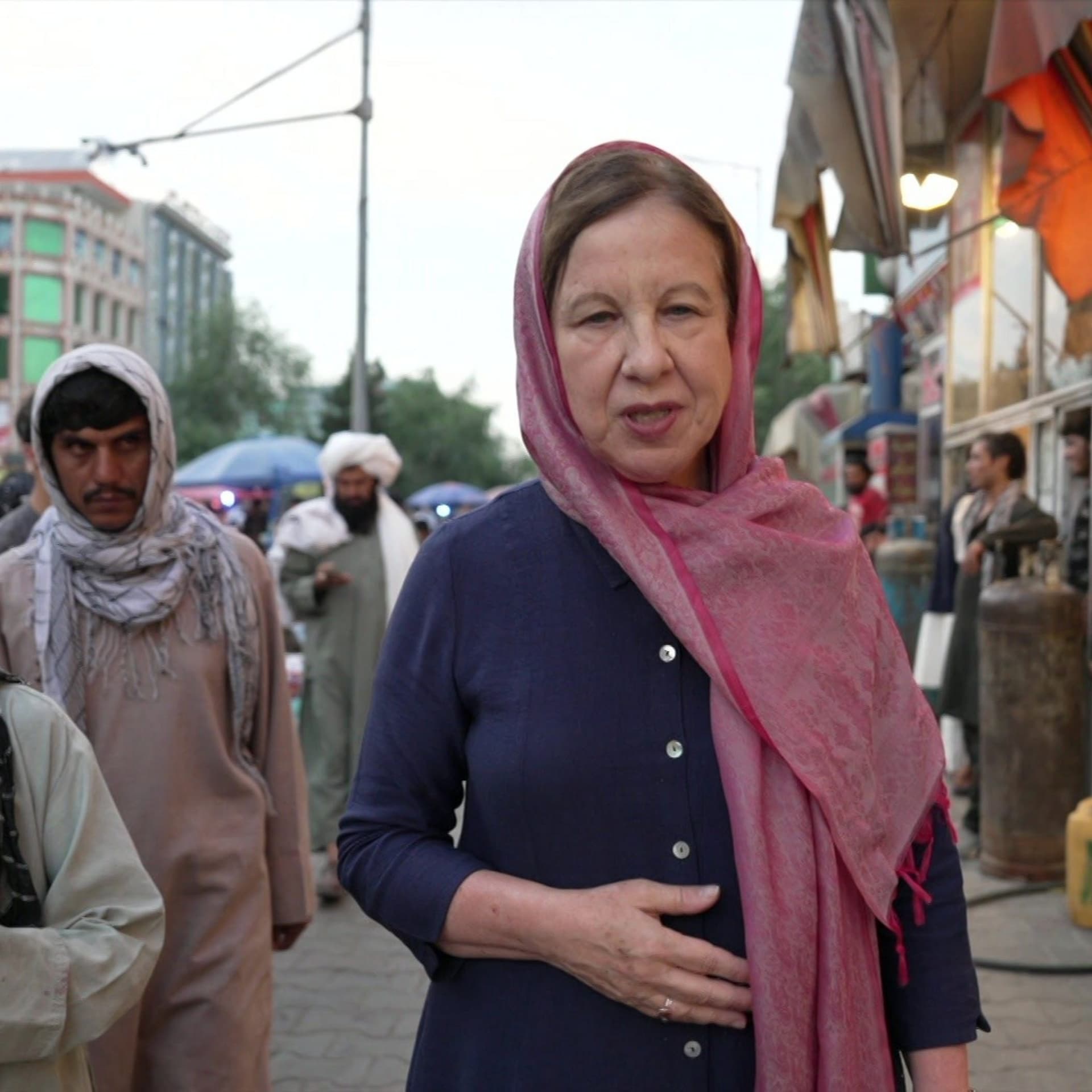
2:11It is five years since the Taliban swept back into power in Afghanistan and life for women and girls is still severely restricted. Girls can only attend school until grade 6, around the age of 12, and women are barred from university and many jobs. There are even rules over visiting public parks and gyms. Our chief international correspondent Lise Doucette has returned to Afghanistan to meet those trying to keep learning and working, despite what some call gender apartheid. The sound of a school almost anywhere in the world. Afghan boys and girls in primary school laughing and learning with their teachers.
2:51But now we're going down a dark hallway into a far corner. And this is how young girls in Afghanistan, beyond grade six, are being educated now. This is what's called a secret school. Hello? Assalamu alaikum. How are you? Are you okay? So you teach the girls what to do if the morality police come. Yeah. This is one escape? Yeah, one escape door. The second one is here. Where do the girls go? Downstairs? This is the back of the back. So they escape out the back door. Did they ever catch you? No. Why do you take this risk? Because I'm also a father and I have girls also. This is risk for us also.
3:39I accept. We're just going up the stairs now. Some other classrooms of the oldest girls studying here. I'm turning years old and it's two years and I'm studying in a secret school and we are so happy to have a school like this. When you sit in the classroom, how does it make you feel? First is the feel that I'm going to learn something And after that, there's some fear that what will happen if they find us. What do you fear? What could happen? If they find us, maybe something happened for us and also for our school. But even with this fear, we're coming to study and learn something. Sometimes you get sad?
4:21Yeah. Sometimes I'm thinking that what will happen in the future. Sometimes I get sad. It's like sometimes this feeling is coming. Where do you find hope? from thinking about my future that maybe it will be good. You're a very brave girl. Thank you also. We've driven about an hour from Kabul and come to this village where we're going to meet women who are learning how to make jam. It's one of the many enterprises that are being set up by Afghan women because it is one area where the Taliban seem to have no objections. Salam. Oh, salam, Hanam. Salam. Ejaza. What were you doing before the Taliban came to power, during the Republic?
5:05I was a university student during the Republic and I was studying political science. I completed six semesters of my studies there. I had only two semesters left. That was when, unfortunately, the universities were closed to girls. And now it's been five years, you're learning to make jam. How does that feel? If I cannot go to university, then I will find work. I knew that if I stayed at home, I would not make any progress or better myself. But I am 100 % sad. I loved my degree and I really wanted to finish it. When I apply for jobs and send my CV in or go to interviews, the first thing they ask is for my university certificate.
5:59But I never got one. Even this space is getting squeezed. As of last year, women can't take the products themselves to the shops to sell. A man has to do it. And if there's a trade fair, they can no longer be at the stalls. They have to send a man in their place. So year on year, it just keeps getting harder. We're on our way now to meet another young Afghan girl who's doing whatever she can to keep being educated. And it's less risky both for the students as well as the teacher. And that's studying online. There's a growing number of initiatives outside and in Afghanistan to educate women in this way.
6:45And we're going to meet one of these students. I'm 13 years old and I finished my 6th grade lessons and after that I'm studying online my lessons. And you were sitting in a classroom with your fellow schoolgirls for six years. Now you're by yourself online. How does it feel? It feels very bad, I think. We studied six years, we were classmates, we were friends, and we all studied together. We're talking in a shop and you're getting trained for a new kind of skill. Yes. Right now I'm doing gold smiting, which I make some jewels to sell. What if your life was that you were a jewellery maker instead of a doctor?
7:27Would that be okay? No, I won't be happy. Becoming a doctor, I think, is much better than becoming a jeweler. Do you sometimes feel the world has forgotten Afghanistan and Afghan girls? Yes, I think the same day forgot it. But I can totally tell them that we are unstoppable and we will never give up. such impressive determination and there are other girls like her but there are many many more who don't have access to the internet online education secret schools or even islamic madrasas for them usually the only option is early marriage sometimes as young as a teenager and this is not just an issue of girls education five years on a new society is being created in afghanistan Lise Doucette reporting from Afghanistan.
8:18President Trump initially said the war against Iran would be over in weeks, but nearly six months in there is no sign of it ending. As a result, US military deployments are being extended indefinitely, and that is reportedly harming the mental health of some personnel stuck in the Gulf, particularly among the 5 ,000 crew of the USS Abraham Lincoln. They haven't been on dry land for more than 200 days, said to be a record for consecutive days at sea. Alison Bath from the military newspaper Stars and Stripes has been speaking to some of the crew. I learned from two sailors aboard the ship that there was an incident where one sailor had attempted to jump off the ship and that sailor was kept from doing that by watchstanders who were nearby.
9:06Other reports said multiple sailors had tried to jump overboard amid food shortages, water problems and unsanitary conditions. The allegations have been dismissed by the US Defence Secretary Pete Hegseth. Our North America correspondent Daniel Bush told me more. There are claims coming in from a couple of different sources, Ali. There was a contentious meeting between spouses and other family members of the sailors on board with Navy officials in which they claimed that their family members on board the USS Abraham Lincoln had written home complaining of lack of food, clean water, supplies. And we also now know that a Democratic Senator Richard Blumenthal from Connecticut has written a letter to Defense Secretary Pete Hegseff raising serious concern about the same issues, potential shortages of supplies of clean water, food, and other materials.
9:56Now, the Navy has come out with a statement to the BBC saying that after a review, did not find an increase in suicidal attempts on board. But there have been reports that multiple sailors jumped overboard from the USS Lincoln, one of whom was wearing apparently a life jacket and was quickly rescued by the Navy. So that is the state of affairs right now. And as you said, this particular aircraft carrier has now been deployed for more than 250 days in the Middle East, supporting the U.S. war with Iran and has not had a port of call in over 200 days, which the Democratic Senator Richard Blumenthal says is a modern day record.
10:34And so what has Pete Hegseth said about all this? Well, he has pushed back, as has the Navy. They again say that they keep the well-being of service members atop of mind, that there are no shortages aboard this aircraft carrier, that there is a steady supply of food, water, that there are clean living conditions on board. You know, this comes as President Trump is facing increasing pressure to wind down this war. And the Navy has extended the deployment of this aircraft carrier without a certain return date. So this is a moment where morale apparently on board is very, very low as these sailors are now there for months on end for a war that has no end in sight.
11:16And I guess some might argue that if you are a sailor or a soldier at war, you just have to put up with these kind of things. Supporters of the war are saying this is part of what it means to be in a war zone. But what critics who are focusing on these living conditions are arguing is that even in wartime, this is unusual. Again, this seems to be a modern day record for the length of time that a aircraft carrier is deployed in a war zone without a port of call. There have been news reports just recently from Reuters that the Navy is sending a separate aircraft carrier or group of ships to the region to replace the Abraham Lincoln.
11:52The Navy itself has not confirmed this yet. So we're waiting to see whether that is the case. But it does suggest that the military is trying to respond to this moment. Daniel Bush in Washington. Staying in the U.S. and for the first time in 16 years, three people there have been executed on the same day. The first was Carlos Cuesta Rodriguez in Oklahoma. An hour later, Anthony Darrell Hines was put to death in Tennessee. By the order of the Supreme Court, The Tennessee Department of Correction carried out the death sentence of Anthony Hines by means of lethal injection at the Riverbend Maximum Security Institution.
12:28Inmate Hines was pronounced dead at 10.43 a.m. and his last words were, tell my son hello. This concludes my statement. Hines had killed Catherine Jenkins in 1985. Melissa Jenkins is Catherine's daughter. For four decades, our family has endured the unimaginable pain and grief of her death. There is a deep void that will never be filled. A lifetime of memories. We were denied because she was taken from us. The third to die was Jeremy Williams in Alabama. He was convicted of raping and murdering a five-year-old girl in Georgia in 2021. There's been a steep rise in US executions recently, with four times as many people put to death last year as in 2021.
13:12But why is that? Luke Jones asked our North America reporter Nardine Saad. There were a total of 37 executions across 11 states in 2025. That's a marked increase from only 25 executions in 2024. But about 40 % of the deaths in 2025 were in Florida, and that's the biggest factor contributing to the US's rise in executions. And just halfway through 2026, 12 of the 19 executions were out of Florida. Why Florida? Governor Ron DeSantis has wide breadth of ability to authorize these executions. And he, like President Donald Trump, was very pro-death penalty and believes it's a deterrent. President Trump has long been a major supporter of the death penalty.
13:53He describes capital punishment as, quote, an essential tool for deterring and punishing those who commit the most heinous crimes, unquote. In 2020, during his first term, he ended a nearly two decade moratorium on the federal death penalty. and the moratorium returned under President Joe Biden, but on his first day back on his second term, President Donald Trump signed an executive order that reinstated the death penalty. I should add that no federal executions have been carried out since though. These executions are happening amid a steady decline of support for the death penalty in the United States and globally, you see it being phased out in Europe and you see it waning in Africa.
14:28A Gallup poll in the US has shown that just 52 % of Americans say the death penalty is morally acceptable and that's the lowest number since the 1970s. There's also been a decline in the number of death sentences that are issued by juries. In the 1990s, juries across the country could issue upwards of 300 death sentences in a year. In 2025, they issued only 23. Hasn't there also been some upsets, not just at the fact that executions are happening, but sometimes how they are happening and there have been a few botched cases? Those are the ones that are making the biggest headlines. Those have been with lethal injections, some issues with the three-drug cocktail.
15:04Then you have pharmaceutical companies coming in and saying that they don't want their drugs to be used in this way. And so the drugs being obtained for these punishments have their own issues. And that is a contributing factor to these botched executions as well. Nardine Saad. According to a recent study, balloon fragments are the marine debris most likely to kill seabirds that ingest them. Scientists at Imperial College London have invented what they claim is the world's first fully biodegradable party balloon. They say it can break down within just nine months, as opposed to traditional balloons that take years.
15:40Lakshmi Gopal has this report. In some parts of the ocean, it's estimated that there are now over one million pieces of plastic for every square mile. Highlighting how plastic pollution harms wildlife, the series Blue Planet 2 sparked action against single-use plastics such as straws. Now there's action against the environmental impact of another everyday item. It was the mission of high-end party planner Charlotte Melia. We'd just hosted a large event and I was surrounded by thousands of pot balloons at the end of the party and that was the straw that broke the camel's back. So how was it made?
16:19Juliana Cumming is the co-inventor of BioLoon. We have a modified natural rubber and we just cut bits off of that and that's what's in here. And we have a biodegradable semi-crystalline polymer which is just in here. We blend them together in a solution and we pour it into this dish and we leave it to evaporate. It's a really thin film and this contains a cross-thinking agent. So we just put this in the oven, 50 degrees, and we just leave it there for 10 minutes. This really is like cooking, isn't it? It is, yes. After different versions of material proved too stretchy or too stiff, this one was just right.
16:54There you go, that's looking more like a balloon. It's hoped it'll pose less risk to wildlife. A recent study found that balloon fragments with the marine debris most likely to kill seabirds that ingested it. The bioloon researchers say while standard balloons can take many years to break down, theirs should fully biodegrade within nine months. A regular balloon, you need to add in sulphur and other additives which prevent it biodegrading and cause toxic chemicals to leach into the environment. Whereas our balloon, we start with biodegradable materials and we join them together just with what is present in there so it retains the biodegradability so there's no additives.
17:37Despite using a different process, the team claims it would be no more expensive and, what's more, would be easier to blow up than a traditional balloon. As for the materials use, the sky's the limit. Party planner Charlotte Melia. We're starting with balloons, but we hope to work into gloves, surgical and non-surgical latex, medicinal apparatus and medicinal balloons, clothing and even condoms in the future. The team says the new, greener balloons will be produced commercially within the next two years. Laksme Gopal with that report. And still to come in this podcast... These geese fly 4 ,000 miles to get better sun.
18:18All I'm asking you to do is play 38 games to win a week. I don't think I'm asking too much. Why sports coaches are getting their teams to behave like migrating birds.
18:36Investing with Schwab is like spending a Saturday at a great farmer's market. You can fill your reusable tote with a bit of everything. Maybe you go for some free-range self-directed investing, or perhaps you pick up a few farm-fresh trades while you peruse. You can even get help from a dedicated advisor. That's full-service wealth management. Mix, match, and change your mind whenever you want. Because at Schwab, you can invest your way. No matter your goals or appetite for investing, Schwab has everything you need all in one place. Visit schwab.com to learn more. The U.S. has long been suspected of trying to sway elections in other countries.
19:11But is something more brazen going on these days? I'm Asma Khalid, and I'm one of the hosts of the Global Story podcast from the BBC. Brazil has accused the U.S. of meddling in its upcoming vote. The U.S. has dismissed the allegation. But how do these claims fit into the long legacy of American electoral interventions? Check out the Global Story on BBC.com or wherever you get your podcasts. Ever wonder why we make the choices we do? And how to make smarter ones? Introducing Choiceology, an original podcast from Charles Schwab Join Wharton Professor Katie Milkman, an award-winning behavioural scientist and author of the best-selling book How to Change as she shares true stories from Nobel laureates, authors, athletes and everyday people about why we do the things we do and how to make better choices to help avoid costly mistakes Each episode covers the latest research in behavioural science and dives into themes like the power of self-control, shaping your mindset for success, navigating new beginnings, and why starting over can feel so hard.
20:21Listen to choiceology at schwab.com slash podcast, or wherever you listen.
20:31This is the Global News Podcast. A law in Ghana which would hand prison terms to members of the LGBT community and those seen as promoting homosexuality is awaiting its final sign-off by the country's president. It was approved by Ghana's parliament earlier this year with cross-party support. Critics say it puts lives at risk. Our religion editor, Alim Mkbul, has been to Ghana to find out more. There are more than 60 countries in the world where The homosexuality is a crime. Around half of them are in Africa, and Ghana is in the process of becoming another that sends gay people to prison. We are criminalising people who carry themselves to be in that society.
21:21People who are gay? Gay. If you are attracted to another man and you express it openly, and you are indulged in the act of kissing a man. It's unnatural for us. I mean, that's his own culture. That's Emmanuel Bezra, Ghanaian member of parliament and one of the architects of a bill that doesn't just outlaw being gay, but also outlaws being an LGBT ally. We thought the spread of all this comes from people who are supported. And so if you are an ally or you are promoting it and you are caught, it means you want it spread. And so you also be, it's a criminal. And if you're seen as an ally, if you're seen as somebody who expresses being gay, that could lead to prison terms.
22:10Of course. You should be in prison. More from Mr. Bezra later. The bill he sponsored has been passed by Ghana's parliament and is now waiting to be signed into law by the president. But some gay Ghanaians have already fled the country. like Bediak Boteng, who hears from those left behind. Sometimes I'm drawn to tears because I've had my very experience of what they are going through. When you are going out, you have to check, oh, is this person that I'm talking, is he safe? Can I trust this person with who I am? Do you feel now not only that you can't live in Ghana, but how do you feel about even visiting Ghana?
22:53Visiting Ghana will be difficult. But it's a sad situation for me, especially having a family there. But I can't face it because I really want to leave who I am without needing to pretend, without needing to lie to anybody. It's very sad. Our society frowns on some of these things. And so back to the MP, Emmanuel Bezra, one of those who drew up the anti-LGBT law. How can you criminalise something that people can't control in themselves? I just gave you one example that people sometimes have desire to steal. But this is very different. This is about living their own lives, expressing themselves.
23:36So there's a boundary in every society. One of the boundaries that don't steal. But is it a crime that somebody is born in a way that they feel affection for somebody that is of their own gender? Born in a way. Who born them in that way? You were born in men. So do you accept that if somebody is gay, they were born that way? No, we don't accept that. No at all. So don't even go there. There are some calls from human rights activists from the international community to raise the issue more. But for some, that could seem like colonial interference. We think that gayism, homosexuality, and all these acronyms, the LGBT, are important from the Western world.
24:19The process over recent years that has led to this legislation being passed in Parliament has led to rhetoric that has left gay people here fearful. Some of them have fled the country. They have to go. We don't want them there. Seriously. The law's only been held up because some Christian and Muslim leaders wanted to be more severe. But it seems jail terms of up to three years could soon be a reality for anyone found to be gay in Ghana. Aline McBull reporting from Ghana. Colombia is still reeling from the powerful earthquake which hit on Monday, destroying thousands of homes and businesses in the west of the country.
25:01More than 270 people are known to have died, and the death toll continues to rise. As rescue efforts continue, families face an anxious wait to find out if their relatives are still alive under the rubble. A 10-year-old boy called Martin, who lived with his mother and grandmother, was on the third floor of an eight-storey apartment block when it collapsed. His cousin, Johanna Jimenez, told the BBC that signs of life in the building have given her hope that her relatives may have survived.
25:33The building Ana Pilar in Cali collapsed with the earthquake. They have managed to locate Martin, who is in this collapsed building. They confirmed that there were signs of life in the building. But as you can imagine, it's very slow, the whole process. So in the early hours, they said that there were some people who were alive and that they heard signs of life. And I hope that the signs of life of my aunt Amparo and my cousin Alejandra, and we're praying that they can take Martín out of the rubble. It's been very hard and very hurtful in a way. It's tough because we're a close-knit family and Martín is a lovely boy.
26:24He's a very happy boy and so is my cousin Alejandra and my aunt and we've been feeling this deep love everybody's been giving us and we believe that God will make this miracle happen. And ever since we saw that the building had collapsed, we've been here and we've been really positive about the outcome of being able to find them. So many people have been affected. So many houses are just uninhabitable or they look like they might collapse. So the city, Cali, is paralysed and the parts that haven't been so badly affected, people from those parts have come to our aid. Nationally, people have come.
Read the full transcript
27:03Internationally, people have come. And the thing is, we're going to have to start from zero because our homes are uninhabitable. Johanna Jimenez in Colombia. A few days ago, a dad in the US state of Ohio set an unofficial world record by running a mile in four minutes and 17 seconds while pushing his daughter along in a pushchair, or stroller as they're known in the US. And while that may seem like a tiring way to jog, a new study has found it might actually help prevent injuries. I heard more from lead researcher Alison Altman-Singles of Pennsylvania State University. What we found is that fewer runners that are running with strollers get injured and they're getting injured at lower rates per 1 ,000 miles.
27:50We think that the reason for that is because of the way that they're running with the strollers. So when you push a stroller, you sort of lean forward onto it, hold onto the handlebars, and that puts some of your weight through the stroller and not all of it goes through your legs. So it almost has like an unweighting effect, kind of like when you're using a walker, how it kind of gives you a little bit less on your feet and more through your arms. So they're getting less force through their body, which causes fewer overuse injuries in the runners. Is it surprising that if you have something to lean on, you're less likely to get injured?
28:21I don't think it's super surprising. And in fact, we've heard of anecdotal studies of people using something similar to a stroller for balance as they exercise as they age as well, which we love. If you run with a stroller, do you tend to go faster or slower? You tend to run a little bit slower, but even if you run the same speed, you still get this benefit from the strollers. What about the guy who just broke the record for running a mile with a stroller? When you run on a smooth, flat surface, it doesn't take too much more effort to push a stroller. So it's awesome that he broke the record. And I think that there's still potential out there that we could be running fast miles with strollers.
28:59And does it make any difference the type of push chair that a person uses when running? For speed, probably. But for injury, it does not seem like it makes a difference in our population. We expected to see most people using like a three-wheeled, directionally locked front wheel type of jogging stroller. We saw some people using four-wheeled strollers, some people using three-wheeled strollers, some using directionally locked wheels, some that were not locked directionally. And so seeing this benefit over a wide variety of strollers is actually encouraging to us. So would you advise people who are going out for a jog to take a stroller with them?
29:33I think it's a great idea, especially if you're spending extra time with your kids or getting to get outside as a family. How common is it for people to run in this way with their children in a pushchair? I believe it's very common for mothers. I don't know how common it is for the rest of the world. This study only covered parents. We got a higher response rate from females, especially in the stroller group. So I think it tends to be more female dominated. However, I think everyone can benefit from pushing a stroller. And other alternatives for people who don't have a baby or a stroller at hand when they want to go for a run?
30:08I think running on a treadmill and holding the handlebars on a treadmill may have a similar effect to pushing a stroller. Dr. Alison Altman-Singles from Pennsylvania State University. Finally, the coach of Japan's rugby team has revealed an unusual strategy for preparing his players for their game against Australia this weekend, showing them videos of geese. Our sports correspondent Andy Swiss has the story. The reason we watch videos of geese, Eddie Jones said, is that the head of the flock is like the ball carrier. Jones explained his unusual coaching method was an attempt to improve his players' teamwork.
30:46The geese fly thousands of miles in formation, he added, and they follow the one goose in front. And it's the responsibility of the support players to respond to what the ball carrier does. He's not the first coach to have used such bird-based strategies. Sir Alex Ferguson would often tell his players to observe the geese during Manchester United's training sessions. In an interview after his retirement, he said it was a way of motivating his squad. I said to them, these geese fly 4 ,000 miles to get better sun. All I'm asking you to do is play 38 games to win a week. I don't think I'm asking too much.
31:21Sir Alex Ferguson passed his analogy onto Europe's Ryder Cup golfers before their match in 2014. The team's victorious captain, Paul McGinley, said remember the geese became a phrase they used throughout the competition. Just one small linguistic point for Eddie Jones. He should, of course, have referred to a skein, not a flock. the correct collective noun for geese when they are in flight. Candy Swiss. And that is all from us for now, but the Global News Podcast will be back very soon. This edition was mixed by Chris Ablakwa and produced by Emma Joseph. Our editor is Karen Martin. I'm Oliver Conway.
32:00Until next time, goodbye.
From the publisher
Our chief international correspondent Lyse Doucet meets Afghan women and girls who face severe restrictions. Girls can only attend school until grade six - around the age of 12 - and women are barred from university and many jobs. There are even rules over visiting public parks and gyms. But many women and girls are still determined to keep learning and working, despite what some call "gender apartheid". Also: Democratic lawmakers in the US are calling for an investigation into allegations of suicide attempts, food shortages and deteriorating conditions on board the USS Abraham Lincoln, which has been at sea for what's believed to be a record 200 days. For the first time in the US in 16 years, three people have been executed in one day. Gay people flee Ghana after parliament votes to jail them and anyone who "promotes homosexuality". As rescue workers in Colombia try to reach survivors of Monday's earthquake, we talk to the cousin of a 10-year-old boy who's trapped in the rubble with his mother and grandmother. Scientists in London claim they have invented the world's first fully biodegradable party balloon that breaks down within just nine months. A new study finds that pushing a buggy or stroller while running can help prevent injuries. And why Japan's rugby team coach is showing players videos of geese ahead of their game against Australia this weekend.
The Global News Podcast brings you the breaking news you need to hear, as it happens. Listen for the latest headlines and current affairs from around the world. Politics, economics, climate, business, technology, health – we cover it all with expert analysis and insight. Get the news that matters, delivered twice a day on weekdays and daily at weekends, plus special bonus episodes reacting to urgent breaking stories. Follow or subscribe now and never miss a moment. Get in touch: globalpodcast@bbc.co.uk
Photo: The BBC's chief international correspondent Lyse Doucet in Afghanistan, five years after the Taliban regained power. Credit: BBC