In short
This BBC Global News Podcast episode leads with an Ebola update: the Democratic Republic of Congo, Uganda, and South Sudan adopt a joint regional plan to stop the outbreak spreading. Key actions include increasing border monitoring, protecting frontline workers, and expanding response capacity. The WHO reports over 900 suspected cases and 101 confirmed, with the virus active in three DRC provinces (Ituri, North Kivu, South Kivu) and spreading into rebel-controlled areas. A major claim is that funding is still a challenge: Africa CDC says about $300 million is needed; Gates Foundation pledged $50 million; the UN allocated about $60 million. Notable examples include suspended commercial flights in Bunea and the lack of vaccines/treatments for this strain.
Guests/interviewees
Juliette Lamont, an activist from the Gaza flotilla; she alleges she was sexually assaulted and injured during Israel’s boarding. The episode also features Taliban deputy spokesman Hamdullah Fitrat (interviewed about girls’ education), and athletes/organizers via reporter Shima Khalil at the Enhanced Games (e.g., sprinter Rhys Prescod).
Written by AI. May contain mistakes. Listen to the episode to check what was said.
Chapters
Tap a time to open that second in VOEbola Outbreak Response in Africa
1:20 to 2:11
Discussion on the joint plan by African nations to combat Ebola.
“And President Trump tells US negotiators not to rush into a deal with Iran, despite earlier suggestions an agreement had largely been reached.”
Challenges in Containing Ebola
2:11 to 5:30
Insights on the difficulties faced in controlling the Ebola outbreak.
“centred in the Democratic Republic of Congo from turning into a wider continental crisis.”
Activist's Harrowing Experience
5:30 to 6:04
An activist recounts her traumatic experience during the Gaza flotilla raid.
“There was outrage earlier this month when video emerged of Israel's security minister, Itamar Ben-Gavir, taunting activists as they kneeled with their hands tied and their heads on the ground.”
Details of Abuse Allegations
6:04 to 9:09
An activist shares distressing details of abuse and humiliation.
“Her name is Juliette Lamont and, warning, you may find some of the details in this interview distressing.”
California Chemical Leak Emergency
9:09 to 11:43
Report on the state of emergency due to a potential chemical leak.
“they sent us this statement, which has been voiced up by a BBC producer.”
Women’s Education Under Taliban Rule
11:43 to 12:29
Discussion on the impact of Taliban's ban on girls' education.
“Around 50 ,000 people remain under evacuation orders in the Garden Grove suburb of Los Angeles, but local shelters are running out of space.”
US-Iran Negotiations Update
14:18 to 18:06
Discussion on the current state of US-Iran negotiations and political reactions.
“Donald Trump has lashed out at critics of his negotiations with Iran, calling them losers.”
Violence in Lebanon Amidst Peace Talks
18:06 to 21:23
Examination of ongoing violence in Lebanon in the context of US-Iran agreements.
“Iran's foreign ministry spokesman said that would form part of later discussions.”
Impact of Taliban's Education Ban
21:23 to 23:59
Insights into the Taliban's ban on girls' education and its societal effects.
“Driving through Kabul, we pass a school.”
Interview with Taliban Spokesman
23:59 to 25:53
Interview discussing the Taliban's justification for the education ban on women.
“We've been here before in this building.”
Show all 12 chapters
Enhanced Games: A New Sporting Controversy
25:53 to 28:01
Coverage of the Enhanced Games allowing performance-enhancing drugs.
“It's called the Enhanced Games because the athletes will be allowed to use performance-enhancing drugs like steroids.”
The Doping Debate in Elite Sports
28:01 to 29:55
Discover the controversial perspectives on doping in elite sports and athletes' views.
“Global Aquatics Federation or Athletics Federation because not only do they dismiss the games, they condemn the games because they say that it goes against everything that fair play and elite sport is about.”
Transcript
Automatic transcript. May contain errors.0:00This BBC podcast is supported by ads outside the UK.
0:30of Jane Austen, the other Bennett sister, only on BritBox. Start your free trial at BritBox.com. The grand opening of your neighborhood Midas is here, and this is your grand invitation to experience a new kind of complete auto care. It's your grand introduction to our team of skilled technicians, ready to let you know what needs fixing now and what can wait. And with everything from routine oil changes to brand new tires, there's no grander opportunity to feel more confident in your ride. Visit Midas now at 1812 Sycamore Road and get a synthetic blend oil change with tire rotation for just$29.99.
1:08This is the Global News Podcast from the BBC World Service. I'm Charlotte Gallagher and in the early hours of Monday the 25th of May these are our main stories. The Democratic Republic of Congo, Uganda and South Sudan adopt a joint plan to counter the spread of Ebola across the region. And President Trump tells US negotiators not to rush into a deal with Iran, despite earlier suggestions an agreement had largely been reached. Also in this podcast. It was horrific, you know, on all levels. The story of an activist on the Gaza flotilla raided by Israeli forces. and it's elite sports' ultimate taboo.
1:52Think of everything that's banned in the Olympics and anything that's banned by the World Anti-Doping Agency, but that's approved by the FDA and that's what they're on. We go to the enhanced games, literally the Olympics on steroids.
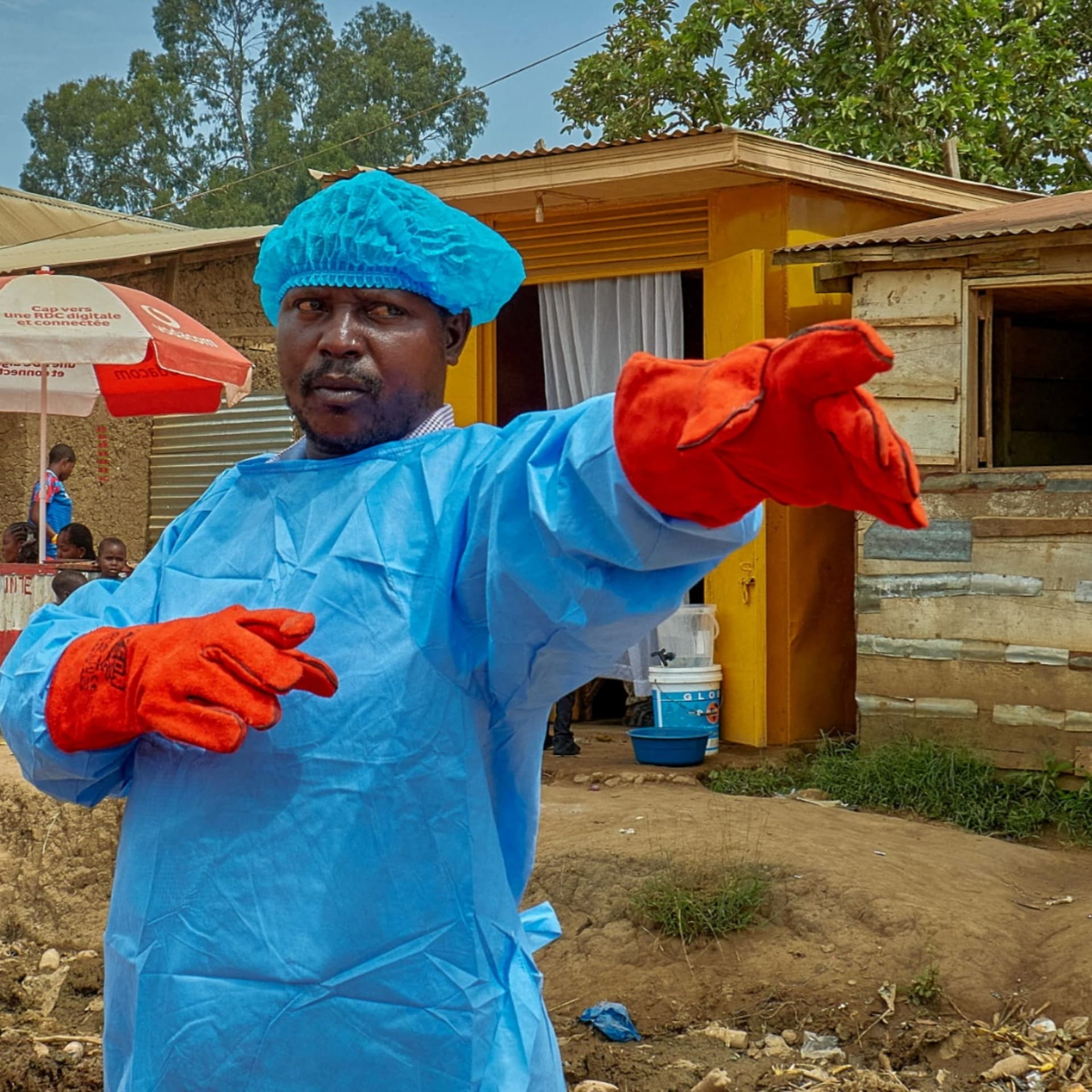
2:10African countries are working together to try and stop the current Ebola outbreak centred in the Democratic Republic of Congo from turning into a wider continental crisis. There have now been more than 200 deaths and 900 suspected cases as the disease spreads through conflict-hit regions with weak health systems. Our correspondent Thomas Nardi told me more. In Kampala, Uganda, the Democratic Republic of Congo, Uganda itself and then South Sudan decided to adopt a joint plan, and it's basically to counter the spread of the Ebola virus across the region. What they are doing is they are trying to increase border monitoring, improve protection for frontline workers, and then also expand capacity.
3:00And we've seen that the numbers have started increasing. The WHO announced on Sunday that the number of suspected cases have risen to over 900 and then 101 confirmed cases. And this is as a result of improved testing, tracking, and then surveillance in the affected regions. But I think the health ministers in the three countries did express concern about the fact that trade and then also conflict in the region co-wescent the ongoing outbreak in the DRC and Uganda. Unfortunately, where the outbreak has centred, particularly in the DRC, it's a very fragile area in terms of regional conflict and also a very fragile health system.
3:51Certainly. The outbreak remains active in three provinces in the DRC. We have the Ituri province, where commercial flights have now been suspended in the capital, Bunea. We also have North Kivu and South Kivu. And we know that the virus has also spread to rebel-controlled territories, which is quite difficult for health authorities to get to in order to contain the spread. And it's sometimes in very remote areas where health facilities are non-existent or there are poor health infrastructure in those particular areas. So it's really very difficult for the authorities to kind of control or prevent the spread of the virus.
4:37And we know that this particular strain has no proven vaccine or treatments. And are these countries getting enough support from other parts of Africa and also from the international community as well? Funding has been a very big challenge in the fight against this virus. Because Africa's CDC on Saturday said that they needed about$300 million to contain the spread. And so far, it's the Gates Foundation, which has announced an initial$50 million in emergency funding to support the Ebola response in the DRC. And we know that the UN has also allocated about$60 million to support the fight against the virus.
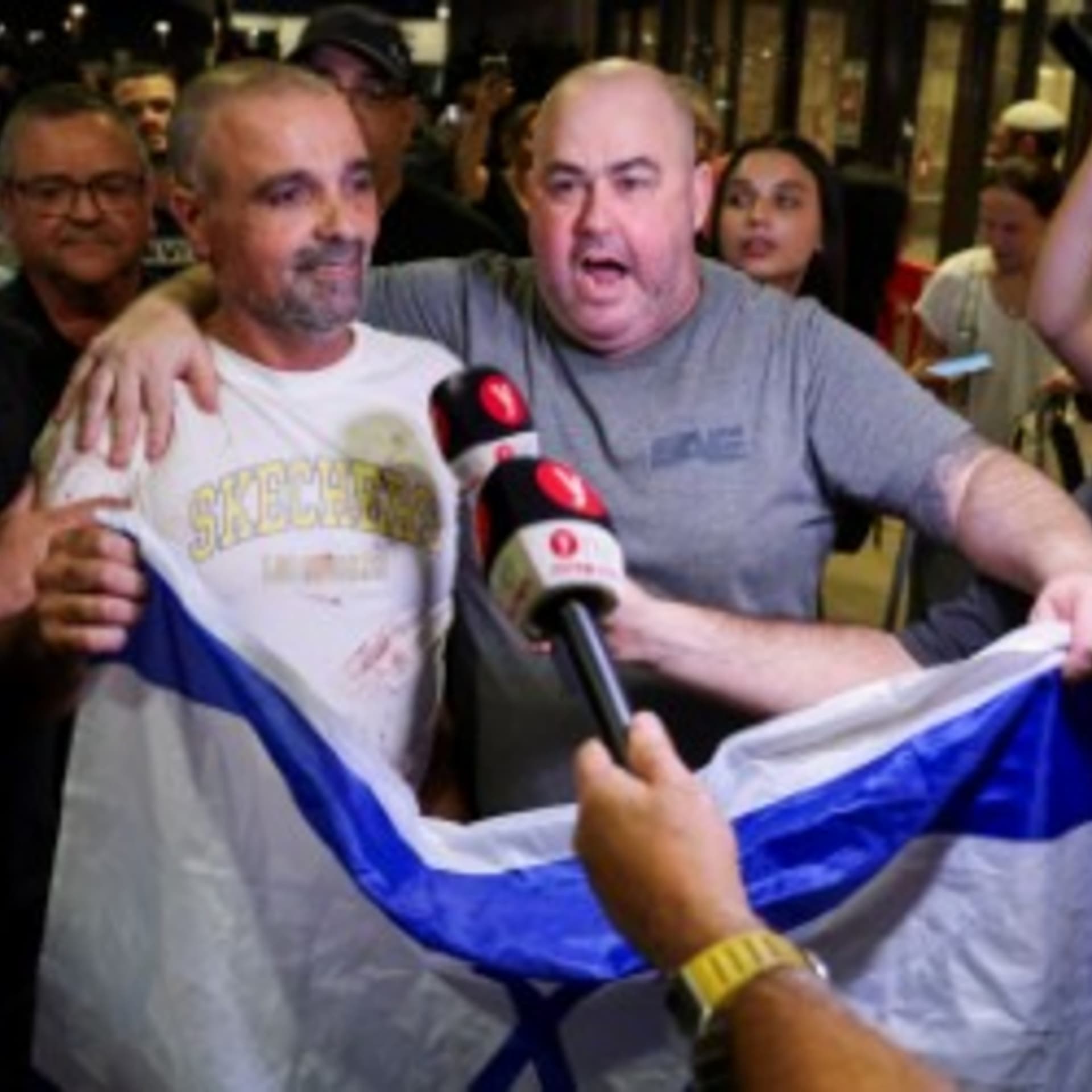
5:18So funding remains a very big challenge. You need money to be able to support frontline health workers who are trying very hard to ensure that they contain the spread of the virus. That was Thomas Nardi. There was outrage earlier this month when video emerged of Israel's security minister, Itamar Ben-Gavir, taunting activists as they kneeled with their hands tied and their heads on the ground. More than 400 of them from countries around the world had been detained after the flotilla they were on carrying aid to Gaza was boarded by Israeli forces. Now, some of the activists have made serious allegations about their treatment at the hands of the Israelis, including in some cases sexual assault.
6:03One activist spoke to James Kumrasami about her experience. Her name is Juliette Lamont and, warning, you may find some of the details in this interview distressing. It was horrific, you know, on all levels, psychologically and physically. I don't think I've ever experienced something as, yeah, awful on all levels. But, you know, we got out at the end of it. I was sexually assaulted three times from when they intercepted our boat in international waters. So it's outrageous the way that they treated us. What are you comfortable telling us about what exactly happened to you? Firstly, when I was taken off the boat, I was handcuffed behind my back and my legs were shackled and I was stood on.
6:51My ribs were broken. My coccyx was broken from a kick to the back. They kept pouring water onto my face so that I thought I was going to drown. Then I was taken into a shipping container that was really dark with five men in it, and I was bashed and my pants were pulled down and I was digitally raped by the men. They smashed me in the face so that when I was sort of spat out of that container into a communal area, open-air area where the rest of us were, my face was bleeding. Yeah, it was like some kind of realm of, you know, Dante's, you know, hell, purgatory. And, you know, it makes you think that if this happens to, you know, 500 ordinary citizens who are acting on the behalf of the world and what happened to Palestinians who don't have that visibility every day, it's just it really needs to end and our global leaders need to act.
7:48Can you just tell us, I mean, were they talking to you? What did they say, the people that you were dealing with there? I mean, there's this, you know, they humiliate you and they go, you know, what are you doing in Israel? Go back to where you came from. And you're constantly told that the level of violence will increase if you do anything. So, you know, you become a shell of yourself and, you know, you start taking the orders. You're in stress positions. So you've got some broken ribs, broken coccyx. How are you getting about? It's really painful. It was lots and lots of codeine. But when we were, the Turkish government gave us flights out of Israel, we were immediately taken to hospitals, our testimonies were taken, and when we get back to Australia in 24 hours, I will then go to another hospital and go through the same thing, just to make sure everything's been documented.
8:35Yeah, I was going to ask you legally, what are your intentions? Every delegation from each country will get a case together to hopefully press charges. Are you in a position to identify your assailants? No, because they wear balaclavas. Yeah, and big men. I'm five foot. I'm five foot. I'm a blonde, five foot, 55-year-old woman. But they didn't identify themselves in any way? At all. No, no. They just humiliated us, insulted us, used our bodies as sort of punching bags. While we asked the Israel Defence Forces for a response to the allegations, they sent us this statement, which has been voiced up by a BBC producer.
9:12The IDF rejects allegations of abuse by IDF soldiers during the operations to protect the legal naval security blockade. IDF orders require respectful and appropriate treatment of flotilla participants on the intercepted vessels, and there are clear and established procedures in this regard. No specific incidents of deviation from these binding procedures are known within the IDF. Any concrete complaints submitted to the IDF on the matter will be examined thoroughly. The maritime area adjacent to Gaza is subject to a naval blockade imposed for security reasons in accordance with international law, aimed at preventing smuggling and terrorist activity that endanger the security of the State of Israel and its civilians.
9:52The legality of the blockade and its enforcement in accordance with international law have also been recognised by a special committee established by the United Nations for this purpose. The IDF, which enforces the lawful naval blockade, intercepted vessels attempting to violate the blockade using recognised and lawful means in accordance with international law. Next, in the US, the Governor of California, Gavin Newsom, has declared a state of emergency as crews race to prevent a toxic chemical leak at a manufacturing facility in Orange County. Officials were initially preparing for two scenarios, the chemical tank ruptures and spills or it blows up.
10:33But there may now be a third option. Here's Orange County's fire chief, TJ McGovern. Our firefighters went in and they were able to visualize the tank. What they found was a potential crack in the tank which could potentially be relieving some of the pressure in there. With this new information it could change our trajectory and our strategy to this event. But with the worst case scenario still in mind, emergency workers are trying to cool the overheating tank. The county health officer, Dr. Regina Chin-Siao Kwong, said anyone who notices a fruity and heavy smell should alert authorities. So in this situation, our biggest concern is when this chemical reacts and the temperatures rise, it can cause a vapor.
11:21If that vapor goes into the air and people inhale that, it causes significant damage. No matter what happens with the situation, whether the polymer just leaks out and then just hardens, or if it does explode and there is a vapor, you are all safe as long as you are out of the zone that was determined to be an evacuation zone. Around 50 ,000 people remain under evacuation orders in the Garden Grove suburb of Los Angeles, but local shelters are running out of space. You know how, like, when people go out drinking, they, like, bar hop? For the last 24 hours, I've been like an evacuation site hopping.
12:01I've worked in refineries my entire life, so I know the danger of the chemicals that they're talking about. What I don't understand is why they haven't been able to contain this. I'm scared because I don't know what's going to happen. And I don't know if anything that already is in the air is going to affect us. The unknown is really scary. Still to come in this podcast, the BBC reports from inside Afghanistan. Before the ban, my parents passionately encouraged me to study. But now they say the best way for me is to get married. Women tell us the Taliban's ban on girls' education is ruining lives.
13:08The Best of British TV The other Bennett sister, only on BritBox. Start your free trial at BritBox.com. Hey, sweetie, your mother showed me this Carvana thing for selling the car. I'm going to give it a try. Wish me luck. Me again. I put in the license plate. It gave me an offer. Unbelievable. Okay, I accepted the offer. They're picking it up Tuesday from the driveway. I haven't even left my chair. It's done. The car is gone. I'm holding a check. Anyway, Carvana, give it a whirl. Love ya. So good, you'll want to leave a voicemail about it. Sell your car today on Carvana. Pick up fees may apply.
13:47I'm Kai Wright. I'm Carter Sherman. Welcome to Stateside with Kai and Carter. We're a new show from The Guardian. We're talking to big thinkers and the best journalists just trying to understand the world through smart conversation and honest reporting. We don't have billionaires telling us what to say. Stateside with Kai and Carter will come out three times a week, Monday, Wednesday, and Friday starting May 13th. Subscribe on YouTube or wherever you get your podcasts.
14:18This is the Global News Podcast. Donald Trump has lashed out at critics of his negotiations with Iran, calling them losers. But several senior Republicans fear that unconfirmed reports of a possible 60-day ceasefire would strengthen Iran's influence in the region and undermine Israel. Earlier on Sunday, President Trump said both sides must take their time, saying the US's blockade of Iranian ports in the Strait of Hormuz would remain in place until an agreement is reached. 24 hours ago, it had seemed that a US deal with Iran was edging closer. Here's our North America correspondent, Peter Bose.
14:56The impression yesterday was given that the deal was imminent, but honestly, I don't think it was. The precise words of the president largely negotiated. and still to be finalized. And really that is still the situation. In fact, the President Donald Trump seems to be a little bit more cautious now, saying that he's told his negotiators not to rush into a deal and that time is on the US's side. He's been quite complimentary about Iran in some of the language that he's been using, but I think he's trying to lower expectations that a deal is indeed imminent. I think some sort of agreement is in the works.
15:36We might hear about it in the coming days. But I think that will just be the beginning, potentially the beginning of the end of this conflict. It seems as if there is still quite a lot to negotiate and especially those issues at the heart of the matter, whether Iran will ever get a nuclear weapon and some of those other really difficult points like the Strait of Hormuz, which it seems as if must be open before they can move on to those difficult issues later in the negotiations. And there's been some backlash from Donald Trump's own party, hasn't there? Yeah, I think the reaction has been really interesting from some pretty senior Republicans who generally are very close to Donald Trump.
16:17Lindsey Graham saying that he fears that a deal would still leave Iran in a strong position in the region and lead to, as he put it, a nightmare for Israel. Some very strong words from Senator Roger Wicker, who's the chair of the Senate Armed Services Committee. He warned that the rumoured 60-day ceasefire, with the belief that Iran will ever engage in good faith, he said, would be a disaster. And he added everything accomplished by Operation Epic Fury would be for naught. And just one more, Senator Ted Cruz from Texas, again, generally very close to the president, said he was deeply concerned by the reports that he's hearing about this emerging deal.
17:02And with the midterms on the horizon, how do you think President Trump is going to sell this to the American public? Are they going to be asking, well, what has this war achieved? That's going to be one of the questions. I think we still need to see the detail of what he will be selling to the American public. I think the first thing that Americans want to notice is that petrol prices are coming down. That can't happen until the Strait of Hormuz is completely and freely open to shipping. Crude oil prices come down. All of that is going to take some time. So I think that's going to be the first issue that Americans will judge progress on.
17:39But then there'll be those questions about whether this war should have been fought in the first place and whether ultimately it has achieved anything over what President Obama achieved a few years ago. And there's been much debate comparing that deal with potentially what this President Donald Trump could be about to achieve. As you heard from Peter there, the US and Iran haven't reached any agreement about Iran's nuclear ambitions. Iran's foreign ministry spokesman said that would form part of later discussions. We got more from Khazran Adji from BBC Persian.
18:40the agreement that so far has been reached. And they are referring to two things. One is the Strait of Hormuz. The other is the release of Iran's frozen assets. I get the impression, that's the sticking point, in a sense that Iran is refusing to relinquish its claim and its claim to management of the Strait of Hormuz. And the Americans are refusing to entertain the idea of releasing Iran's assets before the whole negotiations got through and they've got to the end of the line in 60 days time. So that's where we're still at. While speculation mounts that the US and Iran may be close to some kind of peace deal, there's been no let-up in the violence in Lebanon.
19:31Israel's military has continued to hit what it says are Hezbollah targets in the south and east of the country. Despite Iran's insistence that any agreement must include a meaningful ceasefire between Israel and Hezbollah, Israel is making it clear it reserves the right to take military action beyond its northern border. Our correspondent John Sudworth is in Beirut. The Lebanese have long earned the right to be sceptical about talk of peace deals and ceasefires. Even as hopes are raised that the US and Iran may be getting closer to an agreement with the promise it may also include an end to hostilities in Lebanon, the violence is continuing.
20:14With more Israeli strikes on villages in the south in a weekend of violence that included the deaths of six medics. The war reignited in March after the US launched its strikes on Iran and Iran's proxy militant force in Lebanon, Hezbollah, began firing rockets at Israel. More than 3 ,100 people have been killed in Israel's subsequent bombardments and ground invasion, hundreds of them since a temporary ceasefire was announced last month. Iran says any deal with the US must also include peace in Lebanon, but with some senior Israeli politicians warning that a ceasefire would be acquiescence, the Prime Minister Benjamin Netanyahu is stressing Israel's right to continue to defend itself against all threats.
20:58John Sudworth. It's been almost five years since the Taliban stopped girls over the age of 12 going to school in Afghanistan and there's no sign the ban will be lifted in the future. Activists on the ground say it's led to an increase in forced and underage marriages. Our correspondent Yogita Lamai has been speaking to women inside Afghanistan. Their identities have been hidden and their voices changed due to fear of reprisal from the Taliban. Driving through Kabul, we pass a school. The walls that flank its gates read, knowledge is power, knowledge is light. But that power has been taken from the women of this country for the past five years.
21:41One of the things we've noticed over the years is that it's getting harder and harder to find Afghan women and girls who are willing to speak to us because of the environment of fear that persists. but incredibly there are still people who want the world to hear their voices. We're on our way now to meet a young woman who's travelled hundreds of miles from her home province to the city of Kabul. She's taking English lessons and she's trying every way possible to keep some form of education going. Before the ban, my parents passionately encouraged me to study. They believed in me and told me I can definitely achieve my dream of becoming a pilot.
22:27But now they say the best way for me is to get married. Because I can't go to school, to university, I can't even work. I feel like I'm burning in hell.
22:42We've just travelled to an area in the west of Kabul to meet a family. We meet an elderly mother with two daughters. She worked as a cleaner to put her girls through school. But when the Taliban banned education, she pushed her elder daughter to get married. She explains why, with tears welling up in her eyes.
23:09I was fearful that the Taliban will question why I'm not getting her married. I had wanted her to be educated, work and contribute to society. I'm illiterate, so I'm like a blind person. But I wanted my girls to learn. But here in Afghanistan, it's over for us. Her elder daughter now has two children, an infant and a toddler, both girls. Having a husband is not the only dream a woman has. She needs to stand on her own two feet first, become independent, and then she can marry and start a family. But I went into this new life with none of that. My dreams remain unfulfilled. We've come to the Government Media and Information Centre in central Kabul to interview the Taliban government's deputy spokesman, Hamdullah Fitrat.
24:00We've been here before in this building. And one of the things about this interview and the way it's done, especially for television and video, is that we can't be pictured in the same frame and he also wants it across from me because I'm a woman. But there is no editorial interference. We are free to ask whatever questions we want and we're just waiting for him to arrive.
24:26It's now been more than four and a half years you've been in government. How can you continue to justify this ban on education on girls and women? The restriction on education beyond grade six is a separate issue. When secondary and higher education for girls will be opened is a question for the Ministry of Education, and hopefully they will provide a satisfactory response.
24:51For nearly five years now, we have been speaking to women and girls in your country. At the very beginning, they used to tell us maybe it'll open in a few years. Now they tell us they do not believe that their education will be reopened under your watch. Is that true? Do you recognize that a whole generation of women, their lives, their dreams, they're already over? As I have already said, this question is for the Ministry of Education. You won't allow there to be female doctors, female nurses, female midwives. That is affecting, it's not just about the right to education there, it is about the right to health, it's about their right to a life.
25:28The Islamic Emirate is committed to granting women their rights according to Islamic law. Over the past four and a half years, whenever we've questioned Taliban officials about women's education, we've heard similar responses. They've either been vague, no specific timeline, or there's been outright deflection. We have asked the education ministry for a response. We have not received one. That was Yogita Lamai. A highly controversial new sporting event has got underway in Las Vegas. It's called the Enhanced Games because the athletes will be allowed to use performance-enhancing drugs like steroids.
26:06Around 40 athletes are competing, risking their reputations and perhaps even their health for big cash prizes. Sprinter Rhys Prescod is one of those taking part. Let's say I was in England, for example, and people asked about the Enhanced Games. Everyone's a bit like, there's always a bit of like a side eye towards it, if that makes sense. whereas like we trained in the Middle East people ask me oh what's like Enhanced Games like they're like oh this is really good this sounds really exciting is it like peptides what is it they're really big on it and then you come to America like America here you tell everyone you're competing in Enhanced Games they're like right on like they absolutely love it.
26:40Our correspondent Shima Khalil is in Las Vegas. Think of everything that's banned in the Olympics and anything that's banned by the World Anti-Doping Agency but that's approved by the FDA and that's what they're on so testosterone Alosterone, growth hormones, peptides, steroids, stimulants. These are the things that these athletes here are not only allowed to take, they're encouraged to take under medical supervision. I'm surrounded by giant screens, booming music, as you can hear, cheering crowds. And on the face of it, athletes are, you know, promising speeds. They're promising strength. And it looks like, you know, a big sporting event.
Read the full transcript
27:23And in a way it is, but it's of course very different because this is an event that allows its athletes to use performance enhancing drugs. It's promising them huge, huge money,$25 million in prize money all in all. We've just seen a couple of swimming races where two athletes, one of them actually competing clean, won$250 ,000, a quarter of a million dollars for winning the event. But also if you break a world record, you're promised a million dollars. Of course, these records will not count when it comes to, you know, Global Aquatics Federation or Athletics Federation because not only do they dismiss the games, they condemn the games because they say that it goes against everything that fair play and elite sport is about.
28:15But when you speak to organizers here, when you speak to athletes here, they say doping has always been around in elite sport. They're just bringing it out in the open. And one thing that all athletes have told me is that they're being rewarded very handsomely, much, much more than they have during their Olympic careers. And do these athletes, do they look like normal athletes? Or can you tell that perhaps they're on steroids or something like that? That's really interesting. I think some of them you can really tell because there are before and after pictures. So there was a really, really famous picture that went viral of the Australian swimmer, one of the very first athletes that signed on to be the face of the Enhanced Games, if you will.
28:58And you see his before picture, before being enhanced, and his after picture just completely buffed. You know, he's gained a completely different upper body. And when you see him in real life, you can just see what he's been doing. Interestingly, though, I've been asking them, what regiments are they on? What have they been taking? Because, you know, I said, look, you say that you're out in the open. Tell us what you're on. And they wouldn't share their protocol, as they call it. But they say that they're under medical supervision. And they also keep saying that the Olympics have failed to do something substantial about doping in elite sport.
29:40And when I put that to the US Anti-Doping Agency CEO, he said, look, yes, there are failures in the system. But the answer is not to dope. It's to reform the system and make sure that the integrity of fair play is consistent. That was Shaima Khalil in Las Vegas. And that's all from us for now. If you want to get in touch, you can email us at globalpodcast at bbc.co.uk. You can also find us on X at BBC World Service. don't forget our sister podcast The Global Story this edition of The Global News Podcast was mixed by Chris Hansen and the producer was Paddy Maguire the editor is Karen Martin I'm Charlotte Gallagher until next time goodbye
30:39The most important thing is to be yourself.
From the publisher
The Democratic Republic of Congo, Uganda and South Sudan co-ordinate their response to the Ebola outbreak as the number of suspected cases in the DRC surpasses 900. Also: a pro-Palestinian activist makes serious allegations about her treatment after being detained on board a flotilla carrying aid to Gaza, which Israel denies; President Trump says Iran and the US "must take their time" to reach an agreement, dashing hopes of an imminent deal; we hear from women in Afghanistan where activists say the number of forced underage marriages have risen in the five years since the Taliban stopped girls over the age of twelve going to school; and we go to the controversial Enhanced Games - or the "Olympics on steroids".
The Global News Podcast brings you the breaking news you need to hear, as it happens. Listen for the latest headlines and current affairs from around the world. Politics, economics, climate, business, technology, health – we cover it all with expert analysis and insight. Get the news that matters, delivered twice a day on weekdays and daily at weekends, plus special bonus episodes reacting to urgent breaking stories. Follow or subscribe now and never miss a moment. Get in touch: globalpodcast@bbc.co.uk