In short
The episode covers: (1) a BBC investigation into whether traders profited from insider trading around President Trump’s Iran-war-related statements, citing publicly available spikes in oil futures trading minutes before a March 9 CBS interview where Trump said the Strait of Hormuz could reopen; analysts are split on legality, while the White House denies insider trading and regulators (CFTC/SEC) haven’t publicly updated investigations. (2) U.S.-Iran peace talks: Pakistan prepares to host talks in Islamabad, but Iran hasn’t confirmed attendance after a U.S. seizure and boarding of the Iranian-flagged ship Tuska; Iranian officials cite the blockade and unresolved gaps, amid economic strain and inflation in Iran. (3) Kenya’s tea/flower exporters face disrupted routes and losses. (4) Japan earthquake tsunami warnings; (5) Hong Kong fire survivors return to damaged homes; (6) MI5 warns about Anthropic’s Claude “Mythos” cybersecurity risks.
Guests
none named; reporters include Nick Marsh, Caroline Davies, Lise Doucette, Caleb Mogis, Mickey Bristow, Martin Yip, Will Chalk. Experts: Professor Wendy Hall, Sana Karaghani.
Written by AI. May contain mistakes. Listen to the episode to check what was said.
Chapters
Tap a time to open that second in VOInsider Trading Investigation
1:20 to 2:09
A BBC investigation reveals potential insider trading linked to Trump's statements.
“We have the latest on the chances of peace talks between the United States and Iran to end the war.”
Analyzing Trading Patterns
2:09 to 4:49
Discussion of unusual trading activity before Trump’s statements and how it may indicate insider trading.
“We begin with a BBC investigative story.”
U.S.-Iran Peace Talks
4:49 to 7:35
Exploration of the potential for peace talks between the U.S. and Iran amidst rising tensions.
“They didn't respond to me, but their chair has been speaking recently about the need to crack down on insider trading.”
On-the-Ground Reporting from Iran
7:35 to 10:50
Lise Doucette reports from Tehran on the atmosphere and negotiations regarding the U.S.-Iran conflict.
“We have seen a lot of preparations underway here in Pakistan.”
Impact of War on Iranians
10:50 to 14:01
Discussion on the effects of the ongoing conflict in Iran on its citizens and their desires.
“What's the mood on the ground when it comes to any possible talks with the U.S.?”
The Impact of Hardliners on Iran Talks
14:01 to 14:52
Explore the challenges faced by Iranians amidst ongoing tensions and conflicts.
“These are the kind of hardline comments.”
Economic Fallout in East Africa from Iran Conflict
14:54 to 17:49
Learn how the conflict in Iran is disrupting trade and impacting economies in East Africa.
“Staying with the war in Iran and the effects it's having far beyond the region, countries in East Africa now facing mounting economic pressure because of that conflict.”
Japan Earthquake and Tsunami Alert
19:30 to 21:04
Stay informed about the recent earthquake in Japan and the subsequent tsunami warnings.
“Let's move to Japan, where a big earthquake has struck off the country's northeastern coast.”
Aftermath of Hong Kong's Deadliest Fire
21:20 to 23:23
Understand the ongoing recovery efforts and challenges faced by fire survivors in Hong Kong.
“which engulfed an apartment complex in November, 168 people were killed.”
AI Technology and Security Risks
23:25 to 26:31
Delve into the implications and security threats posed by advanced AI technologies.
“is warning that a new technology created by the artificial intelligence giant Anthropic is very powerful and could be dangerous in the wrong hands.”
Transcript
Automatic transcript. May contain errors.0:00This BBC podcast is supported by ads outside the UK.
0:30Moto Casino, America's Social Casino.
1:00Cancel anytime. Non-refundable fee. Product purchase required. Terms and service restrictions apply. Details at mowes.com slash terms. Subject to change. This is the Global News Podcast from the BBC World Service. I'm Celia Hatton, and at 1500 GMT on Monday, the 20th of April, these are our main stories. A BBC investigation has found that traders have repeatedly bet huge sums just before major announcements by President Trump, raising suspicions of insider trading. We have the latest on the chances of peace talks between the United States and Iran to end the war. The Iranians like to take as long as possible before they make what are really difficult political concessions.
1:43President Trump likes to take as little time as possible. And we'll hear how the fighting in the Middle East is affecting businesses in Kenya. Also in this podcast, an earthquake in Japan leads to a tsunami warning and evacuations, and residents of burnt-out tower blocks in Hong Kong return to see inside their destroyed homes.
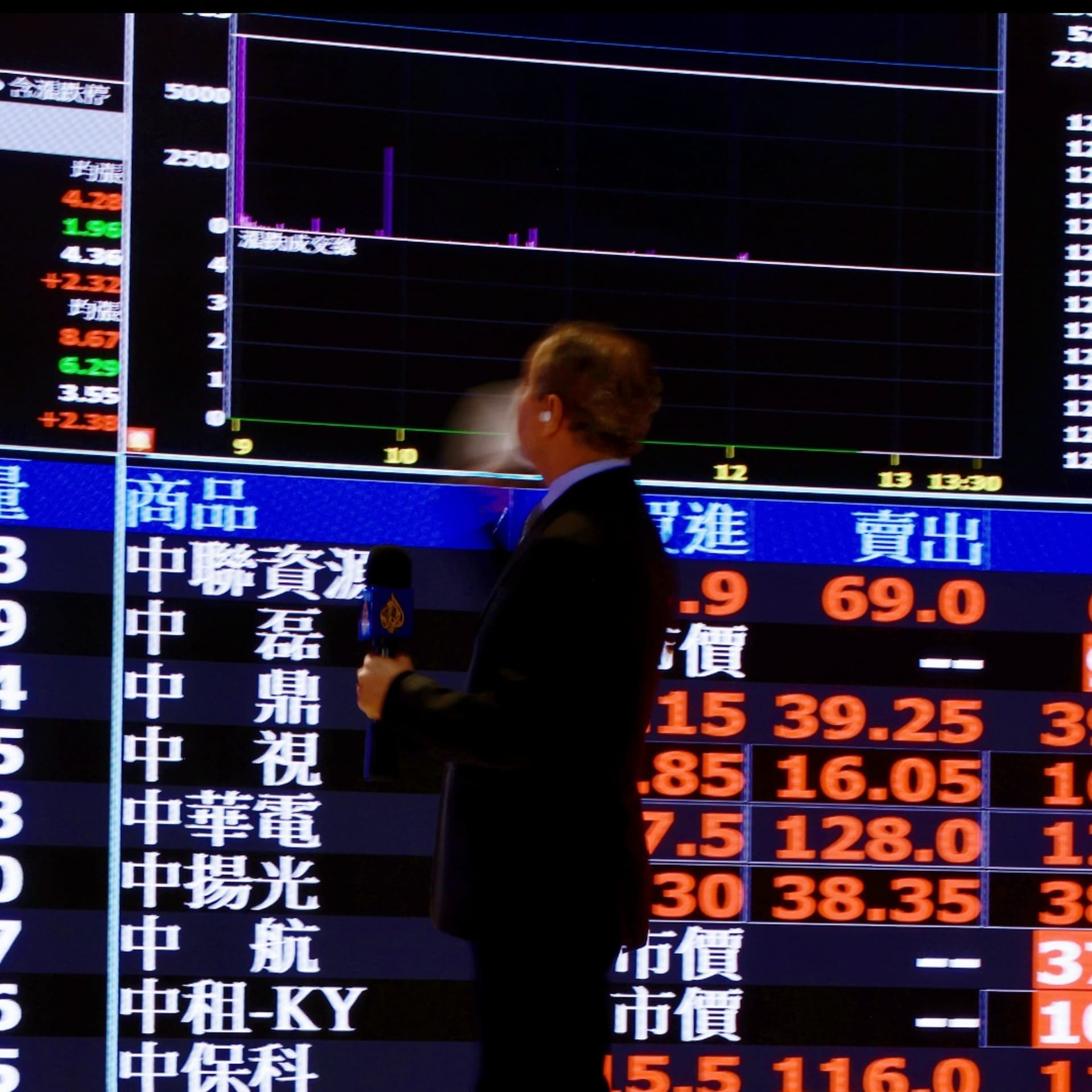
2:09We begin with a BBC investigative story. Throughout Donald Trump's second term, and particularly during the U.S.-Israel war with Iran, we've seen how his words can impact the global economy. Now, the BBC's found evidence of trading on financial markets spiking in the hours and sometimes minutes before the president's statements are made. Some analysts say it looks like illegal insider trading where bets are made based on information that is not available to the public. Others say the picture is more complicated. Our business reporter in Singapore, Nick Marsh, has been looking into this. I asked him for an example of when it's happened.
2:52Nine days into the war, Donald Trump gives an interview to CBS News. I just spoke with President Trump a short time ago, and he said that he thinks the war is very complete, pretty much. So understandably, the price of oil plummets because there's the prospect of the Strait of Hormuz completely reopening and world oil flows getting back to what they were. That statement was first reported on X at 16 minutes past three Eastern time on the 9th of March. 47 minutes before, there's a very, very noticeable spike in oil contracts being traded worth millions and millions of dollars. That's unusual for that time of day on a Monday.
3:41these traders who put this money on oil basically will have made an awful lot of money from it through a strategy known as short selling you know when the price of oil goes down probably don't have time to get into that but rest assured they will have made an awful lot of money through that so nick how did you find this information was it easy to find and is it the same traders placing these suspicious trades each time? Well, look, this is publicly available information. And there are other market analysts who have been pointing this out all throughout Donald Trump's presidency, that there are unusual trade activities that have occurred.
4:22In terms of who placed these trades, it's very difficult to know. The only people who know who placed these trades are the traders themselves. potentially anyone that supplied them with the information on which these trades were placed. And also, crucially, the US financial regulators. They do have the ability to investigate and find out who were placing these trades. I reached out to the CFTC, the Commodities Futures Trading Commission. They didn't respond to me, but their chair has been speaking recently about the need to crack down on insider trading. The same goes for the Securities and Exchange Commission, which look after the stock market.
5:05But when I specifically put these specific instances, which were analysed in my report, I didn't get any updates on to how those investigations were going or indeed whether they had even started. And experts are split neck on whether this is evidence of insider trading. Well, look, there's a school of thought that some people, you know, very, very sophisticated market operators are getting really good at trying to anticipate when Donald Trump will say something, when he'll intervene. They'll look at the market conditions and say, well, he's got to do something because it's not looking good for him.
5:38So he'll say something maybe today, maybe tomorrow, and then place trades based on that. Bets placed on the stock market are based on a huge range of information and intuition and things like that. But there are a lot of experts, many, many market analysts, many people who look at the consistent pattern of spikes in trade before the US president says something and moves markets and say this is unusual. So, Nick, what has the Trump administration said? Well, I received no response when I contacted the White House, but you have had spokespeople in the past making it clear they strenuously deny any form of insider trading.
6:18There was one spokesman who told another outlet last month it didn't tolerate any administration official illegally profiteering off of insider knowledge. There was an email actually circulated to White House staff quite recently warning them not to place bets on these predictions markets based on insider information. But again, at the time, the White House spokesman told us that any suggestion that insider trading was happening was false reporting. Nick Marsh. And Nick's full investigative story is available on the BBC News website. Let's take a look now at the U.S. war with Iran and the prospect of peace talks to end that conflict.
6:59The Pakistani government is preparing to host a second round of negotiations, but it's still unclear if they'll actually go ahead. President Trump said on social media on Sunday that his representatives are going to Islamabad and would be there by Monday evening. And the Iranian president, Masoud Pazeshkian, has said that every rational and diplomatic path should be used to reduce tensions. But Tehran has not confirmed it's sending anyone to talks. We'll be hearing from Lise Doucette in just a moment, who was reporting for us from Tehran. First, here's Caroline Davies, who's in the Pakistani capital, about the latest prospects for any talks.
7:39We have seen a lot of preparations underway here in Pakistan. There have been further road blockades, a large amount of the diplomatic area. The red zone has been essentially sealed off at the moment. So a lot of preparations underway. We've also just heard that Pakistan's interior minister has met the Iranian ambassador here in Pakistan, who has been quite vocal throughout the course of these back and forth negotiations. The sort of messaging that we're getting from that is, again, Pakistan saying to Iran that they advocate for a peaceful solution to have these discussions, to have these talks.
8:09It's what we've heard repeatedly from Pakistan throughout the course of these discussions. We know Pakistan has, of course, been running this back channel between the two countries and re-emphasizing again that all the necessary security arrangements have already been put in place. At the same time, we're hearing a lot of escalatory language that is coming both from the US and from Iran, of course, particularly from President Trump, who said that if there wasn't a deal found between the US and Iran, that he was standing ready to hit every bridge and every power plant inside Iran. Iran, on the other side, have been saying that they don't think that the U.S.
8:49is serious about negotiations, and at the moment they haven't made a decision about whether or not they will come here. Caroline Davies in Islamabad. As I mentioned, our chief international correspondent, Lise Doucet, is in the Iranian capital, Tehran. Lise has been allowed to report from inside the country on condition that her material is not broadcast on the BBC's Persian service. Similar restrictions apply to all international media working in Iran. I spoke to her earlier and I began by asking her about the Iranian flagged cargo ship that was seized by the United States on Sunday. It just seemed it was going to be a matter of time before a confrontation like this took place.
9:28You have the two rival buildup. You have the buildup of U.S. military force in the Gulf. You have those two rival blockades. And what we understand, and this is according to the American account, that they had given warnings for six hours to the Iranian-flagged vessel. The warnings, they say, were ignored. So the U.S. Navy opened fire at the ship, disabling the engine, and then they boarded it and took custody of the ship. This is the first time an incident of this time has happened since the blockade, U.S. blockade of Iran's port came into force. And even though the Iranian military, its Joint Command, has threatened to retaliate, we were just hearing that they are holding off for now until they are sure that the crew on board, the Tuska, the name of the ship, is safe.
10:18So there's a bit of a pause there. There was that post on social media by President Trump in which, you know, in exclamatory tones, we've got the ship, we're going to have a look at what they've got on board. So we're still waiting to get more clarity on exactly what happened. But what is clear is that it has had an impact on the already uncertain possibility as to whether the Iranians were ready to go and join those talks in Islamabad. It's interesting that you tie the two together, Liz. I mean, we just heard from Caroline Davies in Pakistan. But you're in Iran. What's the mood on the ground when it comes to any possible talks with the U.S.?
10:57Well, there's been a press conference at the foreign ministry here a short time ago, and the foreign ministry spokesperson, Ismail Bagai, had said that they have no plans so far. I mean, that's the important phrase, so far, to go to Islamabad. And we have to bear in mind that even before this incident, Iranian officials kept silent in response to that swirl of media reports on Sunday, including posts and interviews by President Trump saying that the talks were going to happen, saying that he was sending his envoys. And the Iranian officials said nothing, but Iranian media said that no decision would be taken on the talks for as long as that U.S.
11:35naval blockade was in force. And now, as we've been discussing, not only is the blockade still in force, there has been this incident. And to add to the mix, the Iranians had also had concerns that the two sides simply weren't ready for high-level talks. The Iranian account of what they agree with the Americans' public statements, yes, some progress was achieved in those first high-level face-to-face talks in Islamabad the first time, but they talk about many gaps, that fundamental issues remain. There is talk of a framework of understanding. We understand that from their perspective, it's not quite right.
12:12What you have here is not just a chasm, of course, in two very different political cultures, two very different end games, two countries with their own red lines, but also two very different negotiating styles. The Iranians like to take the long view. They like to take as long as possible before they make what are really difficult political concessions. President Trump likes to take as little time as possible. He likes to do the big deal. He's even been talking about a deal within days, which just doesn't seem possible. Whether they can find a point in the middle for the kind of serious and sustained negotiations that create the possibility of the give and take compromises by both sides for what they could call a win-win situation just isn't clear.
13:03Liz, you've been there for a few days. How are people coping in general, assuming that this conflict continues for a while? Well, we've been in Tehran now for several days. Our last visit was in February. What can I say? That the situation, which was hard in February, is even harder now. We were stunned by the level of inflation here was at 60 % in February. Now we went to see a pharmacy. Prices are even higher now. Some of the imported medicines are in short supply. The near total internet blackout is still in force. There's not a single Iranian that we've spoken to has said they believe that this fragile ceasefire meant to expire on Wednesday is going to last.
13:49This is a country, bear in mind, 92 million people. Of course, there's going to be a vast range of views. And you hear, for example, some people have said to us, we don't want the talks to succeed. We want to keep fighting. These are the kind of hardline comments. They want to punish the United States, not ready to give in to President Trump's demands. But we've also had Iranians saying to us, we don't want the talks to succeed because they don't want anything which would help keep the system, which is now dominated by hardliners in power. But I think in the middle, you get so many Iranians who really are exhausted.
14:24They're still shaken by those weeks of war, shaken by the crackdown with lethal force in January, which killed tens of, possibly tens of thousands of people. and they just want sanctions to be lifted. They want to get on their lives. They want to have something which could be approaching what we would all regard as a normal life, not constantly in a standoff with the West. Lise Doucette reporting from Tehran. Staying with the war in Iran and the effects it's having far beyond the region, countries in East Africa now facing mounting economic pressure because of that conflict. There are disrupted trade routes, rising freight costs and fuel shortages.
15:09Kenya's tea estates and flower farms are just some of the businesses affected. Caleb Mogis reports from Nairobi. Fresh green tea leaves being processed for preservation before packaging for export. With ongoing conflict in the Middle East, disrupting air and sea transport routes to key markets, Kenyan farmers and exporters are worried. The country's horticulture sector, which is worth over$800 million annually, has been hit hard. Jay Hirani, sales manager at Prima Rosa Flowers, says his company is losing thousands of dollars per day. We export to a lot of countries in the Middle East, including Saudi Arabia, Qatar, Kuwait, Oman, Iraq as well.
15:58Our losses can be anywhere between$30 ,000 to$50 ,000 a day, and that is a huge amount considering 80 % of our market is Middle East. Kenya's tea sector is also feeling the pressure. The country is reporting weekly losses of up to$1.4 million from tea export since the U.S.-Israel war on Iran began. This is Limuru, a place about 30km from Kenyan capital, Nairobi. Large plantations here support thousands of farmers and workers as Kenya heavily relies on tea export to the global market. But the ongoing conflict in the Middle East is disrupting this trade. Samuel Kariuki, who manages Gatoni Park Farm in Limuru, is concerned about operational costs.
16:49The freight charges and the shipment costs staff will also be skyrocketing. So that would mean that we're able to export less of our tea. We are going to have another surplus of the tea because so many people and farmers will be producing tea, but you do not have like an actual market to take it to. According to East Africa Tea Trade Association, 8 million kilograms of tea has been stuck in warehouses in Kenya's port city of Mombasa for weeks, threatening export earnings and farmer incomes. George Omuga is the association's managing director. The Middle East takes an average of 20-25 percent from this auction, and Pakistan, which also neighbors Iran, buys 40 percent.
17:32So we are talking about a market share of 65 percent. Should this war continue, the negative consequences will be more severe. With a fragile ceasefire, smooth passage through one of the world's most important shipping lanes, the Strait of Hormuz may not be guaranteed. Any exporters in the region fear that the worst is yet to come. Caleb Mogas in Nairobi. Still to come in this podcast. We've been hearing from banks saying that they've run Mythos and found a year's worth of patches and security things that they need to update. Like banks should really be taking this to the top table kind of immediately.
18:12The UK security agency issues warnings over powerful new AI technology.
18:25John Daly here. You know what day it is? Neither do I. I live life daily. That's why I only spend on Moto Casino. Moto's got daily free bonuses, daily tournaments, new slots added daily. And the best part? Guaranteed daily jackpots. You can't beat that. So today's the day you're gripping to spend it with me on Moto. America's Social Casino. Play for free on Moto.us. Moto Casino, the social casino. What were prohibited? No purchase necessary. Visit Moto.us for more details. Download the Moto Casino app today. Must be 21 plus. Moto Casino. America's Social Casino. At the BBC, we go further so you see clearer.
18:59With a subscription to bbc.com and the BBC app, you get unlimited articles and videos, ad-free podcasts. The BBC News Channel streaming live 24-7, plus hundreds of acclaimed documentaries. From less than a dollar a week for your first year, read, watch and listen to trusted, independent journalism and storytelling. It all starts with a subscription to bbc.com and the BBC app. Find out more at bbc.com slash unlimited.
19:29This is the Global News Podcast. Let's move to Japan, where a big earthquake has struck off the country's northeastern coast. The underwater quake caused a tsunami, and people living near coastal areas and rivers were warned to immediately move to higher ground and watch for further quakes. This was an announcer on the Japanese broadcaster NHK shortly after the quake hit. There are offshore tsunamis observed off the coast of Iwate Prefecture. This means that waves are approaching Iwate Prefecture. And there are tsunami warnings in place also for Aomori's Pacific Coast and Hokkaido's Central Pacific Coast.
20:08If you are in these areas, you must evacuate now. Go to higher ground. Do not go back. Do not stay near the coastline or near riverbanks because tsunami can cause waves to go inland. Quite a strong warning there. The initial alert was for a possible three meters tsunami. Tommy. Did that happen? Here's the newsroom's Mickey Bristow. A short time ago, the authorities downgraded those warnings to advisories. No longer are they expecting waves of three metres. It's down now to about a metre. In fact, some of those waves have already hit. Having said that, evacuation orders do remain or seem to remain in place in some areas.
20:46170 ,000 people have already fled their homes for centres or higher ground. and people are being told to stay away from coastal areas and river estuaries, that kind of thing. And interestingly, the authorities have said that over the next week, there could be increased or further seismic activity. This earthquake, magnitude 7.7, might not be the biggest over the next few days. So the authorities are advising residents to be alert and keep supplies nearby just in case they have to evacuate at short notice. Mickey Bristow. To Hong Kong now, in the scene of the territory's deadliest fire in decades, which engulfed an apartment complex in November, 168 people were killed.
21:29For the first time since that fire, residents at the complex have been allowed to return to retrieve their belongings. Our reporter in Hong Kong, Martin Yip, has more details. This will be the first time in nearly five months that these displaced residents would have a chance to see firsthand on what has left in their homes. Speaking to Hong Kong's government-controlled broadcaster RTHK, Deputy Chief Secretary Ron Le Churk says some 6 ,000 people have registered to go in. In the next two weeks, families in groups of four at most are assigned, each with a three-hour time slot to pack up. Officials told them to prepare themselves both physically and mentally.
22:14Those who live in higher floors are faced with tough hikes as there are no lifts. Some might well come across the ferry sports where their loved ones had drawn their last breath. Some have given up to go in altogether. Pictures revealed by the government earlier suggest some units are so damaged that walls and even sellings have fallen off with virtually nothing left. A few non-government organisations were offering counselling sessions or even lending out robotic exoskeleton legs to help pensioners who would like to walk up the stairs to go home for maybe one last time. But there are reports of some services being cancelled in last minute under government orders, which the administration is yet to comment on.
23:02On the other hand, officials are denying claims that they are banning volunteers from helping out residents on sites. They have also said that some claims of ransacking were just misunderstanding. These all add to people's frustration, but officials say it is important to follow their lead. Martin Yip in Hong Kong. And last, here in the UK, the government's domestic security agency MI5 is warning that a new technology created by the artificial intelligence giant Anthropic is very powerful and could be dangerous in the wrong hands. Claude Mitho's preview is so good at finding weaknesses in cybersecurity systems that its American developer has decided it's too dangerous for general release.
23:50Our reporter Will Chalk has more. This is the latest iteration of the already popular chatbot Claude, made by the AI giant Anthropic. Claude is a powerful, intelligent collaborator that amplifies your capabilities across all of your work. And like with most AI tools, its purpose, at least on paper, is benign. It's designed to analyse software code and find problems with it. The issue with that, though, is that once these problems have been identified, they can either be fixed or exploited. So releasing this software to the world could be good news for hackers. And this is where we got that chilling warning from Anthropic two weeks ago, saying they decided not to release it because the risk was too great.
24:34They claimed Mythos was so good it had found vulnerabilities in every major operating system and web browser in the world, including some that have been missed by humans for 27 years. Now, this would mean transport systems, medical records, social media chats, hospitals, schools and potentially governments could be vulnerable. But it is important to stress there are plenty of people sceptical about this, including Professor Wendy Hall, a member of the UN's high-level advisory body on artificial intelligence. My message is always that don't panic. A lot of this is hyper-marketing from the companies that have to keep the money flowing in.
25:18This tool could be very useful for people. I mean, it will help, and I'm sure that's part of what Anthropik want. They want people to buy this tool. But on the basis of this warning from MI5, it appears there is also a serious threat couched within the hype. The UK's AI security agency has had access to Mythos. It's reported to the government and the government has then put out a warning to both critical national infrastructure as well as private businesses, saying you're going to need to buck up your defences. Sana Karaghani is a professor of practice in AI at King's College London. I think we've got a window of opportunity here, right?
25:55We've been hearing from banks saying that they've run Mythos and found a year's worth of patches and security things that they need to update. Banks should really be taking this to the top table kind of immediately. We're at a watershed moment where we should be using this to fix our systems. For as long as we have been talking about AI, there have been these sci-fi-esque fears about it taking over or massively altering the world we live in. And wherever this story goes from here, I think it's clear there are plenty of people in the know who think this tech, if used irresponsibly, could make those fears a reality.
Read the full transcript
26:31Will Chalk. And that's all from us for now. If you want to get in touch, you can email us at globalpodcast at bbc.co.uk. You can also find us on X at BBC World Service. Use the hashtag Global News Pod. And don't forget our sister podcast, The Global Story, which goes in-depth and beyond the headlines on one big story. This edition of The Global News Podcast was mixed by Philip Bull. The editor is Karen Martin. I'm Celia Hatton. Until next time, goodbye.
27:16You get unlimited articles and videos, ad-free podcasts, the BBC News Channel streaming live 24-7, plus hundreds of acclaimed documentaries. From less than a dollar a week for your first year, read, watch and listen to trusted, independent journalism and storytelling. It all starts with a subscription to bbc.com and the BBC app. Find out more at bbc.com slash unlimited.
From the publisher
The BBC has found a pattern of spikes in trades on financial markets ahead of public announcements by President Trump, including during the Iran war. It's raised suspicions of insider trading, where bets are made based on information that's not available to the general public. However, some argue that certain traders have become more adept at anticipating the president's interventions. Also: potential peace talks between the US and Iran have been thrown into doubt after American marines seized an Iranian-flagged ship. A strong earthquake off the coast of Japan triggered tsunami alerts. And a warning about a new and very powerful AI model.
The Global News Podcast brings you the breaking news you need to hear, as it happens. Listen for the latest headlines and current affairs from around the world. Politics, economics, climate, business, technology, health – we cover it all with expert analysis and insight. Get the news that matters, delivered twice a day on weekdays and daily at weekends, plus special bonus episodes reacting to urgent breaking stories. Follow or subscribe now and never miss a moment. Get in touch: globalpodcast@bbc.co.uk