
In short
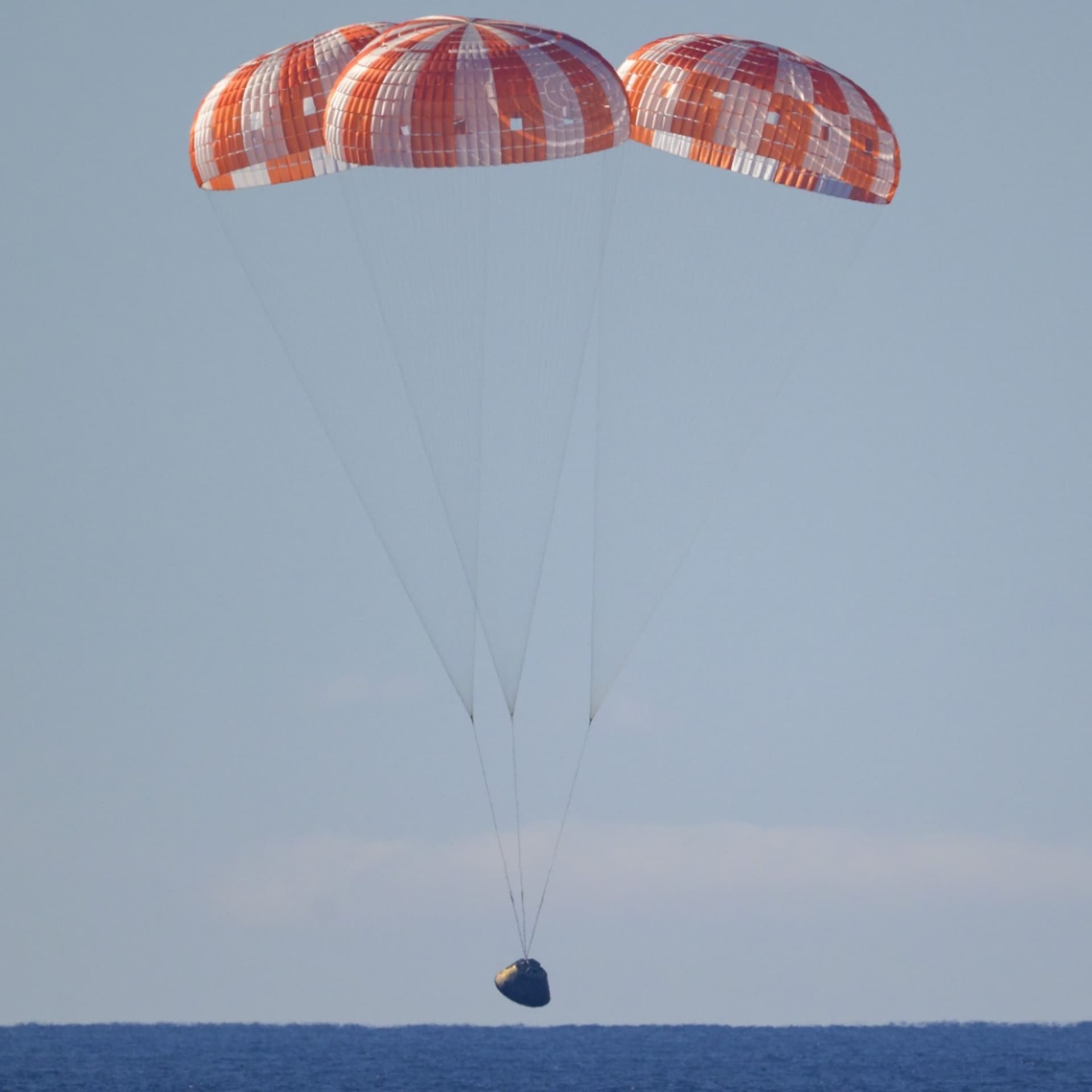
This BBC Global News Podcast episode centers on Artemis II’s splashdown and what comes next, plus major international stories. Artemis II: Orion returned safely to the Pacific with four astronauts after 10 days, completing the first manned moon trip in over 50 years and setting a record for farthest humans in space.
Key claims
the heat shield worked despite concerns from an earlier test; communications were lost for about six minutes during re-entry; astronauts are in excellent shape and will undergo medical checks before seeing families.
Notable examples
NASA “Splashdown confirmed” at 7:07pm Central; red-and-white parachutes; a landing watch party at Columbia Memorial Space Centre with families and a teacher.
Guests
Palab Ghosh (BBC science correspondent); Shama Khalil (LA correspondent); Caroline Davies (Pakistan correspondent); Lise Doucette (chief international correspondent); Sarah Smith (Washington correspondent); Paul Henley (reported Beirut family interview); Nick Thorpe (Hungary election); John Mitani (chimp study co-author); Pete Ross (interviewing Mitani); Kurumi Mori (Japan Deep Purple report). Also interviewed: Naya and her mother Gida Maggi (Beirut Snapchat video during airstrikes).
Written by AI. May contain mistakes. Listen to the episode to check what was said.
Chapters
Tap a time to open that second in VOArtemis II Mission Overview
1:42 to 2:35
Discussion of the successful splashdown of the Artemis II mission.
“splashing into the Pacific Ocean of Southern California and successfully concluding the Artemis II moon mission.”
Mission Control Moments
2:35 to 4:33
Tense moments during splashdown and communication with astronauts.
“have safely returned to Earth, having made the first manned voyage to the moon and back in over half a century.”
Future of Lunar Missions
4:33 to 6:40
Exploration of challenges and timelines for future lunar missions.
“Reid Wiseman said, Houston, we read you loud and clear.”
Public Reactions to Splashdown
6:40 to 10:26
Reactions from the public and plans for inspiring future generations.
“Pallab, it's been an incredible 10 days for the four astronauts involved.”
Iran-U.S. Negotiations Preview
10:26 to 14:01
Preview of high-stakes negotiations between Iran and the U.S.
“Next, final preparations are being made in Pakistan for historic talks between the U.S.”
Iran-US Diplomatic Talks
14:01 to 14:36
Discussion on the potential diplomatic talks between the US and Iran.
“Israel has to stop attacking the positions of Hezbollah.”
Trump's Strategies in the Middle East
14:38 to 16:24
Analyzing Trump's priorities and strategies regarding Iran and oil prices.
“So what will the Trump administration want out of these talks?”
Eyewitness Account of Bombing in Beirut
18:47 to 23:01
A family's harrowing experience during Israeli attacks in Beirut.
“13-year-old Naya's proximity to some of the blasts was documented in harrowing detail in a video she made on her phone, which has since gone viral.”
Hungarian Elections Overview
23:06 to 27:01
Insight into the Hungarian elections and Viktor Orban's challenges.
“Hungarians are going to the polls in a crucial parliamentary election on Sunday with veteran Prime Minister Viktor Orban and his Fidesz party facing a powerful challenge from the opposition Tiza party.”
Chimpanzee Behavior Study
27:04 to 28:04
Exploration of new research on chimpanzee aggression and group dynamics.
“Chimpanzees are known for their intelligence and curiosity, but also their potential for violence.”
Show all 13 chapters
Chimpanzee Cooperation and Conflict
28:04 to 30:28
Learn how cooperation among chimpanzees can lead to unexpected violence.
“And we spent many years documenting the cooperative behavior of the male chimpanzees in this group.”
Humanity's Unique Social Behavior
30:28 to 31:05
Discover the stark differences between chimpanzee and human social behaviors.
“We go out of our way to help and aid neighbors, some of whom may be total strangers.”
Japanese Prime Minister Meets Deep Purple
31:05 to 32:01
Hear about the unique meeting between Japan's Prime Minister and Deep Purple.
“The group has a close association with the East Asian nation, which it first toured more than 50 years ago.”
Transcript
Automatic transcript. May contain errors.0:00Christina Koch:This BBC podcast is supported by ads outside the UK.
0:30Christina Koch:Make your next financial move with confidence. Follow NerdWallet's Smart Money Podcast on your favorite podcast app. Ever wonder why we make the choices we do and how to make smarter ones? Introducing Choiceology, an original podcast from Charles Schwab. Join Wharton Professor Katie Milkman, an award-winning behavioral scientist and author of the best-selling book, How to Change, as she shares true stories from Nobel laureates, authors, athletes, and everyday people about why we do the things we do and how to make better choices to help avoid costly mistakes. Each episode covers the latest research in behavioral science and dives into themes like the power of self-control, shaping your mindset for success, navigating new beginnings, and why starting over can feel so hard.
1:21Christina Koch:Listen to choiceology at schwab.com slash podcast or wherever you listen.
1:30Reid Wiseman:This is the Global News Podcast from the BBC World Service. Hello, I'm Ankur Desai and in the early hours of Saturday the 11th of April, these are our main stories. The Orion space capsule carrying four astronauts has returned safely, splashing into the Pacific Ocean of Southern California and successfully concluding the Artemis II moon mission. An Iranian delegation has arrived in Pakistan for negotiations with the United States, whose team is also on its way.
2:02Reid Wiseman:Also in this podcast, the 13-year-old girl who was filming on Snapchat as bombs fell in Beirut.
2:08Jeremy Hansen:An airstrike struck the building in front of us. The first thing we did was run to another building and I didn't know what to say so I just started swearing. I was just so scared.
2:20Reid Wiseman:And Hungarians are going to the polls in a crucial parliamentary election.
2:31Reid Wiseman:History has been made as the four astronauts of the Artemis lunar mission have safely returned to Earth, having made the first manned voyage to the moon and back in over half a century. Their Orion capsule splashed down into the Pacific Ocean after 10 days in space. They've broken the record for the furthest humans have ever travelled into space. This was the moment the bullseye splashdown took place on the official NASA feed.
2:56Christina Koch:Splashdown confirmed.
2:58Jeremy Hansen:Copy Splashdown, waiting on VLDR.
3:01Christina Koch:Splashdown confirmed at 7.07pm Central Time, 5.07pm Pacific Time. From the pages of Jules Verne to a modern day mission to the moon, a new chapter of the exploration of our celestial neighbour is complete. Integrity's astronauts, back on Earth.
3:20Reid Wiseman:Let's also play you the moment a little earlier when communications were re-established after a very tense six minutes when NASA's mission controllers had no contact with the crew as it re-entered the Earth's atmosphere.
3:34Jeremy Hansen:Integrity, Houston, com check post blackout.
3:39Christina Koch:Houston, Integrity, we have you loud and clear.
3:42Reid Wiseman:The astronauts are said to be in excellent shape and have now been taken by helicopter to a US Navy ship. Just after the splashdown was confirmed, I spoke to our science correspondent, Palab Ghosh. History's been made and it's been made to perfection.
3:57Victor Glover:This mission has so far been flawless. The tense moment was when the capsule entered the atmosphere. There were question marks about the heat shield, which didn't function properly during the first test flight of an uncrewed mission three years ago. So everyone was a bit worried. Would it work this time with four people on board? And it did. We heard there were six minutes of silence. It was excruciating. This was a time that if anything was going to go wrong, it would go wrong then. And we were just waiting and waiting to make sure that we heard back from the astronauts. And we did. Reid Wiseman said, Houston, we read you loud and clear.
4:39Victor Glover:There was a cheer in mission control and there's just been a cheer in the BBC newsroom. That said, the chutes have opened. Integrity has splashed down. It just looked gorgeous with its red and white parachutes sailing majestically across the Pacific Ocean. There's still work to be done. The rescue vessels are on the way. They need to be extracted from the capsule. These are not trivial matters, but the worst is over. This has been 10 days that have made history, but it's not the end of the story. Hopefully this will set astronauts up for another test flight and eventually landing on the moon. they say by 2028, but I think they're being a bit optimistic about that.
5:23Reid Wiseman:So, Zipano, are we likely to see more history making in the coming years? You said it could take longer than 2028. Why is that?
5:30Victor Glover:Well, it's incredibly ambitious. For one thing, the lunar landers have not yet been built. They're supposed to be tested next year by docking in Earth orbit to see if they can dock. The key problem is that these lunar landers are not the lunar landers I remember seeing when I was a boy, which was just basically a small van designed to carry two astronauts down to the lunar surface and back. These are gigantic vehicles that have been designed to carry infrastructure because this time NASA plans to stay on the moon, take stuff up there, build things. Now these landers need refuelling and they'll need to be refuelled in space.
6:13Victor Glover:It's hard enough refuelling them on the ground. The Artemis 2 mission was cancelled twice because they couldn't get the refuelling right. Just imagine how hard it's going to be in space. So once they've overcome that problem, then they've got to test the lunar lander. So an awful lot to do in just two years. However, one must say that they have achieved a near flawless mission with Artemis 2. So who knows, maybe we will see a landing on the moon in 2028.
6:44Reid Wiseman:Pallab, it's been an incredible 10 days for the four astronauts involved. Just talk us through what happens for them. I guess there'll be some strict and stringent medical tests as well. And then when are they likely to see their families and friends and loved ones and their colleagues at NASA as well?
6:59Victor Glover:They'll feel a bit wobbly on their feet, not because their muscles have gone, They haven't been in space long enough for that. But the balance things in the inner ear has not got used to gravity yet. So they'll be feeling a bit dizzy. But that'll go in a couple of hours. They will be on board the rescue vessel being checked out for any neurological issues, health issues. Once they're past fit, then they'll be able to see their families who must be so relieved and so delighted that they're back safely on Earth.
7:34Reid Wiseman:Palab Ghosh. Well, that relief and excitement is being felt by people following this all around the world. Our LA correspondent Shama Khalil was at a landing watch party at the Columbia Memorial Space Centre and told us about the moment the capsule splashed down safely.
7:49Jeremy Hansen:I have a list of emotions now that I have felt. Fear, anticipation, excitement, nerves, anxiety, pride, happiness. This is what I was feeling all around me. This is what the atmosphere was like. And then the moments where the people here at the Columbia Memorial Space Center saw the parachutes deploying and then a huge cheer and then the second set of parachutes and a huge cheer. But then that splashdown happened and the relief was powerful, but also the pride and the happiness. This is, of course, the same, not just for people here where I am, but also around the country and around the world.
8:31Jeremy Hansen:I was speaking to a mother who brought her two daughters here, an 11-year-old and an 8-year-old, and I said, why is it important for you to bring them? And she said, this doesn't happen every day, but this is almost miraculous that we get to witness this, and I want them to tell their children. I was speaking to Ben DeCoy. He's the president of the Space Center, and he said, this feels like a concert hall, and it feels like we're putting out the best concert in town. everyone's eyes are on that screen right now and i can tell you this is rock and roll on another level this is not just for this for the space enthusiasts this is also for the families who want to tell their children that they're witnessing history that they're witnessing a moment that the world hasn't seen in almost five decades and they get to see it live before we let you go is this
9:21Reid Wiseman:something that will inspire the next generation of astronauts is that the sense that you're getting in terms of the increased appetite for civilian space travel in the future?
9:29Jeremy Hansen:I think so, and I think this is really what you get from speaking to people here, from speaking to staff at the Space Centre, but also from the community, that they want their children to take an interest in this. And this is really a STEM-conscious community, if you will. They're interested in sciences, they're interested in space. And for an event like this, of this magnitude, of this historical heft to happen for the children, And it really marks a very important moment in their lives. And I think absolutely. I was speaking to a teacher here, a retired teacher, who said that it's moments like this that you can then push forward space programs, push forward space studies for children and get them interested in an early age.
10:13Jeremy Hansen:The number of children, young children that are dressed like astronauts, boys or girls, they're so cute. I can tell you. And they all want to take pictures next to astronauts. So I think definitely, yes, everyone has space on their minds.
10:25Reid Wiseman:Shaima Khalil reporting. Next, final preparations are being made in Pakistan for historic talks between the U.S. and Iran, which could pave the way for a lasting peace or, if they fail, lead to a return to major conflict in the Middle East. The U.S. delegation is being led by the vice president, J.D. Vance. Before flying to Islamabad, he made the American position clear.
10:49Christina Koch:We're looking forward to the negotiation. I think it's going to be positive. We'll of course see. As the President of the United States said, if the Iranians are willing to negotiate in good faith, we're certainly willing to extend the open hand. If they're going to try to play us, then they're going to find that the negotiating team is not that receptive. So we're going to try to have a positive negotiation. The President has gave us some pretty clear guidelines and we're going to see.
11:10Reid Wiseman:The fact that the two sides will be meeting face to face is significant enough. But big hurdles remain. No sooner had Mr. Vance taken to the skies than Iran demanded preconditions for the talks in Islamabad. And of immediate concern for the global economy is whether Iran will allow more oil to pass through the Strait of Hormuz. From Islamabad, our Pakistan correspondent Caroline Davies sent this report.
11:34Jeremy Hansen:All eyes are on Islamabad as Pakistan's capital prepares to host one of the most high-profile diplomatic events in its history. Schools, colleges and many offices have been closed over the last two days as this city has begun ramping up security. Driving around the city is increasingly difficult, particularly the closer you get to the red zone, the area where the embassies and Pakistan's government buildings are based.
12:03Jeremy Hansen:So we've made it through some back roads to the area known as Dichuk, which is just on the outside of the red zone and this is normally a very major road big arterial road jenna avenue through islamabad but it is completely closed off as far all the way down the road as far as i can see and instead there are tens of camera crews and satellite vans ready to cover the talks whenever they start. Where have you come from today to cover this?
12:37Christina Koch:Istanbul.
12:38Jeremy Hansen:Why was it so important? When did you get in?
12:41Christina Koch:I mean it's obviously it's the most important event in the world. It's going to be the most important event in the world since the talks that are going to take place here is not only going to affect the region but also directly it's going to affect the region but indirectly is going to affect the whole in a broader sense.
13:02Jeremy Hansen:The trust is low, the differences between their positions wide, and any talks that do happen are likely to be challenging.
13:10Reid Wiseman:Caroline Davies reporting. Well, our chief international correspondent, Lise Doucette, is also in Islamabad.
13:17Jeremy Hansen:After some doubt as to whether the Iranians would show up, their planes touched down here in Islamabad, and it has brought a very senior delegation, including the foreign minister, the secretary of the defence council, central bank governors, some leading MPs, and most importantly, Iran's parliamentary speaker, a former commander in the Islamic Revolutionary Guard Corps, Mohammed Baghar Ghalibath, who's a hardliner, who's regarded as a pragmatist. So he's meant to lead the talks with that US delegation, which is now on its way. But even now, Iranian media are reporting that there are still preconditions that have to be met if the talks are going to happen.
13:57Jeremy Hansen:Most of all, there has to be a ceasefire in Lebanon as well. Israel has to stop attacking the positions of Hezbollah. And so there's still a little bit of doubt. But if the talks take place, history will be made. They will be the talks at the highest level face-to-face since the 1979 Islamic Revolution ruptured their relations. Will progress be made? As we've been hearing, the gaps are still wide. But if they make a start, it will send a signal of a commitment to diplomacy faced with a very real risk of an escalation in an already too dangerous war.
Read the full transcript
14:36Reid Wiseman:Lise Doucette reporting. So what will the Trump administration want out of these talks? Sarah Smith is in Washington.
14:43Jeremy Hansen:The biggest issue is opening the Strait of Hormuz because it's the increase in the oil price that's really been hurting Donald Trump with voters in a year, of course, when there are important elections in November. And it wasn't even an issue before he started these attacks on Iran six weeks ago. The other thing that's most important for the United States is Iran's enriched uranium. They will insist that Iran stop all enrichment activity and they want Iran to actually hand over its existing stockpile of highly enriched uranium because Donald Trump has always said Iran must never be able to have a nuclear weapon.
15:18Jeremy Hansen:And he has been issuing threats throughout the day as well. he's been saying that fresh weapons and ammunition are being loaded onto American warships in the region and that he is ready to use them to attack Iran if he doesn't get the deal he wants. But the truth is there really is no appetite here at the White House or among the American public to start this war on Iran again. As Donald Trump was making his way to Air Force One, he described what he had said to J.D. Vance before he left to join these negotiations.
15:49Reid Wiseman:Well, I wish him luck. He's got a big thing. We'll find out what's going on. They're militarily defeated. And now we're going to open up the Gulf with or without him. But that'll be open. We're going to be, or the straight as they call it. And I think it's going to go pretty quickly. And if it doesn't, we'll be able to finish it off one way or the other.
16:12Jeremy Hansen:Yeah, so Donald Trump sounding optimistic there, but he knows that if he was to return to attacking Iran, it would be pretty unpopular with the American public. So that is not the option that is preferred here.
16:23Reid Wiseman:Sarah Smith reporting from Washington. Still to come in this podcast, the civil war amongst a group of chimps.
16:32Victor Glover:Feeding competition intensified, reproductive competition among the males intensified and a few males died. just before hostilities broke out.
16:53Christina Koch:Spreadsheets, clunky software, a hundred different logins just to run your business? There's a better way. Odoo. One simple, connected platform that handles sales, inventory, accounting, and more, so you can focus on growing, not juggling. Make the switch today at odoo.com. That's O-D-O-O dot com.
17:22Christina Koch:Welcome to The Interface, the show that decodes the tech that's rewiring your week and your world. On this week's episode, we'll look at the way that algorithms could change how much you're paying for your groceries, how even astronauts have issues with Microsoft Outlook, and whether the next trend in tech is less tech. Listen on bbc.com or wherever you get your podcasts. Decisions made in Washington can affect your portfolio every day. But what policy changes should investors be watching? Listen to Washington Wise, an original podcast for investors from Charles Schwab, to hear the stories making news in Washington right now.
18:03Christina Koch:Host Mike Townsend, Charles Schwab's Managing Director for Legislative and Regulatory Affairs, takes a non-partisan look at the stories that matter most to investors, including policy initiatives for retirement savings, taxes and trade, inflation concerns, the Federal Reserve, and how regulatory developments can affect companies, sectors, and even the entire market. Mike and his guests offer their perspective on how policy changes could affect what you do with your portfolio. Download the latest episode and follow at schwab.com slash Washington Wise or wherever you listen.
18:43Reid Wiseman:This is the Global News Podcast. Let's hear from two members of a family from Beirut who caught up in Wednesday's Israeli attacks. 13-year-old Naya's proximity to some of the blasts was documented in harrowing detail in a video she made on her phone, which has since gone viral. She was with her father filming on the Snapchat app in the street in Beirut at the moment when the assault began.
19:29Reid Wiseman:The combination of a child with a Snapchat filter of puppy dog ears and a desperate run for cover as lethal bombs come down caught worldwide attention. Naya's mother, Gida Maggi, told my colleague Paul Henley about the moment she knew how close her family came to disaster.
19:49Jeremy Hansen:I received a phone call from her and she was crying and shouting and she said, the explosion, a building, and then the phone cut off. And that's all I heard. And I couldn't reach her anymore. And just minutes earlier, I had heard a big boom. And at the back of my mind, it was either a sonic boom, or it was somewhere far, because we had gotten used to normalizing those sounds. We disregarded the sound. So when she called, and she was crying, and she said explosion and building. So at the back of my mind, I thought that they had exploded our building.
20:29Christina Koch:How long until you knew she was safe?
20:32Jeremy Hansen:It took me approximately three minutes until I could reach her dad. And then her dad said him and Naya were together, and they were safe. But he told me the boys were at home. so I have 11 year old and I have a four year old and I tried to ask him are they good and he kept on repeating he said the boys are at home so I didn't quite understand were the boys at home and the house exploded or were the boys at home and they were safe and what did you think when you
21:11Christina Koch:first saw Naya's now very famous film on her phone?
21:17Jeremy Hansen:Look, when I first saw the video, because Naya sent it to me, I only saw it one hour later, because I was busy, ambulances, we didn't know what was happening. I saw that she sent me a video, but I didn't open it. But then when I saw the video, I just collapsed. And I said, everybody needs to see this video, I need to post it online so people can see what actually happened.
21:39Christina Koch:Naya, thanks for talking to us. Tell me about those moments when the bombs fell.
21:45Jeremy Hansen:OK, basically, first I was with my dad because I finished basketball practice and we were walking home. We stopped because a car passed and we heard something, but we didn't really know exactly what it was. We continued walking and an airstrike struck the building in front of us. The first thing we did was run to another building and I didn't know what to say. So I just started swearing. I was just so scared. I would like to say I'm sorry for saying bad words in the video.
22:17Christina Koch:I don't think anyone blames you. How long before you felt safe? Tell us about those ensuing minutes.
22:24Jeremy Hansen:The second we went into the building, we stayed for like one minute and we ran the opposite side of where they hit. and I was still scared because I didn't know what they could have done next. Maybe they bombed another place that's next to me. I didn't know what was going to happen. So we started going to my house, but from a longer way. And when I arrived home, I felt the safest there. I've never seen a building fall in front of me and I never thought I would ever see a building fall like that.
23:01Reid Wiseman:Naya and her mother Gidemaghi talking to Paul Henley. Hungarians are going to the polls in a crucial parliamentary election on Sunday with veteran Prime Minister Viktor Orban and his Fidesz party facing a powerful challenge from the opposition Tiza party. Nick Thorpe sent this report on an election expected to have an impact far beyond Hungary's borders.
23:25Christina Koch:A chill April evening in Sombote in the far west of Hungary. Hungarian Prime Minister Viktor Orban is due at any moment and a crowd several thousand strong is impatient. Many carry Hungarian red, white and green flags. Miklos is the mayor of a nearby village. I support him because he helps families and especially because of the cap he has imposed on utility bills and the cap on fuel prices now.
24:00Christina Koch:In the election campaign, Viktor Orban stresses one theme above all. He stands for peace in neighbouring Ukraine, he says, while his rival, Peter Madjar, of the Tissa party, would drag Hungary into the war against Russia, with those he calls the warmongers in Brussels.
24:22Christina Koch:In such a situation, we cannot allow a pro-Ukrainian government to replace a national government and send your money to support the war in Ukraine.
24:38Christina Koch:But in the crowd, mixed with the chants of his own supporters, were the chants of the opposition. Filthy fides, they shouted, a common refrain from those who accuse this government of feathering its own nest. Viktor Orban is fighting for his political life.
25:03Christina Koch:I've come to Kishkun Lotzhase, just south of Budapest, to see Peter Madjar address a Tissa party rally.
25:15Christina Koch:The crowd is younger. The candidate is 17 years younger than Orban. He speaks calmly to them while Orban bellows into the microphone. and he preaches a message of unity, of an end to the division, the constant search for external and internal enemies of the Orbán years. In the crowd, I spoke to some of those who'd gathered to hear him at nine o 'clock on a spring morning.
25:44Jeremy Hansen:I really want a big change. I believe he is a very honest person. He discovered many bad things that Orbán did.
25:59Christina Koch:Driving back to Budapest, I listen to the news on the state radio. It begins with ten minutes devoted to the Fidesz message, with just one minute for the TISA party. The last weeks have been marked by many scandals. Viktor Orbán has long been described as the most pro-Russian leader in the EU. And it's not just the Russians. The US Vice President J.D. Vance was in Budapest this week to lend Mr. Orban his support. You have stood up to the bureaucrats. You have stood up to the nihilists. And now I wonder, will you do it again?
26:38Christina Koch:It's strange to see an election splitting NATO, the US with Orban, most other members rooting for the other side. But time is running out for anyone hoping to influence this election. A record turnout is expected on Sunday. Rarely has so much attention from around the world been focused on this small Central European country.
27:01Reid Wiseman:Nick Thorpe reporting. Chimpanzees are known for their intelligence and curiosity, but also their potential for violence. They regularly fight over food, mates and rank. But new research has documented how that aggression seems to have bored over into what amounts to a civil war. The study in the journal Science follows 30 years of chimp behavior in Kibale National Park in Uganda. It's given us an insight into how and why feuds develop between groups. One of the co-authors of the study is John Mitani, a primate behavioral ecologist at the University of Michigan in the US. He told my colleague Pete Ross that he initially went to study the group because it was unusually large.
27:45Victor Glover:There were well over 100 chimpanzees at the time. It took several years actually to nail down the precise number of chimps, but it was clear that the number was well over 100, and that was double the size of any other chimpanzee group that had been studying the wild previously. In this very large group of chimpanzees, I think one thing that they had to do in order to maintain cohesiveness and to hold together with so many chimps around is to actually cooperate with each other. And we spent many years documenting the cooperative behavior of the male chimpanzees in this group. And with that cooperation, they were able to dominate their neighbors.
28:29Victor Glover:They expanded their territory as a result. They gained more food. And they gained fitness or reproductive benefits. And the group increased even more in size.
28:40Christina Koch:So it sounds like things were going swimmingly. And then there was a moment and then violence broke out.
28:47Victor Glover:Exactly. Things were going quite well for them. And that's one of the things that makes the study hard for me to understand and come to grips with. They were actually benefiting in so many ways by living in this large group. But they probably reached a breaking point where, in a sense, they became victims of their own success. The group grew so large that they couldn't hold together anymore. Feeding competition intensified, reproductive competition among the males intensified, and a few males died just before hostilities broke out in 2015. and as a result of that, there could have been changes in social dynamics leading to hostilities that weren't there before.
29:33Victor Glover:There was a change in the alpha male right around the same time. That often leads to increased levels of aggression. There was this combination of factors that came together that led to the split.
29:46Christina Koch:And can we learn anything about our own human capacity for violence or conflicts from times when it seems that, you know, it's peaceful and then suddenly things erupt? Can we learn anything at all?
29:58Victor Glover:I've studied chimpanzees now for a very long time. And if there's one thing I've come to learn is not how similar they are to us, but that they're different. We've known for a very long time that chimpanzees will kill and attack their neighbours. The surprising finding reported in this paper is that they will do so even when those neighbours are former friends and allies. So chimpanzees appear to consider outsiders as the enemy, no matter who they are. We typically don't act in this way. One stark difference that exists between chimps and humans is that we're an unusually pro-social and cooperative species.
30:34Victor Glover:We go out of our way to help and aid neighbors, some of whom may be total strangers. And this ability to get along with others is unusual, if not unique. while aggression and wars break out among humans from time to time. For the most part, we're able to look peaceably side by side with others. Now in a world that includes over 8 billion people. So this difference between chimpanzees and humans is something that actually gives me hope, especially in this time of increasing polarization.
31:04Reid Wiseman:John Mitanni. And finally, we go to Japan, where the Prime Minister, Sanai Takeichi took time out from her busy schedule on Friday to meet some of her heroes, members of the British rock band Deep Purple, who begin a tour of Japan on Saturday. The group has a close association with the East Asian nation, which it first toured more than 50 years ago. Their album, Made in Japan, is one of rock music's most revered live recordings. From Tokyo, Kurumi Mori reports.
31:34Christina Koch:Sanai Takeichi is known as a heavy metal fan, and she gave a whoop of delight as she met the band.
31:44Christina Koch:The prime minister said she first bought their album Machine Head as a schoolgirl and later even performed in a Deep Purple tribute band. The group are touring Japan again more than 50 years after they first visited. Ms. Takai-chi presented the drummer Ian Pace with a set of signed drumsticks and told him, you are my God.
32:10Reid Wiseman:Karumi Mori. And that's all from us for now. If you want to get in touch, you can email us at globalpodcast at bbc.co.uk and you can also find us on X at BBC World Service. Use the hashtag Global News Pod. And don't forget our sister podcast, The Global Story, which goes in depth and beyond the headlines on one big story. This edition of the Global News Podcast was mixed by Johnny Hall and produced by Will Chalk. The editor is Karen Martin, and I'm Anka Desaim. Until next time, goodbye.
From the publisher
Nasa's four Artemis astronauts: commander Reid Wiseman, pilot Victor Glover, mission specialist Christina Koch and Canadian astronaut Jeremy Hansen have safely returned to Earth, after a nine-day mission around the Moon. Officials say the crew are "feeling great" and will now undergo full medical checks. The Orion module carrying the team back to Earth splashed down in the Pacific Ocean on schedule after a six-minute communications blackout. Nasa officials say teams in the Houston control room monitoring the crew's re-entry were elated and that the mission exceeded expectations, describing it as a "gift to the world".
Also: Final preparations are being made in Pakistan for talks between the US and Iran, which could pave the way for a lasting peace deal. We get the latest from our team in Islamabad and look at what the Trump administration will want from the talks, as Donald Trump says the Strait of Hormuz will be opened up "with or without" the Iranians. Iran's delegates have arrived in Pakistan ahead of the meeting, saying there would be no negotiation unless there was a ceasefire in Lebanon.
Hungarians are getting ready to go to the polls in a crucial parliamentary election with veteran Prime Minister Viktor Orban and his Fidesz party facing a powerful challenge from the opposition Tisza party. New research suggest that packs of chimpanzees take part in 'civil war' like conflicts... and Japan's prime minister, Sanae Takaichi, takes a break from politics to hang out with British rock band Deep Purple.
The Global News Podcast brings you the breaking news you need to hear, as it happens. Listen for the latest headlines and current affairs from around the world. Politics, economics, climate, business, technology, health – we cover it all with expert analysis and insight. Get the news that matters, delivered twice a day on weekdays and daily at weekends, plus special bonus episodes reacting to urgent breaking stories. Follow or subscribe now and never miss a moment. Get in touch: globalpodcast@bbc.co.uk