
In short
Global News Podcast Episode Summary
Episode Title
Attacks continue after Trump says Iran deal not good enough
Episode Overview In this episode of the Global News Podcast, host Oliver Conway discusses the ongoing conflict between Iran and US allies in the Middle East. Following President Trump's comments about Iran's willingness to negotiate a peace deal, Iran has escalated its military operations, launching missile and drone strikes targeted at US allies. The episode also delves into the regional implications of the war, the reactions from Iran and the UAE, and the impact of the conflict on global oil prices and renewable energy investments.
---
Key Topics and Discussions
- Iran's Military Actions
- Escalation of Attacks: Despite sustained US and Israeli military strikes, Iran continues to launch attacks on US allies in the Gulf region.
- Iran's Justification: The Iranian foreign minister claims that these strikes do not target civilians but are aimed solely at military targets. He emphasizes that the war will only end when Iran is assured it won't face further aggression.
- International Responses
- Warnings to the UAE: Iran has urged the UAE to evacuate key port zones like Abu Dhabi, Dubai, and Fujairah, heightening tensions in the region.
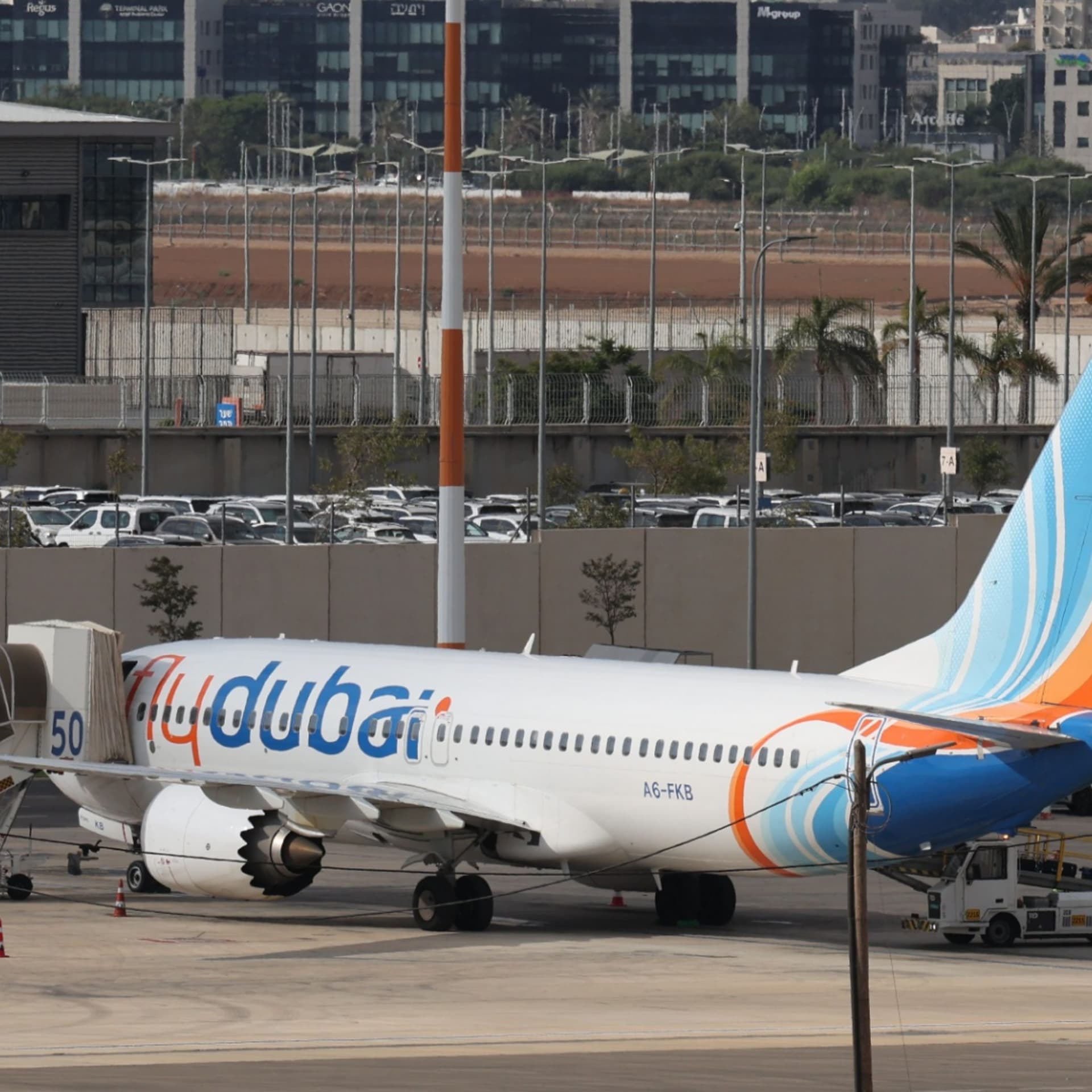
- Reactions from the UAE: Although some operations at Dubai airport are returning to normal, there is still significant concern over safety and the potential for further conflict.
- Impact on Israel
- Missile Strikes: Iran has fired missiles towards Israel, with some penetrating its advanced air defense systems.
- Local Effects: Reports from Tel Aviv indicate there have been missile impacts in residential areas, raising fears among the local population.
- Public Sentiment in Iran
- Concerns Among Citizens: Interviews with residents reveal a mix of fear and hope that the war may lead to regime change, alongside worries about the long-term consequences and devastation.
- Global Oil Market Effects
- Rising Prices: The conflict significantly affects the global oil market, contributing to rising prices.
- Shift to Renewables: Experts suggest this conflict may accelerate investments in renewable energy sources, like wind and solar, which could provide more stable pricing for consumers in the long run.
- Renewable Energy Discussion
- Investment Trends: The podcast highlights a doubling of investments in renewable energy over fossil fuels, particularly in Europe and the UK, in response to conflicts like Ukraine and the current situation in Iran.
- Challenges for Governments: Despite the push for renewables, governments face the dual challenge of managing high energy prices and transitioning away from fossil fuel dependence.
---
Key Takeaways
- The escalation of attacks by Iran in the Middle East, particularly following President Trump's remarks, suggests a complex and ongoing conflict that shows no immediate signs of resolution.
- Regional allies, like the UAE, are grappling with the implications of this war, with both military readiness and public safety becoming paramount concerns.
- As the conflict exacerbates global oil price volatility, there is an increasing call for a strategic shift towards renewable energy, though challenges remain in balancing immediate energy needs and long-term sustainability goals.
---
Conclusion This episode of the Global News Podcast provides a critical overview of the current geopolitical tensions involving Iran, the ramifications for the Gulf region, and the broader implications for energy markets. With expert insights and on-the-ground reporting, it paints a comprehensive picture of an evolving crisis.
For more in-depth analysis and updates, follow the Global News Podcast for daily news and breaking stories.
---
Contact Information: For inquiries, reach out to globalpodcast@bbc.co.uk.
Written by AI. May contain mistakes. Listen to the episode to check what was said.
Chapters
Tap a time to open that second in VOEscalating Conflict in Iran
1:08 to 2:05
Overview of the ongoing US and Israeli military actions against Iran.
“Hello, I'm Oliver Conway with the latest on the US-Israeli war on Iran.”
Iran's Resilience in Warfare
2:05 to 3:41
Discussion on Iran's continued military actions despite heavy bombings.
“President Trump says 100 % of its military capability has been destroyed.”
Iran's Stance on Civilian Targets
3:41 to 6:04
Analysis of Iran's claims regarding civilian safety in its military operations.
“Well, President Trump said on Saturday, the Iranians appeared ready to make a deal to end the war, but the terms were not yet good enough for him.”
Impact on the UAE and Evacuation Plans
6:04 to 6:45
Examination of the UAE's response to Iranian threats and missile attacks.
“Iran has meanwhile warned the United Arab Emirates to begin evacuating the port zones in Abu Dhabi, Dubai and Fujairah.”
Public Sentiment in UAE
6:45 to 7:33
Discussion of how the conflict is affecting public life and tourism in Dubai.
“and trust that the state defence capability are there and they are strong.”
Missile Attacks on Israel
7:33 to 10:18
Report on missile attacks launched from Iran towards Israel and their impacts.
“countries here, that is threatening this safe image they've taken years to build.”
Energy Markets and Renewable Focus
10:18 to 13:08
Discussion on how the conflict is influencing global energy markets and a shift towards renewables.
“Some of the missiles are still able to get through.”
Transcript
Automatic transcript. May contain errors.0:00This BBC podcast is supported by ads outside the UK.
0:30else. With Grammarly, you never will. Download Grammarly for free at grammarly.com. We focus on the part of the internet that most people don't know about. It's called the dark web. Undercover in the furthest corners of the dark web, U.S. special agents are on a mission to locate and rescue children from abuse. From the BBC World Service, World of Secrets, The darkest web follows their shocking investigations. Listen on bbc.com or wherever you get your BBC podcasts. This is an extra edition of the Global News Podcast from the BBC World Service. Hello, I'm Oliver Conway with the latest on the US-Israeli war on Iran.
1:18We're recording this at 13 hours GMT on Sunday the 15th of March. Despite 16 days of US and Israeli strikes, Iran continues its attacks in the Gulf and has warned the UAE to begin evacuating the port zones in Abu Dhabi, Dubai and Fujairah. We report from the scene of an Iranian missile strike in Israel. We saw smoke rising, we quickly got here and the impact must have been just a few minutes beforehand. And later? There's been certainly a wake-up, I think, from governments to say that the reliance on fossil fuels may not be something we can keep going with, especially when we have a shock like what's happening in Iran at the moment.
1:55Has the disruption to the oil market made people think again about renewable energy?
2:04For 16 days, Iran has been pounded by the US and Israel. President Trump says 100 % of its military capability has been destroyed. And yet, Iranian drones and missiles are continuing to hit Gulf Arab states and Israel. Some of America's original war aims, for regime change, unconditional surrender, or even just for a say in choosing Iran's next leader, are no longer being talked about by the Trump administration. In Iran itself, Ayatollah Ali Khamenei has been replaced by his equally hardline son, Mojtabar, who is backed by the powerful Islamic Revolutionary Guard Corps. And it is they, along with the besieged paramilitary volunteer militia, who are in control of the streets, as we heard from this resident of Tehran.
2:49You can only see IRDC and Basij. There is no army. The police forces are very few. They have abandoned police stations. They are closed and they are sleeping in the cars, parked near the station. They are wandering around the streets. They don't have anything to do. They are not allowed to do anything. the only force and power is in the hands of IRDC and Basij. A lot of people without official clothing and name or whatever, having guns, this is very, very dangerous. Dangerous for themselves, but they are crazy. We prefer to die from the bombs instead of die by IRDC. And we know that the end might be very harmful.
3:41Well, President Trump said on Saturday, the Iranians appeared ready to make a deal to end the war, but the terms were not yet good enough for him. In the past few hours, the Iranian foreign minister has made some interesting claims, denying that Iran has targeted civilian or residential areas in the Middle East, only US military targets. And he said the war would end when Iran was certain it could not be repeated. I asked Taranay Fatalian from the BBC Persian service what she made of those comments from the Iranian foreign minister. Well, it seems that these claims are in line with the narrative that Iranian regime is trying to push, which is Iran is not after causing havoc in the region and it strikes on Israeli and American basis as legitimate defence and it's not targeting civilians.
4:30It looks to me like Iran is trying to maintain its relationship, its friendship with some neighbouring countries and keep Iran on its side while hitting back at US and Israel. Is Iran ready to make a deal, as President Trump says? Abbas Arachid, the Iranian foreign minister today, said that Iran is welcoming any regional initiative that is leading to a just end to the war, but they have not received such initiative yet. It doesn't look like they're in a rush to end the war because some say, and analysts say that this war for Iran is a battle for survival of the regime. So they're not in a rush to end the war anytime soon, but they have said that they will welcome any just initiative.
5:21The bombs and missiles have been falling for 16 days now. What's been the impact on ordinary Iranians? When the war started, many people were hopeful. They were worried and scared, but they were hopeful that this will end the regime. As it's progressing, as it's unfolding, and there is no end at sight, people are increasingly worried that the impact of the war will be increasingly devastating. But as we heard just now, some people are more worried that the war will end and the IRGC and the regime will be still in place and they won't reach the outcome that they were hoping and yet they have paid a hefty price for it.
6:03Taraneh Fatalian of the BBC Persian Service. Iran has meanwhile warned the United Arab Emirates to begin evacuating the port zones in Abu Dhabi, Dubai and Fujairah. Khaled Amazaini is a professor at the Emirates Zayed University. The missiles are continuing to be fired from Iran and drones. However, I must say that the number have gone down significantly if we compare them to the very first week of this war. And yesterday, Dubai airport announced that half of its operations are returning to normal. Having said that, all flights, most of them, when they take off from Dubai or Abu Dhabi, they have to be escorted by F-16 fighter jets just to give security and trust that the state defence capability are there and they are strong.
6:49The only question that many people ask is that not only UAE, but all other GCC states, can they really bear this war for another three weeks or four weeks? Well, our correspondent Azadeh Meshiri is in Dubai. So are people there heeding the call to evacuate the port zones? There aren't any statements or any information we could gather so far of any evacuations happening. But the most recent comments from the Iranian Foreign Minister Abbas al-Afqi earlier today, is that Iran is not targeting civilian or residential areas in these Gulf countries and that they're still open to negotiations. Whether that's true or not, the reality is that a luxury hotel, residential areas, the airport, there have been videos of debris striking all these areas.
7:32So this is something that has profoundly concerned Gulf countries here, that is threatening this safe image they've taken years to build. And in fact, there was a very rare statement that was made overnight by a presidential advisor here in the UAE who said that it has a right to defense against what it called this imposed terrorist aggression, but that it is still turning to reason and logic and trying to find a way out for Iran and the region. And those words, reason and logic, are really important because the words asymmetry have been repeated multiple times when we're talking about this war, especially when it comes to military capabilities and the damage that Iran is willing to take.
8:15There was a report in the Times newspaper here yesterday that the Gulf states are somewhat divided with Saudi and the UAE actually wanting the US to continue its attacks until Iran is in effect defanged, while other countries like Qatar and Oman want a ceasefire. What do the people in the UAE think? The UAE, in terms of the government themselves and this statement they put out, are still saying that they're open to negotiations and talks to get Iran and the region out. So it's worth flagging that that's what they're saying publicly. It's a ghost town here in Dubai. When you go to restaurants and cafes, there are still some people here.
8:50There are still residents who've chosen to stay. But when it comes to others, people who own businesses here, they are extremely concerned at the drop in visitors, in tourism, which is a major industry here in Dubai and in the UAE. Azadeh Mishiri in Dubai. Well, overnight and this morning, Iran continued to fire missiles towards Israel, most of which were intercepted by air defences. But at least one got through, as we heard from our correspondent there, John Donison. We were just driving towards Tel Aviv. We heard the sirens go off. And then just a few minutes later, we saw smoke rising. We quickly got here.
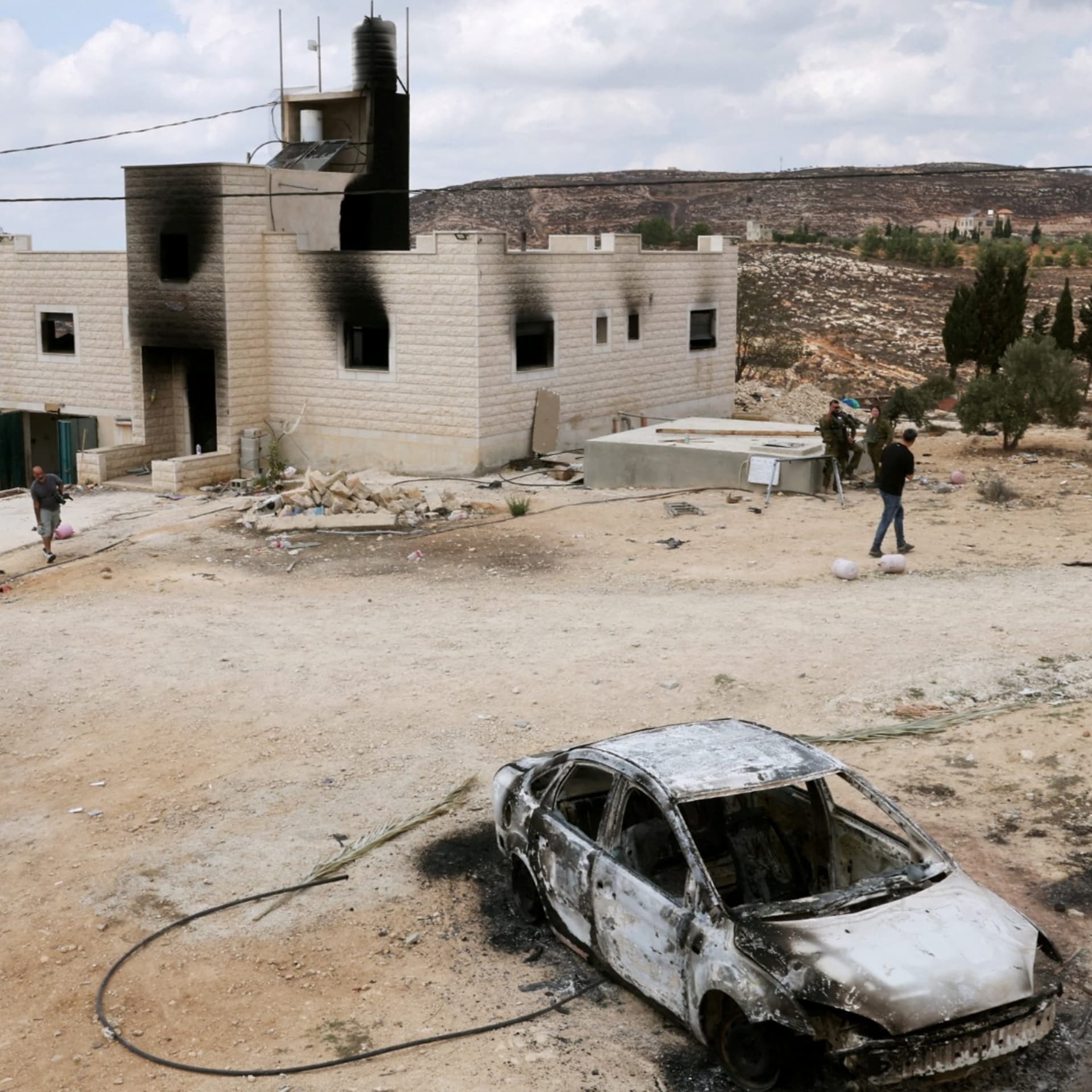
9:27And the impact must have been just a few minutes beforehand. Now, they've cordoned it off here now, a lot of emergency services here. But we saw two cars completely blown out. and I spoke to someone from the ambulance service, said no injuries, but they believed that this was what was a cluster munition. So a missile that breaks up in the air and then disperses these smaller cluster bombs over quite a wide area, maybe up to 10 kilometres, and they're very hard to keep down. And, you know, when they get through, they're potentially deadly. Now, here, it's a pretty built-up residential neighbourhood.
10:00Most people will have got to the shelters, but it's a reminder that, you know, So two weeks into this war, despite Israel's vast military superiority, it's really great, I suppose, very strong missile defence system. Some of the missiles are still able to get through. John Donison in Tel Aviv. As well as attacking its enemies with missiles and drones, Iran has also responded to the war by targeting the global oil industry, pushing up prices once again. That has led some to suggest a new focus on investing in clean and renewable energy sources. Bobby Hollis, global vice president of energy for Microsoft, told the Financial Times newspaper that wind and solar power have a huge advantage, in that once installed, they give companies and consumers far greater predictability in terms of cost.
10:54So how have energy markets changed since Russia invaded Ukraine four years ago? Julian Warwicker spoke to our environment correspondent Matt McGrath. If we look what's happened in the last four years since the Ukraine crisis came on the world, and I appreciate this is a different situation in many, many ways, but the European Union, the UK and many other countries have doubled down on their investment in renewables. Their global investment in renewable energy was over two trillion dollars in 2024 and 2025. That was double the investment in fossil fuels. So government actions are taking place. We can see what's happened with nuclear energy as well.
11:27There's been a real revival in nuclear energy. There's now almost half the world's installed base of reactors is planned to be installed in the next number of years as well, or at least some of them in construction, a lot being planned. So there's been certainly a wake up, I think, from governments to say that the reliance on fossil fuels may not be something we can keep going with, especially when we have a shock like what's happening in Iran at the moment. And I think the big challenge for them is that all the investments that have been made to date have made a massive difference in countries like the United Kingdom and other places where, you know, nearly two million homes have installed their own solar right now.
11:59And this what's called balcony solar in massive countries has really taken off as a phenomenon. But the cost to governments of maintaining the fossil fuel element as well is still really high. So they're in a bit of a difficult position. They want to move to renewables. They want to own their own sources of energy. And they're doubling down on that, undoubtedly. But they still right now are in this difficult place where the green technology is winning, but the consumers perhaps aren't feeling their effects in terms of the cost that they're paying for that technology. and that's making it difficult for governments to earmark even more money to go down the green route.
12:33We've seen in some respects, if I can put it this way, the chilling effect of President Trump on the whole renewable energy space over the last number of years, never mind the Iran war, and his commitment to move away from the Paris Agreement and the agreements that many in the world felt were helping the world to transition away from fossil fuels. And that has had, I suppose, a cooling effect. But it's not just that. We've also seen the continually high prices for energy in many, many countries, and it's a stubborn difficulty for governments. And the short-term nature of electoral cycles doesn't help to maintain that longer-term commitment.
13:07Now, in the UK, I would say, we're kind of an honourable exception, and many countries are indeed, because we have legislated for net zero down the road. So there are carbon budgets, there are plans that have generally been supported by all parties, although that right now, in the next couple of years, may become a greater point of political difference between different leaders. And it has become, as you hinted at the start of the conversation, ever since the Ukraine war, such a big issue for so many people because of the enormous price rises we saw straight after that began. Absolutely. Yeah, we've seen huge increases in the price of fossil fuels in that time period, particularly the piped gas that was coming from Russia.
13:44And that sparked this rush across the world to find alternative sources. What's difficult and different about this particular conflict is that Qatar wasn't touched by the Ukraine conflict, but is now. They are 20 % of the global gas market, and that is a key factor here, making things even more difficult than they were back in 2021. The BBC Environment correspondent Matt McGrath. And that is all from us for now. The Global News Podcast will be back soon. This edition was mixed by James Piper and produced by Nicky Verrico. Our editors, Karen Martin, I'm Oliver Conway. Until next time, goodbye.
14:26We focus on the part of the internet that most people don't know about. It's called the dark web. Undercover in the furthest corners of the dark web, US special agents are on a mission to locate and rescue children from abuse. Move in now. From the BBC World Service, World of Secrets, the darkest web follows their shocking investigations. Listen on BBC.com or wherever you get your BBC podcasts.
From the publisher
After President Trump said Iran seemed ready to make a deal to end the war but the terms weren't good enough, Tehran has been carrying out further missile and drone strikes on US allies across the Middle East. The Iranian foreign minister has denied that Iran has targeted civilian or residential areas in the Middle East - only US military targets. And he said the war would end when Iran was "certain" it could not be repeated. We hear from our Persian service correspondent about what she makes of these claims, and what people inside Iran are worrying about. Also: Iran warns the United Arab Emirates to begin evacuating the port zones in Abu Dhabi, Dubai and Fujairah. So are people heeding these warnings? We hear from our correspondent in Dubai. Tehran continues to fire missiles towards Israel, most of which were intercepted by air defences. But at least one got through, as we hear from our correspondent in Tel Aviv. And how the war is impacting the oil industry and pushing up prices - we hear how increased use of wind and solar energy could give consumers more predictability in terms of cost. The Global News Podcast brings you the breaking news you need to hear, as it happens. Listen for the latest headlines and current affairs from around the world. Politics, economics, climate, business, technology, health – we cover it all with expert analysis and insight.
Get the news that matters, delivered twice a day on weekdays and daily at weekends, plus special bonus episodes reacting to urgent breaking stories. Follow or subscribe now and never miss a moment.
Get in touch: globalpodcast@bbc.co.uk