
In short
Global News Podcast Episode Summary
Episode Title
Australia Bans Social Media for Under-16s
Episode Date
- Recorded on December 9, 2023
Episode Description
In a groundbreaking decision, Australia becomes the first country to restrict social media access for children under the age of 16. The law requires social media platforms to block access to users under this age, with substantial fines for non-compliance. The episode also covers various global news topics, including civil unrest in Cambodia and Thailand, civilian casualties in Sudan, a data breach at South Korea's Coupang, and an inspiring world record attempt in Antarctica.
---
Key Topics Covered
- Australia’s Social Media Ban for Under-16s
- Legislation Overview:
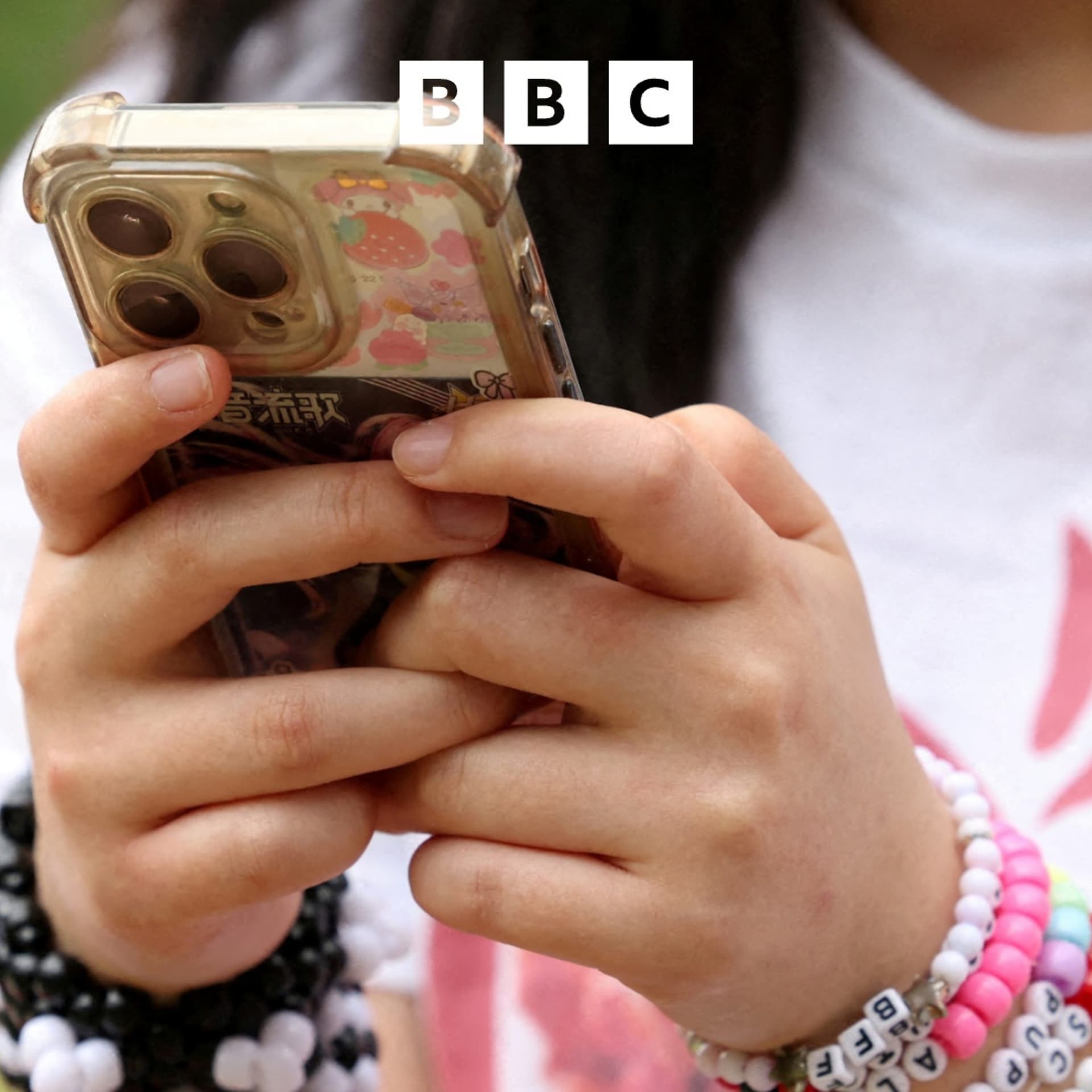
- Australia has introduced a law banning children under 16 from accessing social media platforms like TikTok, Instagram, and YouTube.
- Social media companies could face fines of up to 50 million AUD for failing to enforce the ban.
- Existing profiles of under-16s will be deactivated.
- Reactions:
- Prime Minister Anthony Albanese encourages children to engage in sports or reading instead of scrolling on social media.
- Teenagers express mixed feelings about the ban. Many feel frustrated but recognize potential benefits.
- Implementation and Criticism:
- Critics argue the ban may be ineffective and challenging to enforce, with concerns about isolating vulnerable teenagers.
- The law permits usage of messaging platforms like WhatsApp and Discord, raising questions about the effectiveness of the ban.
- Civil Unrest in Cambodia and Thailand
- Tens of thousands are fleeing their homes due to renewed fighting along the border.
- Historical context provided regarding territorial disputes exacerbated by recent political tensions.
- Civilian Casualties in Sudan
- An investigation reports at least 1,700 civilian deaths from airstrikes conducted by the Sudanese armed forces during the ongoing civil war.
- The military claims its strikes target combatants, while reports indicate frequent civilian casualties.
- Data Breach at Coupang
- Coupang, South Korea’s leading e-commerce platform, experiences a massive data breach affecting approximately 33.7 million user accounts.
- Investigations are underway, with suspicions directed at a former employee involved in the breach.
- Inspirational World Record Attempt in Antarctica
- Darren Edwards, a British man paralyzed nine years ago, is attempting to set a world record for sit-skiing to the South Pole.
- Edwards aims to traverse 222 kilometers in 20 days, showcasing resilience and determination.
---
Key Takeaways
- Impact of Social Media Legislation:
- The Australian ban could influence other nations considering similar regulations amid growing concerns about social media’s impact on youth.
- International Conflicts:
- Ongoing tensions in Southeast Asia reflect deep-rooted historical issues and current political dynamics, necessitating international attention.
- Humanitarian Crisis in Sudan:
- The substantial civilian toll from the conflict underscores the urgent need for humanitarian solutions and accountability for military actions.
- Data Security Concerns:
- The Coupang data breach raises significant questions about corporate responsibility in protecting user data, especially in light of increasing cyber threats.
- Personal Triumphs:
- Darren Edwards’ journey illustrates the power of human spirit and innovation in overcoming physical challenges, inspiring many.
---
Conclusion This episode of the Global News Podcast provides a comprehensive overview of significant global events, emphasizing the implications of regulatory actions, humanitarian crises, and personal stories of resilience. The discussions prompt listeners to reflect on the interconnectedness of current affairs and the ongoing impact of social media on youth.
For further insights and updates, listeners are encouraged to subscribe to the Global News Podcast.
Written by AI. May contain mistakes. Listen to the episode to check what was said.
Transcript
Automatic transcript. May contain errors.0:00This BBC podcast is supported by ads outside the UK. If journalism is the first draft of history, what happens if that draft is flawed? In 1999, four Russian apartment buildings were bombed, hundreds killed. But even now, we still don't know for sure who did it. It's a mystery that sparked chilling theories. I'm Helena Merriman, and in a new BBC series, I'm talking to the reporters who first covered this story. What did they miss the first time? The History Bureau. Putin and the apartment bombs. Listen on BBC.com or wherever you get your podcasts. You're listening to the Global News Podcast from the BBC World Service.
0:46Hello, I'm Oliver Conway. We're recording this at 16 hours GMT on Tuesday 9th December. Australia becomes the first nation in the world to ban under-16s from social media. The Sudanese army is accused of killing nearly 1 ,700 civilians in airstrikes. The aftermath footage of hits in markets is often quite hard to watch because there's often also children among the victims as well. And the EU investigates Google over the use of creative content to train AI. Also in the podcast... Looking out for things like frostbite or hypothermia, There's so much that has never been done by somebody with a spinal injury, so we're kind of leading the way.
1:29The challenges of a world record attempt in Antarctica.
1:38As we record this podcast, Australia has become the first nation in the world to ban anyone under the age of 16 from using social media. A law which came into effect at midnight local time requires apps like TikTok, Instagram and YouTube to block access. under the threat of large fines. Existing profiles will be deactivated. 14-year-old Sophia from Brisbane was one of the first to get locked out. For me, it's a mix of emotions. Obviously, I'm quite frustrated. I do see a bit of light at the end of the tunnel in this decision. I understand that it will probably have a positive impact in the future.
2:16It will definitely adapt the way our brains think. So, yes, I'm a little bit annoyed, but we'll get over it. There are much worse things in life than being locked out of Snapchat. Australia's Prime Minister Anthony Albanese says the ban gives youngsters a chance to spend time doing other things. Start a new sport, learn a new instrument, or read that book that's been sitting there on your shelf for some time. And importantly, spend quality time with your friends and your family, face to face. So, how does it all work? I heard from our technology correspondent, Chris Varnance. From the point of view of the government, this is a delay rather than a ban.
2:56Most of these platforms that fall under this require their users to have a minimum age of 13. Now this goes up under this law to 16. So essentially what this applies to is a list of 10 platforms at the moment. Those are eight of the usual suspects, if you like. Meta Apps, YouTube, Threads, Reddit, X and so on. and two streaming platforms, Kik and Twitch. And essentially, they have to take reasonable steps to check that their users aren't under 16. And if they don't do that, there's the prospect of big fines. 50 million Australian dollars, that's around 33 million US dollars. Although some critics have said for these companies, which make billions of dollars in revenue every year, that's a bit of a parking fine.
3:46For the younger teenagers who've used these apps to talk to each other, are there other ways they can still keep in touch? Well, again, this is an interesting facet of what's proposed that has certainly attracted a fair bit of criticism and scrutiny, because there are no restrictions other than the usual terms of service on using messaging platforms like WhatsApp, Facebook Messenger. There aren't restrictions on gaming platforms like Roblox and on services like Discord. So there are certainly ways in which they can continue to keep in touch. Now, this ban is being closely watched elsewhere in the world amid worries about the damage being done by social media to younger minds.
4:29Will any other countries follow suit? Well, I think there are a lot of countries that have, if you like, taken the first steps down this path. There was a vote in the European Parliament endorsing a sort of similar kind of measure. We've seen countries like Denmark, France, Germany, Spain, again, with similar proposals, with some sort of tweaks in terms of parental consent, perhaps enabling people over 13, but under 16 to access these platforms. So a lot of interest, a lot of countries watching this. Some have said, for now, it's not the way forward. The UK would fall into one of those categories of a country that's got a lot of online safety regulation, but isn't at the moment moving towards increasing the minimum age.
5:10Although there are also, I say, some children's groups who have expressed concern at this kind of approach, saying, really, the platforms just need to make their products safe for children rather than keeping children off them. Our technology correspondent, Chris Vallance. So how are Australian teenagers reacting to life without social media? Our Australia correspondent, Katie Watson, has been finding out.
5:39School's done for the year, but the summer holidays are no break for 15-year-old Brianna. She's hard at work on the family's cattle station.
5:52It's hot right now. The temperature's rising to the mid-40s, but as it starts to cool in the late afternoon, Brianna loads the pickup truck with feed and heads out to the food troughs with Sister Liv and Mum Megan.
6:08Standing here, you get a sense of the size of this country. It took hours to drive to this farm. The driveway itself just to get to the farmhouse was about 20 kilometres. And from as far as I can see, there is nothing in the distance. It's completely flat land, low scrub land, a few bushes, a few trees, but it's pretty barren. And the earth underfoot is very dry, and the rains aren't expected to come in for at least another month or so. This isn't your typical teenage upbringing, cleaning out cattle troughs. But in so many ways, life in Australia's vast outback is surprisingly normal.
6:50On the back of her buggy, Brianna's got an internet extender, giving her much-needed connections far from her friends. Connections that might now look a little shakier than before with the new ban in place. I use Snapchat, Instagram, TikTok and basically to just keep up with my friends share what I'm doing in my day-to-day life especially on the holidays My closest friend is 30km away but all my other friends would be over 100km away It's very important for me to keep up with them stay in contact with them Taking away our socials is just taking away how we talk to each other Remember when I sent you that little video of Truffle helping me muster and it was just really funny You know, you can just share While mum Megan is glad social media companies are being forced to be more responsible, she's not sure how much it will achieve.
7:38I do think that it is a bit of government overstepping. We might be incredibly geographically isolated, but we're definitely not digitally illiterate. I think they'll still find apps and avenues to talk. I do get concerned, though, that if they think they're not supposed to be there, will they still report if they come across an online predator or they do experience bullying when they know they probably shouldn't be there? What just happened, Grace? I just got banned off Instagram. Meta, though, has been getting ahead of the curve, booting off some young Australian teens before the restrictions officially started.
8:12Grace, who's heading off on a summer road trip with her family, is not happy. I was just angry for about 10 minutes. And now, yeah, just denial and grief has set in. But it's fine because Snapchat and TikTok have not been banned yet. We spend a lot of time dealing with the fallout. Iris Nastassi is the principal at Rosebank College in Sydney. It's two in the morning. He or she does something that they wouldn't normally do and the fallout happens here. Relationships are damaged and we have to look into it. So we're really, really pleased that we might be able to reduce that. It's so embarrassing.
8:50Video snippets are all Emma Mason has left to remember her daughter Tilly. It began as things like messaging, text messages, but then moved on to things like TikTok and Snapchat and Instagram. Tilly killed herself after being cyberbullied and Emma has made it her mission to campaign for this law. Whilst the technology was developing, she was developing and becoming more and more engaged in that digital world. Why do you think this bad is so important? Because children across our world are enduring this because these are methods of harm. These are agents of harm that are unregulated, and I think our children have been the social experiment.
9:35The world's watching how teens like Brianna fare. No country has done this before. Others are keen to see if it's worth copying.
9:47Our Australia correspondent Katie Watson. And you can hear more on this on our YouTube channel. search for BBC News, select podcasts, and then the Global News Podcast, and we update it every weekday. Tens of thousands of people have fled their homes in border areas of Cambodia and Thailand following a resumption of fighting. The Thai military said clashes had expanded to six border provinces, and five of its soldiers had been killed since hostilities resumed on Monday. Cambodia says Thai attacks have killed seven civilians. The two nations are blaming each other for breaking a truce brokered by the US and Malaysia.
10:25Here's Sorosan Kongsiri from the Thai Ministry of Defence. The Cambodian troops continuously fired weapons into Thai territory and reports indicated that Cambodia had moved long-range weapons and heavy weapons into the border with Thailand and, of course, with the intent to use those weapons to fire at the Thai installations and, of course, other civilian facilities and homes. The former Cambodian leader, who remains hugely influential, Han Sen, said his country had tried to honour the ceasefire but was forced to retaliate against Thailand. The newsroom's Mickey Bristow told my colleague Sean Lay about the background to the dispute.
11:09Well, it goes a long way back, right to the beginning of the last century, really, when France, which controlled Cambodia at the time, tried to form a border with Siam, which was what Thailand was known as at that time. And the mapmakers, they travelled the area, they decided where the border should be, and they decided it should be on a watershed right near a contentious temple called Prava here. Unfortunately, a couple of years later, when the mapmakers got down to writing this map, they did it in the wrong place. So initially they placed this temple on the Thai side of the border, Then when they made the map, it came onto the Cambodian side of the border.
11:47So it all stems from a mistake in the map. And from then, for the first few decades after that, Thailand didn't complain. It was only subsequently it did. But by that time, the International Court of Justice had said, no, actually, this temple is on the side of Cambodian. And from there, we've had arguments ever since then, essentially about not just this temple, but about other bits of the border between these two nations. Is there a sense that this is a kind of a useful dispute when either something else is causing tension between the two countries or separately the governments are having problems at home and it's quite useful to have an enemy to kind of reunite people domestically?
12:28I think that's exactly the case. This is, as I said, a debate, an argument which goes back a century. So why does it break out? Why does it happen at certain points? 2008, for example, it broke out because Cambodia applied successfully for this temple to become a UNESCO World Heritage Site. So that angered the ties. That led to a flare up of the tension. And just this year, it flared up again in July. There was some tension before then. But essentially, there's a lot of argument between the two major political families in Cambodia and Thailand. I don't want to get too closely into that, but a conversation they had was leaked.
13:02It made the Thai prime minister look weak. She was forced to resign. Also, there's domestic politics at the moment in Thailand. You've got a very weak government, weak in terms of parliamentary majority in Cambodia as well. You have a government which has come under increasing pressure recently because a lot of scam centers, fraud centres have been identified as operating from their territory. So both governments have reasons to sound tough and to continue the fighting. President Trump was supervised the signing of some kind of ceasefire stroke peace agreement. In his natural way, he was very enthusiastic and even bombastic about what had been achieved.
13:41I mean, did the US take its eye off the ball, do you think, in sort of ensuring that the two sides continue to honour the commitments? As you mentioned, President Trump there, Yeah, he said that he had no doubt that peace would prevail. Those were the words he used. Well, it hasn't lasted for two months. Perhaps they've taken their eye off the ball, but if you look at President Trump and the kind of diplomacy he engages in, he likes to do deals and then move away. And in any case, this deal was always going to be very, very fragile. Mickey Bristow there. For more than two and a half years, the armed forces of Sudan have been fighting a civil war against the paramilitary Rapid Support Forces.
14:16Both have powerful weapons, but while the RSF uses drones to carry out airstrikes, the regular army, or SAF, has warplanes. Now an investigation has looked at the impact of SAF air attacks.
14:38Well, that was a video posted about a year ago of an airstrike hitting a marketplace. A report by the Sudan Witness Project says that during the civil war, the army has killed at least 1 ,700 civilians in air attacks. Mark Snook carried out the investigation. The aftermath footage of hits in markets is often quite hard to watch because there's often also children among the victims as well. Our investigation and the data set we have indicates that the SAF have used unguided munitions in populated areas. Our data highlights ongoing risks and impact on civilians who live in areas that have already been severely affected by the conflict.
15:19The RSF, they are being held responsible for a lot of damage and violations, and I think rightly so, but I think the SAF should also be held accountable for their actions. I heard more about the findings from our Africa correspondent, Barbara Platasha. The main patterns that emerged from the investigation were repeated hits on residential neighborhoods, repeated hits on markets, often during crowded market days, also a large number of alleged strikes on humanitarian and medical facilities. And as you were hearing from Mark Snook, there are evidence that the Air Force had used unguided bombs in populated areas.
15:55And their strongest case for that was verified images of an unexploded, unguided aerial bomb in a camp for displaced people. And they had quite a close picture of it and said this is the kind of bomb produced by Sudanese arms manufacturers. They also did case studies on quite a few strikes on markets, as well as a particular strike on a hospital in Darfur and many on residential neighborhoods. For example, a series of airstrikes in early February in the city centre of Nyala, which is a main base for the RSF. And has the army said anything about its airstrikes? Well, it hasn't said anything to us.
16:30We asked for a response and they didn't reply, but it has previously denied allegations of targeting civilians. What it says is that its airstrikes are directed solely at RSF sites, recognized as legitimate military targets. It accuses the RSF of seeking refuge within residential neighborhoods. It insists it is strictly observing international humanitarian laws. And the Sudan Witness Project was quite careful about its data. It says that its research is incomplete because the results reflect access to available material rather than the total number of strikes. And available material is quite limited in a war zone, sat images, videos, credible sources.
17:06So it says military strikes are probably underreported, and that's why they analysed hundreds of reports of airstrikes so they were able to paint a wider picture and observe these wider patterns. Now, of course, Sudan has seen conflict over many years, and a Sudanese militia leader has now been sentenced to 20 years for crimes committed in Darfur two decades ago. That's by the International Criminal Court. Tell us more about that. This is Ali Mohammed Ali Abdelrahman, also known as Ali Kusheib. This is the first ever conviction by the International Criminal Court for crimes committed in Darfur.
17:42Not in this war, as you said, but more than 20 years ago when you had the Darfur genocide. So this was carried out in part by a militia made up of Arab tribesmen known as the Janjewid. They were armed and basically put into action by the military ruler at the time, Omar al-Bashir, and they carried out mass killings and atrocities. That was more than 20 years ago. This is the first time there's been a conviction. But it does have resonance today because the rapid support forces, which is the paramilitary force involved in the civil war, evolved out of the Janjaweed. And the kind of atrocities allegedly carried out by some of its fighters in the past two years seem to be following the same playbook as the Janjaweed.
18:25mass killings on ethnic grounds, rape, burning of villages, and so on. Barbara Platt-Usher on connections between wars, both past and present in Sudan. And still to come on the Global News Podcast. If we do not show this, the whole world will lose faith and stop helping the Ukrainian people. That is why we are doing this, to prove we're still strong. The Ukrainian troops still defending Pokrovsk, despite Russian claims to have captured the city.
19:01If journalism is the first draft of history, what happens if that draft is flawed? In 1999, four Russian apartment buildings were bombed, hundreds killed. But even now, we still don't know for sure who did it. It's a mystery that sparked chilling theories. I'm Helena Merriman and in a new BBC series I'm talking to the reporters who first covered this story. What did they miss the first time? The History Bureau, Putin and the apartment bombs. Listen on bbc.com or wherever you get your podcasts.
19:39The European Union has launched an investigation into whether Google is misusing people's creative content to train its artificial intelligence service. Google's parent company, Alphabet, is accused of profiting from material uploaded to YouTube and its other websites without giving users the chance to opt out. It could face a huge fine. I heard the details from our global affairs reporter, Paul Moss. If you ask a question in Google, it used to refer you to online articles which would answer your question. But these days, often the first answer you get is generated by artificial intelligence, what Google calls its Gemini assistance.
20:16Now, this has been a bit of a disaster for online publishers because it means people are often just reading the AI summary. They're not looking at the original article, which means the publishers lose the traffic, they lose all the advertising revenue, and people are no longer encouraged to subscribe to their publications. But what really adds insult to injury is not only are they losing all those viewers. The AI that Google is using learned everything it knows by reading those online articles. And as the publishers see it from stealing that information, I mean, it's a bit like a pop star being told, sorry, we're not going to pay you for performing anymore.
20:53But thanks very much for teaching our computer how to sing your songs. Now, Google's parent company is also accused of harvesting material that people upload to YouTube, which they also own. And in In all of these cases, they say people don't have the chance to opt out of having their material exploited. So the EU is investigating this. What does Google say about it? We've had a statement from their parent company, Alphabet. They say Europeans deserve to benefit from the latest technologies and the EU's investigation risks stifling innovation. Effectively, what it seems to be saying is that the current system benefits consumers of information.
21:31The allegation is they're less concerned with the people who produce it. And this is just the latest in a series of EU cases involving US tech companies. Indeed. I mean, only a few days ago, the platform X was fined$140 million owed by the European Union. Because of its blue tick system, you can pay X to get a blue tick on your account, which shows that it's genuine. What the EU said is actually these accounts aren't properly verified and the blue tick gives a false sense of safety. But yes, this is just one of many investigations and legal cases. And I should say this is becoming very political.
22:08I mean, the current administration in Washington is no great fan of the European Union generally, but it particularly dislikes any attempt to regulate and to fine America's tech giants. Speaking about the fine on X, the US Secretary of State, Marco Rubio, said this was foreign governments attacking American companies. In fact, he said it was an attack on the American people. I mean, it does seem that the rhetoric in these disputes could only get more colourful, the temperature ever higher. Our global affairs reporter, Paul Moss. Ukraine's armed forces insist they are still holding out in Pokrovsk, despite Russian claims to have taken the city.
22:46Russia has been advancing on Pokrovsk for more than a year as part of its campaign to seize the whole of the eastern region of Donetsk. Our defence correspondent, Jonathan Beale, has been talking to Ukrainian troops still fighting to hold back the invaders.
23:05This is what it's like fighting in Pekrovsk. What the men of Ukraine's Scala Assault Regiment are facing. Hiding from the constant menace of Russian drones. The threat that 48-year-old Hotabic had to endure for nearly 30 days. It is scary when the drones spot you. There are a lot of drones there. They fly around the clock. We always wished for good weather, meaning fog or some rain. A grey sky, because at such times we could resupply and reinforce our positions.
Read the full transcript
23:47His units coordinating the fight from a command centre well behind the front line. Ukrainian drones flying above Pokrovsk show a city in ruins, but they want to prove Pokrovsk has not fallen, despite Russian claims to have taken the city. They've been talking to their men on the ground in Pokrovsk to show us they are there still fighting. He's just giving orders for them to show their flag. And there it is. You can see it now. The commander of the Scala regiment, Yuri, tells me it exposes another Kremlin lie, that Ukraine's lost Pokrovsk. You've seen it with your own eyes. If we do not show this, the whole world will lose faith and stop helping the Ukrainian people, the Ukrainian army.
24:40That is why we are doing this, to prove we're still strong. A staff officer, Korsain Potapich, shows me where Ukrainian forces are still defending in the north of the city. So there's a map here, a digital map, which has Ukrainian positions around Bukrovsk and there are a few red spots, targets, that they're going to hit here, where Russian forces are present. But you can still clearly see from this map that Ukrainian troops are still in the city in numbers, we're told, hundreds. The focus here is on the fight, not peace talks. But a Latvian volunteer, the unit's deputy commander, is willing to vent some frustration.
25:27His call sign is the Godfather, and he has a message for Europe and America. I wish Steve Witkow be together with President Trump, with a strong leader and showed America is number one in military and showing weakness to Russians is showing weakness of America and Trump. So I hope Trump is siding with democratic countries and with NATO countries. Europe is a lot of talking, a lot of bureaucracy and a lot of empty, empty talks and not enough doing.
26:00The battle for Pokrovsk has been going on for more than a year now. How much longer can Ukraine hold on? It is losing ground. The city is in ruins. But Ukraine needs proof of its resolve at this critical time. Jonathan Beale reporting from eastern Ukraine. Kupang is South Korea's most popular online shopping platform with millions of customers. Now its headquarters in the capital, Seoul, has been raided as part of a police investigation into a recent data breach believed to have affected almost two-thirds of the population. Jake Kwon in Seoul told us more about the raid and the data leak. This is the largest data breach in South Korean history.
26:42This is Kupang, South Korea's version of Amazon. This is where most South Korean people do their online shopping. I mean, I use them almost weekly. And we all got a text one day saying that, I'm sorry, there has been a data breach and they're investigating what's going on. And since then, the police and the authorities have formed a team trying to get to the bottom of what had happened here. And what we learned today is that around 17 officers had raided the sole office of Coupang, searching and seizing evidence. So this may be hardware servers, et cetera, to see how a hacker was able to access these very sensitive customer data, which includes names, phone numbers, home addresses, as well as shopping history.
27:29Many people also have put their home door pad code So that was also exposed. Now, the president has called for swift action to punish those responsible. Do we know who might be behind it? According to local media, Kupang has told the police and the authority that they suspect a former employee, a Chinese national who had since quit the company and has left the country as well, that this person was still holding on to what is essentially a key that could still access Kupang servers and that this person has been accessing Coupang servers since June this year, and Coupang had only learned about it last month.
28:06And this is why the leak is so large. We're understanding about 33.7 million customer IDs. It really feels like every few days there has been a hack of South Korean companies. Just this year, South Korea's biggest mobile operator was fined$100 million when a hacker compromised a very sensitive data on around 20 million users. And a lot of these is pointed towards global hacking groups. Some of these hacks are pointed at North Koreans. And another aspect here is that Kupang, although it makes most of its money in South Korea, it is registered in the US and they're listed in New York City. And a lot of South Korean people, media especially, has been very critical that Kupang has been making a lot of money.
28:53And perhaps They did not put enough effort and care to protect data. And this is why the president, he asked the government to look into raising the fight against companies that had mishandled data. Jake Kwon in South Korea. Antarctica is a difficult place for anyone to cross, let alone someone with a high-level spinal cord injury. But a British man who was paralysed permanently nine years ago is attempting a new world record of sit-skiing to the South Pole. After training for more than two years, Darren Edwards has now arrived in Antarctica. Skiing through the day and camping at night, he and his team will be unsupported, facing the risk of extreme temperatures, altitude sickness and exhaustion.
29:35Tanya Sanger reports. Training in Arctic conditions in Norway. As Darren, who in his own words is redefining the impossible, He's aiming to travel 222 kilometres in 20 days to double the current world record of sit-skiing to the South Pole. We've dedicated two and a half years of our lives to do it and for me there's pressure of how's it going to go, are we going to succeed? We've promised a lot of people we're going to do it. Darren became permanently paralysed from the chest down after a climbing accident in 2016 but turned his misfortune into his superpower by taking on a number of record-breaking challenges over the years.
30:19But this one will be his toughest yet. After my accident, I can't feel below my chest. So when we're looking out for things like frostbite or hypothermia, there's so much that has never been done by somebody with a spinal injury, so we're kind of leading the way. He's designed a bespoke sit-ski to help keep his lower half warm. With the help of his team-mate Matthew, who's been inspired by Darren's story after suffering his own sports injury. I met Darren in a gym. We got chatting and he kind of helped me through, guided me through that process of refinding myself, getting myself back on my feet.
30:54And a great example of that there is hope after the adversity. Matthew Bigger, ending that report by Tanya Sanka. And that is all from us for now, but the Global News podcast will be back very soon. This edition was mixed by Daniela Varela-Anandez and produced by Stephanie Zacherson and Mickey Bristow. Our editor is Karen Martin. I'm Oliver Conway. Until next time, goodbye.
31:25If journalism is the first draft of history, what happens if that draft is flawed? In 1999, four Russian apartment buildings were bombed, hundreds killed. But even now, we still don't know for sure who did it. It's a mystery that sparked chilling theories. I'm Helena Merriman, and in a new BBC series, I'm talking to the reporters who first covered this story. What did they miss the first time? The History Bureau, Putin and the apartment bombs. Listen on bbc.com or wherever you get your podcasts.
From the publisher
In a world first, millions of Australian children and teenagers are prevented from accessing social media accounts. Prime Minister Anthony Albanese told adolescents to make the most of the situation by taking up a new sport or reading a book, instead of scrolling on their phones. Under the legislation, companies could face heavy fines if they don't take reasonable steps to prevent under-16s from opening social media accounts. Social media firms have argued the ban would be ineffective, difficult to implement, and could isolate vulnerable teenagers.
Also: tens of thousands flee their homes in border areas of Cambodia and Thailand after a resumption of fighting. An investigation finds at least 1700 civilians have been killed in airstrikes by Sudan's armed forces since the start of the civil war. South Korean police raid headquarters of the e-commerce giant Coupang. And a British man who was paralysed permanently 9 years ago, attempts a world record for sit-skiing to the South Pole.
The Global News Podcast brings you the breaking news you need to hear, as it happens. Listen for the latest headlines and current affairs from around the world. Politics, economics, climate, business, technology, health – we cover it all with expert analysis and insight. Get the news that matters, delivered twice a day on weekdays and daily at weekends, plus special bonus episodes reacting to urgent breaking stories. Follow or subscribe now and never miss a moment.
Get in touch: globalpodcast@bbc.co.uk