
In short
Global News Podcast - Episode Summary
Episode Title
Australia to Tighten Hate Speech Laws After Bondi Attack
Date
December 18, 2023
Host
Bernadette Keogh
Episode Overview In this episode of the Global News Podcast, the discussion centers around the recent shooting at Bondi Beach in Sydney, Australia, and subsequent government responses. The episode also covers various global news stories, including updates from the United States, Venezuela, and Japan.
---
Key Topics Discussed
- Bondi Beach Shooting and Hate Speech Laws
- Incident Overview:
- A shooting at a Jewish event celebrating Hanukkah resulted in the deaths of 15 people.
- The youngest victim was a 10-year-old girl named Matilda.
- Government Response:
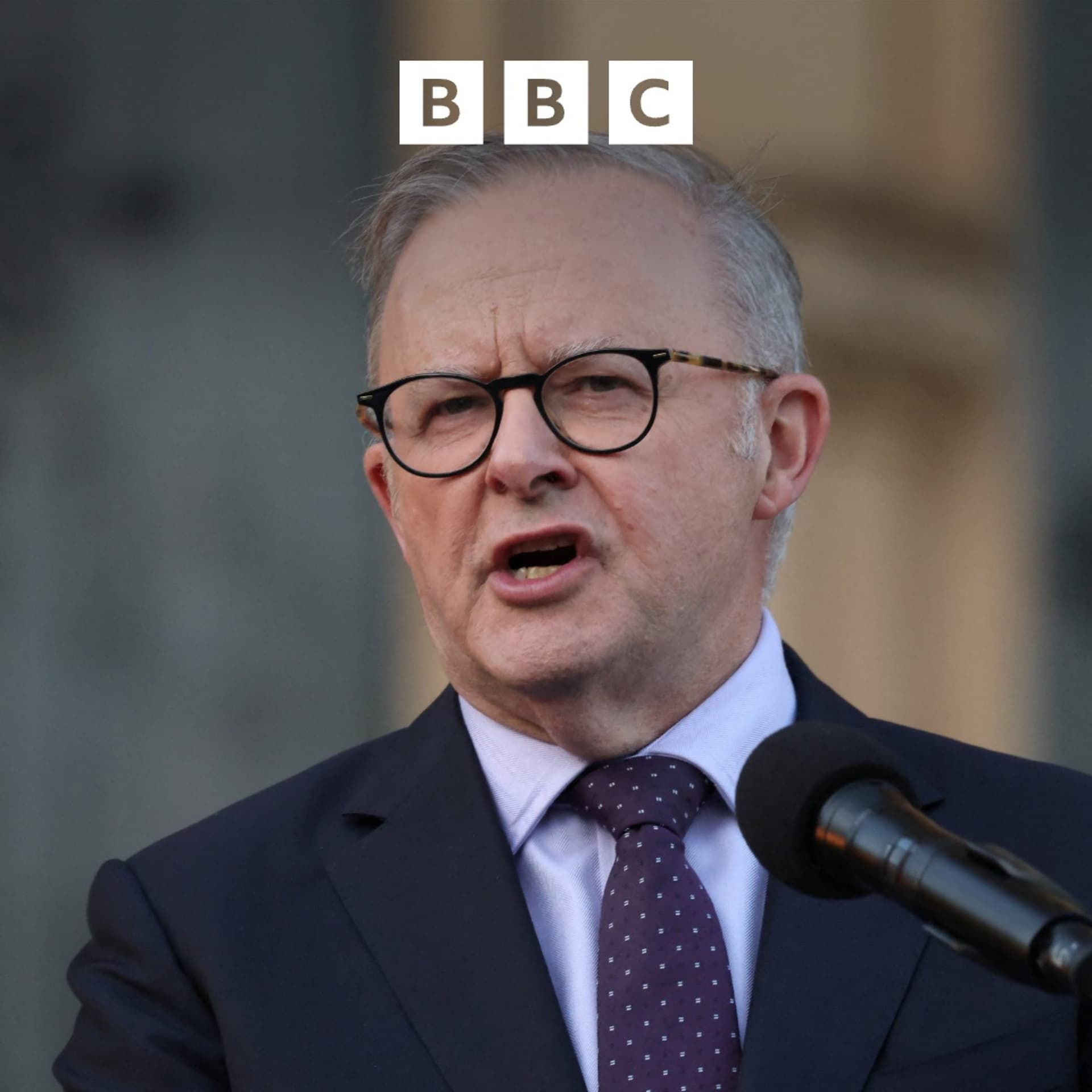
- Australian Prime Minister Anthony Albanese announced reforms to crack down on hate speech.
- New measures include:
- Increased penalties for promoting hate speech.
- Authority for ministers to revoke visas of individuals inciting hate.
- Criticism:
- Albanese faced scrutiny about why these laws were not enacted sooner. He acknowledged the past shortcomings of his government in combating anti-Semitism.
- Expert Insight:
- Correspondent Phil Mercer emphasized the need for Australia to address radicalization and hate speech proactively.
- U.S. Political Update
- President Trump's Address:
- In a year-end speech, Trump touted his administration's accomplishments, addressing issues like border security and job creation.
- He faced criticism for his focus on foreign policy over domestic concerns, and recent opinion polls reveal mixed public sentiment regarding his presidency.
- International Affairs
- Venezuela:
- President Nicolas Maduro accused the Trump administration of attempting to colonize Venezuela amid escalating tensions and U.S. sanctions on oil shipments.
- The Venezuelan economy remains fragile, with warnings of potential hyperinflation.
- Changes in Hollywood
- Oscars Broadcasting Rights:
- Starting in 2029, the Oscars will be streamed exclusively on YouTube, ending its long-standing partnership with ABC.
- Industry analyst Pete Hammond discussed the implications of this shift, highlighting the need for the Oscars to adapt to changing media consumption habits.
- Human Rights Issues in Iran
- Boxer at Risk of Execution:
- Iranian boxer Mohammad Javad Vafaei-Sani faces imminent execution after his retrial request was denied.
- Human rights groups condemn the situation, emphasizing the broader implications for athletes who oppose the regime.
- Public Safety in Japan
- AI-Generated Videos of Bears:
- Authorities warned against misleading AI-generated videos depicting friendly interactions between bears and humans amid rising bear attacks in Japan.
- Over 200 injuries and 13 fatalities reported this year, prompting public safety campaigns.
- Family History Discussions During Holidays
- Cultural Preservation:
- Anthropology Professor Elizabeth Keating suggested using the holiday season to record family histories, emphasizing the importance of understanding cultural backgrounds through personal stories.
- She provided practical tips for initiating conversations with older family members.
---
Conclusion The episode encapsulates urgent global news, focusing on crucial discussions surrounding hate speech legislation, international politics, and cultural preservation. It emphasizes the significance of timely government action in response to societal issues and the evolving nature of media consumption in modern society.
---
Contact Information
- Email: globalpodcast@bbc.co.uk
- Follow: [BBC News on YouTube](https://youtube.com/BBCNews)
---
This summary captures the major discussions and insights from the latest episode of the Global News Podcast, providing a comprehensive overview of current global affairs and encouraging further exploration of the topics presented.
Written by AI. May contain mistakes. Listen to the episode to check what was said.
Transcript
Automatic transcript. May contain errors.0:00This BBC podcast is supported by ads outside the UK. If journalism is the first draft of history, what happens if that draft is flawed? In 1999, four Russian apartment buildings were bombed, hundreds killed. But even now, we still don't know for sure who did it. It's a mystery that sparked chilling theories. I'm Helena Merriman, and in a new BBC series, I'm talking to the reporters who first covered this story. What did they miss the first time? The History Bureau, Putin and the apartment bombs. Listen on bbc.com or wherever you get your podcasts. This is the Global News Podcast from the BBC World Service.
0:47I'm Bernadette Keogh and at 4.30 GMT on Thursday the 18th of December, these are our main stories. As the youngest victim of the Bondi Beach shooting is laid to rest, Australia's Prime Minister promises a crackdown on hate, division and radicalisation. In an end-of-year speech to the American people President Trump lists his top achievements. And the Venezuelan leader Nicolas Maduro has accused the United States of seeking to turn his country into a colony but says any attempt at regime change will fail.
1:25Also in this podcast, a big change in Hollywood. I think they want to be felt as a global organisation and that the Oscars are global, not just Hollywood, not just in America. From 2029, the Oscars will be streamed exclusively on YouTube. And... Ma 'am, you realise feeding that bear is illegal? Oh, good thing he's not a bear. He's family. A warning from Japan, don't fall for AI bears.
2:00Australia's Prime Minister, Anthony Albanese, has announced a series of measures to crack down on hate speech after 15 people were killed by gunmen at a Jewish event on Bondi Beach on Sunday. Mr Albanese said his government would increase the penalties for people promoting hate speech and that ministers would have the power to revoke visas of those found to be inciting hate. But the Prime Minister faced a barrage of questions from reporters, wanting to know why these laws were not introduced sooner. Look, of course more could have always been done. Governments aren't perfect. I'm not perfect. We have engaged in a constructive way where there wasn't a special envoy on anti-Semitism before this government came to office.
2:48I, of course, acknowledge that more could have been done and I accept my responsibility for the part in that as Prime Minister of Australia. But what I also do is accept my responsibility to lead the nation and unite the nation. Our correspondent in Sydney, Phil Mercer, told me more about the measures announced by Mr Albanese. He says Australia needs to do more to combat what he described as this evil scourge of hate speech. So he's announcing a reform to the way Australia responds to hate preachers and also radicalisation. The Prime Minister, Anthony Albanese, acting after heavy criticism of his government in the aftermath of the Bondi Beach shootings.
3:35Mr Albanese's government criticised by its critics who say that it has failed to address a rising tide of anti-Semitism. The Prime Minister has been defending his position all week and today we have this announcement that there will be concrete steps taken that the government hopes will curb hate and radicalisation in a country that is still of course reeling from its worst mass shooting in almost 30 years. Well indeed the Prime Minister was questioned by reporters about why these laws weren't introduced sooner. Yes, what we've seen in the last couple of days is a real intensification of the political fallout from the deaths of 15 people at Australia's most famous speech.
4:20Just a few days ago, there is much debate about the intelligence agencies and how they may or may not have missed crucial signs regarding the gunman's activities and also around gun control and now hate speech. So certainly the government is trying now to be on the front foot to say to its critics that it is doing more to combat anti-Semitism. But you're absolutely right. There will be a lingering fear among certain quarters that the government should have done this a lot sooner. And today is the funeral of the youngest victim of Sunday's attack, 10-year-old Matilda, another very emotional day for Australians.
5:01Yes, more pain and anguish for Australia and its Jewish community. Matilda will have a funeral in a place called Willara, which is in the eastern suburbs of Sydney, so only a short distance from Bondi Beach. She'll then be buried at a memorial park not too far away. So in many ways, Matilda is one of the symbols of this awful tragedy. So yes, you're absolutely right, another day of anguish for not only her family, of course, but the broader community. Phil Mercer. In a rare evening address to the American people from the White House, President Trump boasted exuberantly of his accomplishments. He set out what he sees as the successes of his second term in office so far, mentioning his crackdown on illegal migration into the US, private sector job creation and investment, a ceasefire deal for Gaza, and the imposition of global trade tariffs.
6:02It was a speech full of confidence. We're putting America first and we are making America great again. Very simple. We are making America great again. Tonight, after 11 months, our border is secure. Inflation has stopped. Wages are up. Prices are down. Our nation is strong. America is respected. And our country is back stronger than ever before. Our North America correspondent Sean Dilley was listening to the speech.
6:58to go to the polls to vote on the midterm elections. And he's really not just trying to get Americans as a whole, but he's trying to keep his own party on side who've criticised him often for focusing on foreign affairs rather than domestic. The president was very heavily painting one picture of success. But opinion polls don't necessarily support that, do they? You're right. So what he's trying to do is remind people of the successes that he says he's had in his first year. And he's promising there's going to be more money in people's pockets. And there are some really significant points within there.
7:30So he's talking about that price of gasoline, that petrol price, well under$3. He says he wants to drive it down to$1.99. And he was highly political. He was speaking about the Democrats quite a bit, blaming them for what he was talking about was an inflation disaster. So again, he's running over all these tariffs in the hope that those opinion polls could change. And the polls that matter, as politicians always say, is the one where people go into that polling booth. And what do you think the American public will make of what they heard in this speech? You know, it's really difficult to say because President Trump uses these words and exactly these words in other contexts.
8:07So, for instance, when he was talking about people from overseas coming from insane asylums, from hospitals and from prisons, that, for example, was very, very closely echoing what he wrote on Truth Social off the back of the death of Sarah Beckstrom, the 20-year-old National Guard from West Virginia who was shot up the road from where I'm talking to you from now. So an awful lot of the words will be very familiar to Americans. Whether or not that translates into the modern era of people turning on their television or their smart devices and listening to every word of the president, who knows?
8:37Now, this was his last public commitment before Christmas. Where will he and the First Lady be celebrating? Traditionally, at this time of year, he does go to Mar-a-Lago in Florida. He spends an awful lot of time there. Now, although I don't have his exact schedule here, the reason he does that is he gets gatherings of people that he's very close to and certainly Melania supposedly not really a big fan of all the building work at the White House, walking past it, as I have the privilege to do, is that east wing is being worked upon. You can hear that clattering not just down Pennsylvania Avenue, which is often shut off to allow trucks down there, but anything I imagine for peace and quiet from politics as well as the physical noise in the White House.
9:16Sean Dilley in Washington. In a separate development, new plaques have been unveiled at the White House outlining the legacies of previous US presidents as seen by the Trump administration. The highly partisan descriptions have been installed beneath images of the former leaders on a presidential walk of fame created by Mr Trump earlier this year. His predecessor is named as Sleepy Joe Biden, by far the worst president in American history. Barack Obama is described as one of the most divisive political figures in American history. The Venezuelan president, Nicolas Maduro, has issued a defiant message to the American president, accusing him of trying to turn his country into a colony of the United States.
10:04He was speaking a day after Donald Trump said that he'd imposed a total blockade of all US-sanctioned oil tankers going in and out of Venezuela, as well as accusing Caracas of stealing US oil and land. Mr Maduro also said in a speech that any attempt by the Trump administration to overthrow him would end in failure.
10:30The truth has been revealed. The intention is a change of regime in Venezuela to impose a puppet government that wouldn't even last for 47 hours, that would hand over the Constitution, the sovereignty and all its wealth, that would turn Venezuela into a colony. This will just not happen. Never, never, never. Venezuela will never be a colony of anything or anyone. Never. In recent months, the United States has launched attacks on alleged drug smuggling boats, killing at least 99 people. Venezuela claims these anti-narcotics operations a cover for a plot to overthrow the Maduro government. The UN has urged both sides to de-escalate.
11:17Luis Fajardo, BBC Monitoring's Latin American analyst in Miami, gave me the latest. The Venezuelan government has sent a statement describing the call in which President Maluro called the UN Secretary General and complained about what he described as colonial American attitudes because of the growing tension and particularly the latest actions regarding oil tankers trying to leave Venezuela, unlicensed oil tankers. He also described, American actions as barbaric diplomacy. Clearly, Mr. Maduro shows a lot of concern and the Venezuelan government is showing a lot of concern about this latest escalation in these tensions with the US, which have gone on for several weeks now.
11:59Now, President Maduro has said that oil exports won't be impacted by President Trump's blockade and that it's business as usual. Clearly, Venezuela is determined to sound a defiant note. They are trying to sound a defiant note, as you say. But many analysts suggest that, in fact, the impact could be very, very strong on Venezuela, even if the U.S. only impeded the passage of a part of Venezuelan oil being carried in these oil tankers. The Venezuelan economy has been fragile for several months. Some people suggest that it is near a point of hyperinflation. So even if part of Venezuela's oil exports were to be blocked that would have a potentially devastating impact on the Venezuelan economy.
12:43And just as an indication of this, you can see that not only the Venezuelan government has been criticizing these latest announcements by the Trump administration, which you would expect, but also even some commentators who have been seen as close to the Venezuelan opposition and very critical of Maduro. They say, we do not like Maduro, but they are saying, some of them in Venezuelan media, We are against these potential U.S. actions, and particularly they are reacting very strongly against the claim made by President Trump in social media saying that Venezuela had stolen U.S. oil. And a lot of people in Venezuela are saying that this is not the case.
13:21They claim that there is no historical or legal justification to say that the oil in Venezuela would belong to the U.S. So clearly, I think many people are expecting a very strong impact on Venezuela's economy, on Venezuela. and life in general, if these actions do take place and the flow of oil from Venezuela is seriously impeding. Do Americans feel that they could be heading to war? The opinion polls suggest that if that were to be the case, a lot of people in the US are not interested in escalating or getting very involved in a larger military conflict. In Venezuela, I think many people are expecting and commentators are saying that even the threat of US military action would be enough to cause serious breaks in the government of Maduro to manage to change his opinion or maybe even force him to leave power.
14:11And I think many people are still hoping in the US that even the very large threat of military action would be enough to cause a change in political direction in Venezuela. Luis Fajardo. Now to some big news in the world of Hollywood.
14:30for almost half a century the oscars or the academy awards have aired on the u.s television channel abc with the network paying around 100 million dollars a year for the show but organizers have agreed a new deal with youtube allowing it to have exclusive streaming rights for the ceremony from 2029. Although viewership of the extravaganza did reach nearly 20 million for this year, ratings are still half of what they were decades ago. Pete Hammond is the chief film critic for US entertainment site Deadline. He told the BBC's Ed Butler this was a smart move by the organisers of the awards. It is a big deal.
15:13It was rumoured, you know, the Academy's been working on a new broadcast arrangement. And, you know, I was kind of shocked when I saw even saw YouTube on the list. It's stuff like NBC Universal, Netflix, of course, ABC. Yeah, ABC is going to was, I think, talking about kind of curbing some of the hundred million dollars or whatever it was paying for this current deal. How much do you think YouTube's been paying? YouTube's paying well more than that, because it's a big deal for them. It kind of makes sense. in the scheme of things. And also ABC just basically stole the Grammy Awards from CBS. So they've got that.
15:55And I think they had less need to continue doing the Oscars. They got a decent rating last year, 18 million watch. But, you know, it's way down when you consider like 1998 when Titanic was in there. And that was like almost 60 million. And it might be a very shrewd move on the part of the Academy because with YouTube, without that production infrastructure of a network or even a streamer like Netflix, which is doing live events now, they have the ability to have more control over the broadcast. It can be longer. It can be whatever you want on streaming. Yeah, because I mean, there are programs like ABC.
16:33They were bellyaching about the length of the show, weren't they? I mean, the Oscars just go on for quite a while. Every year they have these discussions about can we take some categories off the main broadcast? they did it one year it was a disaster they did some of them in a pre-show and it didn't work out at all you know you have all these branches in the academy the below the line cinematographers all of that that really made a stink about it and they don't want to go through that again so this works for them so it's no problem with youtube but i'll say the key thing here in my opinion it's international it's the way the academy membership's been going and adding more and more international filmmakers to the membership.
17:17And also, I think they want to be felt as a global organization and that the Oscars are global, not just Hollywood, not just in America. But it's a business that's been struggling. So it's just a way people are consuming content, consuming movies are changing. And I think the other key thing about this, people have been watching the Oscars on YouTube already. They watch bits and pieces. You just go on YouTube and type in, you know, Jamie Lee Curtis winning the Oscar and it comes up. And that's how the younger audiences actually have been watching the Oscars all along. This isn't a dumb move, really, when you assess what the Academy can get out of it.
17:56They're sort of admitting they're way behind the times. And if we can't beat them, let's join them. Deadlines, Pete Hammond. And if you want more of the Global news podcast we're also on youtube search for bbc news click on the logo then choose podcasts and global news podcast we go behind the headlines of one news story every weekday still to come on the global news podcast what might it have been like to grow up in a time where ice formed on the inside of your bedroom window and you were crushed with the weight of the wool blankets. These are the details that often go completely unspoken about.
18:37How different generations can use the holiday season to talk about and record the past.
18:50If journalism is the first draft of history, what happens if that draft is flawed? In 1999, four Russian apartment buildings were bombed, hundreds killed. But even now, we still don't know for sure who did it. It's a mystery that sparked chilling theories. I'm Helena Merriman, and in a new BBC series, I'm talking to the reporters who first covered this story. What did they miss the first time? The History Bureau, Putin and the apartment bombs. Listen on BBC.com or wherever you get your podcasts.
19:28European leaders are meeting in Brussels to decide whether to use more than$200 billion worth of seized Russian assets to underwrite a huge loan for Ukraine at what's viewed as a make-or-break summit. The bloc is scrambling to strengthen Kiev's hand as Russia's war approaches its four-year mark. Here in the UK, the British government is trying to raise funds for Ukraine by going after the former owner of Chelsea Football Club. Roman Abramovich was hit with sanctions over his alleged links to the Kremlin in 2022, triggering the sale of the Premier League club and a freeze of the funds. The oligarch had promised to donate the$3.3 billion in proceeds to victims of Russia's war.
20:16and Prime Minister Keir Starmer now says he has to pay up or face court. The BBC understands Mr Abramovich has 90 days to act. The Spectator magazine's Owen Matthews is a Russia analyst. Abramovich is definitely one of the people who I think we can class as the baddies of the 90s. He was one of the oligarchs who took over vast chunks of the Russian state when the Russian state was completely poor and roughly between$9 and$12 billion is his estimated wealth over the last few years. It fluctuates. He was judged to be a Putin ally and crony. And in March of 2022, the British government ruled that some steel companies that he still controlled in Russia might be used for the Kremlin's war effort in Ukraine.
21:08And that was the proximate cause of him being sanctioned. and the reason why he had to sell Chelsea Football Club, for which he's obviously most famous as the owner. So what we're talking about is sanctions. And at that time, in March of 2022, at the beginning of the war, Abramovich came under, first it was US, then EU and then British sanctions. And it's important to bear in mind that those sanctions are an administrative measure. So he's not been convicted in court of any crime. Abramovich's response to his assets being frozen was to sell his share in Chelsea, and he promised to devote it to humanitarian causes.
21:49And what we're talking about now is exactly what kind of humanitarian causes that money is being put to. The government is now insisting that he puts it towards specifically Ukrainian causes. Owen Matthews. Human rights groups have warned that a champion boxer in Iran could be executed soon after his request for a retrial was rejected The mother of the athlete, who won silver at the country's national boxing championships has reportedly been invited to prison to meet her son a visit often granted before an execution is carried out We heard more from BBC Persian Service reporter Gontje Habibi Azad Mohammed Javad Bafra Isani is a 30-year-old Iranian boxer.
22:35He was reportedly affiliated with an Iranian opposition group banned in Iran and charged with the capital offense of corruption on earth, which can potentially carry death sentence. He was arrested in 2020 in connection to Iran's 2019 anti-government protests. After his arrest, he was convicted on national security charges and sentenced to death. And as reported by foreign-based outlets, his appeals have failed. And this week, Iran's Supreme Court has rejected his request for a retrial. The World Boxing Council has condemned the death sentence and quoted an attack on fundamental values of sport and human dignity.
23:16Also, more than 20 international athletes, including British swimmer Sharon Davies, have signed a joint statement urging governments to act and warned that his execution will be a message to every athlete who dares to speak out. Media outlets in Japan are warning people not to fall for AI-generated videos of bears and humans interacting safely amid a spate of attacks and deaths from bear encounters this year. In the northern regions, bear populations are increasing and they're approaching urban areas in search of food. Stephanie Prentice has this report.
23:58A TikTok account from Higuma Cafe in Japan shows bears and humans enjoying cafe culture together, with adult bears having a latte in a slice of cake, and bear cubs cuddling customers who feed them cubes of fruit before putting them down for a nap. The videos have millions of views and comments from people wanting to visit, But the cafe doesn't exist, and the videos have all been made by AI. It's part of a trend on social media of fake videos showing bears as pets. Ma 'am, you realise feeding that bear is illegal? Well, good thing he's not a bear. He's family. With one popular account showing a grandma character doing things like feeding a bear by hand, sitting with a bear in a jacuzzi or driving with a bear in the passenger seat.
24:54The videos may seem harmless to some, but experts in Japan are warning that the content could cause confusion. This year, 13 people have been killed by bears and more than 200 have been injured. In November, the military was deployed to a mountainous northern region to help counter a surge of attacks after bears wandered into schools, train stations and supermarkets.
25:22Some regions have started practicing bear drills with residents simulating bear attacks and learning how to approach an animal that's been shot or tranquilized. The last fatality was confirmed in August after rescue teams found the body of a hiker being dragged through a mountain range by a family of bears. The release of a Japanese horror film depicting a rampaging killer bear was postponed around Halloween, with producers citing the surge in real-life attacks as the reason. Now experts are warning that the spike in AI videos portraying bears as friendly could undermine efforts to keep the public safe.
26:07Holidays such as Christmas or Hanukkah are a time of year when different generations get together and probably spend more time in each other's company than they usually do. Now, if that applies to you and you're looking for some shared activities for the whole family, here's an idea. Get the younger ones to record interviews with the older ones. That's the suggestion of anthropology professor Elizabeth Keating, who's just written a book on the subject. She spoke to Evan Davis. My parents passed away and it was only after they passed away that I realized how little I knew about their early lives, their childhoods, their teenage years, what made them the people that they became, which of course influenced who I became.
26:52So I did some research and I used my anthropology training and came up with some questions that work very well to get an older person to put themselves back in time to describe what it was like when they were children and when they were teenagers. And it's a wonderful way to connect across generations because, of course, it's changed so much. Yeah. And it is technically quite easy to record an interview on a smartphone, not difficult. Just let's go through the practicalities. Would you video it, record it audio, or maybe not record it at all, just have the conversation? I'm an advocate of recording because the nuances of a person's way of speaking.
Read the full transcript
27:37Also, it's very difficult to take notes and also pay attention at the same time. At least it is for me. And so I think recording captures so much more of a person's way of communicating. And when they've gone, you've got that record and you can listen back. OK, well, give us some ideas of how you get the conversation going, because I can imagine just a bit of awkwardness. Yes, I always suggest starting with a few warm-up questions like, where were you born? are there any stories about your birth? What were your favorite things to do as a child? Just some warm-up questions that are very easy to answer.
28:12And then the first substantive question is, can you describe the house or the flat that you grew up in? And this question has proved to be a wonderful opening for people. Because the home, if you think of it, it's a cultural repository, isn't it? It's where ordinary life happens. And ordinary life is something we discount all the time. We tend to record only the big events in someone's life. But it's ordinary life where the richness of culture and family is located. Yeah. How personal do you take it? Do you talk about the divorce that led to the second marriage? Or would you avoid all the kind of awkward family history?
28:53I believe in description, describing a way of life that our audience perhaps does not know anything about. And it's the description itself, I think, that leads to an understanding of a certain point of view that might be very, very different. And that's another thing about an anthropological approach is to try to stand in the other person's shoes and try to understand what it might have been like to live back then. What might it have been like to grow up in a time where ice formed on the inside of your bedroom window and you were crushed with the weight of the wool blankets and you ran down the icy stairs to the fireplace where the fire was just starting.
29:35And these are the details I think that tell you of the tremendous challenges that the older generations had, which often go completely unspoken about. Professor Elizabeth Keating from the University of Texas.
29:52And that's all from us for now, but there'll be a new edition of the Global News Podcast later. If you want to comment on this podcast or the topics covered in it, you can send us an email. The address is globalpodcast at bbc.co.uk. This edition was mixed by Ricardo McCarthy and the producers were Stephanie Zacherson and Nikki Verrico. The editor is Karen Martin. I'm Bernadette Keough. Until next time, goodbye.
30:27If journalism is the first draft of history, what happens if that draft is flawed? In 1999, four Russian apartment buildings were bombed, hundreds killed. But even now, we still don't know for sure who did it. It's a mystery that sparked chilling theories. I'm Helena Merriman, and in a new BBC series, I'm talking to the reporters who first covered this story. What did they miss the first time? The History Bureau Putin and the Apartment Bombs Listen on BBC.com or wherever you get your podcasts
From the publisher
In the wake of the shooting at Bondi Beach in Sydney, Australia's government has announced a number of measures to address antisemistism, including giving officials the power to reject the visas of anyone who engages in religious hate speech. 15 people were killed when two gunmen opened fire at an event celebrating the Jewish festival of Hanukkah.
Also: in an end of year speech, President Trump has been telling the American people about his achievements since returning to office. YouTube has secured exclusive broadcasting rights for the Oscars awards ceremony from 2029. Britain's Prime Minister Keir Starmer orders the Russian billionaire Roman Abramovich to donate more than three billion dollars in proceeds from the sale of Chelsea football club to Ukraine, or face having the money confiscated. Human rights groups say the Iranian champion boxer Mohammad Javad Vafaei-Sani is at imminent risk of execution. Officials in Japan warn people not to be fooled by AI-generated videos of bears cozying up to humans, as fatalities from bear attacks are at a record high in the country. And the merits of recording your relatives and getting to know the family history this holiday season.
The Global News Podcast brings you the breaking news you need to hear, as it happens. Listen for the latest headlines and current affairs from around the world. Politics, economics, climate, business, technology, health – we cover it all with expert analysis and insight.
Get the news that matters, delivered twice a day on weekdays and daily at weekends, plus special bonus episodes reacting to urgent breaking stories. Follow or subscribe now and never miss a moment.
Get in touch: globalpodcast@bbc.co.uk