
In short
Global News Podcast - Episode Notes
Episode Title
Australian state passes gun control laws after Bondi attacks
Episode Summary In this episode, the Global News Podcast covers the recent gun control laws passed in New South Wales, Australia, following the deadly Bondi Beach attacks. The episode also touches upon various current global affairs including a hunger strike in the UK, a significant plane crash in Libya, restoration efforts in Egypt, and an innovative theatre initiative in Rome.
---
Key Topics
- Gun Control Laws in New South Wales (NSW)
- Context: Laws enacted ten days after a tragic shooting during a Hanukkah celebration, resulting in 15 fatalities.
- New Regulations:
- Limit on the number of firearms an individual can own: four guns (ten for farmers).
- Stricter screening and licensing for gun owners.
- Increased police powers to ban public protests.
- Government Statements:
- Premier Chris Minns emphasized a commitment to community safety and recognized that hate speech can lead to violent actions.
- Political Reactions:
- Opposition from activist groups, which are threatening legal challenges against the new laws claiming they are undemocratic.
- Hunger Strikes by Palestine Action Prisoners
- Situation: Four prisoners are on hunger strike, protesting their treatment and the classification of Palestine Action as a terrorist organization by the UK government.
- Health Concerns: Descriptions of the deteriorating health of hunger strikers and calls for government intervention.
- Expert Opinion: Dr. Mike Strood discusses the medical implications of hunger strikes, including the body's struggle to survive without food.
- Christmas Celebrations in Bethlehem
- Context: For the first time since the onset of the Gaza conflict, Bethlehem celebrates Christmas with public festivities.
- Cultural Impact: The economy, heavily reliant on tourism, is slowly recovering as celebrations return.
- Contrasting Conditions: Despite festivities, the ongoing suffering in Gaza is highlighted, particularly for the Christian community.
- Libya's Army Chief Plane Crash
- Incident Details: General Mohamed Ali Ahmad al-Haddad dies in a plane crash after departing Ankara.
- Context: The trip was intended to strengthen military cooperation between Libya and Turkey.
- Restoration of Ancient Egyptian Boat
- Project Overview: The restoration of a nearly 4,000-year-old ceremonial boat near the Great Pyramid of Giza has begun, with public involvement in the assembly process.
- Significance: This project is deemed one of the most important restoration efforts of the century.
- Innovative Theatre in Rome
- Company Focus: Teatro Pathologico, a theatre company training actors with psychiatric issues and learning disabilities.
- Mission: To challenge societal stigmas and promote the talents of actors with mental health challenges through performances of classic Italian plays.
---
Key Takeaways
- The new gun control laws in NSW reflect a strong governmental response to the Bondi Beach massacre, with significant implications for civil liberties and public protests.
- The hunger strikes by Palestine Action prisoners draw attention to broader issues of political activism and government response to dissent.
- Bethlehem's Christmas celebrations signify a moment of hope amidst ongoing regional conflict, while the situation in Gaza remains dire.
- The death of a prominent military figure in Libya adds to the complex political landscape of the country.
- The restoration of historical artifacts in Egypt serves as a bridge between the past and present, inviting greater public engagement.
- Initiatives like Teatro Pathologico illustrate the power of the arts in providing opportunities for marginalized groups and challenging societal perceptions.
---
Conclusion The Global News Podcast episode encapsulates pressing global issues, from shifts in domestic policies in Australia to resilience in artistic expression, while also highlighting ongoing humanitarian crises. The multifaceted discussions provide insight into how international politics, social movements, and cultural initiatives intersect.
---
For further commentary or engagement, listeners are encouraged to contact the podcast at globalpodcast@bbc.co.uk or via social media.
Written by AI. May contain mistakes. Listen to the episode to check what was said.
Transcript
Automatic transcript. May contain errors.0:00This BBC podcast is supported by ads outside the UK. If journalism is the first draft of history, what happens if that draft is flawed? In 1999, four Russian apartment buildings were bombed, hundreds killed. But even now, we still don't know for sure who did it. It's a mystery that sparked chilling theories. I'm Helena Merriman, and in a new BBC series, I'm talking to the reporters who first covered this story. What did they miss the first time? The History Bureau. Putin and the apartment bombs. Listen on BBC.com or wherever you get your podcasts. This is the Global News Podcast from the BBC World Service.
0:48I'm Alex Ritson and in the early hours of Wednesday 24th December, these are our main stories. New laws on gun ownership in Australia's New South Wales after the deadly Bondi Beach attacks. We're not going to be done until we've done everything possible to keep the people of this state safe and we're prepared to take action and steps to keep the community safe. Pressure on the UK government grows as hunger strikers from the banned group Palestine Action continue their protest. Arab ones are deteriorating in their health and it is vital that the government responds. They have chosen to ignore us and continue to decline any meeting with us.
1:29In Bethlehem, Palestinians celebrate Christmas for the first time since the beginning of the war in Gaza. Also in this podcast, the Italian theatre company transforming the lives of people with mental disabilities. Very often we are forced to be not ourselves. Maybe you are a bit weird, you show your fragilities. It's the best thing.
2:02Ten days after the Bondi Beach Hanukkah attack in New South Wales, the Australian state has passed new laws on gun ownership and protests. Among the measures are limiting the number of guns anyone can own to four, though for farmers it's ten. Officials are claiming that the new laws are the toughest of their kind in Australia. The New South Wales Premier, Chris Minns, said the state government would bring in more reforms. We're not going to be done until we've done everything possible to keep the people of this state safe. And there's a recognition from this government that hate speech leads to hateful actions.
2:38That's what happens in even civilised communities like ours. And we're prepared to take action and steps to keep the community safe. Police powers to curb public protests will also be strengthened. A pro-Palestine group and other activist groups have said that they will mount a legal challenge. 15 people were killed in the shooting in Sydney, where Jewish people had gathered. The Australian Prime Minister, Anthony Albanese, said he had requested that a special honours list be drawn up for the heroes of 14 December. The attack did show us the worst of humanity. Hatred, anti-Semitism, violence. It also showed us the best of humanity.
3:18Extraordinary acts of bravery and courage. Acts of kindness for fellow Australians. These special honours lists have been used previously to recognise individuals for other Significant events like the Bali bombings and MH17. And these awards would be announced in 2026. Police believe the gunmen who carried out the attack were inspired by the Islamic State group. My colleague Vandner Barn heard more from the BBC's Phil Mercer in Sydney. Well, the state government here says these new laws are the toughest gun reforms Australia has ever seen. There will be a limit on the number of firearms an individual can own.
4:01There'll also be a raft of other restrictions, including far more stringent screening and licensing regulations for firearms owners. There was also an amendment made that will make it very difficult, if not impossible, for anyone who has associations with people suspected of terrorism from ever owning a firearm. So all of this brought in, of course, after the attacks at Bondi Beach just over a week ago. The New South Wales state premier is a man called Chris Minns. He's also brought in these protest laws. Essentially, they give the police more powers to crack down on protesters and shut them down.
4:40And also they ban any protests in the months after a terrorist incident. And the state government here has been worried that mass pro-Palestinian rallies may well have fomented anti-Semitism in this country. So some broad reforms being brought in by the New South Wales state government. But as you say, a broad alliance of activists, political and community groups are mounting or are likely to mount a constitutional challenge, saying that the laws are unfair and undemocratic. And as far as the gun reforms are concerned, there are politicians in the New South Wales state parliament who say that they won't do anything to protect against future atrocities and target simply law abiding firearms owners.
5:27Phil, I also want to talk about this new award that will be created to honour the heroes from the Bondi attack. What more do we know about that? I think the atrocity 10 days ago really showed, of course, the worst and the best in humanity. The savagery and the brutality of the attack was countered to some degree from the immense heroism we saw. There were at least four people who risked their lives to try to disarm and wrestle with the gunman. And we know that two of the victims, Boris and Sophia Gurman, died after trying to wrestle the firearm from one of the attackers. So it's these sorts of heroic acts that the Australian government really has at the forefront as it creates a new award.
6:14It will also include heroism from bystanders who rushed to give first aid to people who were literally under fire at the time. medical staff, the police, many, many heroic actions, big and small, being considered by the government. And we are expected to find out the recipients of these bravery awards in the new year. Phil Mercer. Not since the hunger strike in Northern Ireland in 1981, which led to the deaths of 10 Republican prisoners, including the MP Bobby Sands, have so many prisoners in UK jails put their lives at risk. Four people facing trials related to break-ins or criminal damage by the group Palestine Action continue to refuse food, with two prisoners reaching their 52nd day of hunger on Tuesday.
7:04Palestine Action has become prominent in demonstrations against Israel's military operations in Gaza. The UK government prescribed Palestine Action as a terrorist organisation in July this year, making any demonstration of support for it a criminal offence. So far, more than 2 ,000 people have been arrested for this. Among them was the Swedish activist Greta Thunberg, who on Tuesday was arrested for holding up a sign reading, I support the Palestine action prisoners. I oppose genocide. Kamran Ahmed is one of the hunger strikers. His sister, Sharmina Alam, sent the BBC this voice note about his condition.
7:44Cameron is on day 44 of his hunger strike. Since the start of his hunger strike, he has been hospitalised four times, with the last two hospitalisations occurring in the last three days. His health has deteriorated to the point that the prison have moved him closer down to cells which are near the nurse's station to ensure he's able to have his vitals managed and respond to any emergency situations that can occur now as he is past day 30 of his hunger strike. Being past this point means that there can be sudden changes to the health as the body starts to eat away at the organs as it tries to sustain itself.
8:23Our loved ones are deteriorating in their health and it is vital that the government responds. They have chosen to ignore us and continue to decline any meeting with us. This could be resolved very quickly and ensure the health and well-being of all of our loved ones. They are not asking for any exceptional treatment. They are asking for their basic rights as British citizens in this country. Lawyers representing Palestine Action have called on the British government to meet them and hear their concerns about their treatment in custody. But so far, no meeting has taken place. So just how dangerous are hunger strikes?
9:01Dr Mike Strood is a professor of medicine and nutrition and a specialist on treating prisoners who are refusing food. My colleague Evan Davis asked him how long the human body can survive not eating. As long as you're getting liquids, you can withstand usually a minimum of 40 days. You might die then if you have started off very thin. Perhaps more, usually it's 50 to 60 days, and occasionally longer if you started off overweight, although being overweight doesn't protect you quite as much as you might think. And what is happening in those, let's say, 40, 50, 60 days as the body adapts to having no nutritional intake?
9:45The body struggles to survive by shutting systems down. And it starts doing that within three or four days, actually, but only at a slow rate and sort of choosing things that aren't essential. but all systems are affected so your liver will stop processing things properly your kidneys will begin to fail slowly your heart will weaken your immune system weakens so that you become increasingly vulnerable to getting infections and we kind of all carry infections around with us all the time so that they can get you in the end and your brain begins to shut down too and you progress towards becoming, well, you may be delirious or confused or actually lapse into a coma.
10:32Yeah, right. Mike, what do they do in prisons? Because they have, I mean, we've got these well-publicised hunger strikes underway at the moment, but there are quite a number of hunger strikes in any year. What's the general approach? Are they force-feeding people? Are people put onto drips? Are those nutritional drips or just liquid drips? What's the normal practice? You first establish that the striker understands what they are doing and you want them to know, you know, that they are putting their lives at risk. And assuming that they are competent, which most certainly will be at the outset of the hunger strike, you can't actually overrule their desire and put up a drip or force feed them with a tube put into their stomach, because that would be considered assault and against their human right.
11:24Now, some might accept some measure of a drip or force feeding, but in general, if they're serious about their cause and their strike, they're not going to accept that, and there's very little you can do. Dr Mike Strood speaking to Evan Davis. Bethlehem is marking Christmas for the first time since the beginning of the war in Gaza. Public celebrations had been cancelled for two years. But after a ceasefire was announced on October 10th, the holy city where Christians believe Jesus was born decided to bring them back, starting with the lighting of its traditional Christmas tree outside the Church of the Nativity a few weeks ago.
12:05Bethlehem's economy, which is heavily reliant on tourism, has been battered by two years of war. While festivities return in the occupied West Bank, Suffering continues in Gaza, including for its tiny Christian community. According to UN reports citing the Gaza Ministry of Health, more than 400 Palestinians were killed by the Israeli forces in the Gaza Strip since the October ceasefire came into effect. Shaima Khalil sent us this report from Bethlehem. I've been here in Bethlehem for the past two Christmases, and for those two years, Manger Square felt empty, it felt quiet. Almost hollow, to be honest.
12:45Now, it's different. I'm standing near Santa, who's ringing his bell, and there are children gathered around him for toys, and it's so nice to see the smiles on their faces. One of the biggest things that was missing was the city's famous giant Christmas tree, which I'm looking at right now for the first time. It stands proudly at the centre with its golden and red ornaments and the nativity scene at the bottom. A group of tourists are taking selfies in the courtyard outside the Nativity Church, ready to go in. And yet, despite the buzz and the limited presence of pilgrims and visitors, the shadow of the war lingers heavily over the holy city.
13:28The city is a different vibe. It's better. Last year there was nothing, no people, no movement. Now there's more of a festive atmosphere. The city is blossoming a bit, where happy people have started to come back again. When I come here, there is a war and that makes me feel sad about what happened to Palestine. We cannot forget our people in Gaza and we hope to see a different situation for them and this war will, inshallah, end as soon as possible for them.
14:03An hour's drive from Manger Square, the sound of drones hover above the Holy Family Church in Gaza. Outside the church, a man finishes off the wire framing of the Christmas tree, the first in more than two years. The only space that I have is the space that I sleep in the night. There is no privacy. Inside, almost 300 people have sought refuge in what was once only their place of worship. Even after the ceasefire, death is always near. We can hear the sounds of pumping, the sounds of shells. I can see the pumpkins are very, very close and near to us. Hilda Joseph Ayad is a 20-year-old Christian Palestinian sheltering in the church school with her parents and two siblings.
14:49She used to be able to go to Bethlehem and describes Christmas before the war. We used to decorate the tree inside our home, to put an activity sense under the tree also. What do you miss most about Christmas before the war? My home. To be honest, my home, my memories with my family inside our home. All of us joined the table of the dinner, our meals, the gifts we used to give to each other. Do you miss Bethlehem? For sure, that's right. We used to go to Bethlehem and celebrating the birth of Jesus Christ there on the church, but now we can't go anywhere. If you have one wish this Christmas or one message for the world, what would that be?
15:35We ask them to keep us in their prayers. What do you wish for yourself? There's no personal thing. The only thing we need is the love and peace in Gaza and all the world. That's the only thing we really need. Back in Bethlehem, Reverend Jack Sarr, president of the Bible College here, explains why celebrating Christmas is so important. I think this is more about hope. It's more about resilience and more about telling we exist, we are here. Christians and Muslims and everyone who lives here wants to declare that we are people who love life. In every tree lighting Gaza was present, whether it is in the prayers or the mentioning.
16:15What is your message to Christians around the world and what is your personal wish this Christmas? We want peace for our people. Our people need their dignity. This is my prayer for my people. I want them to live life and life in its abundance. There are fleeting moments of joy here as light fills Bethlehem, a fragile hope resting on a fragile ceasefire, and a Christmas still being shaped by loss and grief. Shema Khalil. Still to come in this podcast, Egypt starts the process of restoring a boat buried 4 ,000 years ago near the Great Pyramid of Giza. In a unique first for the Grand Egyptian Museum, visitors will have a live experience of the ship's assembly.
17:10If journalism is the first draft of history, what happens if that draft is flawed? In 1999, four Russian apartment buildings were bombed, hundreds killed. But even now, we still don't know for sure who did it. It's a mystery that sparked chilling theories. I'm Helena Merriman, and in a new BBC series, I'm talking to the reporters who first covered this story. What did they miss the first time? The History Bureau, Putin and the apartment bombs. Listen on BBC.com or wherever you get your podcasts.
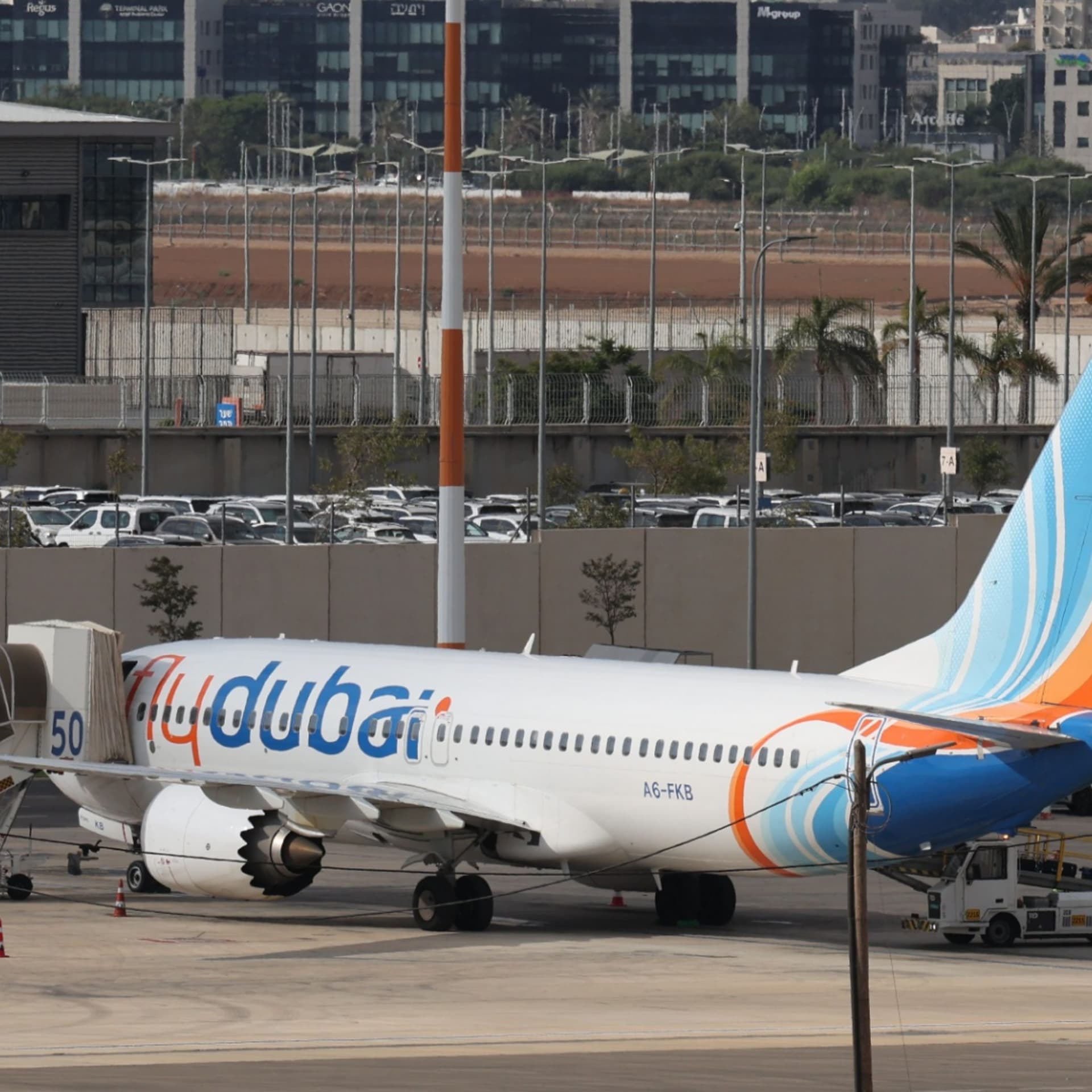
17:50This is the Global News Podcast. Libya's army chief has been killed after his plane crashed shortly after taking off from the Turkish capital, Ankara. General Mohamed Ali Ahmed Al Haddad was in Turkey for talks aimed at further strengthening military and security cooperation between the two countries. My colleague Ankur Desai heard from our Middle East analyst, Sebastian Usher. There was a message, a tweet from the Turkish interior minister saying that radio contact had been lost with this business jet which was carrying the Libyan chief of staff, Mohamed Ali Ahmed al-Haddad and several other officials that had left Ankara.
18:31and he said that about 40 minutes after it had left, on the way back to Tripoli, the Libyan capital, it had requested an emergency landing but then there was radio silence after that. For some time after that, there wasn't any direct confirmation of what had happened but then the Turkish Interior Minister again said that wreckage of the flight had been found about 70 kilometres from Ankara. And what more do we know in terms of the ties and the relationship between the two countries and possibly the nature of these talks as well? Well, talks were between the military staff, the other Libyan officials with him.
19:10Now, they're representing one part of the political scene which remains fractured in Libya. That's the internationally recognised government in Tripoli. You still have other forces that are very much at play there. And they were discussing closer military cooperation, also the extension of Libya's military presence in the country. That had also happened just as these talks were taking place. And really, I think it's all about Turkey in the sense that it has built up a more and more kind of dominant position in Libya, particularly since its intervention in 2019. Back then, there was a major turning point.
19:47Forces from the east had essentially laid siege to Tripoli. And this internationally recognised government was really only in control of perhaps a few streets in Tripoli. It was the military intervention by Turkey which turned the tables on that. And this strongman, Hafta, who had been leading what he called the Libyan National Army, which was originally based in Benghazi, without getting too deep into the complications, but he was seen as the strongman in Libya. It looked like he was about to take over. That was stopped. Since then, Libya has used that to build closer military, of course, political and economic ties, but not just with the international recognised government in Tripoli, but also with Hafta and with the eastern powers to try and really square that circle.
20:37And also, you know, one doesn't know where this is leading and how much this is in good faith, but to try to bring those sides together and to finally have a formal end to what's been a continuing low rumbling conflict, despite the fact that that moment of greatest danger for the government in Tripoli has passed. And General Haftar's moment as the absolute key player with a lot of backing from regional powers has also faded.
21:30Sebastian Usher. is leading efforts. We have a plan to take four years to assemble the ship. In a unique first for the Grand Egyptian Museum, visitors will have a live experience of the ship's assembly, seeing the first ship assembled and, during their visit, witnessing Egyptian and Japanese restorers assembling the second ship. Richard Kagoe told us more. It's not every day museum visitors get to watch history being put back together. At Egypt's newly opened Grand Egyptian Museum, crowds gathered as a small crane carefully lifted centuries-old wooden planks onto a metal frame inside the solar boat's hall.
22:08Tourism Minister Sherry Fati has described the work as one of the most important restoration projects this century. Archaeologists say the boat's fragile structure, made up of hundreds of wooden pieces, meant its excavation and preservation had to be handled with extreme care. The restoration is taking place in full view of the public and is expected to take up to five years. Mystery surrounds the appearance of hundreds of Victorian shoes which have washed ashore on two beaches in South Wales. The black leather boots appear to be more than a century old and no one is quite sure how they ended up there.
22:45The BBC's Thomas Morgan went to take a look. I mean, even though they're quite old, they're still... In very good condition. Yeah, really good condition. But that'll be the salts in the sea. that'll be preserved in the leather. Last Thursday, on the cobbled shores of Llanthwet Major and Ogmoor by the sea, these appeared. A shawl of shoes, hundreds of them, found as a beach clean-up team were restoring the rock pools. It's not unusual to see a shoe, but when there's so many, it does make you... It's quite unnerving. It is a little bit strange, to be fair, because you just don't know where they've come from, so you're trying to figure out the story behind them and how long they've been there.
23:24Now we're finding so many marine litters that have been there for hundreds of years already. The overwhelming majority are men's and children's. So the question now is how did these black leather shoes from yesteryear arrive in 2025? Well, the most likely scenario is probably linked to Tesco Rock, that 500 metre stretch of land in the distance about three kilometres west of the beach here. It's also known as a graveyard of ships, having claimed a number of vessels over the years. Many years ago, that rock out there was a true hazard for ships. There's definitely a shipwreck out there that these shoes have come from.
24:02If that is the case, attention will no doubt turn to who actually made the mysterious footwear. Some are suggesting online the source may be an Italian shoemaker, linked possibly to a downed ship from the 19th century. Thomas Morgan. In 1978, Italy passed a radical law to close state-run asylums, making it the first country in the world to do so. The law made way for community-based treatment of people with mental disorders and learning difficulties, rather than the social segregation that they'd faced beforehand. More than 50 years on, a theatre company in Rome is continuing to embrace that ethos, training actors with psychiatric problems and learning disabilities to perform classic Italian plays.
24:48The BBC's Isabella Jewell went to see one of their performances in London.
25:02In a dark room lit only by candles in London's Italian embassy, a medieval poet stumbles into a terrifying hellscape.
25:17His name is Dante and this is a performance of his Divine Comedy, one of Italy's most famous works of literature. The piece, originally written in the 1300s, is an imagined vision of the afterlife and traces a man's journey through hell to purgatory and then to paradise.
25:39But the theatre company on stage is far from a traditional one. It's called the Teatro Pathologico, literally the pathological theatre, and all the actors have learning difficulties or mental health problems, ranging from depression to anorexia. Just after the play, I caught up with Dante himself, played by Paolo Vaselli. He's been part of Teatro Pathologico since 2012 and told me about his experience. It's important because it represents the possibility of people with disability to be happy, to improve their lives with theatre and with art and be part of a great project. Dario D 'Ambrosio is the mastermind behind the project, which has been going since 1992.
26:34too. Everyone, most of them is autistic and borderline, so they have really serious psychiatric problem. I hope tear therapy can be a therapy for the psychiatric case, because I think when mental illness feels sick, it's like they have not the control of the emotional, and tear help you to put in the right play your emotional. In many places, there is still a stigma attached to people with mental disorders and learning difficulties. But by putting these actors on stage, the audience is encouraged to celebrate their talents, and they've taken their plays across the world. We went in Tokyo, we went in Johannesburg, we went in Toronto, in Chile, South America, so they can see how they feel, these people, how they connect with the audience.
Read the full transcript
27:35So it's like to go against this stigma. In recent years, the theatre company has even created a university course for people with mental illnesses, a point of pride for Dario D 'Ambrosio, who hopes this project could inspire theatre groups in other countries. He tells me that the impact of helping just one person who's struggling has huge ripple effects in their community. When one boy, one girl, mental illness feels good, it doesn't feel good one person, but feel good thousands of people. The mother, the father, the brothers, the grandfather, the people in the building. The Teatro Patologico have taken on many classics, from Pinocchio to Medea.
28:21But this play, a journey from darkness to light, has particular resonance for its lead actor, Paolo Vaselli. It's a journey that is very personal, the search for hope, some sort of light in our lives, to be happy and to be ourselves. Because in society, very often we are forced to be not ourselves. Maybe you are a bit weird, you show your fragilities, But you are yourself and it's the best thing. That report by Isabella Jewell. And that's all from us for now, but there'll be a new edition of the Global News Podcast later. If you want to comment on this podcast or the topics covered in it, you can send us an email.
29:20The address is globalpodcast at bbc.co.uk. You can also find us on X at BBC World Service. Use the hashtag GlobalNewsPod. This edition was mixed by Rebecca Miller and the producer was Muzaffar Shakir. The editor is Karen Martin. I'm Alex Ritson. Until next time, goodbye.
29:54In 1999, four Russian apartment buildings were bombed, hundreds killed. But even now, we still don't know for sure who did it. It's a mystery that sparked chilling theories. I'm Helena Merriman, and in a new BBC series, I'm talking to the reporters who first covered this story. What did they miss the first time? The History Bureau, Putin and the apartment bombs. Listen on BBC.com or wherever you get your podcasts. You
From the publisher
The Australian state of New South Wales has passed gun control laws ten days after the Hanukkah attack in which 15 people were killed. There are also strict limits on how many firearms people can have and the police will have more powers to ban demonstrations. Also: four Palestine Action prisoners in Britain continue a prolonged hunger strike; Libya’s army chief, General Muhammad Ali Ahmad al-Haddad, is killed in a plane crash shortly after take-off from the Turkish capital of Ankara; in Egypt, specialists are restoring a nearly 4,000 year old ceremonial boat from the reign of the Pharaoh Khufu; and a theatre company in Rome trains actors with psychiatric problems and learning disabilities to perform classic Italian plays.
The Global News Podcast brings you the breaking news you need to hear, as it happens. Listen for the latest headlines and current affairs from around the world. Politics, economics, climate, business, technology, health – we cover it all with expert analysis and insight. Get the news that matters, delivered twice a day on weekdays and daily at weekends, plus special bonus episodes reacting to urgent breaking stories. Follow or subscribe now and never miss a moment. Get in touch: globalpodcast@bbc.co.uk
Image credit: Dean Lewins EPA Shutterstock