
In short
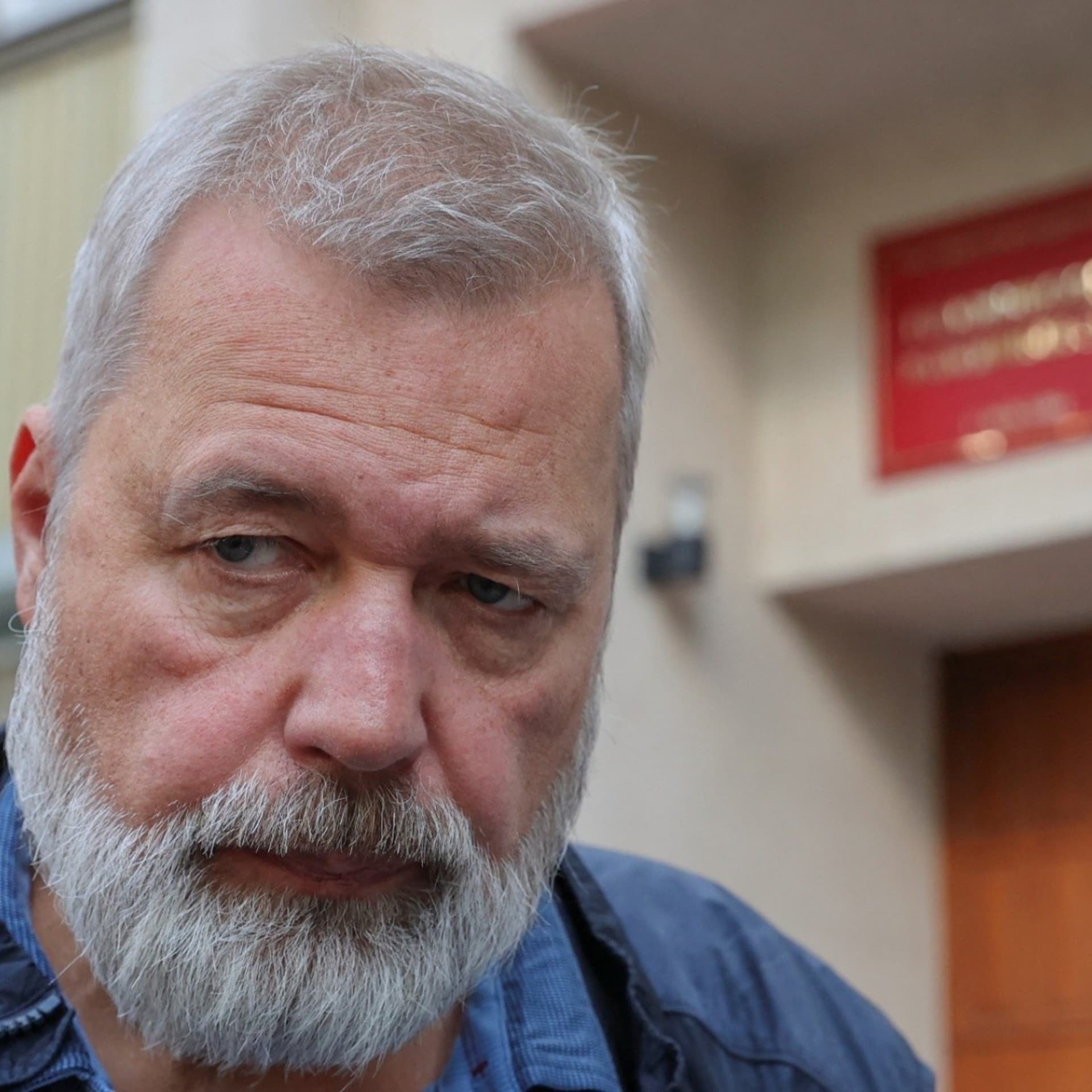
This BBC Global News episode centers on an exclusive interview with Dmitry Muratov, a Russian Nobel Peace Prize-winning journalist and co-founder of Novaya Gazeta.
Key claims
Putin will never win the war in Ukraine; “destroy” is possible but “conquer” is not; nuclear escalation talk is reckless and Putin’s intentions are unknowable; Muratov says the world ignores political prisoners.
Notable examples
Novaya Gazeta’s license revocation and website blocking; a cited estimate of at least 1,500 prisoners for speaking out; pianist Pavel Koshnyr arrested for anti-war videos and dying in pre-trial detention after a hunger strike.
Guests
Dmitry Muratov (journalist, Nobel laureate); Steve Rosenberg (BBC Russia editor, interviewer). Other segments feature Christopher Miller (Financial Times), Tom Bateman (Washington), Pallab Ghosh (science correspondent), Sarah Smith (North America editor), Katie Watson (Australia correspondent), Mark Savage (music correspondent), and Luke Jones (interviewing Raymond Martin).
Written by AI. May contain mistakes. Listen to the episode to check what was said.
Chapters
Tap a time to open that second in VOCurrent Events Overview
1:16 to 2:39
Discussion on significant global events including the war in Ukraine.
“This edition is published in the early hours of Thursday, the 13th of August.”
Interview with Dmitry Muratov
2:39 to 6:08
An exclusive interview with Dmitry Muratov on the state of media in Russia.
“In Moscow, he sat down for an exclusive interview with our Russia editor, Steve Rosenberg.”
Political Prisoners in Russia
6:08 to 8:30
Discussion on the situation of political prisoners in Russia and their significance.
“Nobody knows what's going on in Vladimir Putin's head.”
US Involvement in Ukraine
8:30 to 10:40
Examination of the US's requests to Ukraine regarding military actions.
“And if you want to see his interview with Dmitry Muratov, go to the BBC News YouTube channel.”
Caroline Levitt Steps Down
10:40 to 14:00
Discussion on the resignation of White House Press Secretary Caroline Levitt.
“And there's one other reason why they've done so more insistently recently, and that is because the American companies Chevron and ExxonMobil also have stakes in this pipeline.”
US Political Press Dynamics
14:00 to 15:11
Explore the evolving relationship between the press and US politicians.
“the press and elected politicians in the US have been quite aghast at.”
Total Solar Eclipse Wonders
15:11 to 17:51
Experience the awe of the recent total solar eclipse from various witnesses.
“It was billed as the most significant solar eclipse in Europe for almost three decades, and by all accounts, it didn't disappoint.”
Total Solar Eclipse Wonders
18:47 to 19:17
Experience the awe of the recent total solar eclipse from various witnesses.
“Investing with Schwab is like spending a Saturday at a great farmer's market.”
Controversial ICE Practices
19:21 to 23:31
Discuss the implications of ICE's new electric shock gloves for detainees.
“Three years in, and these pre-owned machines are still at the top of their game.”
Critique of Australia's Disability Funding
23:31 to 24:58
Examine proposed reforms to Australia's National Disability Insurance Scheme.
“to continue to learn things and to continue to be part of her community is just a game changer for all of us.”
Show all 15 chapters
Eurovision's New Hosting Rules
24:58 to 27:32
Understand the changes to Eurovision's rules regarding winners hosting amid conflict.
“But even so, tackling fraud say experts won't solve the problem Hannah Auburn is senior associate at the Grattan Institute and author of a report saving the NDIS.”
Dynamic Toilet Pricing Discussion
27:32 to 28:01
Debate the concept of surge pricing for public toilets in England.
“Because if you remember in 2023, when the UK stepped in to host on behalf of Ukraine, that was done in conjunction with the Ukrainian government.”
The Issues of Public Toilet Funding
28:01 to 29:43
Learn about the challenges and proposals regarding public toilet funding in the UK.
“We've seen the introduction of charging over the last while and it helps to pay for some of the utilities and some of these facilities to make sure they're available.”
Introduction to Pétanque and Its Popularity
29:43 to 30:10
Discover the game of pétanque and its cultural significance in France.
“Pétanque, or boule, is a popular French pastime where players throw steel balls at a wooden ball or jack.”
Innovative Espadrilles for Pétanque Players
30:10 to 32:19
Hear about a unique shoe design that aids pétanque players by picking up balls.
“The game of Patanque dates back to the year 460 BC, when the Greeks got their kicks by throwing stones at a brick on the ground.”
Transcript
Automatic transcript. May contain errors.0:00This BBC podcast is supported by ads outside the UK.
0:30No bouncing between tabs. And best of all, no spreadsheets. Stop managing software and start managing your business with one unified system. Try for free today at odoo.com. That's O-D-O-O dot com. Choiceology, an original podcast from Charles Schwab, is a show about the psychology and economics behind our decisions. Join host Katie Milkman, an award-winning behavioral scientist and author of the best-selling book, How to Change, as she shares true stories from Nobel laureates, authors, athletes and everyday people about why we make the choices we do and how to make better ones to help avoid costly mistakes.
1:08Listen to choiceology at schwab.com slash podcast or wherever you listen.
1:15This is the Global News Podcast from the BBC World Service. Hello, I'm Oliver Conway. This edition is published in the early hours of Thursday, the 13th of August. A Russian Nobel Peace Prize winner tells the BBC President Putin will never win the war in Ukraine. Caroline Levitt steps down as White House Press Secretary. And... It's gone. We are in darkness. It was really, really amazing. It went too quickly for me. It was surreal. Something ate a body experience. It's definitely something I'm going to remember for the rest of my life. Millions across Europe enjoy a solar eclipse. Also in this podcast, a rule change to stop war-torn countries hosting the Eurovision song contest.
2:02And how much would you pay to use a public loo?
2:11Vladimir Putin thought his invasion of Ukraine would be a brief military operation. That was four and a half years ago. Russia has suffered big losses on the battlefield, while Ukrainian drone attacks on its oil facilities and on wild berries, Russia's version of Amazon, are causing economic pain. In Russia, public criticism of the authorities carries a risk, but one man who continues to speak out is journalist and Nobel laureate Dmitry Muratov. In Moscow, he sat down for an exclusive interview with our Russia editor, Steve Rosenberg. I meet Dmitry Muratov at Novaya Gazeta, the independent newspaper he co-founded in the 1990s.
2:55I'm struck by the emptiness, empty corridors, deserted offices. He tells me that really there is no newspaper anymore. The authorities have revoked its license and blocked its website in Russia. But at a time when independent voices here are being silenced, Mr Muratov is still speaking out, not without risk. Almost all non-state media outlets have shut. Most opinion leaders have been declared enemies of the state, foreign agents, extremists or terrorists. Figures vary, but a conservative estimate is that a minimum of 1 ,500 people are now in prison since the beginning of the special military operation, having spoken out against current state policy.
3:49Novaya Gazeta built a reputation for fearless reporting on corruption and human rights abuses in Russia. As a result, in 2021, Dmitry Muratov won the Nobel Peace Prize for defending freedom of expression, just a few weeks later, the world changed. In February 2022, Vladimir Putin announced Russia's full-scale invasion of Ukraine, as he put it, to ensure Russia's security. Go on, tell me, has security increased? With the Wildberries warehouses being attacked by Ukrainian drones, the petrol crisis, disrupted mobile internet communications, the political prisoners. Has security increased here or not?
4:42The so-called special military operation has become the bloodiest conflicts in Europe since World War II. President Putin continues to predict a Russian victory. Dmitry Muratov is sceptical. Understand this. There will never be victory. It can't be a victory when two Slavic nations have ripped a million people to shreds. It seems to me that the situation with Ukraine now is this. You can destroy it, but you cannot conquer it. What do I mean by destroy? Continued escalation all the way to nuclear war.
5:32This year, I've heard several Russian commentators championing the idea of a nuclear strike on the West. For example, the ultra-conservative oligarch Konstantin Malafyev outlined what he called a good scenario for Russia. It included the use of a nuclear weapon. Some dismiss such talk as empty threats. But Dmitry Muratov points out no one really knows what the president is thinking or planning. All those political experts who say Putin thinks this, Putin must have decided so-and-so, they're all charlatans. Nobody knows what's going on in Vladimir Putin's head. I see things only as a journalist.
6:19I study big data. And since the beginning of the year, the need to use nuclear weapons has been mentioned over 500 times. The Russian state has designated Dmitry Muratov a foreign agent, a label often used here to punish critics of the Kremlin. They're banned from taking part in elections and from teaching. It's also designed to create the sense in society of an enemy within. But Mr Muratov prefers to focus not on his problems, but on those of his compatriots who are in jail. What worries me most right now is that no one in the world has any interest in the political prisoners who were the first to speak out against the land grab in our neighbouring country.
7:06From a folder, he takes out a stack of photos of Russians behind bars. There's a journalist, a local councillor, a 70-year-old paediatrician, and a pianist, Pavel Koshnyr, who was arrested after posting anti-war videos. There's a second photo of the pianist. In a coffin, Pavel Koshnyr had died in pre-trial detention during a hunger strike. He was 39. I ask Mr Muratov, the fact that you're a Nobel laureate, does that give you at least some protection to say what you want? This is not a question for me. So please, whenever you have the opportunity, ask the authorities that question. And is there anything, I ask, that helps you through these difficult times?
8:03We live in a time where people stay silent, but many people do support what we do. On the streets of Moscow, my colleagues and I hear only words of gratitude. They are spoken in a whisper, but what people think is very important. Shafts of light in an otherwise bleak picture for critics of the Kremlin. Steve Rosenberg reporting from Moscow. And if you want to see his interview with Dmitry Muratov, go to the BBC News YouTube channel. Meanwhile, Ukraine has reportedly agreed to halt drone strikes on oil tankers using one Russian Black Sea port after a request from the US Vice President J.D. Vance.
8:46The Trump administration is said to be concerned about the high price of oil and about American oil companies that have invested vast amounts of money in the Caspian Pipeline Consortium terminal in Novorossysk. Christopher Miller from the Financial Times has the story. I spoke with several senior Ukrainian officials and my FT colleagues spoke with US officials who all told us that on a phone call on July 31st, J.D. Vance requested to Volodymyr Zelensky, the Ukrainian president, that the president ask his Ukrainian drone forces to stop striking the Caspian Pipeline Consortium Terminal in the Russian port of Novorossiysk, a terminal that carries crude pipe from Kazakhstan to the Black Sea ports there.
9:33And this phone call took place just three days after Zelensky had visited the White House, where he met Donald Trump in the Oval Office. And they spoke about ways to try to bring the war to an end. And Zelensky asked for greater support in terms of American military assistance. But it's not the first time that the Americans have made this request. Earlier this year, they told the then Ukrainian ambassador to Washington, Olga Stefonisina, that they wanted the Ukrainians to stop striking the CPC terminal in Novorossysk. And she received a formal warning from the U.S. State Department, which she passed on to Kiev.
10:12But it's really come to a head, you know, several months after the U.S.'s war with Iran because the Strait of Hormuz that's closed had a big impact on oil prices around the world. Well, now you've got this other pipeline that's being attacked as part of the Russian-Ukrainian war. And so the Americans are interested in seeing the price of oil drop and to see more oil on the global market. And so they've been asking the Ukrainians now for a while to stop it. And there's one other reason why they've done so more insistently recently, and that is because the American companies Chevron and ExxonMobil also have stakes in this pipeline.
10:52Christopher Miller from the Financial Times. She is the youngest ever White House press secretary, but after 18 months in the job, 28-year-old Caroline Levitt is stepping down. President Trump said she would leave at the end of the month to spend more time with her, quote, beautiful young children and family. Ms Levitt recently had a second child with her 60-year-old husband, Nicolas Riccio, and returned to work from maternity leave last month. During her time as press secretary, she earned a reputation as a fierce defender of the president's policies and actions. It's only because of the United States of America that the French are not speaking German right now.
11:30All Americans would agree that funding mastectomies in Mozambique is not something that the American people should be funding. Canada has been ripping off the United States of America and hardworking Americans for decades. It is a fact that the body of water off the coast of Louisiana is called the Gulf of America, and I'm not sure why news outlets don't want to call it that, but that is what it is. I heard more about why Caroline Leavitt is leaving from Tom Bateman in Washington. She says that simply she didn't feel like she could be the best mum possible to her children given the demands of the job in the White House.
12:08And that is why she is departing for family reasons, a message that was echoed by Donald Trump when he paid tribute to her in a social media post as well. And they have said that she will remain in an outside advisor role to the president. Yeah, I mean, she's been a powerful advocate of Donald Trump's policies, despite her young age. Very much so. but certainly she's had a very combative style on the podium. I think somebody who is seen to at that very young age in her late 20s being able to articulate almost a sort of second guess what Mr Trump might say about any given issue and she has not refrained from holding back to lash out at reporters that the White House has an ideological problem with and even in the leaving note she says I've relished holding the liberal media accountable.
12:56in this what has become really a feature of this administration the way they have tried to turn the tables of accountability suggesting that it's the role of the White House and the US government to hold the media to account. Will you and your fellow journalists in the Washington press pack will you miss her? Well you know it's a professional relationship and the role of the White House press secretary is to be a first point of contact as well as a gatekeeper in that sense to the president. But certainly in my experience, you're talking about somebody that has acted behind the scenes with real professionalism, for example, on Air Force One trips, somebody that has given there has been this very fractured and tense relationship between the media and the White House itself.
13:42I think it is certainly possible to have press secretaries that would be harder to deal with. On the other hand, one incident comes to mind where a reporter was really angrily attacked by Caroline Levitt because she didn't like the nature of the question in the briefing room. And that has been a feature, I think, that certainly many who study the relationship between the press and elected politicians in the US have been quite aghast at. Also, given that Mr. Trump himself has angrily abused verbally reporters, particularly women. And so we've sort of seen that part of this relationship as well, which has been really quite concerning, I think, for those that believe in the freedom of the press.
14:25But more broadly, when it comes to the departure of Caroline Levitt, I think there may be more to come about this, if there is more to this than meets the eye. We just don't know yet, because this news is really only just broken. But I think it fits with the way we've seen other departures handled from the administration, where people have been moved to other jobs or described as a promotion or some kind of way that their role is evolving, rather than what we saw in the first Trump term, which was a whole series of sackings and angry resignations, a lot of animosity and real kind of chaos about the personnel issues of the staff around Mr Trump.
15:03This White House has kept a much more disciplined line. And when departures have taken place, they've been managed far more carefully. Tom Bateman in Washington. It was billed as the most significant solar eclipse in Europe for almost three decades, and by all accounts, it didn't disappoint. Millions of people from Iceland and Greenland to northern Portugal and Spain witness what's called totality, when the sun is completely blocked by the moon. In the UK and other parts of the continent, the eclipse was partial, but still drew plenty of onlookers. Our science correspondent, Pallab Ghosh, was in northern Spain to see it for himself, and sent this report from the city of Burgos.
15:43Those lucky enough to watch the total eclipse saw all they could have hoped for, and more. The last sliver of sunlight disappeared as the moon covered the sun's bright disk. A flash, a diamond ring in the sky, and then totality. The sun's shimmering atmosphere, normally hidden, but now, for a minute and three quarters, revealed in all its glory. We could see bright red triangles at the edges. These were nuclear explosions many times the size of the Earth. Oh my goodness. I have literally got goosebumps. It's not just from the cold, it's about the spectacle that I've just witnessed. This reminds us of what it is to be human, that we are a small planet in a vast cosmos and we're seeing the sun in its beautiful hidden form.
16:41Amazing. On the ground there was awe and sheer delight from those who witnessed the sight. It is going and it is going and it's gone. We are in darkness. Can't believe this. Oh my goodness I've taken my glasses off and it is absolutely unbelievable. The way the light was changing within a few seconds. Really exciting. It was really really amazing. It went too quickly for me but the moment when the moon went over the sun was incredible. It was surreal. It just feels like you're in a movie. Everything stands still, like it was really quiet and it just felt like, I don't know, something out of body experience.
17:25It really took my breath away. You feel emotional as well. You know, it just doesn't feel real at all and it's definitely something I'm going to remember for the rest of my life. Two people were crying around us, so yeah, it was special. It ended as it began. A diamond ring, a flash, and then the moon and the sun went their separate ways, leaving those who saw this spectacular cosmic show with an unforgettable experience. And still to come on this podcast... At first it was just for fun, it was really a joke among friends. Then little by little I started adding a tape measure at the front and finding a magnet.
18:06the shoes designed specially for playing petonk
18:19John Deere is putting in work and putting up highlights oh man look at those passes tillage, planting, harvesting three years in and these pre-owned machines are still at the top of their game we're talking reliability, performance and long term potential And get this, these veteran machines can pick up the latest precision tech with ease. You know it, and fans ready to add John Deere certified pre-owned equipment and more options to their lineup can shop at machinefinder.com. Booyah! Investing with Schwab is like spending a Saturday at a great farmer's market. You can fill your reusable tote with a bit of everything.
18:55Maybe you go for some free-range self-directed investing. Or perhaps you pick up a few farm-fresh trades while you peruse. You can even get help from a dedicated advisor. That's full-service wealth management. Mix, match, and change your mind whenever you want. Because at Schwab, you can invest your way. No matter your goals or appetite for investing, Schwab has everything you need all in one place. Visit schwab.com to learn more. John Deere is putting in work and putting up highlights. Oh, man, look at those passes. Tillage, planting, harvesting. Three years in, and these pre-owned machines are still at the top of their game.
19:31We're talking reliability, performance and long-term potential. And get this, these veteran machines can pick up the latest precision tech with ease. You know it, and fans ready to add John Deere certified pre-owned equipment and more options to their lineup can shop at machinefinder.com. Booyah!
19:52This is the Global News Podcast. Immigration agents in the US could soon be issued with gloves that deliver electric shocks to enforce compliance from comative individuals they detain. But ICE is already facing criticism for its use of force during President Trump's immigration crackdown. Here's our North America editor, Sarah Smith. Immigration and Customs Enforcement plan to spend$20 million on the gloves that are due to arrive by March next year. They can deliver painful electric shocks with a maximum strength of up to 380 volts, which the manufacturers say inhibits or distracts the subject from performing coordinated muscle movement.
20:31They claim that's usually enough to make people comply within less than three seconds. Gloves have already been used in some American jails. Many ICE officers have already faced intense criticism for their use of force against detainees and protesters as they've carried out the Trump administration's immigration crackdown across the country. Civil liberties activists have warned that giving immigration agents a concealed means of delivering terrible pain is a recipe for harm to the public and less accountability. The manufacturer says the device should not be used as a punishment against people merely exhibiting verbal defiance or belligerence or on high-risk populations such as children, pregnant women or elderly or disabled people.
21:10The Department of Homeland Security said that ICE agents were targeting the worst of the worst and had faced a 1 ,300 % increase in assaults. Sarah Smith. The Australian government has been accused of undermining a programme that helps support more than three quarters of a million people with lifelong disabilities. The National Disability Insurance Scheme allocates funding based on individual needs and gives people a certain amount of freedom on how it's spent. Critics say the initiative has become a victim of its own success and it's costing the government too much money. Disabled Australians and their carers say reforms proposed by the government, which could be voted on in the coming days, are certain to harm the community.
21:52This report from our Australia correspondent, Katie Watson. Yes, good work. I think we're going to change legs. Let's change. It's Thursday afternoon and time for physio size. Support worker Callie is helping her client Fran flex those muscles. Yeah, it is hard work. It's supposed to be. Physio size is just one of several activities Fran does each week. She's 39 and has Down syndrome, a genetic condition that causes physical and intellectual disabilities. Fran's a participant of the NDIS, a scheme aimed at supporting Australians with lifelong and significant disabilities. When it was first introduced more than a decade ago, it ushered in a very different approach to disability support, making sure people were at the centre of decision-making rather than having to beg for welfare.
22:38But the scheme's success has also been its undoing. It's grown too fast and it's costing the government too much. Health Minister Mark Butler explained the reasons why the government's planning to reform the system that now costs more than twice what it was meant to when it was first introduced. The philosophical underpinnings for a lifelong scheme of support are necessarily different. I think what I've tried to outline today is the need to get back to those basic design pillars of a well-functioning social programme that's working for participants but also is effective for taxpayers. But changes could have a big impact on Fran, according to her mum, Tracy Lee.
23:16People will not get the supports that they need to live a good life. It's something we all deserve, it's a human right. The other thing that worries me about the changes is that it'll push people with disability back into those sort of ghetto areas to save cost. Having seen how wonderful community participation is for Franny to continue to learn things and to continue to be part of her community is just a game changer for all of us. This amendment is, in my opinion, reckless, ill-thought-out and entirely devoid of any shred of understanding of what living a disabled life is actually like for both the person themselves and their support network.
23:56A recent Senate inquiry heard concerns from thousands in the disability community. Hannah Diveny, who has cerebral palsy, was one advocate who gave evidence. Such was the scrutiny over the proposals. The bill's progress was paused until mid-August. Any time I leave the house, if I'm not with a friend or a parent, it costs something. That's an incontrovertible fact of my life. Freedom, ambition, career, a social life, all of the things other people in this room take as a given or as a right even, has a price tag for someone like me. One of the criticisms of the NDIS has been that providers have gamed the system, offering unnecessary and expensive services.
24:36Bill Shorten helped set up the NDIS back in 2012 and then oversaw cuts to the scheme two years ago after he returned as NDIS minister. He's since left politics and is vice-chancellor at the University of Canberra. Many are good providers but some were bad. You know, that's the nature of a government scheme. People will hone in on it and try and slice off amounts for themselves. So that was a problem. But even so, tackling fraud say experts won't solve the problem Hannah Auburn is senior associate at the Grattan Institute and author of a report saving the NDIS. The government absolutely needs to tackle fraud and get on top of people who are rotting this scheme because they're rotting people with disability and taxpayers and it's just not acceptable.
25:18However, the savings from fraud that is evident even in the government's numbers is really small compared to the other reforms that they've put forward. Few dispute the need for reforms, but how they're done is being watched closely by Franny's supporters. With legislation expected to pass in the coming days, that will impact the more than 700 ,000 Australians on the NDIS. Katie Watson with that report from Sydney. The organisers of the Eurovision Song Contest have changed the rules to say that winners will no longer be eligible to host the competition if they're involved in an armed conflict.
25:54The change is being seen as a reaction to Israel's presence at the contest, given the continued fighting in Gaza and elsewhere. As our music correspondent Mark Savage explains. For the last couple of years, there's been a huge amount of internal conflict at the EBU, which organises the Eurovision Song Contest, over the continued participation of Israel amid the war in Gaza. Last year, several countries tried to have the country excluded from the competition altogether. When that failed, five countries decided to boycott the 2026 contest, and they included some of the biggest funders and winners of Eurovision, including Spain and Ireland.
Read the full transcript
26:32Now, after the contest every year, there is a review. The rules are looked at and tweaked every 12 months. What seems to have happened this year, there have been some private concerns expressed over whether the contest will take place in Israel should Israel win. And that's against the backdrop of the country coming second in both this year's contest and in 2025. Israel is a really strong competitor. And a lot of participating broadcasters were concerned that if the contest went to Jerusalem or Tel Aviv, where it's been held before, that that would compromise the safety of the contestants, but also the delegations who travel there and the audience.
27:08And this rule, although they haven't said this explicitly, appears to be in response to that. Also excludes Ukraine because they're at war with Russia. And what will happen in the future is if one of those countries were to win, then another country will step in and host the contest And a significant change in that instance is that the replacement broadcaster will not be required to stage the event on behalf of the winning country. Because if you remember in 2023, when the UK stepped in to host on behalf of Ukraine, that was done in conjunction with the Ukrainian government. Mark Savage. Surge pricing, where people have to pay more for concert or plane tickets when demand is high, already has plenty of critics.
27:49But two councils here in England have been thinking about using it for toilets. Dynamic pricing has already been introduced in some pubs and car parks. So could toilets really be next? Raymond Martin is the Managing Director of the British Toilet Association. We've seen the introduction of charging over the last while and it helps to pay for some of the utilities and some of these facilities to make sure they're available. So charging is something we're starting to come to live with, but we certainly don't see a reason for surge charging or dynamic charging. When more people come into a seaside resort or into a town, whatever, they're going to spend money in the local shops.
28:22They're going to spend money in local businesses. And therefore, the town's going to thrive. Why would you want to penalise them? We've lost nearly 50 % of the toilets across the country over the last while because councils don't have the legal responsibility to provide them or the funding from government. So we're talking to government about getting a duty and a strategy duty and some funding to help councils. But we've seen it across the way where a town or a parish which doesn't have toilets, people will get in their cars. but they'll take themselves somewhere else where they don't see they're being penalised.
28:48So why not ensure that the price being charged adequately reflects the cost of upkeeping them, which might be a little bit more, and ensure that those toilets are there for people to use? You're absolutely right. Look, I mean, when the toilets were introduced, it was spent a penny. It was back in the 1850s. A penny then would have brought you a loaf of bread. So if we acquit that today, we should really be paying£1.50 for the use of public toilet. But the councillors have fought and fought, and most people don't want to pay for toilets. The majority of residents say we pay our rates. That money should already be in the council.
29:19But the council not having the legal responsibility, got to spend the money on cleaning streets, emptying the bins, look after parks and cemeteries, schools, roundabouts. And in fact, most of the council budgets are now going on welfare. The councils are really, really strapped. The money has to come from somewhere. It should come from central government. This is about human rights. This is about equality. It's about looking after people with disabilities. It's a matter of refinding the funding rather than causing councils to have to dynamically charge people. Raymond Martin talking to Luke Jones.
29:46Pétanque, or boule, is a popular French pastime where players throw steel balls at a wooden ball or jack. It involves bending down to pick the balls up after each round, with the potential of a sore back at the end of it all. But the owner of a shoe shop in Pépignan in the south of France has designed espadrille shoes specifically for pétanque players, and they've become a massive hit all over the world. Wendy Urquhart has this report. The game of Patanque dates back to the year 460 BC, when the Greeks got their kicks by throwing stones at a brick on the ground. In later years, it became a firm favourite with French soldiers, and eventually the Patanque tools were refined, with players using lighter, smaller balls that they would fling at a circular piece of wood known as a jack.
30:39Now it's part of the rich pageant of French culture, But no matter how many glasses of wine you've had, all that bending down to pick up the steel balls is murder on your back. Olivier Gelli, who founded the Peyote brand, has come up with a solution. He's added a magnet to the side of espadrilles that's strong enough to pick up petanque balls, which weigh around half a kilo. Olivier says it all started as a joke, but after selling 40 ,000 pairs worldwide, he's definitely laughing all the way to the bank. At first it was just for fun, it was really a joke among friends. Then little by little I started adding a tape measure at the front, putting the cochiné or jack on the side and finding a magnet.
31:27Gradually we refined the design to make it ready for sale. The new design does have at least one critic though, who pointed out that players might cheat by using the magnet to move other people's betonk balls when nobody's looking. Petanque has become so popular in the United States that some people even have a petanque lane in their garden. And 40 % of the sales of these new magnetic espadrilles were sold across the pond, which has even surprised Olivier. I suppose there must be petanque players there. I don't know, because when you look at the names, they're definitely American names. Well, Olivier is already raking in the cash for his magnetic shoes, but he's not done yet.
32:10Now he wants to design espadrilles with a tiny bottle opener on one side and a little pocket for the bottle cap on the other side. There's only one response to that. Cheers, Olivier. Wendy Urquhart. And that's all from us for now, but the Global News Podcast will be back very soon. This edition was mixed by Sidney Dundon and produced by Emma Joseph, our editors, Karen Martin. I'm Oliver Conway. Until next time, goodbye.
From the publisher
Russian journalist, television presenter and winner of the Nobel Peace Prize in 2021 talks exclusively to the BBC. The former editor-in-chief of the now banned independent newspaper Novaya Gazeta tells our Russia editor Steve Rosenberg about life under Vladimir Putin. Also: US Vice-President JD Vance reportedly intervenes to halt Ukrainian strikes on oil tankers using Russian port of Novorossiysk. Karoline Leavitt to step down as White House Press Secretary but will retain role as adviser to President Trump. Millions of people across Europe wowed by once-in-a-generation solar eclipse. Immigration agents in the US could soon be issued with gloves that deliver electric shocks. Eurovision Song Contest changes rules for countries at war. Brits could face dynamic prices to use public toilets. And the magnetic espadrilles helping pétanque players pick up their balls.
The Global News Podcast brings you the breaking news you need to hear, as it happens. Listen for the latest headlines and current affairs from around the world. Politics, economics, climate, business, technology, health – we cover it all with expert analysis and insight. Get the news that matters, delivered twice a day on weekdays and daily at weekends, plus special bonus episodes reacting to urgent breaking stories. Follow or subscribe now and never miss a moment. Get in touch: globalpodcast@bbc.co.uk
Photo: Dmitry Muratov, editor of the now banned independent newspaper Novaya Gazeta and Nobel Peace Prize winner. Credit: REUTERS/Yulia Morozova