
In short
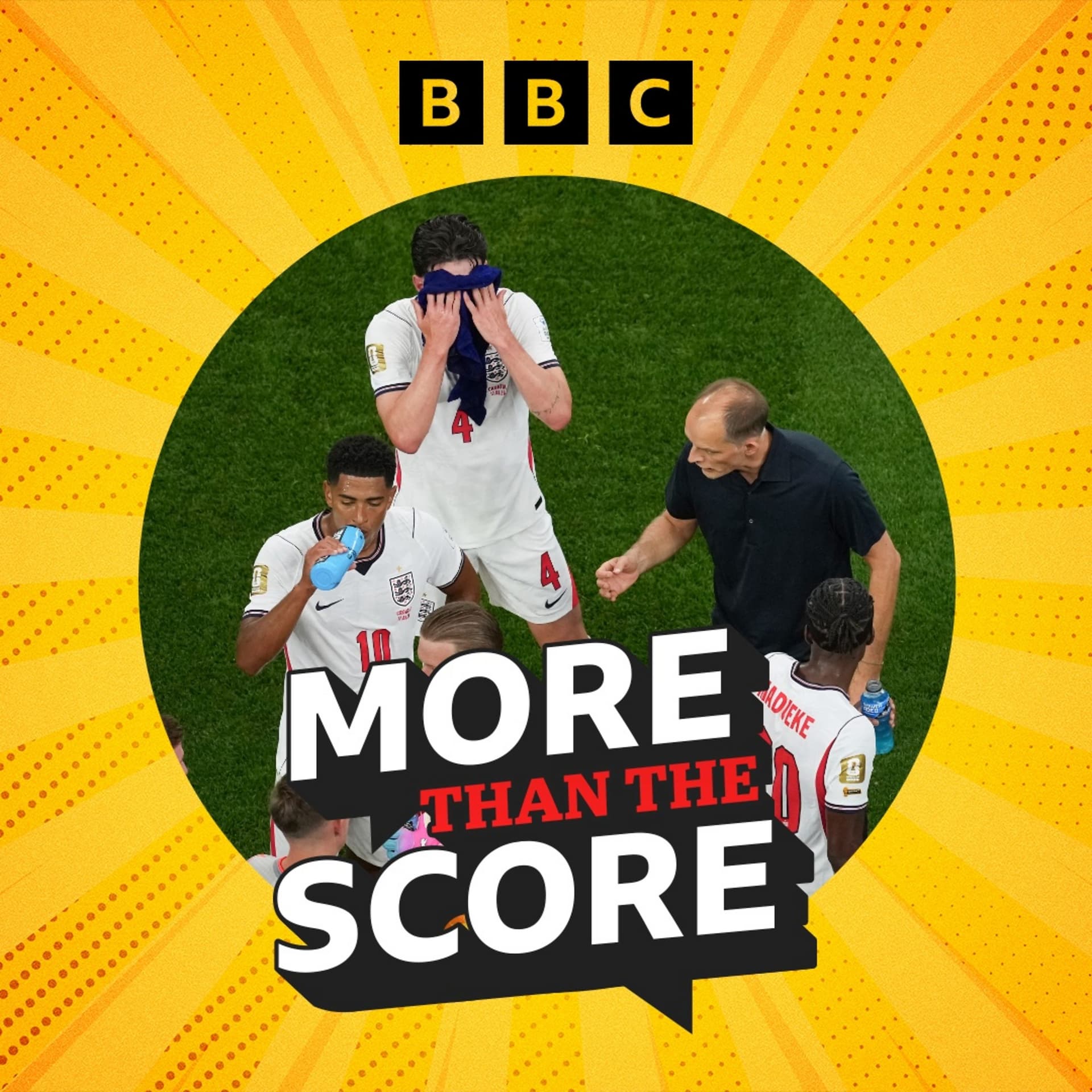
Whether FIFA’s mandatory World Cup hydration breaks (3 minutes at 22 minutes into each half, all 104 games) are here to stay, and how they affect player welfare, tactics, momentum, and broadcast/commercials.
Guests/backgrounds
Matt Cullen, Olympic and sports commentator for CBC; Umir Irfan, BBC Tactics correspondent.
Key claims
FIFA says breaks protect players in heat/humidity; critics argue they’re unnecessary in air-conditioned stadiums and mainly enable commercial revenue. Supporters and some coaches say breaks can aid strategy and prevent heat risk. Broadcasters often cut to ads during breaks, reducing fan immersion and “free-flow” football.
Notable examples
Fans in Toronto at Nathan Phillips Square debate it; momentum shifts include Canada’s late equaliser after a break and a Germany match where Curacao scored, then quickly conceded after the break. Players/managers cited include Virgil van Dijk, Bukayo Saka, Carlo Ancelotti, Didier Deschamps, and Ståle Solbakken.
Written by AI. May contain mistakes. Listen to the episode to check what was said.
Chapters
Tap a time to open that second in VOHydration Breaks Debate
0:37 to 1:28
Discussion on the impact and necessity of hydration breaks during the World Cup.
“You know that one friend who always finds the best travel deals, picks the right credit cards, and somehow ends up in first class for the price of coach?”
Hydration Breaks Debate
1:30 to 4:14
Discussion on the impact and necessity of hydration breaks during the World Cup.
“Well, it has become a familiar scene during this World Cup.”
Differing Perspectives on Breaks
4:16 to 6:06
Analysis of the differing views on hydration breaks from commentators and fans.
“Olympic and sports commentator with the Canadian Broadcasting Corporation.”
Commercial Impact of Breaks
6:08 to 7:33
Exploration of the commercial aspects and broadcasting changes due to hydration breaks.
The Future of Football Commercialization
7:35 to 14:01
Examining how hydration breaks may change the football viewing experience and commercialization.
“Messi is in a beer commercial with other football icons like Christian Pulisic, Alex Morgan and the Brazilian Ronaldo playing a three-on-three in a hotel lobby.”
Business Perspective on Hydration Breaks
14:01 to 15:14
Explore the impact of hydration breaks on the World Cup's momentum and game flow.
“And it takes away perhaps some of that kind of novel ingenuity for players, for individual situations to arise.”
Player and Coach Reactions
15:14 to 16:19
Hear insights from players and coaches about their views on hydration breaks.
“And you had to feel one for poor Curacao, who finally scored a goal against the powerful Germans.”
Tactical Implications of Breaks
16:19 to 19:25
Discuss the tactical advantages and disadvantages of hydration breaks during matches.
“What is it like for the players and for the managers then?”
Evolution of Football and Breaks
19:25 to 22:08
Understand how hydration breaks reflect the evolution of football tactics and game structure.
Future of Hydration Breaks
22:08 to 26:30
Debate whether hydration breaks will be a permanent aspect of football in the future.
“Some have spoken out in favour of the hydration breaks which wasn't in existence when they were playing.”
Transcript
Automatic transcript. May contain errors.0:00This BBC podcast is supported by ads outside the UK.
0:30Snapdragon. That's how. Today's episode is sponsored by Smart Travel, a podcast from NerdWallet. You know that one friend who always finds the best travel deals, picks the right credit cards, and somehow ends up in first class for the price of coach? Smart Travel is like that friend, but in podcast form. NerdWallet's travel journalists sort out what's worth paying for, from lounge access to travel advisors to hotel loyalty programs. Make your travel dollars work harder. Follow Smart Travel on your favourite podcast app.
1:27hydration breaks. You can listen to the whole episode right here. I hope you enjoy it.
2:01Well, it has become a familiar scene during this World Cup. The referee blows the whistle to stop the game 22 minutes into each half to allow players to rehydrate. These mandatory three-minute drinks breaks at all 104 games have been introduced to help players cope with the stifling heat and humidity levels in Mexico, Canada and the United States. It allows coaches to make tactical changes and the broadcasters can, and many have cashed in with lucrative commercial breaks while play is halted. It's become one of the major talking points at this summer's World Cup, attracting criticism from the likes of the Netherlands captain Virgil van Dijk and the US head coach Maurizio Pochettino.
2:39I'm in one of the host cities, Toronto, in Canada, so what do the fans here feel about it? I went along to the Nathan Phillips Square, a large open plaza in the centre of the city. It's where there's usually an ice rink, now there are mini football pitches with children playing games and a large screen showing the matches. We're watching on the big screen here in Toronto the Argentina-Algeria game. It's just gone to the first hydration break. Let's find out what everyone here makes of it. For the players, it's a good team, but for us, I don't like it. I really don't like it. I think it's a good thing because some games are going to be very, very, very hot.
3:18Some are not, but some are going to be very hot. and it gives them time to kind of strategize and things like that. So I have nothing against it. How about you? What do you think? Same, same. I mean, having all these people, you know, doing hydration and, you know, before that wasn't happening. So most of the strategy, I guess, they can sit down and talk will be the plus for that. For the hydration break, I know people are complaining about it, but there are always positives. If you are a coach and you know how to leverage the hydration break, it can be a positive. It is summertime out here. People are playing in Miami.
3:51It is over 100 degrees out there. You know, we don't want a player to collapse on the field of play, right? So I think the hydration break is good. I don't have any problem with that. I don't think it's necessary. It's just stopping the momentum of the games. I don't feel it's helping anyway. It's just for the advertisement and making more money for FIFA. That's all. So that's the view of the fans from here in Toronto. We're joined on more than the score from Toronto by Matt Cullen, Olympic and sports commentator with the Canadian Broadcasting Corporation. Hello, Matt. Hello, Lee. Good to have you with us.
4:23And by the BBC's Tactics correspondent, Umir Irfan. Hello, Umir. Hello, you OK? Welcome, both of you. Matt, there are differences of opinion there from the fans. You can understand why it's become the big talking point at the World Cup. Well, certainly it's a big talking point. It's a big change, particularly going to commercial breaks. Controversial, certainly. Some like it, some do not like it. But it is a big change in the footballing or the soccer landscape here as we know it. But when temperatures do rise in North America during the summertime, upwards of 35, 40 degrees, sometimes hydration breaks do come into place, I believe in around the 25 degree mark usually.
4:59And so it is common for football fans in Canada and the United States to see this type of thing, but just not so regularly, especially with the commercial breaks. Yes, in a statement when they announced these mandatory hydration breaks, FIFA said it is part of a focused attempt to ensure the best possible conditions for players, drawing upon the experiences of previous tournaments, including the FIFA Club World Cup, Amir. And we saw during that summer's tournament just how hot it was and difficult for the players. So you'd say it was essential then for player welfare in these high temperatures to have the breaks?
5:33I think to a certain point when the temperatures do get too high, it's obviously a point of player safety. and you've heard in the quotes from players themselves that when it gets to a certain point, it makes sense. You know, you kind of hydrate, you recover, it gives you a bit of time to, you know, rest from the heat stress that you get from some of those really hot conditions. But interestingly, in the Club World Cup, according to FIFA Pro, there were only three games that perhaps should have been suspended or postponed because of the heat stress measured for those games. And at the World Cup so far, there's not been any games that have exceeded that measure yet, which points towards perhaps other measures coming into play that the timing of the games sort of the air conditioned stadiums that have helped perhaps keep that level of heat stress low enough to allow the players to continue but irrespective of that when it gets to a certain point you need to hydrate and that will benefit you regardless but I suppose for the players they might want to continue playing when it's perhaps not as hot as other games they've played in across Europe or across their home nations.
6:36Yeah I think that's the point isn't it Matt it's been brought in for all 104 games regardless of the conditions there are air conditioned stadiums so would it have not been better to perhaps have a temperature threshold and if it breaches that then then you get the breaks not in every single match well that would be what we are accustomed to is a case-by-case basis if it is a particularly warm day and hydration breaks are necessary required for player safety i think that everyone can understand that having it uniform is also an interesting concept though just by making it the same for all matches and you can understand that just to make sure that there are no unfair or fair advantages let's say but by doing so it does pose the question when you're in a comfortable air-conditioned stadium do you really need a hydration break the answer is no so what else does it serve does it serve as a tactical pause a commercial break for broadcasters and monetary reasons so that could also be one that could be scrutinized but for for for most part i think that the way of the past has been case by case yeah we'll hear from some managers and players and their views on that in in just a moment or two because yeah the big factor is what happens during the break many broadcasters across the world including fox sports in the united states the host broadcaster cut to commercials during these hydration break windows so i've been sold home improvement tools by david beckham a popular The brand of crisps also features Beckham, Lionel Messi and the US actor Steve Carell getting random people for a watch along.
8:09Messi is in a beer commercial with other football icons like Christian Pulisic, Alex Morgan and the Brazilian Ronaldo playing a three-on-three in a hotel lobby. Here in Canada, I noticed I was encouraged to place a bet, protect Ontario, set up a TV subscription and drink beers all before Luminium All that came on for Spain. That does sound about right, yes. Yes, yes. It's intense, isn't it? Especially if you're not used to it. And obviously a lot of markets around the world are used to cutting to commercials. But that's what the experience of this World Cup is very different to previous World Cups.
8:40Yeah, I think in the football landscape, Canadians are relatively new. This is just our third ever World Cup in terms of the men's footballing. So relatively new. But going to commercial break during a half is something that Canadians are not accustomed to seeing. However, when it comes to other major professional sports, ice hockey here, of course, being the main one, We have three commercial breaks per period. There are three periods per game. In terms of NBA, four quarters, regular commercial breaks, baseball as well. So going to commercial is not something that Canadians are unaccustomed to.
9:13But in terms of the footballing, it is different. It is jarring sometimes. And normally in past when a hydration break has been required, it would be a chance for broadcasters to talk about tactics, take a look at the players, taking a look at the communication, the body language within the players. So going to commercial does remove that sense for the fan and for broadcasters, for the supporters to see exactly what's going on on the pitch. Yeah, I think that's the big difference here, isn't it? Hydration breaks, we can debate separately whether they are essential in all conditions here at this World Cup.
9:46But the fact that commercials are being played takes you away from the stadiums, takes you away from the atmosphere. Not all broadcasters are doing that. Telemundo, the Spanish language broadcaster sharing games in the US, has not switched to adverts. that's not been the case in the United Kingdom as well and the commercial broadcaster there who used the opportunity to discuss tactics don't they Omer but that's the thing isn't it you're away from the stadium for a period of time yeah I think when it comes to watching a football game the fan experience from home is as important to to the footballing landscape as perhaps that the being there in the stadium because of how many people do watch it in that manner and when you are watching it you're immersed into the game those breaks and and taking them completely away from sort of the spectacle of football because football is a spectacle it is a show and the punditry matters as much as the commentary matters as much as sort of the little insights you get it's all part of the picture together and when you break away from that completely you kind of lose that sort of immersion and and i think for fans the actual experience of perceiving the game in that manner when they're not used to it is something that's probably you know you lose a little bit of that kind of pure joy that you might get from that pure fan experience well we was in a bar Matt in New York and the owner admitted to me afterwards he'd been outside he came back in and wondered why his staff hadn't put the music on for half time and then they had to tell him no it's the hydration break so everyone is just getting used to it as well and even during what we would think of as North American sports it's still nice to be immersed on the court side isn't it during a timeout in the NBA rather than cutting to commercials.
11:20What do you do, Matt, commentating for CBC then? What happens during the hydration breaks? Well, in terms of the commentary, the broadcast, it depends. It depends really. But for the commentary that I'm doing, we press on during the hydration break. So a chance to check on tactics, look at body language and things like this and then the rights holder for Canada TSN they're stepping aside to do to do the commercial breaks and they usually have a host that comes in over top of the of the commentary and say well we'll take a take a step away for a commercial break and we'll be back shortly after this so it's a bit of a gentle throw towards break but yeah different broadcasters are doing different things it is the new territory here big challenge for you then all of a sudden filling three minutes during a game.
12:08And it is a chance to pause and analyze things, of course, but it's not what you're used to in a free-flowing game. Yes, I'm doing solo commentary as well, so an extra three minutes of talking all by myself without a football moving around does present some challenges. But, you know, it's a great chance to take a look around the stadium. Just take a breath, look around, look at the supporters. I really enjoy looking at the body language, and particularly in the last Canada match against Bosnia-Herzegovina, it was very tense. And the Bosnians, who went up very early in the match, You could see them all tapping each other on the back, clapping, congratulatory.
12:40Meanwhile, Jesse Marsh and the Canadians were all huddled around, all business pointing left, right. The board was out. The ponds were moving around. So I found that very interesting as well. But in terms of the North American landscape, I think that supporters and fans here are quite accustomed to being sent away during commercial breaks. So perhaps not as jarring. I think that's one of the best parts of being at a game, buying a ticket, being at the game, is you get a whole new fan experience. Now you're there during the breaks, you see the animations going on during the stadiums, you see the players.
13:13It's a different vibe, certainly, being at the venue for North American professional sports than on the television. And the challenge for football or soccer, if you prefer, compared to the NBA, the NFL, here in the United States and Canada, is that the sport has fewer stoppages, fewer natural stoppages. So, you know, fundamentally, this could change the commercial picture. I was looking in the Wall Street Journal. They reported that the U.S. broadcaster Fox was selling 30 second ad spots during these hydration breaks at around 200 ,000 for the early round game, 750 ,000 for the U.S. men's national team.
13:50So you can add them all up over the whole of the tournament. And it equates to an awful lot of revenue, which they've had to pay a lot of money for the rights. You can understand why they are recouping it in this way. yeah i mean from a business perspective i think you can go into all industries and there's that same rationale like how are you going to make money the advertisers going to pay big for as many eyes as possible and the world cup is such an enormous stage for it but like you mentioned when it comes to football it's not a game of sort of choreographed plays it's not a game of sort of 30 second to one minute um situations that are quite repetitive outside of set plays which obviously we've seen increase in importance but more broadly it's a game where 22 players can kind of act on free will and that's the joy of the game and ideally you want it to be as free flowing as possible to give you these unexpected scenarios and when it becomes broken down into these individual parts these sort of 20 minute periods you've essentially got a game that the influence of the coaches and the coaching staff in general is overstated in my opinion as much as I love tactics and analysis.
14:56And it takes away perhaps some of that kind of novel ingenuity for players, for individual situations to arise. And I think the big thing that we've noticed in this tournament so far is the shifting in momentum after these hydration periods. That's been a big part of that. I love the point about the momentum. That's been the biggest part so far is just the goals that have been scored directly or minutes after the hydration break and Canada being a beneficiary of that, scoring a late equaliser a few minutes after the hydration break in the opening match. And you had to feel one for poor Curacao, who finally scored a goal against the powerful Germans.
15:35And then shortly after, take the hydration break and then all of a sudden be down three goals to one. And then we all know what happened after that, seven to one being the final score. So it has gone both ways, but momentum shifts have been certainly remarkable so far in the beginning parts of the tournament. Yeah, let's get into what it has done in this tournament. And I must just say the stadium experience, again, it's someone from outside of North America coming into this. It's a little different when it does cut to a hydration break. It is sponsored, which you announce through the speakers at the stadium and on the big screens there.
16:06I was at the Brazil-Morocco game at the New Jersey Stadium, the MetLife. And the big announcement came up. You wait, you chat to some friends, maybe go to the concession stands and you come back for the rest of the first half. So a different experience there. What is it like for the players and for the managers then? You'll hear from England's Bukaya Saka. He was asked about it in his media conference. Also the Brazil coach Carlo Ancelotti after that game against Morocco. And first, the Norway head coach, Stále Salbaken. I'm not a fan of it. I can understand it like it's been in Greensboro when it's been 35 degrees and a really hot climate.
16:42But I don't like it otherwise. I think it's unnecessary. The idea with the other rules is very good. The throw-ins, the five-meter kicks, the 10 seconds rule when you want change. All that is good and that is to speed up the game. But the other things slow down the game. I think the break, if you can explain the problem to the players, and I think it's a tactical aspect, it's a really good moment. I think it depends, you know. Obviously, if you're dominating and you have all the momentum, you would love to keep going. But yeah, I guess in some cases it will be helpful, you know, when we're playing in extreme heat.
17:18But I'm easy, I'm open, I don't really mind. You're trying to get me to say something controversial. I'm not saying nothing. I enjoy the game regardless. Well, the Netherlands captain, Virgil van Dijk, did want to talk about it, unlike Bakaya Saka. Speaking after their 2-2 draw with Japan, the Dutch captain said, I was obviously watching almost all the games up until today. Every time going to a commercial, it's a bit not really what I like. I think for the neutral watches on TV, it's also not great. So if it's really hot, obviously it'll be good to put them in. But I think you have to look at it in every game separately, in my opinion.
17:54Umair, it has, as we've touched upon, had significant impacts, hasn't it, on games? Stopping play for a break does kill the momentum. It allows the coaches, though, to work on tactics. Yeah, absolutely. I think there's two parts to it. The first is obviously the momentum. And I think what we, and I suspected this would have been the case, but it is quite evident that the team that want to dominate the ball that want to kind of apply attacking pressure and that find themselves in the final third against a team pending close to their goal they suffer the most because essentially if to me it feels like boxing rounds almost if your backs are up against the ropes you're just looking to try and get uh into the end of the round sort of recuperate and then it gives you a fresh start from a more neutral position and we've seen this in games throughout the tournament where the teams that have been under pressure have immediately come out following the hydration break able to get their foot on the ball able to push the team that they're facing back and then get into the game grow into the game and get goals of their own so that's the first aspect and obviously the second aspect is when it comes to the managers and the in-game tweaks we know analysts and sort of the video footage they have on hand is remarkable there's so much brain power working during a game to try and find specific tweaks and Nagelsmann mentioned it after Germany's first game in which the opponent set up in a diamond shape in midfield something they didn't expect they relayed the message in the first part of the game but they were able to consolidate that message in the hydration break and we all know how the game ended after that so there are two parts to it but it I think supports teams who want to sit in a bit more and kind of counter-attack which is an interesting dynamic but it's also why some of the sort of less proactive nations have found more joy and matt we heard carlo ancelotti talk about how he used it i mean that was to great effect wasn't it a game against morocco after a lackluster start it was morocco who was dominating after carlo ancelotti had able to get the players together i mean it was an individual piece of brilliance from vinicius jr but the tactical switch he created moving Pacatar inside certainly helped as well so he had that chance.
20:02Yes and I thought that Didier Deschamps, the French manager mentioned it well, that the game continues to evolve and that the footballers the coaches, the managers also need to evolve with that as well and for some it's been very beneficial and for some it's a disruption in terms of the routine, the momentum shifts and those sorts of things but I think that whoever might be able to make the most of it, it's uniform across all 104 and four matches so whoever can make the most of that will perhaps have some success but it is unpredictable it is very it is very unpredictable but it's a great point being made about some of the teams that like to sit in and maybe counter-attack that they might be able to find a moment of joy after after a disruption in the with the hydration break and ume yeah just a point on on that didier jay shong comment because you know he effectively was talking about the four quarters now wasn't he and you know fully embracing that and as to how he structures his his team and his plans accordingly it's not a relative thing it's an absolute thing throughout this tournament so at the top level it would be pretty foolish to not kind of see it for what it is and and the tactical implications of it we know that it affects momentum it means that perhaps you might need to speed up your attacks when it comes to playing against more stubborn teams might it might be a case of sort of enticing them forward playing quickly through the midfield and trying to launch your um faster attackers so you don't end up in a situation where like spain did against cape verde and where they were passing it side to side for long periods and then cape verde obviously got the respite partway through the half i think when we saw the champs tweaks and they were brilliant in my opinion he moved alice into a more central position he went from a high pressing 4-4-2 in the first half to a sort of more passive 4-4-1-1 shape and both of these things allowed mbappe to kind of play in a more counter-attacking fashion france sped up play and he had Alise behind him who again could release him with those through balls in a way that perhaps suited the game and almost provided France with a bit more urgency in those shorter quarters rather than halves if we're terming them that.
22:03Yeah we've got to get used to that haven't we the four quarters now of the games. Let's just finish up then because not every player or ex-player is against this. Some have spoken out in favour of the hydration breaks which wasn't in existence when they were playing. Alexi Lalas, former US player in 94, coped with those very high temperatures. Now, it may not surprise you to learn that he does work for the host broadcaster Fox during this tournament. However, he says he has no problem with hydration breaks. He says it's a win-win. Yes, it changes how you play, coach and watch, but so did substitutions.
22:36Three points for a win. VAR evolve and adapt. There will be generations whose version of the beautiful game includes quarters. Is that the case, Matt? Matt, football always evolves. Football does always evolve. I mean, this is an interesting one. I mean, I think that hydration breaks in terms of the hot landscapes. That's always going to be a part of it. But I think that where the question is, is the commercial breaks, the cutting away. And where do we draw the line in terms of the business of the sport and the monetization of the sport? Because clearly it is a big sport, it is a business. The World Cup is a massive business.
23:10But where do you draw the line in terms of you let the game flow, free-flowing, without interruptions or minimal interruptions? Or perhaps do you look at maybe more of the North American business model where you have scheduled commercial breaks multiple times per period and then a 17-minute intermission break that happens multiple times. Baseball is the same. The top of the first inning, go to commercial break, bottom of the first inning. And then the commercial break again, top of the second inning. So they're very regulated. So the North American model is about the business, and it does really maximize the monetization.
23:43I think that that's the heart of this debate, is where do we draw that line? And I think that we're getting close to it with this discussion here. Yeah, where does it go? VAR decisions, do we cut to a quick commercial before that? You know, where does it end? Are the four quarters, though, here to remain? Certainly when you get tournaments played in temperatures that are significant, and it could affect players' welfare. Just finally, then, what do you both think? Are hydration breaks here to stay in future World Cups? It's interesting because whoever decides and makes these decisions will ultimately have their own opinion.
24:16And I think you can make a justification that hydration breaks are always helpful for the welfare of the player, but are they essential? Perhaps not always. And because they are always helpful, even in freezing conditions, hydrating a player mid-half will help them perform to a better standard a healthier standard that justification will probably allow the introduction of these sort of hydration breaks in in even lesser and and not so hot climates if they so wanted it to be the case i think purely from kind of a footballing standpoint i really enjoy the sort of free-flowing more more spontaneous nature of football and i think as much as it can be held as as a continuous as half um i think the product of football would be better for it but hydration bricks because they are justifiably beneficial can i can imagine a future where they might be put in more broadly than just the world cup tournaments well the next world cup matt is going to be in hot conditions as well partly in south america north africa and in spain and portugal are they here to stay then i think there's certainly a good case to it looking forward to the the future world cups but in terms of the other major competitions, World Cup qualifying, in terms of the Gold Cup here in North America, or even now the club football, which for Major League Soccer is now moving into the winter season to align with the rest of the footballing world.
25:45Is it possible, does it make sense to take a hydration break if the temperatures are below zero, which will happen in Toronto particularly? We've had some very chilly days over by the Lakeshore at Toronto Stadium. I just don't know if that can be sold or could be justified. I'm on the side it's more of a case-to-case basis. I do see and I understand why FIFA would like everything to be uniform across the 104 matches here for a hot summer, June, July. Understood. But I think once we move into the winter months, fall, spring, that's one step too far. Not so much water. It'll be hot chocolate or something like that once in those breaks.
26:20I suppose it's open for branding. That's a great point you make. Matt, Amir, thank you both very much indeed. Thanks for joining us. Thank you. Thanks. That's all from More Than The Score for today. My thanks to Matt Cullen and to Umir Irfan. If you enjoyed today's episode, be sure to follow and subscribe to More Than The Score. We also love hearing your thoughts on the stories we cover. You can email morethanthescore at bbc.co.uk or visit bbcworldservice.com forward slash morethanthescore and to find out how to contact us via WhatsApp. Until next time, though, from me, Lee James, it's goodbye for now.
27:03Hi, it's Alex Ritson from the Global News Podcast again. I hope you enjoyed this bonus episode. To hear more stories from the World Cup and beyond, search for More Than The Score wherever you get your BBC podcasts. Take the leash off your laptop with the processor that gives you long battery life. Work on the go. Jump between back-to-back calls. Stay locked in from brewing morning coffee to burning the midnight oil. Get maximum performance, even when unplugged. Finally, the freedom to move across the room or across the world is here. Snapdragon, that's how.
From the publisher
Fifa has introduced mandatory hydration breaks for this World Cup, essentially splitting the games into four quarters. The mandatory three-minute drinks stoppage at all 104 games has been introduced to help players cope with the stifling heat and humidity levels in Mexico, Canada and the United States. It has been criticised for allowing coaches to make tactical changes while broadcasters can - and many have - opted to cut to lucrative commercial breaks while play is halted.
The breaks have also attracted criticism from the likes of the Netherlands captain Virgil van Dijk and USA head coach Mauricio Pochettino. Fifa says the measure "is part of a focused attempt to ensure the best possible conditions for players, drawing upon the experiences of previous tournaments, including the recent FIFA Club World Cup."
In a special bonus episode from the More than the Score podcast, the BBC’s Lee James is joined in Toronto by CBC's Olympic and sports commentator Matt Cullen, and BBC football tactics correspondent Umir Irfan, to discuss who benefits from a mid-half break in play - players or broadcasters?
More than the Score brings you more than the men’s football World Cup - the new teams, standout stars, trends and fandoms shaping the tournament in ways the stats don’t show. With 48 teams competing across Mexico, the US and Canada, BBC World Service promises to take you deeper - from the group stages to the final. Search for More than the Score wherever you get your BBC podcasts.



