
In short
The episode is a BBC World Service Global News Podcast covering: (1) Ukraine’s Independence Day meeting in Kyiv, where Britain will hand over long-range missile blueprints so Ukraine can produce Patriot missile interceptors and other systems; (2) Iran-US tensions, with Pakistani mediators trying to restart talks amid expanding US sanctions; (3) rare BBC access in Taliban-ruled Afghanistan, including a woman’s divorce case and claims that Taliban governance restricts women under Sharia; (4) a renewed piracy spike off Somalia, including a drone strike killing nine; (5) Shein’s Hong Kong listing and why its valuation fell; (6) Montague’s harrier conservation with satellite tagging; (7) Mastermind’s “moquette” niche topic.
Guests/backgrounds
Volodymyr Havrilov (former Ukrainian deputy defence minister); Taraneh Fathalian (BBC Persian); Qawun Kamush (BBC Afghanistan reporter); Barbara Pletasha (Africa correspondent); Ajuma Ndukwe (reporter); Justin Rolat (BBC climate editor); Mark Thomas (RSPB head of investigations); Emily Medhurst (Mastermind contestant); Anna Clough (moquette maker); Henry Zeffman (TFL fabric expert).
Written by AI. May contain mistakes. Listen to the episode to check what was said.
Chapters
Tap a time to open that second in VOUkraine's Independence Day and Military Support
0:45 to 2:56
Discussion on Ukraine's celebration of independence and military support from allies.
“my honor and dignity have already been ruined by him.”
Impact of New Defensive and Offensive Weapons
2:56 to 4:47
Analysis of the potential effects of new weaponry on Ukraine's military capabilities.
“And President Zelensky will be hoping that Donald Trump hears that message and therefore agrees that Ukraine can produce its own Patriot missile interceptors, which are desperately needed to protect Ukraine's skies.”
Iran's Stance Amidst Sanctions and Economic Struggles
4:47 to 8:01
Examination of Iran's internal divisions regarding diplomacy and its economic crisis.
“Pakistani mediators are in Iran trying to restart the peace process between Tehran and Washington.”
Life Under Taliban Rule in Afghanistan
8:01 to 12:41
Insights into the governance and societal changes in Afghanistan under Taliban rule.
“The BBC World Service has gained rare access inside Afghanistan under the Taliban.”
Rising Piracy in the Western Indian Ocean
14:00 to 17:03
Learn about the resurgence of piracy in the Western Indian Ocean and its implications.
“Now the Western Indian Ocean is seeing a spike in piracy incidents again after years of relative containment.”
Shein's Market Debut and Challenges
17:04 to 19:38
Explore Shein's upcoming stock market debut and the factors affecting its valuation.
“Some analysts say it could be one of the biggest listings of company shares anywhere in the world this year.”
Conservation Efforts for Montague's Harrier
19:39 to 23:30
Understand the challenges faced by Montague's Harrier and conservation efforts.
“One of the world's most agile birds, the Montague's Harrier, is becoming a less common sight in northern Europe in the summer when it arrives to breed.”
Mastermind Contestant Goes Viral
23:31 to 26:39
Discover the unique topic choice of a Mastermind contestant and the significance of design.
“Within weeks, these juvenile birds will be heading south.”
Transcript
Automatic transcript. May contain errors.0:00This BBC podcast is supported by ads outside the UK. This is the Global News Podcast from the BBC World Service.
0:33Indian Ocean. Also in this podcast. I'm ready to be executed, but not live with him. Mr. Governor, my honor and dignity have already been ruined by him. The BBC gains rare access to the lives of people living in Afghanistan under Taliban rule.
0:59Ukraine is hosting key European allies known as the Coalition of the Willing on the 35th anniversary of the nation's independence to press for more political support and, crucially, the critical weapons system it needs to combat Russia. The meeting is also expected to look at how to supply Ukraine with patriot missiles that would intercept some of the aerial attacks from Russia. It's an event being chaired by the leaders of France and Germany, who participate remotely, and by the British Prime Minister Andy Burnham, who's in Kyiv. Thank you for the incredible stand you have taken, because we are all stronger for it.
1:38Europe is stronger. NATO is stronger too. As President Zelensky has said, Ukraine is not a poor relative, but a strong ally. I'd go further still. Ukraine has been Europe's protector, not a drain on our security, but the front line of keeping Europe safe. But this is not just a day for symbolic acts of support. As our correspondent in Kiev, Dan Johnson, explains. There's a large security operation in Kiev today for the Independence Day celebrations. A lot of international politicians and leaders here, including British Prime Minister Andy Burnham, on his first overseas visit. He's bringing a message of renewed British support.
2:23He said that friendship would be there for Ukraine as long as it takes and that Russia's threats against the UK would not weaken the resolve that Britain would not waver in supplying Ukraine with what it needs. And that's not just the Storm Shadow or Scalp missiles that have already been supplied, but it is now the technology, the blueprints for those missiles so that Ukraine can produce them itself. That's an important step, but it also signals to other international countries that Ukraine can be trusted with that technology. And President Zelensky will be hoping that Donald Trump hears that message and therefore agrees that Ukraine can produce its own Patriot missile interceptors, which are desperately needed to protect Ukraine's skies.
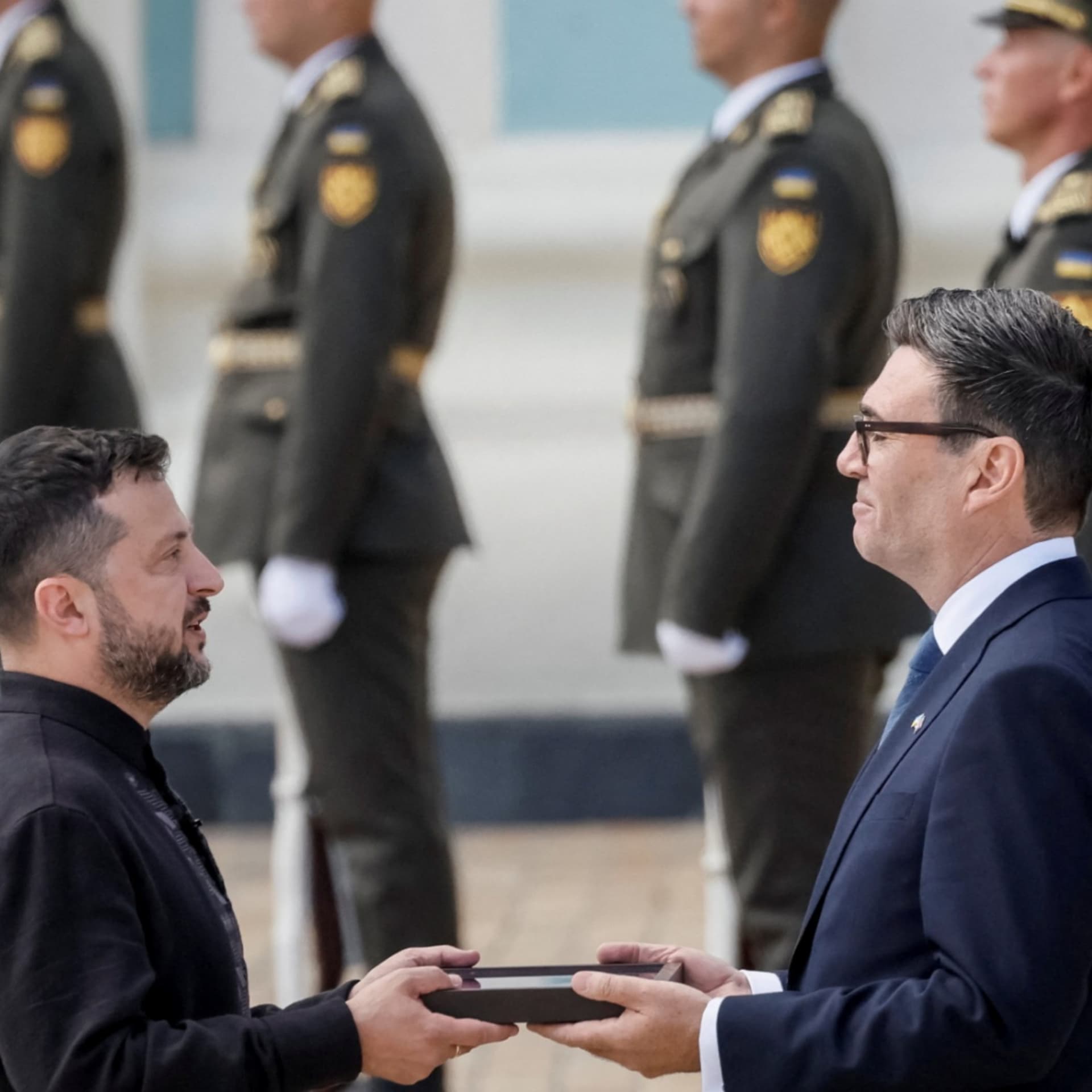
3:07There are political meetings today as well as the celebrations. Andy Burnham is going to receive an award on behalf of the British people for the support the UK has given Ukraine in the four and a half years of this war. So what impact would the promised new defensive and offensive weapons have on Kiev's military abilities? Volodymyr Havrilov is a former Ukrainian deputy minister of defence. Russia doesn't have the capability to intercept ballistics. So they have some systems, but they are not so effective like Patriot or like that. That's why it would be a kind of game changer when the first Ukrainian ballistic missile will reach some kind of targets close to Moscow with all this information coming inside the Russian society to understand that something different is going on.
3:56This war is all about reciprocity. So we didn't have any kind of capability to respond to Russian ballistic missiles or other attacks on our territory until 2026. In 2026, we succeeded sufficiently to scale up the production of our domestic designs of long-range drones and middle-range drones. And also we contributed a lot in the ballistic missile program in Ukraine and cruise missiles. And it gave us a capability to reach Russian targets on the territory of Russia, deep in Russia. And we immediately started to understand that that is a game changer because the Russians started to react differently inside the country about that.
4:41And we are very confident that the next step, ballistic capability, will contribute to the outcome of this war. Volodymyr Havrilov. Pakistani mediators are in Iran trying to restart the peace process between Tehran and Washington. It comes as the US is preparing to expand its economic sanctions, which could see nations that trade with Iran hit with financial penalties. The US Treasury Secretary Scott Besant says they will be the toughest in history. In anticipation, the country's currency, the rial, has hit a record low. The Iranian President Masoud Bezeshkian says the nation stands firm in the face of aggression.
5:21The perception from the US was that Iran would become Venezuela. Not only has this not happened, but Iran has become a power that's astonished the world with its display of resistance, solidarity and integrity. We are in an all-out military, economic and security war in the face of the most devastating set of sanctions. But we're standing firm to secure the future of our people. I asked Taraneh Fathalian from BBC Persian what appetite there is in Tehran for a diplomatic solution to the conflict. What we hear from different officials in Iran, we can kind of feel that there is no consensus and there is a division.
6:03Officials are divided between whether they should make a deal or carry the war. A few days ago, President Pezheshkyan said that we have to get out while we're on top. We have to end the war while we're on top. And then the Iranian Majlis speaker, Qalibov, said in Baghdad that if people are hungry, we can't continue, we can't last. And after there was massive backlash by Iranian hotliner officials saying that they are showing weakness, the Majlis released a long video of the remarks made by the Iran Majlis speaker, Qalibov, saying that it's important that we stand firm where we are and security is just as important as financial stability.
6:51So they're kind of showing a tough facade. But underneath that, they are aware that the economy is crippling. Well, the real, I think, is at a record low. What is life like there for people in Iran? Because I know you've been talking to them. It wasn't long ago that I saw a video online of this young woman who had bought chicken bones from a butcher's, basically the waste of chicken that wasn't being sold. She had bought that from the butchers and was boiling that so she could get some nutrients out of it because chicken has got so expensive. People are talking about eggs because meat and red meat has been off limits for a lot of Iranian families now.
7:34And so they were resorting to eggs for nutrients and protein. And even that is off limits. People are talking about devastating poverty. And these are people who were middle class not long ago. It's very tough. Like I see videos of shopkeepers saying that they've been keeping their shop open for days and they haven't seen one customer. So people are really, really feeling the effects of the war. Taranay Fathalia. The BBC World Service has gained rare access inside Afghanistan under the Taliban. Five years after the extreme Islamist movement returned to power, the BBC has spent time with senior figures there, former insurgents turned politicians, to see how they are governing a country in crisis.
8:21We've also spoken to Afghans themselves, living once again under the same hardline rule the group first imposed decades ago. The BBC's Qawun Kamush reports. In Shibirgan, northern Afghanistan, Taliban Governor Abdullah Sarhadi starts his day. Once a Guantanamo Bay detainee, Sarhadi now works for the country's supreme leader, enforcing strict sharia in his region. The BBC has been given rare access to his office to film some of his daily work, as he meets local people who come to him seeking resolutions to various problems.
9:04One case dominates the day, however.
9:10That of an 18-year-old woman who is seeking a divorce from her husband, accusing him of abuse and beatings. She is wearing a full veil and sunglasses. Her clasped hands and black gloves. To protect her identity, we have had someone else voice her words. I'm ready to be executed but not live with him. The governor tells her she should either continue the marriage or apply for a khula, a form of divorce initiated by the wife, which could mean having to repay her dowry to her husband. Under the Taliban, it is very difficult for a woman to get a divorce without the husband's consent. Despite this, she wants to proceed.
9:53Ask yourself, who would marry me after I get my divorce? You'll have to compromise a lot, or you'll lose your dignity and honor. Mr. Governor, my honor and dignity have already been ruined by him. Dismissing her to the next room, the governor discusses the matter with male officials, bodyguards and her husband. Women are mindless. They are deficient in intellect. They don't know a thing. What would you do with a divorced daughter? You can't kill her. You need to marry her with someone else. Would you marry such a girl with your son? The woman's father says they will continue to fight for the separation.
10:36The Taliban's policies today are similar to the hardline interpretation of Islamic religious law they imposed in the 1990s, and those who oppose them have gone into hiding. especially women who have been erased from public life. When they do fight back, they face harsh crackdowns.
11:01In the week the Taliban came to power, many women took to the streets to protest. Hoda had a successful career and an active life. But now we meet in secret. We have changed her name and voice to protect her safety. Why do you think the Taliban want to restrict women, I ask her? I think the Taliban are scared. They are scared of educated women. They know educated women won't give birth to ignorant beings such as the Taliban. They restrict women so they wouldn't be able to raise wise men, because that would be the end of the Taliban.
11:44Upon returning to power, the Taliban said they had changed. Five years on, it's a country run by men for men. In a lavish press center funded by the Americans for the previous government, we sit down with the public face of the Taliban, their spokesman known as Zabihullah Mujahid. You promised that you will respect human rights. you will allow women to participate in all aspects of life, work and study. Why did you fail to keep your promise? I mentioned Sharia as a condition. We are committed to women's rights, freedom of speech and other things within Sharia. We must scale everything up according to Sharia.
12:31As an insurgency, the Taliban proved they could survive. The question now is whether they can govern a country in crisis and for how long. Khamun Kamush. Still to come in this podcast. What blue and green Czech moquette was originally commissioned for the launch of the Victoria line, but because it wasn't ready in time, an existing design was used instead. Straub. Yes. The quiz show contestant who went viral for having the most niche specialism ever.
13:28The End joining us. And then we'll be learning about Francis Galton and the racist, discredited pseudoscience of eugenics with Desiree Birch. We'll meet many medieval saints in their bone boxes with Rachel Parrott. So if that sounds like your sort of thing, listen to You're Dead to Me wherever you get your podcasts. Thank you. Bye.
13:58Piracy was a major threat to international shipping off Somalia between 2008 and 2008. Now the Western Indian Ocean is seeing a spike in piracy incidents again after years of relative containment. Six ships are being held by hijackers and a drone strike on a vessel, which was believed to be part of a piracy supply chain, killed nine people on Sunday. Vice Admiral Ignacio Villanueva Serrano is from the EU's anti-piracy Operation Atalanta. One skiff full of nine people has been destroyed in close proximity of one of the vessels that is pirated. As you know, right now we have six of them and this skiff has been related to one of them.
14:43Our Africa correspondent Barbara Pletasha told me more. So the strike killed nine people on Somalia's northeastern coast and a Pantlan security official, this is a semi-autonomous region in Somalia, told us that the men had been preparing to board the skiff to go out to sea. He said they were all armed, so very likely they were pirates or at least part of a pirate network. And this is the second such attack in a week, although no one has claimed responsibility for them, but they seem to be linked to one of the vessels that was hijacked last week, the Lutuf. It is flying a Cameroon flag, but there are reports, unconfirmed reports, that it has links to Turkey.
15:20So possibly these boats were hit because they were aimed at supplying that ship. The Puntland security official said he believed it was a Turkish drone. Again, we have no confirmation of that. So the Lutuf is one of, I think now, five ships that are being held by the pirates and they have been hijacked over the course of several months. And we know for some of them, the pirates are asking for quite steep ransoms. What's behind this surge in piracy, do you think, in this part of the world? Well, there are a number of things. One of them is the general security environment. So you have a maritime blockade on the Strait of Hormuz, you have conflict and the threat of conflict in the Red Sea.
16:00And so that, I think, has pushed more and more international vessels closer to the Somali coast in terms of the routes that they are taking. Plus, it's believed that they have distracted some of the international forces who would normally be policing the pirates and piracy to be dealing with these other issues. So that has created an environment of opportunity, shall we say. Analysts are suspicious about a number of ships that have been hijacked near Yemen's coast. They think this might show some collaboration between the Somali pirates and the Houthi rebels in Yemen, that they are perhaps collaborating to take advantage of the environment to make maximum profit.
16:39Again, that hasn't been confirmed. But there is also a local element to this. You have foreign trawlers fishing in the shores off of Somalia, and that has really been a blow to the fishing industry and to incomes of fishermen. So it means that they're more ready to take up piracy for income. Barbara Pletasha. The online fast fashion retailer Shein will make its long-awaited market debut on the Hong Kong Stock Exchange at the beginning of September. Some analysts say it could be one of the biggest listings of company shares anywhere in the world this year. The company, known for selling dresses for about$10 and jeans for about$15, was founded in China, but it now has its headquarters in Singapore.
17:23Our reporter, Ajuma Ndukwe, has been following the story. So we know that Shein, which is a Chinese fast fashion brand, is releasing 280 million shares, which are going to be valued at around$6 per share. What's particularly interesting about this listing is that the company is valued at around$27 billion, US dollars, which is absolutely huge. I mean, it makes it, you know, much more valuable than Zara, which is a household name, which is a Spanish company. However, back in 2022, it was valued at nearly 100 billion US dollars. So that's a significant fall in value. And that's come about for a number of reasons.
18:12Tell us why. I mean, what's gone wrong for the brand? Well, we saw that when Shein, when they released their company results, we saw that sales had slowed down. And part of that is because the US removed an import duty exemption on small packages, which made it much more expensive to order goods from the brand. And it removed the fashion brand's competitive advantage. As a result of this, Shane has said that it has to review its prices across the US market to try and offset those costs. Another problem with their operating costs is that due to the war in Iran, like many companies around the world, it has pushed up the cost of doing business.
19:02And that's had an impact on their operating costs. Also, there's Temu, which you may have heard of. It's another Chinese company which offers fast fashion. They've become a major competitor for Shane and they've taken some of Shane's market share. And of course, all of this comes at a time of huge uncertainty because we've been seeing a tit-for-tat tariff war play out between the US and China, which is currently paused. But as we all know, that can restart at any time. Ajuma Ndukwe. One of the world's most agile birds, the Montague's Harrier, is becoming a less common sight in northern Europe in the summer when it arrives to breed.
19:48It's a long-distant migrant which then travels to Africa for the winter. The bird of prey's nests are on the ground, most often in agricultural farmland. Now, earlier harvests brought forward by climate change mean the nests and the chicks are often at risk of being destroyed by farm machinery. In the UK, Montague's harriers are extremely rare, but the largest conservation charity here in Britain, the Royal Society for the Protection of Birds, has found two nests with chicks and has given exclusive access to the BBC's climate editor, Justin Rolat. Easy, easy, easy. Here she is. God, they're beautiful birds, aren't they?
20:28Absolutely the best, yeah. RSPB experts are fitting a female Montague's harrier with a tiny satellite tag that sits on her back like a rucksack. She is still a chick with wisps of fluffy baby down amongst her dappled brown feathers. But you can see the sleek aerial athlete she'll become. Fully grown, she'll weigh barely a third of a kilo, yet her wings will stretch more than a metre. The RSPB's experts want to understand more about the astonishing journey these birds, so desperately rare in the UK, make. So we've come to a top-secret location all I can say is that we're somewhere in England I've been told not even to mention the county because this bird is is so rare that if bird spotters knew where it was they would come here not just in their hundreds but in their in their thousands and and these birds these Montague Harriers already have it really tough as recently as a few years ago for about a five-year period None were breeding in the UK.
21:44Down from in the 90s, there were as many as 12, 15 breeding pairs. The bird's feeding behaviour is extraordinary. The male is supporting two females and six chicks across two nests and he can make up to ten food deliveries a day. He swoops in carrying prey in his claws, drops it mid-air and the female twists beneath him to snatch it as it falls. This isn't the first time the RSPB has encountered the male bird, says Mark Thomas, who is head of investigations at the charity. The male here is an incredibly special bird. So this was ringed as a chick in Wiltshire in 2016. I was present when that bird was ringed.
22:27And he's come back this year. He spent 10 days displaying like crazy in the sky at several thousand feet and amazingly attracted two female Montague's Harriers. Montague's harriers nest on the ground, hidden among the crops, and climate change is bringing harvests forward. The harvest here, for example, this year was like a month earlier than in previous years, so it almost puts any Montague's harrier nest at the perils of inadvertently being destroyed by farm machinery. If the nests aren't found, the chicks would be killed by the combines, but surviving the harvest is just the first hurdle which is where that satellite tag comes in.
23:09Two of the chicks are getting them because soon they will be leaving Britain. We know adult birds migrate thousands of miles to West Africa but much less is known about the young birds, says Thomas. It allows for the first time ever to work out where they're going, what migration route and how long they'll spend there and will they come back to the UK in the first year or the second year And all of that information is the bit that's missing from the jigsaw. Within weeks, these juvenile birds will be heading south. And now, for the first time, the RSPB will be able to follow two of them into the unknown.
23:49Justin Roulat. The British quiz show Mastermind has a simple format that's been replicated around the world. The contestant chooses a specialist subject for one round, which can be anything, and under a stark spotlight is peppered with quickfire questions. One contestant has gone viral for her topic of choice, transport for London, moquettes. What's a moquette, I hear you ask? Well, it's the thick, durable fabric seen on public transport seats all over the world. Here's student Emily Medhurst, TFL fabric enthusiast, in the famous mastermind Black Chair. What blue and green Czech moquette was originally commissioned for the launch of the Victoria line, but because it wasn't ready in time, an existing design was used instead.
24:33Straub. Yes, the 1940s moquette known as Roundel or Bullseye was originally attributed to Eddie Chapman, but was later discovered to be the work of which other designer? Joy Jarvis. It was Joy Jarvis. Emily and one of TFL's fabric experts spoke to Henry Zeffman. I've always been interested in textiles and design. And growing up in London, I've loved TFL. And I went to an open day at the Acton Depot a few years ago, and they had a stand about maquette. And I was like, wow, this is the perfect marriage of my two interests. I think it was a bit of a slow blossoming interest. And I think it's like once you realise it's there, you realise how much unique design there is across the network, in the seats and in the posters and everything.
25:17And what those who haven't watched your episode of Mastermind won't know is that you were wearing a vest inspired by the London Overground maquette while you were in the chair being grilled by Clive Myrie. That's right, isn't it? Yes, yeah. Yeah, that was my number one priority when I got told I was going to be on the show was to knit something to wear. Oh, you made it yourself? Yes, yeah, yeah. So, yeah, I took precedent over the revision a little bit. But, yeah, I made it myself. OK, well, you may well then be giving our next guest on a cluff from Kamira a run for her money because Camira actually make these maquettes.
25:52Anna Clough, what goes into the process of designing and manufacturing these maquettes? So a lot of time and effort obviously goes into the design work and you've got to think about hiding those sins, things like dirt and things like that. But also with TfL, they always pay homage to something, so the surroundings, so it might be the buildings. The Elizabeth line, for example, that shows the Royal Purple to celebrate the Queen. And just very finally, very briefly, we don't have foreboding music to tell you when you're running out of time on this programme. Emily, why should jaded Londoners who aren't into this stuff already be excited by maquettes?
26:30Very, very briefly. It's public design. I think we all deserve to be around stuff that's beautiful and connects us with the city around us. A lovely thought there from Emily Medhurst and we also heard from fabric maker Honor Clough. And before we go, we wanted to say hello to Raymond in Japan. He's a retired teacher and he told us he listens every day and that he really enjoys some of the lighter stories like goat yoga so much that he records them and shares them with his friends. Are you listening in Japan or do you also share your favourite stories? If so, we would love to hear from you. And that's it from us for now.
27:09If you want to get in touch, you can email us at globalpodcast at bbc.co.uk. You can also now watch our episodes in full. Just search for The Global News Podcast on YouTube. This edition was mixed by Kai Perry. The producer was Charles Sanctuary. The editor is Karen Martin. I'm Valerie Sanderson. Until next time, bye-bye.
From the publisher
Britain's Prime Minister, Andy Burnham, on a visit to Kyiv, has promised to continue support for Ukraine despite what he called "outrageous threats" from Russia. He was speaking at an event marking Ukraine's independence day. Mr Burnham said that the UK and its allies would help Ukraine develop new technologies and support efforts to destroy Russian missiles before they are launched. He confirmed that the UK will provide blueprints so Ukraine can manufacture more long-range cruise missiles. Also: Pakistan's representative is visiting Iran to push for the reopening of talks between Washington and Teheran. A special BBC report from inside Afghanistan under the Taliban hearing from politicians and the impact their hardline rules are having on women. A spike in pirate attacks in the Western Indian Ocean and we hear from Kenya where four people have been arrested following the death of at least eighteen elephants that died after suspected poisoning.
The Global News Podcast brings you the breaking news you need to hear, as it happens. Listen for the latest headlines and current affairs from around the world. Politics, economics, climate, business, technology, health – we cover it all with expert analysis and insight.
Get the news that matters, delivered twice a day on weekdays and daily at weekends, plus special bonus episodes reacting to urgent breaking stories. Follow or subscribe now and never miss a moment.
Get in touch: globalpodcast@bbc.co.uk
Photo: Britain's Prime Minister Andy Burnham receives the "Honorary Distinction to the British People", "Gratitude of the Ukrainian People" award from Ukraine's President Volodymyr Zelenskiy during a celebration ceremony of the Independence Day of Ukraine, amid Russia's attack on Ukraine, in central Kyiv, Ukraine August 24, 2026.
Credit: REUTERS/Gleb Garanich