In short
This BBC Global News Podcast covers multiple stories. Main focus: UK politics—Prime Minister Keir Starmer resigns after losing trust of the governing Labour Party, citing he has “lost the trust” and will ask Labour’s National Executive Committee for a leadership timetable (nominations open 9 July, completed by summer recess). He remains PM until the contest ends.
Key claims
Labour MPs feared Starmer threatened the party; lack of parliamentary numbers makes governing impossible; resignation follows scandals/blunders including appointing Peter Mandelson as US ambassador. Likely successor: Andy Burnham (former Manchester mayor, re-elected MP), backed by Wes Streeting (former health minister). Opposition reactions: Conservatives (Kemi Baden-Ock) demand continuity on national security and funding; Liberal Democrats (Ed Davey) call for changing the political system; Nigel Farage calls for a general election. Other segments: Europe heatwave (Hugh Schofield; record >40C, school closures, 2003 comparison), Ebola in DRC (Emery Makumeno; >1,000 cases, 250 deaths, 31 infected health zones, improved early treatment), Alan Greenspan obituary (Andrew Walker; credited for 1990s growth, blamed for 2008 crisis; “Greenspeak”), EU-UK Brexit talks (Katja Adler; Michel Barnier says single market can’t be “unravelled”), and Maradona “Hand of God” (Lourdes Heredia; 1986 match memories).
Written by AI. May contain mistakes. Listen to the episode to check what was said.
Chapters
Tap a time to open that second in VOKeir Starmer's Resignation Announcement
1:45 to 4:19
Discussion on Keir Starmer's resignation and its implications.
“The British Prime Minister Keir Starmer resigns just two years after his landslide election victory.”
Public and Political Reactions to Resignation
4:19 to 8:20
Exploration of public and political reactions to Starmer's departure.
“Well, the favourite to succeed him, Andy Burnham, the former mayor of Manchester, who's just been re-elected as a member of Parliament, confirmed that he would be running for the top job.”
Impact of Current Heat Wave in Europe
8:20 to 14:01
Analysis of extreme heat wave conditions across Europe and their effects.
“Well, we heard the views of some voters.”
Tragic Incident in France
14:01 to 14:28
Learn about a tragic event involving two children found dead linked to extreme heat.
“And since we spoke to Hugh, reports have come in of two children aged two and four being found dead in their family car in the south of France.”
Reflecting on Alan Greenspan's Career
14:28 to 15:04
A look back at the life and impact of Alan Greenspan on the US economy.
“I made a mistake in presuming that the self-interest of organizations, specifically banks and others, was such as that they were best capable of protecting their own shareholders.”
Introduction to Global News Podcast
16:05 to 16:42
An introduction to the Global News Podcast and today's topics.
“Every story is a technology story in one way or another.”
Ebola Outbreak Update in DRC
16:42 to 18:22
Current situation on the Ebola outbreak in the Democratic Republic of Congo.
“Now to a grim milestone in the Democratic Republic of Congo.”
Survival Rates and Treatment Insights
18:22 to 19:58
Positive developments in treatment and survival rates of the current Ebola outbreak.
“And what health authorities have been telling us here is that when people report early to the treatment centers, there is a high chance of being cured by this Ebola.”
Legacy of Alan Greenspan
19:58 to 24:12
An overview of Alan Greenspan's contributions and controversies as Federal Reserve Chair.
“One of the United States' most influential economists, Alan Greenspan, who served as the head of the US Federal Reserve under four presidents, has died at the age of 100.”
EU's Challenges and Brexit Reflections
24:12 to 28:01
Discussion on the EU's current challenges and reflections on Brexit after a decade.
“Well, a lot has changed in the decade since, with Russia's full-scale invasion of Ukraine and President Trump's threats to seize Greenland, leaving Europe feeling the most vulnerable it's been since the Second World War.”
Show all 13 chapters
UK and EU Relations Amid Security Threats
28:01 to 28:40
Learn about the evolving relationship between the UK and EU in the context of security.
“Pour Senat, s 'il vous plaît, we're going to the Senate.”
The Infamous Hand of God Incident
28:41 to 29:51
Discover the details and significance of Diego Maradona's Hand of God goal.
“Now to a notorious episode in football history.”
Lourdes Heredia's Personal Experience at the 1986 World Cup
29:52 to 32:46
Listen to Lourdes Heredia's memories of attending the iconic match and the atmosphere at the stadium.
“Well, Maradona went on to score a beautiful second goal in the match.”
Transcript
Automatic transcript. May contain errors.0:00This BBC podcast is supported by ads outside the UK. Running a business shouldn't feel like surviving a software group project. One app for accounting, another for inventory, another for sales, and somehow none of them talk to each other. That's where Odoo comes in, an all-in-one business management software that brings every part of your business together. From sales and accounting to inventory and marketing, all in one powerful platform. No messy integrations, no bouncing between tabs. And best of all, no spreadsheets. Stop managing software and start managing your business with one unified system.
0:39Try for free today at odoo.com slash iHeartRadio. That's odoo.com slash iHeartRadio. It's called soccer. It's called football. Uh, soccer. Football. Domino's Best Deal Ever lets you get any pizza, including stuffed crust, with any toppings for$9.99. We can agree on that. Yeah, fully. So, pineapple? Don't ruin it. Get any pizza, including stuffed crust, with any toppings for$9.99. Finally something everyone can get behind. And if the refs disagree, that's between them and Domino's. Which means the only thing left to fight over is who's ordering. Domino's. Price is higher for some locations. Excludes XL and specialty pizzas.
1:25Select this offer from 6.15 to 7.26. Online only. Size availability varies by crust type. Max 7 toppings. 6 for pan and New York style crust. Minimum purchase required for delivery. Prices participation delivery area and charges may vary. This is the Global News Podcast from the BBC World Service. I'm Janet Jalil and at 15 Hours GMT on Monday the 22nd of June, these are our main stories. The British Prime Minister Keir Starmer resigns just two years after his landslide election victory. Europe suffers another record heat wave with temperatures forecast to go well over 40 degrees Celsius. The number of Ebola cases in the Democratic Republic of Congo passes 1 ,000.
2:13Also in this podcast? Because it is very difficult for not to be seen by two people. the referee and the linesman. So that's why I said it was the hand of God. 40 years since football legend Diego Maradona's controversial World Cup goal, we speak to someone who was at that match.
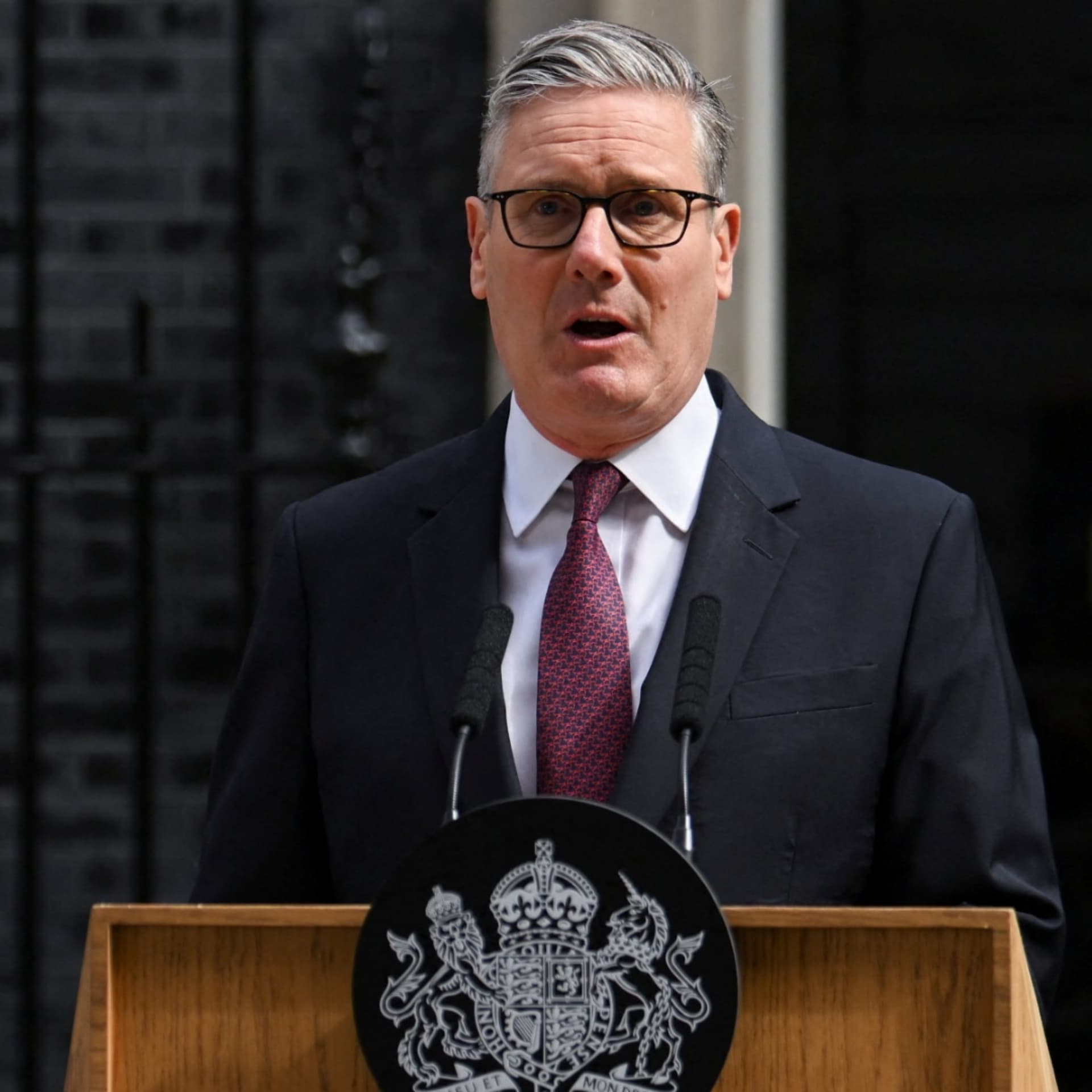
2:37For the fourth time in four years, a British Prime Minister has announced their resignation while standing at a lectern in front of No. 10 Downing Street. Nearly two years after his landslide election victory, Keir Starmer, having repeatedly said he would not stand down, announced that he would be going after all, following a series of scandals and blunders that have seen his popularity plummet. He said he accepted that he had lost the trust of the governing Labour Party. Every decision I've taken has been about putting the country I love first. That is why I will resign as leader of the Labour Party.
3:17I have spoken to His Majesty the King this morning to inform him of my decision. I will ask the National Executive Committee of the Labour Party to set out a timetable with nominations opening on the 9th of July and completed by the summer recess. In the case of a contest, this will ensure a new leader is in place before Parliament returns in September. I will remain in post as Prime Minister until the contest is complete. And when I leave the biggest job in the country, I shall spend more time on the most important job. Being the best husband I can to my fantastic wife, Fig, who has been a rock by my side through good times and bad.
4:04And being the best dad I can to my beautiful children, who are my pride and my joy. Thank you very much.
4:15Keir Starmer, the British Prime Minister, announcing his resignation. Well, the favourite to succeed him, Andy Burnham, the former mayor of Manchester, who's just been re-elected as a member of Parliament, confirmed that he would be running for the top job. And he's been given a boost by another major contender, the former health minister, Wes Streeting, who said he would be backing Mr Burnham to become prime minister. This means that Britain could have its seventh prime minister in a decade as soon as next month. I asked our political correspondent, Rob Watson, why Mr Starmer felt compelled to go now.
4:51Well, he felt compelled to go and he certainly didn't want to go. That's for sure. He thought that he was doing a good job, that actually what comes next won't necessarily be any better. But essentially, he had lost the support of the governing Labour Party. and if you don't have the numbers in Parliament, you can't really carry on governing. And essentially, he lost that support because he'd become so fantastically unpopular with the voters. And therefore, Labour MPs thought that he was a threat to the very existence of their party. Yes, we think like the unforced error of appointing Peter Mandelson as British ambassador to the US.
5:26There has been a mixed reaction, however, to Mr Starmer going, with some supporters feeling he should have been given more time to fulfil his mandate. Let's get a flavour of the public reaction. I think it's just shameful that he was hounded out, really. And I think that the British public is too swayed by the fact that he wasn't a born leader. I'm just so upset. I've been crying in bed because I'm just so upset about it all. Yeah, brilliant news. Fabulous. My family, friends, everyone's been speaking to people in the village. We're all really happy that he's gone. We will look back on this in years to come as a real mistake.
6:01we need a general election. This currently needs a general election. And picking up on that last point, Rob, that is a problem for Mr. Starmer's successor. They won't have the authority of having been elected the way that Mr. Starmer was. True. I'll get to that in a second, Jeanette, but it's fascinating hearing those voices. They just tell you how much of emotion, anger and turmoil there is out there amongst the voters. But to get to your question, it's true that constitutionally there doesn't need to be an election. That's not the way our system works. The next election isn't due until 2029.
6:33But of course, it complicates things that Andy Burnham, we presume it'll be Andy Burnham becoming prime minister, hasn't himself won a general election. So if you like, instead of hitting the ground running, he's going to be hitting the ground with an uphill battle, as you kind of heard at the end with one of those voices there. And it's looking increasingly likely that it will be Mr. Burnham because one of his main rivals where Streeting, another former minister, has now backed him. Yeah, so it does look like we're heading more towards a coronation. That would certainly be Mr Burnham's preference.
7:05And there are those in his camp who argue, look, it's bad enough, Jeanette, having to inflict a seventh prime minister on the British people in 10 years. Surely we don't want them to give them a sort of angry internal debate within the Labour Party, as well as a seventh prime minister. So that is the argument for a coronation. I mean, And of course, the argument against that is, well, if you're going to have seven prime ministers, maybe you should test him out or her out before inflicting them on the British public. But that's the way it looks like it's heading. Especially because a lot of people say there isn't that much difference between Mr.
7:36Burnham and Mr. Starmer. And he will have the same huge challenges that the outgoing prime minister faced. Yes, I mean, absolutely. To deal with that, you have to ask yourself, if Britain has had seven prime ministers in 10 years, maybe it faces some pretty huge problems and we know what they are it's stagnating economy concern that nothing works properly in britain anymore public services stretched and this sort of deep concern about social cohesion and immigration and absolutely i mean there's bound to be vast amounts of skepticism that maybe it's true that andy burnham is a sort of more likable relatable character than keir starmer much better communicator much better messenger but those challenges haven't worked and they've done for six people already Rob Watson.
8:21Well, we heard the views of some voters. Let's also get the reaction from opposition parties to the British Prime Minister's announcement that he's standing down. The leader of the main opposition Conservative Party, Kemi Baden-Ock, questioned why Mr Starmer wasn't being immediately replaced. We need to ask why he set out this timetable. What are we waiting for? There are critical decisions that need to be made, and the Prime Minister is setting out his farewell tool while Andy Burnham wants a summer holiday. It's really, really important that we ensure that the country is being governed. Keir Starmer has had to resign because his defence secretary said he was not looking after national security.
8:59Whatever happens now, we need to make sure that national security is the number one agenda. And that means that Andy Burnham needs to explain where the money to fund our defence is coming from. And he needs to cut welfare to pay for defence. After a succession of conservative and now Labour prime ministers, leader of the next biggest opposition party, Ed Davey of the Liberal Democrats, also expressed his concerns. I think people are pretty fed up with the merry-go-round of prime ministers. Nothing seems to change. So just changing the person at the top won't deliver the change that people need.
9:31We need to change our broken political system. And if we do that, yes, we can rebuild our relationship with Europe and grow our economy and deal with the cost of living. Yes, we can reform social care so we can get our NHS better. And we can have electoral reform and put power back to communities. So let's reserve our judgment on Mr Burnham. Whereas the leader of the right-wing populist party, Nigel Farage, called for a general election rather than the governing Labour Party simply replacing one leader with another. And we have more on this on our YouTube channel. Search for BBC News on YouTube and you'll find Global News Podcast in the podcast section.
10:09There's a news story available every weekday. Much of Western Europe is sweltering under yet another fierce heat wave with record-breaking temperatures forecast. Sports events in Spain and Germany have been cancelled or postponed. Temperatures are also soaring in Portugal, Italy and the UK with weather warnings issued. Hena Hundle is a five-time delegate to the UN climate change conferences. Extreme heat is a global problem, but it's also uniquely a European problem. According to the European Environment Agency, Europe is actually the fastest warming continent on the planet. The World Meteorological Organization has told us that over the past 30 years, Europe has seen temperatures rise at a rate more than twice the global average.
10:53And we know that last year in 2025, more than 95 % of Europe was hit by above average annual temperatures. In France, alcohol has been banned at festivals with temperatures expected to go above 40 degrees Celsius in many places, including Paris, where our correspondent Huescofield is. This is not going to get any better before the middle end of the week. And in the meantime, it's 40, 41, 42. Paris could easily hit 40 tomorrow or Wednesday in parts of central France, Poitiers, Limoges, west central France. It's already above 40 degrees. It's intolerable. It's insufferable. It's extremely difficult to live through.
11:38But it is becoming something people have to get used to. It's a second heat wave in a month, and we're only just arriving in summer. And France, like the UK, is not really set up for this kind of weather. We don't have air conditioning units, say, for instance, in the same way that southern European countries do. So how are people coping? Indeed, and it is beginning to enter the debate, this whole issue of the sort of lack of preparation, as the government's critics would put it. Now, that's true. Air conditioning is not something which is uniformly there in schools or in hospitals. And there's a big debate now about whether that should be the case, whether it should be the mass roulette of air conditioning, knowing that there are certain people on the environmentalist movement who are opposed to air conditioning because of the damage it does to the environment.
12:26but you know that the real life consequences of this heat are becoming more and more apparent and the fact is that even myself I'm affected because my children can't go to school today that applies across the country schools being shut or parents being told listen please don't bring your children to school today because we were faced with temperatures which are just simply intolerable for them and that's what's happened to where I am now and it's happened right across the country. And back in 2003, there was a heat wave in which many hundreds of older people in particular died, because it was right in the middle of summer when their families had gone away, they were on their own.
13:04Is the big fear that this could happen again? And what has been done to prevent that? That was the famous 2003 heat wave in that yes, 15 ,000 people died. It was back then something for which the country was totally unprepared. We can see now that it was as a kind of precursor of all that's followed. Nowadays, because of the recurrence of similar episodes, maybe not quite as extended as that, but they have become repeated, people are more aware. And there is far more kind of mutual help. Places are made available, cool zones. Museums, for example, I'm reading today, have been open in Lyon so people can cool down there.
13:43There's far more air conditioning on public transport. I was traveling around at the end of last week when it was extremely hot, expecting to be suffering on public transport. In fact, his trains were among the coolest places there were to be. So there have been an awful lot of improvements and that massive death toll from back then has not been repeated. Hugh Schofield in Paris. And since we spoke to Hugh, reports have come in of two children aged two and four being found dead in their family car in the south of France. The authorities say while the precise cause of death has not been determined, They think it's probably linked to the heat wave.
14:20As we record this podcast, the full circumstances are not yet clear. Still to come in this podcast, we look back at the career of Alan Greenspan, the longtime US Federal Reserve Chief who presided over a period of prosperity, but was later criticized for failing to prevent the 2008 financial crisis. I made a mistake in presuming that the self-interest of organizations, specifically banks and others, was such as that they were best capable of protecting their own shareholders.
15:04Moto Casino, America's social casino. Welcome to Moto Casino, where the excitement never ends. With thousands of the hottest free-to-play social casino games, fastest payouts, and the best promotions in the industry. No tricks or gimmicks. Owned and operated in the USA. Moto Casino is a free-to-play social casino. No purchase necessary. 21 plus to play. Void or prohibited. Sign up today for a generous welcome bonus. Moto Casino. America's social casino. Download the Moto Casino app today. Hey, it's Ryan Seacrest for Jewel Osco. For you, save days are here. Now through June 23rd, find hot deals throughout the store and earn four times a point.
15:43Look for in-store tags to earn on eligible items from Kinder, Ghost Energy, Cottonelle, Ben & Jerry's, and Popsicle. Then clip the offer in the app for automatic event-long savings. Stack up those rewards to save even more. Enjoy savings on top of savings when you shop in-store or online for easy pickup or delivery. Restrictions apply. See the website for full terms and conditions. Every story is a technology story in one way or another. And on the interface, we decode the tech that's rewiring your week and your world. On this week's episode, we look at the UK's teen social media ban and ask, what happens next?
16:21Why are AI companies so interested in nuclear fusion energy? And will the new iPhone AI update mean that Siri will finally be good? Listen on BBC.com or wherever you get your podcasts.
16:42This is the Global News Podcast. Now to a grim milestone in the Democratic Republic of Congo. The number of Ebola cases in the DRC has risen to more than 1 ,000. Figures released by the authorities also say that of those, 250 people have died. The current outbreak was first declared by Congolese officials in mid-May, but it's feared that the virus may have been circulating undetected for weeks or even months before then. I got this update from our reporter in Kinshasa, Emery Makumeno. Since May 15th, when this budibungo strain of Ebola was declared, we've seen the number of infections increase, the number of deaths increase, including the number of health zones.
17:32These are the health districts here. They initially started with three. Now we have reached at least 31 health zones infected by this Ebola outbreak. These numbers are likely to increase when they would include the additional numbers on Sunday and today, unfortunately. So we are standing at 1 ,003. A laboratory tasted positive and then among them you have 254 dead already. But Emery, there is some positive news in the fact that the numbers of those surviving this Ebola outbreak, this strain of the virus, is higher than in previous outbreaks. That number has reached 100 people that have been discharged from the Ebola treatment centres.
18:22And what health authorities have been telling us here is that when people report early to the treatment centers, there is a high chance of being cured by this Ebola. What we've seen in the one month or so is that because of the skepticism and the people were not going to the Ebola treatment centers early, they were rather going to traditional medicine or traditional doctors for treating what they believe was poison or mysterious illness, if some even have gone to see pastors. But with the crisis communication that has been happening, they are reporting that more and more people are coming to treatment centres early for being taken care of.
19:12There was that case, wasn't there, of a six-year-old girl with Ebola who was taken from a hospital in the north of the country. Do we know what happened there? Well, the six-year-old was found in the Musienene Ebola Treatment Center because finally authorities, after search, they could locate her and their mother. We were told as of Wednesday that when they found her, after being adopted from an Ebola treatment center in about 25 kilometers in a different territory, They were found and the girl was believed to be in stable conditions and she was receiving treatment at the Musi Nene Ebola Treatment Centre.
19:57Emery Maccobeno. One of the United States' most influential economists, Alan Greenspan, who served as the head of the US Federal Reserve under four presidents, has died at the age of 100. Mr Greenspan led the US Central Bank for nearly two decades, serving under Presidents Reagan, Clinton and both George H.W. Bush and George W. Bush. He was widely credited with presiding over a period of growth and prosperity in the US. But the 2008 financial crisis prompted a reassessment of his legacy and he was accused of stripping away the safeguards that would have prevented it. Andrew Walker looks back at Mr Greenspan's career.
20:42The Henry Jerome Orchestra in the 1940s. Among the saxophone players was a young Alan Greenspan. But within a year of that recording, he was at New York University studying economics. That ultimately was the career he chose, and it led him to become chairman of the Federal Reserve, perhaps the most powerful economic official in the world. While he was in office, many thought he was doing a great job. A book about him had the one-word title, Maestro, Mr Greenspan ran the Fed throughout the longest period the US has had without a recession, the boom of the 1990s. At one stage, he wondered aloud whether the financial markets were getting ahead of themselves.
21:21How do we know when irrational exuberance has unduly escalated asset values, which then become subject to unexpected and prolonged contractions as they have in Japan over the past decade? and how do we factor that assessment into monetary policy? In practice, he didn't do much about it. After that comment in 1996, the US had the technology boom and bust and then, in the following decade, the housing and credit boom and the financial crisis that followed. Some blamed him, at least in part, for keeping interest rates too low and being too resistant to financial regulation. He was confronted with this criticism by a congressional committee investigating the crisis, chaired by Congressman Henry Waxman.
22:10Over and over again, ideology trumped governance. Our regulators became enablers rather than enforcers. Their trust in the wisdom of the markets was infinite. The mantra became, government regulation is wrong, the market is infallible. Mr Greenspan acknowledged that he had got some things wrong. I made a mistake in presuming that the self-interest of organisations, specifically banks and others, was such as that they were best capable of protecting their own shareholders. Those of us who have looked to the self-interest of lending institutions to protect shareholders' equity, myself especially, are in a state of shocked disbelief.
23:01That statement was reasonably comprehensible. but he also had a reputation for speaking in impenetrable language. There was even a name for it, Greenspeak. Often people wondered what on earth he'd really said. Usually it was the financial markets that had to decode his statements, but his wife Andrea Mitchell also seems to have struggled at times. He claims that he proposed to me three times before I understood what he was saying. I think that he's making that up, but it is true that he said he was certainly hinting at marriage long before we ended up deciding to actually get married. So perhaps it is that I didn't understand him.
23:38What is very easy to understand is just how events changed Alan Greenspan's reputation. For a time, he got much of the credit for what seemed to be one of the strongest periods of American economic history, the growth of the 1990s. And then he came to be blamed for one of the worst, the financial crisis. It was a remarkable career path for a man who could easily have chosen a less controversial life as a musician.
24:05And that was Andrew Walker looking back on the life of Alan Greenspan, who has died at the age of 100. Well, Mr Greenspan also acknowledged that the years of low economic growth in the West that followed the financial crisis led to the rise of economic populism, which saw Donald Trump win the US presidency and Britain voting to lead the EU, otherwise known as Brexit. Well, a lot has changed in the decade since, with Russia's full-scale invasion of Ukraine and President Trump's threats to seize Greenland, leaving Europe feeling the most vulnerable it's been since the Second World War. Now, nearly 10 years to the day since the Brexit vote, the EU's then chief negotiator, Michel Barnier, has been speaking to the BBC about the threats that the bloc faces today, saying it can't risk being too flexible with the UK in new talks aimed at getting rid of post-Brexit trade barriers.
24:59Here's our Europe editor Katja Adler.
25:06During the long, often tortuous years of Brexit negotiations, I often made this journey from Brussels to test the temperature in Paris. It was seen by so many in the UK as the Brexit bad cop. But times have really changed. Now the UK and France hand in hand have led Europe over helping Ukraine. But with the UK government now insisting it wants to get closer to the EU without paying too much or having to accept freedom of movement, is the EU any more flexible 10 years on? You seemed very strict with the UK at the time. You were famous for being very strict and saying Brexit is Brexit. Strict but never aggressive.
Read the full transcript
25:44Always respectful. Recognise that voice. Michel Barnier, chief EU negotiator, often depicted as a condescending French Eurocrat in the UK press during Brexit, is still very active in French politics and very keenly watching EU-UK relations 10 years on. We welcome any request to have closer relations, but the single market is our main asset. We are in a much more dangerous, fragile world. The UK must understand that it will not be possible to unravel or to fragilise the single market.
26:22The strains of this lovely French chanson you can hear, it's not some busker in the streets of Paris. I'm just by the Sacre Coeur walking past and there is my favourite carousel. And somehow it's making me think about Brexit.
26:38Deux adultes, s 'il vous plaît. So this is probably a good moment to be on radio, because if you could see me, I couldn't resist actually getting on the carousel. But the reason the carousel reminds me of Brexit is because as far as the Europeans are concerned, we in the UK just appear to go round and round looking at the benefits or the drawbacks of EU membership, thinking how close can we get economically on the outside without having to accept freedom of movement. How old are you, may I ask? What do you think about the European Union? I think it's a strength to be part of the European Union, even if it has its difficulties.
27:17Frédéric doing selling and marketing a little bit, street marketing. Do you want to leave the EU like the UK did? I think now we don't have any choice. We need to protect against other big countries, Russia, China, the US. So in a way, it's good to try to do things together. The massive turning point for the EU, according to opinion polls, was Russia's full-scale invasion of Ukraine. Voters seem to think, yep, the bloc isn't perfect, but there is safety in numbers. And so now we see even right-wing nationalist parties, like Marine Le Pen's RN, are no longer calling to leave the EU specifically.
28:00Bonjour. Pour Senat, s 'il vous plaît, we're going to the Senate. Right now, I'm in France's baroctastic Senate, the Upper House of Parliament. That perceived threat from the outside has also brought the UK back closer to its EU neighbours. Hélène Conway-Mouret is vice president of the Foreign Affairs Committee, and she says France working with the UK on nuclear deterrence is key now that the US is no longer so reliable. This is essential. We are working on preserving peace on the European continent. And the UK, being an island, is still attached to that continent. And that report was by Katja Adler.
28:43Now to a notorious episode in football history. It's the 40th anniversary of the famous, or should I say infamous, Hand of God incident, when the Argentine footballing legend Diego Maradona punched a ball into the net in the World Cup quarterfinal against England. The goal at Mexico 86 was allowed to stand because none of the match referees saw the star player using his hand to score. Former England striker Gary Lineker later asked Maradona whether he viewed it as cheating. I don't think it's cheating. I believe it's a craftiness. Maybe we have a lot more of it in South America than in Europe, but it's not cheating.
29:30Why did you say about the hand of God? Because God gives us a hand. Because he gave us a hand. Because it is very difficult for it not to be seen by two people. The referee and the linesman. So that's why I said it was the hand of God. That's not the view of England fans. Well, Maradona went on to score a beautiful second goal in the match. and in the crowd at Azteca Stadium that day was the BBC's very own Lourdes Heredia, then 17. She was able to go after a family friend managed to get some tickets for her and her mother. Our family was never a football fan or I had never been in a match in my life.
30:15And when they offer us these tickets, we was like, oh yeah, lucky because it's so expensive. I mean, much less expensive than now. But, you know, my mum said, let's go. You have to live this experience in the Azteca, which is, for Mexicans, an iconic stadium. You know, so many things happen in that stadium. So, yeah, we were up there. You know, I remember dressing like a party because I was not interested in football. I was thinking, oh, my God, I'm going to see all these handsome boys from all around the world. And I was up there. And when we arrived, it was a massive party. And I think Mexico does know how to, you know, host a World Cup.
30:56So that time was not different. In 1986, the party was magnificent. We got, we got seats. The first part of the match, I think I spent my time looking around, you know, doing the Ola, the wave, the Mexican wave. And it was when the Hanf God happened. I mean, of course, we didn't know it was going to be that iconic. We didn't know that the name was going to be given as a hand of God. But there was a lot of people debating, was it a goal? Was it not? And, you know, people said, oh, the referees didn't see it. We were so intense on the debate, if it was a goal or not, that we really missed the second.
31:38It was four minutes later when suddenly the stadium gets all silence. It was something I never left, you know, lived before. and it was a moment I understood why football was, you know, was so passionate for people. So when he scored the second goal, we could see him travelling from one side to the other and then it was a goal. Even the English fans were, you know, sharing for that. It was like a massive moment at that time. So, Lorde, it sounds like that game really left a lasting impression on you. Yes and no. I kind of understood why people love football. I have to say that it was not until my little girl started playing football that I went to another match.
32:20But, you know, but I mean, for me, the party, how Mexico behaved as a host, we were so proud of being Mexican, you know, despite all the problems. We were having such a good time and the atmosphere was magical. And of course, later on, when I lived in Argentina and they keep talking about the hand of God, I keep asking, why they don't talk about the second goal? The second goal was magnificent. Lord is Iredia with her memories of Maradona's infamous hand of God goal. And that's all from us for now. If you want to get in touch, you can email us at globalpodcast at bbc.co.uk. This edition of the Global News Podcast was mixed by Jack Graesmark.
33:09The producers were Carla Conte and Siobhan Leahy. The editor is Karen Martin. I'm Jonat Jalil. Until next time, goodbye.
33:39What happens next? Why are AI companies so interested in nuclear fusion energy? And will the new iPhone AI update mean that Siri will finally be good? Listen on BBC.com or wherever you get your podcasts.
From the publisher
After months of growing pressure off the back of crushing local election results, Britain's Prime Minister Keir Starmer has announced his resignation. By stepping down, he clears the way for the UK to get its seventh prime minister in a decade. The country's latest MP, the former Manchester mayor Andy Burnham, has said that he will stand in any contest for the top job.
Also: schools close across France as Europe suffers another record heatwave. Authorities in the Democratic Republic of Congo confirm more than 1,000 cases of Ebola. We look back at the career of Alan Greenspan, the longtime US Federal Reserve chief who presided over a period of prosperity but was later criticised for failing to prevent the 2008 financial crisis. And 40 years after Diego Maradona's controversial 'Hand of God' goal against England, we hear from someone who witnessed it firsthand in Mexico's Azteca Stadium.
The Global News Podcast brings you the breaking news you need to hear, as it happens. Listen for the latest headlines and current affairs from around the world. Politics, economics, climate, business, technology, health – we cover it all with expert analysis and insight. Get the news that matters, delivered twice a day on weekdays and daily at weekends, plus special bonus episodes reacting to urgent breaking stories. Follow or subscribe now and never miss a moment. Get in touch: globalpodcast@bbc.co.uk
Photo: British Prime Minister Keir Starmer speaks as he announces the timeline for his resignation, outside 10 Downing Street, in London, Britain, June 22, 2026. Credit: Photo by REUTERS/Jaimi Joy