
In short
The episode (BBC Global News Podcast) covers: Andy Burnham becoming the UK’s 7th prime minister in 10 years, replacing Keir Starmer. Burnham, former Greater Manchester mayor and Labour leader, promises “the biggest changes in 40 years,” a “circuit breaker” for politics, more state control of essentials (energy, water), re-industrialisation via public procurement, devolution of power from London, more mental health support and council homes, and ending rough sleeping. Key claims and debate: correspondent Rob Watson says Burnham’s themes show continuity with recent Labour leaders (renewal, state intervention, devolution) but critics question how he’ll fund giveaways under existing fiscal rules; markets and debt levels raise doubts. Diplomatic correspondent Paul Adams argues foreign policy continuity is likely because Burnham will keep national security adviser Jonathan Powell; Ukrainians want to meet him and note his Unbroken Cities Network role. The episode also reports: US-Iran strikes near the Strait of Hormuz with no de-escalation; Indian “cockroaches” protests over leaked medical entrance exam papers and demands for the education minister’s resignation; and a segment on David Beckham’s US celebrity/advertising power after Spain’s World Cup win.
Guests
none named as interview guests; experts are BBC correspondents Rob Watson, Paul Adams, Simon Jack, Rob Watson, Rob Watson, GR Gol, Siddhanath Ganu, and Shaima Khalil (plus quoted officials like L.A. Galaxy president Tom Braun and marketing CEO Stacey Jones).
Written by AI. May contain mistakes. Listen to the episode to check what was said.
Chapters
Tap a time to open that second in VONew Prime Minister Announcement
1:28 to 1:44
Announcement of Britain's new Prime Minister, Andy Burnham.
“I'm Alex Ritson and a 15 Hours GMT on Monday 20th July.”
Keir Starmer's Farewell
1:44 to 2:52
Coverage of Keir Starmer's farewell and reflections on his tenure.
“as Keir Starmer steps aside and says goodbye.”
Andy Burnham's Inaugural Speech
2:52 to 5:00
Details of Andy Burnham's inaugural speech and key themes.
“The former mayor of Greater Manchester, Andy Burnham, replaces Keir Starmer as head of the Labour Party and will now lead the UK.”
Public Policy Changes Ahead
5:00 to 7:30
Discussion on proposed changes in public policy and welfare.
“I have just come from Buckingham Palace, where I have accepted His Majesty the King's invitation to form a government.”
Continuity and Change Under Burnham
7:30 to 9:00
Examining the themes of continuity and change in Burnham's approach.
“and issue my first instruction to end rough sleeping in our country.”
International Relations and Challenges
9:00 to 14:00
Exploring Burnham's stance on international relations and challenges ahead.
“where the speeches of his six predecessors, in other words, talk about the need for renewal, for change, for re-establishing the trust of the voters and acknowledging the unhappiness of the voters in Britain.”
Challenges and Promises of Andy Burnham's Premiership
14:00 to 16:48
Exploration of Andy Burnham's plans for the UK amidst economic challenges.
“So there's some kind of, if you like, emotional attachment there already.”
The Political Landscape of the UK
16:48 to 19:25
Discussion on the instability in British politics and Burnham's promises.
“But all of this stuff will be set out in what is a 10-year plan he's going to unveil.”
The State of Middle Eastern Diplomacy
19:25 to 20:31
Analysis of deteriorating diplomatic relations in the Middle East.
“And then another issue that he didn't address at all, but which upsets many voters, and that is the question of social cohesion and immigration.”
Iran's Response to US Actions
20:31 to 23:13
Insight into Iran's military responses and internal dissent amidst conflict.
“Let's turn to the Middle East now, where attempts at peace seem to be going backwards.”
Show all 14 chapters
Protests and Political Movements in India
23:13 to 26:38
Coverage of protests in India against the education system and minister.
“just last week, and other protesters who was arrested in January was executed.”
David Beckham's Enduring Fame
26:38 to 28:00
Exploration of David Beckham's cultural impact and brand appeal.
“And we have more on this story on our YouTube channel.”
David Beckham's Impact on Soccer and Culture
28:00 to 30:06
Explore David Beckham's journey from footballer to cultural icon in America.
“And just hours earlier, Beckham had become the first professional footballer to receive a star on the Hollywood Walk of Fame.”
Beckham's Legacy in America
30:06 to 30:50
Discussing Beckham's role as an ambassador for soccer in the U.S.
“He's a social media star and an entrepreneur who owns a football team in Miami worth more than a billion dollars.”
Transcript
Automatic transcript. May contain errors.0:00This BBC podcast is supported by ads outside the UK.
0:30That's powerful, painless, and proven. Learn more at intuit.com slash erp. It's called soccer. It's called football. Uh, soccer. Football. Domino's best deal ever lets you get any pizza, including stuffed crust, with any toppings for$9.99. We can agree on that. Yeah, fully. So, pineapple? Don't ruin it. Get any pizza including stuffed crust with any toppings for$9.99. Finally something everyone can get behind. And if the refs disagree, that's between them and Domino's. Which means the only thing left to fight over is who's ordering. Domino's. Prices higher for some locations. Excludes XL and specialty pizzas.
1:14Select this offer from$6.15 to$7.26. Online only. Size availability varies by crust type. Max 7 toppings. 6 for pan and New York style crust. Minimum purchase required for delivery. Prices participation delivery area and charges may vary. This is the Global News Podcast from the BBC World Service. I'm Alex Ritson and a 15 Hours GMT on Monday 20th July. These are our main stories. Britain has another new Prime Minister as Keir Starmer steps aside and says goodbye. I took our party from a historic defeat in 2019, changed it so it was fit to face the country and won a landslide general election victory in 2024.
2:00This time it's Andy Burnham, a former regional mayor, as he makes his opening speech outside No. 10 Downing Street. I know people at home are fed up with politics. I hear you and I want to be honest with you. We have not been good enough and we need to be better. We will be. We'll ask what the changeover is likely to mean for UK foreign policy and in particular support for Ukraine. Also in this podcast, a ninth straight night of military attacks by both the US and Iran. And thousands of young Indians who call themselves the cockroaches swarm the streets to demand change in education.
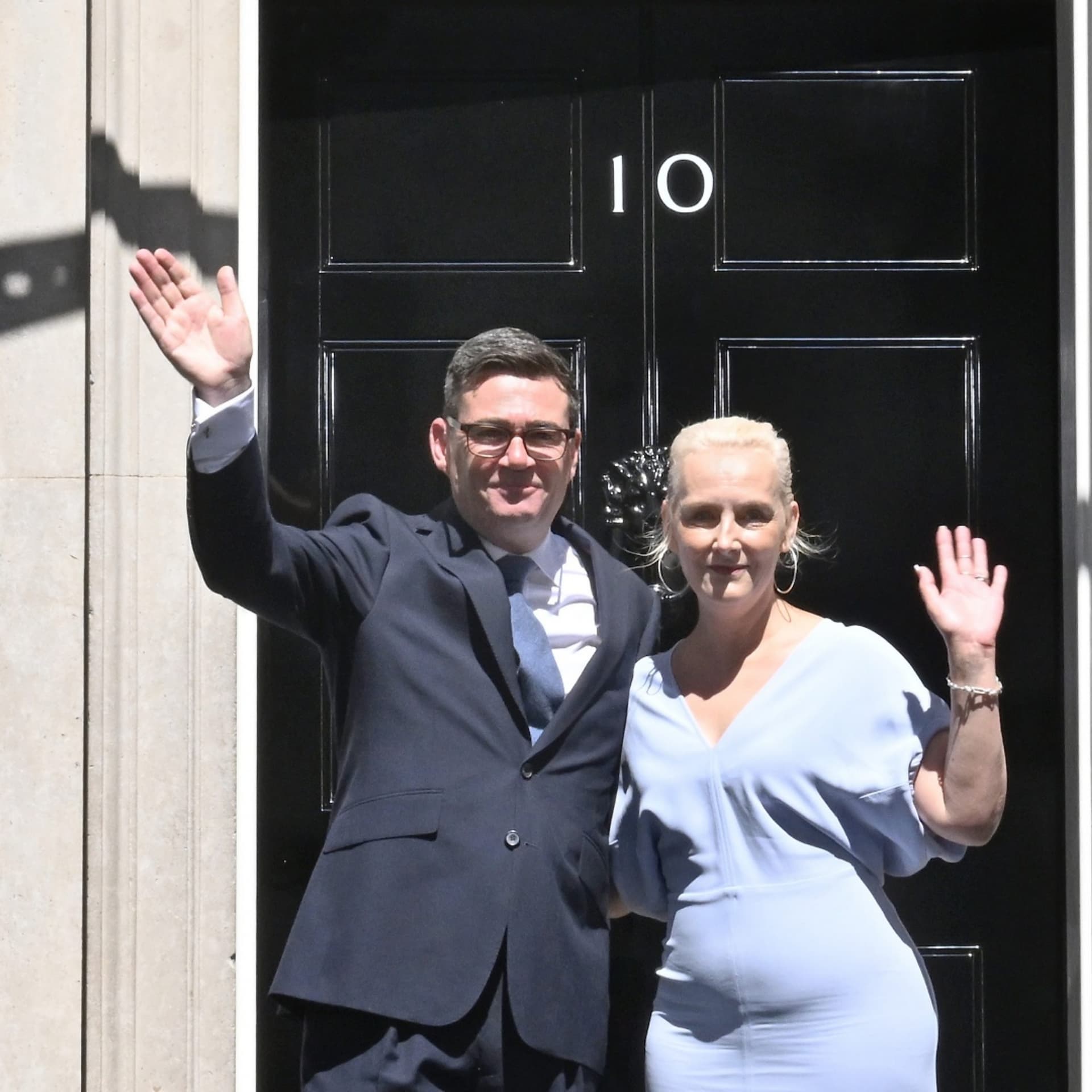
2:48Britain has a new Prime Minister. It's seventh in ten years. The former mayor of Greater Manchester, Andy Burnham, replaces Keir Starmer as head of the Labour Party and will now lead the UK. Keir Starmer was Prime Minister for two years, originally elected with an overwhelming landslide. But he faced increasing disapproval from politicians in his own party and record low approval ratings with British people. He faced reporters outside 10 Downing Street for one last time, outside that famous black door with number 10 on the front, the official residence of the British Prime Minister, and said his final goodbyes.
3:26In six and a half years, I took our party from a historic defeat in 2019, changed it so it was fit to face the country and won a landslide general election victory in 2024. Since then it has been the privilege of my life to serve you and this great country as Prime Minister And I am confident that Britain is now stronger and fairer than it was two years ago So as I now pass the baton to Andy Burnham I wish him every success He has my full support And finally I want to thank once again my family Vic and our children, my team, all the staff here and across the Labour Party, everyone at number 10 and across the civil service and everyone who has supported our efforts along the way.
4:23I thank them again today and I thank the British people for the opportunity to serve. Keir Starmer and his wife then went to a waiting car that took him to Buckingham Palace where he handed his resignation to King Charles. A matter of minutes later, a bouncy and smiling figure arrived to take his place. Andy Burnham waved to cheering Labour politicians as he walked up to 10 Downing Street in a crisp suit. He came from Buckingham Palace, where King Charles III had given him the task of forming a new government. Mr Burnham gave a short speech before passing through the black door. I have just come from Buckingham Palace, where I have accepted His Majesty the King's invitation to form a government.
5:10In doing so, I am acutely conscious that I am the sixth person in the last ten years to walk up this street, the seventh Prime Minister since 2016, making this a moment for reflection and new resolution. It requires my generation of politicians to raise our game and rise to the new challenge. Britain needs to show the world that we can regain our stability once again. I know people at home are fed up with politics. I hear you and I want to be honest with you. We have not been good enough and we need to be better. we will be. We will make this moment a circuit breaker for Britain, bringing forward the biggest changes in the last 40 years.
6:18A new political model and a new economic model. And we will take power out of here and carry it into every postcode in the land so that they can do more. And in doing more build a new economy where we put life's essentials back under stronger public control to make them affordable to you again. Re-industrialising Britain using public procurement to back British industry. We will help more young people into work by changing the education system and giving them more support, more mental health support. And we will build more council homes. That is the fair and sustainable way to bring the welfare bill down.
7:15We will help people to live well, building a more preventative state, investing in people's success rather than paying for failure. and that work starts now. I will soon go through that door behind me and issue my first instruction to end rough sleeping in our country. I will put the care of people at the heart of everything I do. I will give this my all and I ask you all to pull with me. Let's build a new national sense of unity, of common purpose and positivity. Let us make this the moment when Britain starts to believe again, the moment we bring back hope. Thank you very much, everybody.
8:15And as you probably heard there, someone with perhaps operatic training could be heard singing the anthem of the European Union, Beethoven's Ode to Joy as Andy Burnham gave his first speech. That was something of a recent tradition which has accompanied the appointment of a number of the most recent prime ministerial entrances and exits carried out by a protester with a loudspeaker on previous occasions. Police today did ban loudspeakers but the singing perhaps just with a very loud voice still happened. Witnessing that speech in Downing Street, our UK political correspondent Rob Watson, what did he make of what he heard?
8:57Well, I made a couple of things. I mean, the first thing I made of it was the extraordinary similarity in some way where the speeches of his six predecessors, in other words, talk about the need for renewal, for change, for re-establishing the trust of the voters and acknowledging the unhappiness of the voters in Britain. And so there's an awful lot of continuity. I mean, when a prime minister comes into Downing Street and makes that first speech, it is always the moment of maximum hope and optimism. The second thing I made of it was that he repeated themes that we've already heard before, that we heard on Friday when he became leader of the Labour Party, two central themes.
9:36One, a classic theme of the left, and that is for more state intervention. I mean, exactly how that's going to work, we don't know, or how it would be costed. and then the second big idea that he's long had is for more devolution. In other words, Britain is a very centralised country that his idea is that you move power and money, resources out of London to the rest of the country in order to try and make people basically happier and to get the economy growing. If it is continuity though, that is at odds with the people who say it's not just a change of face that we need, the policies of the governing Labour Party are wrong.
10:12Well, this is, I think, what we're still going to be looking at to find out, because there are some contradictions in many ways in what Andy Burnham says, Alex, because he has said in one breath, look, this is going to be a moment of change, the biggest change in 40 years, which is quite a claim. But on the other hand, he said he's going to stick closely to the manifesto, that is the sort of list of promises that the Labour Party won the last election on two years ago. So how you would square, you know, those seemingly contradictory proposals is exactly what we political journalists will be looking at.
10:49But we get the sort of sense of direction. We can sort of feel where he's going, that he does want more public ownership of things like utilities, water. And we have this idea about devolution. I mean, exactly how it's all going to be paid for. How would it work out, given that, you know, the markets and businesses are already very worried about Britain. Britain has huge levels of debt, public spending is already, and taxation are already high levels. It's not as if he's replacing a government that was somehow of the right, that was, you know, small state, low tax. Absolutely far from it. Keir Starmer's government has already raised tax and spending a lot.
11:25So all sorts of unanswered questions as to how you would have this more interventionist state. Rob Watson. Keir Starmer liked to position himself as an international statesman. He went on many foreign trips and was criticised for going abroad too often. In the press, he got the name Never Hear Kir, but he was deeply committed to Ukraine, playing a key role to bring together the Coalition of the Willing, which wants to build an enduring peace with Russia after the war ends. So, will Andy Burnham be equally concerned about international affairs? Our diplomatic correspondent Paul Adams is in the Ukrainian capital, Kyiv.
12:05We are living in a time now when from all the military top brass to strategic analysts and many politicians all recognize that we are living in one of the most febrile and dangerous international atmospheres that we have known for a very long time. And a big focus of that concern is Russia, obviously partly because of the war in Ukraine, but also because there is this sneaking suspicion that Russia has wider ambitions. And you only have to look at the history in the last couple of years of countries right across Europe and including Britain confronting various challenges which emanate from Russia, whether it is the surveillance of undersea cables, whether it is mounting small scale attacks inside several countries using proxies often.
12:54A whole array of issues which the new prime minister is going to have to confront just as Sakhir Starmer did. So Andy Burnham, I think, you know, it's generally acknowledged, wants to have a real focus on domestic affairs. But circumstances simply will not allow him not to have his eyes also on the wider horizon. It is bound to intrude. One criticism of Mr Burnham is that he isn't even that well known in the UK. How well known is he in European capitals and in Ukraine? He's not very well known at all. And this will be clearly a testing time for him and for the relations with our close allies. Clearly, the Ukrainians are interested to know more about him.
13:40President Zelensky has said that he looks forward to meeting Andy Burnham at the earliest possible opportunity. One thing that I think Ukrainians are conscious of is that Andy Burnham was one of the founder members of a network known as the Unbroken Cities Network, which brings together a bunch of cities across Europe and Ukrainian cities, cities affected by Russian attacks. So there's some kind of, if you like, emotional attachment there already. He has also told everyone that he's going to hold on to Sikir Starmer's national security adviser, Jonathan Powell. And I think that is absolutely key because Jonathan Powell has played a vital role in many of the negotiations, whether it is to do with the putting together of the coalition of the willing for Ukraine, whether it is dealing with a difficult relationship with Washington and Donald Trump.
14:33So the fact that he is going to remain at the centre of things, I think suggests that there will be a significant element of continuity about Andy Burnham's premiership when it comes to these pressing foreign issues. Our diplomatic correspondent, Paul Adams. Like many Western countries, the UK faces huge economic and cost of living challenges. I asked our business editor, Simon Jack, what these were and how Mr Burnham intends to overcome them. Well, there's not much money in the kitty in terms of looking forward. So some of the giveaways that he promised today, things like the key phrase that people have zeroed in on is breathing space, which means giving working people more money in their pockets.
15:15It means bearing down on life's essentials like energy, water, etc. But that speech sounds like a net giveaway. And so if he's going to balance the books and he says he's going to stick to the current chancellors and governments fiscal rules, which is to fund day to day spending with tax receipts over the life of the parliament, then he's going to have to raise money from somewhere else. And although it was clear that he wanted to put more money in people's pockets, he wasn't quite clear about where that money is going to come from. A couple of big business themes got quite high billing in this relatively short speech, one of which was re-industrialisation.
15:55Now, he has placed the de-industrialisation of Britain squarely, sort of starting with the Thatcher era in the 1980s. And he wants to roll back some of that. Now, other people would say that is a function of globalization, which has seen other developed countries see their industrial bases, not least the US, lose some of their industrial base. So there was a kind of bi-British theme. So if you're going to build submarines and new warships and increase defense spending, let's get more of the steel for that from the UK. That will please the UK steel industry, a lot of which is under government control.
16:27And he said, let's take some of life's essentials and bring that under closer public control. That means things like water and energy. And there's a lot of big decisions to be made around what he's going to do about North Sea oil and gas, what he's going to do about some of our big water companies which are in big trouble. So the question that everyone's asking is where's the money going to come from? And, you know, it's hiding in plain sight are things like, for example, tax on capital gains, possibly bigger taxes on banks. But all of this stuff will be set out in what is a 10-year plan he's going to unveil.
16:58Now, that is quite indulgent, given the fact he's the seventh prime minister since 2016. No one gets 10 years these days. So how are you going to do it? But it's interesting. He's trying to put a 10 year time horizon on it. So maybe he thinks that he can try and stretch the forecast period a little bit so that he can do some jiggery pokery with money that he hopes will come in further down the track. But there are some very key trade offs here. And we've heard one part of it, which is more money in people's pockets. Whereas that money is going to have to come out of someone else's pocket. And right now, we're not quite sure who that is.
17:31And possibly one of the biggest decisions he has to make today, who's going to be his Chancellor of the Exchequer or Finance Minister? Yes. And the early running, Ed Miliband, who is the current Energy Secretary, led the early betting in that round. But he is seen as very wedded to a very hardline stance from the government on not increasing oil and gas production because of his net zero goals. So the current favourite is Siobhan Mahmood, who some people feel has really done a good job of getting a grip on a tough ministry, which is the interior secretary, if you like, the Home Office, on things like immigration.
18:05And I think she's seen as somebody who's from the right of the party, which will reassure the markets, and also someone who is seen as tough. So when it comes to sort of telling different ministers, can I have some more money? No, you can't get out of my office. There's no more money. She's seen as quite a tough person to be able to have those kind of difficult conversations. that's certainly going to be required. Simon Jack. So can Andy Burnham really end this period of instability in British politics, a country which used to have long term stable leaders, but has now had seven leaders in the last 10 years?
18:38Mr Burnham says he will do politics differently. UK political correspondent Rob Watson gave us his thoughts on the scale of the challenge ahead. It was a striking thing to say, but striking that it's not alone in having Having said that, having sat here for six previous departure speeches and arrival speeches by Prime Ministers over the last 10 years, I mean, that is a familiar promise to try and do British politics in a different way. I mean, that's been a particular promise since the bitterness of the 2016 referendum, which has not entirely gone away. And Keir Starmer promised it, wasn't able to deliver it.
19:17I mean, it is a very, very tough thing to do. And he has quite a job ahead of him. He does. I mean, he has absolutely massive challenges. I mean, the primary one is almost certainly an economic one, and that is how do you deal with Britain's low growth, its stagnating growth in living standards since pretty much the financial crash in 2008, because that in turn leads to deep unhappiness and strains on public services. And then another issue that he didn't address at all, but which upsets many voters, and that is the question of social cohesion and immigration. I mean, these are massive challenges and they explain the downfall of his six predecessors.
19:55Rob Watson. Still to come in this podcast. Beckham. Not Beckham. Buzzcut Beckham. Or was it Blonde Beckham? Is that Beckham? David Mohawk Beckham. It doesn't matter. It's David Beckham. Decades of success, no matter what the hairstyle, what is the secret to the longevity of David Beckham's fame?
20:28This is the Global News Podcast. Let's turn to the Middle East now, where attempts at peace seem to be going backwards. The US carried out a ninth consecutive night of strikes on Iran after at least three US soldiers in the region were killed by an intense exchange of fire over the weekend. Iran said it had also attacked two oil tankers trying to pass through the Strait of Hormuz. So is this all part of firm negotiation or a sign that diplomacy is deteriorating? For the perspective inside Iran, I heard more from GR Gol of the BBC Persian service. There is no sign of de-escalation. What we have seen in the past week or so, there has been numerous attacks, including last night, against Iranian position in different parts of the country, particularly in the provinces close to Strait of Hormuz by the U .S.
21:21jets. but also Iranian have been targeting U.S. facilities in Jordan, in Bahrain, in Kuwait. And it seems to me at this point of time, the messages we are hearing from Tehran is a message of defiant. We will hit back if you hit us. And even today, the Revolutionary Guard said, if we are not allowed to export gas and oil, no one should be allowed. And he said the chemical products and also the gas and oil cannot pass through the Strait of Hormuz if we are not able to export our own gas and oil. As you say, Iran has been attacking ships passing through the Strait of Hormuz. This is yet another sign that it has a very strong hold on this vital waterway.
22:09I think the Revolutionary Guards, particularly the commanders, what we have heard from them over and over again sometimes is not in line with Iranian president, cabinet ministers and himself, because there are hardliners within the Revolutionary Guards. They believe if they push harder, if they respond harder, and if even hold up for a bit longer, they will project power in the same time. They might be able to force U.S. to give more points to Iran. But also we have president and his cabinet who are extremely worried about the economic condition of the country because closing the Strait of Hormuz, it chokes Iranian economy.
22:54More than 90 % of Iranian gas and oil export going through the Strait of Hormuz. In fact, the closure of Strait of Hormuz inflict more pain on Iranian economy than any country in the world. And that ultimately is the Iranian people who are suffering the most. The US pinned a lot of hope on there being an uprising in Iran that would ultimately remove the regime there. Is there any sign of that happening? Not at this point of time. I don't believe at this point of time Iranian government, Iranian security forces heavy handedly dealing with any dissent and anybody who are opposing the government could be easily labeled as a spy or helping or collaborating with foreigners and give them heavy centers or hang them.
23:41just last week, and other protesters who was arrested in January was executed. It is itself is a sign the regime is extremely worried about dissent, uprising, people coming back to the street. That's why by executing those young men, the judicial system hoping to send the signal to those people who thinking coming back to the street. And I think also by bombing infrastructure in Iran, many people at the beginning, they were hopeful, maybe, yes, this is a cost, maybe it will end the regime once for all. That's why they were many of them were very optimistic when the US attacked. But when the war continued, infrastructure were hit, many of civilian facilities were hit, many people paused, and they thought the US is not here to bring freedom or democracy to Iran.
24:31In fact, they are after their own interest. That's why many people change their mind or possibly their heart about the situation. G.R. Ghol from BBC Persian. Thousands of young people have been marching through the streets of the Indian capital Delhi to express their anger over the education system. The protesters call themselves the cockroaches, a reference to remarks by the chief justice minister towards the activists. The movement has built a following of around 22 million people on social media. Delhi police say the march has not been given permission, with hundreds of police and paramilitary deployed to the streets.
25:09The BBC's Siddhanath Ghanu was at the protest. For a month now, youngsters in India have been protesting, demanding the education minister's resignation. This follows after examination papers for India's national eligibility entrance test for medical examination were leaked. The central government conducted the examinations again, but the protesters have demanded that the education minister take responsibility and resign. They also started a hunger strike at a site which is close to parliament. Today, they planned a march to the parliament. They tried to walk towards the parliament. There were instances of batanchaj and also some usage of tear gas to disperse the crowd.
25:49Heavy security deployment around me. This is an area which is close to the parliament of India. the protesters have organized under the banner of cockroach Janata party it began as an online satirical movement after the country's chief justice made remarks that unemployed youth are like cockroaches the chief justice maintains that his remarks were taken out of context but that sort of triggered this online movement which translated into this protests on the ground following the paper leaks in India. This moment, this so-called party, this outfit is being led by a youngster called Abhijit Dipke.
26:27He was in the United States for studying, but he came back after this whole examination paper leak saga and has been leading this outfit till today. Satyanath Ganu. And we have more on this story on our YouTube channel. Search for BBC News on YouTube and you'll find Global News Podcast in the podcast section. There's a new story available every weekday. And finally, a day after their victory over Argentina in the FIFA World Cup final, Spaniards are still celebrating. It's their second title and a few hours ago the Iberia plane carrying the team landed in Madrid. England finished third in the World Cup.
27:08But one Englishman will keep on winning in the US. David Beckham has been a constant presence on TV throughout the tournament, on ads and on the sidelines. In the United States, he is synonymous with football. Shaima Khalil sent this report from Los Angeles about Beckham's enduring appeal to advertisers. Are you David Beckham? I am. Thank you, Simon. In America, nobody brands it quite like Beckham. He hasn't kicked the ball professionally in more than a decade, but Sir David has become the face of this World Cup. Nice to meet you. Selling everything from beer and barbecues to McDonald's and Major League Soccer.
27:47David Beckham! Hey! Will? Jump on the bandwagon! Do I look like a bandwagon fan? He's been nearly impossible to miss. And it's not just the World Cup ads. At the United States opening match here in Los Angeles, he was watching alongside his friend Tom Cruise. And just hours earlier, Beckham had become the first professional footballer to receive a star on the Hollywood Walk of Fame. It's a powerful moment to recognize how the sport I love so much has grown in this country over the past three decades. Kids, I'm going to get emotional now. Kids, I hope you bring my grandchildren here one day and tell them about a boy who dreamed big.
Read the full transcript
28:29Over the years, Beckham has moved seamlessly between sports, fashion, and the cult of celebrity, becoming a familiar presence in the VIP boxes of the world's biggest events. To many, of course, he's still a football legend. If I say David Beckham, what comes to mind? Soccer. Soccer, yeah. Bending it, like free kick. David Beckham is the greatest soccer player to ever live. He was a really good player for England, but he'd be getting too much commercials, though. No, I don't know who he is. Oh my gosh, I know who he is. What comes to mind is the McDonald's cups because I kept trying to get him to get one of those, to give the David Beckham one.
29:04And then when I got it, I was pretty proud of it because when Mommy said she liked it, I liked it too. Assist number one for Beckham and Emily. David Beckham moved to the L.A. Galaxy Football Club nearly 20 years ago and brought a level of star power that Major League Soccer had never seen before. Tom Braun, the president of L.A. Galaxy, says the star power still endures. He was with the LA Galaxy from 2007 to about 2012, and then proceeded to have ownership in Inter-Miami. He has done really great things with that team, bringing some really notable players. So his status continues to really transcend our sport and our culture.
29:41What do you think is unique about him? His ability to, you know, resonate with people. So his connection to soccer and building his brand, he's done a really good job being a business man and building upon that. Beckham. Not Beckham. Buzzcut. Beckham. Or was it Blonde Beckham? Is that Beckham? Maybe Mohawk Beckham. It doesn't matter. It's David Beckham. Years after leaving the pitch, Bran Beckham is bigger than ever. He's a social media star and an entrepreneur who owns a football team in Miami worth more than a billion dollars. Stacey Jones, founder and CEO of the marketing company Hollywood Branded, explains why Beckham still sells.
30:20Well, David Beckham to America is the World Cup. He is soccer to us. We know soccer because of what Beckham has actually done in the United States to a high degree. He is cool. He's sexy. He's been the top of every fashion designer's dream list to dress for years. He's married to Victoria. He has a family that's constantly in the news.
30:45David Beckham came to America as an ambassador of the beautiful game. Today, that legacy stretches far beyond the football pitch. Thanks world, we'll take it from here
30:59Shaima Khalil And that's all from us For now, if you want to get in touch you can email us at globalpodcast at bbc.co.uk You can also find us on X at BBC World Service Use the hashtag Global News Pod And don't forget our sibling podcast, The Global Story which goes in-depth and beyond the headlines on one big story. This edition of the Global News Podcast was mixed by Rebecca Miller and the producers were Alfie Habershan and Oliver Berlau. The editor is Karen Martin. I'm Alex Ritson. Until next time, goodbye.
31:49How did a boy called Jimmy become a billionaire from posting videos? On Good Bad Billionaire, we're going to find out how the world's most popular YouTuber, Mr Beast, made his fortune. He's buried himself in a coffin for days. Counted to 100 ,000 on camera. And even recreated Squid Games, all in an attempt to go viral on the internet. But it all started when he gave a homeless man$10 ,000. So is he a philanthropist reshaping capitalism? Or is he just the king of the attention economy? Find out on Good Bad Billionaire. Listen on BBC.com or wherever you get your podcasts. How did a boycott Jimmy become a billionaire from posting videos?
32:25On Good Bad Billionaire, we're going to find out how the world's most popular YouTuber, Mr Beast, made his fortune. He's buried himself in a coffin for days. Counted to 100 ,000 on camera. And even recreated Squid Games, all in an attempt to go viral on the internet. But it all started when he gave a homeless man$10 ,000. So is he a philanthropist reshaping capitalism? Or is he just the king of the attention economy? Find out on Good Bad Billionaire. Listen on BBC.com or wherever you get your podcasts.
From the publisher
In his inaugural speech in Downing Street, the new prime minister Andy Burnham says Britain needs to show the world it can regain stability. He promises a new political and economic model including measures to help people with the cost of living. He indicates his first calls to foreign leaders will include President Trump and President Zelensky. Also: US carries out strikes on Iran for ninth consecutive night, after at least three US soldiers are killed in exchange of fire over the weekend. Iran says it attacked two oil tankers trying to pass through the Strait of Hormuz. Thousands of demonstrators march towards parliament in Delhi, demanding reforms to India's education system. And, a day after their victory over Argentina in the FIFA World Cup final, the Spanish team return home to be greeted by enthusiastic crowds. England finished third, but one Englishman keeps on winning in the US: David Beckham. We look at his enduring appeal to advertisers in the US.
The Global News Podcast brings you the breaking news you need to hear, as it happens. Listen for the latest headlines and current affairs from around the world. Politics, economics, climate, business, technology, health – we cover it all with expert analysis and insight. Get the news that matters, delivered twice a day on weekdays and daily at weekends, plus special bonus episodes reacting to urgent breaking stories. Follow or subscribe now and never miss a moment. Get in touch: globalpodcast@bbc.co.uk Photo: Andy Burnham with his wife, Marie-France van Heel, outside 10 Downing Street, after he met King Charles III and accepted his invitation to become Britain's prime minister and form a new government. Credit: Jeff Overs/BBC



