
In short
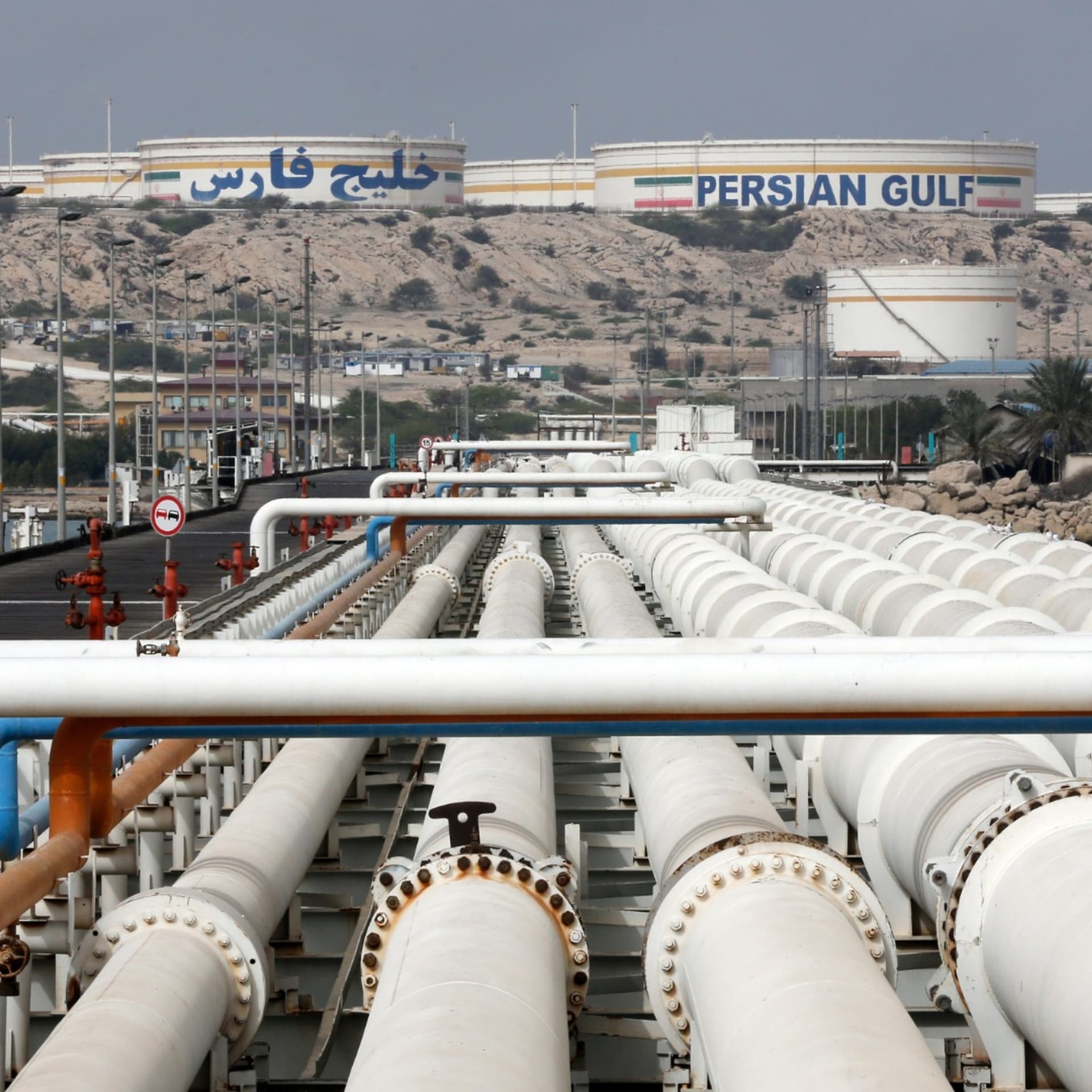
Mixed US messaging on Iran—whether taking control of Karg Island (Iran’s main oil-export hub) could pressure Iran to reopen the Strait of Hormuz; effects of strikes on ordinary Iranians; Russia sending oil to Cuba amid US blockade; night-owl chronotypes and mood; Myanmar’s next president after a military coup; Australian manhunt ending; Italian art thefts and what happens to stolen art; return of a Bronze Age shield to Scotland.
Guests and backgrounds
Brad Taylor, former US Special Forces lieutenant colonel (Iraq/Afghanistan). James Landale, BBC diplomatic correspondent. Joe Inwood, BBC correspondent in Tehran. Mimi Swaby, BBC global affairs reporter. Dr Lindsay Browning, UK sleep-clinic founder. Jonathan Head, BBC Southeast Asia correspondent. Noah Charney, founder of Association for Research into Crimes Against Art. Matthew Knight, National Museums Scotland prehistory senior creator.
Key claims/examples
Troops on Karg Island could be “strategic leverage” but are logistically risky and hard to hold; US could instead disrupt exports from the air. Iran’s strikes have caused craters and internet shutdowns; a programmer “Matin” describes defiance amid business closures. Russia’s 700,000 barrels to Cuba may be a “grey area” vs US blockade. Night owls may have worse emotional regulation due to short/poor sleep and circadian disruption. Myanmar’s Min Ong Lai is “civilian clothes” for military rule. Desi Freeman (sovereign citizen) was shot after a standoff. Italian thieves targeted underprotected, portable works; stolen art often stays in storage or is used as collateral/trade (not easily cashed). Scotland’s returned Bronze Age shield shows sword/spear punctures and dates to just over 3,000 years ago.
Written by AI. May contain mistakes. Listen to the episode to check what was said.
Chapters
Tap a time to open that second in VOTrump's Threats and Negotiations with Iran
1:28 to 2:15
Discussion on Trump's mixed messages regarding Iran's energy infrastructure
“President Trump repeats his threat to hit Iran's energy infrastructure, but also says he's negotiating with the Iranian leadership to end the war.”
Military Strategy and Risks at Karg Island
2:15 to 3:06
Brad Taylor discusses the military implications of controlling Karg Island
“just as thousands of US troops arrive in the region preparing for possible ground operations to take over Karg Island, Iran's main oil exporting hub.”
Challenges of Holding Karg Island
3:06 to 4:59
James Landale explains the difficulties in maintaining military presence on Karg Island
“And we're dealing with the drones and the missiles and that kind of stuff, which are going a long distance, but that puts them in direct line of artillery fan.”
Complexity of Securing Uranium and Exit Strategies
4:59 to 6:46
Discussion on seizing uranium and the complexity of US exit strategies from the conflict
“And they're also talking about the possibility of going into Iran and seizing the uranium?”
Life in Iran Amidst War and US Strikes
6:46 to 10:45
Joe Inwood reports on the challenges faced by ordinary Iranians during the conflict
“And at the moment, there's not a great deal of clarity coming out of the White House.”
Russia's Support to Cuba During US Blockade
10:45 to 12:44
Discussion on Russia's oil delivery to Cuba and implications of the US blockade
“Russia has come to the aid of Cuba and sent more than 700 ,000 barrels of oil to the communist island, which has been suffering under a US oil blockade.”
Consequences of Oil Shortages in Cuba
12:44 to 13:50
Mimi Swaby explains the impact of oil shortages on Cuba's economy and services
“Yes, so President Miguel de Escanal basically said that Cuba hasn't had any oil delivery for more than three months now.”
Chronotypes and Their Impact on Wellbeing
13:50 to 14:00
Dr. Lindsay Browning discusses the effects of chronotypes on mental health
Understanding Chronotypes and Their Impact on Mood
14:00 to 17:22
Learn how our chronotypes influence our mood and sleep patterns.
“Because researchers in Italy have found that night owls are more likely to show signs of being depressed, anxious and irritable.”
Impacts of Societal Schedules on Night Owls
17:22 to 17:55
Discover how societal schedules affect night owls and their sleep quality.
“After a daring heist in Italy, we ask, what do thieves do with stolen art?”
Show all 14 chapters
Political Landscape in Myanmar Post-Coup
20:08 to 23:16
Examine the current political situation in Myanmar under military rule.
“Please visit MentallyHealthyNation.org to learn more.”
The End of an Australian Manhunt
23:16 to 25:52
Details surrounding the conclusion of a significant manhunt in Australia.
“One of the biggest manhunts in Australian history is over.”
The Fate of Stolen Art and Its Black Market
25:52 to 28:02
Insight into what happens to stolen art and its black market value.
“Thieves in Italy have made off with paintings by Renoir, Cezanne and Matisse worth millions of dollars after breaking into a museum near the city of Parma in just a matter of minutes.”
The Significance of the Bronze Age Shield
28:02 to 31:02
Explore the importance and history of a rare Bronze Age shield returned to Scotland.
“Most art theft involves organized crime at some level.”
Transcript
Automatic transcript. May contain errors.0:00This BBC podcast is supported by ads outside the UK.
0:30on your expert's progress right on your phone while you live your life. Plus, you get unlimited expert help at no extra cost, even on nights and weekends during tax season. Visit TurboTax.com. Only available with TurboTax full-service experts. Real-time updates only on iOS mobile app. Hey, it's Ryan Seacrest for Jewel Osco. Are you looking for a refresh this spring? Make sure you take some time for self-care with savings on all your favorite hair care essentials now through March 31st. Shop in-store or online for participating hair care items from Pantene. Head & Shoulders, Aussie, and Old Spice and earn four times points.
1:03Points can be redeemed later for discounts on groceries or gas. Offer ends March 31st. Restrictions apply. Promotions may vary. Visit JewelOsco.com for more details. This is the Global News Podcast from the BBC World Service. I'm Charlotte Gallagher and at 1600 Hours GMT on the 30th of March, these are our main stories. President Trump repeats his threat to hit Iran's energy infrastructure, but also says he's negotiating with the Iranian leadership to end the war. And Cuba is set to receive 700 ,000 barrels of oil from Russia after months of a US blockade. Also in this podcast, the ancient shield that's going back home for the first time in two centuries.
1:55You can really clearly see where a prehistoric sword or spear has pierced the shield at some point. So they were definitely used in combat.
2:07President Trump's latest remarks on the war with Iran have been raising eyebrows with his mixed messaging. He's repeated that a deal to end the war could be reached very soon, just as thousands of US troops arrive in the region preparing for possible ground operations to take over Karg Island, Iran's main oil exporting hub. That would not be without risks, as we heard from Brad Taylor, a former US Special Forces lieutenant colonel who served in both Iraq and Afghanistan. The question in my mind would be applying a military application of force for a strategic in-state, what is that? If it's just to stop the Iranians from exporting oil to fund the regime, you don't need troops to do that.
2:50You could blow up the piers. You could do anything you wanted from the air and prevent them from exporting oil. So in my mind, if we were going to do that, it's more of a psychological effect of here we come, here comes the troops, but I'm not sure it's worth the risk of actually doing it. It's very close to the shores of Iran. And we're dealing with the drones and the missiles and that kind of stuff, which are going a long distance, but that puts them in direct line of artillery fan. And the other risk is when they hit the island, they'll probably have 48 hours of supplies to get going. But eventually, you're going to have to get them resupplied to sustain the operation.
3:24And that's going to have to come through air. And that involves another component of risk. You're going to be flying helicopters in and out of there to get the resupply going. It's just a very logistically challenged piece. I've been speaking to our diplomatic correspondent, James Landale. I asked him first, what's the strategy behind President Trump now focusing on Karg Island? This is a huge source of revenue for Iran's economy. Iran's economy is already in bits. It has been struggling for a very, very long time. And the argument is that if the Americans can control that island, then they can put pressure on the Iranian regime in talks, particularly in discussions to open up the Strait of Hormuz.
4:05So in other words, it would, in theory, give the Americans some leverage. And if there were US troops on Karg Island, I mean, they would be very easily reached by Iranian missiles, Iranian artillery. I mean, would they be sitting ducks in a way? Well, yes and no. I mean, first of all, the Americans would have to take it. And that's no mean feat. It's a long way from anywhere. Remember, the Strait of Hormuz is highly defended. So there's a question mark about whether or not the Americans could get any warships into the Gulf. Then you've got the question of how the Americans could hold Karg Island.
4:37It would require substantial resupply in terms of soldiers, munitions, emergency medical evacuation. The military experts will tell you it's entirely possible. But as ever, the longer you hold any island or piece of ground militarily, the harder it becomes to defend it in the long term because the cost will mount. And they're also talking about the possibility of going into Iran and seizing the uranium? Yeah, so look, there is about 400 kilograms of highly enriched uranium that is missing. This is left over from the US-Israeli attack on Iran last June. And this is the material that's relatively close to weapons grade material.
5:20You could probably, you know, just enrich it a little bit further, make the experts estimate about 10 to 12 bombs. And the suggestion is that the Americans might try to conduct some kind of special forces operation to seize and remove this material. But again, the military experts are all warning this would be hugely complex. Has President Trump got himself in a bit of a mess here? Because it doesn't appear like there's an exit strategy. He's very mixed with all his messages. You know, what is going on? Well, sometimes the American messaging is deliberately mixed to confuse the enemy. And therefore, on the one hand, the Americans are suggesting a willingness to talk.
6:05But on the other hand, they're suggesting a willingness to escalate and deploy military force in different ways. On one level, that's designed to keep the Iranians guessing. It's also designed to try and put pressure on the arrangements to say, look, if you don't agree to some kind of deal over reopening the Strait of Hormuz, then the Americans are willing, in theory, to deploy greater military force and to escalate. The risk, though, is a the element of surprise is gone because Donald Trump has been speaking so openly about some of these potential options that he might deploy. But also, as you say, there is still a degree of strategic confusion over how the Americans wish to exit this war.
6:46And at the moment, there's not a great deal of clarity coming out of the White House. That was James Landale. And you can hear more from James about how US troops could be used on the ground in Iran and how that could give President Trump more leverage in talks by going to our YouTube channel. Search for BBC News on YouTube and you'll find the Global News podcast in the podcast section. There's a news story available every weekday. As Israel continues to carry out attacks across Iran, damaging power grids, life for ordinary people there is getting harder by the day. Our correspondent Joe Inwood has compiled this report.
7:26Working by Torchlight, a search and rescue team navigates a vast crater in the centre of a Tehran street. The beam of light pauses on the twisted remains of a motorbike before moving on. This has become a common scene as the US and Israeli strikes enter their fifth week. One man who lives nearby witnessed the aftermath. Last night they hid the middle of the street near our house with no specific target. No building, no person, nothing. Just the middle of the street. The asphalt was torn up and a huge crater was created. Several parked and passing cars were turned to dust. By daylight, it is a very different scene in Tehran, certainly the official version is.
8:15The historic bazaars and markets seem subdued, but not empty in footage released by the news agencies. Colourful sweets are piled high. A man squeezes fresh pomegranate juice. Only one man speaks on camera, a computer programmer called Matin. He appears to be in his 20s and has a bag slung over one's shoulder.
8:40We are fighting to prevent sanctions, to show the strength of the country, of our country, he says. For me, these things are more important than internet outages or anything else.
8:53But that message of defiance is not what you always get in private communications, as shared with BBC Persian News and voiced by their team. My businesses are completely shut down now. My situation is not better than theirs. It's been very quiet and I think I can hold up the business for one month maximum. We're slowly starting to learn how to live with war. We're going out with the kids, Open our shops and we get emotional watching old photos and movies of Iran. Just as getting information out of Iran is difficult because of the near total internet shutdown, so too is it hard for Iranians to hear from the outside world.
9:35But clearly, information does get in. Over the weekend, President Trump said this. They have to open it up. They have to open up the Strait of Trump. I mean, Harbouz. Excuse me. I'm so sorry. Such a terrible mistake. Now, whether or not it was a joke, it seemingly upset Iranians, even those who opposed the regime. Trump called the Strait of Hormuz the Trump Strait. The Strait of Hormuz and the Iranian islands are in danger of being lost.
10:16Last night in Tehran there was an unusual sound, certainly for those who watched this war from afar.
10:26Iranian air defences firing into the black sky. They appear to be ageing AA guns, unlikely to shoot down a modern fighter jet. but they are still firing. In what is fast becoming a battle of wills, that is significant. Joe Inwood reporting. Russia has come to the aid of Cuba and sent more than 700 ,000 barrels of oil to the communist island, which has been suffering under a US oil blockade. The Kremlin spokesman, Dmitry Peskov, said it had raised the issue with the United States and was pleased the sanctioned delivery was taking place.
11:08Amid a severe blockade, our Cuban friends need petroleum products and oil. They're essential for keeping normal life running, for electricity generation and for providing medical and other services to the population. Russia, of course, believes it's our duty not to stand aside and to provide the necessary assistance to our Cuban friends. So does this mark the end of the oil blockade by Washington? I asked our global affairs reporter Mimi Swaby. President Trump has told journalists he doesn't have any problem with Russia sending fuel to Cuba. Now it isn't clear if these remarks which he made on board Air Force One on Sunday are a complete reversal of his blockade on the island which has now been in place for about three months.
11:52That includes threats of tariffs for any country who is delivering oil to the nation, or if it's just a one-off allowance. He said that if a country wants to send oil to Cuba right now, I have no problem with that, whether it's Russia or not. He said anyway, Cuba is finished, they have a bad regime and a corrupt leadership. So it essentially didn't matter if a boat of oil got through or not. It's really unclear. I think Cuba will be wanting this oil to continue now from Russia. Russia has made it clear as well, the Kremlin spokesperson Dmitry Peskov saying that Russia will continue to work on oil supplies to Cuba, and that these supplies to the island were actually raised in its talks with the US.
12:30But it's a bit of a grey area which no one seems to have a definite answer for at the moment. So once this oil vessel is docked in the northern shore on Cuba, we will then find out if there is another one or if there are any more progress to be made with it. And presumably, this is going to make a huge difference for Cubans. Yes, so President Miguel de Escanal basically said that Cuba hasn't had any oil delivery for more than three months now. Now Cuba is suffering a severe economic crisis, essential collapse of the economy, as well as severe fuel shortages. Since the US imposed its oil blockade, there have been two nationwide blackouts.
13:05And this is on top of daily extended blackouts, fuel scarcity, basic goods being very scarce, as well as water shortages. So this amount of oil on board the Anatoly-Kolodkin vessel is thought to be able to supply Cuba for about a week of fuel. And that is including things like essential services, so hospitals which would dire need at the moment. Many running off generators with their intensive care units and emergency services seriously kind of under pressure from this blockade, as well as transport and electricity. Again, the electricity system, the grid is in kind of disarray, but it's been exacerbated by this fuel shortage, which in turn has been put on more pressure by this US blockade.
13:49Mimi Swaby. Now, if you're someone who prides yourself on being an early riser, fresh and chirpy in the morning, spare a thought for your opposite numbers who prefer being up late into the night. Because researchers in Italy have found that night owls are more likely to show signs of being depressed, anxious and irritable. Dr Lindsay Browning is the founder of Trouble Sleeping, a sleep clinic here in the UK. She told Leila Nathu that each of us is predisposed to function better at certain times of the day. We all have a thing called our chronotype and that That means at which point of the day do you feel you're most awake and alert?
14:26And there are early people, larks, who seem to wake up and feel really refreshed and want to get going straight away. But as the day progresses, they start to fade. Whereas the later people, evening types or night owls, the morning is not their friend. And as the day progresses, they tend to get more and more energy and want to stay up a bit later. And there are lots of people somewhere in the middle. So that's your chronotype. It determines when in the day you feel you're most alert, basically. You can't change that particularly. Right. Right. So it's genetic, is it? There is definitely a genetic component to that.
14:56There are ways you can tweak it, but you can't completely change yourself from a night owl to an early morning lark. And on this idea of night owls being associated with worse moods, is that to do with something biological or is that to do with how they have to operate within the constraints of society? Perhaps they feel a bit more out of sync with the schedules imposed by society. That's what we think, that if you are someone who is a night owl, then your daytime isn't really working with your biological, what you want to achieve. So you might be trying to be out of step with your daily schedule.
15:31You want to fall asleep later, but work, school or family still require you to wake up early, which means you probably might end up getting less sleep because if you go to bed late, but still have to get up at the same time as everybody else, most people who are night owls or evening types tend to have short sleep. And also, if you are sleeping in at the weekend and you have a very different social jet lag, you have a different bedtime, wake time during the working week and the weekend, that can disrupt your circadian rhythm, which can lead to poor quality sleep. And those things, short sleep and poor quality sleep, have a huge impact on our emotional regulation.
16:07And that's probably what this study is showing because it's an association. It didn't say that night owls will definitely become having poor emotional regulation and those kinds of traits associated with developing bipolar disorder. But it did show an association because of those factors. You said that you couldn't really do much about it if you are inclined to be better in the morning or be better in the evenings. But what can you do to sort of smooth the path? What would your advice be for somebody who really genuinely is a night owl, for example, but who has to have early starts? think of it a little bit like jet lag so the answer isn't just to ignore it but to really help your body so keep your bedtime and wake time as regular as possible so that you allow yourself enough time in bed for sleep and also get bright light first thing in the morning because that can really help to anchor our circadian rhythm so first thing in the morning open those curtains maybe even go outside for a quick walk or have your breakfast in the garden try to reduce bright light exposure late in the day.
17:06And like I said before, it's so important to avoid the pattern of short sleep during the week, followed by a long catch up lines at the weekend, because that really creates this sense of a dysregulation of your circadian rhythm, your body doesn't really know what time it is. So consistency really is the key. That was Dr. Lindsay Browning. Still to come in this podcast. Their understanding of how art crime works is from the same films and fiction that the general public watches, which suggests that criminal collectors exist, when in fact in known history, we know of almost none that have ever existed.
17:42After a daring heist in Italy, we ask, what do thieves do with stolen art?
17:55Hey, it's Ryan Seacrest for Jewel Osco. Are you looking for a refresh this spring? Make sure you Do you take some time for self-care with savings on all your favorite hair care essentials now through March 31st? Shop in-store or online for participating hair care items from Pantene, Head & Shoulders, Aussie, and Old Spice and earn four times points. Points can be redeemed later for discounts on groceries or gas. Offer ends March 31st. Restrictions apply. Promotions may vary. Visit Jewelosco.com for more details. Do you love rom-coms? Do you wish you could talk about Christmas movies year-round?
18:29then we have the perfect podcast for you, Hallmarkies Podcast. Throughout the year, we cover all things romance, holiday, and Hallmark, including recaps of every Hallmark show like When Calls the Heart and The Way Home. You can also get loads of bonus content covering shows like Bridgerton, Sweet Magnolias, and just like that. We are an all-female group of friends who are passionate for these shows and movies and give our honest opinions as well as gush over what we love so much. But that's not all. Every Monday, there are interviews with all your favorite actors, writers, directors, and more.
19:04Check out Hallmarky's podcast on all your podcast providers and on YouTube. That's Hallmarky's podcast wherever you listen to podcasts. This is Mike Bolo of Lexicon Valley. And I'm Bob Garfield. Are you one of those people who sometimes uses words? Do you communicate or acquire information with, you know, language? Hey, us too. So join us on Lexicon Valley to chew over the history, culture, and many mysteries of English. Plus some life cracks. Find us on one of those apps where people listen to podcasts. The sun's shining, birds are singing, and all feels right in the world. Until the season changes and suddenly you lose your motivation to get out of bed.
19:52In fact, one in five people experience some form of depression no matter the season or time of year. At the American Psychiatric Association Foundation, our vision is to build a mentally healthy nation for all. Because we want you to live your best life and be your best you all year round. Please visit MentallyHealthyNation.org to learn more.
20:16In Myanmar, General Min Ong Lai is set to be the country's next president. He led the military coup five years ago, which resulted in a brutal suppression of the opposition. He's been chosen by the country's parliament, which is dominated by the military following recent elections that were widely described as a sham. So is it business as usual with the military in charge? Our Southeast Asia correspondent Jonathan Head is in Myanmar. I think it is. This certainly isn't any kind of new dawn. This is, in essence, an expanded version of the existing military regime in civilian clothes. You've got a parliament where 90 % of the members of parliament are loyal to the military, loyal to Minong Lai himself, and Minong Lai is choosing his own loyalists.
21:00He'll clearly choose loyalists to be in his new government, but also to replace him in command of the army. So it's very much still his show. This is something he's wanted to do for a long time. You know, when he launched his coup, he claimed somewhat implausibly when he ousted the elected government of Aung San Suu Kyi five years ago that he was doing it to protect his version of democracy. And they call it the military calls it a discipline flourishing democracy. And he's always said he wanted to have an election and get back to civilian rule. It's taken him this long because he's set off a civil war and armed opposition to his coup, which has resulted in his regime losing control of large parts of the country.
21:39And indeed, there were many parts of the country where the election could not take place. That civil war goes on, but he will be pleased that he's passed this particular milestone. And he will also be trying to persuade countries, particularly in this region, who are more likely to be persuaded by his argument, that they should engage with him and recognise him now as the legitimate government. Legitimacy is something he's not had for the last five years. Western governments, of course, will continue to shun him and argue, as do many others, that his position is essentially illegitimate. And how do people in Yangon feel about this election and feel about him taking over the country?
22:17I think there's a large degree of resignation. It's pretty hard to get people to speak openly. A lot of people were unhappy. They felt forced to take part in the election. I think for most people here, they're just exhausted by the civil war. The economy has completely collapsed. And now, of course, we've got fuel shortages caused by the Iran war, which are particularly bad in Myanmar. It's very hard to get fuel now. And remember, this country doesn't have a reliable electricity supply. So many people rely on generators. So things are really grim economically, and people just want an end. The problem is that Minong Lai isn't giving any sense that he's going to change his tactics and perhaps soften his suppression of the opposition.
22:57His message on his last Armed Forces Day parade at the end of last week was very hard line, and he's appointed a very hard line man to replace him in the military. So sadly, much as people here hope that a civilian government might possibly bring an end to the civil war, nothing Min Online is saying or his deputies are saying suggests they're going to change. That was Jonathan Head in Myanmar. One of the biggest manhunts in Australian history is over. The suspect, 56-year-old Desi Freeman, who was wanted for killing two police officers seven months ago, has been shot dead. He had fled into bushland last August, prompting a huge search operation.
23:33This report from Richard Hamilton. Everyone knows that these scumbags are buffered because they're obsessed with power. In 2021, police arrested Desi Freeman, previously known as Desmond Philby, during an anti-government protest. He was a self-declared sovereign citizen who regarded the government as illegitimate. In August last year, he opened fire on a team of police officers when they arrived at his semi-rural property in Paupunker, about 300 kilometres north-east of Melbourne. They'd gone there with a search warrant in relation to a child sexual abuse investigation. Two officers were shot dead at the scene and a third was injured.
Read the full transcript
24:16Freeman, who was believed to have expert bushcraft skills and multiple firearms, then fled into bushland in Mount Buffalo National Park. Although he's not yet been formally identified, police say Freeman was shot after a three-hour standoff. Mike Bush is the Chief Commissioner of Victoria Police. This morning, Victoria Police fatally shot a man as a result of the operation. Everything I know at this point tells me that this shooting was justified. The operation was conducted by professionals. There was an appeal to encourage the person to come out. He then exited the building. There was an opportunity for him to surrender peacefully, which he did not.
25:07This brings closure to what was a tragic and terrible event. The search for Desi Freeman was one of the largest in Australian history. A reward of a million Australian dollars had been offered for information leading to his capture. At one point, around 450 police officers were involved, including experts from New Zealand and even the Australian Army. More than 100 homes were searched and police used helicopters and sniffer dogs to scour a vast area of scrubland that was also littered with disused mineshafts. But they admitted that Freeman had known the terrain much better than they did. Richard Hamilton.
25:53Thieves in Italy have made off with paintings by Renoir, Cezanne and Matisse worth millions of dollars after breaking into a museum near the city of Parma in just a matter of minutes. It's one of the most significant thefts in Italy in recent years and follows the audacious robbery of France's crown jewels from the Louvre in Paris last October. So what actually happens to stolen art? Leila Nathu spoke to Noah Charney, the founder of the Association for Research into Crimes Against Art. In this case, it's quite clear that the thieves knew what they were after. There were the three pictures that they took, plus a fourth one, the identity of which has not come forth to the public yet, that they tried to take but got scared off by the security system, the alarms going off.
26:36So it was targeted, but it was probably chosen as a location to burgle because it was relatively underprotected, a bit out of the way. And they saw the objects as high value, easily portable objects that were perhaps undersecured. Are they high value, though, on a black market for art? That's an excellent question, and the short answer is no. If art thieves knew how difficult it was to turn stolen art, especially by famous artists, into cash, they probably wouldn't bother. So at open auction, these are extremely valuable, particularly a Cézanne watercolour, which is very rare. But there is almost no market, black or otherwise, for identifiable, unique stolen paintings.
27:16So thieves have to come up with another way to profit from them. But a lot of them don't know how to because their understanding of how art crime works is from the same films and fiction that the general public watches, which suggests that criminal collectors exist when, in fact, in known history, we know of almost none that have ever existed. So they're not stealing to order for sort of underworld collectors. So what then happens? They just end up staying in storage, presumably, never to resurface. So it's true. The idea of criminal art collectors is primarily from the realm of fiction. I know of a few dozen counterexamples, but that's it.
27:53And there are tens of thousands of art thefts reported worldwide every year. So it's just a fraction. But what happens more often is maybe more interesting, but more complex. Most art theft involves organized crime at some level. And organized crime groups will sometimes take these stolen objects and use them on a closed black market in dealing with other criminal groups and using them for trade or collateral for other deals involving objects that have a high risk in turning into cash, like arms and drugs. And you have this idea that the stolen work of art, which experts estimate on a black market is worth maybe 10 % of its legitimate value.
28:33And you can equate that as a check that you never want to try to cash, but you think you're pretty sure you could get 10 % of the value for it. And then you can trade it for other objects of a similar value on the black market. Noah Charney. Finally, an incredibly rare Bronze Age shield has been returned to Scotland for the first time in more than 230 years. The shield was originally discovered in a peat bog in North Ayrshire in about 1779 and has been in a museum in London ever since. Matthew Knight is the senior creator of prehistory at National Museums Scotland. It's a really really important object.
29:10These were highly decorated objects generally considered to be symbols of ceremony or status but we've also been able to show that they're very effective defence weapons. Describe the shield for us. How big is it? What does it look like? The shield is about 60 centimetres in diameter. It's a round shield hammered from a fingerlingot of bronze into a very very thin sheet, but then it's been decorated with concentric rings and concentric hammered bosses. And there's over 9 ,000 of these bosses hammered into the surface of the shield. Does it look as if it's being used in anger or in self-defence?
29:46Yeah, this is the really fascinating thing about this shield in particular, is you can really clearly see where a prehistoric sword or spear has pierced this shield at some point. So they were definitely used in combat. And this is really significant as well, because these are some of the very early origins of conflict and violence in Britain. When are we talking about? What year? Do you have a sense of when the shield was created and what the conflicts were that were driving its use? The shield dates to just over 3 ,000 years ago in what we call the Bronze Age. This is a period where people are settled in farming communities, they're living off the land, but this is also a period where we see the invention of the sword, the first object in human history that's designed purely for harming another human, unfortunately.
30:37And with this, if somebody has a sword, you want a shield or you want a bigger sword. And it fuels what I call the Bronze Age arms race, where you have societies coming into conflict with each other in a very dedicated fashion for the first time. And this gives rise to a sort of status with a warrior, somebody capable of defending your community, but also unfortunately shattering another. That was Matthew Knight speaking to Justin Webb. And The Shield will be on display towards the end of June at the National Museum of Scotland in Edinburgh. And that's all from us for now. If you want to get in touch, you can email us at globalpodcast at bbc.co.uk.
31:17You can also find us on X at BBC World Service. Use the hashtag Global News Pod. And don't forget our sister podcast, The Global Story. This edition of the Global News Podcast was mixed by Mike Campbell and the producers were Judy Frankel and Paul Day. The editor is Karen Martin. I'm Charlotte Gallagher. Until next time, goodbye.
31:55language. Hey, us too. So join us on Lexicon Valley to chew over the history, culture, and many mysteries of English, plus some life cracks. Find us on one of those apps where people listen to podcasts.
From the publisher
President Trump says the US is in serious discussions with what he described as a new and more reasonable regime to end military operations in Iran. Also: Russia comes to the aid of Cuba by sending more than 700,000 barrels of oil to the communist island. Thieves in Italy make off with paintings by Renoir, Cezanne and Matisse - worth millions of dollars - after breaking into a museum near the city of Parma in a matter of minutes. As General Min Aung Hlaing is set to become Myanmar's next president, we ask if it will be business as usual? One of the biggest manhunts in Australian history comes to an end as the man wanted for killing two police is shot dead. Researchers in Italy find that those who stay up late at night are more likely to be depressed, anxious and irritable. And an incredibly rare bronze-age shield is returned to Scotland for the first time in more than 230 years.



