
In short
The BBC Global News Podcast covers (1) Canada-US tariff escalation and retaliation, (2) firings at the Pentagon-funded but historically independent US military newspaper Stars and Stripes, (3) South Korea testing an Arctic shipping route, (4) China’s humanoid robot competition and record sprint, plus brief science and other news segments (fish-skin burn treatment, drug pollution in oceans, FBI returning Egyptian antiquities, and standardizing “moon time”).
Guest backgrounds
David Willis (North America correspondent); Eric Slavin (editor-in-chief, Stars and Stripes); Mark Lantain (professor, Arctic University of Norway); Anbarasan Etirajan (global affairs reporter); Laura Bicker (China correspondent); Natasha Wozniak (led shark study); Warren Bull (health reporter); Brian Keane (reporter); Libby Jackson (head of space, Science Museum).
Key claims
Canada says US tariffs are “economic attack”; US says Canada walked back commitments; Stars and Stripes independence threatened by Pentagon; Arctic route could be faster but risks climate impacts; China’s robots are improving rapidly; fish skin may reduce hospital stays and sepsis risk; sewage overflows spread drugs into marine life.
Notable examples
50% tariffs on ~$20bn Canadian imports; Canadian retaliation targeting US steel/dairy; Panstar Arco trial voyage via Northern Sea Route; “Lightning” humanoid robot breaks 100m record; fish skin from Atlantic cod; sharks found with caffeine/cocaine; FBI returns 48 stolen Egyptian artifacts.
Written by AI. May contain mistakes. Listen to the episode to check what was said.
Chapters
Tap a time to open that second in VOCanada vs. US Trade War
1:16 to 2:28
Overview of Canada's response to US tariffs amid trade tensions.
“This is the Global News Podcast from the BBC World Service.”
Impact of Tariffs on Both Economies
2:28 to 5:12
Analysis of the economic consequences of tariffs on Canada and the US.
“Canada walked away, claiming that at the 11th hour, US negotiators wanted to introduce unfair restrictions on Canadian trade deals with other countries.”
Canada's Preparedness for Retaliation
5:12 to 6:54
Discussion on Canada's plans to retaliate against US tariffs.
“Indeed, already one US Senator, Amy Klobuchar of Minnesota, that's a state which borders Canada, has warned of the possibility of rising costs for businesses there because of this dispute.”
Censorship at Stars and Stripes
6:54 to 10:22
The firing of Stars and Stripes editor raises concerns over media independence.
“Let's stay in the United States because the editor-in-chief of the US military newspaper Stars and Stripes has said that he's been sacked for insubordination.”
South Korea's Arctic Shipping Route
10:22 to 13:08
Exploration of South Korea's new Arctic route for shipping.
“The Pentagon declined to comment on his claims, but it previously issued a memo saying that the paper's articles must be consistent with good order and military discipline.”
China's Humanoid Robot Games
13:08 to 14:00
Coverage of China's World Humanoid Robot Games and robotic advancements.
“China's second World Humanoid Robot Games is underway in Beijing, where more than 2 ,000 robots are participating in events such as boxing and sprints, as well as household tasks and even firefighting.”
China's Technological Ambitions in Robotics
14:00 to 16:51
Learn about China's advancements in robotics and the broader implications for global competition.
“And after the finish line, it looked like it needed a lie down.”
Innovative Use of Fish Skin in Medicine
16:54 to 19:53
Explore how fish skin is being used as a treatment for burns and its advantages over synthetic materials.
“Fish skin has been used by doctors to treat burns for years.”
Drug Pollution in Marine Environments
19:53 to 22:31
Understand how drugs are contaminating aquatic ecosystems and explore potential solutions.
“For several years, scientists have been finding evidence that seas, lakes and rivers are being contaminated by traces of drugs, including antibiotics and opioids.”
Return of Stolen Artifacts to Egypt
22:31 to 24:33
Learn about the FBI's efforts in returning stolen Egyptian artifacts and the significance of these items.
“The FBI has returned dozens of stolen artefacts to Egypt after a successful investigation into a trafficking operation.”
Show all 11 chapters
The Importance of Time on the Moon
24:33 to 27:31
Discover why establishing a standard time on the Moon is critical for future space missions.
“law enforcement agencies have returned more than 5 ,000 archaeological and cultural artifacts to Egypt over the past decade.”
Transcript
Automatic transcript. May contain errors.0:00This BBC podcast is supported by ads outside the UK.
0:30No bouncing between tabs. And best of all, no spreadsheets. Stop managing software and start managing your business with one unified system. Try for free today at odoo.com. That's O-D-O-O dot com. Choiceology, an original podcast from Charles Schwab, is a show about the psychology and economics behind our decisions. Join host Katie Milkman, an award-winning behavioral scientist and author of the best-selling book, How to Change, as she shares true stories from Nobel laureates, authors, athletes and everyday people about why we make the choices we do and how to make better ones to help avoid costly mistakes.
1:08Listen to choiceology at schwab.com slash podcast or wherever you listen.
1:16This is the Global News Podcast from the BBC World Service. I'm Alex Ritson and in the early hours of Sunday the 23rd of August these are our main stories. Canada promises to match Donald Trump's whinging tariffs dollar for dollar as the old allies enter a full-on trade war. Fired for insubordination the editor of America's official military newspaper South Korea becomes the latest country to send a container ship through a new Arctic trade route despite warnings. Also in this podcast, Lightning Bolt, the humanoid robot that has smashed Usain Bolt's 100-metre world record in China. I'm very surprised by the improvements.
2:04I feel very proud of our country's technological advancement.
2:13For decades, the United States and Canada weren't just neighbours, they were the closest of allies. But President Trump's global trade war has seriously fractured their relationship, which had flourished under their free trade partnership. Washington and Ottawa were in trade talks, but these broke down on Friday. Canada walked away, claiming that at the 11th hour, US negotiators wanted to introduce unfair restrictions on Canadian trade deals with other countries. After the talks collapsed, as Mr Trump had threatened, he imposed 50 % tariffs on nearly$20 billion worth of Canadian imports. Doug Ford, the Premier of the Canadian province of Ontario, gave this scathing response.
2:56President Trump, he can't be trusted. Simple as that. He changes the deal. He keeps moving the goalpost. You know, let me tell you about President Trump. President Trump is the type of person that would steal your lunch money the first day. He'd steal the toque off your head the second day and the third day he'd steal your running shoes. He is not to be trusted whatsoever. We need to stay united. The US Trade Representative Jameson Greer said that Ottawa had made new demands and walked back from other commitments. He added that Washington had no plans to restart negotiations. We don't have new talks planned with the Canadians.
3:34We're moving forward with measures that respond to Canadian retaliation. Remember, as President Trump has introduced a trade policy to reshore American production, protect American jobs. Two countries have retaliated against the United States, the People's Republic of China and Canada. Our interest is in protecting American workers and protecting American supply chains. The Canadian Prime Minister Mark Carney has promised to retaliate against Washington's new tariffs with duties on US products that include steel and dairy, as well as pressing ahead with building new trade relationships. Our North America correspondent David Willis told me that this dispute will lead to economic pain on both sides of the border.
4:14I think the bottom line here, Alex, is that nobody really benefits from trade wars, trade conflicts of this kind. And these latest US tariffs will affect about 5 % of Canadian exports to the US. That's not a huge amount, but they will apply to a wide array of goods, a very diverse array of goods, ranging from alcohol to building materials. And to put that into perspective, about 80 % of Canadian goods will still enter the United States tariff free. Nonetheless, it's a policy that threatens to heighten tensions between the United States and Canada to make negotiations over a new US, Canada, Mexico trade agreement all the more difficult.
5:03And it will impact the economies of both nations because potentially it could weaken investment in Canada and put jobs at risk there. It could push up prices here in the United States. What would be a very unfortunate time, of course, for President Trump, just three months, less than three months to go to the midterm elections here, where one of the crucial issues is likely to be inflation, the so-called affordability crisis here in the United States. Indeed, already one US Senator, Amy Klobuchar of Minnesota, that's a state which borders Canada, has warned of the possibility of rising costs for businesses there because of this dispute.
5:47I suppose President Trump would say that all this could be avoided if only Canada would agree to become the 51st state. That's right, and that's one of the things that he's said in the past that has really infuriated the Canadians, of course. And Canada is now preparing to retaliate with tariffs of its own that are set to come into place in just a couple of weeks' time. Those are expected to target U.S. farmers with tariffs on dairy appliances, other agricultural equipment as well. Mark Carney alluded to the mistrust that now exists between Canada and the United States. You mentioned those rapidly deteriorating relations over President Trump's comments, Alex, there.
6:33And as Mark Carney said, the new U.S. tariffs were designed, as he put it, to hurt Canada and divide its citizens. He said the United States was, in his words, trying to break Canada so that it could own the country. A reference, presumably, to what you were just talking about there, Alex, of President Trump's remarks about the 51st state. David Willis. Let's stay in the United States because the editor-in-chief of the US military newspaper Stars and Stripes has said that he's been sacked for insubordination. Eric Slavin claimed that this was because he spoke out against potential editorial interference by the Pentagon.
7:11And a correspondent, Lara Court, also said she'd been fired after she reported on the alleged hardships of sailors aboard the USS Abraham Lincoln. Stars and Stripes is partly funded by the Defence Department, but has historically been editorially independent. James Kumrasamy asked Mr Slavin whether he was surprised by the Department's decision to fire him. It's certainly not what I expected when I woke up on Friday morning. Certainly there were tensions that went back all the way to a January the 15th tweet by a senior official in the Pentagon press office talking about changing stars and stripes substantially.
7:51And that tweet came with absolutely zero notice. At the same time, a federal regulation was removed and a story was leaked to a friendly news organization talking about firing a bunch of our reporters. So we had some idea that there were problems, but still did not expect this to happen. But when that process began and you got wind that changes were coming, substantial changes from the Pentagon, what did you do? Well, initially, we attempted to contact them for more information and they referred us to the tweet. And then nothing really happened for about two months. And we felt rather secure that maybe things could, you know, die down a bit.
8:38And then another memo came out on March the 9th, which proceeded to reaffirm our independence, but then place new restrictions upon the organization. You gave, I guess, what would now be seen as a fateful from your point of view interview to CBS in which you were asked about red lines, the Pentagon shouldn't cross, and you talked about censorship. Is that because you believe now that censorship is in place? Well, that was my unofficial opinion that I gave to CBS, and they asked me what my red line would be. And I said if there was a perfectly accurate story that we weren't allowed to run, and then they gave us something else that was written by the Pentagon, that that would be a red line for me.
9:19I never said that I would disobey any sort of directive. I simply explained what I thought the rules were, because the rules say that we must remain editorially independent. That's actually Defense Department policy. And for that, I was given a separation notice for insubordination. I sincerely hope that Stars and Stripes can continue to report independently. Of course, I'm concerned, given what has recently happened. Why is it so important that a newspaper is independent, but it is for servicemen and women? Why is it so important that it does report independently and is not, if you like, an in-house magazine that is used to boost morale?
10:02I think it is ultimately one of the best expressions of American values that we can show the world. Here is a news organization that is partially funded by the government, and part of its job is to hold government to account. Eric Slavin of the U.S. military newspaper Stars and Stripes. The Pentagon declined to comment on his claims, but it previously issued a memo saying that the paper's articles must be consistent with good order and military discipline. With the war in the Middle East continuing to affect global shipping, countries are looking at alternative routes for their cargo vessels. Now it's been confirmed that South Korea is the latest country to send a commercial vessel on a trial voyage to Europe via the Arctic.
10:50The Panstar Arco ship left Busan to test the viability of a route that is quicker and, in theory, safer than using the Strait of Hormuz or the Red Sea. However, environmental groups say increased activity along the northern sea route could accelerate melting polar ice, and it comes with further challenges. Mark Lantain is a professor of political science at the Arctic University of Norway in Tromsø. People have been discussing the possibility that the Northern Sea Route could be a secondary transit corridor for many decades now. But there are two issues. First of all, it is a concern that increased sea traffic in the Arctic will accelerate ice loss and accelerate climate change.
11:35And the bigger issue is that if a ship were to run into trouble, if you see an oil spill, if you see an accident, the environmental impact would be very severe. Our global affairs reporter is Anbarasan Etibrajan. This ship is carrying some electrical goods and chemical products, and it is only a trial run for the South Korean company because they want to see how commercially viable this route would be. Now, from South Korea, it will go up north through the Arctic, hugging the Russian coast along, and then go via the Norwegian coast and then come to the UK and then go to the rest of Europe like Netherlands and Poland.
12:12It may look very simple, but this route is normally inaccessible, especially during winter. But things have changed in the last 10 years or so when the ice melted. So mostly during the summer months from August onwards, for three months, this route remains open when you don't require any nuclear-powered icebreakers or any other assistance. And that is why they are trying this route to see how far this can be viable. Of course, South Korea is not the first country to do. Russia, China, among the few other countries, have been testing these routes for the past few years. In fact, last week, a Chinese company, Sea Legend, started scheduled service from the Chinese coast, coming all the way to Felixtov in the UK.
12:58So countries are increasingly looking at this particular route, which Xi Jinping, some years ago, described as the polar silk road. Anbarasan Etirajan. China's second World Humanoid Robot Games is underway in Beijing, where more than 2 ,000 robots are participating in events such as boxing and sprints, as well as household tasks and even firefighting. The teams taking part in the competition represent companies rather than countries, and one of them, the Chinese smartphone maker Honor, says its humanoid robot has broken the world record for the 100-metre sprint set by Usain Bolt 17 years ago. The BBC's China correspondent, Laura Bicker, was at the Games' opening day in Beijing and sent us this report.
13:51Before the Games had even begun, a robot smashed the 100-metre world record. Rather fittingly, it's called lightning. Speed isn't the problem. Breaking is. And after the finish line, it looked like it needed a lie down. This display of precision, power and programming isn't just to prove robots can jump high. It's to show how far this technology has come. As competitors lined up in a packed stadium, China choreographed an opening ceremony to showcase its technological ambitions. I'm very surprised by the improvements. I feel very proud of our country's technological advancement. I hope my daughter can one day work in this industry and contribute to our nation.
14:47Almost every team here is Chinese, but the real competition extends far beyond the arena. It mirrors a much larger race with the United States. There's no doubt China's robots have made advances in the last year, but the question investors want to know is not just how fast they can run, but can they actually fold laundry? Can this technological spectacle step out of the sporting arena and be of some use in your home? And now even housework is a competitive sport. Points are lost for dropped items and collisions. And yes, in the future, apparently even our pets are robots. China is already a global leader in humanoid robotics.
15:35It's attracting attention in Washington. Donald Trump has moved to restrict imports of some new Chinese products. But this country's biggest challenge isn't building these machines. It's turning them into something millions of people actually want to buy. Laura Bicker in Beijing. Still to come in this podcast, what time is it on the moon and why that question needs to be answered sooner rather than later? Time is really critical for a spacecraft. If you get it wrong, you might fire your rocket engines at just the wrong time, your navigation errors could go huge and it could have catastrophic consequences.
16:23Investing with Schwab is like spending a Saturday at a great farmer's market. You can fill your reusable tote with a bit of everything. Maybe you go for some free-range self-directed investing. Or perhaps you pick up a few farm-fresh trades while you peruse. You can even get help from a dedicated advisor. That's full-service wealth management. Mix, match and change your mind whenever you want. Because at Schwab, you can invest your way. No matter your goals or appetite for investing, Schwab has everything you need all in one place. Visit schwab.com to learn more.
17:21get your podcasts.
17:26This is the Global News Podcast. Fish skin has been used by doctors to treat burns for years. Now, a team of scientists in the US say that fish skin may be a safer and more effective treatment compared to the man-made products typically used ahead of major skin surgery such as skin grafts. But what kind of fish are we talking about exactly? I put that question to our reporter Warren Bull. We're talking about Atlantic Cod and the reason why they chose Atlantic Cod is because they're very large. So it means that they can cover a large area that has been burnt and in a surgical situation that's quite important because it means they don't have to stitch bits together.
18:11It's much more practical in a surgery situation ahead of giving a skin graft. So how does this work exactly? What they do is they put the fish skin onto the burnt area ahead of giving a skin graft. And the idea of doing that is something that's gone on for years in using synthetic products. Normally they use something that's got collagen in it because it's a human protein like glue and it helps accelerate healing. In this case, they've gone back to something that was far more ancient that people used to use sometimes with burns. They've also used honey in the past. But with fish, they found that it has properties that gives what they say is the right amount of inflammation to assist the healing process.
19:00So it does come up as looking red after the fish has been applied. But it doesn't then harm the skin. it allows it to heal ahead of having a skin graft and what they found was that in patients who were coming out of hospital they'd be coming out up to 12 days earlier than if they'd had a synthetic version of this so for example they said that patients on average were having a skin graft and coming out 25 days later instead of 37 days later so there was a massive difference in how they'd have to stay in hospital. And they also said that they had a lower chance of other complications compared to synthetic treatments.
19:42So, for example, it cut their chances of getting sepsis by half. It had an all-round effect that was an improvement on using a synthetic product that had collagen in it. Warren Bull. For several years, scientists have been finding evidence that seas, lakes and rivers are being contaminated by traces of drugs, including antibiotics and opioids. Recently, there have been more cases of these kinds of substances being found in marine animals. Earlier this year, sharks in the Caribbean were found to have swallowed caffeine. So what's going on and how can these drugs be removed from marine environments?
20:21BBC's Brian Keane has been looking into the phenomenon. One of the main ways drugs enter wild water is through sewage plants. When people don't finish a course of antibiotics or antidepressants, for instance, they might flush them down the toilet hole. And even if they do finish the course, traces of these drugs can enter the sewage system through their urine or faecal matter. But why aren't some sewage plants filtering out these toxins? They were designed to filter out solids and nutrients like nitrogen. In periods of heavy rain and flooding, sewage naturally overflows, especially before it's been screened and treated.
20:59And of course, if untreated sewage is going into wild water and into wildlife, so are the traces of drugs inside it. One study conducted this year in the Bahamas uncovered a new substance present in sharks, caffeine. Natasha Wozniak, who led the study, told me she was shocked by the findings that were gathered through blood sampling. I guess what surprised us the most was finding these substances in sharks in a place we often imagine as a pristine paradise, far from pollution and other human disturbances. We detected cocaine alongside caffeine and painkillers, showing that very different substances from our daily lives are making their way into the marine environment.
21:37And that was a real eye-opening for us. It's unknown how caffeine affects shark behaviour, but one aquatic species where behavioural changes have been logged as a result of drug pollution is Atlantic salmon. So what are some of the possible solutions to drug pollution? One obvious suggestion is to improve filtration techniques in sewage plants. While bigger picture solutions are being discussed by regulators, one expert I've spoken to says a shorter term solution could be explored. Charles Tyler at the University of Exeter in the UK says that despite few anti-waste programmes existing, one country is leading the charge for change.
22:12Now in Sweden it's very different, largely through things like extensive public awareness campaigns on the risk of drugs to wildlife and the environment. How likely it is that other governments will follow suit is debatable. but the scheme in Sweden shows that where there's a will to keep drug traces out of our water sources, there's most certainly a way. Ryan Keene. The FBI has returned dozens of stolen artefacts to Egypt after a successful investigation into a trafficking operation. The objects, spanning thousands of years of Egyptian history, were displayed at a ceremony in Los Angeles, as Stephanie Prentice reports.
22:51officials from the fbi's art crime team handing over 48 stolen items including jewelry statues sculptures and ancient inscriptions the team in los angeles confirmed they'd been removed from egypt illegally patrick grandy was one of the leads on the case these artifacts represent the rich history of egypt most of them are thousands of years old and their cultural significance to the Egyptian people is invaluable. The items include carved figurines, amulets, and tomb equipment, among other items, from the Pharaonic, Roman, and Coptic periods. Details of how the items were taken were not revealed during the handover, but agents suggested the hall is part of a wider smuggling network.
23:40Alan Grove is a special agent on the FBI's art crime team. This is an ongoing investigation, so we're not going to go into a lot of the details primarily. Despite knowing that the suspected trafficker is now deceased, we are seeking to identify further co-conspirators. And additionally, we have reason to believe there may be more items out there. The operation is part of an agreement between Washington and Cairo that started in 2016, designed to stop trafficked antiquities entering America and help repatriate stolen objects. The Egyptian Consul General Hossam al-Din Ali accepted the items. These artifacts are an integral part of our people's identity, of their cultural heritage, their history, and it's truly a great honor to see that our partnership with the U.S.
24:30allows us to bring them home. According to the FBI, U.S. law enforcement agencies have returned more than 5 ,000 archaeological and cultural artifacts to Egypt over the past decade. Stephanie Prentice. And let's end the podcast with a tricky question. What time is it on the Moon? There's actually no right answer because it's never been agreed. But that might be about to change with discussions underway on how time should be measured up there. And with governments and corporations eyeing up opportunities on the Moon, it is becoming more important than ever. So how can it be done? Libby Jackson is the head of space at Britain's Science Museum.
25:14Thanks to Albert Einstein, we understand space and time and relativity. And time on the moon runs ever so slightly faster than time on Earth because the moon is smaller than the Earth. And we are entering an era of lots and lots of spacecraft heading to the moon for missions. Space agencies around the world are looking to explore the South Pole of the Moon, and they want to work together. And in order to do that, they have to agree on what time it is, because time is really critical for a spacecraft. It tells you when you want to fire your rocket engines. If you get it wrong, you might fire your rocket engines at just the wrong time.
25:57Your navigation errors could go huge, and it could have catastrophic consequences for landers that are trying to position themselves and land on the Moon really accurately. At the moment, it's up to any spacecraft operator what time they want to use. They might synchronize themselves to Earth time. They might use a different moon time. They might just use a mission elapsed time, some time that is synchronized to the day that they lifted off from Earth. The concept of agreeing that there should be a standard time is something that everybody is in broad agreement with. It makes sense here on Earth.
26:31It makes sense on the moon as well. There were three different versions of time, how to measure it on the moon that were proposed. One has been discarded. The other ones are essentially looking at the time in the centre of the moon or the time on the lunar surface, because those two things can be slightly different. And there's discussions ongoing and we expect to see a resolution to which one gets picked later this year. It is how here on Earth we coordinate time, how we agree that UTC, universal coordinated time, is our standard. And that same body is now looking to find a way to standardise time on the Moon.
Read the full transcript
27:11And they want to do it in such a way that then when perhaps we also want to standardise time on Mars, it's been the same process and the same set of decisions and they can say yep we understand and we all agree what the time is on Mars as well. The Science Museum's Libby Jackson. And that's all from us for now. If you want to get in touch you can email us at globalpodcast at bbc.co.uk You can also now watch our episodes in full. Just search for the Global News Podcast on YouTube. This edition of the Global News Podcast was mixed by Mark Pickett and the producers were Carla Conte and Pete Ross.
27:54The editor is Karen Martin. I'm Alex Ritson. Until next time, goodbye.
From the publisher
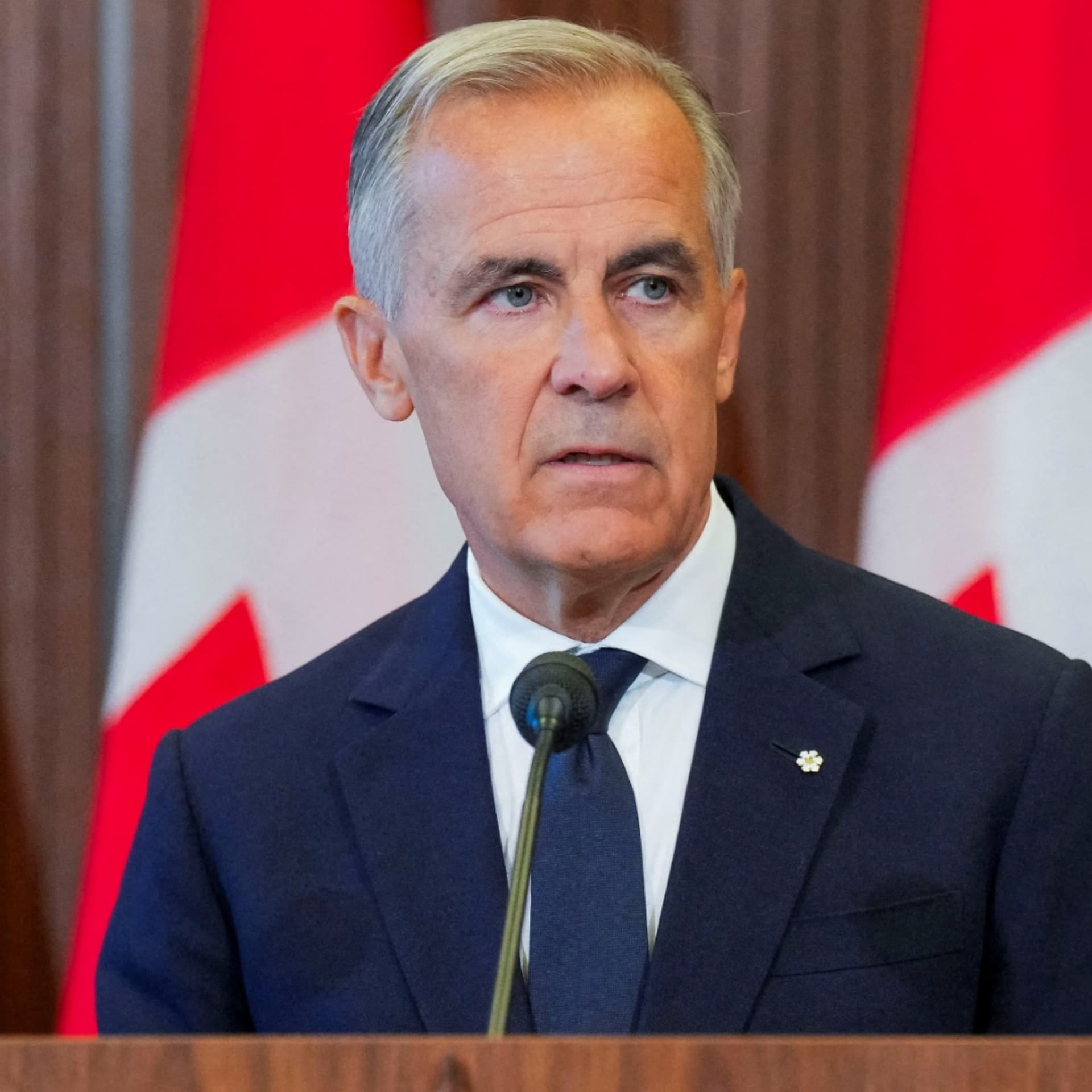
The Canadian prime minister, Mark Carney, has said the trade war with the United States isn't Canada's choice, but his country is ready to retaliate. Talks between the neighbours collapsed late on Friday, with each accusing the other of seeking last-minute changes to a proposed trade deal. Also, the editor-in-chief of the US military newspaper, Stars and Stripes, raises concerns over censorship after he was dismissed by the Department of Defense for "insubordination". South Korea is sending a commercial vessel on a trial voyage to Europe via the Arctic in an effort to find alternative shipping routes because of war in the Middle East. Scientists in the US say that fish skin beats man-made products when treating people with severe burn injuries. And a humanoid robot has broken the men's world record for the 100-metre sprint set by Usain Bolt 17 years ago.
The Global News Podcast brings you the breaking news you need to hear, as it happens. Listen for the latest headlines and current affairs from around the world. Politics, economics, climate, business, technology, health – we cover it all with expert analysis and insight. Get the news that matters, delivered twice a day on weekdays and daily at weekends, plus special bonus episodes reacting to urgent breaking stories. Follow or subscribe now and never miss a moment.
Get in touch: globalpodcast@bbc.co.uk
Photo: Canada’s Prime Minister, Mark Carney, speaks to the media suspending trade negotiations with the United States, in Ottawa, Canada.
Credit: REUTERS/Chris Tanouye