In short
Global News Podcast Summary: Episode - "China makes trade deal with Canada amid US tariffs"
Overview The episode discusses the recent trade agreement between Canada and China, set against the backdrop of U.S. tariffs imposed during Donald Trump's presidency. The podcast highlights various global events, including Taiwan's tech investment in the U.S., genocide charges against Myanmar, South Korea's former president's sentencing, and preparations for the Africa Cup of Nations final.
Key Segments
Trade Agreement Between Canada and China
- Main Point: Canada has announced a strategic trade agreement with China amid shifting geopolitical alliances influenced by U.S. trade policies.
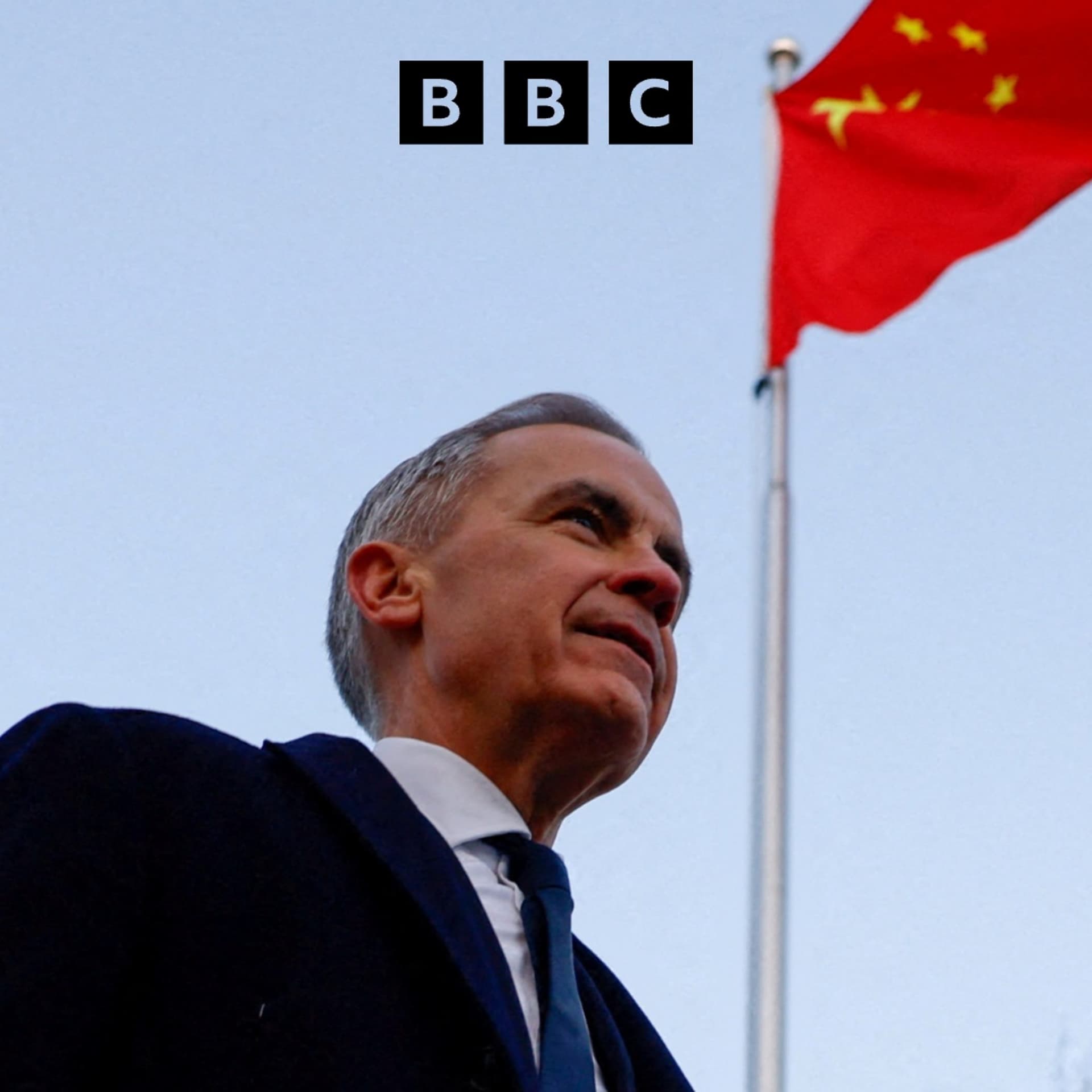
- Speaker: Canadian Prime Minister Mark Carney emphasizes a need for Canada to adapt to new global realities, suggesting that the relationship with China has become "more predictable" than with the U.S.
- Details of the Agreement:
- China will export 49,000 electric vehicles to Canada at preferential tariff rates.
- Canada will benefit from reduced tariffs on agricultural products like canola seeds.
- Analysis:
- This deal indicates a significant shift in Canada's foreign policy as it seeks to diversify its economic partnerships away from the U.S.
- Correspondent Stephen McDonnell highlights concerns regarding the U.S. administration's chaotic approach to international relations, suggesting it may have driven allies like Canada closer to China.
U.S.-Taiwan Trade Agreement
- Development: The U.S. announced a trade agreement with Taiwan, which includes lowering tariffs on Taiwanese goods in exchange for a $250 billion investment from Taiwanese tech firms.
- Chinese Reaction: Beijing criticized the deal, viewing it as a provocative act against its territorial claims over Taiwan.
Myanmar's Defense at the International Court of Justice
- Context: Myanmar is defending itself against genocide charges brought by Gambia regarding the Rohingya people.
- Key Points:
- The case represents a significant moment in international law, as Gambia argues that genocide is a global concern.
- Reid Brody, a war crimes prosecutor, notes the difficulty of proving genocidal intent, which is critical for the case's outcome.
South Korea's Former President Sentenced
- Event: Former President Yoon Suk Yeol was sentenced to five years in prison for abuse of power and the declaration of martial law in 2024.
- Public Sentiment: The ruling is seen as a historic moment, with widespread public outrage over the actions taken during his presidency.
Africa Cup of Nations (AFCON)
- Focus: Morocco prepares to face Senegal in the AFCON final, aiming to win the tournament for the first time in 50 years.
- Impact of the Event: The tournament is viewed as a significant investment in Moroccan culture and society, despite some public concerns regarding the costs involved.
Additional Insights
- Iran Protests: Reports indicate an ongoing crackdown on protests in Iran, with civilians speaking about their struggles under the regime and the impact of communication blackouts.
- Weight Loss Drugs Discussion: The episode briefly touches on the development and societal implications of weight loss drugs, highlighting their effectiveness and the associated stigma around obesity.
Conclusion This episode of the Global News Podcast provides a comprehensive examination of how global dynamics are shifting, particularly in light of U.S. policies under Donald Trump. It underscores the complexities of international relations as countries navigate trade agreements and political turmoil while reflecting on significant societal issues.
For further details, listeners are encouraged to subscribe to the Global News Podcast for daily updates.
Written by AI. May contain mistakes. Listen to the episode to check what was said.
Chapters
Tap a time to open that second in VOCanada-China Trade Partnership
0:47 to 2:14
Discussing the implications of the new Canada-China trade deal.
“I'm Julia McFarlane and at 16 hours GMT on Friday the 16th of January, these are our main stories.”
Geopolitical Implications of Trade
2:14 to 4:40
Exploring the security concerns surrounding Canada's trade with China.
“Relations between Beijing and Ottawa have plummeted over the past decade.”
China's Strategic Positioning
4:40 to 6:05
Analyzing how China's trade strategies are benefiting from US policies.
“you know, these countries, I mean, do they also trust the Trump administration?”
Taiwan's Trade Agreement with the US
6:05 to 8:04
Examining the significance of the US-Taiwan trade deal amid rising tensions.
“Chinese businesses are growing and it comes to the tech sector.”
Taiwan's Sovereignty and Chinese Response
8:04 to 10:30
Understanding China's perspective on Taiwan's sovereignty and US involvement.
“So is this more about just Taiwanese sovereignty?”
Myanmar's Genocide Case at the ICJ
10:30 to 14:02
Details on Myanmar's defense against genocide charges at the International Court.
“And for more in-depth analysis on this deal and what it means for the global economy, you can go to our Daily Explainer on YouTube.”
Genocide Allegations Against Myanmar
14:02 to 15:19
Discussion on the allegations of genocide against the Rohingya in Myanmar.
“And at the time, UN investigators concluded that there were reasonable grounds to believe that acts of genocide had been committed.”
The Development of Weight Loss Drugs
15:19 to 19:22
Exploration of the history and impact of weight loss drugs like Ozempic.
“We finally have hope that after decades of suffering, there might be accountability.”
Oprah's Experience with Weight Loss Drugs
19:22 to 20:30
Discussion on Oprah Winfrey's use of weight loss drugs and the challenges of maintaining weight loss.
“I feel even more proud and emotional than I really expected.”
Protests and Crackdowns in Iran
20:30 to 23:34
Reporting on the ongoing protests in Iran and the government's crackdown response.
“In Iran, the communications blackout is now in its eighth day.”
Show all 13 chapters
US Military Strategy Regarding Iran
23:34 to 28:00
Analysis of the current US military strategy and regional responses concerning Iran.
“Lucy Williamson reporting from the Iran-Iraq border.”
Political Turmoil in South Korea
28:00 to 30:22
Learn about the recent sentencing of President Yoon Suk-yul and the implications for South Korea's democracy.
“they would not comply with what they viewed as an attempted coup.”
Africa Cup of Nations: Morocco's Journey
30:22 to 33:31
Explore Morocco's hosting of the Africa Cup of Nations and the cultural impact of the tournament.
“Morocco are just one win away from claiming the Africa Cup of Nations title for the first time in 50 years.”
Transcript
Automatic transcript. May contain errors.0:00This BBC podcast is supported by ads outside the UK. If journalism is the first draft of history, what happens if that draft is flawed? In 1999, four Russian apartment buildings were bombed, hundreds killed. But even now, we still don't know for sure who did it. It's a mystery that sparked chilling theories. I'm Helena Merriman, and in a new BBC series, I'm talking to the reporters who first covered this story. What did they miss the first time? The History Bureau, Putin and the apartment bombs. Listen on BBC.com or wherever you get your podcasts. This is the Global News Podcast from the BBC World Service.
0:47I'm Julia McFarlane and at 16 hours GMT on Friday the 16th of January, these are our main stories. China and Canada announce a major strategic partnership. Could this be the beginning of the end of Pax Americana? we get the view from inside China. In a separate development, the United States and Taiwan have reached a trade agreement that reduces import taxes on goods from the island, while increasing Taiwan's technology investment in the US. And Myanmar has begun its defence at the UN's highest court against charges of carrying out genocide against its Rohingya minority. Also in this podcast, people fleeing the deadly crackdown inside Iran offer a rare glimpse of the horrors suffered by those taking to the streets.
1:36And... There were two scientists who were noticing that type 2 diabetics were often people living with obesity. And so when they saw this weight loss, they thought, oh my gosh, we would not just be a treatment company, we would be a prevention. We hear about the history of weight loss drugs.
1:57Donald Trump is fond of calling himself a great peacemaker, able to persuade foreign leaders to put aside their differences. Well, a new trade deal agreed by Canada and China was not brokered by President Trump, but it may not have happened without him. Relations between Beijing and Ottawa have plummeted over the past decade. China has accused Canadian citizens of spying. Canada has accused China of election interference. But US tariffs have forced other countries, even its neighbour and close ally Canada, to seek out new partners. Speaking in Beijing, Prime Minister Mark Carney said Canada had to adapt to a new reality.
2:39Canada can thrive in a new system, but to do so, we must work at speed and scale to find new partners. The deal will see China export 49 ,000 electric vehicles to Canada at a preferential tariff rate. And China will reduce tariffs on Canadian agricultural products like canola seed, commonly used in cooking oil. Our correspondent in Beijing, Stephen McDonnell, told us the agreement represents a major strategic shift. Mark Carney said that his government's relationship with China was actually more predictable than that with the US and that the fruits of that predictability had panned out in this trip.
3:20You know, years ago it would have been unthinkable to hear a Canadian Prime Minister speaking like this. Thus is the nature of the meltdown that Canada has had with the Trump administration. Stephen, everything we've heard today has been very much within the narrative of mutual trade. But it seems striking that, and of course we won't have to remind listeners, that the US has made threats to Greenland, a NATO country, over what it sees as the Chinese and Russian threat in the Arctic. Are there not security concerns if Canada, its neighbour, starts getting closer with Beijing, even if only so far on a trade basis?
4:02Well, it's interesting. Mark Carney was asked about this in his press conference today, and he's said similar things to what you've heard from the likes of the Australian government. and the British government for that matter, that you can trade and you can have that sort of relationship and you can have these other areas where you completely disagree with one another. He spoke about these security guardrails. So in other words, Canada and China, they can cooperate on renewable energy, they can have trade. And yet still, there'd be other areas where they frankly don't trust one another when it comes to cyber security or what have you.
4:39But then again, you know, these countries, I mean, do they also trust the Trump administration? This is the problem. When you're talking about things like the US threatening invading Greenland, what Mark Carney also said is we're a NATO member. So, you know, they can't abide by the US making threats to a fellow NATO member. And Canada is supposedly the US's closest ally. So all of this is breaking down to tell the truth. And it's going to be very interesting in the coming years where it all falls, because I think many analysts would say that Donald Trump and his government have considerably underestimated the damage that their attacks on Western allies and the like have had, and the possibility for that to really break down all of the West.
5:29And this is just a huge gift to Xi Jinping. He's been able to forge these relationships with countries, closer relationships he never would have been able to forge if it was not for the chaos that Donald Trump has inflicted on the world. President Xi will no doubt be enjoying this. He's been treating today really as a giant storefront for China saying he is open for business. Yeah, and you can see China's messages to the world. It's like, look, we are this bastion of stability and you compare us to the US and people are often making this comparison. Chinese businesses are growing and it comes to the tech sector.
6:11They're kicking all these goals, renewable energy, electric vehicles. And the comparison is with, well, what frankly is seen as chaos, putting tariffs on supposed allies and the like. And so, yeah, it's been brilliant for Beijing in terms of forging these new alliances. I mean, India is another good example. There's a country which should be much closer to the US than it is. Instead, what's it doing? It's getting closer to China. And again, this is all just win, win, win, win, win for the Chinese government. Stephen McDonald speaking to me from Beijing. Well, as Prime Minister Carney was announcing the Canadian deal with China, Beijing was criticising the US for reaching its own trade agreement with Taiwan.
6:59On Thursday, Washington announced it would lower tariffs on most of the island's goods in exchange for Taiwanese tech companies investing$250 billion into the US. The two governments have been at odds over the production of semiconductor chips, a vital component of everything we need to power modern life, from smartphones to cars. Beijing, of course, views Taiwan not as a country in its own right, but as a breakaway province of China. And it's reiterated that it opposes any agreements that Taiwan strikes with other countries. Kerry Allen is our China media analyst. There's very, very strong messaging in Chinese state newspapers saying that Chinese officials strongly deplore the agreement with the US and Taiwan, and they're calling on Washington to revoke the deal.
7:46And newspapers like the Global Times, which are normally very, very anti-US, are saying that they feel the Taiwan's government is selling out Taiwan to court Washington. And they're saying of the US that it's putting its own interests first and has no intentions of protecting Taiwan, say if there was an invasion. That's very interesting. So is this more about just Taiwanese sovereignty? I mean, could China also be angry that the US might have an edge, a business advantage in the tech sector? I mean, China will absolutely be angry with the deal and the idea that Taiwanese firms like TSMC, major semiconductors firms, will be expanding their production capacity in the US.
8:24I mean, many analysts will see this as a strategic move in terms of the China-US artificial intelligence chip race. But I have to say that when it comes to Taiwan's sovereignty, I mean, this is a message that China very forcefully makes constantly. It says that Taiwan is part of Chinese territory. This is a message that Beijing officials are constantly reiterating. I mean, it generally does anyway, any kind of interactions between US and Taiwanese officials, diplomatic meetings between these as provocative, as ways of provoking China directly. I mean, in the past, what we've seen is China has sent its military out, encircling Taiwan and threatening military activity whenever there's been meetings between US and Taiwanese officials.
9:07Let's zoom out a little, Kerry. I mean, when you look at Chinese social media, what does the average Chinese citizen make of President Trump and his America First policies and how they are impacting the wider world? Well, I would say they have changed a lot since Trump's first presidency. So in the past, Trump used to be a kind of love to hate figure in China. People often actually used to call him on platforms like Sina Weibo, which is China's equivalent of a platform like Facebook, Comrade Trump. And there used to be a lot of discussion about him. People used to generally talk about how they think that Trump's policies back then were in a way able to benefit China.
9:45But the messaging has really changed, I would say, in the last year since Trump entered his second term. There's been a real emphasis on one phrase I see quite often in state newspapers is unilateralism, this idea that the US wants to dominate other countries, particularly smaller nations. And media are much more, social media users as well, much more angry about Trump now, very critical. You'll often see him described as a madman on these platforms. People will say that he's looking to bring war to the world for his own selfish aims. So there's a really different messaging now. When people read about Trump, they actually feel quite passionately angry and quite concerned about whether he might bring war close to China, much as they see him doing in regions like Iran.
10:29Kerry Allen. And for more in-depth analysis on this deal and what it means for the global economy, you can go to our Daily Explainer on YouTube. Just search there for BBC Global News Podcast. In our latest video, the BBC's economics editor Faisal Islam looks at how the global financial landscape has changed following Mr Trump's America First policies and worldwide tariffs. The government of Myanmar has begun its defence against charges of genocide at the International Court of Justice, or ICJ, the highest court in the UN. The case is being brought by the Gambia, which has accused Myanmar of violating the UN Genocide Convention during a military operation against the Rohingya people in Rakhine state back in 2017.
11:15Reid Brody is a war crimes prosecutor and member of the International Commission of Jurists who's been following the case in The Hague. He spoke to James Menendez. In 2019, the Gambia brought this case on behalf of the international community, arguing that genocide is a crime of concern to all states and that under the Genocide Convention, any state party to the convention can invoke another state's responsibility, even if it isn't directly injured. And the ICJ accepted that theory a few years ago and let the case proceed. And in fact, that principle became a template for South Africa's later case against Israel for alleged genocide in Gaza, which is now pending.
11:57And what makes this case striking at this time is the contrast. While some of the world's most powerful states, including the United States and Russia, are openly flouting international law, small Gambia, a West African country with no direct state, turns to international law to defend the people on the other side of the world. It is all about genocide. What does the Gambian need to prove in this case? Legally, it has to show two things. First, that the prohibited acts occurred, like killings, serious bodily harm, conditions of life meant to destroy the group. And second, genocidal intent, an intent to destroy the Rehingya as a group in whole or in part.
12:43And that's probably the most difficult thing to prove in international law. And in fact, the ICJ has never ruled that a state itself was responsible for committing genocide. In the former Yugoslavia, the court said only if genocide is the only reasonable inference from a pattern of conduct can you find genocide. So how the court reasons here about intent is going to shape genocide law for years to come, including in South Africa's genocide case against Israel. Just remind us of the facts of what happened to the Rohingya, because this is about 10 years ago now, isn't it? Right. So this case concerns the Rohingya, one of the most vilified and persecuted minorities in the world, a Muslim minority in Myanmar who were stripped of their citizenship in 1982 and rendered stateless, subjected to restrictions on movement, education, marriage, health care, as well as many waves of violent attacks.
13:43And that long persecution culminated in the so-called clearance operations in 2016-2017. Villages burned, mass rape, killings, which drove some 740 ,000 Rohingya into Bangladesh in a matter of weeks. And at the time, UN investigators concluded that there were reasonable grounds to believe that acts of genocide had been committed. And what about Myanmar's defense for its operations in Western Myanmar against the Rohingya? I mean, I think they're describing it as counterterrorism. I mean, there were armed groups operating in that part of the country at that time, weren't there? Well, at the time, there was a very small insurgent.
14:27Now, in fact, there are armed groups operating in control half of Rakhine State from where the Rohingya fled and where over a million still live. But counterterrorism doesn't really answer the legal question. I mean, even in an armed conflict, genocide can occur. So the real issue is, were the Rohingya targeted because of who they were? And does the overall pattern show an intent to destroy the group? Calling it counterterrorism doesn't immunize conduct that meets the convention standards. Of course, at the heart of this case, are the people involved? There are hundreds of thousands of survivors now living in camps in Bangladesh.
15:04I mean, do you know what they're saying about these hearings, what the case means to them? Many Rohingya actually made the long trip to The Hague. And what they're saying is it's a rare moment when their suffering becomes visible in a world courtroom. Survivors told me things like our voices are finally being heard. We finally have hope that after decades of suffering, there might be accountability. I mean, the case is broadcast. And I know that many people in the one million population of refugees in Cox's Bazaar are listening and watching this case. International lawyer Reid Brody. Weight loss drugs and injections are never far from the headlines these days, it seems.
15:46The treatments are quickly and radically changing lives and societies around the world. But the story of how these drugs were developed is a tale in itself. Amy Donilon has written a book about it called Off the Scales, the inside story of a Zempik and the race to cure obesity. She told Anna Foster, while many people know it started as a diabetes drug, they may not know just how long ago it was. A lot of people think that these drugs really just came out in the past few years and don't think too much about the development. So it really kind of goes back to the 1980s when there was two teams, one in Mass General in Boston and one in the University of Copenhagen that were essentially in this arms race, trying to, first of all, find this GLP-1, which is the secret sauce in Ozempic and Manjaro and all these other drugs that people are now using for diabetes and weight loss, trying to prove, first of all, that it existed.
16:42So it was like a concept thing. And then also to prove that it helped to reduce blood sugar. And it was just from that early stage that they managed to do all of that. And as it went into the pharmaceutical development, it was when they really started to see the weight loss, which they really just saw as a side effect, not the purpose of these drugs. And what was the genesis of that progression, as you say, from it being simply a diabetes drug to them realising that the side effect was something that was actually really useful to target in itself? Novinordisk is the company that makes Ozempic and Wigovie is the obesity medication.
17:17So they were like the titan of insulin and diabetes. And there were two scientists working in Novo Nordisk who were really noticing, first of all, that obesity levels were rapidly increasing throughout the world and also that their patients. So the type two diabetics were often people living with obesity. And so when they saw this weight loss, they thought, oh, my gosh, we would not just be a treatment company. We would be a prevention. And they got very, very excited about that. But unfortunately, there was a very big stigma around obesity and the causes of it. And even the executives at Nova Nordisk, you know, really kind of thought this has nothing to do with us.
17:58This has nothing to do with pharmaceuticals. This is really a lifestyle thing. These are choices that people are making. They're eating too much. They're not moving enough. And what has this got to do with us? And that battle is really explored in the book and is really quite amazing. Yeah. And I suppose one of the great discussions now is that when people have been on them, they've lost the weight they want. It's whether it's difficult to come off, how long you can reliably be on them for. And the fact that we have tested them over a period of time will potentially at least be helpful with that decision that people are making.
18:28Yes. And I mean, we have a very well-known live case study happening now, which is Oprah Winfrey, who is talking this week at length about the fact that she was on these drugs. They really helped her, but then she came off them and she put 20 pounds back on within a year. So I think we've got data as well from the University of Oxford. There's an awful lot of data now suggesting that when you come off these drugs, it's not that they rewire your brain or they rewire your gut. It's that actually you do seem to revert back to the way your body was behaving before. So a lot of people who are living with obesity talk about this food noise, which is kind of an incessant chatter in their head telling them to eat more, eat more, eat more.
19:08And for many people, that seems to switch off when they're on these drugs. And that's almost, they say, a bigger benefit than the weight loss. Amy Donilon, author of Off the Scales, the inside story of Azempic and the race to cure obesity.
19:25Still to come in this podcast. I feel even more proud and emotional than I really expected. You could feel it was a continental celebration. Whatever happens, I think Morocco already won. Can Morocco end 50 years of hurt in the Africa Cup of Nations this weekend?
19:52If journalism is the first draft of history, what happens if that draft is flawed? In 1999, four Russian apartment buildings were bombed, hundreds killed. But even now, we still don't know for sure who did it. It's a mystery that sparked chilling theories. I'm Helena Merriman, and in a new BBC series, I'm talking to the reporters who first covered this story. What did they miss the first time? The History Bureau, Putin and the apartment bombs. Listen on BBC.com or wherever you get your podcasts.
20:30In Iran, the communications blackout is now in its eighth day. It makes reporting and monitoring of the crackdown on anti-government protesters exceptionally difficult. But some of those caught up in the violence in recent days have now made it to the border between Iran and Iraq, where they've been speaking to our Middle East correspondent Lucy Williamson.
20:54At Iran's mountainous border crossing with Iraqi Kurdistan, the stern face of Iran's former supreme leader Ayatollah Khomeini peers down at the trickle of Iranians leaving the country. Just past the last Iraqi border post, there's an Iranian flag fluttering in the snow. Iran has shut down the internet and blocked phone calls into the country, but its borders are still open. Inside the arrivals hall, dozens of men, women and children wait for passport checks. Iranians don't need a visa to cross here, and many have relatives on the Iraqi side of the border. No one told us they were fleeing Iran because of the government crackdown, but one man showed us several bruises on his face, saying security forces had shot him with pellets during a protest in central Iran last Friday.
21:46He asked us to hide his identity. I was hit in the face by Iran's seven pellet rounds. They struck above my eyelid, on my forehead, my cheek, my lip, under my ear and along my jaw. I had to use a razor blade to cut one of the pellets out. Five are still stuck in my face. I was too afraid of being arrested to get medical help. Iran's regime has treated these protests as an existential threat. Its crackdown seems to be working, with protests largely dying out. But several people here, including the protester, told us that demonstrations had continued into this week. Demonstration was still continuing in Fardis, Mallard and some areas of Tehran.
22:33My friends were there. We were constantly on the phone. On Tuesday night, the protests were still going on, but I haven't had any updates since then. The BBC has seen no hard evidence that street protests are continuing. very little footage is trickling out of Iran and the reports we've heard here are impossible to confirm. But even with protests ebbing away, the economic problems that sparked this crisis remain. A teacher here told us her salary only covered the first 10 days of the month and that Iranians just wanted their basic rights. We are waiting to see what Trump does. In the meantime, civilians are getting killed.
23:16I don't care who the leader is. I only want my economic situation to improve. Hidden behind this mountainous border, Iran's regime is reimposing its control. But that repressive control hides the regime's growing fear, as Iranians lose faith in its power to deliver protection from foreign attacks or prosperity at home. Lucy Williamson reporting from the Iran-Iraq border. Well, the United States appears to have paused any potential military strike on Iran, at least for now. Donald Trump had suggested one might be imminent, but appeared to back off when he said that the killing in Iran had stopped and there had been no executions there.
24:04Various outlets are reporting that he was persuaded not to go ahead after regional leaders warned him it could very well lead to further instability. Salman Sheikh is a Middle East expert and former advisor to Kofi Annan, and Anshul Pfeffer is The Economist's Israel correspondent. Anna Foster asked Salman Sheikh first why regional powers such as Saudi Arabia and Israel, who are no friends of Iran, appear to have stopped US military strikes on it. They know the dangers of military action, which can break open a country, but where you're not able to actually put it back together again. You know, I was in shortly before the Iraq invasion.
24:44We met with this Saudi foreign minister in Paris, we at the UN, and he told us with a tear in his eye, they're going to break this place and it's going to create immense harm. So I think what we have today in the emerging new world order is actually where Middle East actors, particularly Gulf actors actually have agency. They're not spectators now. And I think they are being listened to by President Trump. Do you think their calculations would be different, Sam, and if there was an obvious focused opposition ready to go? Yes, potentially. But right now, I think even President Trump and the people around him don't think that that's the case.
25:24So I think the policy right now, as much as we can defer is containment. Containment, give us time to be able to see are negotiations possible with the current Iranian regime, which has been doing horrible things and is a transition possible in the country? Because I think most Iranians would say that this regime has lost legitimacy. But, you know, can security be established? Can a leadership emerge? What about issues of the economic conditions and having the means to be able to lift sanctions and things. And of course, very real things like the missiles, the nuclear material, probably more than 2 ,000 kilograms, which is out there somewhere between, enriched between 3.67 % to 60%.
26:15So these are all very serious things which have to be addressed. Yeah, various concerns. And Anshul Pfeffer, the Israeli security service, is not probably as much about Iran as the Iranians themselves, probably more about what's going on inside the country than anybody else. And they, it seemed, also agreed that now was not the moment for a US strike. Well, from Israel's perspective, I think the main concern here was that a US strike would set off, would spark off a chain of Iranian counterstrikes, both at the Gulf countries and at Israel. And even though Israel did go to war seven months ago, back in June, against Iran, That was something which had been prepared over months, even over years.
26:58And the kind of war that you could expect to have with Iran, as we saw back in June in previous Iranian strikes, would mean massive salvo of missiles and drones towards Israel and other targets in the Middle East. That's the kind of thing that you need to prepare a very robust missile defense network. You need hundreds, even thousands of interceptor rockets. Those were depleted to a degree back in June. Obviously, now they're manufacturing more of those. But I think at this point, both Israel and the other countries in the region aren't quite ready for another round of warfare with Iran. And that's why Netanyahu was urging Trump to perhaps pause this a bit.
Read the full transcript
27:40Anshal Pfeffer, the Israel correspondent from The Economist. And you also heard from Salman Sheikh, who's a Middle East expert and former advisor to Kofi Annan. Now let's go back just over a year to South Korea.
27:57Within hours, thousands of protesters made it clear they would not comply with what they viewed as an attempted coup. Withdraw the martial law. Arrest Yoon, they chanted. That was the BBC's Laura Bicker reporting there in December 2024, when President Yoon Suk-yul, facing growing political opposition, briefly declared martial law and blocked members of parliament from the National Assembly building. Today, he's been sentenced to five years in prison for a number of offences, including abuse of power and obstruction of justice. Our Seoul correspondent Jake Kwon told me more. We were in the crowd of Yoon supporters who were watching this happening outside the courthouse And it became very evident that this day was not going to go the way that Mr.
28:47Yoon would have liked. And the supporters started yelling abuses at the large screen where the judge was presenting his ruling. And what the judge was saying was that Mr. Yoon was empowered as the president and he had sworn to protect the Constitution and law. but he had turned its back on them by ordering the presidential guard to prevent his arrest, as well as what is essentially cutting many corners when he declared martial law on December 2024. So this is going to have a lot of implications. This is only the first of the many trials that he has going through right now. And of course, the bigger one is the insurrection charge, which we will see the result in February.
29:27Jake, as far as the public is concerned, how has that day been seen? by South Koreans? Well, it's probably the most shocking moment of South Korean history in my memory. I mean, South Korea had the martial law last time 44 years ago. And since then, it really had built a reputation as Asia's most prominent democracy. We have a lot of freedom that a lot of South Korean people enjoy here. So when the martial law happened, a lot of people were very upset, shocked, and thousands of people actually came out to the street to really put themselves in the way of armored vehicles that the military had rolled out that night.
30:04And I think some of this anger was reflected in what the judge was telling the crowd today, saying that, you know, Mr. Yoon is not showing any remorse, any repentance for what he had done, that he had plunged the country into a political crisis. Jake Kwon speaking to me from Seoul. To football now, and the hosts Morocco are just one win away from claiming the Africa Cup of Nations title for the first time in 50 years. The government there has invested huge amounts of money into the game as a tool for societal and cultural change. The Moroccan side, the Atlas Lions, will face Senegal in Sunday's final.
30:42Now, every host claims it will put on the best AFCON ever. But how has this tournament gone so far? And do people think it's been worth the cost? BBC Sport Africa's Ian Williams reports now from Rabat. wherever the africa cup of nations finds its home the colors and the sounds never change here morocco have been successful on the pitch what about off it hassan has a stall in a great location on the edge of the main square at the market entrance decked with shirts hats flags and even replica trophies it's mostly moroccan colors but other countries appear as well we have give away our products as gifts for free.
31:29Next up, the AFCON branded tram, a ride which takes me to the fan zone, where we bumped into Yousef, a student working on the trams, helping visitors find their way to stadiums. There is a very big difficulties, but I think we did it. And I see people help. We are Moroccans. The people who come from the other countries like this competition. The Atlas Lions are hosting AFCON for the first time since 1988, but playing in the Moroccan winter means conditions haven't been ideal. The first few weeks were very wet. But the pitches held up, something which pleased Omar Khayyari from the Royal Moroccan Football Federation.
32:08We are tremendously happy about our technology, and we are very happy also because it shows to the world that sometimes Africa can do it better than other countries. And lastly, and maybe the more important, all of this technology is for working companies. Organisers told me they're happy with ticket sales, which are up on Ivory Coast two years ago. But we did witness supporters sometimes having issues, getting in amid strict crowd control. Last year's Gen Z protests showed there is discontent with some of the investment around football. But the new railway station outside the Prince Mule Abdallah Stadium has eased traffic congestion on match day, As fans here on the final leg of our journey pour out of its sleek new glass entrance, do they think AFCON has been worth the money?
32:57We're really proud to be Moroccan in 2026 and to host the African Cup of Nations. There aren't any benefits, but with the time I think that it will be good. I think it's bringing a lot of attention in Morocco, bringing a lot of investment, so I think it's a really good thing. While hosting AFCON comes at a cost for these fans, victory in Sunday's final will be worth every dirham if it ends 50 years of hurt. And that was BBC Sport Africa's Ian Williams reporting from Rabat. And that's all from us for now, but there will be a new edition of the Global News Podcast later. If you want to comment on this podcast or any of the topics covered in it, you can send us an email.
33:41The address is globalpodcast at bbc.co.uk. This edition was mixed by Joe McCartney and the producer was Paul Day. The editor is Karen Martin. I'm Julia McFarlane. Until next time, goodbye.
34:01If journalism is the first draft of history, what happens if that draft is flawed? In 1999, four Russian apartment buildings were bombed, hundreds killed. But even now, we still don't know for sure who did it. It's a mystery that sparked chilling theories. I'm Helena Merriman, and in a new BBC series, I'm talking to the reporters who first covered this story. What did they miss the first time? The History Bureau, Putin and the apartment bombs. Listen on BBC.com or wherever you get your podcasts. you
From the publisher
Against the backdrop of Donald Trump's tariffs, America's closest ally, Canada, has struck a trade agreement with its rival, China. Speaking in Beijing, Canadian Prime Minister Mark Carney said the relationship with China had been "more predictable" than the one with the US. Is President Trump pushing his allies into Beijing's orbit? Also: Taiwan's tech firms will invest $250 billion in the US in exchange for lower tariffs. The government of Myanmar has begun its defence at the International Court of Justice against charges that it committed a genocide of the Rohingya people. South Korea's former president Yoon Suk Yeol is sentenced to prison for his 2024 attempt to impose martial law. And we take a look at the Africa Cup of Nations football tournament, as host nation Morocco prepares to face Senegal in the final.
The Global News Podcast brings you the breaking news you need to hear, as it happens. Listen for the latest headlines and current affairs from around the world. Politics, economics, climate, business, technology, health – we cover it all with expert analysis and insight.
Get the news that matters, delivered twice a day on weekdays and daily at weekends, plus special bonus episodes reacting to urgent breaking stories. Follow or subscribe now and never miss a moment.
Get in touch: globalpodcast@bbc.co.uk