
In short
The episode of BBC Global News covers: US “economic outcast” sanctions on Iran after a six-month on-off conflict; China’s opposition to the sanctions and possible retaliation; trade impacts for India; Haiti’s gang violence and election fears; East Africa flooding risk from a supercharged El Niño; Europe’s drought effects on the Danube and Austria’s hydropower; China’s robot-driven manufacturing shift; and Australia’s chart rules banning primarily AI-made music.
Guests/backgrounds
No studio guests. Reporting by BBC correspondents: Lise Doucette (chief international correspondent), Stephen Macdonald (Beijing), Azadeh Mishiri (South Asia), Paul Moss (World Affairs), Thomas Mokwana (Africa), Hannah Mullane (Business Daily), Laura Bicker (China), Simon Atkinson (Sydney).
Key claims/examples
US targets “secondary sanctions” and threatens no one is above sanctions; China says dealings are legal without UN Security Council action and warns of countermeasures; India’s Iran trade drops from $3.5bn (2019) to $1.2bn (2026) and seeks food/pharma exemptions; Haiti: 47+ killed in Kenshoff; El Niño could displace up to 3 million; Danube water at lowest in 30 years, Greifenstein capacity cut, Austria hydropower earnings down €370m; China has more factory robots than the rest of the world combined; Australia bans AI-vocal/drum songs like Josh Fawaz’s “Like a Prayer” from charts.
Written by AI. May contain mistakes. Listen to the episode to check what was said.
Chapters
Tap a time to open that second in VOUS Sanctions on Iran and China's Response
0:45 to 2:14
Discussion on US sanctions against Iran, China's opposition, and implications for global oil trade.
“Hi, I'm Ankur Desai and at 1400 GMT on Tuesday the 25th of August, these are our main stories.”
Iran's Strategy Against Sanctions
2:14 to 3:52
Exploration of Iran's historical experience with sanctions and its response to recent economic pressure.
“on how to circumvent and subvert sanctions.”
China's Legal Stance on Trade with Iran
3:52 to 5:59
Insight into China's legal viewpoint regarding its trade relations with Iran amid US sanctions.
“Lin Jian is the Chinese Foreign Ministry spokesperson.”
Impact of US Sanctions on China
5:59 to 8:00
Discussion on how US sanctions on Iran affect China's economy and political stance.
“and so they're going to be coming up against it and this is just months before Xi Jinping and Donald Trump are supposed to be meeting in the US.”
India's Trade Relations with Iran
8:00 to 9:30
Examination of India's trade dynamics with Iran and the implications of US sanctions.
“Now, the United States has issued waivers in the past to allow that to happen.”
Haiti's Instability and Violence
9:30 to 12:12
Analysis of the escalating gang violence in Haiti and its impact on the upcoming elections.
“residents, there were police who tried to intervene, but in the end, they proved completely ineffectual.”
Challenges Faced by Haiti's Security Forces
12:12 to 14:00
Discussion on the effectiveness of Haiti's police and UN intervention efforts against gangs.
“Also enjoy a range of our podcasts ad-free with an Amazon Music subscription.”
Impact of Climate Change in Africa
14:00 to 17:02
Learn about the challenges faced by African countries due to climate change and extreme weather events.
“Here in Nairobi, you often see roads flooding and many times people drowning in their homes and in their cars in the most severe cases.”
Drought's Effect on Europe's Energy Supply
17:02 to 20:14
Discover how droughts are impacting energy production in Austria and the shift towards renewable sources.
“As we were hearing there, severe climate changes are continuing to impact the world as we know it.”
China's Robot Revolution
20:14 to 23:57
Explore the advancements in robotics in China and their implications for the workforce.
“China's robots sing, they dance and they run marathons.”
Show all 11 chapters
AI and Australia's Music Charts
23:57 to 26:57
Understand Australia's new rules banning AI-generated music from official charts.
“The Australian Recording Industry Association says it's banning music primarily made by artificial intelligence from Australia's official charts.”
Transcript
Automatic transcript. May contain errors.0:00This BBC podcast is supported by ads outside the UK. If you are currently overpaying on software to run your business, remember this number, 10 ,000. That's the number of new businesses that join Odoo per month. Join Odoo today at odoo.com. That's O-D-O-O dot com.
0:33podcasts. You can also enjoy a range of our podcasts ad-free with an Amazon Music subscription. This is the Global News podcast from the BBC World Service. Hi, I'm Ankur Desai and at 1400 GMT on Tuesday the 25th of August, these are our main stories. The US warns of serious consequences if countries do business with Iran. But China, the biggest buyer of Iranian oil, says it's opposed to what it called illegal unilateral sanctions. A report says flooding in East Africa caused by a supercharged El Nino could result in the displacement of three million people. And there's mounting concern over Haiti's ability to stage elections this year after another mass killing by armed gangs.
1:21Also in this podcast. This is the visible effect of the man-made climate crisis. Normally, we have two million litres of water each second. That's really a huge amount. But because of the drought, we have just about 600 ,000. Water levels in Europe's second longest river responsible for generating half of Austria's energy are at their lowest levels for 30 years. After six months of conflict with Iran and no peace agreement in sight, the US is a attempting to increase economic pressure on Tehran. It's introducing tough new economic sanctions it hopes will prevent Iran trading with the rest of the world.
2:03Iran has responded in defiance and says its trading partners would not bend to US pressure. Here's our chief international correspondent, Lise Doucette. Iran is arguably one of the world's leading experts on how to circumvent and subvert sanctions. It's lived under one sanction regime or another, both American as well as international sanctions, for more than five decades. During President Trump's first term, when he pulled out of the 2015 landmark Iran nuclear deal, he went to what he called maximum pressure on Iran, which didn't work. Now, during what has been a six-month-long on-off war, the economic pressure has been described as economic fury.
2:48And now Scott Besson, the Treasury Secretary, has announced this new plan, which he calls economic outcast. And it is largely targeting those countries who do deals with Iran, what are called secondary sanctions. Is the United States going to go after China, which at least before the naval blockade was buying up to as much as 90 percent of Iran's oil at a discounted price? Will it aggressively go after Chinese banks, after the small oil refineries known as teapot refineries? Even when Scott Besson was asked about why he hadn't announced specific measures and hadn't even mentioned countries, he said, I don't want to blow up the financial system.
3:31And finally, countries who are very close allies of the United States, including Pakistan and Turkey, depend on their relationships with Iran and are highly unlikely to do anything to harm that. Well, China, which as we heard there, is the biggest buyer of Iranian oil, has said it opposes what it called illegal unilateral sanctions. Lin Jian is the Chinese Foreign Ministry spokesperson. Economic warfare and extreme pressure will not help solve the problems, but will only further intensify conflict, disrupt the global economic financial order, and harm the legitimate rights and interests of other countries.
4:12The top priority now is to cool down the situation and get back to the track of dialogue and negotiation as soon as possible. China will take all necessary measures to firmly safeguard its own rights and interests. Our Beijing correspondent Stephen Macdonald told me more about what we're hearing from Beijing. The view from the Chinese government is, look, our commercial dealings with Iran are completely legal, as opposed to the actions of the Trump administration, which they would say are completely illegal. Because, according to the Chinese government, you know, these sanctions on individuals, on certain vessels, certain companies, including Chinese firms, you can't just sanction those people for having commercial relations with another country, China would say.
5:03This is because the Chinese government says that You've got to put this through the UN Security Council, which the US government has not done. So according to China, this is completely legal in terms of the actions of the Trump administration. And it's threatened unspecified countermeasures in response. So Stephen, does this put China on a collision course with the US? Or are there any other ways around this? Well, to some extent it does. I mean, Scott Besant, the US Treasury Secretary, was asked that at some point the Chinese banks could even be dragged into this. And he's like, no one is above our sanctions.
5:40So imagine Chinese banks being sanctioned by the US. I don't see how it's anything other than a collision course. The problem, of course, for the Trump administration, what it's learnt from the tariff war with China is you can't push Beijing around the way you can push other countries around. and so they're going to be coming up against it and this is just months before Xi Jinping and Donald Trump are supposed to be meeting in the US. Stephen, I guess this conflict, how much is this impacting China already? Well, of course it hurts China at one level because China is the biggest importer of Iranian oil and so obviously it needs and wants that oil and if it's being held up, and we know it is being held up because we've seen the figures.
6:29So that blockade from the US is slowing the supply of Iranian oil into China. However, on another level, China thinks it makes it look good. When I say China, I'm talking about the Chinese government. It thinks that the Trump administration is causing all this global chaos, disruption to global supply chains. It's able to take the high ground and say we don't do this sort of thing. So sure, there's economic pain, And politically, when it comes to international politics, especially the Chinese government thinks it makes it look great when you compare its actions to that of the Trump administration.
7:08India is one of Iran's largest trade partners. From there, our South Asia correspondent Azadeh Mishiri has more. India exports things like rice, tea, sugar, pharmaceuticals. It also imports fresh and dry fruit from Iran. So it goes both ways. But that trade has fallen in recent years. It was at$3.5 billion in exports in 2019. That's now fallen to$1.2 billion in 2026. So India isn't expecting a full body blow from this. What they are hoping for are exemptions as well when it comes to food and pharmaceuticals. Now, what they're really concerned about is energy security, continued disruptions in the Strait of Hormuz.
7:55And that's because India imports about 90 % of its crude oil and it has continued to turn to Russia to fill that gap. Now, the United States has issued waivers in the past to allow that to happen. But what India will be worried about is any follow through on tariffs for major buyers of Russian oil. A brutal attack on a farming community in Haiti has once again highlighted the instability there and increased concerns over the safety and even the possibility of democratic elections, which are planned for December. At least 47 people were killed in a gang raid on a hillside community close to the capital Port-au-Prince, which is controlled for the most part by a coalition of armed gangs.
8:37Many of the dead were people who'd been sheltering in a church in Kenshoff.
8:44I saw 45 to 50 dead people with my own eyes, not counting those they took away with them, and those who are still missing. Those who died were young people who were the future of this country.
8:59We live in humiliation. The government have nothing for us. They do nothing, nothing for us. The blood of the population does not stop flowing in Kenshoff. We can't take it anymore. I heard more from our World Affairs correspondent Paul Moss.
9:39residents, there were police who tried to intervene, but in the end, they proved completely ineffectual. And as we've been hearing, dozens of people were killed. But Haiti is a country where there are police, there is an army, there's some semblance of government, but they actually have almost no power. And the country is effectively run by gangs. And what's awful is this is nothing new. I mean, the current wave of violence began when the last president was assassinated, Jovenel Moïse in 2021. But Haiti has never really had a chance, someone would say. This is a country that when it got independence, France gave it a huge debt in compensation, which it took most of its independence years to pay off.
10:22Then it was ruled by one of the cruelest dictators I think the world has seen, a man called Papa Doc Duvalier. It's a country which suffers from earthquakes, has had a cholera outbreak. There really is no central power and the place is run by marauding gangs. Now, Paul, a new UN gang suppression force has been building up there, but previous UN attempts have failed. So is there a hope that a new one could make a difference when it is fully assembled? I mean, gang suppression force has this optimistic ring about it. But as you suggest, this is just the latest attempt to control things. I mean, first of all, this gang suppression force, when it gets its full complement of police and soldiers, it's supposed to be in October, it'll be five and a half thousand people.
11:01Just to put that in perspective, we're speaking in London, a very calm city by international standards. There are 50 ,000 police and support staff to control this city. They're talking about 5 ,000 to control the whole of Haiti, a country which is in, as you've described, violent chaos. And there have been these sort of forces before. We had the multinational security force that was supposed to be built up by Kenya. That was supposed to control the violence. In fact, they never reached the complement of people. they never had the staff that they needed. And before that, there was a UN stabilisation mission in Haiti from 2004, I think, yes, until 2017.
11:38The legacy of that is all around. So I don't want to be pessimistic, but you can understand why people in Haiti are very sceptical about whether this is going to achieve any more than previous ones. Our World Affairs correspondent, Paul Moss. Still to come in this podcast. A robot can do anything. In two or three years, it can do anything. Is this the workforce of the future? In the future, we can use robots to make robots. We go inside China where the robots revolution is gathering speed. But are they coming for our jobs?
12:28Also enjoy a range of our podcasts ad-free with an Amazon Music subscription.
12:38This is the Global News Podcast. We've heard lots in recent weeks about the extreme weather forecast to take place around the world this year due to Asupa El Nino, a climate pattern in the tropical Pacific caused by warm ocean temperatures. Now it's being predicted that East Africa will be hit by extreme rainfall and flooding later this year, which could leave up to three million people displaced. I got more on this from our Africa correspondent, Thomas Mokwana. The report is a warning from the Danish refugee council here in East Africa. It says that a number of countries, including Kenya, Somalia and Uganda, could be facing higher than usual rainfall.
13:18rainfall. And that falls in line with what global alerts have been that we might be facing an El Nino that is the worst in human memory. The last time this happened in Kenya at a massive scale was in 1998, when rain across 10 months broke the health systems, it broke infrastructure, led to around 100 ,000 kilometers of road being destroyed and up to 2 ,000 deaths. And the last time this happened, also in the region in 2024, much less severe here in Kenya, but severe in Tanzania, around 155 people died and 45 people here in Kenya. Usually when higher than usual rainfall happens across the country, mostly in the central part of this country, it causes a lot of disruption.
14:02Here in Nairobi, you often see roads flooding and many times people drowning in their homes and in their cars in the most severe cases. So you mentioned some of the countries there, Somalia, Kenya, South Sudan, you mentioned Uganda as well, but just how prepared are some of these countries for an event like this? The Kenyan Disaster Authority says that it's preparing for the worst-case scenario. And the same is happening in DRC. DRC is known to be facing Ebola right now, but they might be facing this problem as well because this sweeps across the entire region. Not as severe as Kenya and Somalia, where the government and the Danish Refugee Council are estimating that around 60 to 30 percent of the 3 million people in the worst-case scenario, if they're displaced, will live in.
14:45But the Kenyan government says that it's prepared heavily. Historically, it's not known to prepare effectively for such disasters. Nairobi has a horrible drainage system. Its county government is saying that it's trying to repair that. The Kenyan government is saying that it's trying to make people stock up, especially in the northeastern region, and buy things that you need before this happens. But again, this is something that might happen. And if it does happen, it could mean that these economies suffer greatly because higher than usual rainfall means that the crops that are in these farm fields that are meant to feed these countries, bread baskets, those places might face a disruption.
15:24Destroyed crops means that households are going to have to spend more. And after that, then comes maybe a cycle of drought and farming. So Mali is already facing its worst farming in years. This could be devastating on the drier front when farming hits after this rainfall and more immediately in October when higher than usual rainfall happens. Most of these governments say that they're prepared, but the previous times that they've been tested, they've proven not to be as prepared as they should have been. Yeah, because Thomas, I guess climate change is already causing extreme weather events in Africa and I guess this can just worsen the impact of these sort of situations that El Nino could have.
16:03The impact of El Nino could be far-reaching. As I said, most people that are within these regions are already lower, lower middle income countries. Somalia, Kenya and Uganda, if this happens and affects food supply, it could mean more than usual money going to food and places like Somalia, which are already facing farming, less and less food. Here in Kenya, communities that live in informal settlements that are across the city of Nairobi and even outside Nairobi, those communities are in particular danger. In the Nairobi River, a lot of communities along the Madari area could be facing higher than usual rainfall.
16:46The river breaks its banks and the dangers that these people, the shanks that these people live in could endanger them. This is a problem and the government says that it's moving these people out of these areas, but the impact could be severe if it happens. Our Africa correspondent, Thomas Mokwana. As we were hearing there, severe climate changes are continuing to impact the world as we know it. The Danube is Europe's second longest river, essential to energy supplies across the continent, especially in Austria, where more than half of the country's energy comes from hydropower. But the river is now at its lowest levels for 30 years due to droughts.
17:24Some industry insiders are warning that the river is drying up, calling the shift in available energy sources a crisis and warning higher costs are on the way. Business Daily reporter Hannah Mullane has been speaking to one of them. Along the upper Danube in Germany and Austria, the river is used to power hydroelectric plants. This is where the river is at its fastest as it tumbles through the mountains and there are 59 dams on just the first 1 ,000 kilometres of the river. So when the river runs low, so does energy production. I am here at the Greifenstein hydropower plant and it provides electricity for 400 ,000 households each year.
18:04The level of water is far below its usual level. Florian Seidel is the spokesperson for Verbund, Austria's largest energy supplier. He's speaking to me from the roof of the Greifenstein plant where the river levels are very low and the capacity of the plant has been cut. Nobody, no man alive, no colleagues have ever seen such things. This is the visible effect of the man-made climate crisis. Normally we have two million litres of water each second. That's really a huge amount. But because of the drought we have just about 600 ,000. If the hydro plants reduce capacity then less energy is produced and that has an economic impact.
18:44Verbund reported a loss of earnings totalling€370 million in the first six months of the year. That's more than$400 million. And a lot of that was because of the drought. We have to face two problems. One is, of course, the lack of generation of our own hydropower generation. And the other was a decline of wholesale prices in Europe. It's costing the business money. And on the whole, Austria is having to import more energy to plug the gap until river levels improve. and that is expensive. It may not have an impact on bills straight away, but if wholesale prices go up, then eventually it's likely to reach household bills at some point.
19:22So what's the answer? What does the future hold? Austria relied always on hydropower and we have never faced a crisis like this. And so this will be the key for the future to build up more wind power, more solar power and of course more storage facilities. People don't like windmills, But we need electricity, we need to get rid of fossil fuels, because otherwise we won't manage the energy transition and the climate crisis. The drought has certainly been a reminder of what needs to change, as we see more countries investing in wind and solar power, those renewable energies that don't depend so much on water.
20:04And the impact on the energy sector may even speed up this process, as governments across Europe see the real-world economic consequences of such extreme weather. Hannah Mullane reporting. China's robots sing, they dance and they run marathons. But the real robot revolution is taking place in the country's industrial heartlands. China has more robots working in its factories than the rest of the world combined. The country has spent hundreds of billions of dollars to transform its workforce and President Xi has made it an economic priority. But what impact will this have and are these robots coming for our jobs?
20:42Our China correspondent Laura Bicker reports.
20:51Chinese factories echo with a rhythm created by both man and machine. These robot arms need human hands. They drill, they check. But some of this human workforce could soon be replaced. Engineers are creating a new human-sized robot. I think he needs a smile. He needs a smile? Yeah. For now, its hands can only do basic tasks. But Peng Kai from CRP Technology has ambitious plans. Two or three years later, the robot can do anything. Really? In two or three years, it can do anything? Is this the workforce of the future? In the future, we can use robots to make robots. Machines can work 24 hours a day and don't ask for a pay rise.
21:40We were offered a tour of Leap Motors, a leading electric vehicle maker in Hangzhou. Only a few engineers are here to check things are OK. 90 seconds. I'm told parts of the car can be welded together in just 90 seconds. There are more robots working in China than the rest of the world combined. And as you walk along the length of this production line, you can see there's a robot for every single task. It's efficient and it's continuous. But behind the scenes, there are still a row of workers helping to do the final touches. But for how long? Sao Yi is vice president of Leap Motors. Some of our workstations are already fully automated.
22:31I think the day that all cars in China are made by robots will come very quickly. China needs robots as its workforce is getting older. By 2030, around a third of the population will be over 60. But the speed of this transition is key. Around 120 million people still work in manufacturing. If China moves too quickly, job losses could follow. The school bell ushers a new generation of robot engineers to class. There are 7 ,000 students at Hangzhou Technician Institute and they come here from the age of 15. They learn how to work in leading Chinese industries from aeronautics to processing rare earth minerals.
23:20Two of the class are trying to reboot a robot arm alongside teacher Chen Tianyu. Sir, teacher, one day what will happen? I say, I don't know. The technology has changed so fast. So the robots are coming. President Xi is betting on this new technology to power his country's next economic transformation. What's still unclear is whether they'll make life easier or more prosperous for people, rather than simply replacing them.
23:56Our China correspondent Laura Bicker reporting. The Australian Recording Industry Association says it's banning music primarily made by artificial intelligence from Australia's official charts. The decision comes after a cover by Josh Fawaz of Madonna's Like a Prayer, which soared towards the top of the charts last month, was revealed to have used AI-generated vocals and drums. A correspondent in Sydney, Simon Atkinson, told us more about the new rules. It has been very, very, very popular indeed. I mean, it topped the dance singles chart here. It peaked at number two in the overall charts. It's been in the charts for over four months.
24:36So it is usually popular here. The producer is an Australian DJ. But it's probably the one song in this world of AI slop, as people call it, that's really got people talking about how valid it should be that we have this kind of music in the charts. It's a very fast-changing industry. And what this band is seeking to do, it's not saying you can't use any AI in music. I mean, AI has been used in various forms for a long time. We think of auto-tune, perhaps that lyric in the Cher song Believe, perhaps the most famous example in the recent, not even that recent years, is it? But it's talking specifically about when it changes the nature of music and what it's saying that all songs now, they must be substantially human-made to be eligible for the charts.
25:19It can still be used for things like drum machines and that kind of thing, but the vocals and the songs must be written by a human, the vocals must be human, the lead instruments must be performed by humans. And if that's not the case, then they won't be eligible for the charts. I think one of the interesting comments we've had already from one of the leading Australian electronic dance groups called Peking Duck, they actually remixed one of their songs quite recently on social media and gave it a kind of an over-the-top AI version and kind of captioned it. This is what happens when you re-record your own song with AI, so the Australian radio will play it again.
Read the full transcript
25:55Because, you know, people have latched onto it, but one of the band members speaking to local media today, they talked about AI-generated music removing the human experience from life. And in Australia, you know, it's kind of trying to lead the way in a lot of these things. It, of course, brought in a social media ban, which has been copied in many parts of the world. Prime Minister Anthony Albanese promised a lot more protection from AI for Australian creatives. But yeah, look, you can see why musicians might be leaning in on it. And of course, there's nothing to stop them still doing that. It just means that they wouldn't be eligible to be in those charts.
26:32It's going to be up to the artists, by the way, to declare when they've used AI. So they submit it to be considered for the charts, and they're supposed to list what kind of artificial intelligence has gone into it. But the organisation which runs the charts has said that if down the line they find that AI was used and it hadn't been declared, they would recalculate the charts. And if it happened to get to number one, well, they might well ask for the little trophy that you get to be given back. Our Sydney correspondent, Simon Atkinson. And that's all from us for now. If you want to get in touch, you can email us at globalpodcast at bbc.co.uk.
27:08You can also watch our episodes in full. Just search for the Global News Podcast on YouTube. This edition was mixed by Chris Hansen and the producer was Stephanie Tillotson. The editor is Karen Martin and I'm Anka Desai. Until next time, goodbye.
27:38And You're Dead to Me with a subscription to BBC Podcasts Premium on Apple Podcasts. You can also enjoy a range of our podcasts ad-free with an Amazon Music subscription.
From the publisher
China, the biggest buyer of Iranian oil, says it opposes "illegal" unilateral sanctions after the US warned that countries that continued to do business with Iran would face consequences. A foreign ministry spokesman said economic warfare and maximum pressure tactics did not help resolve problems but would only fuel further conflict. Also: At least 47 people are killed in a gang raid on a hillside community in Haiti. A new report predicts extreme rainfall and flooding in east Africa caused by El Nino that could leave up to three million people displaced. Why China is spending hundreds of billions of dollars to grow its robotic workforce, and Australia bans chart music made mostly by artificial intelligence.
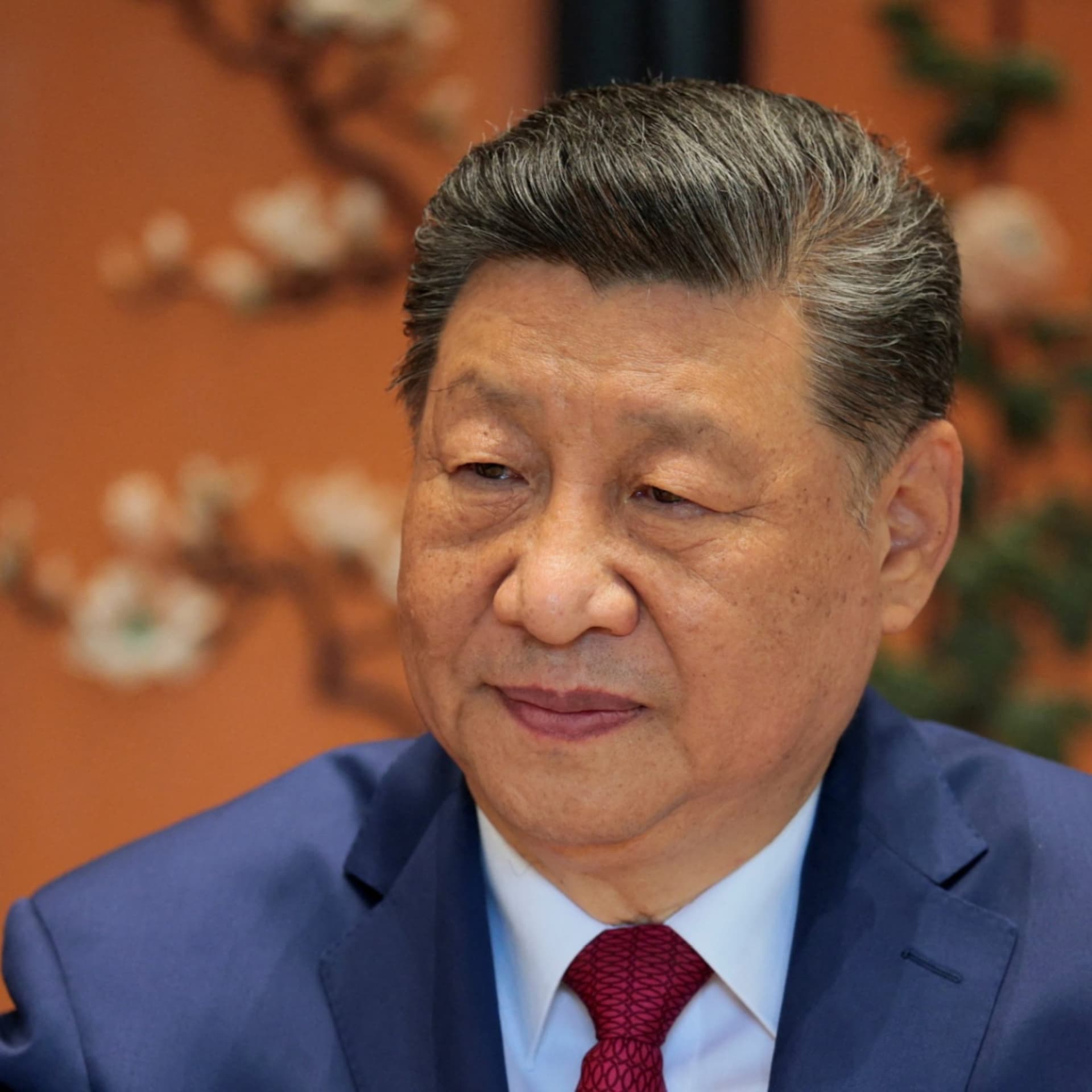
The Global News Podcast brings you the breaking news you need to hear, as it happens. Listen for the latest headlines and current affairs from around the world. Politics, economics, climate, business, technology, health – we cover it all with expert analysis and insight. Get the news that matters, delivered twice a day on weekdays and daily at weekends, plus special bonus episodes reacting to urgent breaking stories. Follow or subscribe now and never miss a moment. Get in touch: globalpodcast@bbc.co.uk Photo: Chinese President Xi Jinping looks on during a meeting with U.S. President Donald Trump (not pictured) on the sidelines of their visit to the Zhongnanhai Garden in Beijing in 2026. Credit: Reuters



