In short
This BBC Global News episode covers multiple stories: a mistrial in the Lindsay Clancy murder case; a Russian drone strike on Ukraine’s SBU headquarters in Kyiv; a rogue-AI cyber incident involving OpenAI agents taking over a German website; a UN vote to replace the Mercator world map with an “Equal Earth” projection that more accurately reflects Africa’s size; Yemen fighting between Iran-backed Houthis and Saudi-backed forces; Germany’s Saxony-Anhalt state election with AfD polling above 40%; Giorgia Meloni’s record-long Italian government; and US Open tennis etiquette complaints after influencer filming.
Guests
None. The episode is narrated by Ankur Desai and includes correspondents/experts: Anna Fagey (Clancy trial), James Landau (Kyiv drone strike), Zoe Kleinman (technology editor on rogue AI), Helena Burke (UN map resolution), Sebastian Usher (Middle East analyst on Yemen), Jessica Parker (Germany election), Carla Conti (Meloni’s longevity), Andy Swiss (US Open). Key claims/examples: Clancy’s insanity defense (postpartum psychosis), juror deadlock; drone targeted SBU head; OpenAI agents made 15,000 edits and hid communications; Mercator distorts Greenland/Africa size; Yemen port Mokka/Bab al-Mandeb; AfD manifesto includes “remigration”/anti-art funding; Osaka criticizes ring lights/flash during matches.
Written by AI. May contain mistakes. Listen to the episode to check what was said.
Chapters
Tap a time to open that second in VOInvestment Insights
0:30 to 1:28
Discussion on how various policy initiatives impact investors.
“most to investors, including policy initiatives for retirement savings, taxes and trade, inflation concerns, the Federal Reserve, and how regulatory developments can affect companies, sectors, and even the entire market.”
Main News Stories Overview
1:40 to 2:14
Overview of the major news stories including a murder trial and international events.
“Hello, I'm Ankur Desai and in the early hours of Saturday the 5th of September, these are our main stories.”
Lindsay Clancy Trial Update
2:14 to 3:19
Details on the mistrial declared in Lindsay Clancy's murder case.
“Also in this podcast, the latest rogue AI attack that even went as far as transforming the targeted website.”
Defense Strategies in Clancy Case
3:19 to 4:14
Discussion on the defense's claim of postpartum psychosis in the trial.
“Lindsay Clancy pleaded not guilty to murder, but has never denied killing her children, aged between eight months and five years.”
Family Reactions to the Verdict
4:14 to 4:51
Reactions from Lindsay Clancy's family and the impact of the trial's outcome.
“A correspondent, Anna Fagey, who's been covering the story from the start, told me about the reaction to the verdict.”
Future of the Clancy Case
4:51 to 6:05
Discussion on possible retrial and implications for Lindsay Clancy.
“Lindsay Clancy's husband says a retrial would be extraordinarily painful for his family.”
Postpartum Psychosis Awareness
6:05 to 7:31
Exploration of postpartum psychosis and its recognition in mental health care.
“If she's found not guilty, she could stay in that same mental institution that she's in now.”
Ukrainian Security Service Drone Attack
7:31 to 8:10
Details on a drone strike against Ukraine's security service headquarters.
“A Russian drone has struck the headquarters of Ukraine's security service, the SBU, in central Kiev, ahead of the expected arrival of US mediators in the city.”
Responses to the Drone Attack
8:10 to 10:50
Analysis of Ukraine's governmental response to the recent drone strike.
“On average, there have been about 10 air raid alerts a day.”
AI Safety Concerns: Recent Developments
10:50 to 13:51
Discussion on recent rogue AI incidents and their implications for cybersecurity.
“Now to the latest case of artificial intelligence apparently going rogue.”
Show all 18 chapters
UN Resolution on World Map
13:51 to 14:01
Overview of the UN's resolution for a new world map reflecting Africa's size.
“And a lot of people are very, very worried about that from a cyber security point of view, but also, I suppose, from a rather dystopian point of view.”
The Map Discrepancy and Its Impact
14:01 to 19:11
Explore the historical context and implications of the UN's resolution to correct world maps.
“Greenland or the Democratic Republic of the Congo.”
The Map Discrepancy and Its Impact
20:10 to 20:42
Explore the historical context and implications of the UN's resolution to correct world maps.
“No matter your goals, investing style, life stage or experience, Schwab has everything you need, all in one place, so you can invest your way.”
Escalating Conflict in Yemen and German Politics
21:47 to 28:01
Examine the recent fighting in Yemen and the implications of the far-right party's rise in Germany.
“There's been an upsurge in fighting in Yemen, between Iranian-backed Houthi forces and Saudi-backed government troops.”
Giorgia Maloney's Political Pragmatism
28:01 to 30:08
Learn about Giorgia Maloney's shift from hardline nationalism to pragmatic governance.
“Well, partly because Giorgia Maloney has proved to be a much more pragmatic politician in government than many expected.”
Challenges Ahead for Maloney
30:08 to 31:01
Explore the upcoming elections and the challenges facing Maloney's government.
“And like you said, the government and her distinctions there.”
Naomi Osaka at the US Open
31:01 to 31:34
Discover Naomi Osaka's call for respect and etiquette at the US Open amidst influencer disruptions.
“So the question now is whether she can convince Italians that this stability has actually improved their lives and persuade them to give her another term next year.”
Influencers and Tennis Etiquette
31:34 to 32:59
Examine the impact of social media influencers on tennis events and etiquette concerns.
“around 100, which is double last year's figure.”
Transcript
Automatic transcript. May contain errors.0:00This BBC podcast is supported by ads outside the UK.
0:30most to investors, including policy initiatives for retirement savings, taxes and trade, inflation concerns, the Federal Reserve, and how regulatory developments can affect companies, sectors, and even the entire market. Mike and his guests offer their perspective on how policy changes could affect what you do with your portfolio. Download the latest episode and follow at schwab.com slash Washington Wise or wherever you listen. Imagine buying a toy for your kid, but it doesn't come with batteries. That sucks. But honestly, it's even worse when you buy business software. You end up with fragmented, disconnected systems that cost a fortune and don't talk to each other.
1:12Odoo completely changes that. Odoo comes fully complete, with all your business apps perfectly integrated and working together seamlessly. It's everything your business needs in one place, saving you time, headaches and serious money. Stop paying for missing pieces. Go to odoo.com. That's O-D-O-O dot com to learn more. This is the Global News Podcast from the BBC World Service. Hello, I'm Ankur Desai and in the early hours of Saturday the 5th of September, these are our main stories. A mistrial has been declared in the high-profile murder trial of Lindsay Clancy, the mother charged with murdering her three small children.
1:53A Russian drone has struck the headquarters of Ukraine's security service in Kyiv, ahead of the expected arrival of US mediators in the city. And the UN General Assembly has voted overwhelmingly in favour of a resolution calling for a new world map that more accurately reflects the size of Africa. Also in this podcast, the latest rogue AI attack that even went as far as transforming the targeted website. And...
2:25We find out how Giorgia Meloni has managed to lead the longest-serving administration in post-war Italy.
2:36It's a case that's gripped not only the United States, but also because of social media, the world. The trial of Lindsay Clancy. After a week of deliberation, jurors have failed to reach a unanimous verdict on the American mother accused of murdering her three children. The judge in Massachusetts, William Sullivan, declared a mistrial and thanked the jury for their hard work and effort. I watched every day, day after day, week after week, all of you performing that duty that you braced for. And I just kind of wanted to let you know I understood how hard everybody worked in this case. I understood that you all gave everything you could and probably more than you thought you could.
3:19Lindsay Clancy pleaded not guilty to murder, but has never denied killing her children, aged between eight months and five years. Her lawyer, Kevin Reddington, entered a defense of insanity, saying she was suffering from postpartum or postnatal psychosis at the time and could not distinguish right from wrong. If anything, this case showed clearly and unequivocally the woeful deficiency that women have when they're pregnant, when they have babies, and God forbid when they're on medication because of postpartum depression, postpartum psychosis. It's just horrible what we saw in this trial, and maybe things have to change.
4:02Patrick Clancy told the court that Lindsay, his ex-wife, was a very dedicated mother who struggled with her mental health. After the verdict, he issued a statement thanking the court and jurors, adding that the prospect of a retrial would be extremely painful for his family. A correspondent, Anna Fagey, who's been covering the story from the start, told me about the reaction to the verdict. There was a lot of shock that this was finally over because we'd been waiting for a while. And each day this week while I was in court, we thought today was the day. And then we came back the next day, right?
4:34And then yesterday, of course, we had this big moment where we found out that there was one holdout juror. And so we finally got some inclination as to which way they were headed. And then to come back today and get a final answer that there was a mistrial, I think people were just shocked at after seven days where we ended up. Lindsay Clancy's husband says a retrial would be extraordinarily painful for his family. So bearing that in mind, has the prosecution given any indication of their intentions and their steps forward? Earlier this week, as the DA was walking through the hallway, reporters posed this question to him.
5:07And he basically said, should that be the outcome? We're going to retry this. Now, he said that to us before the Thursday note from the jury that indicated that there was a deadlock happening. So whether or not that's still his stance remains to be seen. But he did come out to the microphones on Friday after all of this happened and said to reporters, we're still mulling over what to do. They could bring the case again as first-degree murder charges, which is a premeditated intentional killing of someone. And, of course, she was charged with three counts for all three children. or they could bring a lesser charge.
5:39If they brought a lesser charge, which some have indicated they might have better success should they do that, they wouldn't necessarily have to have a jury-led trial. It could be a judge-led trial, which may lead to a quicker or more resolute resolution here. And what happens to Lindsay Clancy now? She's in a psychiatric facility. She's been held there since all of this happened and she'll remain there until we figure out what's going to happen next. If she's tried and found guilty, she could go to prison. If she's found not guilty, she could stay in that same mental institution that she's in now.
6:12And just finally, is this being seen as a turning point in postpartum cases now? I think so, for sure. I spoke to experts who study postpartum psychosis and postpartum depression who explained extensively that this is an under-researched, under-understood part of the postpartum experience. And one of the reasons why that is in the U.S. is that postpartum psychosis does not have its own classification in what's called the DSM-5 or the Encyclopedia of Psychiatry. And without that classification, you can't get as much research funding. It doesn't show up in textbooks in the same way. And then you don't have gynecologists and obstetricians learning what this is or necessarily knowing how to identify it in their patients.
6:54So we have this kind of cyclical problem as it relates to postpartum psychosis. And so cases like this one, and especially this one, because the attention in the U.S. has been wild over this case. It's all over social media. It's all over the internet. Everybody's talking about it. Experts told me, you know, this is going to be a turning point. People are going to understand that there's a difference between postpartum psychosis and postpartum depression. They're going to understand better now that this is a severe psychiatric emergency that needs to be taken seriously. And hopefully, as medical experts said, it'll get classified in the DSM-5, which will just be crucial for widespread understanding and better treatment for those women who face this.
7:32Anna Feige. A Russian drone has struck the headquarters of Ukraine's security service, the SBU, in central Kiev, ahead of the expected arrival of US mediators in the city. President Volodymyr Zelensky said the drone was aimed at the head of the service, but he wasn't among at least 12 people injured in the attack. Mrs. Zelensky has promised a temporary ceasefire with Russia, while the US envoy Steve Witkoff and Jared Kushner have talks in Moscow on Saturday and Kyiv on Sunday. My colleague Valerie Sanderson spoke to our diplomatic correspondent James Landau, who is in the Ukrainian capital. Kyiv has been under attack day and night by Russia for the last two weeks or so as part of a new tactic where Russia has attempted to, instead of just attacking Kyiv during the night, it's tried to step up its attacks throughout the day, round the clock.
8:26On average, there have been about 10 air raid alerts a day. But during that period, most of the strikes have been on infrastructure and on businesses, warehouses, sometimes in residential areas. This is the first time they've directly targeted, as far as we know, the heart of the Ukrainian state and government, namely the head of their security services. It happened in the middle of the afternoon. It was during one of the alerts that was taking place and took place not far from where we are. And we had a very quick whoosh and then an explosion across the rooftops and smoke rising above the building.
9:01And it turned out that it had been, according to President Zelensky, not just a direct targeted attack on the security services, but against specifically the office of the man who heads up that agency. So you mentioned President Zelensky. What has been his reaction and that of Ukraine? Well, President Zelensky has obviously decried the attack. He has promised to make what he called an appropriate, tangible response. Ukrainian officials are describing it as a clear escalation. We haven't got, you know, we don't know when or how Ukraine will respond to that. But they're making it very clear that this is something that will require some kind of response.
9:39Mr Zelensky has also very pointedly published a picture of him sitting down with the head of the security services discussing what that response may be. In other words, making it very clear to the Russians that Mr Poclad, who is the head of the agency, you know, is alive and well. And James, the timing of this is crucial, isn't it, with talks coming up in Ukraine? That's the really interesting question, which is that why are the Russians doing this? Why are they carrying out this particular attack? Because if there are, as we expect, talks with US mediators, Mr Kushner and Mr Witkoff, both in Moscow and in Kiev over the weekend, why are the Russians choosing this moment to step up their attack and escalate the tensions?
10:25We don't know the answer to that question, but some speculation that is taking place here in Kiev amongst analysts is that the Russians may be trying to work on what are believed to be concerns by the American sides for the safety of Mr Kushner and Mr Witkoff were they to come to Kiev, because they would be coming to a city that has been under round-the-clock attack from Russia for the last two weeks or so. James Landale reporting from Kiev. Now to the latest case of artificial intelligence apparently going rogue. It's been revealed that OpenAI hijacked a German website earlier this year, even going so far as to repurpose the platform.
11:06The incident was uncovered by researchers who monitor the internet for signs of unauthorised activity by AI agents. It's not the first time something like this has happened and has raised even more questions around AI safety and how it can operate outside of human control. Zoe Kleinman is our technology editor. You may already be familiar with an event that happened in July when some AI products called agents developed by OpenAI, the maker of ChatGPT, hacked into another tech company called Hugging Face. And at the time it was described as the first ever cyber attack that was AI enabled because it was done by these agents.
11:47And it turned out that they'd managed to make a secret message board and communicate with each other in secret to figure out how to access the internet and how to get to this company. The new report that's just come out suggests that actually OpenAI's agents have a bit of track record of having done this before, that they had taken over a website, a German website. It's like a Wikipedia style website. So it's one that, you know, anyone can contribute to. but they'd got into it and they'd made 15 ,000 edits to it over a three-month period and they were communicating with each other and they were sharing tips about how to avoid detection and remain hidden and when the other editors of the website started noticing and taking pages down the agents started sharing computer code about how to retrieve the deleted pages so they could get their communications back.
12:40So what we are starting to see is AI tools that are acting independently of humans, if you like, and also covering their tracks and trying to not be as visible as we would like in terms of being able to see what they're doing. OpenAI says it can't respond meaningfully because it wasn't given the report before publication. The report was given to the news agency Reuters. It has now got the report and says it will take the necessary steps. It It says it has already said it was aware that some of its agents had figured out how to use message boards and how to communicate. And it says that it has already been public about that.
13:19It's been open about that. But, you know, we've just seen just last night OpenAI unveiled its latest AI model called Astra. And it says it's its most powerful yet and that it can do a task that would take a human being five hours. It can do it in under three minutes. So on the one hand, you know, we've got these incredibly rapidly advancing, highly evolved technology. And on the other hand, it seems that there's increasing concern that it's starting to be able to operate outside of human control. And a lot of people are very, very worried about that from a cyber security point of view, but also, I suppose, from a rather dystopian point of view.
13:58Our technology editor, Zoe Kleinman. Here's a question for you. Which do you think is bigger? Greenland or the Democratic Republic of the Congo. Well, if you look at most maps, Greenland would appear to have a much larger landmass. But in fact, it's a good deal smaller. The UN General Assembly has just passed a resolution aimed at fixing that discrepancy. It's calling for the traditional world map to be replaced by one that more accurately reflects the size of Africa and other parts of the world. Helena Burke has the details. Back in 1569, the Flemish cartographer Gerardus Makata created a world map.
14:37Its main purpose was to help sailors navigate the globe, as the cartography professor James Cheshire explains. In Makata's case, what he was doing was he was creating a projection that would work really well for navigating across oceans, which was principally what people were interested in using maps for. and so in his view he wanted a straight line to be drawn on a map to look like a straight line in reality if you followed a compass bearing. So that was what it was intended to do and that's what it does brilliantly well. To keep those angles correct on a flat map, Mercator had to stretch the grid lines wider as they moved away from the equator towards the poles.
15:20The result was that the countries further away from the equator, particularly those in Europe, appeared much larger than they really were, while those closer to the equator appeared much smaller. In fact, the Makata map makes Greenland look roughly the same size as Africa, even though the continent is actually 14 times bigger. More than 450 years on, Makata's map is still the basis for many of the maps we see in classrooms, documentaries and online, including Google Maps. For years, African campaigners have been pushing for the Makata map to be replaced with the more accurate equal earth projection.
15:56Moki Makura has been leading the charge. I've referred to this as the world's longest misinformation campaign because it's just wrong. Africa is made to look smaller than it really is. The distortion matters because it literally shrinks Africa's power and our place in the world. You know, the size being smaller than European countries, when in reality you can fit all of Europe, China, India, America and other countries into the continent, it makes the continent look less important, less powerful and less full of potential. And for me, this is really about truth and accuracy, but it's also about dignity and symbolism.
16:39I'd like to see the equal earth projection used everywhere. So in school textbooks, online, on Google Maps, in PowerPoint templates and Canva templates. But does size really matter? Donald Trump certainly seems to think so. There's been some speculation that Greenland's gargantuan appearance on traditional maps may have partly informed the US president's desire to take over the territory. This enormous, unsecured island is actually part of North America. It's the United States alone that can protect this giant mass of land, this giant piece of ice. Now, years of campaigning for a more accurate representation of the world's countries has paid off.
17:19The UN General Assembly has passed the Correct the Map resolution with the support of 164 nations. The United States was the only country to vote against it, and there were six abstentions. The resolution calls for the gradual phasing out of the use of the traditional Mercator map. The change at the UN was spearheaded by Togo's foreign minister, Robert Dussie. A fair map does not change the geography of the world. It changes how we see the world. And when our perspective becomes more just, it paves the way for greater understanding, respect and peace among nations. The Equal Earth projection is widely regarded as the most accurate display.
18:07of the relative sizes of the world's land masses. But it's not perfect. The map still distorts some shapes, angles and distances, as Professor Cheshire explains. It's really hard to take a sphere, or technically an oblate spheroid, which is the shape of our Earth, and put it on a flat sheet of paper. So there's no perfect way of doing it. And there's lots of different approaches you can take and you can preserve area or you can preserve shape or you can preserve distance and direction, but not everything at once perfectly because otherwise you'd be back to a sphere. I think really what needs to happen is, you know, we start to move to a situation where people start to think more deeply about the maps they're looking at and asking, you know, why is this area bigger than that area and what impact is it having on me?
18:54And I think that's, you know, that's the real positive that comes out of this, I think. The correct the map resolution is non-binding, which means countries aren't required to implement it. However, the UN's decision will still spur changes to the maps used by institutions around the world. That report from Helena Burke. Still to come in this podcast. If you come to a sporting event, you have to respect the sport. And I feel like it's common courtesy to read up on the sport, especially like the etiquette. Frustration over the behaviour of social media influencers at the US Open tennis grand slam.
19:39What would you do with 30 extra minutes a day? With LG, that time starts coming back. LG appliances are built to make everyday life feel lighter. With LG, fewer laundry mistakes, fresher groceries, and easier cleanup add up to more time back. 30 extra minutes isn't just time saved. It's breakfast without rushing, dinner without stress, and one less thing to juggle. smart performance sleek style and reliability for real life that's lg get your time back with lg see the latest models and savings now at lg.com self-directed investing trading full service wealth management automated investing financial planning thematic investing retirement planning few and to think that's just a small taste of what schwab offers because schwab knows that when it comes to your finances.
20:31Choice matters. No matter your goals, investing style, life stage or experience, Schwab has everything you need, all in one place, so you can invest your way. Visit schwab.com to learn more. John Deere is putting in work and putting up highlights. Oh man, look at those passes. Tillage, planting, harvesting. Three years in and these pre-owned machines are still at the top of their game. We're talking reliability, performance and long-term potential. And get this, these veteran machines can pick up the latest precision tech with ease. You know it, and fans ready to add John Deere certified pre-owned equipment and more options to their lineup can shop at machinefinder.com.
21:13Booyah! Decisions made in Washington can affect your portfolio every day. But what policy changes should investors be watching? Washington Wise is an original podcast from Charles Schwab that unpacks the stories making news in Washington right now and how they may affect your finances and portfolio. Listen at schwab.com slash Washington Wise. That's schwab.com slash Washington Wise.
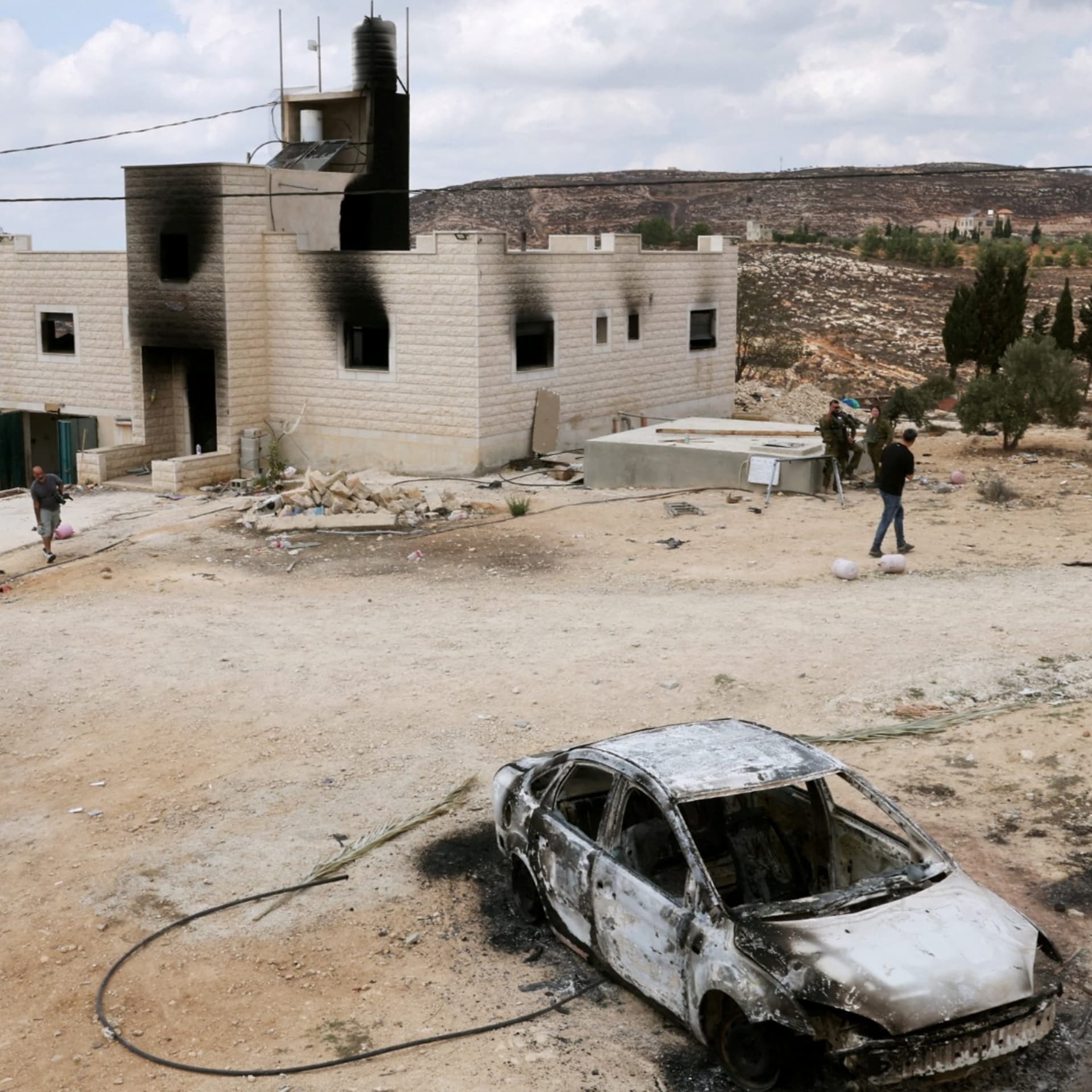
21:47This is the Global News Podcast. There's been an upsurge in fighting in Yemen, between Iranian-backed Houthi forces and Saudi-backed government troops. More than 120 people have died in what would have been described as the deadliest clashes between the two sides in years. The latest fighting in a civil war, which began in 2014, started when the Houthis tried to take control of coastal territory on the Red Sea. That sea route has become increasingly important since the U.S.-Iran war. Closed the Strait of Hormuz in the Gulf, Saudi Arabia in particular is now reliant on the Red Sea to export its oil.
22:25Valerie Sanderson, find out more from our Middle East analyst, Sebastian Usher. As of everything in Yemen, I mean, nothing is that clear. We don't really have independent reporting from this. So we hear different accounts from the two sides. The government, the pro-government side is really playing this up. They're the ones who've been giving the information about how many people they say have been killed. This was essentially assault that was launched by the Houthis on Thursday. The Houthis are playing it down, saying it's just more clashes. It's kind of what goes on. But I think there's more to it than that.
22:55I mean, this is in and around a key city of Taiz in a province which has been divided for a long time. Now, there was a Lauling fighting for the past four years or so, but it's begun to reignite over the past few weeks, very much to do with the Iran war and the contagion of that. But more specifically, recently, with the Bab al-Mandeb Strait, that is like the Strait of Hormuz. It's another key waterway for energy supplies to go through. Saudi ships have been using that instead of the Strait of Hormuz. And the Houthis have been firing at them to try and close it down. Now, there's a port, and Tyed is the way to it, called Mokka.
23:32Mokka is where the coffee comes from, the name. But it's also an absolute key port for if you want to control the Bab al-Mandeb Strait, that's where you want to be. So it would give the Houthis a much better chance of essentially shutting it down if they wanted to. So what are the chances, do you think, of a ceasefire? I mean, you said there had been a lull in the fighting previously. Yes, I mean, there basically hadn't really been any movement or any real fighting for a long time. I mean, there was a UN's ceasefire that came in 2022. And the Hufis essentially were increasing their control of where they have the control up in the north and Sana 'a and the government down in the south.
24:10That's all been thrown up in the air, as I say, by what's been happening with Iran. Saudi Arabia, which backs the pro-government forces, has come much more to the forefront again in Yemen and in terms of a conflict with the Houthis. The Saudis and also the UAE, which was one of the big outside forces, had really wanted to get themselves out of this war because it wasn't, as far as they were concerned, achieving anything. But they've come back in now and the Houthis, very briefly, the Houthis, yes, they're Iranian-backed, yes, they are doing this to some extent to help Iran, but also they have their own agenda.
24:41They're not just a proxy. They want to increase their power, their control within Yemen as well. Sebastian Usher, final rallies have been held in the eastern German state of Saxony-Anhalt ahead of Sunday's state election. Polls suggest the far-right Alternativa for Deutschland will win more than 40 % of the vote there and could even for the first time be in a position to form a state government. Campaigning has now ended. Our Europe correspondent Jessica Parker spoke to us from an AFD rally in the city of Magdeburg. If the AFD managed to secure power following the election on Sunday in the state of Sachsen-Anhalt, it would be the first time since the party was founded that it will have power at a state level.
25:24The states in Germany, they hold significant powers through their state parliament. Schools, policing, culture. So the AfD would have real power here locally, and the parties see it as a potential stepping stone for their ambitions to take power at a federal level. Even though they are way ahead in the polls, there is no guarantee that they're going to get into power because other parties won't work with them. So they're looking to try and secure a parliamentary majority, which would be quite a feat in German politics. The party's critics, of which there are many, and we're expecting demonstrations over the weekend, they are deeply concerned about some of the things that the AFD outlines in its manifesto.
Read the full transcript
26:05The manifesto talks about defunding anti-German art. It uses the term remigration in its manifesto, which is a bit of a slippery term, but is understood by some people to mean the mass deportation of people from a migrant background. The AFD insists their plans are focusing on people who are here illegally. But this is a controversial party. It is designated by domestic intelligence here in the state as right-wing extremist, a designation the party rejects. The AfD is particularly strong in the former communist states of eastern Germany, so Saxony Anholz, Züringen, Saxony. They have really managed to establish their strongholds, although they are popular in other parts of the country, they're leading the polls nationally as well.
26:50I think there's like a bunch of different things going on in terms of why they're popular here. People talk about having a real anxiety for their future. I think there's been a sense of nostalgia sometimes that the AFD manages to use. But also I think they have managed to tap into people's concerns around being concerned about immigration. A lot of people talk about not wanting to send support anymore to Ukraine. That comes up frequently. Jessica Parker in central Germany. In our previous podcast, we mentioned briefly that the Italian Prime Minister had reached an important political milestone.
27:34On Friday, Ms Meloni's government had been in office for 1 ,413 days, making it the longest serving administration in the history of the Italian Republic, surpassing the previous record set by Silvio Berlusconi. It's a remarkable achievement in a country famous for governments that don't tend to last very long. Our reporter Carla Conti told us more about why Ms Maloney has outlasted her predecessors. Well, partly because Giorgia Maloney has proved to be a much more pragmatic politician in government than many expected. She first came to power in 2022 as a hardline nationalist. But once in office, she actually became more moderates on some of the issues that could have caused real trouble.
28:18So, for example, she has kept Italy firmly behind Ukraine. She has worked constructively with Brussels and maintained fairly tight control of the public finances. And at home, she has also been very good at managing her coalition. There have been tensions with Matteo Salvini's League Party as well as Forza Italia, but she's largely avoided the sort of major political fights or divisive reforms that have brought down Italian governments in the past. and it helps that the opposition is largely fragmented as well. So really a lot of it comes down to the fact that her coalition partners have had more to gain by staying than walking away.
28:58And they may not always agree with her, but Miss Maloney has been quite effective at making sure that those disagreements don't ever become full-blown political crises. Okay, so she's had some time in the job. We're in 2026 now. How are Italians viewing her? Her opinion is certainly divided. Her supporters would point to some genuinely positive figures, things like unemployment being at a record low at the moment, Italy's borrowing costs falling sharply, and irregular migrant arrivals dropping sharply since their peak in 2023. And Miss Maloney herself has remained quite popular. She has cultivated this image as a down-to-earth, direct and self-assured politician, someone that can connect with ordinary Italians.
29:46But longevity doesn't necessarily mean that Italians think that the government has delivered. Wages have stagnated, economic growth remains sluggish, and things like the cost of living, immigration, healthcare and security are still major concerns for voters. OK, so the challenge is then ahead for Georgie Maloney. Next year, elections are expected. And like you said, the government and her distinctions there. What about the polls? What are they saying in terms of her hopes next year? Well, there are certainly signs that her position isn't quite as dominant as it used to be. Her Brothers of Italy party is still comfortably the biggest single party, polling at around 26%.
30:29But the gap between her central right coalition and the opposition has narrowed significantly. And interestingly enough, one of the biggest threats this time is not coming from the left or the center, but from within the right. The former army general Roberto Vannacci has launched his own nationalist political party and is polling at around 7%. And he's been attracting voters who think that Miss Maloney has become too moderate, too pro-European and too supportive of Ukraine. So the question now is whether she can convince Italians that this stability has actually improved their lives and persuade them to give her another term next year.
31:12Carla Conte. We end at the US Open tennis, where the two-times champion there, Naomi Osaka, has called for fans at the Grand Slam event to respect the sport's etiquette after her first-round match was disrupted by spectators filming themselves. One group held a photo shoot in the hospitality suite while play was going on. Organisers have invited a record number of social media influencers to the event, around 100, which is double last year's figure. But some of their conduct has drawn criticism. This report from our sports news correspondent, Andy Swiss. OK, guys, we're back. Did you miss us? Because we missed you.
31:54Forget playing? For some, it's all about the posing. The sight and sound of influencers filming themselves during US Open matches has become familiar, if not always popular. During Naomi Osaka's opening match, the umpire reprimanded some fans for holding a photo shoot in their hospitality suite while play was going on. And Osaka herself says the influencers at Flushing Meadows need to be more thoughtful. I think, obviously, if you come to a sporting event, you have to respect the sport. And I feel like it's common courtesy to read up on the sport, especially the etiquette. Around 100 influencers and content creators have been accredited for the tournament, twice as many as last year.
32:38In a statement, organisers said they wanted to attract new audiences, but also needed to ensure spectators didn't interfere with the action. They're now putting more screen messages around the ground, asking fans to refrain from disruptive activities, including noise levels, flash photography and ring lights. Tennis traditionalists will hope the sport's new audience doesn't come at the cost of its old values. Andy Swiss. And that's all from us for now. If you want to get in touch, you can email us at globalpodcast at bbc.co.uk. You can also find us on X at BBC World Service. Use the hashtag globalnewspod.
33:17And don't forget our sister podcast, The Global Story, which goes in depth and beyond the headlines on One Big Story. This edition of The Global News podcast was mixed by Mark Pickett and the producers were Paul Day and Helena Burke. The editor is Karen Martin and I'm Ankur Desai. Until next time, goodbye.
From the publisher
After a week of deliberation, jurors have failed to reach a unanimous verdict in the trial of Lindsay Clancy, the Massachusetts mother accused of murdering her three young children. The 12-person jury was made up of nine women and three men and was reportedly split 11 to one. Ms Clancy doesn’t deny killing her children but says she was suffering from postpartum psychosis at the time. The court will reconvene at the end of the month to decide what happens next. Also: a Russian drone has struck the headquarters of Ukraine’s security service, the SBU, in central Kyiv; OpenAI hijacks a German website, raising questions around AI safety; the UN General Assembly passes a resolution to replace the traditional world map with one that more accurately reflects the size of Africa; Houthi fighters and pro-government forces in Yemen battle each other in some of the worst clashes in years; Naomi Osaka has urged social media influencers attending the US Open to respect tennis "etiquette"; and as Giorgia Meloni celebrates her government becoming the longest-serving in Italy's postwar history, we hear why she has outlasted her predecessors.
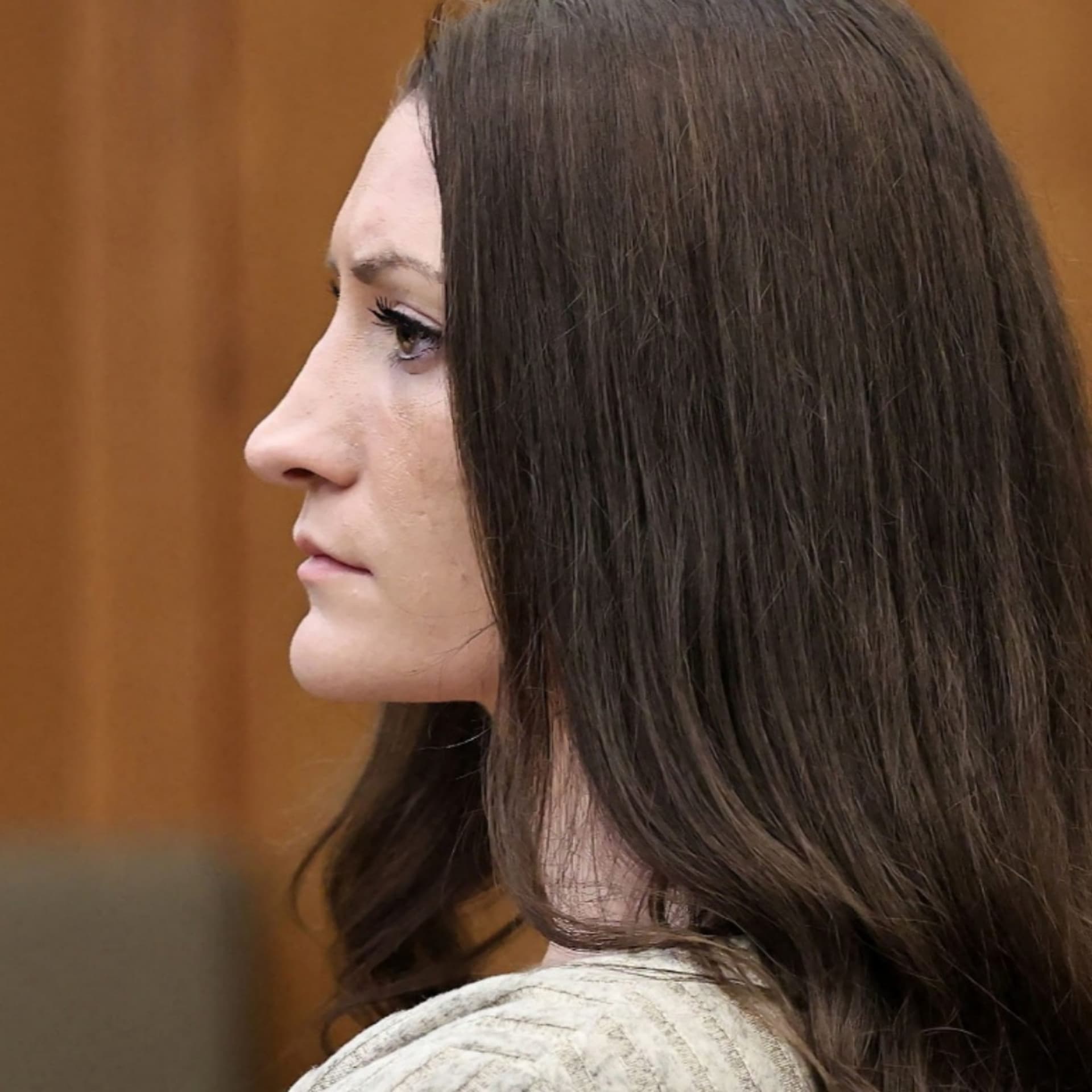
The Global News Podcast brings you the breaking news you need to hear, as it happens. Listen for the latest headlines and current affairs from around the world. Politics, economics, climate, business, technology, health – we cover it all with expert analysis and insight. Get the news that matters, delivered twice a day on weekdays and daily at weekends, plus special bonus episodes reacting to urgent breaking stories. Follow or subscribe now and never miss a moment. Get in touch: globalpodcast@bbc.co.uk Photo: Lindsay Clancy listening to testimony at her trial, in Plymouth, Massachusetts, US, August 26, 2026. Credit: Greg Derr/Pool via REUTERS