In short
A BBC Global News Podcast covering controversy at the Men’s World Cup (a red card overturned so US striker Folarin Balogun can play), plus other major stories: southern Europe wildfires, Israel defying a Supreme Court ruling on a TV regulator, fighting around Konstantinivka and strikes in Crimea, mysterious “space balls” in Australia, Iran’s former supreme leader’s funeral, vigilante women in Nigeria’s Plateau State, why women hit the “wall” less in marathons, and Cape Verde’s World Cup return.
Guests
No named podcast guests; interviews are with BBC correspondents/sports reporters John Bennett, Vinny McIverney, Alfie Habershon, Caroline Davis, James Beardsworth, Richard Hamilton, Lise Doucette, Ifeo Kabasi Etang, and Owen Bennett-Jones.
Key claims/examples
Balogun’s straight red (for stepping on an ankle) was expected to trigger a one-match ban, but FIFA suspended it after Trump phoned FIFA; Belgium’s manager Rudy Garcia and Belgian FA call it unprecedented and furious. Wildfires: ~19,000 hectares affected; fires in Portugal/Spain/France/Greece. Australia “space balls”: ~50cm pressure-sphere-like objects may be from fuel systems or maritime sources. Marathon study: men nearly twice as likely to hit the wall; men overpace early, women pace more cautiously.
Written by AI. May contain mistakes. Listen to the episode to check what was said.
Chapters
Tap a time to open that second in VOWorld Cup Red Card Controversy
0:00 to 0:37
Discussion on the overturned red card for Folorin Balogun and the reactions.
“This BBC podcast is supported by ads outside the UK.”
World Cup Red Card Controversy
1:20 to 2:49
Discussion on the overturned red card for Folorin Balogun and the reactions.
“A World Cup red card turns into a trump card.”
Norway vs Brazil: A Shocking Match
2:49 to 5:39
Recap of Norway's historic victory over Brazil and Brazil's struggles.
“This is the big talking point on the TV stations here and out on the streets where I am in Philadelphia amongst USA fans.”
Firefighters Battle Southern Europe Wildfires
5:39 to 10:00
Update on the ongoing wildfires in southern Europe and their impact.
“Norway go on to play England, who beat the co-hosts Mexico 3-2 at their home stadium, the Azteca in Mexico City.”
Israeli Government vs Supreme Court
10:00 to 12:12
Overview of Israel's government defying a Supreme Court decision.
“They've got more firefighters, more helicopters, more aircraft stationed in these areas of southern Europe that are at risk.”
Ukraine's Ongoing Fight in Crimea
12:12 to 14:00
Insight into Ukraine's battle for control in Crimea and the local situation.
“Ukraine's President Volodymyr Zelensky says his troops are still fighting the Russians for control of Konstantinivka, which the Kremlin claimed to have captured.”
Fuel Shortages in Crimea
14:00 to 16:06
Learn about the fuel crisis in Crimea and the frustrations of residents.
“and stopped the sale of fuel at the pump.”
Mysterious Metallic Balls in Australia
16:06 to 18:16
Discover the story behind the strange metallic balls found on an Australian beach.
“After decades of space exploration, a lot of debris has been left up there orbiting our planet.”
Upcoming Podcast Teaser: The Global Story
18:16 to 19:15
Get a glimpse into the Global Story podcast discussing the evolution of 'Made in China'.
“Generally, when we're going into a race, I will be a lot more cautious and take it a lot slower and steadier, whereas Robbie goes out hard and fast and then just sees what happens.”
Iran's Supreme Leader Funeral
19:39 to 25:25
Explore the events surrounding the funeral of Iran's former supreme leader Ayatollah Khamenei.
“The funeral of Iran's former supreme leader Ayatollah Ali Khamenei is set to continue on Monday.”
Show all 13 chapters
Vigilante Women in Nigeria
25:25 to 28:05
Learn about a group of women patrolling at night to ensure community safety in Nigeria.
“If you've ever run a marathon, you may be aware of hitting the wall.”
Running Strategy: Tortoise vs. Hare
28:05 to 29:05
Learn about pacing strategies in long-distance running and the importance of negative splits.
Cape Verde's World Cup Journey
29:06 to 31:39
Discover the inspiring return of Cape Verde's national football team after their World Cup performance.
“Paul Ngea was at the airport when the team arrived.”
Transcript
Automatic transcript. May contain errors.0:00This BBC podcast is supported by ads outside the UK.
0:30business needs in one place, saving you time, headaches, and serious money. Stop paying for missing pieces. Go to odoo.com. That's O-D-O-O dot com to learn more. Self-directed investing, trading, full-service wealth management, automated investing, financial planning, thematic investing, retirement planning. Phew. And to think, that's just a small taste of what Schwab offers. Because Schwab knows that when it comes to your finances, choice matters. No matter your goals, investing style, life stage or experience, Schwab has everything you need, all in one place, so you can invest your way. Visit schwab.com to learn more.
1:14This is the Global News Podcast from the BBC World Service. I'm Alex Ritson and in the early hours of Monday 6th July, these are our main stories. A World Cup red card turns into a trump card. The US president successfully lobbies FIFA to suspend a one-match ban on the American team's top striker, Folorin Balogun. Raging wildfires fanned by strong winds create inferno-like conditions in large parts of southern Europe. Three sons of the assassinated Iranian supreme leader join mourners at his funeral, but his successor and other son, Mojtaba, isn't there. Also in this podcast. These particular ones, they're shiny, and if they'd come back in through the atmosphere, as Space Chunk often does, they should be a bit scorched and charred.
2:06They shouldn't be quite so shiny. The mysterious metallic balls that have washed up in Australia.
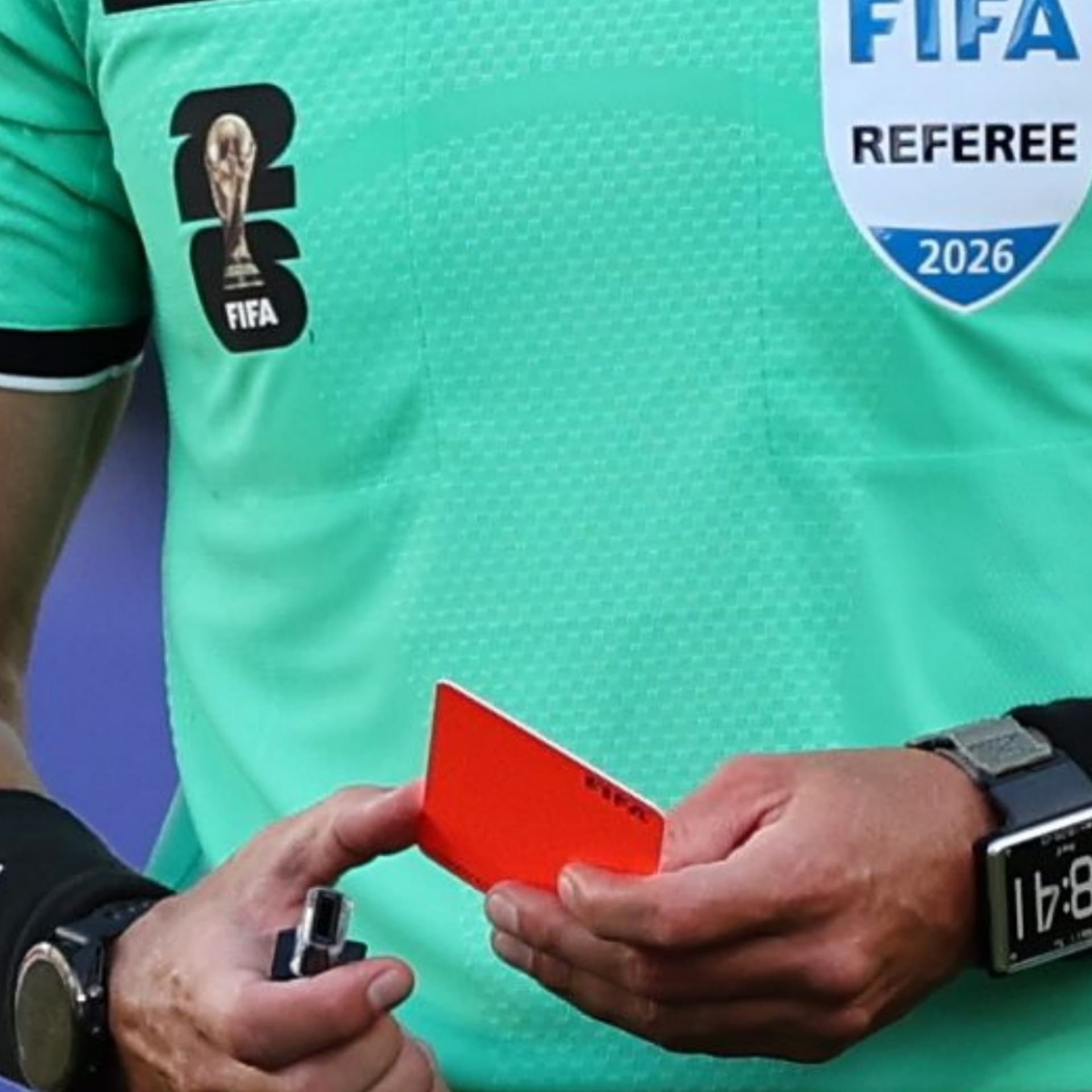
2:15At the Men's Football World Cup, the teams are slowly being whittled down in the knockout matches, but there's been controversy off the pitch. The US star striker, Follerin Balogun, has been cleared to play in the co-host's showdown with Belgium, despite getting a red card in the last match that should have earned him a one-match ban. The suspension was reportedly overturned after President Trump phoned FIFA, which runs the World Cup. Earlier, I spoke to our sports correspondent, John Bennett, who's in the US for the World Cup. I asked him what happened with the red card and what the Belgian team think about it.
2:52This is the big talking point on the TV stations here and out on the streets where I am in Philadelphia amongst USA fans. The star man with three goals suddenly available again. He was showing that straight red card for a foul on a Bosnia-Herzegovina defender. But I have to say the general consensus from pundits and former referees was that the decision of showing him a red card was harsh. He accidentally stepped on the player's ankle. The US Secretary of State Marco Rubio was among those who demanded the decision be reviewed. The red card should have meant a one-game ban, but now, as you say, FIFA say that will be suspended so he can play.
3:29And it's very controversial. You mentioned Belgium. They are furious. Their manager, Rudy Garcia, today said in the press conference he wondered if it was April Fool's Day. The Belgian FA say they're astonished. They're considering all potential options. There is no precedent of this happening at a World Cup. There is a precedent pre-World Cup. You may remember this. Cristiano Ronaldo was red carded in one of the final qualifying matches for Portugal. But FIFA suspended a two game ban for him for a year. But yeah, massive talking point here. Big story in the US. And I thought you weren't allowed to appeal against a red card.
4:02If you've got a red card, you've got a red card. This is the accusation that's being made towards FIFA that they're making up the rules as they go along, because that's what everybody thought, that you weren't able to appeal this. But they are pointing to the regulations which say this can be overturned. It's at their discretion. They're also saying it's independent, despite some of the speculation around this decision. And yes, Balogun will be able to play in this game. It's a massive boost for the USA, although Maurizio Pochettino himself has said it's great news. But we're getting this a bit late because I'm sure he'd planned for the game without his star striker.
4:38Now he's putting him in. It's a great bonus, but it will change his plans. Moving to news on the pitch, a dramatic match between Norway and Brazil today. Massive disappointment for Brazil. Their earliest exit from a World Cup since 1990, and it was a poor performance in terms of how much of the ball they had, how much possession they had, and the chances they wasted. A missed penalty from Bruno Guimaraes, first Brazilian to miss at a World Cup for 40 years. Hendrik, all the fans wanted to see on the pitch, he came on, missed a brilliant chance. and then at the other end Norway have one of the best strikers in the world Erling Haaland and when he got his first opportunity on 79 minutes a header he made no mistake 10 minutes later he scored a great goal from outside of the box so Norway make history they're through to the quarterfinals for the first time but all the talk will be about Brazil one of the worst teams they've sent to a World Cup and Neymar who has struggled with injury during this tournament after the game he announced this will be the end of his international career John Bennett and following their 2-1 win against Brazil, Norway go on to play England, who beat the co-hosts Mexico 3-2 at their home stadium, the Azteca in Mexico City.
5:49Our reporter Vinny McIverney watched the match at an England fan zone in London. I think that is the contender now for the best game of this tournament, definitely England's best game. They had previously won three and drawn one, But the form that we saw from the team tonight is something that we just hadn't seen. And the challenges that they faced, the altitude, the record of Mexico in the Azteca Stadium, they were really up against that huge home advantage. But they managed to pull it off in quite significant style, a man down as well. And you might be able to hear now, I'm just at a fan park by Wembley Stadium, the home of English football.
6:30There are hundreds of people still here, despite it being just after 4am in the UK. And they had a tense couple of hours watching this game, but they are celebrating now. We've had Sweet Caroline, we've just had a group song of Oasis Wonderwall, and now it's football's coming home, three lions on the shirt. Now that remains to be seen. England will play against Norway, who defeated Brazil in a shock upset a few hours ago. So they will play in a quarterfinal now next Saturday in Miami. Goodness. And they did it with 10 men. Gerald Quonsa sent off for that unfortunate challenge, a straight red card.
7:12And there were a lot of English people in the newsroom who had a sinking feeling at that point. Yeah, they did. I think that just brought back memories, you know, of previous World Cups. I think the 1998 was the Argentina game where David Beckham got the red card and was sent off and they were a man down. That was flashing through, I think, a lot of fans' minds. But England managed to hold their own. At the end, it did feel like Mexico were dominating the possession, but they managed to hold them off and keep that lead. I think everyone here very relieved we didn't have extra time. And, of course, for England, a dreaded penalty bout.
7:52Vinny McAveney. In southern Europe, firefighters are racing to stop the raging spread of the wildfires caused by a heat wave and strong winds. It's due to the extreme heat that began at the end of June, with temperature records being broken all over the continent. Thousands of people in Portugal, Spain, France and Greece have been forced to leave their homes. I heard more from Alfie Habershon. The total area engulfed by the flames across southern Europe now spans about 19 ,000 hectares in total. To put that into context for you, that's more than two Manhattans, so it's quite a big area. In France, the flames began erupting on a mountainside east of the city of Perpignan.
8:32That's meant about 10 ,000 people are about to flee their homes. Some of the pictures that have been coming out of Greece are particularly grim. That's because the fire there started at a recycling plant, which has caused this thick, dark smoke over the city of Veseloniki. And that means people are having to stay indoors, shut their windows, and really protect themselves from some of the health effects that could be caused by being exposed to that. In Portugal, it's been described as a monster wildfire that they're really struggling to contain now, and even Italy and Spain are having to send their firefighters over there to help them with that.
9:03All this, of course, is Spain is dealing with a wildfire of its own in the Catalonian region. The firefighters there have managed to create this 40-kilometre perimeter and contain it, box it in, which is rather impressive, but the residents there are still feeling very, very shaken. I saw fire and inside I was frozen solid with shivers running through me. It was very, very strange. Let's not let it happen again. Now we've had this scare, it's really big, but there's still a lot of ground left. We have to take care of what's left. Scary. And Alfie, this is just the start of the wildfire season.
9:42It is. So as I say, 19 ,000 hectares is the area affected by this series of wildfires. If you compare that to Europe over the whole of last year, that was a million hectares. So that really puts it into perspective. That was the worst year on record. But people, of course, are pointing out that this is just the very start of the season, which spans all the way to September. The EU have tried to prepare for this. They've got more firefighters, more helicopters, more aircraft stationed in these areas of southern Europe that are at risk. But, you know, now with climate change, experts are pointing out it's not just southern Europe anymore.
10:13Central Europe, Western Europe, even Scandinavia are kind of risk areas as well. and these firefighters cannot be everywhere at once. Yeah, and now disruptions to the Tour de France. Yes, so crowns are not going to be able to attend a particular leg of Tour de France. Also the caravans, these are these big colourful promotional parade of vehicles that run alongside the cyclists, booming out music, really bringing the atmosphere. They cannot be there for that final leg of the race either. So it's a really depleted and solemn atmosphere this year. Alfie Habershan. Israel's government has voted to defy a Supreme Court decision on the country's broadcast regulator, raising concerns of a possible constitutional crisis.
10:52Last month, the court ruled that the regulator could continue operating after seven members of the board resigned, which left it without the legal minimum number which is normally required to make decisions. The regulator is currently reviewing the proposed takeover of one of Israel's main television networks by a group of investors widely seen as critical of Prime Minister Benjamin Netanyahu's government. Caroline Davis reports from Jerusalem. Benjamin Netanyahu's government has clashed with the Supreme Court before. In 2022, they tried to reduce its powers, which led to widespread protests, and they've ignored the court's decisions in the past.
11:30This time, they voted to defy it altogether. In a statement, the ministers for communication and justice said that a ruling that contradicts the law will not be recognised and decisions made under it are null and void. The cabinet secretary tried to play down the statement saying that the government were not calling to disobey the decision but giving sharp criticism and would use any available legal means to overturn the decision. That's not how others saw it. Israel's president Isaac Herzog has said that disobedience to a court ruling is a red line. While former Prime Minister Naftali Bennett warned that to not adhere to court rulings brings anarchy in the streets and disintegration of the country.
12:10Caroline Davis. Ukraine's President Volodymyr Zelensky says his troops are still fighting the Russians for control of Konstantinivka, which the Kremlin claimed to have captured. The town is key to Russian attempts to seize the major Ukrainian cities of Kramatorsk and Slovyansk. But even as it defends its eastern flank, Ukraine has gone on the offensive elsewhere, causing fuel shortages by hitting targets deep inside Russia. It stepped up strikes on occupied Crimea, which Russia seized in 2014. The BBC's James Beardsworth has been gauging the mood among people there. On the single bridge that connects Crimea to the Russian mainland, traffic stretches for kilometres as cars try to leave the peninsula.
13:00This is an absolute record, says the motorist filming the queue. Over the past two months, Ukraine has made the illegally occupied peninsula a new theatre of the war, making life there increasingly intolerable.
13:20Drone and missile strikes on energy infrastructure and supply routes to the region have choked Crimea, leaving shortages of fuel, water and even groceries. 24-year-old Alexei, not his real name, is an IT worker from the western Crimean city of Yevpatoria. He told me more. Ukrainian drones are flying, rockets are flying like every week and the logistics have been damaged to the point where we have no petroleum right here and we have some shortages in various goods. The most serious of these shortages is fuel. In efforts to combat the situation, the regional authorities have declared a state of emergency across Crimea and stopped the sale of fuel at the pump.
14:07Nastya, again not her real name, is a resident of Sevastopol, the largest city in Crimea, where shortages have bitten the hardest. I've almost completely stopped using my car. I only drive when it's really necessary. We recently introduced a QR code system. You are supposed to get a QR code through the messaging app and then use it to buy fuel. The idea itself isn't bad, but the implementation has been a complete failure. Getting one of these QR codes has turned into something like the Hunger Games.
14:48The attacks have left many Crimeans, who have been largely sheltered from Russia's 2022 invasion, increasingly frustrated. Irina, again, not her real name, is an archaeologist and also a Sevastopol resident. I think on the both sides, people are mostly angry. Whilst many blame Ukraine for their current situation, Irina says that in Crimea it is a far more complicated picture.
15:27Instead, many are beginning to point the finger at Moscow and what they say is its failure to protect Crimeans. Nastya told me more. It's hard not to blame the authorities. It feels like they should have prepared better. The situation had been getting more and more tense every month and every year. People here have always been optimistic. They believed things would work out and try to just live their lives. But now it feels like they are being worn down, little by little, over and over again. James Beardsworth with that report. After decades of space exploration, a lot of debris has been left up there orbiting our planet.
16:12Although most burns up in the atmosphere, some of that space junk has come back down to Earth. And in Australia, questions are being asked after mysterious metallic balls appeared washed up on a beach. Richard Hamilton takes up the story. The six solid objects were discovered on Forest Beach to the north of Townsville in Queensland. They look to be about 50 centimetres in diameter. That's around twice the size of a football. Crews in protective suits were seen placing the spheres in barrels amid fears they may contain hazardous material. So far, there's been no definitive explanation of what they are, but there are suggestions they may have come from space rockets.
16:57Alice Gorman is an associate professor at Flinders University in Adelaide who specialises in space archaeology. They're definitely part of some kind of fuel system. So they're called pressure spheres. They often contain fuels under high pressure and they are widely used in spacecraft. However, these particular ones, they're shiny. And if they'd come back in through the atmosphere, as space junk often does, they should be a bit scorched and charred. They shouldn't be quite so shiny. So they could even possibly come from some kind of maritime vessel because they don't look scorched or charred and they've washed up on a beach.
17:39So it's possible they're not from space. The arrival of the so-called space balls has caused quite a stir. It's very quiet. Not a lot happens here, the owner of the Forest Beach Takeaway told the broadcaster ABC. So having a lot of extra activity definitely created a bit of excitement. But this is not a one-off. In 2023, India confirmed that a giant metal dome that washed up on a beach near Perth was from one of its rockets. And another spherical object was also found in Namibia back in 2011. Richard Hamilton. Still to come in this podcast. Generally, when we're going into a race, I will be a lot more cautious and take it a lot slower and steadier, whereas Robbie goes out hard and fast and then just sees what happens.
18:32Why women marathon runners are less likely to hit the wall.
18:44When you hear the phrase made in China, what do you think? I'm Tristan Redman. And I'm Asma Khalid, and together we host the Global Story podcast from the BBC. And today on our show, we look at the origins and evolution of made in China, because it actually wasn't inevitable. What we're talking about is the world's largest communist nation is at the beating heart of the capitalist system. For more, listen to The Global Story on bbc.com or wherever you get your podcasts. Decisions made in Washington can affect your portfolio every day. But what policy changes should investors be watching? Washington Wise is an original podcast from Charles Schwab that unpacks the stories making news in Washington right now and how they may affect your finances and portfolio.
19:35Listen at schwab.com slash Washington Wise. That's schwab.com slash Washington Wise.
19:45The funeral of Iran's former supreme leader Ayatollah Ali Khamenei is set to continue on Monday. Thousands of mourners have gathered in the capital Tehran to witness the late leader's remains being moved through the city. But Iran's new supreme leader, Khamenei's son Mojtaba, was not at any of the ceremonies. He's thought to have been seriously injured in the US-Israeli attack which killed his father on the first day of the war, along with four family members. Our chief international correspondent, Lise Doucette, is at the funeral and she's allowed to report on condition that none of her material is used on the BBC's Persian service.
20:24Similar restrictions apply to all international broadcasters in Iran. There's quite a spectacle and a very choreographed spectacle at the vast open-air Grand Masala mosque compound. And it's actually a mosque compound that has, of course, operations put in place for this massive surge of people. Many, many thousands have filed in and out and spent time inside this complex over the past two days. When the body of the late Ayatollah was lying in state, you have the constant stream of water being sprayed over the crowds, cool down the temperatures in the summer's baking heat. But what really struck me today was in the midst of what is really always in Iran, this mingling, intermingling of religious chanting and quiet prayer, the loud sobbing mixed in with the old signature slogans of Iran's revolution, death to America, death to Israel.
21:25there was a new refrain rising from the mourners, and that is for revenge. Waving red flags symbolizing vengeance. And with every day, there's more and more posters appearing, some with President Trump's face on it, saying death is near. This is something that's being expressed not just by these crowds, But anger over this assassination of Ayatollah Khamenei in the first hours of the war on February the 28th is also fueling fits within the ruling ranks with hardliners saying, why are you negotiating with President Trump's team when they ordered the assassination of our leader? Our chief international correspondent, Lise Doucette.
22:12For many years, the security services in Nigeria have struggled to get a grip on the violence and kidnappings in parts of the country, such as Central Plateau State. So some women there in the city of Joss have decided to take security into their own hands by going out on patrol at night. The BBC's Ifeo Kabasi Etang joined them. It's well past 11pm in this part of Joss. The streets are dark, but in the distance, the beam of a flashlight cuts through the blackness. These are the vigilante women, 10 strong, determined and armed only with sticks and touch lights. Let's go ladies. Every night, they move through the neighbourhood between 10pm and 3am, checking cars, stopping motorcycles, hoping to prevent crime.
22:59For the women here, the patrol is not just about keeping order. It's deeply personal. Many women in Platte State have lost husbands and children to the violence that has plagued the region for decades. If I'm going out, I'll tell my children. If I come back, glory be to God. Lokia Lawrence is one of the members. She does not pretend the job is easy. With the story of attacks coming from other villages, I don't know what will happen outside. What keeps giving me motivation to continue going out every night It's the joy of me knowing that if I go out and come back, the next morning there won't be any negative reports.
23:34Commander, commander, commander, commander, commander. The leader of the group is Blessed Ngozi. She explains why this group is made up entirely of women and why they refuse to stop. We women are the ones who are affected in anything bad that happens. We are affected because our husbands are killed and our children are killed. At the end of the day, we remain childless and widows. The group was formed from grief, but it is sustained by resolve. It has earned the trust of their neighbours, and slowly the fear that once gripped the community has begun to ease. For some, joining was not straightforward.
24:13Aisha, too, a Muslim woman, wrestled with her faith before deciding to become part of the group. In my faith as a Muslim, a woman is not expected to do this kind of work. I kept asking myself, can I really do this? But Aisha does not go out on the night patrols. Instead, she belongs to a division called Early Warning. As a female community leader, she puts her ear to the ground, listening for threat signals, gathering intelligence, and alerting the group to potential danger. One resident, Peace Desmond, admits she once thought of leaving the community altogether. There was a time I wanted to run.
24:53They encouraged me to stay. Another resident, Walter Oguchiku, says the women have become the backbone of local safety. Whenever there is one or two challenges, they are always there to make sure there is peace. The leader of the group, Lesin Ngozi, has bigger vision and looks to the future. I want the whole world to see this group and know that peace can be achieved through determination. Lesin Ngozi ending that report from Ifeo Kabasi Etang in Nigeria's Plateau State. If you've ever run a marathon, you may be aware of hitting the wall. You may have even experienced it yourself. It's the moment in the latter stages of the race when you suddenly run out of steam.
25:37Your legs feel like concrete. Your body slows down and so does your brain. AJ Hari Das famously hit the wall just 300 metres from the finish of the Boston Marathon in April, as he explained afterwards. I saw the finish and I was like, I knew I was like crawling at that point, but my quads just like fully gave out. I just remember getting back up every single time. And after the second time or third time, I started slapping the ground to try having myself up. I tried a couple more times. The last time I fell, I rolled over for a second. I was going to take a deep breath and honestly just like start crawling or something.
Read the full transcript
26:16It happens when the body runs out of stored carbohydrates and research in the journal Scientific Reports has found that men are nearly twice as likely to hit the wall as women. Owen Bennett-Jones spoke to married couple and marathon runners Katie and Rob Harrison who've just completed a continuous 24-hour run. Generally when we're going into a race, I will be a lot more cautious and take it a lot slower and steadier. And then if I've got anything left, I will sort of use it at the end. whereas Rob doesn't do that he he kind of goes all guns blazing he goes out hard and fast and then just see what sees what happens well it's what you've just described there is exactly what these researchers found which is basically the men are overconfident I think they think they can you know run the whole thing at top speed and then they can't and they and they sort of come to a crashing halt towards towards the end I mean Katie that's right isn't it is that how you see it yeah that's exactly how I see it and I think Rob I know from our own personal experiences Rob will say oh I'm going to do this and it'll be really quite ambitious I think goal whereas I would never say that even though I might try and you know part of me might want to train for it but I think he just he thinks that he can sometimes not always but sometimes he thinks he can do more than he's maybe capable of and I think then you tend to hit the wall a lot quicker.
27:39Now Rob if you know this happens presumably you've adjusted and you never overdo it at the beginning am I right? uh you would think so you would think so yes so i'm i'm a bit more cautious than i used to be i think as well probably experience to teach is you sort of constantly reassess as you're racing and now i you know say after 13 miles or 15 miles 16 miles i'll i'll constantly sort of like reassess how i'm doing and instead of like trying to stick to a pace i'll i will slow down earlier now so it's just pushing the wall a little bit further into the distance well this really is tortoise and hare material isn't it and katie as as the tortoise do you ever beat him well interestingly i've just beaten him in the in this 24-hour run because um oh well done this is a perfect example because rob went out really hoping to go really far and he went far too quickly and then so rob stopped and then I wasn't quite torched in hand and I passed him because he'd stopped and then I was able to go ahead but I started a lot more cautiously and I think that's what I tend to do so in marathons they talk quite a lot about you want to aim for a negative split so your second half is quicker than your first half and that's something I always aim for and I don't know I don't think I've ever done that I very rarely get a second half faster than the first half Katie and Rob Harrison Let's end this podcast where we started the World Cup where the unlikely heroes were the Cape Verde squad also known as the Blue Sharks who returned home on Sunday to a rapturous reception The island nation off the coast of West Africa has a population of just over half a million people On Friday, their footballing success story finally came to an end when they were knocked out by the defending champions Argentina after taking them all the way to extra time.
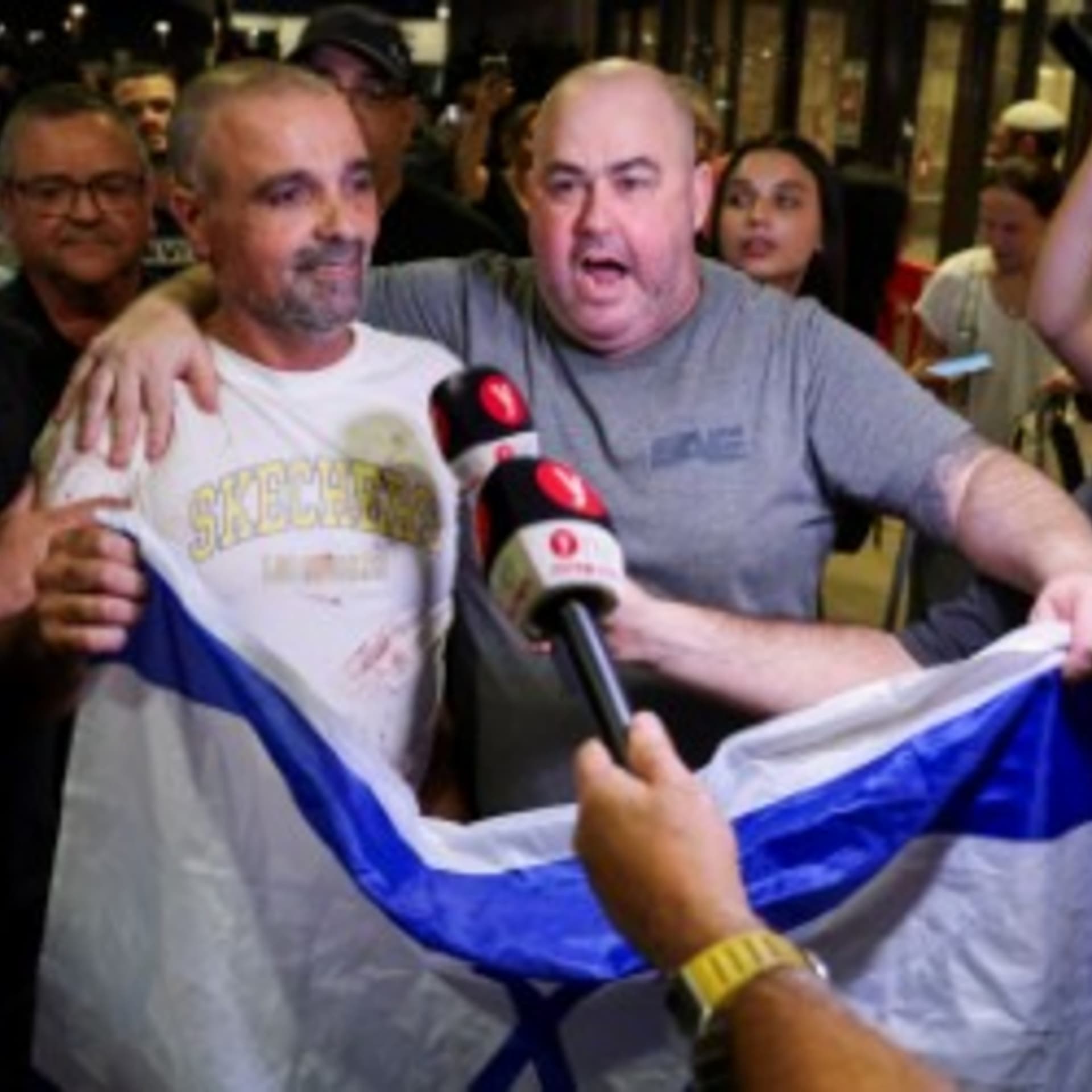
29:35Paul Ngea was at the airport when the team arrived. The drumbeats of pride reverberate across Cape Verde's capital, Pryor. Thousands are gathered outside the main airport for a double celebration, Independence Day and the much-expected return of the national football team after an inspiring performance at the World Cup. And just as the chants and dance peaked, the boys made their grand entrance aboard a chartered flight. Among them, 40-year-old goalkeeper, Vozinia, who gave great teams like Argentina and Spain a hard time. I think this means for everyone. It's something for our national team, for our country.
30:20So it was a great job for everyone. And I wish my teammates could have a bigger team from now on. The moment they were waiting for finally arrived. The Blue Sharks, led by coach Bubista, took a precious moment to greet the very people behind their motivation to fight and excel at the World Cup. It was also a moment for these passionate supporters to get the autographs of their favourite players. This was nothing but pure love. It's such an emotional moment being here to welcome the Blue Sharks. It was also very emotional during all the games and we feel very grateful to all the players for taking us to the top.
31:03Nowadays Cape Verde is widely known and we also saw the power of our nation. Cape Verde went down in history. There is no country whatsoever that doesn't know Cape Verde. It was historic, marvellous and I'm very proud. Every Cape Verdean is happy. We are great. We are the big sharks.
31:26Although they were eliminated from the World Cup by Argentina, these scenes portray the Cape Verdean squad as proud winners. They may not have won on the pitch, but they certainly succeeded to capture the hearts of many on the islands and around the world. Paul NGA reporting from Cape Verde. And that's all from us for now. If you want to get in touch, you can email us at globalpodcast at bbc.co.uk. You can also find us on X at BBC World Service. Use the hashtag Global News Pod. And don't forget our sibling podcast, The Global Story, which goes in-depth and beyond the headlines on one big story.
32:11This edition of The Global News Podcast was mixed by Philip Ball and the producers were Mickey Bristow and Daniel Mann. The editor is Karen Martin. I'm Alex Ritson. Until next time, goodbye.
From the publisher
FIFA suspends a one-game ban imposed on a USA star footballer given a red card, after a reported phone call from President Trump. The decision to allow Folarin Balogun to play against Belgium at the next World Cup fixture has been condemned. Also: wildfires force evacuations across southern Europe; a report on how Russia's war in Ukraine is affecting Crimeans; we meet the Nigerian women taking security into their own hands; why men are more likely to "hit the wall" in a marathon; and the mysterious space balls on Australian beaches.
The Global News Podcast brings you the breaking news you need to hear, as it happens. Listen for the latest headlines and current affairs from around the world. Politics, economics, climate, business, technology, health – we cover it all with expert analysis and insight. Get the news that matters, delivered twice a day on weekdays and daily at weekends, plus special bonus episodes reacting to urgent breaking stories. Follow or subscribe now and never miss a moment. Get in touch: globalpodcast@bbc.co.uk Photo: Referee Raphael Claus looks on after showing a red card to Folarin Balogun of USA during the FIFA World Cup 2026 Round of 32 match USA against Bosnia and Herzegovina. Credit: BENJAMIN FANJOY/EPA/Shutterstock