
In short
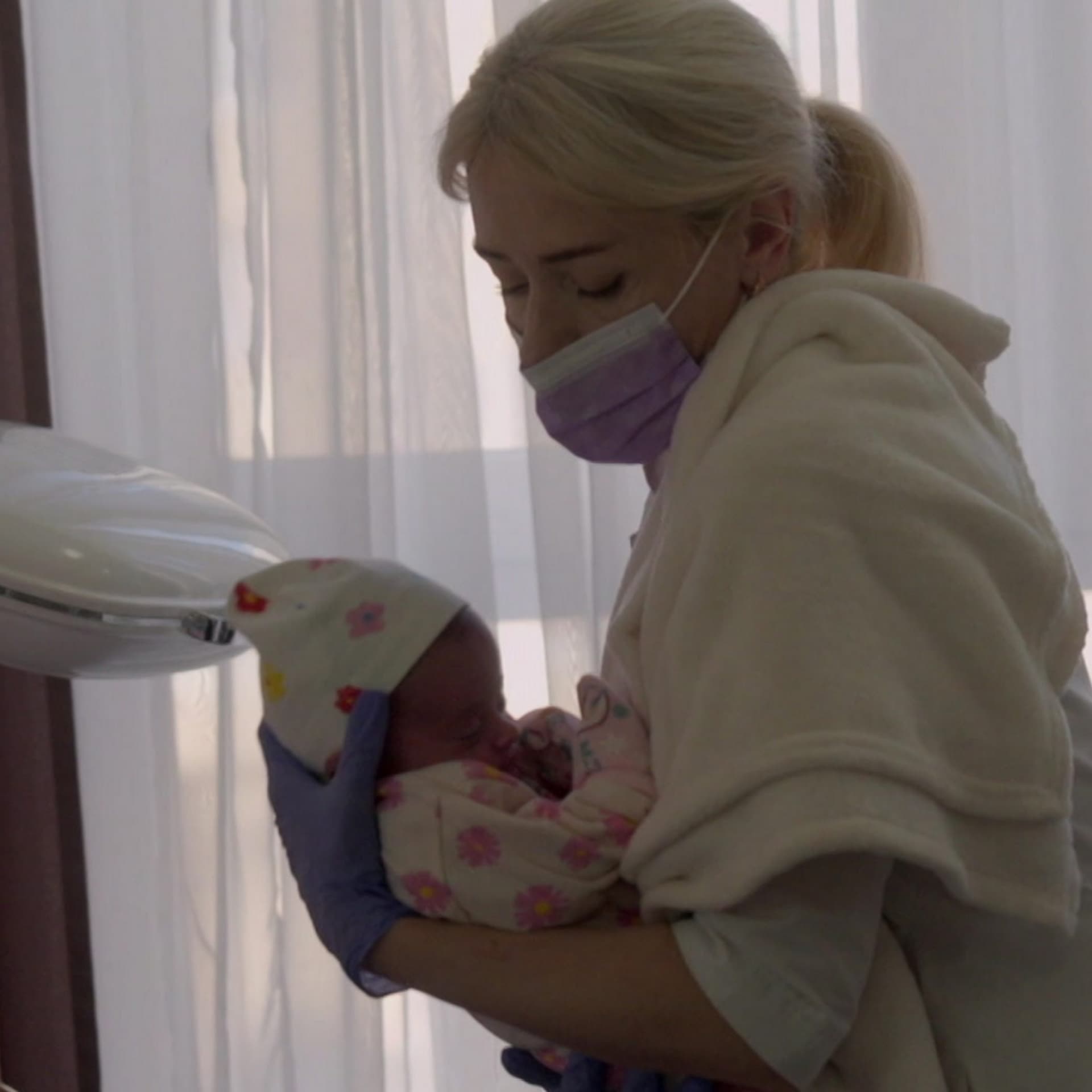
BBC Global News Podcast roundup led by a BBC investigation into foreign couples still traveling to Ukraine for surrogacy despite Russia’s invasion; it also covers US-Iran talks and Israel’s strike on Beirut, plus major culture, science, and tech stories.
Guests
None. The episode is a news roundup with reporters and interviewees, including Sofia Betitsa (Kiev surrogacy report), Jeremy Bowen (international editor discussing Iran talks), Helen Briggs (megatsunami science), Sarah Rainsford (Venice Biennale protests), Hugh Schofield (French politics/royalty romance), and Helena Burke (robot monk story). Christiane Amanpour and Evan Davis appear in a Ted Turner remembrance segment.
Key claims
Ukraine’s surrogacy industry continues; a proposed Ukrainian law could ban surrogacy for foreign parents, threatening the market. Some intended parents delay or abandon children; officials link surrogacy to child trafficking. Megatsunami risk is worsening with climate change.
Notable examples
London-to-Kiev couple collecting a baby amid drones/explosions; a child home case of a premature baby left behind; a megatsunami from an Alaskan landslide; Pussy Riot/Femen protests at the Russian pavilion in Venice; a humanoid robot ordained as a Buddhist monk in South Korea.
Written by AI. May contain mistakes. Listen to the episode to check what was said.
Chapters
Tap a time to open that second in VOSurrogacy in Ukraine Amidst War
1:20 to 2:39
Exploring the ongoing surrogacy industry in Ukraine despite the war.
“Hello, I'm Ankur Desai and in the early hours of Thursday the 7th of May, these are our main stories.”
Foreign Couples Seeking Parenthood
2:39 to 3:55
Insights from couples traveling to Ukraine for surrogacy during conflict.
“A global health reporter, Sofia Betica, traveled to Kiev to find out why foreign couples continue to travel to a country at war to have children and what the proposed law could change.”
Challenges of Surrogacy Arrangements
3:55 to 4:50
Discussion on the complexities and emotional aspects of surrogacy.
“But not every surrogacy arrangement goes so smoothly.”
The Impact of Legislation on Surrogacy
4:50 to 6:15
Debate on a proposed law that could affect surrogacy for foreign parents.
“At this children's home in Kiev, we meet Wei, who was born through surrogacy.”
Surrogacy as a Lifeline for Women
6:15 to 7:01
Understanding why women choose to be surrogates during wartime.
“She's 22 and carrying a baby girl for a Chinese couple.”
Transition to News on Iran Conflict
7:01 to 7:45
A shift to discussing the ongoing war with Iran and related geopolitical issues.
“Next, President Trump has predicted that the war with Iran will be over quickly.”
Trump's Strategy on Iran Talks
7:45 to 9:10
Analysis of Trump's approach to negotiating with Iran amidst conflict.
“But Israel is obviously not interested in that.”
Consequences of Iranian Resistance
9:10 to 10:59
Discussion on Iran's stance and implications for US foreign policy.
“And the question mark now is that they're talking about a so-called MOU, a memorandum of understanding, basically a one-page guide to the way talks might go.”
Legal Battle Over Avatar's Creation
10:59 to 14:00
Exploring the lawsuit regarding the likeness used in the Avatar franchise.
“Across three movies, the franchise has taken more than six billion dollars worldwide.”
Understanding Megatsunamis and Climate Change
14:00 to 15:21
Learn about the megatsunami phenomenon and its link to climate change.
“Scientists say they verified the existence of the second largest wave ever to sweep the Earth, a megatsunami that topped 481 metres, which is taller than the Empire State Building in New York.”
Show all 16 chapters
Christiane Amanpour Remembers Ted Turner
18:11 to 21:33
Listen to Christiane Amanpour's reflections on Ted Turner's impact.
“This news service will be called the Cable News Network and will program continually updated half-hour segments of national news, business news, sports and features, 24 hours a day.”
Protests at the Venice Biennale
21:33 to 25:51
Understand the protests surrounding the Venice Biennale this year.
“For more than 130 years, the Venice Biennale has been synonymous with high arts and culture.”
The Royal Romance: Bardella and Bourbon Princess
25:51 to 28:00
Explore the implications of the relationship between a populist leader and a princess.
“In France, celebrity watchers have been tracking the latest romance linking the worlds of royalty and politics, revealed in the carefully choreographed pages of Paris Match magazine.”
Political Implications of Personal Affairs
28:00 to 29:40
Explore the political ramifications of a public affair involving a politician.
“with a decent shot at being next French head of state, He says they decided to go public with their affair because they were being besieged by paparazzi.”
Introduction to Robot Monks
29:40 to 30:16
Learn about the recent ordination of a humanoid robot as a Buddhist monk.
“Could the fairy tale end with a fairy tale wedding here, with the Gothic rose windows looking out over the multicoloured streetscape of what some call New France, House Bourbon and House Bardella, two worlds.”
Gabi's Ordination Ceremony and Its Significance
30:16 to 32:01
Understand the significance of the robot monk's ordination in modern Buddhism.
“Gabi, as the machine is known, has just been ordained at a ceremony in South Korea.”
Transcript
Automatic transcript. May contain errors.0:00This BBC podcast is supported by ads outside the UK.
0:30with clear, research-backed insights. No jargon, no misinformation. Make your next financial move with confidence. Follow NerdWallet's Smart Money podcast on your favorite podcast app. Another app for inventory? One for CRM? Oh, don't forget accounting. Wait, which login was that? Or you could use Odoo, one fully integrated system that does it all without the hassle. Ah. Ditch the app overload. Get everything your business needs on one platform. Try Odoo free today at odoo.com. That's O-D-O-O dot com.
1:13This is the Global News Podcast from the BBC World Service. Hello, I'm Ankur Desai and in the early hours of Thursday the 7th of May, these are our main stories. A BBC investigation has found that couples from all over the world are still going to Ukraine in search of a surrogate despite the war with Russia. President Trump says the US has had very good talks with Iran to end the war, but the signs from Tehran have been less positive.
1:46Also in this podcast. This news service will be called the Cable News Network and will program continually updated half-hour segments of national news, business news, sports and features, 24 hours a day. We mark the life of Ted Turner, the media mogul who launched CNN, who's died at 87.
2:12For years, Ukraine has been one of the world's leading hubs for commercial surrogacy, attracting couples from around the world with lower costs and more relaxed laws. Despite Russia's full-scale invasion, the industry has continued to operate. But now a proposed law being debated in Ukraine's parliament could ban surrogacy for foreign parents, threatening to dismantle one of the world's biggest surrogacy markets. A global health reporter, Sofia Betica, traveled to Kiev to find out why foreign couples continue to travel to a country at war to have children and what the proposed law could change.
2:54We are in a so-called baby room in the outskirts of Kiev set up by a surrogacy agency. Here, newborn babies wait for their prospective parents to come and collect them from the UK, Turkey, Brazil and beyond. No, you can hear that. You can hear that sound. Every year, thousands head to Ukraine for surrogacy. The war disrupted this huge industry, but it didn't stop people like Himatraj and Rajveer, who have travelled from London to Kiev to have a baby. So you weren't sleeping, you were worried all the time. You could hear explosions, you could hear drones. Feel tremors. You could feel tremors and see smoke billowing in the skies from where the attacks were.
3:43Was it worth a risk? Definitely. Yeah, definitely, definitely. I mean, being able to bring that sun back and seeing him every day and being able to fill that dream of ours, it was worth every risk. Wow. But not every surrogacy arrangement goes so smoothly. We found that in many cases, parents delay travelling to Ukraine to collect their newborns. Sometimes, for months, Svitlana runs a small surrogacy agency. So you had these twins for 11 months. The intended parents just left them with you. But don't you think that leaving their babies for nearly a year is a bit selfish and a bit careless? This is not normal, but unfortunately we have had cases.
4:36It happens about 80 % of the time. I cried when I handed them over. It hurt. They felt like my own. I was watching them grow up, learning to speak, getting their first teeth. It's still painful for me.
4:55Not every baby is collected. At this children's home in Kiev, we meet Wei, who was born through surrogacy. He was premature and has a severe brain injury. He cannot sit unaided, hold his head or see properly. When his intended parents were told about his condition, they did not come for him. Cases like this are prompting calls for change. The Ukrainian parliament is now debating a new law that could ban surrogacy for foreign parents. How often are children born through surrogacy left behind? There is a lot of children that are left behind. Valeria Soruchan is from the health ministry. And it's not only children that are left behind.
5:45We don't know where the children go from there. As soon as they get picked up from this country, we don't know what happens to them. Surrogacy is one of the ways for children trafficking. It is. Would this law solve that problem? We do believe that it will minimize that. But for those women who choose to become surrogate mothers, this is a lifeline in a country where war has stripped away their livelihoods. Karina is doing a scan. She's 22 and carrying a baby girl for a Chinese couple. It was a decision she took after her home in Mahmoud, on the front line, was destroyed. She'll be paid$17 ,000.
6:32I'm going to do as many surrogate pregnancies as it takes, as long as my health allows. This ban would ruin my plans.
6:45A vote on the proposed ban is expected this year. But for now, many will risk everything, even coming to a war zone, to become parents, while they still can.
7:01Sofya Betitsa reporting from Kiev. Next, President Trump has predicted that the war with Iran will be over quickly. That wasn't long after he'd said there would be much more intensive bombing attacks if Tehran didn't agree to his demands. Tehran is reading the small print on those proposals and no doubt considering its options. But surrendering to the US military is hardly likely to be one of them, given that it's remained steadfast in its position for so long. Meanwhile, Israel has attacked the Lebanese capital Beirut for the first time since the ceasefire was agreed. The Israeli Prime Minister Benjamin Netanyahu said he had personally approved the strike on Hezbollah targets in a suburb of the city.
7:44Iran has made clear that Lebanon must be part of any agreement to end the war. But Israel is obviously not interested in that. So are we close to a deal or not? A question I put to our international editor, Jeremy Bowen. I'm confused and I think everyone looking at it is confused. In fact, on the BBC this morning, the former head of MI6, the secret intelligence service, Sir John Sawers, said this was Alice in Wonderland stuff that's going on at the moment. So, you know, that is pretty clear that it's not the way that geopolitics and wars are meant to work. I think what's going on is that Trump wants to reverse out of a war that has become very unpopular in the United States.
8:22It's driving up the price of petrol. His supporters voted for him because they didn't want to be involved in foreign wars. And suddenly they are again. His problem, though, is that he needs something which he can say is a victory. He wants the win, yeah. He wants the win. And he doesn't want people to be able to say, well, it smells just like the deal that Obama made back in 2015, which Trump ripped up in 2016, saying it was the worst deal ever in the history of the world. But, you know, he's got the Iranians wrong, I think, because they have a strong ethos of resistance and stubbornness in that regime.
8:53It's a really nasty, ruthless regime that kills its own people in the streets. But that also means that they're not going to be too concerned if the people of Iran are suffering, economically or whatever, because they want to preserve their system. And they are not going to capitulate. I think that is now clear. But I think he's somehow still hoping that they might. That's a big underestimation. I think so. And the question mark now is that they're talking about a so-called MOU, a memorandum of understanding, basically a one-page guide to the way talks might go. future of Iran's nuclear plans.
9:23What about the Strait of Hormuz? And then there is still the enriched uranium as well, which is another sticking point. Which may or may not be under rubble in some bombed out mountain tunnel, but the assumption appears to be that it's intact. So if they get to a place where they do some kind of a deal on the future of enrichment, you know, they start off by saying never, that's a war aim, Never, ever. Then there's some talk about 20 years, Iran saying maybe five years without enrichment. But a deal with so-called sunset clauses was one of the things that Trump hated about Obama's deal with Iran.
9:59You know, the point is, is that it's very hard to stop these things happening when the knowledge is out there. So what sensible diplomats would try to do is try to manage the situation, not try to issue an edict and hope that the other country involved just says, okay, then, yeah, sorry, we're frightened. Iran doesn't work like that. With this proving to be unpopular at home, midterms on the horizon. How quickly does this need to accelerate for Donald Trump in order to try and win back favour with especially his core supporter base too? Tomorrow. I think he wants this to be over as soon as possible.
10:29That's why he keeps hyping up the chances of a deal while backing that up with threats that he probably won't carry out, but he might. It's a terrible, self-inflicted mess. And if Iran comes out of this with some acknowledgement of its place in the Strait of Hormuz, its power over it, some kind of a deal on enriched uranium, the lifting of sanctions so they get money coming in. To start with, that is political kryptonite for Benjamin Netanyahu. And I think for America, it would actually add up as a strategic defeat, very serious for their position in the world, because whatever Donald Trump says, America's allies and adversaries and enemies will look at that and think, oh, they haven't done well here have they our international editor jeremy bowen next to a lawsuit in the u.s that's questioning the lines between using a muse to inspire art and stealing someone's likeness to make money the bbc's will chalk has the details when we say to make money we mean a lot of money the concept is to drive these remotely controlled bodies called avatars because this is to do with the highest grossing film of all time, Avatar.
11:42You're not in Kansas anymore. You're on Pandora. Across three movies, the franchise has taken more than six billion dollars worldwide. But this lawsuit goes way back to its inception and the inspiration for the appearance of most of its characters. Can we just talk a little bit about Avatar? There is the drawing that is the exhibition. That's the director James Cameron speaking to the French website Combini back in 2024. He's standing in front of a sketch he made that went on to be the model for the film's famous blue aliens, the Navi. The source for this was a photograph that was in the LA Times as part of the promotion for The New World.
12:25There's a young actress named Koryanka Kilcher who played Pocahontas in The New World. So this is actually her lower face. She had a very interesting, interesting face. Now, that actress, Koryanka Kilcher, is suing both Disney and James Cameron, saying they extracted, replicated and commercially deployed her facial likeness, violating her publicity rights. The lawsuit says the filmmakers took the unique biometric facial features of a 14-year-old girl, ran them through an industrial production process and generated billions of dollars in profit without ever once asking her permission. It adds that in doing this, Avatar, which is based around themes of colonial exploitation of indigenous people, exploited a young actress who is herself of indigenous Peruvian descent.
13:16We have an indigenous population called the Navi. They are very hard to kill. But this isn't an isolated case. Taylor Swift is among the stars who've started filing trademark applications for their voice and likeness to try and combat the power of generative AI to replicate someone at the click of a button. In this context, James Cameron's alleged offence, taking inspiration from a real face when drawing a real sketch, is relatively archaic, but it shows that the battle for control over who has the right to use your image and how is one that's deeply entrenched across the entertainment industry.
13:53In short, if you want to be the only person who makes money from you, you need to keep control of your avatar. We'll talk with that report. Scientists say they verified the existence of the second largest wave ever to sweep the Earth, a megatsunami that topped 481 metres, which is taller than the Empire State Building in New York. The wave was created when part of an Alaskan mountain crumbled into the sea last year. Researchers say megatsunamis are made worse by climate change and are a reminder of the risks posed by melting glaciers. Our science and environment correspondent Helen Briggs reports.
14:34Last summer, a giant wave swept through a fjord in southeast Alaska, a region known for its natural beauty and popular with cruise ships. The event went largely unnoticed at the time, but scientists have now analysed the mega tsunami, a massive wave caused when a landslide crashes into the water. They say it was the second largest ever recorded and was partly driven by climate change. Melting glaciers are making slopes less stable and increasing the risk of collapse. The researchers say it was only the early morning timing that spared nearby tourist ships as they were anchored offshore at the time.
15:13The study, published in Science, is prompting calls for wider monitoring in regions at risk of future megatsunamis. Geologist Brett Wood Higman, who visited the site, called it a close call. We know that there were people that were very nearly in the wrong place and it worked out just barely. And I'm quite terrified that we're not going to be so lucky in the future. Alaska is particularly vulnerable because of its steep mountains, narrow fjords and frequent earthquakes. Helen Briggs. Still to come in this podcast, the far-right populist and the princess. It all helps him because he's the little guy who manages to get the princess.
16:00A very French love story, but will it have a fairy tale ending?
16:13I'm Kai Wright. I'm Carter Sherman. Welcome to Stateside with Kai and Carter. We're a new show from The Guardian. We're talking to big thinkers and the best journalists just trying to understand the world through smart conversation and honest reporting. We don't have billionaires telling us what to say. Stateside with Kai and Carter will come out three times a week, Monday, Wednesday, and Friday starting May 13th. Subscribe on YouTube or wherever you get your podcasts.
16:40The crew of NASA's Artemis II mission have returned home safely after successfully completing their groundbreaking voyage around the moon. Splashdown confirmed. Humans are back in the business of going to the moon. But while the mission is over, the Artemis space program is just getting started. 13 Minutes, the BBC Space Podcast, is looking back on their epic journey. and discovering what the future holds for the Artemis space program. Just imagine what we as humans can do next. 13 Minutes presents Artemis II from the BBC World Service. Listen now, wherever you get your BBC podcasts. What's actually happening inside Iran?
17:25I'm Tristan Redmond, host of the Global Story podcast from the BBC. Iranians have been under a near-total internet blackout for several months. Few Western journalists have been permitted to operate in the country. But in recent weeks, the BBC's chief international correspondent, Lise Doucette, has been reporting on the ground in Tehran. For more, listen to The Global Story on bbc.com or wherever you get your podcasts.
17:54This is the Global News Podcast. The American broadcasting mogul Ted Turner has died. He was 87 and was known for many things, but primarily as the founder of CNN, the first round-the-clock TV news channel launched back in 1980. Here he is announcing the network. This news service will be called the Cable News Network and will program continually updated half-hour segments of national news, business news, sports and features, 24 hours a day. The grandson of poor farmers, Ted Turner was also a major philanthropist, donating over a billion dollars to create the United Nations Foundation. It's a public charity aimed at boosting American support for the UN.
18:41Christiane Amanpour is CNN's chief international anchor. She knew Ted Turner from when she began working at CNN in 1983. She spoke to my colleague Evan Davis. His presence will live forever. He changed the world. You know, BBC is a great operation with the World Service. But TED created the first ever global television service, you know, 24-7 TV. And it was fundamental. It just changed the world. It really did. And it became a huge thing at the first Iraq war when suddenly it exploded really into, wow, this is covering it all the time and you can turn it on. And he had absolutely seen it. Now, is it true, as Wikipedia says, he famously said, we won't be signing off until the world ends.
19:26He absolutely did. He absolutely did. We have it on videotape, as they say. And how wonderful. You know, the reason he said it, and it created such waves and such like, yes, right, yeah, really, was that CNN started June 1st, 1980. That's when he signed on publicly and said he was, you know, creating this for the world. And it was very difficult because there were occasions when they ran out of budget, when the funding was difficult, And we were called at the very beginning, and I started in 1983, which was just three years after the launch of this startup called CNN, Chicken Noodle News. So that meant people were deriding us.
20:04Nobody expected CNN to last. And now, 46 years later, we're still here. And that's thanks to Ted. And so I guess he said, and we're not signing off, you know, just because my bank balance doesn't look too good today. We'll be here till the world ends. And there was another aspect to that. He was absolutely devoted to world peace and the elimination of nuclear weapons. Yeah, well, he wasn't your typical billionaire mogul. There was a lot to the guy. He thought outside the box, absolutely. He did, he did. And he was bold and he was courageous and he wasn't afraid to really go where nobody had strode before.
20:41He bust so many barriers. When he took CNN Television International in 1985, he also started to break down the walls of state-controlled media, state-controlled information in many of these nations. People who could afford satellites or somehow got their version of VPN all those years ago could see a different telling of what's happening in their world, not just controlled information. And that was a huge, huge thing. He was ahead of so many curves, not just on media, but on climate and philanthropy. You know, he was the first of the post-Rockefeller, Carnegie Mellon generation that said, OK, I'm going to give a billion dollars to the UN.
21:22And then all the other rich people followed, well, not all of them, but a lot of them. He was the one who did all those things. Christiane Amanpour remembering the broadcasting legend Ted Turner. For more than 130 years, the Venice Biennale has been synonymous with high arts and culture. But this year, it's making headlines for protests, resignations and boycotts over the inclusion of Russia and Israel. In the latest incident, protesters from the Russian punk band Pussy Riot and the Ukrainian feminist group Femen, wearing pink balaclavas, set off pink smoke bombs, causing the Russian pavilion to be shut down.
22:01Our correspondent Sarah Rainsford was there. Please move over. Please move over. Pushing through the crowd, pussy riots descend on the Russian pavilion. The women start punching the air and shouting in protest at Russia's return to one of the biggest art events in the world. Russia, keep the United States! That's the Russian pavilion behind me. And right in front of it, these activists have come with their balaclavas and with their protests and with their flares. They believe that Russia's presence here at this biennale is an act of propaganda and should never have been allowed. Russia wages hybrid war.
22:40It's not just tanks and drones in Ukraine, but also it is culture, art, language, so-called soft power. It's part of Russia's strategy and so far they're winning because they're drinking vodka and champagne in their pavilion soaked in blood. Before the protest, I'd stepped inside the Russian pavilion. They are intoning, singing, playing their percussion. And in the centre, there's a tree covered in purple and yellow flowers. I'm responsible for the pavilion. I'm the commissioner. Could I ask a question from BBC? Anastasia Karnieva wasn't keen to talk. You're responsible for Russia's presence here.
23:26Yes. You think that Russia should be here? This is our house. We come to our place. What do you think about the protests, saying that Russia shouldn't be here during the full-scale invasion of Ukraine? I don't think about protests. You don't? I mean, they're pretty strong. Because I'm very busy with the organisational part. Your father's a very senior figure in Rostec. Can we stop this conversation? Thank you. I mean, that's why there's so much protest. Rostec is the state-owned weapons company that's arming Russian troops. The EU isn't happy that Russia is back here in Venice. The Commission is pulling a big chunk of funding for the Biennale, and Italy's culture minister is also boycotting the event.
24:04There have been daily protests, too, over Israel taking part. And last week, the entire jury resigned, saying the leaders of both Russia and Israel are wanted in The Hague as suspected war criminals. But the president of the Biennale is defiant.
24:23Pietrangelo Butafuoco accuses his critics of intolerance and of supporting censorship. If the Biennale began to select not works, but affiliations, not visions, but passports, it would stop being what it has always been. We just stepped outside into the beautiful paved streets of Venice, and I'm here with an arts critic from Ukraine, Zoya, who's come to show me what they're calling the invisible finale. This is Nika Kazushka. She was 18 years old, a writer and artist in Kharkiv. We're standing in front of a poster for an imaginary event marked as cancelled because the author was killed by Russia.
Read the full transcript
25:07And this writer isn't the only one. They are all people of culture. Some of them was killed in the street. Some of them fight for Ukraine in front line. That's why there are protests, some of them noisy like this, and some quietly symbolic, like the main exhibit that's been brought to the Biennale from Ukraine. It is a concrete statue of a deer that was evacuated from Pukrovsk in the east to escape the advance of Russian troops. It's now hanging from a crane just a few metres from the Russian pavilion, displaced by war like millions of Ukrainians. Sarah Rainsford reporting. In France, celebrity watchers have been tracking the latest romance linking the worlds of royalty and politics, revealed in the carefully choreographed pages of Paris Match magazine.
26:01The young presidential hopeful, Jordan Badela, from the hard-right National Rally Party, has revealed his relationship with Maria Carolina of Bourbon to Sicily. She's the heiress to a historic noble family that once ruled southern Italy. So how is this alliance of the populist and the princess going down with French voters one year ahead of a presidential election? Hugh Schofield reports. Saint-Denis, the gritty, multi-ethnic North Paris neighbourhood from where the young Jordan Bardella emerged unknown on his ascent to political fame, is also the home of this architectural gem. the Royal Basilica, where for hundreds of years kings and queens of France were interred.
26:49Among them, many ancestors of Bardella's new girlfriend, Princess Maria Carolina of Bourbon of the Two Sicilies, Duchess of Calabria and Palermo. Yes, here in Saint-Denis, it's a strange coming together of two worlds that somehow feels very mid-21st century. Brought up between Paris, Monaco and Rome, the 22-year-old Bormann princess was educated by private tutors, speaks six languages and works today as, what else, an online influencer, helping sell haute couture. Her website says she's concerned about the environment and women's issues. In Italy, they've been following her relazione with Bardella very closely.
27:32Rome-based journalist Ilaria Grillini writes and broadcasts about European royalty. Maria Carolina has been brought up in a certain way. She has manners, education. It is an excellent family she comes from. All that can only bring good things to this young man. Because if he's going to rise in politics, he will need an image. As for Bardella, the obscure Saint-Denis commoner, with a decent shot at being next French head of state, He says they decided to go public with their affair because they were being besieged by paparazzi. And they're very happy. But politically speaking, people are asking, is this such a good move?
28:17After all, he's from a right-wing populist party that's supposed to speak up for the impoverished masses. Isn't linking up with a jet set going to put people off? For Hugo Droschon, politics professor at Nottingham University, the answer is no, not nowadays. Why I think it works for Bardel is that that princess is not considered to be part of the establishment. She's, on the one hand, a link back to an ancien regime, which is against, perhaps, the regime that's in place today. And then her appeal, she's an influence, which is very contemporary, and the social media. So it's a smart move in many ways.
28:54And on a trip to hard-right territory in Montagy, south of Paris, that's borne out. These Bardella supporters all say the same thing. It's his private affair, good luck to them. They're so good-looking, they're bound to have beautiful babies.
29:14And even this non-Bardella supporter said that nabbing a princess could only help his political fortunes. It all helps him because it lets him come across as a human being. He's the little guy who manages to get the princess and people adore that sort of stuff. Back in the Royal Basilica, a guide is showing visitors around the tombstones of Maria Carolina's ancestors. Could the fairy tale end with a fairy tale wedding here, with the Gothic rose windows looking out over the multicoloured streetscape of what some call New France, House Bourbon and House Bardella, two worlds. Hugh Schofield reporting from Paris.
30:03Robots have been taking over roles performed by humans for decades now, from factory work to cleaning and even some types of surgery. But here's a new one. Robot monks. That's right. For the first time, a humanoid robot has become a Buddhist monk. Gabi, as the machine is known, has just been ordained at a ceremony in South Korea. Helena Burke has the story.
30:30He cuts a striking figure, 130 centimetres of metal and plastic, wearing traditional orange robes as he waddles towards a temple. Garbi then completes the full ritual sequence for new monks. He joins his palms in prayer, bows to the Buddha, and receives a rosary before swearing his devotion to Buddhism. Robot monk, please reply with palms together. Yes, I will devote myself. Yes, I will devote myself. The ceremony in Seoul was organised by the Jogye Order, the Korean sector of Buddhism. It's believed the order decided to ordain Gabi as part of an effort to appeal to younger generations and to help address a shortage of monks.
31:16The number of new initiates into the Jogye Order dropped from 319 in 2005 to just 99 in 2025. Gabi was welcomed with open arms by his fellow monks.
31:32The ultimate goal of Buddhist monks is to achieve complete spiritual awakening and peace, known as enlightenment. It's unclear how a robot with no sentient thoughts could achieve this. However, the Joggya order has tweaked its ethical guidelines, known as the Buddhist Five Precepts, to better suit Gaby's unique circumstances. According to the rules, Gaby must protect life, refrain from damaging other robots, respect and obey humans, avoid deceptive conduct and conserve energy by not overcharging. The humanoid monk is expected to appear at another ceremony later this month to celebrate Buddha's birthday.
32:09Helena Burke reporting. And that's all from us for now. If you want to get in touch, you can email us at globalpodcast at bbc.co.uk. You can also find us on X at BBC World Service. use the hashtag Global News Pod. And don't forget our sister podcast, The Global Story, which goes in-depth and beyond the headlines on One Big Story. This edition of The Global News Podcast was mixed by Chris Lovelock and produced by Paul Day and Wendy Urquhart. The editor is Karen Martin, and I'm Ankur Desai. Until next time, goodbye.
From the publisher
For years, Ukraine has been one of the world’s leading hubs for commercial surrogacy - attracting couples from around the world with lower costs and more relaxed laws. Despite Russia’s full-scale invasion, the industry has continued to operate. But now, a proposed law being debated in Ukraine’s parliament could ban surrogacy for foreign parents. Also: Rumours are swirling that a US-Iran deal could be close. Scientists have verified the existence of the second largest tsunami ever. CNN's founder Ted Turner has died. And a robot has become a Buddhist monk.
The Global News Podcast brings you the breaking news you need to hear, as it happens. Listen for the latest headlines and current affairs from around the world. Politics, economics, climate, business, technology, health – we cover it all with expert analysis and insight. Get the news that matters, delivered twice a day on weekdays and daily at weekends, plus special bonus episodes reacting to urgent breaking stories. Follow or subscribe now and never miss a moment. Get in touch: globalpodcast@bbc.co.uk



