
In short
This BBC Global News Podcast episode covers multiple world stories. Main topic: a deadly earthquake in Colombia. Guests/people featured: Angelica Avila (eyewitness in Manizales); Alejandro Eda (Cali mayor); Jose Carlos Coeto (BBC Mundo reporter in Bogota); Orla Guerin (senior international correspondent on Turkey/PKK); Laura Bicker (China correspondent on marriage fraud); Victoria Gill (science correspondent on dog-brain study); Raul Hernandez-Perez and Laura Quire (University of Vienna researchers); Dr William Schaffner (Vanderbilt professor on vaccines); Simon Jones (reporter on UK Channel migrant boat); Rob Laurie (migration aid worker); Isa Jacobson (Zambia/elephants reporter); Chaminolwa Chambul and Teresa Mishiba (Zambia conservation/coexistence voices); Victoria McLean (Harry Potter fan). Key claims/examples: Colombia quake kills 130+; first 48 hours critical; communications/airports damaged; compared to Venezuela’s earlier twin quake. Turkey approves law to end decades of PKK conflict; Erdogan needs pro-Kurdish parliamentary support; PKK leader Abdullah Erjulan won’t be freed. China reports “flash marriage” scams exploiting a 30 million-man bachelor demographic; example: Wang Zhuang loses life savings after a fake bride. Austria study: dogs’ reward circuitry lights up to human smiles. Trump order: MMR split doses; Schaffner says no scientific benefit and no vaccine-autism link. UK: 230 migrants in one dinghy; smugglers profit. Zambia: elephants entering Livingston due to drought and development; coexistence measures. Dobby’s memorial in Wales: fans helped stop an undersea cable project threatening it.
Written by AI. May contain mistakes. Listen to the episode to check what was said.
Chapters
Tap a time to open that second in VOColombia Earthquake Aftermath
1:12 to 6:28
Reporting on the devastating earthquake in Colombia, its impacts, and rescue efforts.
“I'm Will Chalk, and in the early hours of Tuesday the 11th of August, these are our main stories.”
Turkey's Legislative Changes
6:28 to 10:24
Discussion on Turkey's new law to resolve conflict with the PKK and its implications.
“Our senior international correspondent, Orla Gerin, told me why this was happening now.”
Marriage Fraud in China
10:24 to 14:02
Examination of the rising trend of sham marriages in China and its societal impacts.
“with scammers increasingly targeting single men desperate to find a wife.”
Marriage Trends in China
14:02 to 14:54
Explore the challenges of marriage and childbearing in modern China.
“Women in China can also afford to be choosy and demand a higher bride price.”
Understanding Dogs' Emotions
14:57 to 17:04
Learn how dogs interpret human emotions through their brain activity.
“Now, are you really a pet owner if you haven't looked at your pet and thought, I wonder what they're thinking?”
Trump's Controversial Vaccine Comments
18:17 to 21:34
Examine President Trump's statements on childhood vaccines and public health implications.
“President Trump has signed an order that calls for fewer childhood vaccines and also recommends administering mumps, measles and rubella, or MMR shots, in separate doses.”
Record Migrant Crossing in the Channel
21:38 to 23:45
Details about a new record for migrant crossings and the risks involved.
“On to a story from here in the UK that is dominating many of the newspaper front pages.”
Human-Elephant Conflict in Zambia
23:47 to 27:41
Understand the challenges faced by communities near Victoria Falls regarding elephant encounters.
“If you're lucky enough to have seen the Victoria Falls on the border of Zambia and Zimbabwe, you'll know it's one of the natural wonders of the world.”
Pilgrimage Site for Harry Potter Fans
27:46 to 28:01
Discover the significance of Dobby's grave and its impact on fans.
“Right, before we go, a fictional scene from a film.”
Dobby's Grave: A Pilgrimage for Fans
28:01 to 30:48
Learn about the significance of Dobby's grave and the fan efforts to protect it.
“Yet the place where that scene, the death of Dobby the house elf in the Harry Potter films, was shot has become a real-life pilgrimage location for fans.”
Transcript
Automatic transcript. May contain errors.0:00This BBC podcast is supported by ads outside the UK.
0:30an award-winning behavioral scientist and author of the best-selling book, How to Change, as she shares true stories from Nobel laureates, authors, athletes, and everyday people about why we do the things we do and how to make better choices to help avoid costly mistakes. Each episode covers the latest research in behavioral science and dives into themes like the power of self-control, shaping your mindset for success, navigating new beginnings, and why starting over can feel so hard. Listen to choiceology at schwab.com slash podcast, or wherever you listen.
1:11This is the Global News Podcast from the BBC World Service. I'm Will Chalk, and in the early hours of Tuesday the 11th of August, these are our main stories. A state of emergencies declared in Colombia after a powerful earthquake kills more than 130 people. A law's been approved in Turkey aimed at resolving decades of conflict with the Kurdish militant group the PKK. Also in this podcast. I've spent my life's savings. The total damage is close to 74 ,000 US dollars. I cannot work. I cannot sleep. We have a special report on the crippling cost of sham marriages in China. Are humans and elephants getting a bit too close for comfort in Zambia?
1:58And what are dogs thinking when we smile at them? The dog brain has certain capacity that makes them really good at understanding others.
2:09We start with this. I was in a hotel at the moment. It was moving quite strongly and everyone was screaming. and then as it stopped, I could look through the window and saw some dust coming out of the neighbouring buildings. That's Angelica Avila, who was in the Colombian city of Manizales when a powerful earthquake struck. One of the cathedral's towers bent over. The situation is a bit strange. We don't know exactly what to do. And the flights are cancelled. The airport is collapsed. More than 130 people are now known to have been killed. The president's declared a state of emergency and a major search and rescue operation has started for those buried under the rubble of dozens of collapsed buildings.
2:59Cali, 200 kilometres south of the epicentre, is one of the worst affected cities. Its mayor, Alejandro Eda, told the BBC the first 48 hours are critical for finding survivors. We're still searching around the city. It's a very large city and it was a very strong quake, but the city held up quite well. That kind of makes it a little bit harder to find the victims in the collapsed buildings because it's kind of like finding needles in a haystack right now. Our teams are very well trained. We actually sent our search and rescue team, we just sent it to Venezuela. So they have very recent experience in these types of events.
3:37The earthquake was felt as far away as the capital Bogota, where our reporter Jose Carlos Coeto is based. It was around 7.30 in the morning local time. I was in a taxi and then the car started moving to swing to both sides and then the driver asked me to leave and to get safe for both of us and then we could feel the ground shaking beneath our feet while building trees and traffic lights swayed. And this region is probably with the highest seismic activity in Colombia, all of this part that is somehow crossed by the Andean Mountains, major damages as those that we're seeing in cities like Cali or Pereira.
4:19Yeah. And what are we hearing out of those cities? What's the picture like there? Well, it's been hard to get information because communications have been down. They have been switching on and off during the whole day. also because it's difficult to get there. The airports have ceased their operation. They were established early in the afternoon in Cali, but in Pereira, the airport is not functioning. It has damages as well, and getting there by road. The roads are limited because it's a very geographically difficult area surrounded by mountains, so it hasn't been easy for the media to get there.
5:00It hasn't been easy for the rescue teams to get there. So getting the full picture is difficult now. And when all these factors start to become more clear, people are fearing that the death toll can be higher. Yeah, and fresh in everyone's minds will be what happened in Venezuela earlier this year as well. Yes, because, well, firstly, because it's closed and there are many human and cultural connections between Venezuela and Colombia. There are many Venezuelans living here. And it was very recent, that traumatic event in Venezuela, that is still affecting the people on the ground. For now, the two situations are not comparable when it comes to the magnitude.
5:41First of all, because Colombia hasn't been suffering the same economic crisis that Venezuela has over the last decade. So let's say that the infrastructure and the rescue teams are better prepared to respond to these sort of situations. and also because of the conditions, because of the features of the earthquake. They are not the same. It was in Venezuela. It was a twin earthquake with many aftershocks. Those aftershocks haven't been felt in the same way in Colombia, having more than 100 dead people. It's a serious situation, though it's not expected to reach the level of thousands, more than six thousands, that Venezuela has already.
6:20Jose Carlos Coeto there from BBC Mundo speaking to me from the Colombian capital Bogota Let's bring you a story out of Turkey next where the parliament has approved a law aimed at ending more than four decades of conflict with the Kurdish militant group the PKK The legislation will allow some former fighters to return to civilian life and suspend prosecutions or prison sentences for others The group announced last year that it planned to lay down its arms and disband But the PKK's jailed leader, Abdullah Erdilun, does not appear to be among those who could be freed. Our senior international correspondent, Orla Gerin, told me why this was happening now.
6:59Well, I think this is connected very much with the electoral timetable and ambitions of the Turkish leader, President Recep Tayyip Erdogan. It's widely known and understood here that he would like to run for a third term as president. He's constitutionally barred from doing that, and his current term is due to expire in 2028. Now, there's only two ways around this for him. Either he amends the constitution or he calls early elections. To do either of those things, he needs the support of pro-Kurdish parties in Parliament. The numbers simply don't stack up without them. That said, there has been a peace process underway since 2024.
7:46Contacts have been going on between the PKK and the government. Last year, the jailed leader of the PKK, Abdullah Erjulan, publicly called for the organization to disband and it agreed to do that. Kurdish politicians are saying, look, our longstanding demands for greater rights, political rights, cultural autonomy, all of those things still stand and have not yet been resolved. But does the fact that the PKK's leader, as you mentioned, Abdullah Erjulan, he's not part of this deal, does that make it a bit less meaningful? He's part of it in the sense that he has strongly backed it most recently a few days ago in a message sent from his prison cell.
8:30However, at the moment at least, he will not benefit from any of the measures which include things like a suspension of jail terms for people convicted of more minor offences, things like membership of the PKK or aiding the PKK. Arjalan himself is serving an aggravated life sentence, so he doesn't qualify for any of these current relaxations, if you like. But there is speculation here that that could change in the future. And what will this mean for ordinary Kurdish people in Turkey? For many, I think there will be a sense of relief. I think there will also for some be a sense of disappointment.
9:13You'll have to remember that the PKK insurgency began as far back as 1984. And the demand at that stage was for an autonomous Kurdish state in the southeast of Turkey. Now, that has not been realized. The conflict went on for 40 years. there were more than 40 ,000 people killed, most of them PKK fighters and Kurdish civilians. And having spoken to people in the Kurdish areas last year when the PKK was being disbanded, feelings were mixed. Some said, look, peace has to come. This is a price worth paying. We have to do a deal now. We haven't won by using weapons. Others felt that the PKK were giving up their weapons and their organisation and not getting enough in return.
10:02But I think across Turkey, there is a sense of caution, I would say, because past peace processes have failed. What we are seeing now is an attempt to provide a strong legislative framework to keep this one going. So senior international correspondent Orla Guerin. The authorities in China say there's been a rise in marriage fraud, with scammers increasingly targeting single men desperate to find a wife. The BBC has been to the heart of the so-called flash marriage industry, where matchmaking agencies arrange weddings in a matter of days. The industry has sprung up in seemingly perfect conditions.
10:43The country has a huge male-to-female gender imbalance, and men are willing to spend big to find a wife. As our China correspondent Laura Bicker reports, this scam is a symptom of a wider demographic crisis facing the country. This music signifies the start of what appears to be a love story. Alongside the romantic soundtrack, 37-year-old Wang Zhuang is pictured smiling and holding hands with his fiancée after handing over most of his life savings to a matchmaking agency. How many women did you meet before you chose your bride? I met seven. This was the ace. I chose her. Each meeting lasts about eight to ten minutes.
11:32You see one person around four to five times. How long after that meeting were you married? About three or four days. That's why they call this a flash marriage, a booming industry in China. During their wedding ceremony, the pair pledged to build a new life. He also handed her thousands of pounds as a bride price, a traditional Chinese marriage custom. It wasn't long before he realised even her age was fake. He discovered she'd been married three times, had three kids and was deeply in debt. When this happens, you feel extremely anxious. I've spent my life's savings. The total damage is close to 74 ,000 US dollars.
12:23My parents blame me. I cannot work. I cannot sleep. He went back to confront the matchmaking firm, only to find the building empty. They too had disappeared with his money. We toured a warren of offices trying to find an agency to talk to us. One eventually agreed. Of course, gay marriages affect us. We have an old saying, one speck of dirt ruins a whole pot of soup. We often attend meetings by the local police. If any company comes fraud, it will show the legal responsibilities. So after our matchmaker interview, one of his colleagues was not pleased and we had to leave quite quickly. although he says he is a legitimate business owner that he's there to try to match as many people as possible and to ensure that his clients have some kind of background check this is an industry where it's difficult to know especially after just a few days who you're marrying.
13:29The agencies springing up in Gujo are a symptom of a much bigger problem. We've come to the countryside to get an idea of the scale of the problem. China is facing a demographic crisis. Up until 10 years ago, parents were only allowed to have one child and there was a preference for boys. That has left around 30 million men looking for a wife in this country. That's the equivalent of the entire male population of the UK remaining a bachelor. The party is trying to get more people to get married, trying to get more people to have children, but it's having a limited effect. Women in China can also afford to be choosy and demand a higher bride price.
14:16In China, the family line runs through the men of the household. It's seen as a family duty to get married and have children. But this scam has left Wanzhuang with few options. I don't know whether I can get married after what happened. I wasn't a good catch and I spent all my money. I won't consider getting married again. Fewer marriages mean fewer children at a time when China's population is shrinking. It's a shift that's reshaping society and creating a challenge the Communist Party is struggling to overcome. Laura Bicker with that report from China. Now, are you really a pet owner if you haven't looked at your pet and thought, I wonder what they're thinking?
15:03Well, scientists in Austria think they're getting closer to an answer. They say they've worked out what's going on inside a dog's brain when it sees a human smiling or scowling. The team hope it will help people communicate better with their animals. Our science correspondent Victoria Gill has the story. A total of 14 dogs were involved in the study. Six good boys and eight good girls all trained to sit very still in a brain scanner while they were showing pictures of people's faces. Photos of smiling human faces of complete strangers made an area of the dog's brain associated with reward light up with activity.
15:38That reward circuitry is the part of the brain that's activated when we enjoy and remember good things like tasty food or praise. In terms of our own human brains, we often refer to this activation as a dopamine hit that's triggered by winning a game or even receiving a positive comment on a social media post. And in previous research on dogs, that same brain circuitry was activated when they anticipated a tasty snack or smelled a familiar person. So this study shows, scientists say, that a human smile is a positive, rewarding thing for a dog. The project was led by researchers at the University of Vienna, and one of the lead scientists, Raul Hernandez-Perez, says it's part of an ongoing series of studies that's showing how life with humans has reshaped the brains of our canine companions.
16:23The dog brain solves the problem of understanding emotions in others in a way that cannot be found in other similar animals. So the dog brain has certain capacity. They evolve something that makes them really good at understanding others. Another lead scientist on the study, Laura Quire, says the insights could even help us to understand and communicate better with our own dogs. So we can learn from them and we can also be more aware about how they are expressing their emotions. And I think if we are aware of this, the relationship will improve. One simple thing you can do to improve that relationship, smile more at your dog.
17:01You heard it here first, smile at your dog. Victoria Gill with that report. Still to come. Dobby's grave is a permanent reminder of how important he is to us as the fans. The fictional character who forced the rerouting of a very real pipeline.
17:44is bringing you a special series of extraordinary love stories from all around the world. In India, love at first sight feels more psychotic than arranged marriage. Love stories that break all the rules. We came into our relationship with a lot of complicated pieces. Stories that show that sometimes love is all you need. Lives Less Ordinary love stories from the BBC World Service. Listen now, search for Lives Less Ordinary wherever you get your BBC podcasts.
18:17This is the Global News Podcast. President Trump has signed an order that calls for fewer childhood vaccines and also recommends administering mumps, measles and rubella, or MMR shots, in separate doses. The US president repeated unfounded claims linking vaccines with autism. Here is just a bit of his address in the Oval Office. So the MMR, we want to have separate, separate visits, separate times. the vaccine being broken into three separate single doses and vaccines being administered in separate visits for example at one year you should have five separate visits for vaccines rather than getting them all in the same day and i saw this early on and i've seen proof of it where they have a vaccination that looks like the size of a bottle of soda poured into a little child's body and bad things happen in many cases in too many cases because this is an explosion this is an epidemic the reaction from the medical community has been strong for a flavor of it here is dr william schaffner who's professor of medicine at vanderbilt university medical center in nashville speaking to the bbc steve lie i think there is no scientific reason to that there are only downsides Remember, each of these elements in the shots, measles, mumps, and repella, requires two inoculations.
19:43So we'll go from two to six. So the child will have, instead of two jabs, will have six. And there will be a number of different visits, harder to keep track of by the parents and the providers. It will cost more. There's no scientific benefit to it at all. autism was mentioned and that concept has been proven many times over scientifically there is no relationship between vaccines and autism i can assure you viewers of that 100 yeah it's just where i want to ask you next actually i mean these autism uh suggestions seem to persist just break down to us what the research actually shows there have been up to 40 different studies done by different investigators in different countries in different populations, and all have come out with the same answer.
20:40There is no relationship between vaccines and autism. So that is now a secure, scientific, comfortable fact. And we can reassure parents that there is no relationship. Vaccines prevent serious disease. They do not cause autism. So what's your advice then to parents that may have doubts about getting their children vaccinated for these three things, these mumps, measles, and rubella? There are many doubts and many questions. Please ask your provider, your doctor. And if you want to go to a source, go to the American Academy of Pediatrics. The pediatricians in our country couldn't possibly recommend something that's bad for children.
21:27They recommend a comprehensive vaccination schedule, including MMR. Dr William Schaffner talking to my colleague Steve Lye. On to a story from here in the UK that is dominating many of the newspaper front pages. A dinghy carrying 230 migrants on it crossing the channel from France to England. and that sets a new record for the number of people making the journey in a single boat. Those pictures show passengers packed onto the 15-metre boat. Many are dangling their legs into the water. Both British and French authorities have condemned it. Our correspondent Simon Jones is at the British port of Dover.
22:09Those involved in the rescue operation said they had never seen anything like it before. More than 230 people, including 20 children, in one inflatable boat attempting to cross the world's busiest shipping lane. The dinghy set off from northern France. As it approached the beach near Berk, scores and scores of migrants ran from the dunes into the sea to clamber on board. Callum Blades is from the charity Samphire, which supports migrants in Dover. When you look at the amount of people that are on it, it's squashed together and fearful for their lives. I think there is maybe a sense of terror, I suppose, especially as this is kind of a last-ditch attempt, really.
22:46It's very dangerous. The fact is a lot of these rafts and dinghies that we sort of encounter are botched together. They're not obviously regulated. The boat was being shadowed by the French authorities, who felt it was too dangerous to attempt to stop such an overloaded vessel at sea. Once the migrants reached UK waters, they were picked up by the Border Force and taken to Dover. The so-called small boats have been getting much bigger over the years. When the crossings began in earnest in 2018, there was an average of seven people per boat. Last year, that rose to more than 60. Earlier this month, 173 people had to be rescued from a single boat, which caught fire mid-channel.
23:23Rob Laurie, a former soldier turned aid worker who works on BBC podcasts about migration, says there's really only one main reason for the smugglers' change in tactics. Bottom line, money. That's all it is. It's money. If 30 people go overboard on that boat, make no mistake, the smugglers will disappear for a while, it'll all calm down, they'll come back and they'll make more money. That report was by Simon Jones. If you're lucky enough to have seen the Victoria Falls on the border of Zambia and Zimbabwe, you'll know it's one of the natural wonders of the world. But inevitably, with tourists, comes development.
23:59And there's growing concern this is having an unintended impact on the local wildlife. Isa Jacobson reports from the nearby Zambian city of Livingston. Late at night, Chaminolwa Chambul is on patrol on the edge of the peaceful town of Livingston, the tourist capital of Zambia, which lies just a few miles from the Victoria Falls and its national park. He warns locals to be careful, not because of criminals, but because of elephants. I've thought it's not really safe for you to be moving in the night. He works for the Conservation and Tourism Society, a local group which promotes coexistence between communities and wildlife.
24:38In recent years, elephants have been coming into the city that's home to around 200 ,000 people to raid gardens and feed on food waste. There's an elephant? Oh wow, it's gone? Recent severe droughts have forced animals to seek food in unusual places, but experts say another key driver is increased development around the town and around the Victoria Falls, which has cut across the traditional routes used by elephants as they migrate between neighbouring Zimbabwe, Botswana and Zambia. Elephants never used to come in our communities But they keep on building lodges, give out lands, just like that Elephants do not have enough place or space for them to fit They end up visiting those communities To spill their gardens, cause damages of houses You know, people get angry As a result, elephants get a hostile reception Local gangs have even turned elephant chasing into a sport But it can have deadly consequences At least three people from town have been killed in elephant encounters so far this year.
25:44They would throw stones on them. They even end up following elephants to the game park. I would say they lack knowledge in our communities. We told them to say when you see elephants coming in the community and everything, don't throw stones on them, don't scream, chase them or anything. We just need to stay inside. Teresa Mishiba lives in Damboa, a neighborhood of Livingston that has expanded right up to the edge of the national park. She collaborates with the Zambian Wildlife Department to help communities adapt to this new reality. So you find that each household has mango trees. Then when elephants start coming looking for food, they always pluck big branches.
26:23Maureen lives just a couple of metres from the fence with her young family. So she's saying elephant problems are not something that's ending any time soon. so if they can have anywhere to go, they would rather relocate to another safe place. Coexistence can be a hard sell. So on his night patrol, Chamu has a special job. He tries to coax elephants away from hostile areas. He shows that gentleness and understanding really can work. There's some elephants. Oh, wow. So there are houses behind us and elephants are right here, feeding in the grass. It's only a few metres away from us. Leaning out the window, Chamu works his magic.
27:09Come on, guys. It's time to go. And then, incredibly, these massive animals respond to his words and slowly trundle across the road. He guides them away, back towards the national park. This nightly challenge is unlikely to end, for in reality, the pressure for development of this landscape is only going to grow. but Chamu hopes people will find a way to share the special land. My prayer always is these animals, they can just live freely. Maybe in the next five years, people's mindset will definitely be going to change. That report was by Isa Jacobson. Right, before we go, a fictional scene from a film.
27:53Toby is happy to be with his friend. Harry Potter.
28:05Yet the place where that scene, the death of Dobby the house elf in the Harry Potter films, was shot has become a real-life pilgrimage location for fans. So much so that when a multi-million dollar underground cable project threatened the future of Dobby's fictional resting place in Pembrokeshire in Wales, hundreds lobbied the company to change its plans. Victoria McLean is a Harry Potter superfan who lives close to the memorial. She spoke to Regine Vaidyanathan. It's like a homage where people can come and say goodbye to an incredibly loved fictional character from the Harry Potter series. The beach itself, Freshwater West, is very much a natural, been-left-alone beach.
Read the full transcript
28:45It's not a typical tourist attraction. There are no shops selling Welsh merchandise. There are no kind of restaurants or bars. It is literally a natural beach with beautiful sand dunes that the producers of Harry Potter decided that was going to be the final resting place of Dobby, the house elf. And it's become a makeshift grave for Dobby, a memorial site for him. Yes, it has. He was buried there. He died on the beach during Deathly Hallows Part One at the end of the film. Spoiler alert for those who haven't seen Harry Potter. and he was buried at Shell Cottage. Harry wanted, instead of using magic to create his grave, Harry wanted to do it himself and dig it by hand.
29:29The reason this has all become a new story is because they wanted to build undersea cables in the area and you and other fans managed to stop that because Dobby's grave was going to be in its path. Is that right? Yes, incredibly, the person who actually did all the surveying didn't know who Dobby was fair enough and there was hundreds of calls made to the company asking them please do not do this to Dobby's grave because apparently it was going to go directly under Dobby's grave which again is quite a shock anyway because even if Dobby's grave wasn't there I think it would have spoiled what is naturally a very beautiful beach but we stopped it I mean how many fictional characters do you know that that's happened to?
30:12Could his grave not have been moved somewhere close by even so this important project could go ahead? I don't think so. When you look at the site, there is so many hand-painted rocks there. There are monuments to Dobby, people, they go there and they feel close to these characters and it's probably one of the many places in the UK where you don't have to pay for entrance to see something as important in the stories. So Dobby's grave is a permanent reminder of how important he is to us as the fans. Harry Potter superfan there, Victoria McLean. That's all from us for now. If you want to get in touch, you can email us at globalpodcast at bbc.co.uk.
30:58We're also on X at BBC World Service. This edition of the Global News Podcast was mixed by Chris Murphy. The producer was Emma Joseph. The editor is Karen Martin. And I'm Will Chalk. Until next time, goodbye.
From the publisher
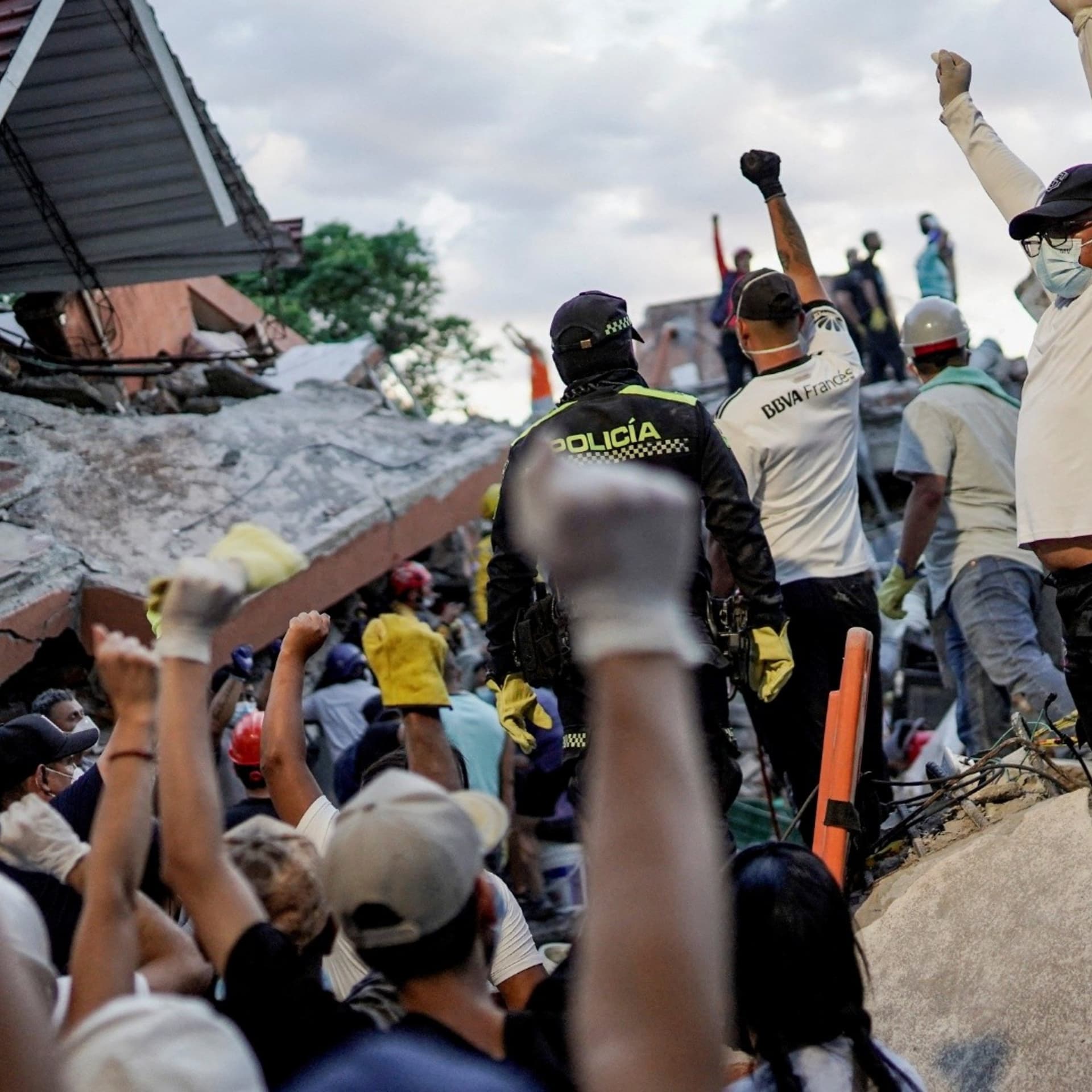
More than 130 people have been killed after a powerful earthquake struck western Colombia. Rescuers are searching for those trapped under the rubble of destroyed buildings. Also: Turkey approves a law aimed at ending conflict with the Kurdish militant PKK group; we investigate China's "flash marriage" scams targeting lonely men; how tourism is impacting wildlife, especially elephants, in Zambia; Harry Potter fans get an undersea power cable rerouted to protect Dobby's fictional grave; and why we should smile at our dogs.
The Global News Podcast brings you the breaking news you need to hear, as it happens. Listen for the latest headlines and current affairs from around the world. Politics, economics, climate, business, technology, health – we cover it all with expert analysis and insight. Get the news that matters, delivered twice a day on weekdays and daily at weekends, plus special bonus episodes reacting to urgent breaking stories. Follow or subscribe now and never miss a moment. Get in touch: globalpodcast@bbc.co.uk Photo: Rescuers at the site of a collapsed building in Cali, Colombia, following earthquake Credit: Sergio Acero/REUTERS