In short
Global News Podcast - Episode Summary
Episode Title
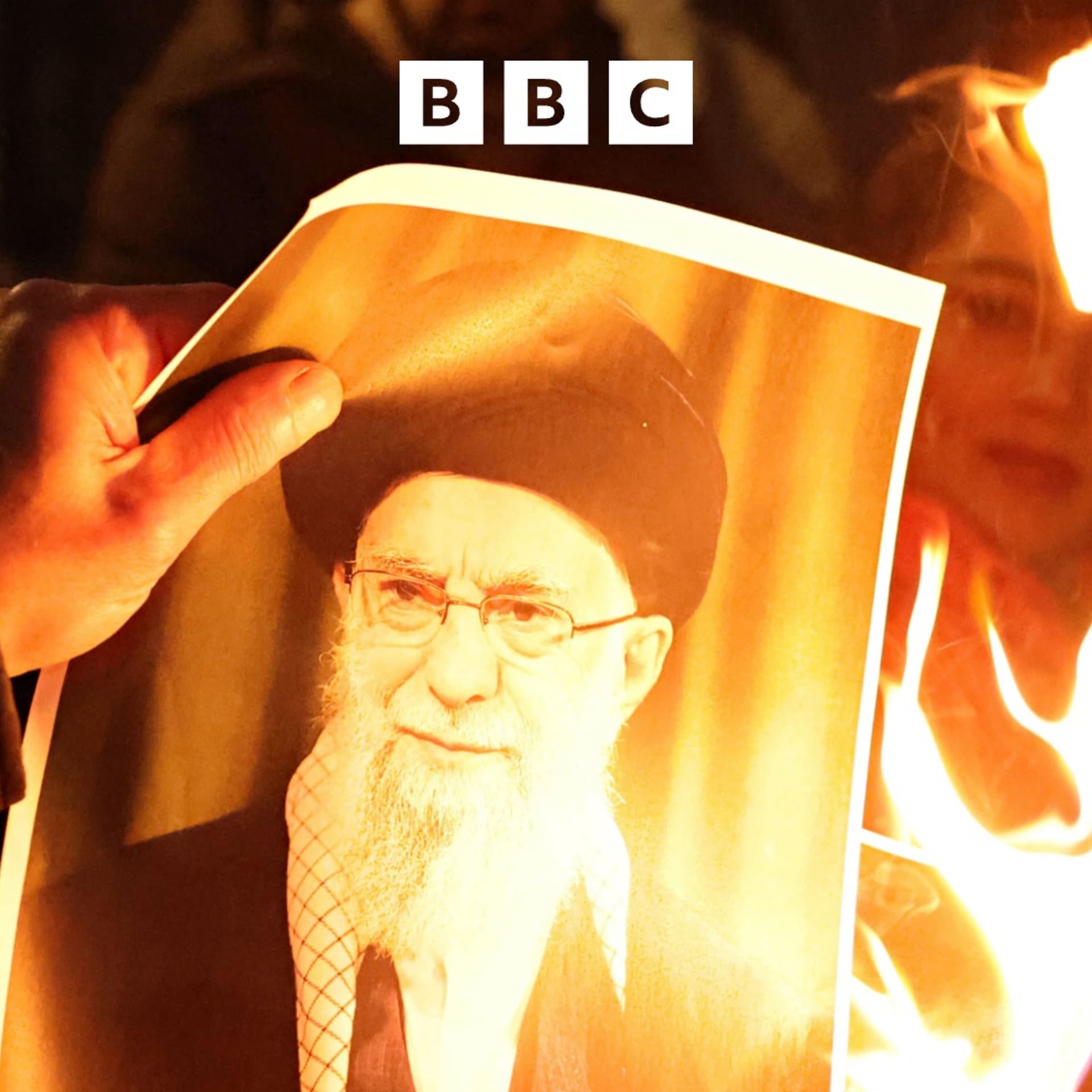
Death toll rises as Iran protests enter third week
Overview In this episode of the Global News Podcast, the focus is on escalating protests in Iran, where security forces are reportedly increasing their violent response. The episode also covers Donald Trump's foreign policy regarding Cuba and Venezuela, significant compensation paid by the UK government to a torture victim, and highlights from the Golden Globe Awards, among other news.
---
Key Topics Discussed
- Iran Protests
- Death Toll: Over 500 protesters reportedly killed amid ongoing demonstrations against the Iranian government.
- Government Response: Eyewitness accounts and videos suggest a violent crackdown by security forces, including the use of military-grade weapons.
- International Implications: Trump indicates potential military intervention in Iran, warning that action may be necessary if the killing of protesters continues.
- Activist Voices: Skylar Thompson from a US-based human rights organization describes the indiscriminate use of lethal force against protesters and calls for international condemnation.
- U.S. Policy Towards Cuba and Venezuela
- Trump's Threats: Trump warns Cuba to negotiate or face consequences, particularly regarding the flow of Venezuelan oil which supports the Cuban economy.
- Cuban Response: Cuba's president rejects Trump's demands, asserting their sovereignty and criticizing U.S. interventions.
- Economic Implications: Observers note that the loss of Venezuelan oil could drastically impact Cuba's economy, leading to potential crises.
- Compensation for Torture Victim
- UK Government Settlement: The British government has paid substantial compensation to Abu Zubaydah, who was tortured by the CIA and has been imprisoned at Guantanamo Bay for nearly 20 years.
- Legal Claims: Zubaydah's case highlighted the complicity of UK intelligence agencies in his torture.
- Avalanches in the Alps
- Recent Incidents: Six skiers have died in a series of avalanches, exacerbated by heavy snowfall.
- Rescue Efforts: Many victims were off-piste, complicating rescue operations. Authorities emphasize the dangers of skiing in unmarked areas.
- Medical Advancements
- Restoration of Sight: Doctors have achieved significant breakthroughs in restoring vision for patients suffering from a rare type of blindness using a novel gel treatment.
- Patient Experiences: Testimonials from patients highlight the life-changing impact of the treatment.
- Golden Globe Awards Highlights
- Major Winners:
- Best Drama: "Hamnet" directed by Chloe Zhao.
- Best Actress in a Drama: Jessie Buckley for "Hamnet".
- Best Comedy: "One Battle After Another".
- New Podcast Award Category: Acknowledgment of the evolving nature of entertainment consumption with the introduction of a podcast award.
- Humanoid Robots
- Future of Household Chores: Discussion on the development of humanoid robots that could assist with daily tasks, highlighting advancements in AI technology.
- Market Predictions: Industry insiders speculate that it could take years for domestic bots to become widely accepted and truly useful.
---
Key Takeaways
- The Iranian protests reflect deep-seated dissatisfaction with the regime, compounded by international pressures and potential military involvement from the U.S.
- U.S.-Cuba relations remain tense, influenced heavily by geopolitical dynamics involving Venezuela.
- The UK government's compensation settlement speaks to the longstanding implications of post-9/11 policies and actions.
- The advancement in medical technology offers hope for many suffering from rare conditions, demonstrating the potential for new treatments to transform lives.
- The Golden Globes not only celebrate cinematic achievements but also adapt to contemporary trends, such as the rise of podcasts.
- The race for humanoid robots underscores a broader trend towards automation in everyday life, with varying opinions on its near-term feasibility.
---
Contact Information For more updates and to share feedback, contact the podcast at: globalpodcast@bbc.co.uk.
Written by AI. May contain mistakes. Listen to the episode to check what was said.
Chapters
Tap a time to open that second in VOUS Military and Iran Protests
0:45 to 1:30
Discussion on US military options regarding the unrest in Iran.
“Hello, I'm Oliver Conway and this edition is published in the early hours of Monday, the 12th of January.”
Violent Crackdown on Protesters
1:30 to 2:26
Details on the violent crackdown by Iranian authorities against protesters.
“Since the Islamic Revolution of 1979, Iran has faced a series of mass protests.”
The State of Unrest in Iran
2:26 to 3:32
Exploration of the current protests across Iran and government responses.
“The Iranian government has been severely weakened by the Israeli and American attacks last year and the loss of its allies in Syria and Lebanon.”
Victims of Unrest
3:32 to 4:45
Reports on casualties and the impact of protests in Iran.
“The hometown of Iran's supreme leader, a place where protesters want his clerical rule to die.”
International Reactions and Statements
4:45 to 6:34
International reactions to the protests and statements from leaders.
“The Speaker had a warning for President Trump, who's been threatening to attack Iran again.”
Cuba's Political Climate
6:34 to 8:02
Discussion on Cuba's political situation in relation to US sanctions.
“And that report by our chief international correspondent, Lise Doucette.”
Cuban Response to US Demands
8:02 to 9:06
Cuban president's response to US calls for a deal amid tensions.
“And of course, that is exactly what Donald Trump wants.”
Greenland's Political Future
9:06 to 10:43
Exploration of Greenland's status and its relationship with the US.
“Our Europe editor Katja Adler sent this report from Greenland's capital, Nuke.”
Golden Globes Highlights
10:43 to 14:00
Recap of the Golden Globes awards and notable winners.
“Now time for some Hollywood glitz and glamour.”
Exploring the Flawed Draft of History
14:14 to 14:55
A discussion on the implications of flawed journalism in major historical events.
“If journalism is the first draft of history, what happens if that draft is flawed?”
Show all 14 chapters
Compensation for Torture Victim
15:02 to 16:29
Report on the UK government's compensation to a tortured Palestinian man.
“The BBC has learned that the British government has paid substantial compensation to a Palestinian man tortured by the US.”
Innovative Treatment for Blindness
16:29 to 18:53
A breakthrough gel treatment restoring sight for patients with hypotony.
“His lawyers are now urging the UK and other governments that share responsibility for his treatment to ensure his release.”
Avalanche Risks in the Alps
18:53 to 21:22
Coverage of recent avalanches in the Alps resulting in fatalities.
“It's hoped the gel will become the standard treatment, with hundreds, if not thousands, eventually benefiting.”
The Rise of Humanoid Robots
21:22 to 25:09
Investigation into the development and potential of household robots.
“If you hate tidying up and ironing, you may soon be able to offload those mundane tasks to an android.”
Transcript
Automatic transcript. May contain errors.0:00This BBC podcast is supported by ads outside the UK. If journalism is the first draft of history, what happens if that draft is flawed? In 1999, four Russian apartment buildings were bombed, hundreds killed. But even now, we still don't know for sure who did it. It's a mystery that sparked chilling theories. I'm Helena Merriman, and in a new BBC series, I'm talking to the reporters who first covered this story. What did they miss the first time? The History Bureau, Putin and the apartment bombs. Listen on bbc.com or wherever you get your podcasts. You're listening to the Global News Podcast from the BBC World Service.
0:47Hello, I'm Oliver Conway and this edition is published in the early hours of Monday, the 12th of January. President Trump says the US military is assessing its options over Iran, as activists say more than 500 people have been killed there in anti-government protests. Cuba's president has rejected Donald Trump's demand to make a deal with Washington. And the Golden Globes have kicked off the Hollywood awards season. Also in the podcast, we hear about the deadly avalanches that have hit the Alps and... It's incredible. It's life-changing. It's given me everything back. The simple gel that can treat a rare form of blindness.
1:30Since the Islamic Revolution of 1979, Iran has faced a series of mass protests. The usual response from the authorities has been to launch a violent crackdown. And it's no different this time. A communications blackout makes it difficult to know exactly what's going on there, but the US-based human rights activist's news agency says 544 people have been killed in two weeks of demonstrations. The group's deputy director is Skylar Thompson. We have seen the use of lethal force indiscriminately against protesters. We have evidence of close range gunshot wounds. We have evidence of tear gassing. We have evidence of military grade weapons being deployed on individuals protesting in the streets.
2:13And this is absolutely unacceptable. It's a serious violation of not only international law, but it's something that the international community must condemn. Despite the violence, there's an important difference from previous demonstrations. The Iranian government has been severely weakened by the Israeli and American attacks last year and the loss of its allies in Syria and Lebanon. It's also facing a threat of intervention from President Trump. In the past few hours, he's said he's looking at possible military action. The president was asked by reporters on Air Force One if Iran had crossed a red line of protesters being killed.
2:48It's starting to what it looks like and there seem to be some people killed that aren't supposed to be killed. These are violent, if you call them leaders, I don't know if they're leaders or just they rule through violence. But we're looking at it very seriously, the military is looking at it and we're looking at some very strong options. The Iranian president, Masoud Pazeshkian, says the unrest is being manipulated by Iran's enemies. while the authorities in Tehran have called for nationwide marches on Monday in support of the regime. Our chief international correspondent Lise Doucette has this report.
3:26Mashhad, Iran's holiest city. Now it burns with a different fervour. The hometown of Iran's supreme leader, a place where protesters want his clerical rule to die. Across Iran, the anger boils. Tehran in the north. Kerman in the south. The roar of the crowds. The boom of the guns. But courage has a cost in Iran. A huge cost. This forecourt is full. Ground zero of grief. It's an open-air morgue. We've tried to count body bags. There's at least 180 here, and the trucks keep coming.
4:24The government is also burying their dead. Coffins carrying police and civilians carried by the crowds. The presenter on state TV lists 10 provinces where they fell. Killed, she says, in terrorist acts committed by the US and Israel. Death to America. MPs shouted in Parliament today. The Speaker had a warning for President Trump, who's been threatening to attack Iran again. So that you are not miscalculating, know that in the case of an attack on Iran, Israel, as well as U.S. military bases in the region will be our legitimate targets. Iran's exiled former crown prince sent President Trump a different message on America's Fox TV.
5:21Your words of solidarity with the Iranian people and your administration has had tremendous positive effect. Let's hope that we can permanently seal this legacy by liberating Iran so that we and you can make Iran great again. Some call for Reza Pahlavi to return. He's helped galvanize these protests. But his call for foreign health is rejected by those Iranians who say change has to come from within. Today, Iran's President Peshishkan also spoke for the first time in days. We ask that everyone comes together and not let these people riot. If they have concerns, we will hear them. It is our duty to hear them and solve their problems.
6:10However, our highest duty is to not allow rioters to disrupt society.
6:18But there's menace on the streets. Security forces on motorcycles open fire. It's not clear who they're targeting. The message to the president from the protests, there are no quick fixes anymore. They're calling for much more. And that report by our chief international correspondent, Lise Doucette. When US forces seized the Venezuelan president, Nicolas Maduro, just over a week ago, many of those killed trying to protect him were from Cuba. Venezuela has a longstanding alliance with the island nation and supplies it with an estimated 35 ,000 barrels of oil a day. Donald Trump says he's putting an end to that, urging the communist authorities in Cuba to, quote, make a deal before it's too late.
7:05Cuba's president, Miguel Diaz-Canel, has hit back with this post on X read out by one of our producers. Those who turn everything into a business, even human lives, have no moral authority to point fingers at Cuba for anything, absolutely anything. Those who today hysterically rail against our nation do so out of rage over the sovereign decision of this people to choose their political model. More details on the dispute from our diplomatic correspondent Paul Adams in Washington. Donald Trump has made one very trenchant observation, which is that Cuba is heavily dependent on Venezuelan support, specifically oil.
7:41And with America assuming control of Venezuelan oil, that support is gone. Cuba is losing around a third of what it relies on from outside contributors. So that could have a very dramatic effect. Some observers are suggesting it could be catastrophic for the Cuban economy and lead to power cuts and food shortages and all sorts of difficulty. And of course, that is exactly what Donald Trump wants. He wants to batter communist Havana into submission to make some kind of deal. What that deal is, he doesn't say. But for Cuban Americans, influential people like the Secretary of State, Marco Rubio, They want to see the release of political prisoners, the holding of free and fair elections.
8:25Frankly, they want to see an end to the Cuban revolution started led by Fidel Castro in the 1950s. Now, the Cuban president, President Diaz-Canel, has said that Cuba is free, independent and sovereign. No one tells us what to do. But the regime in Havana, which has weathered all sorts of storms in the past, knows that it is now facing possibly some of its most difficult days yet. Paul Adams in Washington. Meanwhile, the foreign ministers of Denmark and Greenland will travel to Washington this week for talks over the future of the semi-autonomous Danish territory. President Trump says the US needs Greenland for its defence, but 85 % of the island's residents say they have no interest in becoming American.
9:07Our Europe editor Katja Adler sent this report from Greenland's capital, Nuke. Crisis or no crisis, it's the weekend and Greenlanders were out skiing and sledging around the frozen lake of Nook but tension hangs heavy This is the world's biggest island and local mayor of Varak Olsen's municipality is the size of France across the ice sheet She's protective of her home We need to stick together as a people because we will be here forever It is our country. And even though we can't get some really scary thoughts sometimes, let's focus on what we have in Greenland. Denmark decides the foreign policy here, which frustrates many.
9:52But there's cautious hope for compromise at the meeting in the US. Most Greenlanders don't want to be dominated by Copenhagen or Washington, but some see opportunity rather than menace in President Trump's ambitions. Pele Broberg is an opposition MP for the NALRAC party. We want to work closely with the US in the future. You have to remember, we are in the North American continent, but we get all our goods from the European Union, basically only from Denmark. That's a 4 ,000 kilometre way of getting our goods. Why not just 500 kilometres to the US? Why aren't we looking for better ways to live here, cheaper ways?
10:27The UK and others in Europe are standing up for Denmark over Greenland, but they don't want to anger President Trump. They need him for a Ukraine peace deal and their own security and defence. There's a lot at stake here. Katja Adler. Now time for some Hollywood glitz and glamour. Affectionately known as the drunk uncle of the awards season, the Golden Globes have just finished in Los Angeles. I spoke to our correspondent in LA, Peter Bowes, as it was wrapping up. George Clooney and Julia Roberts on stage to present the two top awards Of the night, Best Drama, Motion Picture, went to Hamnet, director Chloe Zhao's mostly fictional story of the tragic death of William Shakespeare and his wife's 11-year-old son, and how their family experiences inspired one of his most famous plays.
11:20So that has been named Best Drama. The Irish actress Jessie Buckley, who played the wife of William Shakespeare, She won the award for Best Actress in a Drama. We also have the winner in the Best Comedy category. A lot of people are predicting this. It had the most nominations going into the night, one battle after another. The epic black comedy about a washed-up, rather pathetic, former revolutionary character played by Leonardo DiCaprio, winning for Best Supporting Actress, Tiana Taylor, Best Screenplay and Director for Paul Thomas Anderson. But Leonardo DiCaprio, the lead, did not win in his category because that category was won, I think, by, you could describe him as the man of the moment in Hollywood, Timothee Chalamet.
12:08He won for his performance in Marty Supreme, a film all about a shoe salesman who turns into a rather arrogant tennis player with big ambitions. A popular win, I think, for him. He described it as a very sweet moment. And were there any upsets? You know, there weren't any upsets. I think tonight, more than most award shows, it has gone as pretty much as people have predicted. I think the big winners, and we must note the success of Adolescence, again, the British Limited series, it had five nominations, a story of the 13-year-old arrested for the murder of one of his schoolmates. And this is a miniseries that has won accolade after accolade at the Emmys a few months ago.
12:57Owen Cooper, the 16-year-old now star of this miniseries, he made quite an endearing kind of acceptance speech, very modest. He really couldn't believe that he was standing on the stage at the Golden Globes. The series also won her Best Lead Actor in Stephen Graham, a major production force behind the series as well, and Best Supporting Female Actor for Erin Doherty. She plays the therapist in the series. And briefly, a new podcast award. Now, no nomination for the Global News podcast, but tell us about that. Yes, this is a new venture, I think, for the Golden Globes. And I think what they want to try to do is to broaden out the appeal of the Golden Globes.
13:42We all get our entertainment in very different ways these days. So they've introduced this podcast category, received somewhat cynically by many podcasters around the world, because the nominees were all of those well-funded podcasts that are also video podcasts. It was won by A Good Hang with Amy Poehler. Amy Poehler, a friend of the Golden Globes, as a former presenter. Peter Bowes in Los Angeles. And still to come on this podcast... I'm Memo, your future home robot. We meet the humanoid robots that could do our daily chores.
14:23If journalism is the first draft of history, what happens if that draft is flawed? In 1999, four Russian apartment buildings were bombed, hundreds killed, But even now, we still don't know for sure who did it. It's a mystery that sparked chilling theories. I'm Helena Merriman, and in a new BBC series, I'm talking to the reporters who first covered this story. What did they miss the first time? The History Bureau, Putin and the apartment bombs. Listen on BBC.com or wherever you get your podcasts.
15:01You're listening to the Global News Podcast. The BBC has learned that the British government has paid substantial compensation to a Palestinian man tortured by the US. Abu Zubaydah has been imprisoned without trial at Guantanamo Bay for almost 20 years, and before that at secret CIA sites. The British intelligence agencies MI5 and MI6 gave the CIA questions to ask Abu Zubaydah during his interrogations, despite knowing of his extreme mistreatment. Daniel DeSimone reports. Abu Zubaydah was the first man subjected to the CIA's so-called enhanced interrogation techniques after the 11th September 2001 attacks.
15:43When captured by the US in Pakistan in 2002, it was claimed he was a senior al-Qaeda member. He was held for four years at secret CIA detention centres where he was interrogated and tortured, including through simulated drowning, beatings and being locked in a coffin. MI6 and MI5 passed on questions to be put to him. He brought a legal claim against the UK on the basis that its intelligence services were complicit in his torture. The case has now reached a settlement, with Abu Zubaydah paid a substantial sum of money. The US no longer says he was in al-Qaeda, but he remains in the Guantanamo Bay prison camp after two decades, without charge or convictions.
16:31His lawyers are now urging the UK and other governments that share responsibility for his treatment to ensure his release. The Foreign Office, which oversees MI6, said it would not comment on intelligence matters. Daniel De Simone. People with a rare form of blindness have had their sight restored using a low-cost gel. The treatment can reduce the effects of hypotony, where pressure in the eyeball is too low and leads to distorted vision. Our health correspondent Sophie Hutchinson has been speaking to one of those affected and lead researcher Dr Harry Petroskin from the Moorfields Eye Hospital in London.
17:09A pea-sized drop of gel is saving people's sight, a common and inexpensive substance repurposed with astonishing success. It's incredible, it's life-changing, it's given me everything back. Nikki Guy's eyes had such low pressure known as hypotony that the structure, the eyeballs, were collapsing. It led to blindness in her right eye and then her left eye started rapidly deteriorating. Her left eye could still technically see if the eyeball around it could be re-inflated but the commonly used filler, a silicon oil, is hard to see through. The obvious thing to do would be to pump it up because if you have a ball that deflates you pump it up and if you have a bike tire that deflates you pump it up but what you really need to do for vision is to pump it up with something that you can see through and if we're taking a young person who needs to be able to drive and needs to be able to look after her child and work the quality of vision you get with silicon oil is not great.
18:08And then came the idea of using the clear gel HPMC used for decades during other types of eye surgery. The really different thing about this approach is we're injecting the gel in the back of the eye and that had never really been done in a rigorous way and that was sort of the eureka moment that really changed everything. Nikki is one of seven out of an initial eight patients treated monthly with gel injections who've seen dramatic improvements. I used to take loads of photographs and be a keen photographer. I can do that again. I can see my child grow up at every birthday. I can make him a birthday cake.
18:44If my vision stays like this for the rest of my life, it would be absolutely brilliant. It'd be wonderful. I mean, I may not ever be able to drive again, but if it stays like this, then I'll take that. It's hoped the gel will become the standard treatment, with hundreds, if not thousands, eventually benefiting. Sophie Hutchinson. It's been a difficult weekend for mountain rescue teams in the Alps, with six people killed in a series of avalanches following heavy snowfall. Many more had to be rescued. French weather forecasters had warned of a high risk of avalanches and advised skiers and snowboarders not to go off-piste.
19:19More details from Stephanie Prentice. The majority of the people who died were off-piste, meaning they deviated from marked runs on the mountain which are generally safer and easier for rescue teams to access. One avalanche in the Eresh Beaufort resort killed one person and injured another, with ski patrollers saying they found them almost by chance after being alerted to cries for help. Jean-Pierre Mirabel is president of the resort.
19:51It turned out that there was already one person buried. Only his head was visible, so he was quickly rescued. While talking to him, the rescuers learned that another person was buried. Five other people were reported dead after incidents at multiple resorts, including La Plaine, Val d 'Azur and Courcheval. In Val d 'Azur, two victims weren't carrying an avalanche transceiver, meaning rescuers had to find them manually by trying to track their smartphones. These people in the resort told us how they're trying to stay safe. I try to stick to the slopes and do a little off-piste skiing, but always in a controlled manner.
20:28I never ski alone. We assess the conditions and the risk of avalanches. When we want to venture off-piste, we bring safety equipment and detectors, and we don't just go anywhere. In one resort in Austria, rescue teams are reporting an unusually high level of missions, around 250 since the start of the year. They're telling people on the mountain to study the terrain. Gerhard Brunner manages a rescue team in Nidroblan. There are no fall zones. This means that when people fall, they fall onto rocks next to the slopes, which often results in serious injuries. This is particularly noticeable at the moment.
21:12Experts are warning that a single skier or snowboarder can be enough to trigger a large avalanche, even in terrain that's normally considered safe. Stephanie Prentiss. If you hate tidying up and ironing, you may soon be able to offload those mundane tasks to an android. With the rise of AI, companies around the world are racing to ship robots to our homes to help with daily chores. But how soon could this become a truly useful reality? Our correspondent Joe Tidy has been to meet some of the high-tech helpers.
21:46It's impossible not to smile when a humanoid robot walks into a room. Neo is 5 '6 and walks and moves very slowly. It has two button eyes set into a face and body, coated in soft knitwear. It looks cute and cuddly, and that's the point. This is one of a new wave of domestic bots designed to live with us and help us run our homes. We've just walked up to see NEO in action, and someone is operating NEO right now and watering all the plants. I've just been told this is what they do all day, carrying out tasks and testing all day long. Good accuracy. Oh, I spoke too soon. Aside from the spill, Neo did a good job of watering the plants.
22:29It also fetched me a bottle of water and tidied away some crockery. Impressive. But all of this was done by a human controlling it. Neo's creator, Bernd Bornich from One X, though, says Neo can do lots of things on its own and has become truly useful in his home. Does a pretty good job of tidying, so resetting my living room and my house in general. And that's all someone with a VR headset? It's a mix. It's a mix. So in my home, we have a lot of data. So a lot of the stuff in my home can get automated because we have data there. Periodically, someone kind of steps in and helps if the robot does not know exactly how to move on.
23:06Development in the plush Silicon Valley headquarters is moving fast. They plan to get Neo out to thousands of customers later this year who've already pre-ordered the$20 ,000 bot. Early adopters, though, will have to be comfortable waiving their privacy when humans take charge. A lot of our early customers are people that actually will have a lot of value from this. Way higher value than having a second car. There are several domestic bot companies here in Silicon Valley. Once again, it's an epicentre for the latest emerging AI tech trend. Sunday AI will start shipping its bot Memo next year. I'm Memo, your future home robot here at Sunday.
23:42Memo is again about five foot tall, but it's not a full humanoid. It has no legs, moving around slowly and smoothly on wheels. It has long arms and a small head with an orange cap. We watch it as it uses a coffee machine. So Tony, can I just check with you? There's no one that we can't see doing this for the robot. This is all autonomous. Yes, it's one single neural network controlling the whole body movement. Memo also folded some socks, loaded a dishwasher and cleared a table. With one mistake. Oh, holy. Smashing the wine glass seems to have been a bad fluke as the grip pad on its mitten-like hand wasn't right.
24:20And actually, those robot mitten hands are part of the key to the company's success, as co-founder Tony Chow explains. Normally, the way we train AI is to teleoperate the robots in people's homes or in other places and gather the data. And instead, we build these gloves. And people just wear their gloves in their homes and collect data for us. We now see more than 500 homes and also all the different ways they go about doing the task. Sunday AI is, of course, paying these people to carry out hours of repetitive tasks to train the robot, a reminder of the human drudgery that often underpins AI.
24:55It's not just in the US where people are getting excited about human-like robots. The humanoid robot industry in China is so hot that the government there recently warned a bubble might be building set to burst. Outside of the tech bubble, some, including the International Federation of Robotics, think it could take 20 years before domestic bots become truly useful and accepted. Making your coffee now. But AI robotics companies are convinced that things are moving fast, and eventually we'll all want one of their bots in our homes. Our cyber correspondent, Joe Tidy. And that is all from us for now, but the Global News Podcast will be back very soon.
25:34This edition was mixed by Chris Lovelock and produced by Stephanie Zacherson. Our editors, Karen Martin, I'm Oliver Conway. Until next time, goodbye.
26:08I'm Helena Merriman, and in a new BBC series, I'm talking to the reporters who first covered this story. What did they miss the first time? The History Bureau, Putin and the apartment bombs. Listen on bbc.com or wherever you get your podcasts.
From the publisher
Videos verified by the BBC and eyewitness accounts appear to show security forces in Iran ramping up their response to protests that have spread across the country. Activists say dozens of bodies seen piled up in black bags outside a morgue near Tehran are dead protesters. US President Donald Trump says Iran's leadership is seeking to negotiate following his threat of military intervention, but warns that he "may have to act before a meeting".
Also: President Trump tells Cuba to "make a deal" with Washington or face consequences, warning the flow of Venezuelan oil and money to the country will stop. The UK government has paid "substantial" compensation to a man who was tortured by the CIA before being shipped to Guantanamo Bay where he is still imprisoned. Greenland residents tell the BBC they want to be left alone, as their island becomes embroiled in a geopolitical storm. Six skiers have been killed in a series of avalanches across the Alps. Doctors say they have achieved the previously impossible - restoring sight and preventing blindness in people with a rare but dangerous eye condition. Timothée Chalamet, Jessie Buckley and Seth Rogen were among the winners at this year's Golden Globe Awards. And how soon could humanoid robots carry out our household chores?
The Global News Podcast brings you the breaking news you need to hear, as it happens. Listen for the latest headlines and current affairs from around the world. Politics, economics, climate, business, technology, health – we cover it all with expert analysis and insight. Get the news that matters, delivered twice a day on weekdays and daily at weekends, plus special bonus episodes reacting to urgent breaking stories. Follow or subscribe now and never miss a moment. Get in touch: globalpodcast@bbc.co.uk