
In short
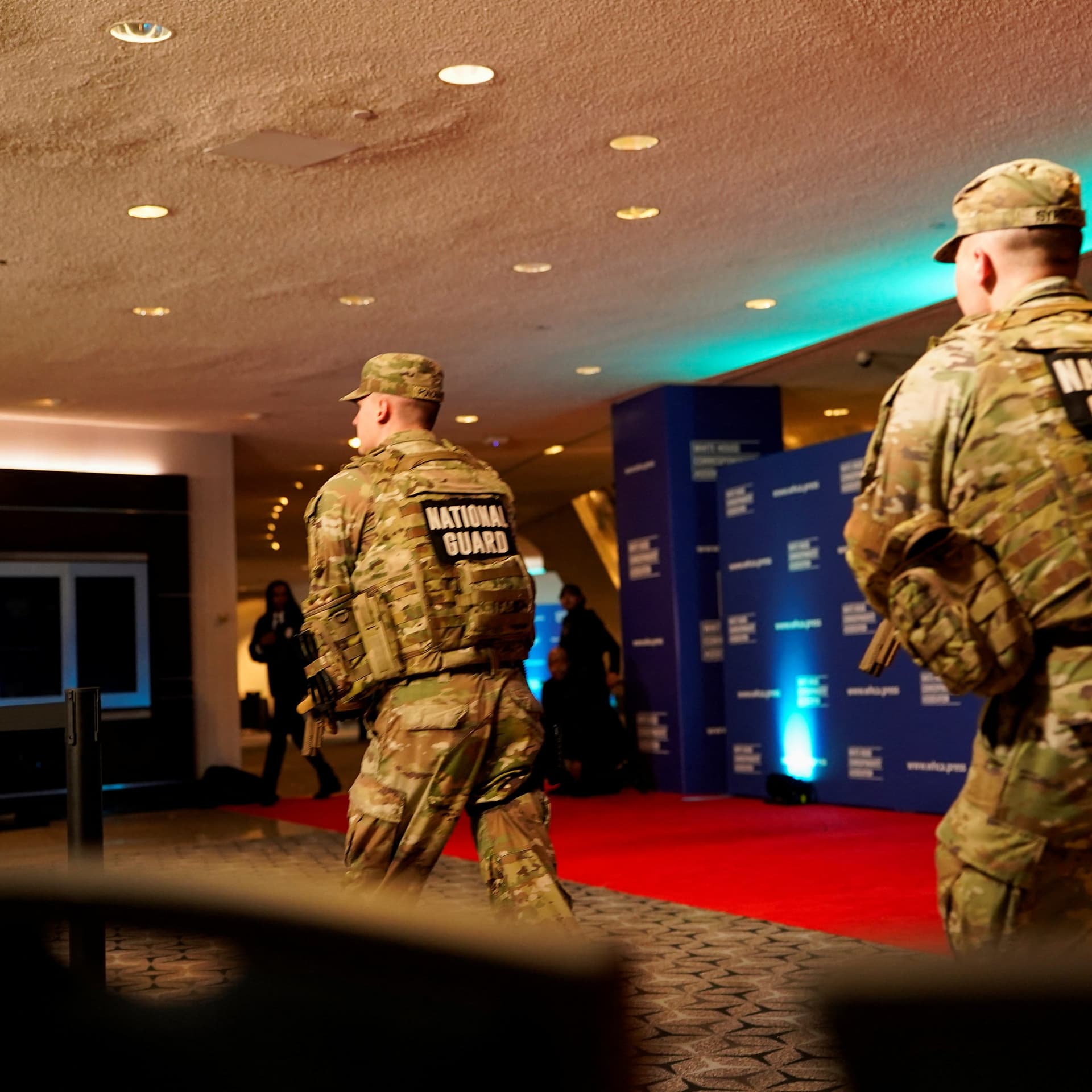
The episode covers: (1) Washington’s White House Correspondents’ Dinner at the Hilton, where President Donald Trump was evacuated after loud noises suspected to be gunfire; witnesses report Secret Service rushing Trump, Melania Trump, and others under tables, with the ballroom locked down. Trump later said a shooter was apprehended and that one officer was shot but protected by a bulletproof vest. Guests include BBC reporters Carl Nasman, Catriona Perry, Bernd de Boosman, and Gary O’Donoghue, plus officials mentioned on scene (J.D. Vance, Pete Hegseth, Robert F. Kennedy Jr., FBI Director Kash Patel).
Key claims
security acted quickly; shots’ origin was unclear. (2) Trump canceling envoys’ Pakistan trip for Iran talks; Israel’s Netanyahu ordering Hezbollah strikes in Lebanon after a ceasefire extension. (3) Colombia bus bombing killing at least 14 amid FARC dissident violence before elections. (4) Chernobyl 40-year retrospective with Reuters’ Charles Bremer on Soviet secrecy and radiation exposure.
Written by AI. May contain mistakes. Listen to the episode to check what was said.
Chapters
Tap a time to open that second in VOTrump Evacuated from Dinner
1:14 to 1:40
President Trump was evacuated from a dinner due to suspected gunfire.
“In dramatic events in Washington, security agents whisked President Trump away from a dinner for White House correspondents after there were loud noises sounding like gunfire.”
Details of the Incident
1:40 to 2:18
Eyewitness accounts of the chaotic scene during the evacuation.
“He posted on social media that a shooter had been apprehended.”
Live Reports from the Scene
2:18 to 3:08
BBC reporters provide updates on the situation at the dinner event.
“be evacuated from a prestigious dinner for White House journalists at the Hilton Hotel right after this happened.”
Security Response to the Threat
3:08 to 4:36
Discussion on the security measures taken during the incident.
“This is the scene there, and you can see many of those journalists that have gathered for that gala here in Washington still there at the event.”
Trump's Press Briefing
4:36 to 6:06
Details from Trump’s press briefing about the gunfire incident.
“You probably have it by now, put out on truth and put out on many of the platforms.”
Correspondent Insights
6:06 to 7:43
Correspondents share their insights and experiences from the dinner.
“She didn't say what happened, and we still have no official confirmation of what took place.”
The Atmosphere at the Dinner
7:43 to 9:51
Description of the atmosphere and reactions during the event.
“It's very unclear what happened, but from where I was sitting, it appeared or it sounded as if the gunshots had come from kind of towards the lobby area.”
Trump's Decision on Talks with Iran
11:15 to 14:03
Trump discusses his decision to avoid sending envoys to Pakistan for talks.
“Hey there, this is Thomas Germain, co-host of The Interface, the show that decodes how technology is rewiring your week and your world.”
Trump's Changing Attitude Towards Iran
14:03 to 15:49
Explore Trump's shifting perspective on negotiations with Iran amidst pressures.
“that they were not inclined to take part in direct negotiations with the Americans anywhere.”
Netanyahu's Military Actions in Lebanon
15:50 to 17:29
Understand Netanyahu's authorization of military actions against Hezbollah targets.
“Buildings that Israel said were used by the Iranian-backed armed group came under fire.”
Show all 13 chapters
Ceasefire Situation and Israel's Stance
17:30 to 19:18
Discuss the implications of Israel's military actions on the ceasefire situation.
“as we've seen in Gaza, as we've seen in other war zones, when it believes that there is a threat to its national security, which essentially it has felt pretty much every day since the ceasefire came into place.”
Colombia's Violence and Upcoming Elections
19:19 to 22:38
Examine the recent bomb attack in Colombia and its impact on the political landscape.
“Just weeks before a presidential election in Colombia, at least 14 people have been killed in a bomb attack on a bus in the southwest of the country.”
Reflections on the Chernobyl Disaster
22:39 to 26:53
Learn about the Chernobyl disaster's historical context and media coverage at the time.
“Today marks 40 years since the worst nuclear disaster in history at Chernobyl in northern Ukraine, which was then part of the Soviet Union.”
Transcript
Automatic transcript. May contain errors.0:00This BBC podcast is supported by ads outside the UK.
0:30For more details.
0:37Spring into deals for seasonal savings. Shop select one fine annuals for just$1. Plus, get a free additional cobalt 40-volt 2-amp hour battery when you buy a select cobalt 40-volt trimmer and blower combo kit. Our best lineup is here at Lowe's. Lowe's. We help you save.
1:07This is the Global News Podcast from the BBC World Service. I'm Alex Ritson, and in the early hours of Sunday, the 26th of April, these are our main stories. In dramatic events in Washington, security agents whisked President Trump away from a dinner for White House correspondents after there were loud noises sounding like gunfire. And that's where I heard the noise come from. And to me, it sounded like that booming noise that assault rifles make. The president is safe. He posted on social media that a shooter had been apprehended. We'll hear from BBC reporters who were at the scene. Also in this podcast, a few hours before the dinner, President Trump announced that he would not be sending his two special envoys to Pakistan for talks about the war with Iran.
2:01And we hear about a deadly explosion on a bus in Colombia just weeks before a presidential election.
2:12There were extraordinary events in Washington on Saturday night when President Trump had to be evacuated from a prestigious dinner for White House journalists at the Hilton Hotel right after this happened.
2:33It wasn't clear at first if the loud bangs were gunshots, but the First Lady, Melania Trump, and the White House Press Secretary, Caroline Levitt, were seen saying what happened as they, along with President Trump, were quickly taken out of the building by security personnel. There were cries of stay down and get down. This is how Carl Nasman of BBC TV reported the events immediately afterwards. We are getting reports from that White House Correspondents' Dinner here in Washington that there were suspected gunshots within the building. Let's take you there now live. This is the scene there, and you can see many of those journalists that have gathered for that gala here in Washington still there at the event.
3:16We understand that President Trump has been evacuated from the building tonight. Minutes later, Catriona Perry, who presents and reports for the BBC in Washington, spoke on her phone about what she'd seen at the event. We were seated here. We were finishing off the starter course. And the next thing, there was a crissuffle of a sound of breaking glass and tables being knocked over right by the entrance to the room here. And a large law enforcement armed presence rushed through, rushed straight to the president, rushed he and the first lady all above the stage. Everyone was ordered to dive for cover, which we all did.
3:57Everyone dived under the dining tables here. And there was a noise that sounded like shots. I cannot say that they were shots. I was speaking to an individual here who was outside of the bathroom, outside of the dining room at the time and he said there were shots fired outside the dining room, so not inside the dining room. Also with Mr Trump was the US Vice President J.D. Vance, the Defence Secretary Pete Hegseth, the Health Secretary Robert F. Kennedy Jr., the FBI Director Kash Patel and other members of the President's Cabinet. As we record this podcast, President Trump is giving a press briefing at the White House.
4:37Here's what he told us. A man charged a security checkpoint armed with multiple weapons, and he was taken down by some very brave members of Secret Service, and they acted very quickly and have just released for purposes of transparency, clarity. I've ordered it to be put out. You probably have it by now, put out on truth and put out on many of the platforms. A tape showing the violence of this thug that attacked our Constitution and also showing how quickly Secret Service and law enforcement acted on our country's behalf. Really did a great job. One officer was shot, but saved by the fact that he was wearing, obviously, a very good bulletproof vest.
5:27He was shot from very close distance with a very powerful gun. And the vest did the job. I just spoke to the officer and he's doing great. He's in great shape. President Trump. Let's get more now on how the drama unfolded. Our Washington correspondent, Bernd de Boosman, was at the dinner. I spoke to him minutes after the president was whisked away by security. At the moment, there's still several thousand people, mostly reporters and their guests, still locked in the ballroom of the Washington Hilton. Just a few minutes ago, the president of the White House Correspondents Association, Weijia Jiang of ZBS, went to the podium and informed us that the event will be continuing in a short time.
6:12She didn't say what happened, and we still have no official confirmation of what took place. But from where the BBC was sitting, there was perhaps four or five what sounded like gunshots. The FBI director, Kash Patel, was sitting just behind me, kind of almost back to back. He was quickly rushed out of the venue by an agent. And then President Trump was rushed off stage where he was sitting with members of the White House Correspondents Association, about three or four Secret Service agents with long rifles quickly got on stage and rushed him off the stage. And you heard the noises, did you? I did.
6:49It was very clear, and it was very clear to me that it was gunshots. I've heard gunshots before, and there was probably four or five of them. At that point, everyone took ducks mostly beneath their tables, and that's when I saw an agent, I assume an FBI agent or a Secret Service agent, kind of jump over several chairs to get to FBI Director Kash Patel and his girlfriend and and remove them from our immediate vicinity. Yes it is extraordinary watching the Secret Service in action in an event like this. It is and I was also at Butler Pennsylvania and I think that when then candidate Trump was shot this is something they've rehearsed for very often and the security just to get into the venue even before the shooting was really quite intense.
7:34The streets around the Washington Hilton were closed. There was full kind of almost airport type security screening just to get in the venue, metal detectors and such. It's very unclear what happened, but from where I was sitting, it appeared or it sounded as if the gunshots had come from kind of towards the lobby area. They weren't actually in the ballroom where we are at the moment. Bernd DeBoosman, our chief North America correspondent, Gary O'Donoghue, was also in the room. Well, I was about 40 feet from the stage where the president, vice president, first lady, RFK, P-Hexer were all sitting.
8:13And the stage was to my left and the doors into the ballroom were ahead of me. And that's where I heard the noise comes from. And to me, it sounded like that booming noise that assault rifles make. But we haven't had confirmation. What we have just had in the last minute or two is that the vice president and the president are uninjured. When those noises happened, everyone around me and in this huge ballroom where I am dived under the tables. And the Secret Service were on the stage taking the president and others straight out of the room. I mean, I mean, astonishing speed in which they were all evacuated straight out of the room.
8:55We'd only just had the first course and we'd had the national anthem. We'd had the first speech and people were just getting to tuck into their food and then these huge kind of noises from front and centre ahead of me. And then we were all on the deck for, I don't know, about 20, 25 minutes after that. They've locked the main doors, the ballroom. I think we may try and find if there's a way out down the side here. There's no, the cell service is very patchy in here. So I'm hoping you can hear me reasonably clearly, but there must be 2 ,000 people in this room. I mean, it's a huge forum. And to give you an idea, I mean, I was on table 95.
9:31I'll give you an idea of the sort of scale of this event. And the first time, of course, the president had come to the White House Correspondents' Dinner. He'd shunned it in years before as president. And he came tonight and, I mean, our goodness knows. We'll find out what the actual details are, but the ramifications of this could be huge as well. Gary O'Donoghue. Still to come in this podcast. A lot of media in the West were saying there were hundreds and thousands of people who were dead. It was a big unknown because these were the days before the internet, social media. It's exactly 40 years since the meltdown of the Chernobyl nuclear reactor.
10:23Welcome to Moto Casino, where the excitement never ends. With thousands of the hottest free-to-play social casino games, fastest payouts, and the best promotions in the industry. No tricks or gimmicks. Owned and operated in the USA. Moto Casino is a free-to-play social casino. No purchase necessary. 21 plus to play. Void or prohibited. Sign up today for a generous welcome bonus. Moto Casino. America's social casino. Download the Moto Casino app today. Hey, it's Ryan Seacrest for Jewel Osco. Take care of yourself this spring with great savings on all your favorite wellness brands. Now through April 28th, save$5 when you buy three or more participating wellness items.
10:59Shop in-store or online for products like Centrum Silver, Nexium 24-Hour, Tums Ultra Strength or Smoothies tablets, and Flonase Spray. And save$5 when you buy three or more. Get these deals before they're gone. Offer ends April 28th. Restrictions apply. Offers may vary. Visit Jewelosco.com for more details. Hey there, this is Thomas Germain, co-host of The Interface, the show that decodes how technology is rewiring your week and your world. On this week's episode, Apple's CEO is resigning, and we'll look at what that means for the future of smartphones. We'll talk about whether your latest favorite band is actually a secret marketing ploy, and how the AI data center boom has finally met its match, public backlash.
11:46Listen on BBC.com or wherever you get your podcasts.
12:16decision came after Iran's foreign minister, Abbas Aragji, left the Pakistani capital following a meeting with mediators, apparently to set out Tehran's latest position. Shortly after boarding a flight on Air Force One, Mr. Trump explained his new line of thinking. We'll deal by telephone and they can call us anytime they want. Again, we have all the cards. They have no military left, practically. They have no leaders left. We don't know who the leaders are. Nobody knows who the I don't think they know who the leaders are very importantly. So we're not going to be travelling 15, 16 hours to have a meeting with people that nobody ever heard of before.
12:54What changed to make you make that decision? Too much travel. When they say the meeting's scheduled for Tuesday, I said Tuesday, that's a long time from now. Too much travelling, takes too long, too expensive. I'm a very cost-conscious person. Mr Trump said that his decision didn't mean there would be a return to fighting. So where does all this leave the negotiations? I heard more from our North America correspondent, Peter Bowes. Donald Trump was quite abrupt in his intervention, telling his team of negotiators that they were not going to make an 18-hour flight to Pakistan. He said, we have all the cards, they can call us any time they want, referring to Iran.
13:34But essentially, he is implying that he considers a long flight to Islamabad to, as he said, sit around and talk about nothing isn't worth the time and money. I think it's probably fair to say that expectations were quite low to start with when this wasn't necessarily going to be the top team from the United States. J.D. Vance, the vice president who led negotiations two weeks ago, was always going to stay in Washington, but there were to be no talks. And we know that Iran had been saying for at least a day or two that they were not inclined to take part in direct negotiations with the Americans anywhere.
14:12So the day has achieved nothing. So why is he doing this? Because it appeared that the American team were set to go. Well, Donald Trump seems to be taking a somewhat different attitude to the one that we've been hearing from him, let's say a week or so ago, where he was talking in terms of the bombing starting again if Iran didn't agree to a deal. There was a sense of urgency in what he was saying. The attitude now, not just from the President but from the Defence Secretary, Pete Hegseth, appears to be, let's just stand back a little bit, suggest that we have some time and not be rushed into a deal.
14:46But this is a country where people are becoming increasingly frustrated, are being affected increasingly by the high fuel prices and how it's affecting people's everyday lives. So there is the potential to put President Trump under greater political pressure. President Trump says that time is on his side and that the clock is ticking for the Iranians. But next Saturday, of course, is 60 days since the start of the war and he has to go to Congress for approval. Yes, there is a new deadline there. And I think as the days and weeks go by, this is one reason why the pressure is increasing on this president, not just congressional approval, but the mood in the country.
15:25Remember, this is a president who promised that he wouldn't get into these protracted overseas wars situations, which is what this is beginning to look like with no end in sight. So I think as far as Mr Trump is concerned, there is pressure all around. And to say that all the cards are on his side might be somewhat simplistic when you consider the complex issues that are at stake here. Peter Bowes. Soon after President Trump announced that his envoys wouldn't fly to Pakistan, the other crucial player in all of this, Israel's Prime Minister Benjamin Netanyahu, ordered the Israeli army to vigorously attack what he said were Hezbollah targets in southern Lebanon.
16:05Attacks followed almost immediately. Buildings that Israel said were used by the Iranian-backed armed group came under fire. All this just days after Israeli and Lebanese diplomats in Washington agreed a three-week extension to a ceasefire. I asked our Middle East analyst, Sebastian Usher, if Mr Netanyahu had put the ceasefire in jeopardy. Well, he's up the ante again. I mean, it's clear that he isn't really happy with there being the kind of ceasefire that there is in Lebanon at the moment. It's unfinished business as far as he's concerned. And as far as many Israelis are concerned, I mean, when the ceasefire was announced, there was a sense that he had been kind of forced into it by the Americans and that it was unfinished business, not just from him, but also from opposition politicians and parties.
16:50So he has now, in a very brief statement, ordered the Israeli military to vigorously attack Hezbollah targets. That is the first really strong statement from him since the announcement by President Trump that the ceasefire that's currently in place in Lebanon is being extended by another three weeks to give more time to these peace talks but are being held between the Lebanese government and Israel, but not Hezbollah. So does this mean the ceasefire is now effectively over? I mean, from the Israeli perspective and from the way that it was defined in the terms of the ceasefire, Israel was given the right to carry out attacks still in Lebanon, as we've seen in Gaza, as we've seen in other war zones, when it believes that there is a threat to its national security, which essentially it has felt pretty much every day since the ceasefire came into place.
17:45And that's led to Hezbollah fighting to a smaller extent inside Lebanon and also firing a number of rockets into northern Israel. So I don't think one could say that the ceasefire is over, but it's been breached every day. And this would make one think that there are going to be bigger breaches so that it might become a ceasefire all but in name. The only thing one could say is that for Lebanese in Beirut and Sidon in the big cities, they haven't had any attacks on them, any Israeli strikes since the ceasefire came into force. Is the timing of this statement significant just after the apparent breakdown of talks between the US and Iran?
18:25You could certainly interpret that way. As I was saying, I mean, Mr. Netanyahu is not keen really on there being a ceasefire either in Lebanon or in Iran. Again, he feels that Iran, the regime there needs to be obliterated. It needs to be done away with. And that isn't what's going to happen at the moment. And if the ceasefire continues, if there are peace talks, if they do reach some kind of resolution, then the existential threat that Mr. Netanyahu has talked about for decades with reference to Iran and its regime, well, he won't have dealt with that. And that was his promise to the Israeli people this time, both about Iran and about Lebanon.
19:05So I think there's no secret that he would prefer to some degree for the military aspect of his conflict to continue for longer until potentially those goals are achieved. So you could say that in making this move, in making this announcement so quickly after the latest hopes for a new round of peace talks faded, at least for now, that this is another attempt to destabilise that process. Sebastian Usher. Just weeks before a presidential election in Colombia, at least 14 people have been killed in a bomb attack on a bus in the southwest of the country. The attack is part of the latest wave of violence, which has been blamed on dissidents from the now defunct FARC rebel group.
19:52Hugo Lopez is the commander of Colombia's armed forces.
19:59This is a terrorist attack against the civilian population. It occurred in a district of Cali in Cauca on the Pan-American Highway. There was a roadblock set up by the terrorists who used a bus and another vehicle to block the road. Our South American expert for BBC Monitoring, Luis Fajardo, joined us from Miami. As the clip you were playing was saying, there was this roadblock in a main road outside a provincial capital in Cauca department in the southwest of Colombia. There were videos taken showing just before the explosion. There were many, many cars stuck in this roadblock, manned by the rebels, when all of a sudden there was a big explosion and a bus was destroyed.
20:44Again, the authorities are talking now about 14 people and they're warning that the number might go up. Tell us who these dissident factions are. The government has repeatedly tried to have political conversations with these dissident FARC groups. The FARC, the main body of the Colombian rebels, signed a peace treaty with the Colombian government nearly 10 years ago. But there's many so-called dissidents that moved apart from this peace process and they restarted their guerrilla activities, their subversive activities. Critics of the government say that these FARC decisions are little more than crime groups.
21:25There's strong documentation of their involvement in drug trafficking. And the opposition is saying that they should not continue these attempts at political dialogue with them, that what is needed is a strong hand against them. As you know, Colombia is about to hold elections, and many conservative candidates are precisely calling for this measure. Yeah, as you say, elections coming, and the security situation is not great. Not at all. Many people say that this actually reminds them of what Colombia was like 10 years ago. And supposedly the peace process and the peace deal with the FARC supposedly had led Colombia to a new situation, a more peaceful situation, which is really not showing at this time.
22:06And again, the main left-wing candidate who is favored by the current government is Ivan Cepeda. He has proposed to continue with these attempts at a political situation, while two conservative candidates, Abelardo de las Priegas and Paloma Valencia, are saying that it is impossible to negotiate with them, that what you need is stronger security policies. Many will think that their position, the conservative position, have been strengthened actually by these violent actions occurring days before the election. Luis Fajardo. Today marks 40 years since the worst nuclear disaster in history at Chernobyl in northern Ukraine, which was then part of the Soviet Union.
22:49A reactor explosion released significant radioactive contamination across Europe. State media and the Soviet Union finally broke the news of the explosion two days after it happened.
23:14Charles Bremer was Moscow bureau chief for the Reuters news agency at the time and one of the first reporters to get close to Chernobyl after the accident. He's been speaking to Caroline Wyatt. We didn't really know how much we had to be afraid. We knew there was a lot of radioactivity, But there were a lot of wild rumours and we didn't know what the truth was because the Russians were telling us absolute lies on one side. And there was a lot of hysteria in the West, if you remember, or maybe don't. A lot of media in the West were saying there were hundreds and thousands of people who were dead.
23:48It was a big unknown because these were the days before the internet, social media. There was absolutely no information out of the area. And what was the atmosphere like when you got there? Were you allowed to go there freely? Were you accompanied by minders? Oh, we were accompanied by minders. We were flown there on a state jet and then driven out to a state farm where we met people who lived on another state farm, which was only about 20 miles from the reactor at Chernobyl. And they were all briefed to tell us how everything was normal and it was not such a big deal. But it was quite obvious that it was a very big deal.
24:27It was a beautiful, beautiful spring day, just like today is in April. We were in the fields with cherry blossom, I remember, and a beautiful bucolic, idyllic Ukrainian scene. But there were Red Army, Soviet Army personnel around with Geiger counters measuring the radioactivity. And that one thing I remember is them running Geiger counters over children to see how radioactive they were. The children had come from the immediate area around the reactor. And how close did you get to the site? Could you actually see the reactor? Oh, no, no. We were 50 odd miles away. It was very radioactive. They were not going to take us as close as that.
Read the full transcript
25:12Thankfully, even still, we were a little bit worried. But although they did feed us lunch at the state farm where we went in the countryside, sitting outside, giving us salad from the fields around, which we now know were quite radioactive. But the main thing I remember is the extraordinary sort of contrast between the tranquility and beauty of the scene and the countryside in Ukraine and the horror of what we were aware was going on very, very close by, about 50 miles away. Do you know how much radiation you were exposed to? We were exposed to quite a lot because when we got back to Moscow, we went to our appropriate embassies.
25:55We didn't obviously trust anything the Soviets, the Russians were telling us. So we went to experts at the American embassy, in the British embassy. The American embassy was the main one. They told us to burn our clothes, basically, because we were completely contaminated. When did the full picture of the damage done by this disaster, when did that finally come out? That took quite a while. It didn't come out in Moscow where we were. It came out in the West and it came out after the collapse of the Soviet Union, really. Mikhail Gorbachev, who was the leader at the time, he'd been in power for a year.
26:34He was the reformist leader, Soviet leader, who wanted to turn the Soviet Union into a modern democracy and didn't manage. The country collapsed, and he said when it was collapsing that he thought the Chernobyl accident was one of the principal reasons for the quick downfall of the Soviet Union. Charles Bremner talking to Caroline Wyatt. And that's all from us for now. Now, if you want to get in touch, you can email us at globalpodcast at bbc.co.uk. You can also find us on X at BBC World Service. Use the hashtag Global News Pod. And don't forget our sister podcast, The Global Story, which goes in-depth and beyond the headlines on one big story.
27:20This edition of The Global News Podcast was mixed by Joe McCartney. The editor is Karen Martin. I'm Alex Ritson. Until next time, goodbye.
27:37What makes people want to believe in aliens? I'm Tristan Redmond, one of the hosts of the Global Story podcast from the BBC. Donald Trump last week announced that he'd be releasing the US government's UFO files. So why the renewed interest in life out there? And what deeper spiritual meaning might people be searching for? Check out The Global Story We Are Serious Journalists on bbc.com or wherever you get your pods.
From the publisher
A person is in custody after shots fired at event with President Trump. He praised the secret service operative who'd intercepted him. The US president and the first lady were unharmed. Also with Mr Trump was the US Vice-President, JD Vance, the Defence Secretary, Pete Hegseth, and other members of the president's cabinet. In other news, the latest hopes for a new round of talks between Iran and the US have faded after Donald Trump cancelled a planned trip by US negotiators to Islamabad shortly after the Iranian foreign minister left the Pakistani capital. The Israeli Prime Minister, Benjamin Netanyahu, orders army to "vigorously attack" Hezbollah in Lebanon. Colombia says rebels are responsible for highway bombing which killed 14 people. Forty years since the worst nuclear disaster in history, we hear from the then Moscow bureau chief for the Reuters news agency. He was one of the first reporters to get close to Chernobyl after the accident.
The Global News Podcast brings you the breaking news you need to hear, as it happens. Listen for the latest headlines and current affairs from around the world. Politics, economics, climate, red twice a day on weekdays and daily at weekends, plus special bonus episodes reacting to urgent breaking stories. Follow or subscribe now and never miss a moment. Get in touch: globalpodcast@bbc.co.uk