
In short
This BBC Global News Podcast episode is mainly about shifting US-Iran war dynamics and broader world events. Topic: President Donald Trump says the US and Iran have “major points of agreement” after talks, leading him to postpone strikes on Iranian power plants for five days; oil prices drop sharply.
Key claims
Trump says Iran contacted the US and agreed not to pursue nuclear weapons; US envoys Jared Kushner and Steve Witkoff spoke to a senior Iranian figure identified by US media as Mohammed Bagher Ghalibaf (Iranian parliament speaker, not Supreme Leader Mojtaba Khamenei). Iran denies negotiations; Israel continues striking targets in Tehran.
Notable examples
Strait of Hormuz “chokehold” threats; markets reacting (Brent down >10%); ongoing strikes despite the pause. Other segments include: a fatal LaGuardia plane/fire truck collision; London anti-Semitic arson on Jewish ambulances; AI smart glasses for dementia (CrossSense’s Wispy); new cave species in Cambodia; UN climate report; Cuba blackout; and Lionel Jospin’s death.
Guests
Alex Ritson (host), security correspondent Frank Gardner, BBC Persian’s Ganshe Habibi Azad, BBC’s Nedda Torfik, BBC Persian’s Ganshe Habibi Azad, Professor Julia Simner (CrossSense), Pablo Sinovas (Fauna & Flora), Celeste Saulo (World Meteorological Organization), Will Grant/Anne Soy (Cuba segment), Hugh Schofield (Jospin segment), Lucy Manning (London arson), Asma Khalid (Global Story promo).
Written by AI. May contain mistakes. Listen to the episode to check what was said.
Chapters
Tap a time to open that second in VOTrump's Negotiations with Iran
2:16 to 4:23
Discussion on President Trump's claims of agreements with Iran amidst tensions.
“in discussions aimed at ending current hostilities.”
Market Reactions and Military Strategy
4:28 to 7:16
Analysis of how Trump's military decisions affect global markets and geopolitics.
“He'd threatened to obliterate, his words, Iran's power plants if it didn't end its chokehold on the Strait of Hormuz, the crucial waterway that allows the passage of oil tankers.”
Iran's Response to Negotiations Denial
7:22 to 9:29
Exploration of Iran's denial of negotiations and the ongoing military situation.
“ministry statement accused President Trump of trying to reduce global energy prices to gain time for his military plans.”
Public Sentiment in Iran
9:31 to 10:38
Insights into how Iranians perceive Trump's statements and the situation.
“BBC Persian, you and your colleagues have been working tirelessly to reach Iranians.”
Collision at LaGuardia Airport
10:44 to 13:02
Report on the tragic collision of an Air Canada plane and firefighting vehicle.
“To New York now, where two pilots have died after an Air Canada plane collided with a firefighting vehicle at Lagardia Airport.”
Tribute to Lionel Jospin
13:04 to 14:01
A look back at the life and political achievements of former French Prime Minister Lionel Jospin.
“The former French Prime Minister, Lionel Jospin, has died at the age of 88.”
Political Reforms in France
14:01 to 14:40
Explore the political history and reforms in France under Jacques Chirac.
“but then got his revenge on Jacques Chiric when he became his prime minister for several years at the end of the last century and enacted a lot of reforms which are still with us, such as the 35-hour week.”
AI Glasses for Dementia Support
14:42 to 17:44
Learn about innovative AI glasses designed to assist people with dementia.
“That is the promise of a newly designed pair of smart glasses that offers wearers a real-time guide and companion to everyday tasks in the form of a chatty assistant called Wispy.”
Upcoming Discoveries in Cambodia
17:45 to 18:01
Anticipate the discovery of new species in Cambodia's limestone caves.
“Still to come in this podcast, never before seen reptiles and mollusks found deep in limestone caves in Cambodia.”
Anti-Semitic Arson Attack in London
20:09 to 22:30
Discuss the recent anti-Semitic arson attack targeting the Jewish community.
“where we explore how world wars start, how they end, and what can be done to avoid them.”
Show all 16 chapters
Climate Change Report Insights
22:31 to 25:26
Examine alarming findings from a UN report on climate change.
“We have heard from politicians backing the Jewish community, saying this is unacceptable, saying this can't happen.”
Cuba's Energy Crisis
25:27 to 28:00
Analyze the ongoing energy crisis in Cuba and its impact on daily life.
“Power supplies have been restored in Cuba a day after a nationwide blackout, the second in less than a week.”
Fuel Crisis in Havana
28:00 to 28:34
Learn about the extreme fuel shortages and economic challenges in Havana.
“There's no fuel with which to fill car tanks.”
Discovery of New Animal Species in Cambodia
28:34 to 29:54
Explore the exciting discoveries of new species in Cambodia's unique caves.
“Researchers in Cambodia have discovered several new animal species living in a unique ecosystem within caves in the west of the country.”
Unique Ecosystems and Species Adaptation
29:54 to 31:19
Understand how isolated ecosystems lead to unique species evolution.
“We have already described three new species of gecko which was really exciting and there is another three that we're in the process of describing as well.”
Significance of Bats and Rare Species
31:19 to 31:35
Discover the ecological importance of bats and rare fauna in Cambodia.
“for example, or silver lango, green peafal, etc.”
Transcript
Automatic transcript. May contain errors.0:00This BBC podcast is supported by ads outside the UK.
0:30Amazon, and plenty more. So if you want to be smart with your wallet, your career choices, in meetings with your colleagues, and at dinner parties, listen to Big Technology Podcast wherever you get your podcasts. Hey, I'm Josh Spiegel, host of the podcast Lunatic in the Newsroom. If you enjoy journalism that drifts into mild panic, wild overthinking, and a guaranteed nervous breakdown, Lunatic in the Newsroom is for you. It's news like you've never heard before. The only newsroom with a panic button. You'll laugh, you'll cry and gasp in horror as the show spirals completely out of control. It's not just news, it's emotionally unstable.
1:06Lunatic in the newsroom. Listen today. This is the Global News Podcast from the BBC World Service. I'm Alex Ritson and at 16 hours GMT on Monday the 23rd of February these are our main stories. Donald Trump says he's postponing strikes on Iranian power plants after what he calls productive talks on ending the war. Oil and gas prices fall substantially on the news but a key Iranian news agency questions whether the negotiations have even taken place, an arson attack on ambulances owned by a Jewish charity in London. Also in this podcast, two pilots are killed as a plane collides with a fire truck at a New York airport and the AI smart glasses that could be used to support people with dementia.
2:03It's getting you to think in a multi-sensory way. If you stimulate the senses, then it's a way to scaffold and maintain the cognition and the memory of the person.
2:15President Trump has said there have been major points of agreement between the US and Iran in discussions aimed at ending current hostilities. Earlier, he called off American strikes on Iranian energy infrastructure, but Israel has continued striking what it says are targets in Tehran. Earlier, Iran fired missiles at Israel, which said it intercepted them, preventing casualties. Mr Trump claimed Iran had made contact with the United States and had agreed to not pursue nuclear weapons, adding that the US would continue its bombing if talks failed. Mr Trump said his envoys Jared Kushner and Steve Witkoff had been speaking to a top person in Iran who was not the new supreme leader, Mojtaba Khamenei.
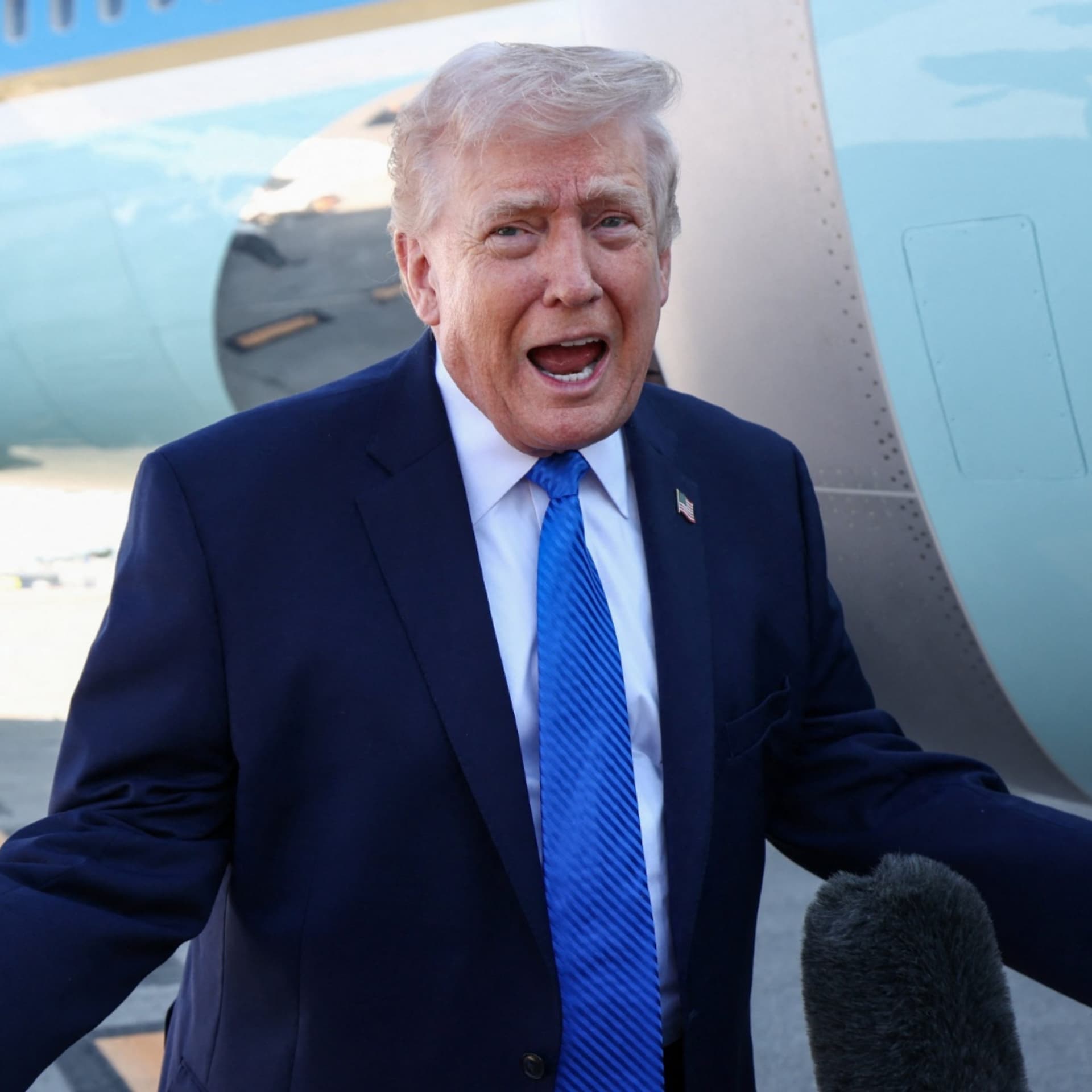
3:03US media is reporting that this is the speaker of the Iranian parliament, Mohammed Bagar Galibaf. In Florida, before boarding Air Force One, Mr. Trump spoke to the press. We have had very, very strong talks. We'll see where they lead. We have major points of agreement, I would say almost all points of agreement. Perhaps that hasn't been conveyed. The communication, as you know, has been blown to pieces. They're unable to talk to each other. But we've had very strong talks. Mr. Whitcoff and Mr. Kushner had them. They went, I would say, perfectly. I would say that if they carry through with that, it'll end that problem, that conflict.
3:48And I think it'll end it very, very substantially. So the discussions took place yesterday. They went into yesterday evening. They want very much to make a deal. We'd like to make a deal, too. We're going to get together today by probably phone because it's very hard to find a country. It's very hard for them to get out, I guess. But we'll at some point very, very soon meet. We're doing a five-day period. We'll see how that goes. And if it goes well, we're going to end up with settling this. Otherwise, we'll just keep bombing our little hearts out. President Trump earlier wrote on his Truth Social website that he'd ordered the US military to pause its planned strikes on Iranian power plants for five days.
4:33He'd threatened to obliterate, his words, Iran's power plants if it didn't end its chokehold on the Strait of Hormuz, the crucial waterway that allows the passage of oil tankers. Iran had warned that it would respond by attacking power plants in Israel and those supplying US military bases in the Gulf. Financial markets have reacted positively. Oil prices fell sharply with the benchmark Brent crude price dropping by more than 10%. As we record this podcast, it's now trading at under$100 a barrel. Our security correspondent, Frank Gardner, is in Doha in Qatar and explained why he thought Mr. Trump had changed course.
5:15I think he's spooked by the markets, yes. I mean, that is the generally perceived explanation for this, because, you know, there's no question that the US has overwhelming military superiority over Iran. It can hit targets at will wherever it wants. But the one thing it can't control is geography. And Iran has got geography on its side. And despite the absolute hammering it has taken, Iran is still able to fire missiles and drones at targets at this side of the Gulf, and it's able to threaten the Strait of Hormuz. And that clearly is having a huge effect on the global economy, on the price of gasoline, as the Americans call petrol, at the pump, and it's affecting stock markets.
5:58So you've only got to look at the reaction from the oil price and stock markets since this 11th hour reprieve has been announced to show that it is very susceptible to what is going on in this part of the world. The Iranians have effectively got a chokehold on the Strait of Hormuz. Now, we don't know what exactly was discussed at these negotiations that have been announced by the Americans, denied by sources on Iranian media. And yet there are reports on Fox Business News, for example, that Steve Witkoff and Jared Kushner, Trump's go-to negotiators of choice, that he sends to trouble spots around the world, that they'd been involved in hammering out a deal last night.
6:42There's another report that Egypt, Pakistan and Turkey have been mediating this. Previously, it was Oman. Clearly, you know, a number of countries in this part of the world have been trying to de-escalate and defuse this. The Iranian regime, despite all the hits it's taken, losing its supreme leader, losing Ali Larajani, the secretary of the Supreme National Security Council, despite all the destruction of its military, it's still standing, it's still intact, and it's defiant. It's unrepentant. And as far as they're concerned, they're winning. Frank Gardner. Iran, though, has denied there is any dialogue with the United States.
7:21A foreign ministry statement accused President Trump of trying to reduce global energy prices to gain time for his military plans. But it did acknowledge initiatives from regional countries to reduce tensions. A news agency affiliated to the powerful Revolutionary Guards said Mr Trump had backed down in the face of Iranian threats against power infrastructure in Gulf countries. I heard more from BBC Persian's Ganshe Habibiazad. The issue is we haven't seen any named officials coming out and saying that Iran has not been involved in negotiations with Donald Trump. All we have seen so far, as you said, is by Fast News Agency, another agency affiliated with the IRGC, Taslim News Agency, has been quoting another unnamed official.
8:09And also SNN, Student News Network, which is also affiliated with Islamic Revolutionary Guard Corps' paramilitary. The Siege Student Organization has quoted an informed source in Iran's foreign ministry as saying that they deny negotiations and Strait of Hormuz is close to aggressors, is what they have been saying. We are yet to see anyone coming out explicitly from the Iranian government or officials, anyone saying that they deny the negotiations. The president didn't say he would order an end to strikes on military targets and the Israeli military is still hitting Tehran. So the war far from over.
8:49Yes, it seems far from over. And the issue right now with Iran is that it's under almost near total internet blackout. We don't see much photos or videos coming out of Iran. And especially in remote parts of Iran, we don't see much reports coming out. And Iran's state TV, when we watch it, they don't report much on strikes on Iran. They usually show missiles coming out of the country and trying to show that they have been striking other places. But what we are seeing from Iran is limited. But at the same time, from Israel and also from those contacts that I have in Tehran, we have been hearing reports that there are still strikes ongoing.
9:29Yeah, you work for BBC Persian. BBC Persian, you and your colleagues have been working tirelessly to reach Iranians. Have any been reacting to this latest news? Actually, I didn't even see Donald Trump's post before a man in Tehran sent it to me. And I had to go and double check if that was true or not on true social. And he's connected via Starlink, which is Elon Musk's satellite internet in Iran. Authorities have been trying to crack down on it recently. They said they have confiscated hundreds of Starlink devices. So he told me that the end of this will be very costly for the people of Iran, whatever the outcome is.
10:11And another one, a woman in her 20s in Tehran told me that Donald Trump is so unpredictable, I have no idea what's going to happen. So it seems like from the people that I'm talking to, that they're very limited people, very much of them are in Tehran. And their main concern is the internet, but they are just very much perplexed and they don't know what's going to happen next. Ganshe Habibi Azad from BBC Persian. And there'll be more on President Trump's military and political options in Iran on our sister podcast, The Global Story. To New York now, where two pilots have died after an Air Canada plane collided with a firefighting vehicle at Lagardia Airport.
10:52The plane was carrying 72 passengers and four crew. Some 41 passengers and crew were taken to hospital. Two fire truck officers are in a stable condition in hospital. The BBC's Nedda Torfik is in New York and told us what happened. Just before midnight, the Air Canada express flight had actually safely landed at New York's LaGuardia Airport. But what happened was that a fire truck that was responding to a separate incident where the Port Authority said that there had been an odor emanating from another plane on a different runway. Now, as that fire truck was kind of making its way across the runways, and I should add, it actually got clearance to do so from air traffic controllers.
11:41Then we actually have audio of air traffic control trying to stop the fire truck crossing the runway, saying, stop, stop, stop. But clearly they were unable to get the fire truck to do that. And so then the plane collided with the fire truck. And we can see in the photos just the way the front of the plane is completely destroyed and mangled. And we do know from the port authority that the two pilots have died. Luckily, though, all of the passengers were actually able to get off from the stairs of the plane. And many walked away. Ultimately, 41 went to the hospital and several did have more severe injuries and are still being treated.
12:26The airport is actually going to be closed at least until 2 p.m. New York time so that the National Transportation Safety Board can begin that investigation. I mean, there has been a very large emergency presence there on the runway on LaGuardia. But, you know, as you can imagine, this is a massive airport that serves this area in the region. Mostly local flights coming out of LaGuardia, no international flights beyond Canada and nearby countries. But we have seen more than 500 flights cancelled as investigators try to piece together exactly what happened. Ned Atorfic. The former French Prime Minister, Lionel Jospin, has died at the age of 88.
13:10Mr Jospin was a socialist head of government from 1997 to 2002. He served five years as Prime Minister under Conservative President Jacques Chirac. In addition to his achievements as head of government, he'll be remembered as a two-time presidential candidate who, in 2002, suffered a stunning first-round humiliation defeat from the far-right's Jean-Marie Le Pen. During his premiership, Lionel Jospin introduced a 35-hour limit to the working week, as well as civil partnerships for gay couples. President Emmanuel Macron described the former prime minister as a towering figure in French politics.
13:52Our Paris correspondent Hugh Schofield looks back at his career. He was twice presidential candidate but failed both times, but then got his revenge on Jacques Chiric when he became his prime minister for several years at the end of the last century and enacted a lot of reforms which are still with us, such as the 35-hour week. a long-standing socialist henchman of Francois Mitterrand before that, Minister of Education, but his most famous moment came at the very end of his career when he came down, crashing down in 2002 in the presidential election, beaten in the first round by Jean-Marie Le Pen of the far right, heralding this new era of politics in which the far right plays such a big part.
14:39Hugh Schofield. Could artificial intelligence help people with dementia? That is the promise of a newly designed pair of smart glasses that offers wearers a real-time guide and companion to everyday tasks in the form of a chatty assistant called Wispy. The software from the British company CrossSense has just won a major prize for the development of technology for sufferers of dementia, a condition affecting tens of millions of people around the world. Professor Julia Simner is science lead at CrossSense. They look pretty much like a regular pair of glasses. Really, you wouldn't particularly notice anything different about them unless you look very closely and then you might see a camera embedded in the front of the glasses on the ridge of the nose.
15:28So the idea is that this technology can sit quite discreetly in the background but then sort of step forward when needed. So they've got a camera, they've got a microphone and they have speakers all inbuilt. that essentially allows the software to see what you are seeing if you're wearing them and then give you feedback in real time. Yeah, that's right. So the glasses see what you see, they hear what you hear, and they can talk with you. So they take in the visual world through the camera, and then they interpret that with AI. And that AI can then do a number of things. So it can, for example, superimpose words or shapes or colours into the visual field.
16:11For example, it can superimpose a warning triangle over a hot hob. They can also talk very gently into the ear. So they have a soft-spoken AI assistant. We call her Wispy. She's got a very nice, gentle, lilting voice, and she can speak reassuringly into your ear. And they can help with daily living. so they can tell you how to complete tasks like making a cup of tea they can read handwriting so they might be able to read a note that says haircut tuesday and then they could remind you they can remind you what objects are called and what they're for and they can also engage in a kind of talk therapy called cognitive stimulation therapy and that's a way that we know can boost cognition in people living with dementia the way the talk therapy works is very friendly very warm And WISPY talks to you gently about reminiscences, but it does it in a very subtle scientific way.
17:05That means what WISPY is actually doing is getting you to think in a multisensory way. It will say things like, think about that place you loved going to as a child. What would you have seen there? What would you have heard there? What would you have smelled there? And we know from the science that if you stimulate the senses, then it's a way to scaffold and maintain the cognition and the memory of the person. So there are lots of things that it can offer as a benefit. and one of those is not having to rely on human therapists to give this support. But you do have to be careful, of course. When you're on the frontier of a new technology, there is a responsibility on your shoulders to make sure that you're using it right and that's definitely one of the things that we keep with us going forwards.
17:45Professor Julia Simner from CrossSense. Still to come in this podcast, never before seen reptiles and mollusks found deep in limestone caves in Cambodia. We found a new species of bit viper, a beautiful snake, green with some red in it and amber eyes. And so that was really, really exciting. It's not every day that you find a new species of snake.
18:42We'll see you next week. Microsoft, Amazon, and plenty more. So if you want to be smart with your wallet, your career choices, in meetings with your colleagues, and at dinner parties, listen to Big Technology Podcast wherever you get your podcasts. The sun's shining, birds are singing, and all feels right in the world. Until the season changes, and suddenly you lose your motivation to get out of bed. In fact, one in five people experience some form of depression, no matter the season or time of year. At the American Psychiatric Association Foundation, our vision is to build a mentally healthy nation for all, because we want you to live your best life and be your best you all year round.
19:21Please visit MentallyHealthyNation.org to learn more. Too many tools, too much stress, and way too many bills. Odo replaces it all. One connected platform for every part of your business, so you can work faster, smarter, and for less. Odoo, the only software you'll ever need. Try it free today at odoo.com. That's O-D-O-O dot com.
19:54Are we heading for World War III? The consequences of the U.S. and Israel war with Iran have already reached far beyond those three countries. Is there a danger of this conflict becoming truly global? I'm Asma Khalid, one of the hosts of the Global Story podcast from the BBC, where we explore how world wars start, how they end, and what can be done to avoid them. Listen to the Global Story on BBC.com or wherever you get your podcasts.
20:27A deeply shocking anti-Semitic arson attack. That is how Britain's Prime Minister Keir Starmer has described an overnight incident targeting London's Jewish community. Four ambulances belonging to a Jewish ambulance service were set alight in the attack. 34 residents were evacuated from nearby homes as a precaution, but were able to return relatively quickly and no injuries have been reported. CCTV footage appears to show three people in hoods pouring accelerant, probably otherwise known as petrol, on the vehicles before setting them on fire and fleeing. No arrests have yet been made. One of the community members spoke to the BBC.
21:09He didn't want to give his name. Many Jewish people would have woken up this morning eating their breakfast, wondering if this is a country that they want to continue to live in. Many questioned that after Manchester, after the anti-Semitic terrorist attack there, and many after this attack on our doorsteps this morning, including myself, will question is this a country that I want to raise my family and when I eventually raise a family I can tell you that many of my friends and perhaps even myself have concluded that this isn't the country that they want to live in going forward because they don't feel that it's safe.
21:37Our correspondent Lucy Manning is at the scene and told us what had happened. There was a big explosion. Residents at the nearby block of flats talk about smoke filling the building they had to be evacuated and these four ambulances from the Hatzola Ambulance Service it's a volunteer-led Jewish ambulance service but they help other people as well non-Jews and Jews alike in the community. Four ambulances in the grounds of a synagogue were set on fire. The police believe it was an arson attack investigating it as an anti-Semitic hate crime and there has been a smell of smoke in the air this morning certainly the block of flats that we went into next door There was a smell of smoke and those who represent the synagogue have told me that some of the stained glass windows were blown out.
22:25The roof was damaged and they believe there is smoke damage here as well. We have heard from politicians backing the Jewish community, saying this is unacceptable, saying this can't happen. But there are many, most within the Jewish community, who have faced anti-Semitism, who just feel this has to stop, that this has gone on for too long. Lucy Manning. The Earth's climate is more out of balance than at any time in recorded history. Those are the findings of a new report published by the UN's Weather Agency, increasing concentrations of heat-trapping greenhouse gases, which are at their highest level in at least 800 ,000 years, have upset the Earth's equilibrium, with our planet gaining more energy than it can release.
23:16While the world is now seeing cooler conditions under what's known as the La Niña effect, forecasters have recently warned that another warmer El Niño peak could be seen towards the end of 2026. Celeste Saulo is the Secretary General of the World Meteorological Organization, which published the report. The last 11 years were the warmest on record. Of course, immersed in this trend, you have natural variability. And as you can remember, possibly 2025 was La Niña year. So we expect on La Niña years, not so warm temperatures as we expect in El Niño. But still the trend is very clear and the trend is the one that is alarming us.
24:03The ocean heat content that is increasing, that means that the 2 ,000 meters, the upper layer in the ocean are getting warmer and warm. And that will bring impacts in time scales around centennials or even millennials. I think that that is the one that worries me the most, together, of course, with melting glaciers. We also are aware that the change to renewables is a change that has also been established. Maybe this world helps people and countries that were already running into green energy to accelerate their decision for green energies. But if you, for example, look at the trend in carbon dioxide, it is increasing and it is increasing faster than any other year.
24:59So I think that we need not only an abrupt decision in terms of how we use energy, what energy we use, we also need some other policies in place. But what we can highlight from this report is that the concentration of greenhouse gases is increasing and it's continuously increasing and it has been continuously increasing. So we need a strong decision making there. Celeste Saulo of the World Meteorological Organization. Power supplies have been restored in Cuba a day after a nationwide blackout, the second in less than a week. The country's problems with an ageing infrastructure are being made worse by a US-imposed oil blockade.
25:44Our correspondent Will Grant, who's in Havana, spoke to Anne Soy about the situation there and how people were managing. I think it's really a question for most Cubans, a sense of, well, for now, I mean, until the next one. They're simply aware that while the grid might have been brought back online for the time being, that it won't be long before it collapses again, probably. That has been the case before the US imposed fuel blockade on the island, but certainly since US elite troops removed Nicolas Maduro from power in Venezuela, Venezuela being Cuba's closest energy ally in recent years, has made the situation in Cuba almost unbearable for ordinary people.
26:35The rolling blackouts were already very, very bad. This nation was already going through its biggest energy crisis since the end of the Cold War. And since Nicolas Maduro was removed from power in Venezuela, Washington has imposed an almost total oil blockade on the island. So while the grid might be back up and running again for now, I think most Cubans are simply expecting it to go down again very soon. How has it affected daily lives of people there? In all different ways that you could imagine, I mean, on the very, very basic ways, obviously with having no power, that means when it comes back on, whether or not that's two in the morning, three in the morning, four in the morning, people have to immediately get up and start to cook.
27:21because if they don't cook when they have power, if they have electric hobs or electric stoves, then they may not get another chance again that day because power can come back for maybe three, maybe five hours and then not be on again for another 20. So it is very, very exhausting for people to be waking at all hours trying to do the very basic things of life, charge their phones, be back in communication with their family members abroad, And of course, for children, it can mean schools being shuttered or it's very, very difficult to do schoolwork from home with no power. Workplaces are closed.
28:01You can go on and on. There's no fuel with which to fill car tanks. There's no fuel with which to run generators. Everything is being rationed to the most extreme degree. and people who have to turn to the black market to find fuel are having to pay extremely high rates. We're talking US$100 for 10 litres of fuel to run your generator. So it's becoming very difficult, particularly for those who don't have access to foreign currency. Will Grant in Havana. Researchers in Cambodia have discovered several new animal species living in a unique ecosystem within caves in the west of the country. The area, which is highly protected, is made up of limestone hills and caverns.
Read the full transcript
28:51It's known as a karst landscape, where species are able to evolve separately in habitats which remain isolated from each other. Pablo Sinovas, an expedition leader working with the charity Fauna and Flora, spoke to the BBC about what they found in the caves and what it was like to explore them. We had to actually get to those places with torches in hand at night, looking for some of the creatures that we were hoping to find. These are quite remote areas in Western Cambodia. And essentially, it is limestone terrain with sinkholes and caves. So it's quite silent at night, except for the insects when you are outside.
29:33and then as you enter the caves you mostly hear the chirping of the bats and also the dripping that comes out of the walls and the ceilings of the caves. Karst ecosystems are incredibly diverse and special in terms of species that occur nowhere else and so we had an expectation that we might find some new species and in fact we did. We have already described three new species of gecko which was really exciting and there is another three that we're in the process of describing as well. Very interestingly we found a new species of pit viper, a beautiful beautiful snake green with some red in it and amber eyes and so that was really really exciting.
30:15It's not every day that you find a new species of snake and then also really quite interesting a couple of micro snails and these are tiny tiny snails about the the size of a grain of sand which turn out to be new species as well and probably endemic to these very very restricted areas and two new millipede species black and red millipedes that live in some of these caves. These caves are quite unique environments you've got in some of them thousands even hundreds of thousands of bats that produce lots of guano and that guano creates a specific ecosystem where invertebrates feed on it and then other invertebrates feed on those invertebrates.
31:00And so you've got species that are adapted to those particular conditions and often don't live anywhere else. And therefore, they evolve in isolation, becoming over time different species. And that's what we found. But it wasn't just new species. We also found the area to be very important for obviously for bats, but also above ground for quite rare species like pangolins, for example, or silver lango, green peafal, etc. Pablo Sinovas from the charity Fauna and Flora. And that's all from us for now. If you want to get in touch, you can email us at globalpodcast at bbc.co.uk. You can also find us on X at BBC World Service.
31:47Use the hashtag Global News Pod. This edition of the Global News Podcast was mixed by Derek Clark and the producer was Adrian White. The editor is Karen Martin. I'm Alex Ritson. Until next time, goodbye.
32:19of this conflict becoming truly global. I'm Asma Khalid, one of the hosts of the Global Story podcast from the BBC, where we explore how world wars start, how they end, and what can be done to avoid them. Listen to the Global Story on BBC.com or wherever you get your podcasts.
From the publisher
President Trump has said that the United States and Iran are in discussions aimed at ending current hostilities after he called off American strikes on Iranian energy infrastructure. He claimed that Iran had made contact with the US and had agreed to not pursue nuclear weapons, adding that the US would continue its bombing if talks failed. Iran has denied there is any dialogue with the US. Also: two pilots have died in a plane crash at an airport in New York; the British prime minister, Keir Starmer, condemns an attack on the Jewish community in London; the earth's climate is more out of balance than any time in recorded history, according to the United Nations; never before seen turquoise pit vipers, flying snakes and microsnails are found deep in limestone caves in Cambodia; and could artificial intelligence help people with dementia?
The Global News Podcast brings you the breaking news you need to hear, as it happens. Listen for the latest headlines and current affairs from around the world. Politics, economics, climate, business, technology, health – we cover it all with expert analysis and insight. Get the news that matters, delivered twice a day on weekdays and daily at weekends, plus special bonus episodes reacting to urgent breaking stories. Follow or subscribe now and never miss a moment. Get in touch: globalpodcast@bbc.co.uk



