
In short
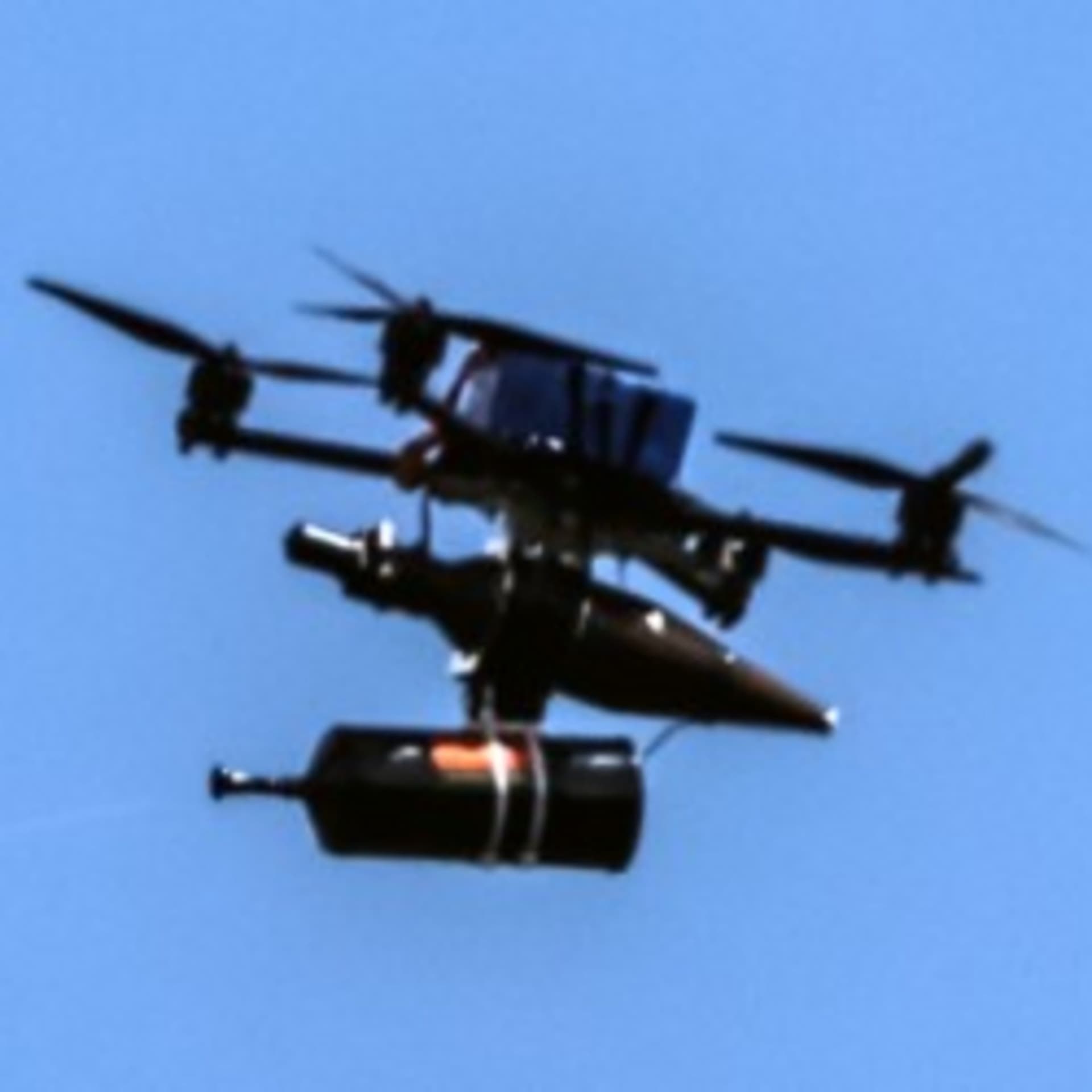
Hezbollah’s new fiber-optic drones and their impact on Israeli border communities; broader regional conflict updates (Israel-Gaza ceasefire breakdown, UN sexual-violence blacklist); plus separate news segments (Austrian Taylor Swift concert plot sentencing, Kenya school fire, French Open heat effects, Sound of the Year).
Guests/backgrounds
No podcast guests are interviewed in this episode. Reporters and experts quoted include BBC correspondent Lucy Williamson (Shomera, Israel), Sarit Zahavi (ALMA Research Center), BBC correspondent Emin Eder (Jerusalem), Pratikshia Gildial (UN report coverage), Bethany Bell (Austrian court), Thomas Mukwana (Kenya), Will Chalk (heat/tennis), Dr. Kristina Dahl (Climate Central), Monika Gamble (ultra-marathoner), and Matthew Herbert/Sean Lay (Sound of the Year).
Key claims
Hezbollah drones are becoming the main threat; Israel is expanding Gaza control beyond the ceasefire; UN documents conflict-related sexual violence patterns; no Ebola vaccine exists and preparedness is questioned; heat can cause serious illness in athletes.
Notable examples
Shomera air-raid alerts and drone-following civilians; a soldier killed in a separate drone attack; Netanyahu aiming to occupy 70% of Gaza; UN citing rape/gang rape allegations; Austria sentencing “Baron A” to 15 years for a Taylor Swift concert plot; Kenya boarding school fire killing 16 girls; Sinner’s collapse at the French Open; Sound of the Year winner “Songs of the Bearded Seals.”
Written by AI. May contain mistakes. Listen to the episode to check what was said.
Chapters
Tap a time to open that second in VOIntroduction to Global News Podcast
0:30 to 1:13
Overview of the podcast's main stories, including health and conflict updates.
“Make your next financial move with confidence.”
Escalating Conflict with Hezbollah
1:13 to 2:06
Discussion on Hezbollah's drone threats amidst Israeli attacks in Lebanon.
“Hello, I'm Anka Desai and in the early hours of Friday the 29th of May, these are our main stories.”
Criticism of Israeli Actions in Lebanon
2:06 to 2:51
Lebanese leaders criticize Israeli strikes on historic landmarks and civilians.
“You heard a tennis player today saying he was dizzy.”
Hezbollah's Drone Threats
2:51 to 4:00
Insights into the new drone threats posed by Hezbollah along the Israel-Lebanon border.
“Israel has intensified attacks on Lebanon in recent days and has also hit the capital Beirut, saying it's targeting Hezbollah.”
Israel's Military Response to Drones
4:00 to 5:48
Exploration of Israel's strategies and technologies to counter Hezbollah's drones.
“we scanned the sky, but there's no sign of a drone.”
Iran's Influence on Hezbollah
5:48 to 6:50
Discussion on the Iranian influence on Hezbollah's drone attacks against Israel.
“There are no limits on the use of strength and resources when it comes to the security of our troops and our civilians.”
Increased Israeli Control in Gaza
6:50 to 8:12
Israeli Prime Minister Netanyahu's orders to expand military control in Gaza.
“Along with many Israelis, Council Chief Sami Zanetti is frustrated at the US desire to wind up the region's wars.”
Humanitarian Crisis in Gaza
8:12 to 9:06
Concerns about the humanitarian situation in Gaza amidst ongoing Israeli strikes.
“There are fears that the proposed Israeli expansion in the Palestinian territory could result in thousands more civilians being cut off from their homes.”
Challenges of Ceasefire in the Region
9:06 to 10:06
Exploration of the stalled ceasefire process amid rising tensions in the region.
“And this Board of Peace that is backed by the US, created by the US, has shown itself ineffective in brokering a way forward, finding solutions in order to progress the ceasefire process.”
UN Report on Sexual Violence in Conflict
10:06 to 11:39
Overview of the UN report documenting sexual violence amid conflicts in Ukraine and Gaza.
“And it should also be borne in mind that Israel is entering election season.”
Show all 16 chapters
Israeli Response to UN Accusations
11:39 to 13:51
Discussion on Israel's reaction to being included in the UN's blacklist for conflict-related sexual violence.
“They say they documented cases against 14 men, 7 women, 9 boys and 1 girl from Gaza and the West Bank.”
Ebola Outbreak in Central Africa
15:18 to 15:40
Discover the implications of a rare Ebola outbreak in Central Africa.
“There's a rare type of Ebola spreading in Central Africa, and it has no vaccine.”
Terror Plot Against Taylor Swift Concert
15:52 to 17:40
Learn about the sentencing of a man involved in a bomb threat against a Taylor Swift concert.
“Back in 2024, 200 ,000 Taylor Swift fans were left disappointed when the Austrian leg of her era's tour was cancelled due to a bomb threat.”
Tragic School Fire in Kenya
17:40 to 20:39
Details about a devastating school fire in Kenya and its aftermath.
“The people of Kenya are coming to terms with one of the worst school fires in the country's history.”
Heatwave Impact on French Open
20:42 to 23:44
Examine how a heatwave affected players at the French Open.
“Well, as anyone who's lived through a heatwave, like the one Western Europe is currently experiencing will know, even simple things like getting some sleep or popping to the shops can be a chore.”
Sound of the Year Awards
23:46 to 26:51
Explore the significance of the Sound of the Year awards and featured entries.
“to listen to the world more consciously and celebrate sound in all its forms.”
Transcript
Automatic transcript. May contain errors.0:00This BBC podcast is supported by ads outside the UK.
0:30with clear research-backed insights. No jargon, no misinformation. Make your next financial move with confidence. Follow NerdWallet's Smart Money podcast on your favorite podcast app. There's a rare type of Ebola spreading in Central Africa and it has no vaccine. The WHO has declared a public health emergency of international concern and the US has restricted entry for people coming from some African countries. What does this deadly outbreak tell us about how prepared or not we are for an international health crisis. For more, check out The Global Story on BBC.com or wherever you listen.
1:12This is the Global News Podcast from the BBC World Service. Hello, I'm Anka Desai and in the early hours of Friday the 29th of May, these are our main stories. As Israel intensifies attacks in Lebanon, we have a special report on how Hezbollah is responding with a new drone threat of its own. Israel's Prime Minister Benjamin Netanyahu says he's ordered the military to further increase its occupation of the Gaza Strip, contradicting the terms of the ceasefire deal. The United Nations has added Israel and Russia to its blacklist on sexual violence in conflict. Also in this podcast, an Austrian court has handed a 15-year jail sentence to a man who planned a jihadist attack at a Taylor Swift concert.
2:02And the heatwave across Europe affects the French Open. You heard a tennis player today saying he was dizzy. That's one of the symptoms of heat stress or heat illness. Yannick Sinner suffers a shock defeat after feeling unwell on court.
2:20We begin in Lebanon, where leaders there have sharply criticized deadly Israeli attacks near UNESCO-protected historic landmarks. The Prime Minister Nawaf Salam said nothing could justify ongoing strikes on the Tyre and Nabatea regions and the destruction of their landmarks. He said Israel orders for residents to evacuate swathes of southern Lebanon amounted to a collective punishment condemned by all international norms and laws. Israel has intensified attacks on Lebanon in recent days and has also hit the capital Beirut, saying it's targeting Hezbollah. But the Iran-backed group is fighting back.
3:03It's developed a new drone that has become the main threat faced by Israel's soldiers in southern Lebanon and on civilians in northern Israel. The BBC's Lucy Williamson has been to the Israeli border community of Shomera. And a brief warning, this piece begins with air raid warning sounds. Minutes after arriving in Israel's border town of Shomera, a warning. Explosive fibre optic drones, the newest threat from Hezbollah in Lebanon. It's close to the border. The warnings and the weapons come seconds apart. In the film? It's the film. We've just gone off. There are Hezbollah drone attacks here. All the time.
3:44And all Israel's firepower. It's occupation of Lebanon. Can't stop them. Go. We've just ducked inside the bomb shelter here in Shemera because we've had three separate alerts. This community has been the target of Hezbollah drones over and over again. From the entrance to the shelter, we scanned the sky, but there's no sign of a drone. Israel's army later told us it lost contact with it, but that an Israeli soldier was killed in a separate drone attack outside Shomera an hour earlier. Outside, near a bus stop hit by a drone this week, Shomera's council chief, Zami Zanetti, told me there was sometimes no warning at all.
4:27The problem is you don't feel them coming, he said. You're sitting there, and suddenly it arrives. And if you run, it follows you. The day before we arrived, Shomerad's security team were chased by a drone, firing at it right above the house of Amichai Ben David, a peach farmer with seven children, whose roof already has a large hole from a Hezbollah rocket attack last year. It came and we rushed into the house. The soldiers, who were here outside, shot at it and managed to knock it out of the air and saved us, thank God. The missile stopped because of the ceasefire and drones started coming instead.
5:10Despite the ceasefire, Israel's artillery still fire across the border. Its forces still occupy large areas of southern Lebanon and its prime minister this week vowed to deal Hezbollah a crushing blow. But none of it stops the small, low-flying fiber-optic drones. Israel's military has been criticized for not learning from Ukrainian forces, facing the same threat for two years. On a visit to the northern border today, Israel's military spokesman, Effie Defrin, addressed the threat. We are constantly formulating responses to the drone threat. The best minds in the IDF and outside it are working tirelessly.
5:51There are no limits on the use of strength and resources when it comes to the security of our troops and our civilians. Several Israeli companies are working on ways to intercept the drones, including specialist ammunition and a project that links sensors to computers on soldiers' personal weapons, which can lock onto targets and provide a firing window. But Sarit Zahavi, head of Israel's ALMA Research Center, which monitors the conflict, says Hezbollah is increasingly using its drones to target civilian communities like Shomera. They intensified the amount of attacks that are border crossing into Israel.
6:30I think that it's direct order from Iran. And this is all with the background of what is happening with the deal. Iran wants to see a situation that Israel is attacking Hezbollah and everything explodes here. Everything goes back to the beginning and the regular Iranian back and forth. A return to full conflict with both Hezbollah and its backer Iran would please some in Shomera. Along with many Israelis, Council Chief Sami Zanetti is frustrated at the US desire to wind up the region's wars. I'd like the country to take a brave decision and finish off Hezbollah, he told me. Today, our hands are tied by President Trump.
7:17Lucy Williamson reporting. Meanwhile, on another front of the conflict in the Middle East, the Israeli Prime Minister Benjamin Netanyahu has ordered his troops to take control of even more of the Gaza Strip, far beyond what was agreed in the US-brokered ceasefire deal with Hamas last October. Speaking at an Israeli settlement in the occupied West Bank, Mr Netanyahu said he wants the IDF to occupy 70 % of Gaza. We are currently squeezing Hamas. We now control 60 % of the territory of the Strip. You know this. We were at 50. We moved to 60. My directive is to go to 70. We're pressing them from all sides.
8:02We're dealing with the remnants. Since the truce between Israel and Hamas, hundreds of Palestinians in Gaza have been killed in Israeli strikes. There are fears that the proposed Israeli expansion in the Palestinian territory could result in thousands more civilians being cut off from their homes. Israel does not allow the BBC to report freely from Gaza. Our correspondent, Emin Eder, is following developments from Jerusalem. The ceasefire process in Gaza has ground to a halt. Hamas hasn't disarmed. The Israeli military has killed more than 900 Palestinians since the ceasefire deal came into effect seven months ago.
8:42You have Israel still accused of blocking a Palestinian technocratic committee from coming in to take over the administration of the Gaza Strip. And Israeli troops, of course, haven't withdrawn. We're seeing them doing the opposite. Israel is insisting it is meeting its aid obligations, its humanitarian obligations. But the UN and aid agencies are saying the opposite, that much of the aid remains blocked. And this Board of Peace that is backed by the US, created by the US, has shown itself ineffective in brokering a way forward, finding solutions in order to progress the ceasefire process. Now, there's a couple of things that should be noted.
9:20One, Israel is very anxious about this emerging US-Iran ceasefire deal. Of course, Iran is insisting that the deal should include a ceasefire on all fronts in the war in the region. That would include Lebanon. It would include Gaza. And for Israel, its government, it's thinking that this is going to stop it being able to declare a military victory in all of these different arenas on the terms that it wants. And then you also have this trend in Israeli politics of people who want to see Gazans, Palestinians, forced out of the Gaza Strip. Just yesterday, you had the Minister of Defense, Israel Katz, vowing once again to implement what he called voluntary emigration from the Gaza Strip at the correct time, which for Palestinians, they read that as a euphemism for forced ethnic cleansing.
10:11And it should also be borne in mind that Israel is entering election season. So Prime Minister Netanyahu and the other ministers want to speak to their different audiences and they want to show that they are still calling the shots. And all of this must be held in mind when you look at what Israel is doing in Gaza and elsewhere in the region, be it Iran, be it Lebanon. Eminetta reporting. The United Nations has added Israel and Russia to its blacklist on sexual violence in conflict. In an annual report, the UN says that despite warnings, it's continued to document patterns of sexual violence in the wars in Ukraine and Gaza and the occupied Palestinian territories.
10:53A correspondent in New York, Pratikshia Gildial, told me more. We have obtained a copy of this report and it has been shared with the Security Council as well by the Secretary General's office, I'm told. It says that in general, the cases of conflict-related sexual violence went up significantly last year in 2025 as compared to 2024. And as you were saying just now, Israeli and Russian security forces have been added to this blacklist on sexual violence in conflict. In Israel particularly, they say they have documented patterns of sexual violence against Palestinians detained in Israel and the occupied Palestinian territories.
11:39They say they documented cases against 14 men, 7 women, 9 boys and 1 girl from Gaza and the West Bank. These violations consisted of rape, gang rape and violence to genitals, among others. But it's important to note that the UN says that these cases are indicative of a multi-year trend rather than a comprehensive report, since they say that the Israeli government denies them access to detention centers. In response, the Israeli ambassador to the UN denounced this report. He called it unacceptable. He said that it was unacceptable to put Israel and Hamas terrorists, as he called them, on the same list.
12:25And any reaction from Russia? You mentioned Israel there. We haven't seen any formal reaction from Russia yet. But again, this report highlights sexual violence in the occupied Ukrainian territories and even within Russia. And the UN says that Russia continues to deny access to UN monitors in its territory. The report goes on to say 310 cases of conflict-related sexual violence were documented. These include an overwhelming number of men, which is 280 men, 26 women and six girls. The UN accusing that these were all perpetrated by Russian armed and security forces. And just very briefly, for any victims, will any justice be served or handed out?
13:15The thing is that this is not a legal procedure. This is not a legal document. This is basically what the Security Council had mandated the UNSG office to do. That being said, these things can be taken into evidence from what I understand in legal procedures, if there are to be any. But as we have seen that a lot of such UN resolutions, mandates, they do put moral pressure, but don't seem to go too far when it comes to actual legal repercussions. Pradeksha Giliel reporting. Still to come in this podcast, the winner of the sound of the year.
14:03we tell you more about the award and what that sound actually is
14:15we all can agree that housing is expensive rent mortgage it doesn't matter which one you're paying it stings every month but built can make you feel a little better let me explain built started out rewarding members on their rent. Now, as of 2026, Built members can also earn points on mortgage payments wherever they live. Every housing payment earns you points you can use toward flights with top travel partners like United & Hyatt, Lyft rides, Amazon.com purchases, and so much more. And here's what you might not expect. Built members can also get access to a neighborhood concierge. It can make restaurant reservations, book fitness classes, and find new local spots, all while being rewarded at more than 45 ,000 merchant partners.
14:58It's like having a personal assistant baked into where you live. It's simple. Being a renter and now owning a home is better with Bilt. Join the membership for where you live at joinbilt.com slash podcasts. That's J-O-I-N-B-I-L-T dot com slash podcasts. Make sure to use our URL so they know we sent you. There's a rare type of Ebola spreading in Central Africa, and it has no vaccine. The WHO has declared a public health emergency of international concern, and the US has restricted entry for people coming from some African countries. What does this deadly outbreak tell us about how prepared, or not, we are for an international health crisis?
15:39For more, check out The Global Story on BBC.com or wherever you listen.
15:49This is the Global News Podcast. Back in 2024, 200 ,000 Taylor Swift fans were left disappointed when the Austrian leg of her era's tour was cancelled due to a bomb threat. Now the man who planned that attack has been sentenced to 15 years in prison. Her correspondent, Bethany Bell, was at court in Wiener Neustadt. This 21-year-old man, he's only been named as Baron A, because that's in line with Austrian privacy laws. He was found guilty to plotting the attack on the Taylor Swift concert. The court heard how he'd tried to make a bomb, how he tried to buy weapons illegally, how he'd sworn allegiance to the militant group Islamic State.
16:33But these were not the only charges he faced. He was also implicated in the same trial of a separate plot with two of his school friends to carry out attacks in Middle Eastern cities, plots in Dubai, Istanbul and also in Mecca. It's very rare for Austria to deal with the terror-related issues like this. Has it led to changes in how security services respond to potential threats? It's not the first time Austria has been faced with terrorism. Vienna saw a terrorist attack in 2020 when a man ran through the centre of the city with a gun shooting a number of people. But certainly I think there was shock when the Taylor Swift concerts were targeted.
17:18And it's interesting to note that it was discovered through a tip-off by the CIA. Austria, because it's not seen as many attacks as a number of other places, had perhaps got used to being a more peaceful place. But this, of course, has reminded people that attacks can happen anywhere. Bethany Bell reporting. The people of Kenya are coming to terms with one of the worst school fires in the country's history. Sixteen young girls died when a blaze tore through a boarding school in the Rift Valley town of Gilgil, northwest of the capital Nairobi. More than 70 other children were injured as they fled.
17:59Some parents are still waiting for confirmation their daughters are amongst the dead. With an investigation now underway, the incident has sparked a debate in Kenya about school safety after a series of previous similar tragedies. Our correspondent, Thomas Mukwana, sent this report from Gilgil.
18:21The wailing of a grieving parent. An all too familiar cry in Kenya's boarding schools. She's wailing for her daughter, who's among 16 girls who died at Otomishi Girls Academy here in central Kenya. Police say the fire started just after midnight on Thursday. Some parents heard the news on the television. This elderly woman is relieved her granddaughter is alive. I came to pick my granddaughter after seeing the news on the TV that children have died in the fire. We were shocked. I thank God that I have found my grandchild safe. Not far from them is another parent. She's too weak to let us record an interview.
19:03I'm not strong enough, she tells us. Next to her is a bucket with her daughter's school books. It was 2 p.m. in the afternoon, and she had been waiting since 6 a.m. to reunite with her daughter. She's losing hope. Just tell me, is she alive or dead? That's what I want to know. Please! Please tell me. Tell me. This man is demanding to know the whereabouts of his daughter. He's been here since morning and the police are not giving him answers. He's one of the many parents who have been waiting all day for answers. They're now taking out the bodies of the 16. The police have cordoned off the area.
19:45Everyone's behind the line. They all are tapes. Several fires have occurred in Kenyan boarding schools over the years. In September 2024, a dormitory at a boys' school in a nearby region caught fire at night, killing 21 boys. Kenya's Education Cabinet Secretary announced safety inspections at all boarding schools. The cause of this fire is still unknown. I just want to say that as a country, this is a serious tragedy. The investigations are going to be thorough. The investigation continues here. The school closed indefinitely and the government pathologist is searching the ground. For the children and parents of this school, an imaginable pain.
20:27For Kenya, another tragedy in a school dormitory. More questions about the safety of the country's children. More calls inevitable for more to be done to protect them. Thomas Mokwana reporting. Well, as anyone who's lived through a heatwave, like the one Western Europe is currently experiencing will know, even simple things like getting some sleep or popping to the shops can be a chore. Several hours on a tennis court, playing at the very highest level is another thing entirely. No wonder then that the heat is a big talking point at the French Open and it's led to a huge upset too. World men's number one Yannick Sinner melted under the blazing sun to go out in the second round.
21:13Our reporter Will Chalk has the story. It's important to stress here just how close Yannick Sinner was to winning this match against Argentina's Juan Manuel Cerundolo. At 5-1 up in the third set, Sinner was just four points away. But then he started dropping points, complained of feeling like he was going to vomit and had to take a medical timeout. Fast forward 90 minutes and it had gone the other way. Juan Manuel Sarundolo had gone on a winning streak and taken the match in five sets. So how much were the high Paris temperatures to blame? Well, according to Sinner himself, they weren't. I mean, it was warm, but it was OK.
21:53You know, it was not like I was dying because of the heat. The Italian insisted he'd been feeling ill since that morning. But given he's struggled in high temperatures before and the nature of his collapse, it seems unlikely the sun had nothing to do with it. On Wednesday, Czech player Jakub Mencik had to use a wheelchair after collapsing on court. Dr. Kristina Dahl is from US non-profit Climate Central. We know that there are dangerous effects on the human body. So, you know, you heard tennis player today saying he was dizzy. That's one of the symptoms of heat stress or heat illness. and that can escalate all the way up to heat stroke, which can be fatal.
22:34But is there another way to look at this? What if I told you some people look at athletes struggling in the heat and think you should have trained harder? I have had that thought recently. Monika, gamble there. You might be thinking, who is she? And what right does she have to judge these high-level competitors? My quads have seized up completely. I just was stopped for a while. now I'm back moving again. Well she's a veteran of several extreme ultra marathons through places like the dunes of Namibia covering 150 plus miles in temperatures topping 50 degrees celsius. Yeah fair enough. So how did she do it?
23:15So about two months before the race began I joined a sauna studio and so for two months I would go to the sauna every single day. I would do my workout sometimes in the sauna. Yeah, and I just really built up my tolerance as much as I could. The people who work with athletes like Minika Gamble insist bodies can be trained to compete in extreme heat. But if climate change continues, we're left with the question, do we want to live in a world where every sport becomes an endurance sport? Will Chalk reporting. The Sound of the Year awards are designed to try and encourage people to listen to the world more consciously and celebrate sound in all its forms.
23:55Matthew Herbert, a musician and producer who founded the Radiophonic Institute that runs the awards, has been telling Sean Lay about the global entries.
24:14So this was recorded in a private garden outside of Tehran this year. and there's something extraordinary going on in this sound I think as well which is it's not just we're not just listening to one thing we're not just listening to bombing but we're hearing a number of things going on so we're hearing the bombing at a distance which has a kind of an interesting thing because we're listening at it from a distance as well but you can also hear a kind of distress in the natural sounds like birds are distressed too and whilst it appears to be one sound it's actually quite a sort of layered narrative of different sounds going on
25:00This was recorded by Tom Fisher, and it's the sound of treehopper insects. And he modified a contact microphone. This is a microphone that you're physically attached to a source rather than held at a distance. And he attached it to a stalk of a plant. It must be tiny. very lightweight yes very very small very sensitive and you lose some of the high frequencies so it's quite muffled but you sort of get like oh hello you know kind of really it's it really feels like you're putting your ear into an entirely other world like this insect world you think blimey if that's just one stem in one rainforest like what are we missing around the world that we can't hear Tell us about the winner and why you chose it.
25:48So the winner this year is recorded by Matthias Arignan and it's called Songs of the Bearded Seals.
Read the full transcript
26:07And it's recorded in the Arctic Ocean during a 90-day window, which is the breeding season for these particular seals. And this incredible sound, we're so used to so much noise at the moment, you know, just political noise. A sound like this, I think, really reminds you that actually we share this planet. These other mammals and these other plants and these other insects, they all have their needs and their wants and their desires and they need their space too. And I think that's one of the things we were drawn to this year is to sort of look slightly differently at all the political turmoil that's going on and trying to hear through that, cut through that noise somehow.
26:50Matthew Herbert speaking to Sean Lay. And that's all from us for now. If you want to get in touch, you can email us at globalpodcast at bbc.co.uk. You can also find us on X at BBC World Service. Use the hashtag Global News Pod. And don't forget our sister podcast, The Global Story, which goes in-depth and beyond the headlines on one big story. This edition of The Global News Podcast was mixed by Russell Newlove and the producer was Mazafra Shakir. The editor is Karen Martin and I'm Ankur Desai. Until next time, goodbye.
From the publisher
The BBC reports from the Israel-Lebanon border, where fibre-optic drones have become Hezbollah's primary weapon of war. Also, Benjamin Netanyahu has ordered Israeli troops to take control of even more of the Gaza Strip. Meanwhile, the UN has added Israel and Russia to its blacklist for sexual violence in conflict zones. A 21-year-old Austrian man has been sentenced to 15 years in prison for planning a jihadist attack on a Taylor Swift concert. The people of Kenya are coming to terms with one of the worst school fires in the country's history. Jannik Sinner is out of the French Open in the biggest shock of the tennis tournament so far, but how much was Europe's heatwave to blame? And an underwater recording of bearded seals is named the sound of the year.
The Global News Podcast brings you the breaking news you need to hear, as it happens. Listen for the latest headlines and current affairs from around the world. Politics, economics, climate, business, technology, health – we cover it all with expert analysis and insight. Get the news that matters, delivered twice a day on weekdays and daily at weekends, plus special bonus episodes reacting to urgent breaking stories. Follow or subscribe now and never miss a moment. Get in touch: globalpodcast@bbc.co.uk



