
In short
The episode’s main focus is a developing El Niño event that scientists warn could be the strongest in living memory, with tropical Pacific waters warming rapidly (from 0.5°C above average in June to forecasts of ~3°C by peak in November–December).
Key claims
El Niño disrupts global weather patterns, increasing odds of low monsoons, floods (e.g., Peru), drought impacts (e.g., Panama Canal reducing ships), and a record global temperature next year; it’s a natural cycle but hits harder in a warmer world. Notable examples include India’s sugar price surge (+40%) and first sugar imports in a decade due to damaged sugarcane and rain-fed crop failures.
Guests
none explicitly interviewed in this episode; it features named correspondents and experts (Met Office’s Prof Adam Scaife; BBC environment correspondent Matt McGrath; India correspondent Archana Shukla; Middle East correspondent Lucy Williamson; entertainment/royal correspondent Bronte Coy; Pakistan correspondent Caroline Davis; culture correspondent Noor Nanji; plus film exec Priyanka Chopra Jonas and director Orlando von Einstiedel, and Lucinda Dickens-Hawksley).
Written by AI. May contain mistakes. Listen to the episode to check what was said.
Chapters
Tap a time to open that second in VOEl Niño: A Major Weather Event
0:39 to 2:12
Discussion on the impending El Niños weather event and its potential impact.
“This is the Global News Podcast from the BBC World Service.”
Understanding El Niño's Impact
2:12 to 4:36
Exploration of how El Niño disrupts global weather patterns and its consequences.
“I heard more from our environment correspondent, Matt McGrath.”
El Niño and India's Sugar Crisis
4:36 to 7:33
How El Niño affects sugar prices and agriculture in India.
“It happens every two to seven years and we've been having these for almost a thousand years.”
Return of Israeli Settlers to Kadim
7:33 to 11:43
Report on Israeli settlers returning to the West Bank, impacting local communities.
“Israeli settlers have returned to the settlement of Kadim in the occupied West Bank, 21 years after it was evacuated by a previous Israeli government.”
Prince Harry and Meghan Markle's Return
11:43 to 14:01
Discussion about Prince Harry and Meghan's return to the UK and Meghan's acting prospects.
“This morning's headlines here in Britain are dominated by the news that Prince Harry and his family are returning to the UK after six years in the US.”
Trump's Military Strategy Shift
14:01 to 14:43
Discussion on President Trump's reduction of military exercises with South Korea.
“which was bare brain rot behaviour when you think about it.”
Imran Khan's Health and Imprisonment
14:51 to 18:00
Update on Imran Khan's medical condition and the confusion surrounding his hospital transfer.
“His lawyers say he's practically blind in one eye.”
Film Spotlight: The Cycle of Love
18:01 to 21:11
Overview of the film about caste discrimination in India and its main characters.
“A new film, The Cycle of Love, focusing on the discrimination people can face because of India's caste system, has premiered in the US.”
Reimagining Dickens for Gen Z
21:17 to 25:05
Discussion on the new AI adaptation of Great Expectations for younger audiences.
“but here's the latest, a reimagination of great expectations to reflect the way teenagers speak today.”
Transcript
Automatic transcript. May contain errors.0:00This BBC podcast is supported by ads outside the UK. Has Prince Harry and Meghan's American dream failed? I'm Asma Khaled, and I host the Global Story podcast from the BBC. The Sussexes are intending to return to the UK, six years after moving to California and striking multi-million dollar brand partnerships. Just last year, Harry told the BBC he couldn't see a world in which his family would return. So what's changed? Find out on The Global Story on BBC.com or wherever you get your podcasts.
0:39This is the Global News Podcast from the BBC World Service. I'm Valerie Sanderson, and on Friday, the 21st of August, these are our main stories. Weather experts warn that a developing El Nino event could become the largest in living memory. Imran Khan, Pakistan's former prime minister, is returned to jail after being taken to hospital. A report from the occupied West Bank, where Israeli settlers have returned to a village after 21 years. Also in this podcast, the true story of a man who cycled from India to Europe for love is turned into a film. You meet them and you're like, wow, you know, this is a love story with a happy ending because you're still together.
1:21They hold hands and they're affectionate. And I'm like, I want that after 50 years, you know. It's amazing. It seems every week another report is released about extreme weather and the increasingly worrying state of the climate. Today is no exception. Scientists are now warning that the El Nino weather event developing over the Pacific Ocean is likely to be the strongest in living memory. Professor Adam Scaife is head of long-range forecasting for Britain's Met Office, which released the latest data. I've been involved in long-range forecasting for many years, and I have never seen an event like this in our forecasts.
2:00The tropical Pacific is warming faster than I've ever seen, and assuming the forecasts are correct, and we've got very high confidence at this stage, we think that when it peaks in November and December, it's likely to be record event, unprecedented beyond anything we've seen in living memory. I heard more from our environment correspondent, Matt McGrath. I think it's worth bearing in mind that this current El Nino was only declared just over two months ago in June. And that declaration means the temperatures in the water have reached 0.5 degrees above the long term average. Now that's gone from that to two degrees in a couple of months.
2:36It's likely to go higher to at least three degrees, according to the forecasts. Those are significant increases in temperatures. And if you look at what's driving it, there's heat down in the water, perhaps eight degrees above the long term average deep in the waters of the Pacific. So that's an awful lot of heat that could come out of the and will come out of the ocean and will have impacts all around the world. A lot of people listening to this, Matt, are going to think, you know, why is El Nino itself so important? What does this system actually do? Yeah, what it does really is disrupt the weather patterns and the weather systems that we've all getting used to around the world.
3:12So the monsoon, for instance, the increase of heat, the increase of change in the winds that's caused by the rise of heat in the Pacific, that increases the chance of a very low monsoon, which affects millions and millions of people. You'll also see different aspects of it as well. So you get flooding in some places. We've already seen reports in Peru, which is right in the path of El Nino, right close to it, of getting increased floods in the last couple of weeks. We've seen the Panama Canal declare that they're going to cut the number of ships because they're being affected by a drought. So each and every area around the world, particularly around the tropical belt of the world, is hugely affected from Indonesia to Australia, all around that central bit.
3:48But other parts of the world are affected as well. And we're likely to see the biggest overall impact, which is our new record global temperature next year. That will be directly linked, I think, to the added heat that El Niño will push into the atmosphere. I mean, this is a simplistic question, but can anything be done? I don't think there's anything that can be done directly. and people often talk about these events as being linked to climate change and this is one of those events that's a natural event but it occurs in a much warmer world. It's not directly linked to climate change so us cutting back our fossil fuels and our emissions aren't going to directly impact El Nino but it's happening in a much warmer world and if it wasn't happening in such a warm world it may not have such a direct impact.
4:27The floods, the droughts might not be as strong. So I don't think there's anything we can do except bear it, be aware of it, listen to the forecast, be aware of what's happening in the world but stopping it, I'm afraid, it's a natural event. It happens every two to seven years and we've been having these for almost a thousand years. Matt McGrath. We heard there from Matt about the growing threat from El Nino. Indian consumers are already feeling the impact with the skyrocketing price of sugar. Now the Indian authorities have approved duty-free imports of raw sugar to bolster local supplies. Our India business correspondent, Archana Shukla, is following this in Mumbai.
5:04I asked her, will these measures be enough to satisfy the demand for sugar in the country? Well, to some extent, yes. They are hoping that with additional supplies coming in, the prices will start easing, which have gone up by more than 40 percent here in the local markets. And with the festive season coming up, we have a long period of festivals with the Shehra, Diwali, and then the wedding season. That's a period when the demand for sweets actually goes up quite a lot. And that is the period when the government hopes that the supply would help. You know, it wouldn't have been this big a problem if the cropping season was normal.
5:40But because of the El Nino impact, there have been erratic rain patterns and the sugarcane crop has been hurt. And the spare capacity that India has normally is now being directed to ethanol based fuels. So the supply actually is crunched from both sides. And that is pushing the government to import first time in a decade. And that definitely will also have impact globally, because remember, India is the second largest producer of sugar and second largest producer of exporter. And this is happening at a time when, you know, other hub exports like Brazil and Europe are also seeing impacts on the sugar crop production.
6:15And I was checking earlier in the morning, international prices of sugar has already started ticking up with news that India would be importing now rather than exporting. And Acharya, tell us about other ways that Indian consumers might be affected by El Nino. Well, you know, across different aspects in our lives, you know, this time in summer, we saw some of the most intense nighttime heat for people. The demand for, you know, power went up, you know, for cooling, for air conditioning went up. It also impacted people's sleep patterns, their work life. And the biggest impact is now coming on food with erratic rains.
6:53And we know India's majority of the farms here in India are rain fed. And, you know, with the monsoon being delayed, monsoon being erratic, it's affecting crops, not just sugarcane, but also rice, wheat, the entire monsoon cropping season. And it's hitting food prices. We've seen some of our kitchen staples becoming very expensive from the grains, from vegetables. And that's a direct hit on household budgets. Then we are looking at, you know, water reservoirs, you know, at very low capacities at this point in time. And, you know, everybody's looking at the monsoon to kind of fill in. Otherwise, you know, water for drinking water purposes and even for winter crop, it could be a problem.
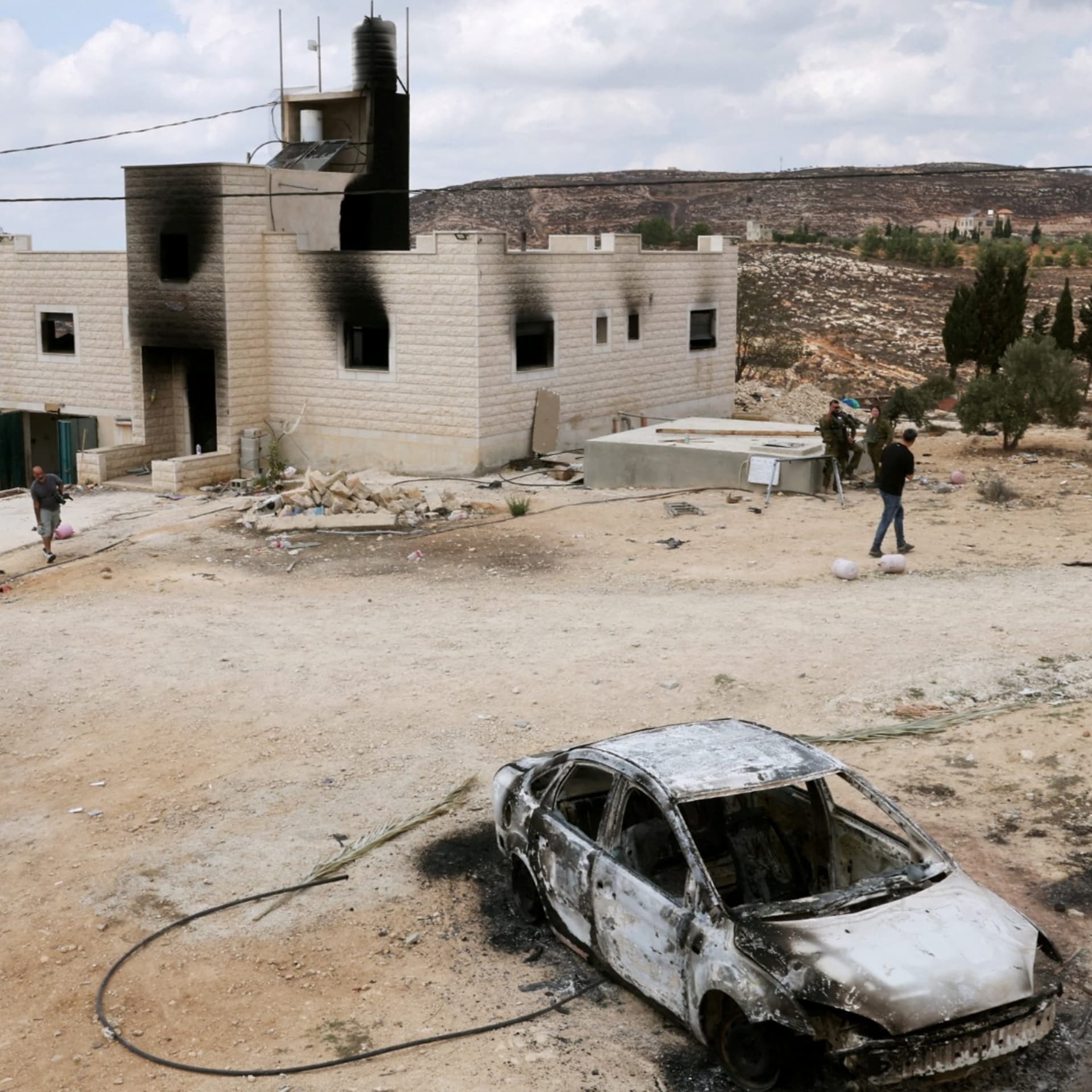
7:33Mashaan Ashukla. Israeli settlers have returned to the settlement of Kadim in the occupied West Bank, 21 years after it was evacuated by a previous Israeli government. Kadim is the last of four West Bank settlements dismantled in 2005 to be reopened under the current Israeli government and is part of a sprint to expand settlement across the West Bank before elections are held in Israel in October. Our Middle East correspondent Lucy Williamson has this report from outside Kadim. Flanked by government ministers and rows of new white caravans, settler leader Yossi Dagan congratulated Kadim's new settler families as the inaugural ribbon was cut.
8:17We've corrected the expulsion from northern Samaria, Dagan said, using the biblical name for the occupied West Bank, vowing that Jewish settlers would return to Gaza too. This area around Janine is the latest focus of Israel's push to expand settlements across the West Bank. Government ministers and settler leaders were invited to Kadeem's opening ceremony. Journalists were not. Down a narrow track just behind the settlement, we found a Palestinian vegetable farmer and his family. He asked us to hide his identity. As a boy, he told us he'd watched from this same house as the settlement of Kadim was built, then watched it evacuated two decades later.
9:05Now he's watching the settlers return. This time it's different, he told me. Back then, the settlers lived alongside us. They lived their lives and we lived ours. But now, they already drove my nephews away from their citrus trees, telling them, you have no place here, don't come back.
9:31Kadim was one of four Israeli settlements forcibly evacuated in 2005. Israel's current government has reopened all four of them and approved more new settlements in the area as well. overturning a 20-year ban on Israeli settlers around Janine. By the time caravans had arrived at the new settlement of Emekdotan, Palestinian teacher Samad Jaba says the problems had already begun.
10:02Settlers try to enter our homes and provoke us in every possible way. The biggest problem is after midnight. After midnight, they have powerful floodlights and they stop right next to the house, shining them directly through the windows, house after house, until two or three in the morning. Alongside new settlements around Janine, a new Israeli military bases, including one near Janine's refugee camp, the first permanent Israeli military site built on land under full Palestinian authority control.
10:41In the past, we enjoyed the bliss of not having settlements. Now, we live in a hell made by settlers and their attacks. Kamal Abu al-Rub is the Palestinian Authority governor in Janine. It's as if the Israelis are racing against time before the upcoming elections. Many of the areas around the city are now surrounded by settlements. Farmers are afraid and anxious about settler attacks when they go to work on their lands. They have also cut off roads, bulldozed lands and cut down trees. This is the road that links the new settlement of Kadim to Israel. The last time I was here, just a few weeks ago, we sat in a cafe over here drinking coffee, surrounded by Palestinian shops and businesses.
11:28Since then, dozens of those businesses have been flattened by the Israeli army. It gives you some sense of how fast things here are changing. Lucy Williamson reporting. This morning's headlines here in Britain are dominated by the news that Prince Harry and his family are returning to the UK after six years in the US. And reports in Australia say that his wife, Megan, has been offered an acting role here, which sources close to the family have not denied. Bronte Coy is senior entertainment and royal correspondent at the Australian outlet news.com.au, which broke the story. This is such a key part of the puzzle.
12:09And I think when we all heard that news that Harry and Megan were moving here and within a matter of days and the kids were enrolled in school, everyone was asking, well, what is Megan going to be doing? Is she keen on returning to royal life or what will her career look like in the UK? And I think this here answers a lot of that now. I had heard rumours that potentially she'd be stepping into the acting world a little bit more. We saw a sign of that actually late last year when it emerged that she had filmed a cameo as herself in a big upcoming movie with Jack Quaid and Lily Collins. But this is obviously a massive step now back into that direction.
12:42And again, this is clearly part of why they've decided now to relocate over here with the kids because either she has signed or is about to sign on for this project. I'm told it's significant and she's very excited about it. But we don't know exactly what it is. And when we look at the fairly scant level of detail that we do have, the fact that the children will be enrolled in school might be telling because things like Hollywood blockbuster movies or TV shows, they tend to be filmed reasonably quickly now in just a couple of months. So it could be a longer term role, a longer lasting role, perhaps?
13:18You're exactly right. I mean, this has clearly been a top secret operation as conversations have been undergoing. But what we can glean is that if they are going to be here for what we're told is an extended period of time, it does indicate that it would be a lengthier project, possibly a show. I think we will find out relatively soon because if it is now at the point where she is signing on, I know this project is definitely happening because as I say, it's a big part of why they wanted to move over here. There's also obviously Harry's connection to the UK and wanting to spend time with his wider family.
13:46But this is a big part of it. Bronte Coy speaking there to Anna Foster. Still to come in this podcast, a classic 19th century novel reimagined by AI for Generation Z. I used to stare at the headstones trying to imagine what they looked like, which was bare brain rot behaviour when you think about it. Just me standing in a graveyard, doom scrolling through my own trauma.
14:17Is President Trump snubbing South Korea to reignite his friendly relationship with Kim Jong-un? I'm Asma Khaled, and I host the Global Story podcast from the BBC. The U.S. and South Korea have been close allies since the 1950s. But this week, Trump announced that the U.S. will substantially reduce joint military exercises with South Korea. He cited his very good relationship with North Korea's Kim Jong-un. For more, check out The Global Story on BBC.com or wherever you get your podcasts.
14:50Pakistan's Prime Minister Imran Khan is back in prison after being taken to hospital amid reports that he was unwell. His lawyers say he's practically blind in one eye. But on Friday morning, doctors at the hospital deemed him medically fit. Mr Khan has been held in prison for three years on corruption charges, which he says are politically motivated. A short while ago, Imran Khan's sister, who'd been present at the hospital, spoke to reporters. They only examined Imran Khan's eyes. No blood tests or any other medical examinations were conducted. Only his eyes were checked. I don't know who these doctors were.
15:27Only Imran Khan's blood pressure was measured and no other tests were performed. I got more from our correspondent, Caroline Davis. During that conference, they talked a little bit about what happened last night because there was really quite a lot of confusion around this transfer to hospital and then back again to prison. There had been a Supreme Court ruling that had said that he should be moved to a particular hospital, which was a private hospital. That was the hospital that his family and party preferred him to go to. And they wanted him to be seen by his own personal position. However, it has now emerged that he did not go to that hospital.
15:59Instead, he was taken along with his sister to a different hospital, which is a state-run facility. His doctor, meanwhile, told us at the conference that he was taken to the private hospital where he waited for Mr Khan. But Mr Khan never appeared because he was taken from the state run hospital straight back to prison. So a lot of confusion around exactly what happened there. Mr Khan did have checks and tests done on him. These they were observed by his sister, who is also a doctor as well. So she was monitoring what happened. Now, the other sort of element of confusion here is that we were repeatedly told during the press conference about how fit and healthy Mr Khan is as an individual, but also that they have these ongoing concerns about some of his blood pressure readings that had been taken in the run up to this.
16:46Those have apparently improved. And the eye condition that you mentioned as well, which was particularly prevalent earlier this year, we've also seen reports that that has improved as well. And Mr Khan is now back in prison. I think beyond all of the health concerns, which obviously a large amount of his supporters are very worried about, this is also about something else. This is the fact that after over three years in prison, this is the first indication of Mr Khan getting some form of relief in whatever form that is from the court system. And the fact that that hasn't happened for the course of the last three years has meant there's been a lot of speculation here in Islamabad about what might be going on behind the scenes that has led to that level of development.
17:27Now, that is all speculation. We have not heard of anything from Imran Khan's party talking about any form of deal or discussions going on, particularly with Pakistan's politically powerful military and intelligence services. And of course, we've not heard anything from the military's side either. But that is certainly what people are watching. And that is also why all of these tiny intricacies, which might seem like intricacies about which hospital he went to and how quickly he was transferred back, are also being monitored and looked at because everybody's trying to see if this is an indication of what might happen next with Mr Khan.
17:59Caroline Davis. A new film, The Cycle of Love, focusing on the discrimination people can face because of India's caste system, has premiered in the US. It tells the true life story of Piquet, a street artist from the marginalised Dalit cast who cycled more than 9 ,000 kilometres from India to Europe to try to reunite with his true love Lotta from Sweden. About 200 million people in India are Dalits, historically known as untouchables who face generations of discrimination and exclusion. Our culture correspondent Noor Nanji spoke to Priyanka Chopra Jonas, who executive produced the movie, and its director Orlando von Einstiedel and ask them what the real-life PK and Lotta think about the film.
18:40I think one of the things that makes me feel that maybe we got it right is when this film's played at film festivals, PK and Lotta have come and they've watched every single screening of the film, which is amazing. Cute together, like, you meet them and you're like, wow, you know, this is a love story with a happy ending because you're still together and you're still cute. Like, they're still, like, they hold hands and they're affectionate And I'm like, I want that after 50 years, you know, that's it's amazing. What does this film say to you about the power of love? I think it stands for how resilient love can be.
19:18And I think resilience is one of the most important qualities when it's actually really true love. Like when you're resilient and you're like, I will bend heaven and earth to achieve this thing that makes it passionate. it makes it magical. And this movie is like an absolute example of that. Orlando, do you think many people outside of India will be shocked that this level of discrimination based on a person's caste exists? Well, I think discrimination exists in all societies. I think more than anything, this is also, as Priyanka was saying, this is a story about extraordinary human resilience and a man learning to love himself and by loving himself, being able to love others.
20:03And Priyanka, the issues in this film of social justice and a fairer system are very topical right now, given the protests we've seen in India. How timely do you feel that your film is and what do you hope that the film will achieve? I think this is a conversation which is timely at any given time. And it's unfortunate that, I'm sorry, but your question makes it timely just currently. I think these are issues we've discussed historically. And as human beings, taking the right step in that direction is what is crucial. And the word untouchable itself is quite contentious and maybe even offensive to some.
20:38What discussions did you guys have around it? So, you know, whenever you make a film outside of your own socioeconomic experience, it's an enormous responsibility. We took trying to get this right in the film very, very seriously. That began by working together with P.K., Lotta and the whole family. But we also surrounded ourselves with experts. We worked with a number of cast experts on this film. And, you know, I knew very little about this before getting into it and done my best to educate myself. And hopefully we've done a job of representing this correctly in the film. Orlando von Einstiedel and Priyanka Chopra-Jonas speaking there to Noor Nanji.
21:16There have been many adaptations of Charles Dickens novels, but here's the latest, a reimagination of great expectations to reflect the way teenagers speak today. The novel was fed into an AI model and translated into Generation Z or Generation Z slang. Here's the opening of the novel the way Dickens wrote it. My father's family name being Pirip and my Christian name Philip, my infant tongue could make of both names nothing longer or more explicit than Pip. So I called myself Pip and came to be called Pip. I give Pirip as my father's family name on the authority of his tombstone and my
22:08And here's its Gen Z translation. So I called myself Pip. I-C-L. I can't lie. It's not exactly a name with much riz, but here we are. I never knew my parents. I'd only ever seen their gravestones in the churchyard down in the marshes. Proper bleak vibes, all mist and sadness. I used to stare at the headstones trying to imagine what they looked like, which was bare brain rot behaviour when you think about it. Just me, standing in a graveyard, doom scrolling through my own trauma. It was on one such evening, Christmas Eve no less, that my life went mad to Lulu. Simon Jack spoke to Lucinda Dickens-Hawksley, the author of several books on Charles Dickens.
22:47She's also the great, great, great granddaughter of this celebrated novelist. So what does she make of this Gen Z version? Well, I mean, I think it's always great to have Dickens reinterpreted. I think people get really hidebound by, oh, we have to just stick to the original. As long as the original is always kept and able to be studied, I think it's great to bring Dickens out for a new generation. I just think that maybe people aren't as all hidebound to the generations that text speakers. as we think they are. I guess the thing is, it's all very well having modern words, but as long as they're accurate, as whether they convey the original meaning.
23:25Yeah, I mean, I read an article that said that this version was so that parents could understand what their generation's children were talking about. And it just really made me laugh. I love the fact that every single parent apparently knows great expectations well enough to be able to translate it. I mean, that's a great idea. I just don't know that that's always true. I think, joking aside, I think it's a great thing to have Dickens reinterpreted because every generation learns a new Dickens. I mean, we have so many different adaptations of things, such as A Christmas Carol. Every year there's a new one.
23:55I do think we need to look at the fact that this was written with AI. So does AI actually know what Generation Z is talking about? And I'd also like to point out that AI, like Anthropic and Meta, have actually taken without permission or payment works of many authors, including me. and I think that they couldn't have written this without having scraped perhaps words by Generation Z authors. So that's something that really does need to be looked at. We can joke about it and say it's a good gimmick, but AI is a real issue for real working authors and I wonder what would Dickens have thought of that, of his work being rewritten, not by a Generation Z author, which would be great, but by a bot.
24:32You mentioned it yourself that, you know, how many times has Christmas Carol been done over again? How many times has wrote expectations? I mean, why has his work been adapted so many times over the years? What is it about the work that still captures each generation? Whatever interpretation is done, Dickens wrote great plots, and that is what's always going to work. As long as you get the plot right, it's when people take great works, classic works, and they rewrite them and give them their own ending because they didn't like the original, or whatever it might be. I think that is a bit frustrating because then you're not really sticking with the essence of it.
Read the full transcript
25:01But what I love about Dickens is his characters stand the test of time. Lucinda Dickens-Hawksley. And that's it from us for now. If you want to get in touch, you can email us at globalpodcast at bbc.co.uk. You can also watch our episodes in full. Just search for The Global News Podcast on YouTube. And don't forget our sister podcast, The Global Story, which goes in-depth and beyond the headlines on one big story. This edition of The Global News Podcast was mixed by Darcy O 'Brie. The producer was Adrian White and the editor is Karen Martin. I'm Valerie Sanderson. Until next time, bye-bye.
25:46Is the West Bank reaching a tipping point? I'm Asma Khaled, and I host the Global Story podcast from the BBC. For more than a week, homes in the village of Qusra have been under siege, including one of a Palestinian-American man from Ohio. It's just the latest to draw attention to the rise of settler violence in the West Bank, which the UN says is higher than at any point in the last 20 years. For more, listen to The Global Story on BBC.com or wherever you get your podcasts.
From the publisher
Scientists warn the El Niño event developing in the Pacific could be the strongest in living memory, pushing up global temperatures and increasing the risk of extreme weather. Effects are already being felt around the world - the Indian government is having to import sugar to bolster local supplies. We visit the West Bank town of Kadim to see how the Israeli government is expanding settlements ahead of October elections. The former Pakistani President Imran Khan is taken to hospital and then returned to prison, confusing his family and followers. And what is Meghan going to do in the UK when she returns with Prince Harry in a couple of weeks' time?
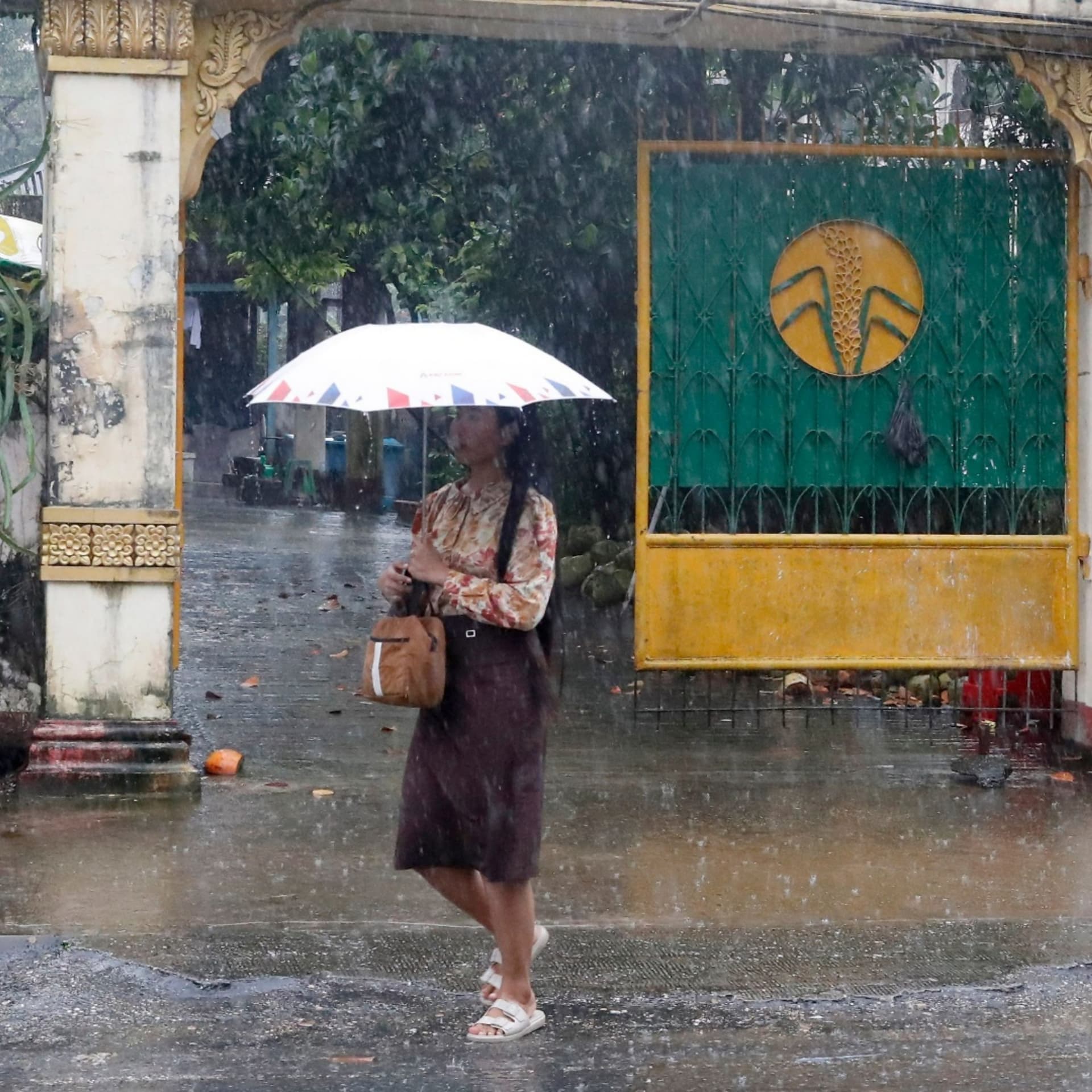
The Global News Podcast brings you the breaking news you need to hear, as it happens. Listen for the latest headlines and current affairs from around the world. Politics, economics, climate, business, technology, health – we cover it all with expert analysis and insight. Get the news that matters, delivered twice a day on weekdays and daily at weekends, plus special bonus episodes reacting to urgent breaking stories. Follow or subscribe now and never miss a moment. Get in touch: globalpodcast@bbc.co.uk Photo: A woman walks during heavy rainfall in Yangon, Myanmar, 12th August. Credit: EPA/Shutterstock