
In short
Global News Podcast roundup (16 Sept). Main focus: EU Commission President Ursula von der Leyen proposes Canada as the EU’s first “associate member,” amid Canada–US trade tensions and security concerns. Other stories: Gaza apartment collapse after prior Israeli airstrikes; Saudi says it shot down a drone toward Mecca blamed on Houthis; Iran women’s rights since Mahsa Amini’s death; ICC conviction of former Kosovo president Hashim Thaci for war crimes; German CDU pressure on Chancellor Friedrich Merz after far-right gains; Ed Sheeran tour turmoil after Macklemore pro-Palestinian comments; Natural History Museum’s reopened “Nature and Us” gallery.
Guests
None. (Interviewees are BBC correspondents/reporters: Nick Beek, Yolan Nell, Gonche Habibi Azad, Frank Gardner, Paul Mons, Jessica Parker, Mark Savage, Evan Davis.)
Written by AI. May contain mistakes. Listen to the episode to check what was said.
Chapters
Tap a time to open that second in VOEU Considers Canada as Associate Member
0:57 to 2:49
Discussion about the proposal for Canada to become the first associate member of the EU.
“I'm Celia Hatton, and on Wednesday, the 16th of September, these are our main stories.”
Reactions and Implications of Associate Membership
2:49 to 4:16
Analysis of what this new link could mean for both Canada and the EU.
“This possible new partnership comes as Canada is fighting a hugely costly trade war with the United States, the country that normally takes in more than 70 % of its exports.”
Gaza Building Collapse and Its Consequences
4:16 to 7:18
Report on a tragic building collapse in Gaza and the ongoing conditions there.
“But certainly, both sides feel that there would be this added protection in the face of economic aggression.”
Escalating Conflict Between Houthi Rebels and Saudi Arabia
7:18 to 11:18
Overview of the conflict escalation between the Houthis and Saudi Arabia, including drone attacks.
“A multi-story building has collapsed in Gaza City with people inside.”
Masa Amini and the Woman Life Freedom Movement
11:18 to 14:00
Exploration of the impact of Masa Amini's death on women's rights in Iran.
“the United Nations Security Council has been calling for a de-escalation in violence following Houthi attacks in and around the Bab al-Mandab Strait on the Red Sea, which has disrupted the vital maritime corridor.”
The Impact of Masa Amini's Death
14:00 to 14:48
Learn about the protests that erupted in Iran following the death of Masa Amini.
“So even though the Houthis, visually, when people see them, you know, they don't look like a professional army.”
Women’s Rights Movement in Iran
14:48 to 18:24
Discover the ongoing struggles and developments in women's rights in Iran post-Amini.
“The BBC Persian Service's Gonche Habibi Azad sent this report.”
Upcoming Museum Exhibition
18:24 to 18:52
Find out about the reopening of a gallery at London's Natural History Museum.
“Still to come in this podcast, We've got one of the oldest figures in the world, about 40 ,000 years old, made out of mammoth cast, the Lion Man.”
Hashim Thaci War Crimes Verdict
18:52 to 19:45
Learn about the conviction of former Kosovo president Hashim Thaci for war crimes.
“To a decision now from the International Criminal Court at The Hague.”
Consequences of the War Crimes Verdict
19:45 to 22:46
Explore the implications of Hashim Thaci's conviction for Kosovo's political landscape.
“Our global affairs reporter Paul Mons first told me about the background to the case.”
Show all 17 chapters
Ed Sheeran's Tour Controversy
22:46 to 27:38
Analyze the fallout from Ed Sheeran's decision to drop Macklemore from his tour.
“To Germany now, Chancellor Friedrich Merz is under growing pressure following major electoral losses in the Saxony and Halt state elections to the far-right AFD party.”
Natural History Museum's New Exhibition
27:38 to 28:00
Discover the details of the newly reopened gallery at the Natural History Museum.
“It's a hard situation to get yourself involved in.”
Musician Captivates Audience
28:00 to 28:34
Learn about a musician's unique talent for engaging large crowds.
“I once saw him at Wembley Stadium and he was the only musician on stage for two hours.”
Natural History Museum Reopens
28:34 to 29:14
Discover the reopening of a long-sealed gallery in the museum.
“And now they'll have good reasons to return.”
Exploring Nature and Us Exhibition
29:14 to 30:28
Explore the new exhibition that examines humanity's relationship with nature.
“OK, so we're going behind the black screens that are currently covering the entrance to this gallery.”
Whaling's Historical Impact
30:28 to 31:46
Learn about the social history of whaling through artifacts.
“So these are microscopic animals, one of the animals that can actually thrive on plastic.”
Evolution of Museum Missions
31:46 to 32:21
Understand how the mission of museums has shifted over time.
“What would you say is the big difference between museums as they were then and now?”
Transcript
Automatic transcript. May contain errors.0:00This BBC podcast is supported by ads outside the UK.
0:30The truth, we don't make it free. The Fix, now playing in theatres. Get more with BBC Podcasts, wherever you listen. Be the first to listen to your favourite shows, like Evil Genius, Good Bad Billionaire and You're Dead to Me, with a subscription to BBC Podcasts Premium on Apple Podcasts. You can also enjoy a range of our podcasts ad-free with an Amazon Music subscription. This is the Global News Podcast from the BBC World Service. I'm Celia Hatton, and on Wednesday, the 16th of September, these are our main stories. The President of the European Commission, Ursula von der Leyen, announces proposals for Canada to become the first associate member of the European Union.
1:15The Civil Defence Agency in Gaza says at least 20 people, including five children, have been killed after the collapse of an apartment block weakened by previous Israeli airstrikes. Saudi Arabia says it shot down a drone that was heading towards Mecca, Islam's holiest site. The kingdom blames the Houthi rebel group, but the Houthis deny launching the attack. Also in this podcast... Four years ago, if someone had told me that one day I would see women walking down the streets bravely and without the hijab, I probably wouldn't have believed them. It's been four years since the death of Masa Amini at the hands of morality police in Iran.
1:57Her death sparked huge protests. What's changed since then?
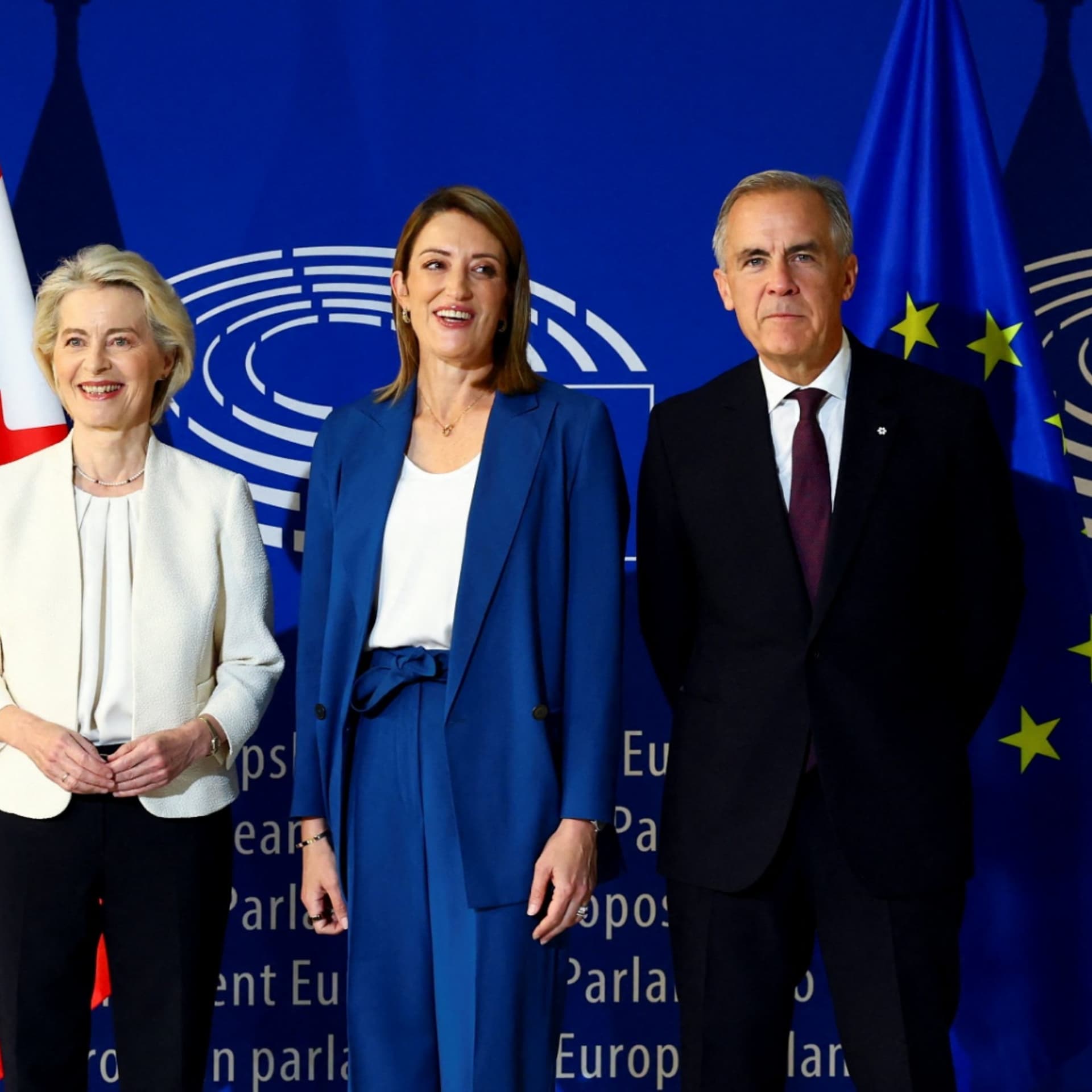
2:05We'll begin with what could be the start of a new global alliance, one between Canada and the European Union. The EU's chief has backed a proposal for Canada to become the union's first associate member. Here's Ursula von der Leyen speaking in Strasbourg. Mark Carney, the Canadian prime minister, was in the audience. We want to bring the relationship with Canada to the highest level possible. And dear Mark, I said we must urgently reimagine our partnerships. So I would like to work with you on opening the door for Canada to being the first associate member of the European Union. This possible new partnership comes as Canada is fighting a hugely costly trade war with the United States, the country that normally takes in more than 70 % of its exports.
2:59Mark Carney has promised to fight that battle by finding new markets for Canadian products. He's also pledged to make Canada safer by forging new security ties, as Donald Trump continues to threaten to make his northern neighbour, the United States, 51st state. So that's the view from Canada. But what could the EU get from this new link? I asked our correspondent in Brussels, Nick Beek. I think this all boils down to the fact that at the moment, many Europeans, particularly Ursula von der Leyen, the commission president, really feels that Mark Carney in particular is a kindred spirit, that they're on the same page.
3:36They're dealing with the same sort of threats, that from China, but notably, as you were saying, from President Trump, an unpredictable Donald Trump, whether it's the waging of tariff wars or hitting out supposed allies, whether they're just across the border in Canada or across the Atlantic in Europe. And so what's being put forward today by Ursula von der Leyen is something completely novel, because at the moment there's no such thing as associate membership for anyone who wants to join the European Union. So this would be something that's not in the EU treaties at the moment, not in EU law.
4:12So really, there are a lot of unknowns around this. But certainly, both sides feel that there would be this added protection in the face of economic aggression. And also potentially, when it comes to defence in the years and decades to come, that this sort of union could be mutually beneficial. Yeah, fascinating, isn't it? I mean, Mark Carney does have experience on both sides of the Atlantic. He's the prime minister of Canada now, but he worked in England. He was the governor of the Bank of England in the UK. I wonder, you said that this is a brand new venture in theory. So is this symbolic? What would it take for Canada to become an associate member?
4:54Is it fait ou complet? Well, it would take years, that's for sure. And the idea of associate membership, although it's not been implemented. It's something actually that was raised a few months back by Chancellor Mertz of Germany. Now, he was talking about Ukraine in that context, saying that maybe the Ukrainians could be brought on board, not with all the benefits of EU membership, but some of them. Now, the thing with this is that at the time, people were saying, well, hang about, there's a long queue of other countries who are going through this very laborious, long process, trying to make sure that all their laws and and basically the way their countries work, I'm thinking about in the Balkans in particular, that they are hitting all the goals needed, the European standards needed, so that they can progress and ultimately become members of the European Union.
5:42So it's hard to see how this thing would be fast tracked. And of course, there's the thorny cost of membership. You know, how much would it cost to be part of this club, even if it's not full membership? Do you get the sense that this is a bit of a knee-jerk reaction to the EU and Canada's strained ties with the US, with Donald Trump, rather than a desire to build closer relationships between Canada and the EU? I think certainly it's in keeping and chimes with the relationship that's emerged between Canada and the EU over the past couple of years. Earlier in the year, Mark Carney was saying that middle powers, middle countries should club together in the face of aggression and muscular activity by the much bigger superpowers, the United States and China.
6:28So there are benefits for both sides here. But of course, in the longer term, whether the Canadian people want this, whether the people of the European Union want this is another matter. But yes, if not knee-jerk, certainly this is a response to the current political temperature. And of course, Donald Trump won't be around forever. And Ursula von der Leyen and Mark Carney in the future won't be at the helm. So yeah, this is something that's put forward, making a lot of headlines today. But let's see how it progresses in the weeks and months to come, in the years to come. And potentially they may feel they don't need this because at the moment there's already this big trade deal between Canada and the European Union.
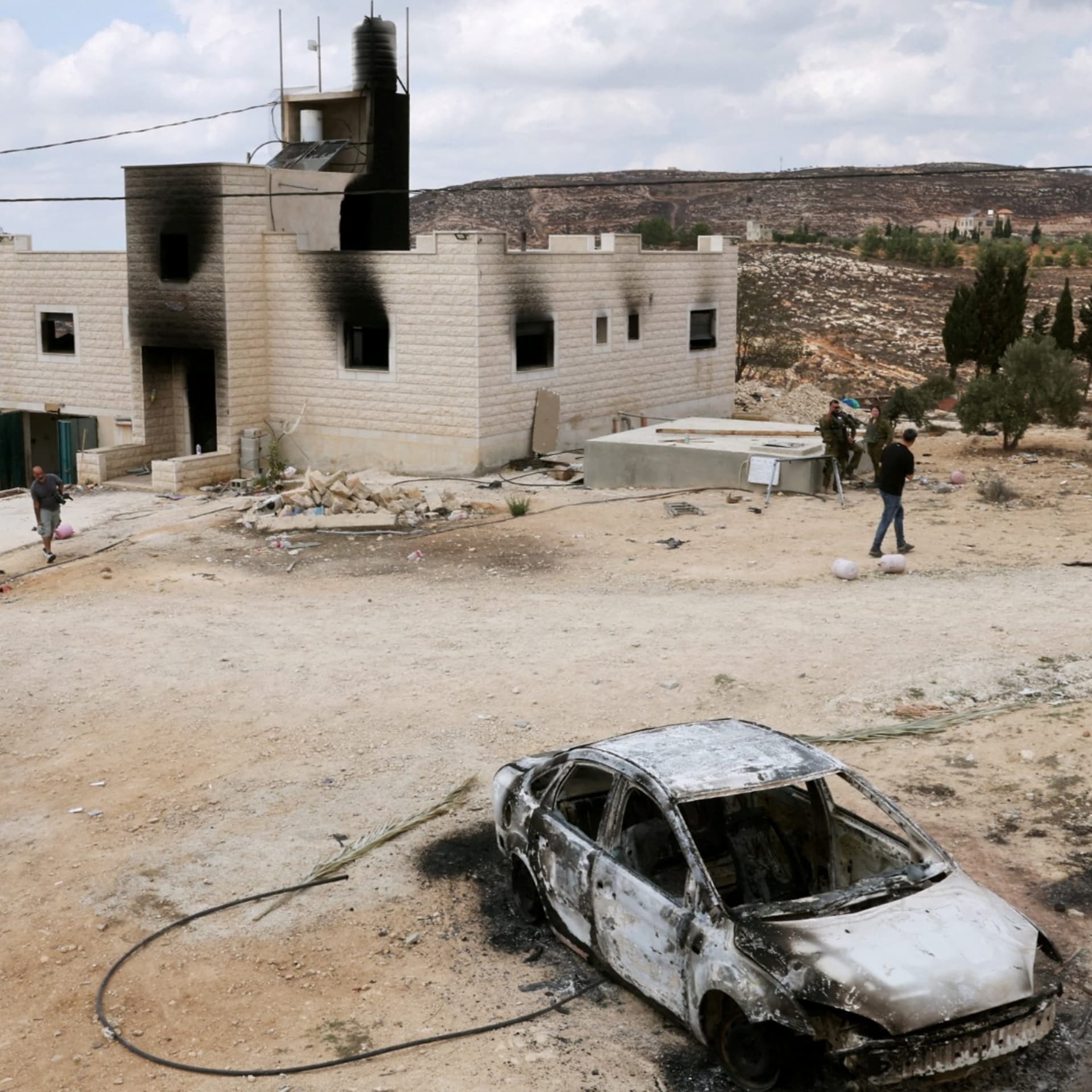
7:05The EU is actually the second biggest market for the Canadians. So already there are these deep ties. There is this trade agreement that's been in place, although not fully ratified. That's been there for nearly the past decade. Nick Beacon, Brussels. To Gaza now. A multi-story building has collapsed in Gaza City with people inside. Before the structure crumbled, it had been functioning as a makeshift home for several displaced families. The large building had been previously attacked by an Israeli airstrike, which had left it damaged. The territory's civil defence agency says dozens of people are missing, at least 20 people, including five children, have died.
7:42Despite the Israel-Gaza ceasefire, conditions inside Gaza do not appear to have improved. The U.S.-created Board of Peace was meant to oversee the ceasefire and initiate reconstruction, as well as a gradual withdrawal of Israeli troops from the territory. But Israel has expanded its control and still limits what reconstruction materials go into the Strip. Our Middle East correspondent Yolan Nell told me the latest. We're speaking to local journalists there, and they're saying that this building collapsed overnight. It's one which was known to have structural damage, according to Gaza's civil defence.
8:18Yet families had been living there really because of the very harsh conditions and the lack of suitable shelters around. People had chosen to live in a building that they knew was unsafe, rather than living in the tents around them to try to take shelter from the strong sun during the summer, from the wind and the elements. and we're hearing that there are 10 families that have been living in this building and that dozens of people are still unaccounted for, many of them children. But there are rescuers there saying that they can hear voices from within the rubble so there is some hope of finding some more survivors.
8:56So emergency teams are on site, but what kinds of challenges do rescuers face when this kind of collapse happens? I mean, you can see from some of the video footage that people are just using their bare hands to try to go through the rubble of at least six floors of this building that have now been sandwiched together. There are some heavy equipment teams arriving there. They are from the UN and also from an Egyptian relief agency. The civil defence told the BBC that it's really struggling to get heavy equipment for any kinds of jobs like this because of Israel's tight border restrictions, which it says are in place for security reasons to stop Hamas and other Palestinian armed groups being able to use this equipment, being able to rearm, to re-establish tunnels in the Strip.
9:47But there's also a shortage of spare parts for machinery, a shortage of fuel to run the machinery. And that causes real problems with events like this happening. And the civil defense is saying that there are about 2 ,000 buildings where people have been told not to live in them, but they know that there are families inside. Yolanao. Now to another fast-changing story in the Middle East, the growing conflict between the Houthi rebel group in Yemen and Saudi Arabia. The Saudi military says it shot down a drone flying in western Saudi Arabia towards Mecca, Islam's holiest site. The Saudis blamed the Houthis for what they claim is an attempted attack.
10:28It's an unproven accusation which the Houthis have denied. But the Saudis say the Houthis have crossed a red line. The Organization of Islamic Cooperation has also condemned the alleged attempted attack as heinous. Mustafa Noman is the deputy foreign affairs minister of the internationally recognized government of Yemen. It might be not a main goal, but to try to say that they can reach anywhere in Saudi Arabia, whether it's holy and sacred to all Muslims or is it military side. So I think it's part of their propaganda and just to show off of their power and their capability to reach anywhere they decide to reach.
11:08Meanwhile, the Houthis are claiming to have shot down a Saudi fighter jet in Yemen's Marib province using locally made weapons. The Saudis are yet to comment. It's all adding to an escalation in the conflict, so much so that for the second time this week, the United Nations Security Council has been calling for a de-escalation in violence following Houthi attacks in and around the Bab al-Mandab Strait on the Red Sea, which has disrupted the vital maritime corridor. So what more do we know about Yemen's alleged attacks? I spoke to our security correspondent, Frank Gardner, who's following developments.
11:44There is no evidence on either side of this, not to say that it hasn't happened. But until we see the evidence, I think we're going to have to take a degree of skepticism about it. Because as your previous guest said there, there is an element of propaganda about this. if the houthis really did fire a drone at mecca the holiest city in islam the birthplace of the prophet muhammad that is very bad optics for the houthis it makes them look really bad but the houthis are busy denying this because they know how you know they are fundamentalists um muslims their slogan is god is great death to america death to israel a curse on the jews uh victory to Islam.
12:29So it's not a good look for them if they fired a missile at the holiest city in Islam, whether or not it got there. But it may be that this is something that has been concocted to make them look bad. Even if we're still looking into reports surrounding this drone, but also the accusations that or the claims by the Houthis to have shot down a fighter jet, a Saudi fighter jet, it's clear that tensions are rising between the two sides. How evenly matched are they? Are the Houthis really capable of taking on Saudi Arabia? So Saudi Arabia has by far the most powerful air force. It's got powerful American-made F-15s, McDonnell Douglas, F-15 strike eagles.
13:13And we don't know if one of those was shot down or not, but it was claimed that it was shot near Marib, which is an area where the Saudis have been active inside Yemen. The Houthis have got a lot of Iranian-supplied and Chinese-supplied weaponry. They've got the ability to threaten shipping, passing their coastline. And this is why all of this is kind of catching world headlines at the moment, because the Houthis last week made a lightning advance down the coast of the Red Sea to seize areas close to the narrow choke point, the Babal Mandet, the waterway that separates the Arabian Peninsula from the Hall of Africa.
13:52And it's through that narrow choke point that shipping has to pass to get from Europe or from Saudi oil export terminals like Yambu to markets in Asia. So even though the Houthis, visually, when people see them, you know, they don't look like a professional army. They're wearing flip-flops and carrying 1970s-era weapons. And yet they've got the strategic ability to harm the global economy. Frank Gardner. With this next story, we'll go back to something that happened four years ago, the death of a young woman in Iran, Masa Amini, three days after she was arrested by Iran's morality police for allegedly wearing her hijab improperly.
14:35The 22-year-old's death sparked huge protests and the ongoing Woman Life Freedom Movement. So what's changed for women's rights since those demonstrations and now with the U.S. war with Iran. The BBC Persian Service's Gonche Habibi Azad sent this report.
14:56Women, life, freedom. It was the defining chant of a protest movement sparked by the death of a young woman while in custody of Iran's morality police.
15:08After the death of Mahsa Amini, Videos of women dancing and appearing in public without mandatory hijabs went viral. Across Iran, women ripped off and burned their headscarves in solidarity.
15:23The authorities responded with a brutal crackdown. The UN says more than 500 protesters were killed. The mass protests eventually subsided. But the movement did not simply disappear from Iran's society. Speaking out is not safe. So all the voices you'll hear have been voiced by BBC Persian producers, like this 20-year-old from Tehran. I think what connected us to Mahsa was the fact that she was one of us. Four years ago, if someone had told me that one day I would see women walking down the streets, bravely and without the hijab, I probably wouldn't have believed them. And these changes are not limited to the capital.
16:06A young woman in Rashid, a city in northern Iran, told us, You can see it in the way the city looks. Some families have become a bit more open-minded too. These days, they left their daughters go out wearing tops or even short skirts. There is more freedom than before, in shops, in taxi and cars. But that greater sense of freedom does not mean the mandatory hijab law has gone away. You won't take my daughter anywhere, a distressed mother shouts. This video was sent to us from Tehran two years ago. A woman is being taken away by the morality police, just like Masa. Away from the streets, women are still being monitored online.
16:47And while arrests in public appear to be less frequent, some fear they could flare up again. They stopped my friend's car and asked, where's your headscarf? I'm scared. I'm scared the crackdown will happen all over again. And honestly, I don't have the mental capacity for it. The war with the US and Israel appears to have changed the government's priorities. And one senior Iranian figure says enforcing the hijab law is currently a lower priority. The changes have also sparked a backlash. One young man I spoke to who lives near Tehran said the issues had become polarising. Dressing appropriately is different from wearing the hijab in my opinion.
17:29but it feels like some women are taking their resentment towards the hijab to an extreme. An opposition to the changes now seen on Iranian streets is then confined to men. A group of religious women gathered in central province of Isfahan recently. Man, where is your dignity? Where is your wife's hijab? They chant.
17:53The hijab law must be enforced, another chant says. But their views are far from universal inside Iran. And this young woman from Tehran echoed many of those we spoke to. Women are taken much more seriously now. They seem more confident and more willing to push boundaries. It's almost like people have learned that women can be important too and that they can do whatever they want, wear whatever they want. Gonche Habibi Azad. Still to come in this podcast, We've got one of the oldest figures in the world, about 40 ,000 years old, made out of mammoth cast, the Lion Man. And we've put it next to this little Star Wars figurine.
18:38London's world-famous Natural History Museum reopens a gallery that's been sealed off to the public for 80 years. We'll tell you what's there now.
18:52This is the Global News Podcast. To a decision now from the International Criminal Court at The Hague. The former Kosovo president, Hashim Thatshi, has been found guilty of war crimes committed in the late 1990s. He's a former top commander of the Albanian separatist Kosovo Liberation Army that was fighting during the country's war for independence from Serbia. Thatshi was convicted by a panel of judges in The Hague. The presiding judge, Charles Smith, announced his sentence. The panel has determined, A, a term of 15 years of imprisonment for the war crime of illegal or arbitrary arrest and detention, a term of four years of imprisonment for the crime of cruel treatment, a term of 20 years imprisonment for the crime of torture, and a term of 23 years of imprisonment for the war crime of murder.
19:40The panel now sentences you to a single sentence of 25 years of imprisonment. Our global affairs reporter Paul Mons first told me about the background to the case. As you say, Hashim Thatcher was the leader of the Kosovo Liberation Army during the fight that Kosovo fought for independence from Serbia. This was part of the several, just one of the several conflicts which broke out as Yugoslavia fell apart. But it was particularly pointed for the Serbs. They fought it with particular ardour because for Serbs, Kosovo wasn't just part of Yugoslavia, it was part of Serbia itself. So this was a very vicious, a very violent conflict in which there were accusations of atrocities on all sides.
20:19And yes, this Kosovo Liberation Army, effectively a guerrilla force, but Hashim Thatcher was very much its presentable face, very dapper, very suave. I remember interviewing him in the capital, Pristina. He's fluent in English, very, very convenient. And he was said to have charmed a lot of political leaders in the West. However, there were always allegations that not only the Serbs, but the Kosovo Liberation Army were committing atrocities in this conflict. So looking back, I suppose it maybe was inevitable that in the end, this KLA commander might end up accused himself of committing war crimes.
20:53So you've talked about the accusation, but today a conviction. What more can you tell us about the crimes that he's found to have committed? We heard that judge, didn't we, who was coming up with this extensive list? Yes, murdering people, opponents were tortured. And these weren't just some Serbs who were captured. They were Kosovans accused of collaborating with the Serbs. He was also accused of detaining, torturing and murdering political opponents. And that's important because Kosovo may have won independence de facto, but it's a country that's still very unstable. It's internationally rated as being corrupt.
21:27And therefore, the fact that their former prime minister and president has been found guilty of murdering political opponents, that's going to have an effect internally. I should also say the judges mentioned the fact that it was a trial that took place against a background of terrible witness intimidation. attempts to prosecute Kosovo leaders before have seen witnesses suddenly withdraw their testimony, go silent, in one case murder. And they made that point. This time they have successfully prosecuted someone. Paul, these are crimes that took place in the late 1990s. What now about the consequences for this decision?
22:01I think there are many. The Serbian side have always complained, why is it only our leaders, our military leaders and politicians who are prosecuted, people like General Mladic, who died only last month. Well, now that criticism no longer holds. They successfully prosecuted Kosovans as well. And that is important for people, I think, who believe in the idea of international justice, that it doesn't matter whether you're on the side in a conflict that people consider to be the right side. It doesn't matter whether you won or lost. You will be held to account for any crimes you commit. At the same time, he remains very popular, Hashim Thatchi.
22:36We've already seen protests breaking out, and there have been predictions there could be more protests by his supporters, both in The Hague, where the trial took place, and also in Kosovo itself. Palmos. To Germany now, Chancellor Friedrich Merz is under growing pressure following major electoral losses in the Saxony and Halt state elections to the far-right AFD party. Amid the pressure, the Chancellor cancelled his upcoming trip to the United Nations General Assembly in New York to attend a crisis meeting of his Christian Democratic Union alliance. Questions have been raised over whether he's too much of an electoral liability.
23:12He's vowed to carry on, but two further state elections this Sunday are being seen as an important moment for the chancellor. A resignation midterm in Germany would be highly unusual. So how likely is it that Merz could go? I asked our Berlin correspondent, Jessica Parker. Obviously Merz is saying that he's going to carry on. There's a lot of questions over how this would even happen, because this is not really something that German politics is known for. But this idea of a chancellor swap has been circulating through the summer and seems to have ratcheted up in the last few days. Is there somebody within the Conservative CDU party who could replace Chancellor Mertz and perhaps be a more successful leader for the party?
23:58And then this Sunday, the AFD could again top the polls in another eastern state, while the Conservative CDU are hovering at around 7 % in that state, Mecklenburg-Wappermann. And that puts them in danger of possibly falling out of Parliament altogether if they fall below the 5 % threshold. And they could lose power in Berlin, an election happening there as well. So whilst the chancellery and government sources have not given a precise reason as to why Mertz has cancelled his trip to New York, it is being widely read as the chancellery taking the situation quite seriously and wanting Mertz to be around in the aftermath of those votes on Sunday.
Read the full transcript
24:38Jessica Parker speaking to me from Berlin. To the US now and some trouble ahead for the British singer-songwriter Ed Sheeran. He's currently touring the United States, but now all his supporting acts have quit. The artists say it's in solidarity with the rapper Macklemore, who was dropped from the concert lineup after making pro-Palestinian comments when playing at an Ed Sheeran concert in New Jersey. I've been trying to figure out a way to say this all day. One of the reasons why I wanted to come on this tour was because I wanted to stand up here on stages and stadiums across America and say two words that are very near and dear to my heart, free Palestine.
25:29I said free Palestine.
25:37The words of the rapper Macklemore. For more on the story, I spoke to our music correspondent, Mark Savage. So this all started two weeks ago when, as you heard, Macklemore was on stage in New Jersey the opening night of Edge here in the US tour. And he made these statements about Palestine. The second night he came out and doubled down on those statements, he called Israel's action in Gaza a genocide, which of course is a term that Israel contests but that other people have endorsed. That kicked off a huge wave of criticism. Pro-Israeli groups in America said that Macklemore had ambushed fans with these images and with these words.
26:14There were petitions calling for him to be dropped from the tour. And what we understand happened next was that venue owners for future dates on the rest of this tour started phoning up Ed Sheeran's team and his promoters and putting pressure on him to drop Macklemore. Now, in a statement on Tuesday, Ed said that he had spent a week trying to negotiate this, trying to build bridges between the different sides. But the ultimate result taken by his promoters was to drop Macklemore from the bill. And in a very long statement, it was almost 500 words, Ed Sheeran was trying to say, I don't like this.
26:47I have my own views on Gaza. I try not to speak about them publicly. But kind of saying his hands were tied, it wasn't a very convincing statement. It felt like he was trying to keep the peace, but not really doing it very successfully. And within hours of that statement dropping, all of the support acts for the rest of the tour dropped out. And not only that, but Ed's backing band who play with him on songs like Galway Girl and Jenny Mulligan, they also dropped out. And so basically now he's left doing these 18 stadium shows completely on his own. Wow. So as you said, this started right at the start of a big tour.
27:25So what does he face now? Will he struggle to find any other supporting acts, any other backup singers or musicians? I mean, I think it'd be very difficult for anyone to join this tour. I mean, look, there are a lot of artists who would love that exposure. But I think as soon as you sign up to it, you're going to get caught up in this controversy and you're going to face torrents of abuse online because it will be interpreted as endorsing either Ed Sheeran's point of view or rejecting Macklemore's point of view. It's a hard situation to get yourself involved in. You'd have to have tough skin for that.
27:58As for Ed, he has a lot of experience of playing shows on his own. I once saw him at Wembley Stadium and he was the only musician on stage for two hours. He just plays his guitar and then uses what's called a loop pedal to kind of sample himself and build up tracks. He's very capable of holding 80 ,000 people in the palm of his hand for that amount of time. But I do think for the remaining three months of the year, while he's on the road. It's just going to be him. Mark Savage. And last, let's end here in London. Natural History Museum is the UK's most popular tourist attraction. Last year, more than 7 million people visited the site.
28:36And now they'll have good reasons to return. Today, the museum reopened a gallery that has been sealed off to the public for 80 years. In it is a new exhibition which explores our evolving relationship with the natural world through 50 objects. Evan Davis went to the museum to find out more. Welcome to the Natural History Museum. My name's Doug Goer and I'm the director of the museum. Five years to go to your 150th anniversary at the Natural History Museum and you've got a new exhibition opening, Nature and Us. Absolutely, yes, Nature and Us, which is really all about that. What is our relationship between humanity and nature over time and space?
29:18Let's go and have a look. OK, so we're going behind the black screens that are currently covering the entrance to this gallery. We've got some staff here. So what you're in here is an enormous, long, spacious gallery. It's actually on the second floor. And because, as you say, for the last 70 or 80 years it's been used as a collection store, you can see all these rather wonderful cabinets. so we're bringing a lot more global perspectives we're really bringing back a lot of historical perspectives and of course at the heart of it we have some pretty cool specimens in here
29:54Well also with me here in the gallery is Isabel Davis who's one of the science leads in this exhibition Now one thing that caught my eye Star Wars figurine Talk to me about this So this gallery is trying to put interesting things together So we've got one of the oldest figures in the world, about 40 ,000 years old, made out of mammoth cast, the Lion Man. And we've put it next to this little Star Wars figurine, which has been brought up from the bottom of the sea and colonised by bryozoans. So these are microscopic animals, one of the animals that can actually thrive on plastic. You know, we talk a lot about plastic in the sea, of course, but this is one animal that's made it its home.
30:40Right, so it doesn't really look like... It doesn't look like a TIE fighter anymore. No, no, it doesn't. It's been transformed by nature. And this curious-looking scythe-type object, what is this? So this is a whaler's flensing knife, and this really speaks to the social history of whaling. Obviously, it was terrible, fatal for whales, but it's also for the actual people working as whalers. It was not an easy life. Here we've got one of their tools, and at the bottom it's actually got a Marian mark, so the kind of good luck charm. Where would this have come from then? I mean, we associate whaling with one or two countries now.
31:18Well, this one comes from South Georgia. So Falkland Island, sort of, round that part, South Atlantic, South Georgia. And we had a library open day recently and there were quite a few young people who had no idea that whaling was a thing. And the extraordinary international efforts that were made in the 20th century to bring those numbers down. So there is a kind of positive end to this. Coming back to Doug, the director, 150 years in South Kensington as the Natural History Museum. What would you say is the big difference between museums as they were then and now? Look, I mean, some things have not changed at all.
31:56And what has not changed is museums are all about the collection. What's also not changed for our museum is that collection was put there for a dual purpose, for public display and also for scientific research. But here's what's changed. Go back even to when this building started, opened in 1881. The scientific mission was how do we classify and understand the natural world? That's not the mission today. The mission today is how do we protect and restore nature? And that is what this gallery is challenging. Evan Davis. And that's all from us for now. If you want to get in touch, you can email us at globalpodcast at bbc.co.uk.
32:36You can also now watch our episodes in full. Just search for the Global News Podcast on YouTube. This edition was mixed by Chris Cousares and the producer was Ira Kahn. The editor is Karen Martin. I'm Celia Hatton. Until next time, goodbye.
32:56You're the best field operative I've ever had. You were born for it. In 81, the embassy went down. We go 25 million in the wall. Where? Hotel Tehran. This is bad. Like Run for the Hills Band. Do it now. I don't have the money, but I've got something more valuable. You shall know the truth. The truth? I'll make it free. The Fix, now playing in theatres. Get more with BBC Podcasts, wherever you listen. Be the first to listen to your favourite shows like Evil Genius, Good Bad Billionaire and You're Dead to Me with a subscription to BBC Podcasts Premium on Apple Podcasts You can also enjoy a range of our podcasts ad-free with an Amazon Music subscription With a subscription to the BBC website and app you can now get early access to your favourite BBC podcasts Listen to shows like You're Dead to Me In Our Time Good Bad Billionaire and more Plus, there's all the other great benefits you get with a BBC subscription.
34:01From live streaming the BBC News Channel and acclaimed documentaries to in-depth analysis and features. Visit bbc.com forward slash subscribe to find out more.
From the publisher
The President of the European Commission, Ursula von der Leyen, has backed a proposal for Canada to become the EU's first "associate member". Canada's Prime Minister, Mark Carney, has been seeking closer ties with Europe as relations with the United States deteriorate over trade.
Also: Rescuers in Gaza are searching for survivors after a war-damaged building collapsed overnight, killing more than twenty people; The former leader of Kosovo, Hashim Thaci, has been sentenced to 25 years in prison for war crimes committed during the fight for independence from Serbia; Yemen's Houthis say they've shot down a Saudi F-15 jet while also denying Saudi claims they targeted Mecca; The German Chancellor will miss the United Nations General Assembly to attend a crunch party meeting on his future; The state of women's rights in Iran four years after the death of a young woman, Mahsa Amini, after she was arrested by morality police for allegedly wearing her hijab improperly. And, the controversy surrounding singer Ed Sheeran after his support acts pull out of his US tour because of the decision to drop the rapper Macklemore for making pro-Palestinian comments on stage.
The Global News Podcast brings you the breaking news you need to hear, as it happens. Listen for the latest headlines and current affairs from around the world. Politics, economics, climate, business, technology, health – we cover it all with expert analysis and insight. Get the news that matters, delivered twice a day on weekdays and daily at weekends, plus special bonus episodes reacting to urgent breaking stories. Follow or subscribe now and never miss a moment. Get in touch: globalpodcast@bbc.co.uk Photo: Canadian PM Mark Carney arrives ahead of State of the European Union address in Strasbourg Credit: REUTERS