
In short
The episode covers four major stories: a hantavirus outbreak on the cruise ship MV Hondius off Tenerife, with Spain and the WHO coordinating evacuations of 90+ passengers in protective gear and recommending 42 days quarantine; the US repatriation of Americans where one tested positive for the Andes strain and another had mild symptoms. It also describes a UK military humanitarian mission: Army medics parachuted onto Tristan da Cunha to treat a suspected hantavirus case, with oxygen supplies dropped. Next, it reports Syria’s landmark trial of Atif Najib, Bashar al-Assad’s cousin and former Dar’a political security chief, charged with war crimes including torture and massacres. Finally, it follows Trump-Iran talks after Trump calls Iran’s response “totally unacceptable,” plus Mexico’s Mothers of the Missing march ahead of the World Cup, and a Kansas City World Cup base-tour.
Guests
none named; correspondents include Sarah Rainsford, Simon Jones, Lina Sinjab, Wirra Davis, Caroline Davis, Mimi Swaby, and Will Grant.
Written by AI. May contain mistakes. Listen to the episode to check what was said.
Chapters
Tap a time to open that second in VOCruise Ship Evacuations Begin
1:04 to 1:16
More than half of the passengers from the virus-hit cruise ship have been evacuated.
“You're listening to the Global News Podcast from the BBC World Service.”
Virus Outbreak Details
1:16 to 2:12
Current situation of the Hantavirus outbreak and the cruise ship's status.
“with the rest due to follow during the day.”
WHO's Response and Praise
2:12 to 3:04
Helen Clark discusses international cooperation in response to the outbreak.
“was carefully overseen by officials from the Spanish government and the World Health Organization.”
Quarantine Procedures Explained
3:04 to 3:37
Details on quarantine measures for those exposed to Hantavirus.
“From the 2nd of May, when the virus was confirmed as hantavirus, WHO has acted very speedily and there's been a lot of international cooperation.”
On-the-Ground Situation Report
3:37 to 4:59
Correspondent Sarah Rainsford provides updates from Tenerife on the evacuation.
“Many of the passengers are expected to go into quarantine, although the United States has said it won't force any Americans to isolate, something the head of the World Health Organization said may have risks.”
Hantavirus Transmission Risks
4:59 to 5:55
Discussion on Hantavirus transmission risks compared to COVID-19.
“basically with the pilots in place and the engines running.”
Military Aid to Remote Island
5:55 to 7:09
UK military parachutes medics to a remote island for Hantavirus case.
“So for those who are worried about this virus spreading very widely, his message has been all through that this is very different and that the risk of the hantavirus spreading to the general population is low.”
Trial of Syrian Official
7:09 to 8:00
Atif Najib's trial marks a significant step in seeking justice for war crimes.
“announced that one of the 17 Americans repatriated from the Hondius had tested positive for the Andes strain of the virus.”
Victims' Families Speak Out
8:00 to 9:00
Families of victims express their hope for justice in Najib's trial.
“It has a population of 221 people, no airstrip and is normally only accessible by boat.”
Settlers Exhume Palestinian's Body
9:00 to 10:15
A Palestinian family forced to exhume a grave due to settler actions.
“The cousin of the former Syrian President Bashar al-Assad has appeared in court on charges including murder, torture and responsibility for massacres.”
Show all 14 chapters
UN Condemnation and Continuing Violence
10:15 to 14:01
UN condemns the actions against the Palestinian family and highlights ongoing violence.
“He committed the first massacre of the Syrian revolution in Dara province.”
US-Iran Tensions and Ceasefire
14:52 to 18:44
Discussing the current state of US-Iran relations and military tensions in the Gulf.
“You're listening to the Global News Podcast.”
March for the Missing in Mexico
18:45 to 21:32
Coverage of the Mother's Day march by families of missing people in Mexico.
“most as a result of drug cartel-related violence.”
Kansas City Prepares for the World Cup
21:33 to 26:06
Exploring Kansas City's preparations and the excitement surrounding the World Cup.
“Well, Mexico City hosts the opening game of the World Cup on the 11th of June, and there'll be matches in 15 other cities across Mexico, Canada and the US in the following days and weeks.”
Transcript
Automatic transcript. May contain errors.0:00This BBC podcast is supported by ads outside the UK.
0:30D-O-O dot com.
0:35I'm Kai Wright. I'm Carter Sherman. Welcome to Stateside with Kai and Carter. We're a new show from The Guardian. We're talking to big thinkers and the best journalists just trying to understand the world through smart conversation and honest reporting. We don't have billionaires telling us what to say. Stateside with Kai and Carter will come out three times a week, Monday, Wednesday, and Friday starting May 13th. Subscribe on YouTube or wherever you get your podcasts.
1:04You're listening to the Global News Podcast from the BBC World Service. Hello, I'm Oliver Conway. We're recording this at four hours GMT on Monday the 11th of May. More than half the passengers on the virus-hit cruise ship have been evacuated, with the rest due to follow during the day. President Trump has rejected Iran's latest peace talk proposals as totally unacceptable. and a Palestinian family in the occupied West Bank has been forced by Israeli settlers to dig up a grave. Also in the podcast, we hear from a packed courtroom in Syria where a cousin of the ousted president has gone on trial in the first attempt to bring an Assad-era official to justice.
1:47And... Goodwill. One for one. Doesn't have to be pretty, it just has to cross the line to be a goal. OK. That's it. But it certainly wasn't pretty. We visit the city that four football teams have chosen as their base for the World Cup.
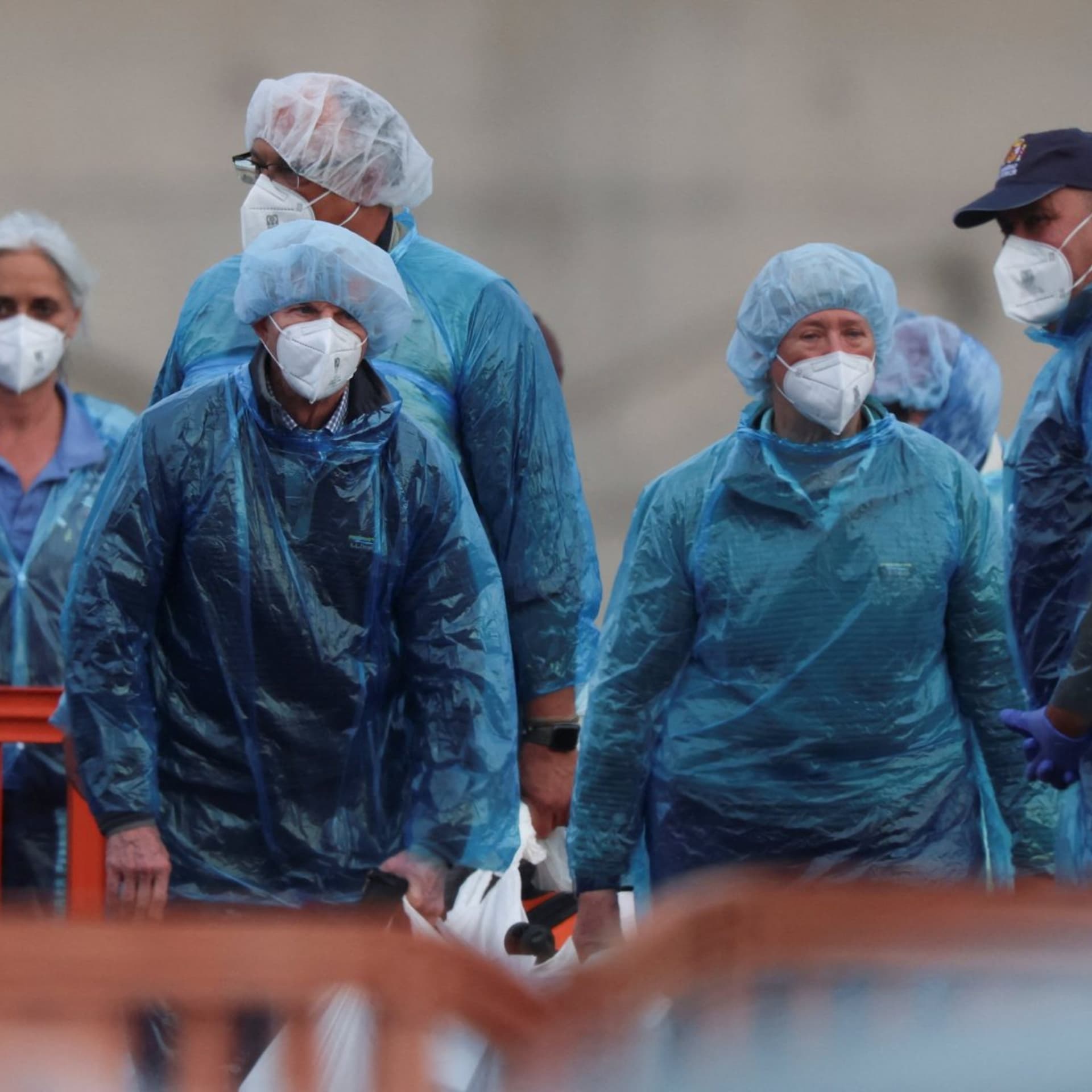
2:06Rarely has the arrival of passengers from a cruise ship been so closely monitored. But on Sunday, the evacuation of more than 90 people from the MV Hondias was carefully overseen by officials from the Spanish government and the World Health Organization. The vessel, which had been hit by an outbreak of Hantavirus, is currently anchored off the coast of Tenerife in the Spanish Canary Islands. Passengers were taken off in small boats to a sealed-off area of a local airport, with teams wearing protective bio-suits. They were then flown back to their own countries or health facilities in the Netherlands.
2:41The evacuation of the remaining 60 or so passengers and crew is due to be completed on Monday, before adverse weather could force the ship to leave. The former Prime Minister of New Zealand, Helen Clark, is co-chair of the Independent Panel for Pandemic Preparedness. She says many questions remain about the outbreak and initial response, but she praised the latest efforts to contain it. From the 2nd of May, when the virus was confirmed as hantavirus, WHO has acted very speedily and there's been a lot of international cooperation. And that's the really good news part of the story, that the approach through the updated international health regulations appears to be working, and that's good news.
3:24But we will need to go through every aspect of this at a national and a global level to see what lessons can be learned from how the outbreak spread beyond that ship. Many of the passengers are expected to go into quarantine, although the United States has said it won't force any Americans to isolate, something the head of the World Health Organization said may have risks. Our correspondent Sarah Rainsford is in Tenerife and from a windy shore described the scene. It's been a day of a pretty major and complex evacuation operation that's been really carefully coordinated by the Spanish authorities but working with the World Health Organization here.
4:04And we've been seeing all day on Sunday small boats ferrying passengers from the Honduras cruise liner to shore because the cruiser itself actually anchored out at sea for extra safety reasons. And then all the passengers were gradually being taken to shore in these little boats and then moved to evacuation planes where they were being flown home. So we know that dozens of people have already been taken off the cruise liner, but we expect further evacuation flights and more of those boats on Monday, particularly for some Australian nationals, because it's taking some time for their plane to reach Tenerife in order to evacuate them.
4:45And what happens to the passengers once they're on those planes? Are they wearing full hazmat suits, that sort of thing? Yeah, this whole process has been done with very, very strict security and safety measures in place. So nobody was allowed off the ferry until an evacuation plane was in place on the tarmac at the airport here, basically with the pilots in place and the engines running. In terms of the protective measures, everyone, both the passengers coming off and all of the medics and officials meeting them, were wearing protective clothing. They were all wearing medical face masks. the passengers on the small boats were mainly sitting kind of socially distanced in those boats and they were all being dealt with in small numbers both on the buses to take them to the airport and also on those on those little boats so it's all being done carefully the the WHO the World Health Organization its head has been here in Tenerife for the for the duration he's been keen to stress that this is a virus the hantavirus which is transmitted in a different way for example to COVID-19, which of course caused a pandemic.
5:54He's saying that the hantavirus is only transmitted through close contact. So for those who are worried about this virus spreading very widely, his message has been all through that this is very different and that the risk of the hantavirus spreading to the general population is low. And yet at the same time, he said that the US decision not to follow WHO guidance may have risks. So not everyone's completely out of the woods. So the WHO has guidelines, but it can't enforce them. So the guidelines are clear. There should be a fairly long quarantine period for anyone who's come into contact with the virus.
6:36They say 42 days is the recommended number after exposure or potential exposure to the virus. Now, of course, for the people who are on this ship, That was back in early April. So I think different countries will implement different systems. Certainly Spanish passengers are being taken to a military hospital to quarantine. British passengers are expected after a couple of days in hospital in the UK. They will then be allowed to self-isolate at home. So different measures for different countries. But yeah, the WHO guidelines are clear, 42 days quarantine at least. Sarah Rainsford in Tenerife. And after we spoke to Sarah, the US Department of Health and Human Services announced that one of the 17 Americans repatriated from the Hondius had tested positive for the Andes strain of the virus.
7:20Another passenger has mild symptoms. Meanwhile, medics from the British Army have parachuted onto one of the world's most remote inhabited islands to help a man with suspected hantavirus who disembarked from the Hondius before the outbreak was reported. He was dropped off on Tristan de Kuna in the middle of the South Atlantic but later developed symptoms of the disease. Simon Jones reports.
7:47In what was described by the Ministry of Defence as a daring mission, six paratroopers, an intensive care doctor and a nurse jumped from an RAF transport aircraft to reach Britain's most remote inhabited overseas territory. It has a population of 221 people, no airstrip and is normally only accessible by boat. Brigadier Ed Cartwright is the commander of 16 Air Assault Brigade. We had to dispatch the parachutists about five kilometres out over the Atlantic. They would then have to get out of the aircraft, turn into wind, be blown backwards over the island, and then conduct a landing right on the edge of the island.
8:24And obviously the consequence of getting that wrong was you end up in the Atlantic. So a really technical, challenging jump, but safely executed by some really professional soldiers. Oxygen supplies, which were running critically low, were also dropped. The MOD says this is the first time the UK military has parachuted in medical personnel in peacetime to provide humanitarian support. The British man with suspected hantavirus who lives on the island is in a stable condition in isolation. The army team said they received a warm welcome from the locals who had made them cottage pie for their dinner.
8:56Once their work is done, the parachutists will leave by boat. Simon Jones. The cousin of the former Syrian President Bashar al-Assad has appeared in court on charges including murder, torture and responsibility for massacres. Attaf Najib is accused of overseeing a violent crackdown on anti-government protesters in Daraa in the 2011 uprising during the so-called Arab Spring. The landmark trial is seen as the first attempt towards bringing justice for the countless victims of the ousted regime. Our correspondent Lina Sinjab was at the pact hearing in the Syrian capital Damascus. This is where the second hearing for Atif Najib's trial is taking place.
9:39The courtroom is surrounded by armoured men with security. Lots of families are waiting outside. For thousands of Syrians, this is the start of a long road to justice. Atif Najib, the cousin of former President Bashar al-Assad and former head of political security in Darah, is facing charges for war crimes like torture and massacres. He was responsible for the torture of children in Darah in southern Syria. It was that that provoked public anger and sparked the uprising in 2011. Ramzi Abu Nabut lost his brother in Darah. He committed the first massacre of the Syrian revolution in Dara province.
10:21My younger brother, Ahmed Abu Nabud, was one of Atif Najib's victims. We have faith in the new Syrian judiciary. We hope that all criminals, including Atif Najib, will be tried and that he will receive the verdict he deserves that satisfies the families of the victims killed by this criminal. Bashar al-Assad ibn Hafiz. Atif Najib appeared in a cage wearing a stripped prison uniform. He is facing 10 different charges, all of which he denies. Families of his victims attend the hearing as well as members of Syria's National Committee for Transitional Justice and some international human rights organizations.
11:07Hiba Zayedin from Human Rights Watch was attending. I think what we found most inspiring or heartening is the fact that the judge has decided to apply international law in terms of war crimes, crimes against humanity, which we had worried and others had worried would not be the case given the transitional justice law has not yet been introduced, and that they were going to be using Syrian criminal law, which is inadequate in the face of the crimes that these defendants are being accused of. Wardi Abu Nabboot was one of the witnesses and she's frustrated with the process. The criminal and murderer Atif Najib lies and denies all the accusations, that he did nothing and had no involvement, and that he resigned before the massacre and before my son was killed.
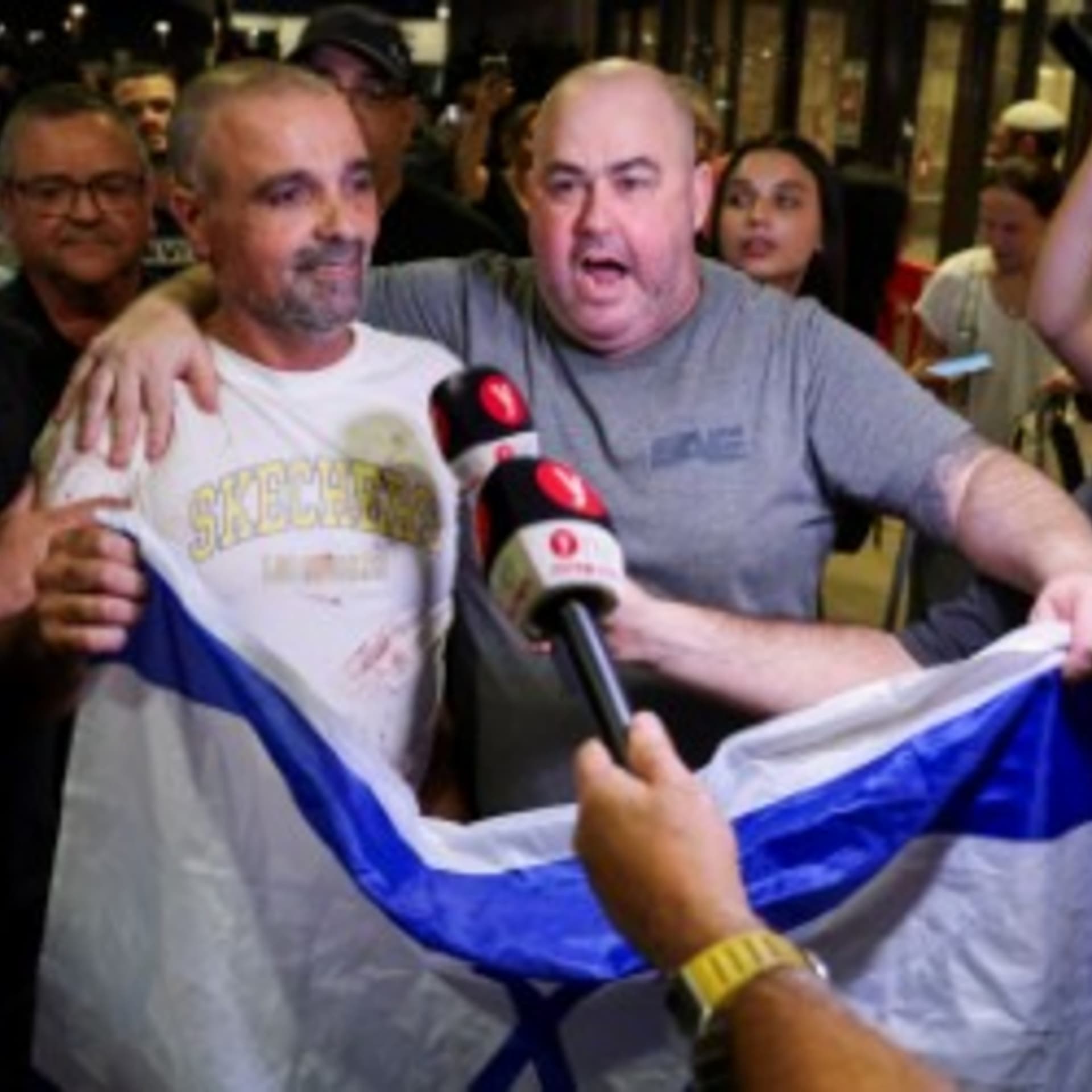
12:00He denied all the accusations and the people who were present in court today were not allowed to speak or express what happened. We were even more heartbroken than on the day our son was killed. He lied right before our eyes. Cases against members of the Assad regime are still being processed, but for many in Syria, transitional justice must be comprehensive and must include members of this government. And this may put justice out of reach. Lina Sinjab in Damascus. When 80-year-old Palestinian Hussein Assasa died on Friday, he was laid to rest in his village in the Israeli-occupied West Bank. But shortly afterwards, a group of settlers forced his family to exhume the man's body because they wanted the land.
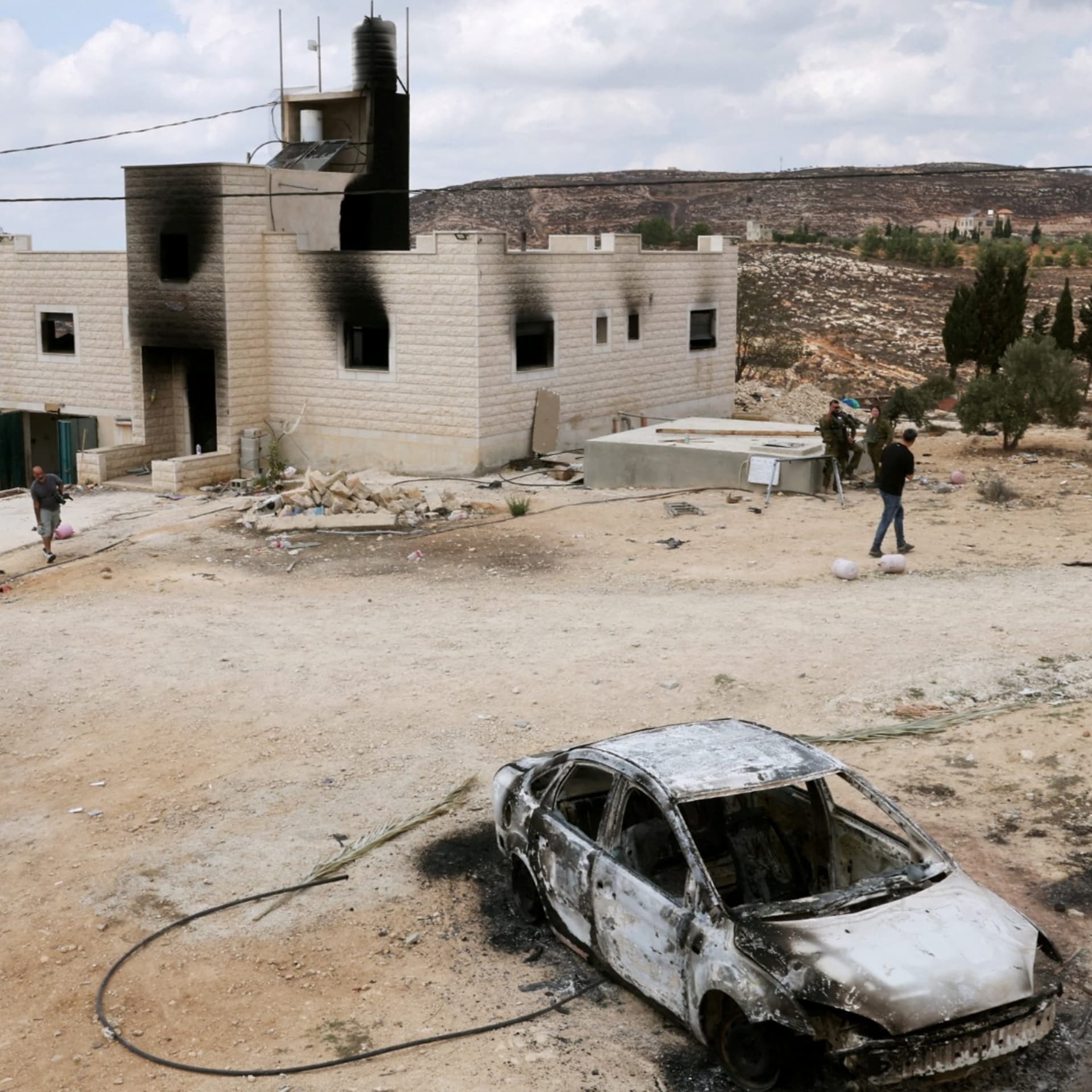
12:48Our correspondent Wirra Davis sent this report from the West Bank. After being forced to unceremoniously dig up their father's body, Hussein's remains have now been reinterred here in a cemetery in a neighbouring village. It's not ideal, but for his family, it's better than what could have happened. Settlers had already started to dig up his grave. We got back to my father's grave just in time. It almost dug down and reached the body, says the eldest son, Mohammed el-Assassa. How can we be safe as Palestinians when our dead relatives aren't even secure in their graves? The Israeli army says it's investigating and they say they tried to confiscate tools the settlers were using to damage his grave.
13:38But according to the family, soldiers just stood by and watched as they were forced to take care of their father's body and take it to a place of relative safety. The UN today called this an appalling and emblematic example of the dehumanisation of Palestinians in the occupied West Bank. We're at Davis. And still to come in this podcast.
14:09The mothers of people missing in cartel related violence in Mexico take to the streets.
14:21I'm Kai Wright. I'm Carter Sherman. Welcome to Stateside with Kai and Carter. We're a new show from The Guardian. We're talking to big thinkers and the best journalists, just trying to understand the world through smart conversation and honest reporting. We don't have billionaires telling us what to say. Stateside with Kyan Carter will come out three times a week, Monday, Wednesday and Friday, starting May 13th. Subscribe on YouTube or wherever you get your podcasts.
14:52You're listening to the Global News Podcast. When he paused his short-lived attempt to guide ships through the Strait of Hormuz, Donald Trump said great progress has been made towards a complete and final agreement with Iran. That comment boosted financial markets and sent the oil price back below$100 a barrel. But Iran has now sent its latest response and the US president says it is totally unacceptable. The details haven't been revealed, but the Iranian proposal is reported to stress the need for an end to the war on all fronts, including Lebanon, as well as the lifting of US sanctions and Iranian management of the Strait of Hormuz.
15:32The month-old ceasefire is largely holding, but it's been fraying in recent days with clashes at sea and more drone attacks in the Gulf. So where does this leave everything? Our correspondent Caroline Davis is monitoring developments from Dubai. The response that we've now had from President Trump, of course, it could be a negotiating position again. It's very difficult to know for certain whether or not this is just a complete outright rejection and there's nothing else going on behind the scenes. But it obviously doesn't sound like there's a huge amount of wiggle room or maneuver there. So whether we will see other noises coming out from the US side, we will see a different and change in tone from the US president.
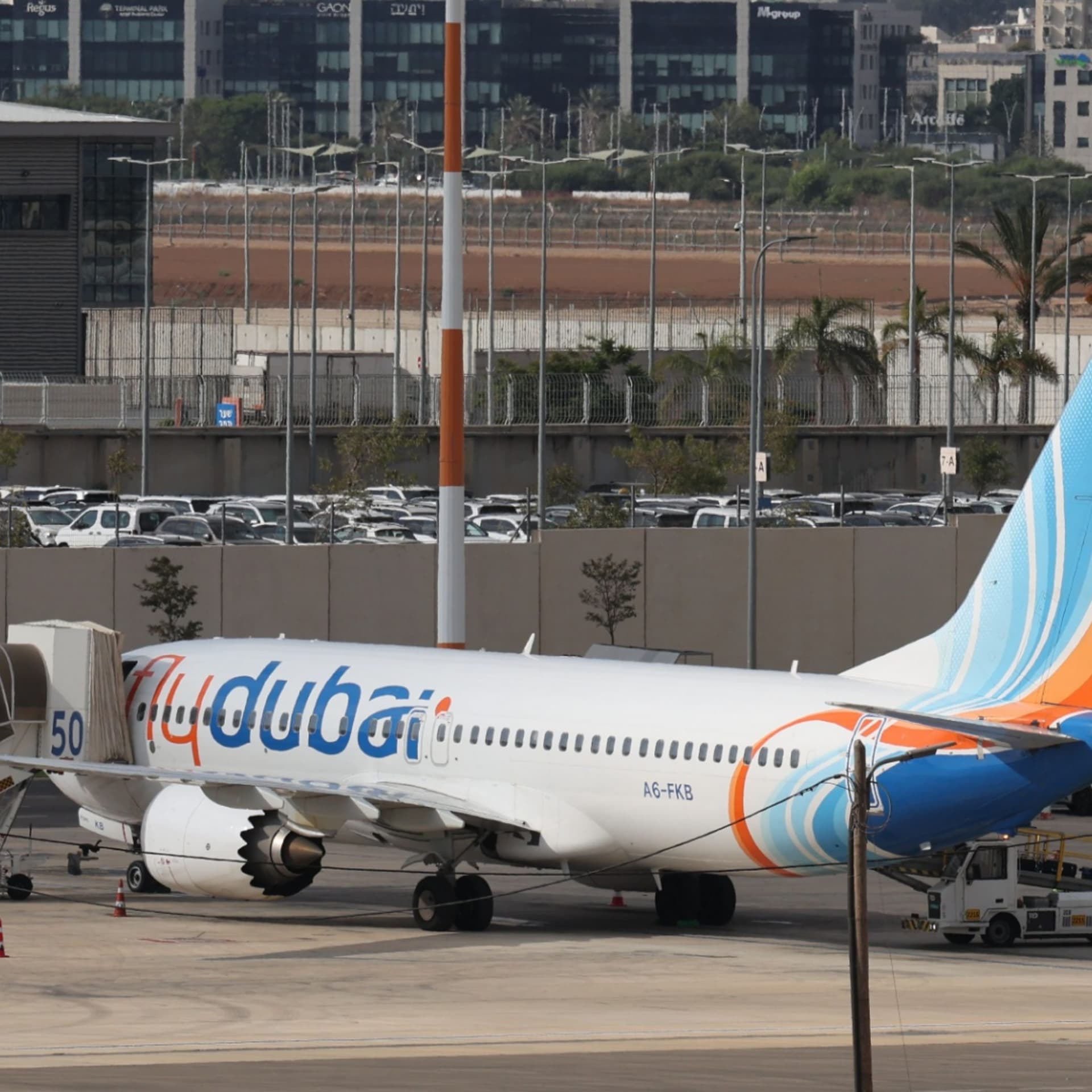
16:13That is what we are waiting to see what happens next. Do they continue to move forward with further diplomatic movements? Do we see further military stances taken from the US? What comes after that statement from President Trump? Yeah, because it had been sounding optimistic in the past couple of days, hints that a deal was getting closer. What's the view where you are? Because there have been reports of a couple of incidents. Yes, we had started the week on Monday, where I am here in the UAE, notifications from the Ministry of Defence saying that they were engaging with both missiles and drones.
16:49That happened again on Tuesday. And in fact, today, again, there was a notification from the UAE's Ministry of Defence saying that they were dealing with two Iranian drones. But we also heard warnings from Qatar's Ministry of Defence, who said that they had also seen a drone that had hit a vessel inside Qatar's waters, 23 nautical miles off Qatar's coast. and we heard from Kuwait's Ministry of Defence who also said that they had around dawn engaged with drones as well. Both Qatar and Kuwait didn't directly say when they announced these that these were Iranian drones but of course that's what many people assumed and jumped to.
17:27And so I think really across the Gulf there is a concern that the more we see these clashes particularly between Iran and the US in the Strait of Four moves the bigger concern is that the Gulf will start being pulled further and further into those sorts of clashes as well, particularly after a period of relative calm that we've seen in the course of the last few weeks since there was a ceasefire agreed between the US and Iran, the concern being that this just becomes deeper and deeper and more of a problem. So obviously a lot of concern that after the sort of positive noises, as you say, that we've been hearing particularly from the US side saying that they thought Iran was going to make a deal, talking a lot about diplomacy, although President Trump has consistently also talked about diplomacy, but at the same time talked about the sort of threats that America would be happy to initiate against Iran.
18:16For example, when he said that on the one hand, if Iran agrees to what has already been agreed, was his terminology, then Operation Epic Fury would be finished. However, he said if they did not, that the US would be willing to go back to bombing and with an increased intensity. So, of course, that is the big concern. Now we have heard from President Trump saying that what has been put forward from Iran is unacceptable. What does President Trump do next? Caroline Davis in Dubai in the UAE. More than 100 ,000 people have gone missing in Mexico in recent decades, most as a result of drug cartel-related violence.
18:53On Sunday, thousands of people led by mothers of the missing march through Mexico City, holding pictures of their loved ones.
19:07The annual protest against drug violence and impunity received extra attention this year as Mexico prepares to co-host the world's biggest sporting event, the World Cup. One banner read, On Mother's Day our children are missing and their killers are free organising World Cups. Our global affairs reporter Mimi Swaby told me more. So the Mothers of the Missing in Mexico march every Mother's Day. is an annual event where different kind of colectivos, different groups of these mothers who have made it their life's mission now to find their missing children come together. This year's been a little bit different because in a statement, the mothers called on football fans to join them.
19:45And this comes just ahead of the FIFA World Cup, which Mexico is co-hosting. They said there is nothing to celebrate as Mexican mothers play the most difficult match for justice. And they said, alongside from chanting, that Mexico is a champion in disappearances. They marched through the centre of Mexico City with banners and slogans, with huge pictures and the names of all these people who are missing. Now, Mexicans generally are pretty keen on football. Will this march make any difference to how they host the World Cup? I think the short answer is no. This is an issue which has been getting worse, disappearances.
20:23One public policy group called Mexico Evaluates Mexico evaluates, found that there'd been a 200 % increase in disappearances over the last decade. And this is due to the growing power of cartels, of organized crime groups. There were more than 130 ,000 recorded missing people. And that number is something that soared after 2006, when the government launched their war on drug cartels. Interestingly, though, earlier this year, Mexican authorities said they'd identified that more than 40 ,000 people who'd been recorded as disappeared actually could be alive. People are very angry that the Mexican government is pouring lots of resources into preparing for this huge event, whereas those resources could be used to help find these thousands of missing individuals.
21:14Some women at the march saying that they're worried that their relative, their disappearance, is no longer a priority. It was so many years ago, it could be five, ten, fourteen years ago, that the government has largely forgotten them. And that is why these mothers and wives of people who are missing keep demanding justice. Mimi Swaby. Well, Mexico City hosts the opening game of the World Cup on the 11th of June, and there'll be matches in 15 other cities across Mexico, Canada and the US in the following days and weeks. One of the smallest host cities is Kansas City, but it has an outsized influence in sporting terms.
21:54Four teams have chosen it as their base for the World Cup. Our correspondent Will Grant went to see what the players and their travelling supporters can expect.
22:07Kansas City takes its football seriously. For years, that meant the American football team, the Kansas City Chiefs, who've won three out of the last six Super Bowl finals. Now, though, football in the British sense of the word is starting to break through too. In fact, the city bills itself as the soccer capital of America. It is, yeah. We have the best teams and we have the most support for the women and the best leagues. We are ready for the World Cup. Yeah, the fans really embrace soccer here. So football's big, obviously, with the Chiefs. The Royals have done well, but, yeah, we'd love to see more soccer.
22:44Let's bring it on. Absolutely. Oh, yeah, it was in 94. It'll be even bigger this time. It's going to be... People don't know what's coming. It's going to be crazy.
22:54What's coming are four national teams, holders Argentina, England, the Netherlands and Algeria, who have all chosen Kansas City as their World Cup training base. There you go. And then we're right out here. Oh, wow. Yeah. I mean, it really is such a treat to have this level of a facility for our second team and our academy system. I was shown round the England camp, called Swope Soccer Village, by Jared Belzer of the MLS side Sporting Kansas City. It used to be our first team facility as well. We've hosted the Kansas City women's soccer team here before they moved. So really, you can't tell the story of soccer in Kansas City without Swope Soccer Village and this facility.
23:34Goodwill. One for one. The grass training pitches are off-limits, kept pristine for the England players. But the AstroTurf was free, and fortunately I brought my boots to test it out for Harry Kane and his teammates. Yes, sir. Yes, sir. It doesn't have to be pretty. It just has to cross the line to be a goal. OK. That's it. Well, it certainly wasn't pretty. The facility is undoubtedly world class, even if my football skills are not. The England manager, Thomas Tuchel, is said to have particularly liked its intimate setting. We have one's 55 degrees and one's 105, so it's time to call it. But Argentina, a training in the Compass Minerals Performance Centre, used by Sporting Kansas City's first team, is one of the top football facilities in the United States, possibly the world.
Read the full transcript
24:27But the hosts insist no one's getting any favouritism. To get three of the top seven clubs in the world is astonishing, and I credit to the facilities. Jake Reed is the CEO of Sporting Kansas City and the vice president of the city's World Cup 2026 committee. For us, it's how do we show the world what we already know, which is Kansas City's a hidden gem, great place to be, great place to live, plenty to do. I think when you think of America, you think of the coast of L.A. and New York, and we're kind of flyover country as we joke. And how do we change that with the World Cup here in a couple of weeks?
25:00My name is Scott Umscheid. We're at Scott's Kitchen in Kansas City, Missouri. Kansas City's other big passion is barbecue. Locals are very proud of their brisket, ribs and what they call burnt ends, the smoked caramelised cubes of beef. He's grabbing some ribs there. If England do venture out of the hotel, Scott Umscheid, the owner of Scott's Kitchen, says he'll prepare the players his signature dishes. I'm sure with the high-nutrition diet and everything else that they're doing to play football, that having a sandwich or a rib is probably not going to hurt them. I mean, they came here for a reason, right?
25:40They chose Kansas City.
25:46There's a real buzz growing ahead of the first match. People here are excited to showcase their heritage during this World Cup, from sports to jazz. Expect the Midwestern hospitality to be on full show, as Kansas City strives to ensure players and fans alike feel that they're in good hands. That report by Will Grant. And that is all from us for now, but the Global News Podcast will be back very soon. This edition was mixed by Darcy O 'Brie and produced by Stephanie Zacherson. Our editors, Karen Martin. I'm Oliver Conway. Until next time, goodbye.
26:37I'm Kai Wright. I'm Carter Sherman. Welcome to Stateside with Kai and Carter. We're a new show from The Guardian. We're talking to big thinkers and the best journalists just trying to understand the world through smart conversation and honest reporting. We don't have billionaires telling us what to say. Stateside with Kyan Carter will come out three times a week, Monday, Wednesday, and Friday, starting May 13th. Subscribe on YouTube or wherever you get your podcasts.
From the publisher
A complex repatriation of passengers on board the cruise ship struck by a deadly hantavirus outbreak has begun, with more than 90 of the 150 people on board disembarking on Sunday. Most of those who have left the MV Hondius have been repatriated to their home countries on specially chartered flights, while Spanish health workers and the World Health Organization continue the evacuation operation in Tenerife. Three people have died in the outbreak.
Also: a landmark trial begins in Syria against Altef Najib, who is accused of responsibility for massacres and torture in the name of the ousted Assad regime. Iran has responded to the latest US peace proposal, but President Trump rejects Tehran's bid as "totally unacceptable". We meet a Palestinian family in the occupied West Bank who say they were forced to exhume their father's grave, after Israeli settlers started digging at the cemetery where he had been laid to rest. Mothers in Mexico call on football fans to join their fight for justice for their missing relatives. And with the World Cup only a month away, we visit one of the tournament's hosts - Kansas City.
The Global News Podcast brings you the breaking news you need to hear, as it happens. Listen for the latest headlines and current affairs from around the world. Politics, economics, climate, business, technology, health – we cover it all with expert analysis and insight. Get the news that matters, delivered twice a day on weekdays and daily at weekends, plus special bonus episodes reacting to urgent breaking stories. Follow or subscribe now and never miss a moment. Get in touch: globalpodcast@bbc.co.uk