
In short
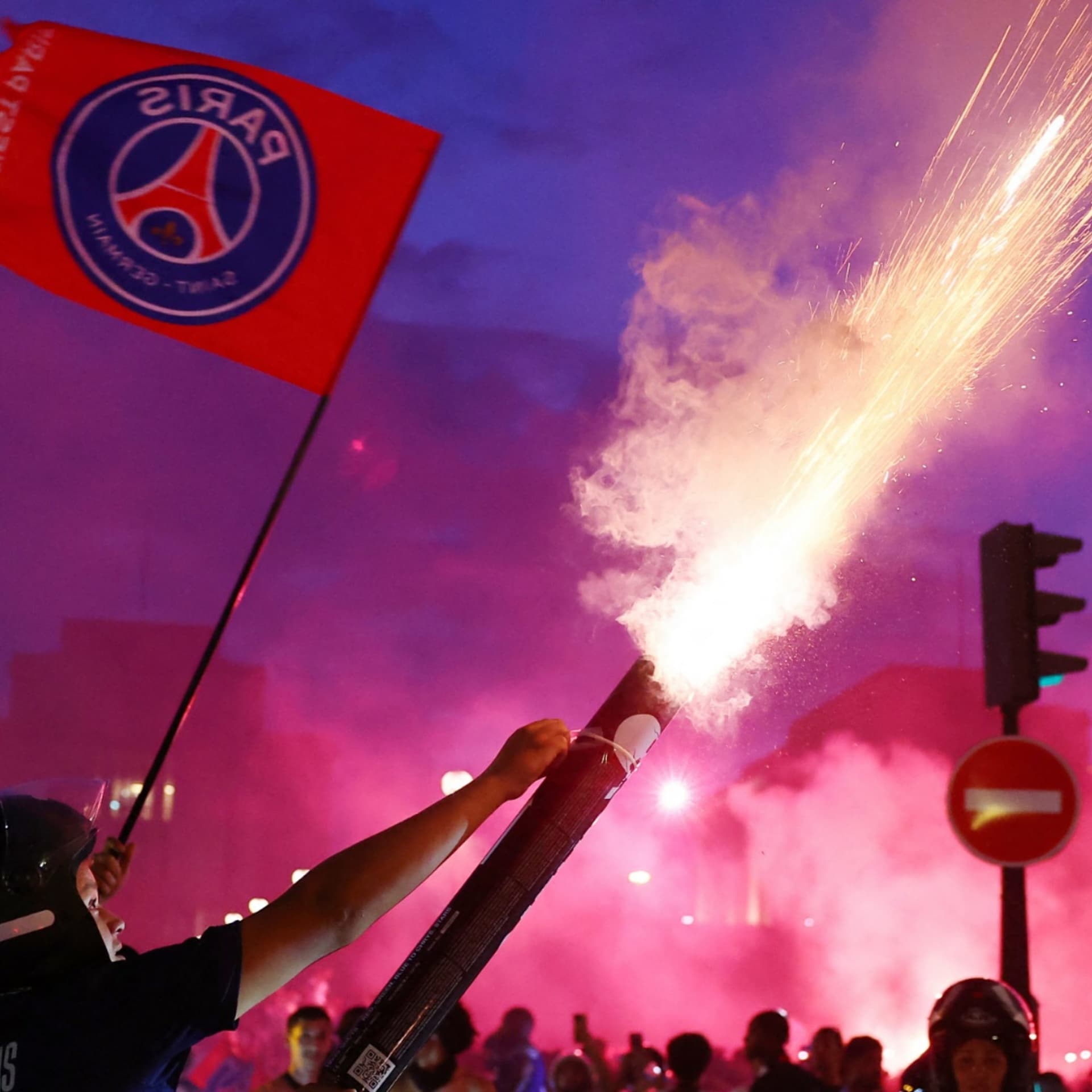
Global News Podcast (BBC World Service) covering: Paris PSG Champions League celebrations turning violent; Ebola outbreak in eastern DRC with a suspected imported case in Brazil; Colombia presidential election amid security violence; Ukraine drone attacks on public transport in Kherson; plus UK fly-fishing charity for breast cancer, Marsha Lucas’ death, US 250th anniversary concert cancellations, and a new UK fungus that kills invasive heathstar moss.
Guests (named individuals and roles)
Will Chalk (BBC reporter in London updating Paris arrests); Pierre-Antoine Denis (Paris correspondent, interviews fans); Marina Rossi (BBC in Sao Paulo on suspected Ebola case); Tedros Adhanom Ghebreyesus (WHO DG, in Bunia); Emery Makumeno (BBC reporting from Bunia with Tedros); Luis Fajardo (BBC Monitoring on Colombia candidates); Jane McGubbin (BBC on Fishing for Life); Vitaly Shevchenko (BBC Monitoring on Kherson bus attacks); Helena Burke (obituary on Marsha Lucas); Tom Simons (Washington on US concert); Georgina Renard (UK science on moss fungus).
Key claims
280+ detained in Paris; 22,000 police deployed; Ebola risk to Brazil “very low” but man monitored; Colombia election seen as left vs hard right on security; Kherson buses hit by drones despite protections; fungus “fairy ring of death” kills heathstar moss without harming other wildlife (as far as known).
Notable examples
PSG beat Arsenal 1-0 after extra time; penalties 4-3; Ebola strain budubungio; Kherson bus drivers describe daily drone targeting; Marsha Lucas credited with Obi-Wan’s death edit and 1977 Best Film Editing; Trump-linked US concert artist pullouts; moss dieback fungus found in South Wales.
Written by AI. May contain mistakes. Listen to the episode to check what was said.
Chapters
Tap a time to open that second in VOViolence in Paris After Champions League Win
0:34 to 1:20
Overview of the violent celebrations following PSG's Champions League victory.
“We realise that if we abandon these people, no one else will drive them.”
Details of the Arrests and Police Response
1:20 to 2:26
A report on the arrests made and police measures taken during the celebrations.
“Well, Anka, we know that they detained more than 280 people in Paris, out of 416 people who were detained across France.”
Match Highlights and Fan Reactions
2:26 to 3:04
Discussion of the match details and fans' pride following PSG's victory.
“It's the second year in a row they've won the Champions League and Arsenal didn't make it easy for them.”
Correspondent's Perspective from Paris
3:04 to 5:50
Insights from a correspondent on the atmosphere in Paris after the win.
“but my club is the best club of the world.”
Update on Ebola Suspected Case in Brazil
5:50 to 6:36
Report on a suspected Ebola case in Brazil and health responses.
“Pierre-Antoine Denis reporting from Paris.”
WHO's Efforts in the DRC's Ebola Outbreak
6:36 to 8:50
An update on the Ebola outbreak in the DRC and WHO involvement.
“And the authorities just say that the risk of Ebola reaching Brazil remains very low, and not in no recorded cases in the country to date.”
Colombian Presidential Elections Explained
8:50 to 11:40
Insight into the upcoming Colombian elections amidst political tensions.
“which has spread across three provinces in Ituridia, Congo, and into neighbouring Uganda.”
Fishing for Life Charity's Impact
11:40 to 14:03
A report on the Fishing for Life charity helping breast cancer patients.
“Well, also, again, a very strong dispute between the left and the right.”
Healing Through Fishing
14:03 to 14:30
Learn how fly fishing aids breast cancer recovery for many patients.
“If I can help anyone to catch some fish, that would be great.”
Opening the Global News Podcast
14:43 to 15:05
Introduction to the Global News Podcast and a preview of topics.
“It could genuinely be quite a rare phenomenon of kind of the British environment fighting back against this moss to try and restore balance.”
Show all 15 chapters
Ukraine's Nuclear Power Plant Under Attack
15:05 to 15:49
Update on a drone strike at a nuclear power plant in Ukraine.
“Russia's nuclear agency says a Ukrainian drone has struck Europe's largest nuclear power plant, causing localised damage.”
Life Under Attack in Kherson
15:49 to 18:32
Bus drivers in Kherson bravely continue their work amid drone strikes.
“Here's Anatoly Dmitrov, who sustained shell shock in a drone strike against his bus earlier this month.”
Remembering Marsha Lucas
18:32 to 20:39
A tribute to Marsha Lucas, a key figure in the editing of Star Wars.
“Marsha Lucas, the Oscar-winning editor of the original Star Wars film, has died aged 80.”
Concerns Over 250th Anniversary Concert
20:41 to 22:31
Discussion about the potential cancellation of a major anniversary concert.
“It looks like the much-hyped concert to celebrate the 250th anniversary of the United States might not happen at all because most of the musicians who are slated to perform have pulled out.”
Discovery of a New Fungus Species
22:34 to 25:01
Scientists discover a new fungus that combats invasive moss in Britain.
“They say it attacks and destroys Heathstar moss, an aggressive invader.”
Transcript
Automatic transcript. May contain errors.0:00This is the Global News Podcast from the BBC World Service. I'm Marco Desai and in the early hours of Sunday the 31st of May these are our main stories. Hundreds are detained in Paris as football fans go on the rampage after PSG's win in the European Champions League final. Health officials are on alert in Brazil after a man returned from the DRC with suspected Ebola symptoms and polls will open in a few hours in Colombia in the first round of the presidential elections. Also in this podcast. We realise that if we abandon these people, no one else will drive them. We work like rats in a cage. We get attacked from every side, but we keep driving.
0:45We have a special report on how public transport in Ukraine has been under relentless attack from Russian drones.
0:56We begin in Paris.
1:04where hundreds of people have been arrested after violence broke out during the celebrations of Paris Saint-Germain winning the Champions League. The match took place a thousand kilometres away in Budapest and we'll come to that in just a moment. But first, here's an update on the violence in the City of Lights by our reporter, Will Chalk. Well, Anka, we know that they detained more than 280 people in Paris, out of 416 people who were detained across France. Now, out of that number, we don't know how many are going to face further action, but we have been told that seven police officers have been wounded, six vehicles have been damaged, some businesses as well.
1:45In the newsroom here in London, we've been watching footage come in throughout the night from Paris. You've seen police with riot shields chasing people, projectiles being thrown, batons being used, flares being set off. And of course, this is just the beginning of the celebrations as well. The PSG players are supposed to take part in a parade, supposed to lift the trophy outside the front of the Eiffel Tower, and 100 ,000 people are expected to show up for that. Okay, and of course, there was violence last year when Paris Saint-Germain won the Champions League for the very first time. Yeah, and similar scenes.
2:18We saw two people actually lost their lives last year but again we saw shops smashed up hundreds of arrests and police were aware of this happening last year and they made extra deployments this year 22 ,000 police were deployed across France for this year's game that includes 8 ,000 in Paris tram lines were halted metro stations were shut so obviously an attempt to avoid a repeat of what happened last year but clearly despite all those efforts they haven't been able to stamp it out completely Well, despite that violence after the match, it was still a monumental night for Paris Saint-Germain.
2:55It's the second year in a row they've won the Champions League and Arsenal didn't make it easy for them. The final had finished 1-0 after extra time. So the two sides needed penalties to separate them with PSG winning 4-3. Here's what it meant to some fans. I'm very proud of my club. We travel a lot of difficult periods. but my club is the best club of the world. Vive le PSG! Vive le PSG! Vive Paris! Vive la BBC! Let's go! One man with more mixed emotions was our correspondent in Paris, Pierre-Antoine Denis, who I spoke to shortly after the match had finished. I am an Arsenal fan, first and foremost, but I am also French, and I've been cheering for Paris Saint-Germain every time they play in Europe, So it was very conflicted for the final on a purely career level now because I'm in Paris.
3:52I'm very delighted that Paris won. OK, diplomacy détente. Perfect. Exactly. So what was the atmosphere like tonight then over there? I'm standing here on one of the avenues, the main avenues of Paris, one of the Grand Boulevard, as we call it. It leads to the Republic Square and these streets, this huge avenue has been filled with people for hours after the game ended. Now, only now, Carl's are able to go back. But obviously, it's been really pandemonium for several hours after the game with really people lining up the streets, chanting, hugging each other, telling me how happy they were because it really is a milestone for Paris Saint-Germain tonight, obviously, to have won it back-to-back and really making history here.
4:40How will this feel for Paris Saint-Germain fans? They've always been the bridesmaid, never the bride. They had the era of all the superstars and they had that remontada, of course, famously when they lost to Barcelona. But now, under Luis Enrique, they've found a strength to go back-to-back, as they've been talking about. Quite incroyable, as they've been saying in the French media. Where does this rank in terms of the achievements of a French football team against some of Europe's most elite teams? This makes Paris and the PSG here standing on its own above the rest. Because, as you said, always the bridesmaid is never the bride.
5:20In 1993, Marseille won this very Champions League. And ever since, up until last year, Marseille was a big rival of Paris. We'll always say to Paris and to PSG, look, we've won it, you've never done that. Now, obviously, since last year, Paris can say we've done it as well. And now from tonight onwards, I guess Parisians will be able to say we've won it twice. You haven't done that. So tonight we'll obviously rank as probably the greatest night to date for Paris Saint-Germain. Pierre-Antoine Denis reporting from Paris. The Bundibugio strain of Ebola has already infected 1 ,000 people and killed more than 200 others.
6:01Now, the first suspected case of Ebola outside of Africa during this latest outbreak has been reported in Brazil. A man in his 30s who may have contracted the virus during a trip to the Democratic Republic of Congo is being monitored in a Sao Paulo hospital. The BBC's Marina Rossi is in the city. You don't have a lot of information about him. It's just he's a 37-year-old man from the Democratic Republic of the Congo. And he developed symptoms, including fever, and just meeting the criteria for a suspect case. And the authorities just say that the risk of Ebola reaching Brazil remains very low, and not in no recorded cases in the country to date.
6:47and even given the low-risk health services are advised to remain alert to individuals with fever and a recent travel story. So we've been waiting for the past 21 days to areas where the virus is circulating. It's just the information that we receive. Well, the World Health Organization's Director General, Tedros Adhanom Ghebreyesus, is in Bunia in Congo at the heart of the Ebola outbreak. I came because the people of Italy, the Kibus and all of DRC deserve to know that they're not alone. As we know, DRC has faced Ebola before, 16 times, and has ended every outbreak. And this is the 17th. That history gives me real confidence.
7:41The BBC's Emery Makumeno is travelling with the head of the WHO and sent us this report from Bunia in the eastern DRC.
8:11Recently, samples had to be transported more than 1 ,500 kilometers to the capital, Kinshasa, causing delays that health workers feared could cause lives and allow the virus to spread further. The laboratory was relocated to Brunia last week to speed up the response. More than 1 ,000 people have so far been identified as suspected Ebola cases. Earlier, Dr. Tedros met a tourist governor, General Johnny Luboya, as authorities and international health agencies step up efforts to contain the outbreak. The outbreak is linked to the rare budubungio strain of the virus, which has spread across three provinces in Ituridia, Congo, and into neighbouring Uganda.
8:58Emery Makumeno reporting. Against the backdrop of a resurgence of political violence, Colombians are preparing to vote in the first round of the presidential elections, which is largely regarded as a referendum on the outgoing President Gustavo Petro's policies. The 2016 peace deal between the Colombian government and the largest insurgent army, the FARC, could not end decades of armed conflict and guerrilla attacks have been surging. This election is being seen as a battle between the left and the right, and how to deal with the country's worsening security situation. The campaign has been overshadowed by bombings, kidnappings, and the killing of dozens of local political leaders.
9:42Our South America expert Luis Fajardo from BBC Monitoring told me more about the presidential candidates. As you mentioned, it's seen as a battle between the left and the right, and the candidates could not be more different. The candidate who's supported by the government, his left-wing presidential candidate, Ivan Cepeda, he's a former human rights lawyer, and he has been supporting a continuation of the left-wing policies of the current government. While the hard right-wing candidate, Abelardo de las Priegas, is a criminal defence lawyer who's known as a flamboyant presence in social media.
10:17He flaunts his wealth, he goes around in private jets and he has said he's going to take a very strong security stance against left-wing rebels and other illegal armed groups in the country. When it comes to trying to tackle the surge in violence in the country? How do the candidates propose to do this? There's also the backdrop of economic uncertainty and drug trafficking too. Certainly, again, very, very different proposals being presented to Colombians. From the hard right wing, Abelardo de las Pregas says he's going to follow policies similar to those of Donald Trump and other right wing leaders who have rich power in Latin America.
10:53While from the left wing, Ivan Cepeda says he wants to continue with government interventionist policies of the current government. Again, security is going to be a crucial issue. Cepeda, the left-wing candidate, says he wants to continue peace negotiations that so far have been unsuccessful, while again, Abelardo de la Esprella presents himself as the law and order candidate. And Luis, finally, just how important is this election for the region as a whole? How pivotal is it? It's important because many countries in the region have turned to the hard right. Probably the two big exceptions are precisely the two largest countries in Latin America, Brazil and Mexico, which have left-wing presidents right now.
11:33But the Colombian election, if de las Priegas was to advance, would be a continuation of this. And it is seen as an important indicator of what could happen in the larger election, which is coming up in Brazil later this year. Well, also, again, a very strong dispute between the left and the right. Louise Faharda from BBC Monitoring. For 18 years, a group of volunteers here in the UK have given up their time to teach fly fishing to people with breast cancer. The charity Fishing for Life aims to help with both physical and mental well-being. Jane McGubbin has been to one of their riverside branches in south-west England.
12:15for Libby for Jane for Heather and Andrew this is the sound of healing
12:24I'm here in this moment and it's just just lovely like when you go in the supermarket and you hear that do do all the time reminds me of a hospital the equipment that they have in hospital so those sounds take you back but you don't get that here They invited us here to see the power of this place, to let troubles wash away. So lift up, cast out. I get peace and separation from all the doctor's appointments. You just lift. Just want it to go on forever. 18 years ago, Gillian Payne set up Fishing for Life to teach fly fishing to people with breast cancer. Andrew represents the less than 1 % of sufferers who are men.
13:12He was diagnosed a year ago. You can see the difference in him. Oh, yeah, yeah. Yeah, totally different now. He wouldn't talk, he'd be sat in a chair, there's no point carrying on. Put it through your finger like we did last time. I can see he's not thinking about anything else. I think Julian just wanted to give back, and it's amazing. I mean, she provides, you know, all the lunches. The world needs more Julian. They do. Today there are ten Fishing for Life groups all over the country, free for anyone with breast cancer. That's the first dropper. Heather is one of the volunteer coaches. Because you are going to catch one.
13:51Well, I'm going to do my very best. Heather was a volunteer for almost a decade before she got her own diagnosis. I phoned Gillian and said, I've become one of the girls. If I can help anyone to catch some fish, that would be great. enjoying the sunshine in the fresh air, moving their shoulders wherever they've had breast cancer to help the lymphatic, help the muscles get better after surgery. Hundreds have helped here and have been helped, finding peace and hope from the steady concentration of casting a line. That report from Jane McGubbin on breast cancer patients learning to fly fish. and you can hear more positive and inspiring stories every week on The Happy Pod or wherever you get your BBC podcasts from.
14:43Still to come in this podcast. It could genuinely be quite a rare phenomenon of kind of the British environment fighting back against this moss to try and restore balance. There's new hope for some of Britain's damaged native habitat.
15:04This is the Global News Podcast. Russia's nuclear agency says a Ukrainian drone has struck Europe's largest nuclear power plant, causing localised damage. Kiev has denied carrying out the attack on the facility in Zafarytsia in Russian-occupied eastern Ukraine. Earlier, Ukraine's President Volodymyr Zelensky said the country was braced for significant strikes on its capital in retaliation for a large-scale drone attack on military targets inside Russia. But amid the warfare, everyday life must go on in Ukraine. Public transport is still operating in the frontline city of Kherson, despite relentless attacks from Russian drones.
15:44This year alone, more than 30 buses have been damaged by Russian attacks. Vitaly Shevchenko of BBC Monitoring sent this report.
15:59the municipal bus company in kherson says the attacks started last year and are getting worse since the beginning of this year three of its workers had been killed and eight wounded
16:14four bus drivers have told the bbc that russian drones are now part of their daily reality All of them have been wounded in recent attacks. Here's Anatoly Dmitrov, who sustained shell shock in a drone strike against his bus earlier this month. All the windows got smashed. I barely made it to the next stop, where there was a shelter. I looked in the mirror and saw blood. I thought, oh, I need to get to the shelter quick, because sometimes they drop a second drone immediately. It's no fun working here. You go to work and you have no idea if you are going to come home. It is easy for the Russians to target Kherson because they're right next to the city, just across the river Dnipro.
17:00Anatolia's manager, Rita Dobrynova, says the skies are abuzz with Russian drones. They keep flying all day long. Some are just hoovering, waiting. Others are scout drones. They look the driver right in their eye through the windscreen. There is a bus driver who had a bomb dropped literally onto his head. It went through the cabin's roof. The authorities have taken steps to protect bus drivers and their passengers. Some of the busier streets are covered with anti-drone nets and drivers have been given helmets, bulletproof vests and drone detectors.
17:46But why do bus drivers in Kherson keep going back to work, despite the lethal danger and even after being wounded? Driver Maxim Dyak explains.
18:00We need to get people to their pharmacies and hospitals, children and the elderly, everyone who has stayed here, everyone who still lives here. No one apart from us will do this. We realize that if we abandon these people, no one else will drive them. We work like rats in a cage. We get attacked from every side, but we keep driving. Many of the 65 ,000 residents still in Kherson do not have cars. Without buses, their lives would be even more difficult. Vitaly Shevchenko reports in from Kherson in southern Ukraine. Marsha Lucas, the Oscar-winning editor of the original Star Wars film, has died aged 80.
18:42She was married to the Star Wars creator George Lucas during the making of the first three films and was regarded as a pivotal creative force behind the space saga's early success. Although her contributions largely took place behind the scenes, her role in shaping the films has been widely recognised in the decades since. Helena Burke looks back at her life.
19:08No! This is the moment Obi-Wan Kenobi is killed by Darth Vader in the first Star Wars film. It's a pivotal scene, but if it wasn't for Marsha Lucas, it may have never happened. She is credited with convincing the film's director, George Lucas, to take the bold step of killing off one of the main characters. This is one of many edits made by Marsha to the first three Star Wars movies, adding emotional depth and narrative clarity to the films. George Lucas credited her with helping make sense of the vast amount of footage filmed for the climactic Death Star battle sequence in episode four. Watch yourself, increase speed, full throttle.
19:50What about that tower? You worry about those fighters, I'll worry about the tower. Marsha subsequently won the Academy Award for Best Film Editing in 1977 for this work. But her success wasn't limited to the Star Wars franchise. You talking to me? You talking to me? Marsha also collaborated with the director Martin Scorsese on a string of his acclaimed films, including Taxi Driver, Alice Doesn't Live Here Anymore and New York, New York. I can take a hand. Can you also take a walk? Look, you want me to leave? Yes. I'll leave right now. Bye. Marsha died on Wednesday at her home in California. In a statement, her family described her as a true trailblazer for women in film and one of the most influential editors in cinematic history.
20:39Helena Burke reporting. It looks like the much-hyped concert to celebrate the 250th anniversary of the United States might not happen at all because most of the musicians who are slated to perform have pulled out. President Trump has said on his social media account that he is to personally headline the event. In the post, he said the man, who some say is the greatest president in history, should take the place of what he called highly paid third-rate artists. Tom Simons has the details. Three days ago, the American organisers announced a whole load of artists who would be taking part, but about half, if not more than half of them, have now pulled out.
21:21Morris Day, a singer-songwriter, out. Young MC, a rapper, out. The Commodores, classic soul band, also out. Poison, heavy rock band. Bret Michaels, the lead singer of that band, has said he's not interested anymore. Martina McBride, a country singer, has pulled out. Leaving really only two big names, Vanilla Ice, the rapper, I think from the 90s, and C &C Music Factory, a dance act from the 90s as well. Donald Trump does not like to be crossed in this way. I think that's pretty clear. and his true social post suggests that he will become the artist with a big rally speech that he wants to try to stage on Wednesday.
21:58But it's not clear whether that will actually happen or not. And there are other things as well, and some of it is controversial. I think the biggest row is about the proposed$250 bill relating to the 250 years of American independence. And in creating a new dollar bill, the theory is that Donald Trump has the opportunity to put his own face on it. Now, that is only an idea at this stage. The Treasury Department here has said it's working away as though Congress decides to do this, but it's not a cert yet. Tom Simons reporting from Washington. Now, scientists say they've discovered a new species of fungus growing in Britain, which they believe is having a positive impact on the environment.
22:41They say it attacks and destroys Heathstar moss, an aggressive invader. Our climate and science correspondent Georgina Renard reports. Scientist George Greif is showing me how one invasive plant, the Heathstar moss, has taken over habitats like this one in the Bannae Brehinyog in South Wales. As you go along, you start to see it's just really everywhere. Heath's star moss arrived on British soil in the 1940s. With nothing to control it, it has spread far and wide, crowding out native species. You know, it's quite an aggressive species. Each one of these little shoots can grow into a completely new plant.
23:24It's quite a pretty-looking thing. But we don't want it. It's just not nice for the environment, really. It has caused a lot of problems. While out walking one day, George saw something strange. Something was attacking the moss. Here we go. So if you look down at the moss, right through this whole area here, almost as big as my hand, a kind of what they call a fairy ring of death. George has discovered a new fungus species that kills the heath star moss. Using a macro lens, we could film the fungus infecting the tips of the moss. Now wherever George goes, he is looking for the moss dieback fungus.
24:04It's in North England, it's in South England, it's in Wales. It hasn't been seen in Scotland just yet, but no doubt it's there, because I haven't been in a while. This looks like a win for biodiversity, but what if the fungus is threatening other species as well? At Amgadwa Cymru Museum in Cardiff, George analyses how the fungus works after entering the moss cells. He now believes it's an unusual case of nature attacking an invasive species. There's actually just one group of very closely related mosses that this fungus grows on. So it's not a threat to other trees and other wildlife as far as we know.
Read the full transcript
24:42The samples will now be added to the museum's collections. Scientists can use them to help bring back the UK's native habitats. Tiny but potent, the discovery of the moss dieback fungus shows there are still solutions out there to the crises facing Britain's nature. Georgina Renard reporting.
25:30is Karen Martin and I'm Ankur Desai. Until next time, goodbye.
From the publisher
Several hundred people have been detained by police in Paris after football fans went on the rampage when Paris St-Germain won the European Champions League. Vehicles and businesses were damaged, and several police officers were injured. It's the second year in a row that PSG have won the Champions League - but Arsenal didn't make it easy for them. Also: The first suspected case of Ebola outside Africa has been reported in Brazil. Colombians are preparing to vote in the first round of Presidential elections against a backdrop of political violence. The Oscar-winning editor of the original Star Wars film has died. And Scientists have discovered a new species of fungus, which they believe is helping the environment.
The Global News Podcast brings you the breaking news you need to hear, as it happens. Listen for the latest headlines and current affairs from around the world. Politics, economics, climate, business, technology, health – we cover it all with expert analysis and insight. Get the news that matters, delivered twice a day on weekdays and daily at weekends, plus special bonus episodes reacting to urgent breaking stories. Follow or subscribe now and never miss a moment. Get in touch: globalpodcast@bbc.co.uk



