
In short
The episode of BBC World Service’s Global News Podcast covers multiple stories. Main topic: FIFA backlash over proposed sell-off of World Cup commercial rights. FIFA would create a company to handle TV, tickets, sponsorship for men’s and women’s World Cups and the Club World Cup, then sell private investor stakes; FIFA says it could generate billions for football development. UEFA calls it “selling football’s soul” and criticizes lack of consultation; CONCACAF and AFC join. Key claim: private investors may push for more teams and more frequent tournaments, harming UEFA’s Champions League and European Championship value. Notable example: UEFA emergency meeting and possible European boycott threat.
Guests/voices
Mike McCarthy (BBC Sport); David Bernstein (former FA chairman, Manchester City); Glenn Mikalev (EU sports chief, quoted); Sally Nabil (BBC Arabic, on Iraq militias); Tomohiko Taniguchi (advisor to PM Shinzo Abe, on Japan quake); Steve Rosenberg (Russia editor, on Pavel Durov/Telegram); Chantal Isandou (equestrian centre rescue, France fires); Nomi Iqbal (BBC News, Jared Leto allegations); Ambarison Ethirajan (tiger conservation, Nepal); Mishi (sauna rave DJ, London).
Written by AI. May contain mistakes. Listen to the episode to check what was said.
Chapters
Tap a time to open that second in VOBacklash Over FIFA's Proposal
0:11 to 0:58
Discussion on FIFA's plans to sell stakes in football competitions and the backlash it has received.
“And we hear what happened at an equestrian centre that was caught up in the fires in southwest France.”
UEFA and Global Reactions
0:58 to 4:00
Analysis of UEFA's response and concerns from other football governing bodies about FIFA's commercialization plans.
“As we reported in our earlier podcast, FIFA is arguing that the plan would allow all nations to share in the riches that can be created by football.”
US-Iran Conflict Escalates
4:00 to 8:30
Overview of renewed hostilities between the US and Iran, including missile strikes and military actions.
“You'll find the Global News podcast in the podcast section.”
Impact of Militias in Iraq
8:30 to 11:16
Exploration of the influence of Iranian-backed militias in Iraq and their impact on regional stability.
“Many people still remain missing or are waiting to be rescued.”
Japan Earthquake and Rescue Efforts
11:16 to 14:01
Report on the earthquake in Japan, casualties, and ongoing rescue efforts amidst challenging conditions.
“Russia's Federal Security Service has charged the Telegram founder, Pavel Durov, with facilitating terrorist activities and issued an international warrant for his arrest.”
Rescue Efforts for Horses During Wildfire
14:01 to 16:31
Learn about the dramatic rescue of horses threatened by a wildfire and the community's response.
“Businesses have also been affected, including an equestrian centre that was forced to evacuate 100 horses as flames bore down on their stables.”
Jared Leto Faces Allegations
16:35 to 17:24
Explore the serious allegations against Jared Leto and the experiences of the women involved.
“Usually a sauna would be probably around 80 degrees Celsius, but we take it down to 40.”
Clara's Encounter with Leto
17:25 to 20:44
Hear the harrowing details of Clara's interaction with Jared Leto and the alleged misconduct.
“Normia Iqbal's report contains details of alleged sexual offences that you might find upsetting.”
Tiger Conservation Success in Nepal
20:46 to 24:05
Discover Nepal's successful tiger conservation efforts and the implications of growing numbers.
“He's due to return to stage next year for a high-profile tour with his band, placing him back in the spotlight.”
The Rise of Sauna Raves
24:06 to 28:00
Learn about the phenomenon of sauna raves and their unique appeal in modern health culture.
“They've been attracting a lot of supporters in big cities like London, Berlin and New York.”
Transcript
Automatic transcript. May contain errors.0:00This is the Global News Podcast from the BBC World Service. I'm Andrew Peach and at 15 Hours GMT on Wednesday 29th July these are our main stories there's more backlash after FIFA's plans to sell stakes in its football competitions fighting resumes between the US and Iran with 20 members of an Iraqi militia reported killed Russia charges the founder of Telegram with facilitating terrorist activities also in this podcast the Hollywood star Jared Leto faces allegations of criminal sexual conduct by four women who were teenagers at the time. And we hear what happened at an equestrian centre that was caught up in the fires in southwest France.
0:42All around the stables everything is burned. In fact the horses are very clever because they decided to go where people had been evacuated and it was a safe place. Let's start with a backlash sparked by FIFA's proposal to sell stakes in its major competitions including the World Cup. As we reported in our earlier podcast, FIFA is arguing that the plan would allow all nations to share in the riches that can be created by football. But the European Football Association, UEFA, has described it as an attempt to sell football's soul. And the EU sports chief, Glenn Mikalev, called it the relentless and corrosive commercialisation of the game.
1:24This was the reaction of David Bernstein, former chairman of the English Football Association and Manchester City. Well, I think the whole thing is absolutely dreadful. It's totally unacceptable. The feel of cronyism, nepotism, it sort of stinks, frankly, and I would totally support UEFA, the FA, the Prime Minister and so on in their criticism. Let's get more on this from Mike McCarthy of BBC Sport. FIFA wants to create a company that would take over the commercial side of its major competitions. The idea is that body would be responsible for things like TV rights, ticket sales, sponsorship for the men's and women's World Cup and the club World Cup as well.
2:02FIFA would then sell stakes in that company to private investors. It says doing that can generate billions of dollars which can be shared among its members and that money would in theory be used for football development projects around the world. It feels like everyone hates it, do they? Well as you mentioned UEFA were first out of the blocks saying that FIFA had crossed the line. They have since been joined by CONCACAF, which governs football in North America, and the equivalent body in Asia, the AFC. They both criticise the lack of consultation that they've had about the plans. Certainly the fear from UEFA is if private investors were involved in the World Cup, they are likely to want more teams in the competition and perhaps the World Cup to take place more regularly than every four years so it generates more money.
2:42The same would likely be true of the club World Cup, and UEFA's clearly concerned about the impact that that would have on the value of their own competitions, such as the Champions League and the European Championship and the Football Canada in general as well. What's the likelihood of FIFA and Gianni Infantino in particular being able to get this through, even though there is such a level of criticism from other parts of the football world? Yeah, well, UEFA have been the strongest critics, but they only represent about a quarter of FIFA's 211 members. The way voting in FIFA works, every country gets one vote.
3:12So France have the same voting power as the Faroe Islands and Brazil have just as much say as Botswana. Gianni Infantino is essentially offering a significant amount of money from the deal up front, as you mentioned, to all FIFA members. So for many in Europe, an extra$40 million in one-off capital is not a hugely significant amount of cash. But for many of the game's smaller footballing powers who don't enjoy the riches that we see in the European game, it is a very big deal. Now, for its part, UEFA is organising an emergency meeting later this week of its members. The suggestion has been made that if European nations were to threaten to boycott the World Cup, then that would destroy the value of the tournament for any potential shareholders of this new company.
3:52Now, that would be a huge escalation, but the situation hasn't reached that point yet. Mike McCarthy from BBC Sports, and there's more on this story on our YouTube channel. Just search for BBC News on YouTube. You'll find the Global News podcast in the podcast section. There's a new story available every weekday. After four days of relative quiet in the Middle East, the US and Iran have been trading strikes once more. Iran reignited the fighting by firing ballistic missiles towards a US military base in Jordan and claims to have held up three oil tankers in the Strait of Hormuz. The US military central command said it had intercepted the barrage of missiles and has now, with the help of Saudi Arabia, been targeting an Iran-backed militia group in Iraq called the Popular Mobilisation Forces, or PMF, The group says 20 of its members were killed by the U.S.-Saudi strikes and calls it a dangerous escalation.
4:46Abdallah al-Mualimi was the Saudi ambassador to the United Nations for 12 years. He insists his country had to act to protect itself. We are not drawn into the war by defending against the attacks that were launched against Saudi Arabia. We cannot sit by idly and allow uncontrolled militias to send missiles and drones onto our territory and just do nothing about it. We have to make sure that we reply to the sources of attack and respond appropriately. To find out more about the PMF, I spoke to the correspondent Sally Nabil of BBC Arabic. They are a very influential umbrella group in Iraq. They include a number of Shia militias backed by Iran, and they have gained a rising influence in Iraq 10 years ago as they were part of the fight against the so-called Islamic State.
5:40And since then, their influence in the country have been growing, whether military influence or even economic influence. And since the beginning of the war in Iran, they have launched strikes against U.S. interests in the region quite frequently. And this is why other components of the Iraqi society are getting worried that their country is being dragged into a war they don't need. We have an initial reaction from the Iraqi influential Shia cleric Muqtada Sadru, who is not aligned with Iran. He reacted to those strikes saying that these militias are dragging Iraq into a war that is unnecessary.
6:24And he called upon the Iraqi government to practice law and order and restrain these militias. This has obviously been going on for a while. Why are they targeting this group now but have not done so before now? Actually, that's a big question which we can't answer. We have no clear-cut answer for that. But the strikes and counter strikes has been going on and off. But the involvement of Saudi Arabia, I think, has to do with it, because the Saudis said that these Iran backed militias have targeted their oil facilities in the east of the country. And that is a huge blow to their main industry, which is oil production.
7:06And they have also targeted U.S. interests and U.S. military bases in Jordan. So the fact that they started posing imminent threat to U.S. interests in the region and also to U.S. Gulf allies, I think this plays a role in the fact that they got targeted now. And even winding right back to the start of this conflict, People talked about, you know, the danger of it spiraling into a much wider Middle East situation. Possibly there's more risk of that now. Absolutely, because we have more key players now involved in this conflict, which seems to be getting out of hand. It's not just the Iran-backed militias in Iraq, for example.
7:50You have also the Iran-backed Houthi militias in Yemen who are threatening to block navigation in the Red Sea. And that has been the alternative route a country like Saudi Arabia, for example, is using to export its oil after the Strait of Hormuz has been effectively closed by Iran since the beginning of the war back in February. So you have Yemen, you have Iraq, you have the Gulf monarchies who are aligned with the US and get frequently targeted by Iran. So we have multiple fronts now and we don't know yet where things are heading. That's Sally Nabil of BBC Arabic. At least 14 people are now confirmed to have died in the powerful earthquake that struck the Japanese island of Kyushu on Tuesday.
8:37Many people still remain missing or are waiting to be rescued. There are fears that some people are still trapped under the debris of a shopping mall that collapsed after the quake. Tomohiko Taniguchi was an advisor to the Prime Minister Shinzo Abe between 2014 and 2020. It seems to me that it is a unique isolated case with the shopping mall because the collapse did not happen immediately by the earthquake, but by the explosion, the gas explosion that happened in the building. Our correspondent in the region, Jake Kwon, has been following developments. There are many still missing inside the shopping centre, but we are still looking at the same death toll and the recovery number.
9:25Earlier, we were told that eight people were found inside. Three of them, unfortunately, has been declared dead. But the authorities are still carrying on with the rescue operation. This is the shopping center in the town of Kashima, just south of the Kumamoto City, where the second floor had collapsed, as you just heard, after an explosion. But what we're hearing from the shopping mall's operator, Eon, they said that they are still trying to contact some of their staff members who have stayed behind after evacuating most of the shoppers. and they said that some of them, about four of them, they still cannot account for.
10:01So the search is continuing, but further to the south, in the town of Yasashiro, a paper factory's chimney fell earlier that had trapped the workers beneath. And what we are hearing from the public broadcaster NHK now is that they have confirmed five people dead over there, but the rescue workers are still looking for four missing workers there. Tell me a bit about the rescue effort, because obviously we're still in the relatively early stages of this, so there is the possibility of people being found alive. What's happening to try and see whether that's the case? The rescue effort is continuing, and Prime Minister Sanae Takaichi has mobilised 3 ,600 members of the Self-Defence Force.
10:39These are the troops to help with the rescue effort as well. And we've been seeing a lot of images of the fire department going into these buildings, trying to clear the debris and find these people. But, you know, we're hearing concerns from the authorities saying that, You know, it is really hot over there right now. It's 35 degrees Celsius and it's very humid. This is Japanese summer. And they have been warning that the work is slowing down because of this weather condition. And they have been warning that now the rescue workers themselves are at danger of suffering heat strokes. Our correspondent Jake Kwan in Japan.
11:16Russia's Federal Security Service has charged the Telegram founder, Pavel Durov, with facilitating terrorist activities and issued an international warrant for his arrest. The encrypted messaging app he launched in 2013 is used by more than a billion people around the world. Our Russia editor, Steve Rosenberg, told me more. I've got the two-page FSB statement in front of me, And in it, Russia's domestic security service announces that Pavel Dorov, who, keep in mind, doesn't live in Russia, has been charged with facilitating terrorist activities. So the FSB claims that the messenger app that he created had failed to remove various telegram channels and chats and bots allegedly used by the Ukrainian secret services, in the words of the FSB, to prepare and coordinate acts of sabotage and terror and mass killings inside Russia.
12:09So says the FSB. One of the accusations in this statement is that a telegram based dating service called Daivinchik was used by Ukraine and the Ukrainian intelligence operatives posed as young women to to contact and recruit Russian men and manipulate them into carrying out attacks and sabotage. Where is Pavel Durov? Do we know? Not in Russia. He moved to Dubai a few years back. And I think today's charges will not have come as a surprise to him, because I remember back in February, he responded to reports of a criminal case, already in February, a criminal case against him, and he accused the Russian authorities of fabricating new pretexts to restrict Russians' access to Telegram.
12:57And certainly the Telegram app has come under sustained pressure, particularly this year. The Russian authorities have restricted access to the app. It's hugely popular in Russia as a messaging app, as a source of news. Tens of millions of Russians use it. But I think part of a wider crackdown on Internet freedoms, the authorities have restricted access. There is a suspicion here that the authorities, the Russian authorities, would like Russians to move away from global messaging apps like Telegram to the state-sponsored Russian app, Max. Our Russia editor Steve Rosenberg with me from Moscow. In the early hours of Wednesday, officials in the Gironde, west of the French city of Bordeaux, announced that fires there that had been sweeping through the region had been stabilised.
13:46Local people gathered overnight to put out smaller blazes themselves, but people were again bracing for high temperatures that could foster more wildfires. More than 200 ,000 people have been forced from their homes in that region and other parts of southern France. Businesses have also been affected, including an equestrian centre that was forced to evacuate 100 horses as flames bore down on their stables. In videos that have since gone viral, almost a dozen panicked horses are seen bolting through the streets of Bicaros town. Chantal Isandou as part of the rescue, she spoke to my colleague Rob Young.
14:21We said, OK, we must be ready. We have 100 horses at the stable and in the fields, you know, in the paddocks. So if we have to evacuate, it's going to be quite long. So we must do it now. We took the vans, the cars, and we said, OK, first the horses which are in the box, we have to evacuate. So everybody came, you know, not only the owners of the horses, friends. There was a real solidarity and very quickly it was really moving, you know. And first we managed to evacuate 25 horses very quickly and then 25 more horses with the people who came from the cities. 20 minutes later, it was a real emergency.
15:12The fire was coming closer and closer. And we decided to break the fences and let them free. This is the video. And the video is incredibly dramatic. Many people on social media suggested that it was probably generated by artificial intelligence because you see all these 10 horses running through the streets incredibly quickly. Was it a decision that you took lightly because you weren't to know where they would run? In fact, the horses are very clever because they decided to go where people had been evacuated maybe one hour before. They went towards Biscarot's Plage and it was a safe place. And so where are they now?
15:57Some people took them. They went with the transport. They took them along the road and they managed to put them in a safe place. There was a real solidarity. It was incredible. Have the stables been damaged by the fire? When we left, we said bye-bye to the stables. Really. Sorry. But finally, only one part of the stables was damaged. The house of the owner was OK, but it's a miracle. You have to understand, it's a real miracle. Chantal Isandu with Rob Young. Still to come in this podcast. Usually a sauna would be probably around 80 degrees Celsius, but we take it down to 40. But as you can imagine, when the bodies start piling up in there, it can get pretty heated again.
16:48What's it like to go to a rave in a sauna?
16:57This is the Global News Podcast. The Hollywood star and musician Jared Leto is facing allegations of criminal sexual conduct by four women who were all teenagers at the time of the alleged offences. The actor, who won an Oscar in 2014 for his role in Dallas Buyers Club, made his name with films like Requiem for a Dream and The Suicide Squad. His rock band, 30 Seconds to Mars, is planning a high-profile tour starting in the spring. The women who spoke to BBC News say they encountered the 54-year-old between 2002 and 2014. Normia Iqbal's report contains details of alleged sexual offences that you might find upsetting.
17:38His band was having a concert. I was with another girl and we were backstage. I was 17. He had sent an acquaintance of his and he told me, Jared's seen you and he was interested in getting your number. This is Clara, not her real name. She says she started texting Jared Leto in the mid-2000s when he was twice her age. Very handsome, great features, professional. And the Oscar goes to Jared Leto. The Oscar-winning actor, known for his roles in Dallas Buyers Club, The Suicide Squad, and more recently in Tron Ares, is facing serious sexual misconduct allegations in a new BBC documentary. We've spoken to 10 women, several of whom met Leto as teenagers through his band 30 Seconds to Mars.
18:27So sometime after that concert... Clara was invited to an exclusive hotel in West Hollywood by Leto and brought along a friend. He kind of waved us over, we sat down, my friend and I, just having some general banter about things. We had kind of drifted into the realm to talk about the age of consent. I had mentioned to him that my dad was in law enforcement, that I knew with certainty that here in California the age of consent is 18. He just kind of shrugged it off like it wasn't a huge concern for him. She says Leto then invited the girls to his house. He suggested to my friend, you can wait in the computer room while her and I hang out.
19:08Clara says they went on to have sex. Her age at the time means this would be classed as statutory rape in California where the age of consent is 18. That's what I like about high school girls. I keep getting older than you stay the same age. It's not the first time Leto has faced allegations of sexual impropriety against teenagers. An investigation by US publication Air Mail last year was met with a flat denial from the actor. And despite this and years of rumours, they have not held back his Hollywood career. But these new allegations could prove harder to ignore. Clara is one of four women accusing Jared Leto of criminal sexual misconduct from when they were teenagers.
19:54The other women's allegations include one of grooming and another of threatening sexual assault. Oh my gosh. You guys remember pictures? A fourth woman, who we're calling Isabel, told us how at 17 Leto visited the shop she was working at and asked her to meet him at his motel room after work so they could hang out. I didn't think much of it. I just was like, oh, he's still getting ready and we're going to meet up there and then we're going to go out afterwards. So this is where it gets hard. Instead, she says she was asked inside where he sexually assaulted her. You know, I'm in my 40s now. I don't think I ever so recently blamed him.
20:37I always blamed me. Despite repeated attempts to contact Jared Leto, he has not responded to the allegations put to him by the BBC. He's due to return to stage next year for a high-profile tour with his band, placing him back in the spotlight. Nomi Iqbal reporting. Now, some good news from the world of conservation. Nepal has reported an increase in its tiger population. Our global affairs reporter, Ambarison Ethirajan, told me more. Nepal has conducted this survey earlier this year. Now they say that there are about 429 tigers in its five protected zones across the country. And this is an increase of 74 from the previous count that was carried out in 2022.
21:26Now, why tiger numbers are important? Because when you talk about increasing tiger numbers, that also reflects that the habitat, the forests are protected. and it has got enough prey, which means like a deer or buffaloes or wild buffaloes, numbers are increasing. And that means the whole ecosystem is protected. And that's why the increase in numbers being celebrated by conservationists. And how did they do it? That is the main question because Nepal has become a success story in tiger conservation. And first and foremost, they protected the habitat. They didn't allow people to encroach the forest areas to very robust anti-poaching measures.
22:09I was in Nepal with one of the Nepal army teams going into the forest how they do this patrolling and also effective prey management to make sure that there are enough animals for tigers to eat and survive. And that's why this is regarded as a success story, doubling the numbers in the last 10 years. So they've been working pretty hard on this in Nepal. If we look beyond Nepal, what's the story about tiger numbers elsewhere? Well, once upon a time, maybe 100 years ago, there were 100 ,000 tigers roaming around the forest in South Asia because of hunting, especially during the colonial period. And also deforestation brought the numbers to almost to extension about 30, 40 years ago.
22:50Now there are about 5 ,700 tigers globally, most of them in India. For example, India has also recorded impressive tiger number growth. But it is also creating issues for countries like Nepal, the increasing numbers. On the one hand, you have the conservation success story. On the other hand, it is also bringing people into conflict, what they call as increasing human-animal conflict in many areas. So, in other words, if there are more tigers, there are more likely to be incidents, sometimes nasty incidents involving tigers and people. For example, in Nepal alone in the last seven years, more than 60 people were killed by tigers.
23:28I interviewed some of the family members a couple of years ago when doing this story, because when the numbers are increasing, the tigers are also territorial. They don't allow the competitors to stay in the area. So they move out or they nudge them out or force them out. So the other tigers come into some of the border areas where they find the easy prey like cattle or they come into human beings who take the cattle into the forest areas foraging or collecting leaves. And that is why this is also a concern about the increasing human-animal conflict. And while the tiger numbers are celebrated, people are also voicing concern.
24:03Embarrassing, Ethirajan reporting. We're going to end this podcast with a rave in a sauna.
24:15These raves are a new health fashion. They've been attracting a lot of supporters in big cities like London, Berlin and New York. You spend the evening dancing to electronic music in a hot, dark space. Hydrating, as you might expect, at a sauna rave is very much encouraged. Mishi is the DJ, producer and sound therapist from London who's been involved in these events. She told Paul Henley what they consist of. We were using a venue in East London that has a large sauna in it, which accommodates around 90 people. so usually a sauna would be probably around 80 degrees celsius but we take it down to 40 but as you can imagine when the bodies start piling up in there it can get pretty heated again so it's quite close proximity stuff is that the appeal yes yeah i think like having that human connection you know there's no phones in there it's just a real life connection really there is like a call-off area that has the cool down pools and showers etc and so you can go and call off and then come back in the music's really loud as well so you might want to break from that kind of like a rotation and it's a real rave is it people dance big time yes yes you I was actually really surprised the first time I did it so I'm using club standard equipment in there speakers I play the music slower than I normally would simply because the heat is going to make your heart rate go up anyway but people are dancing and enjoying it like it's just like taking a dance floor from a club and just dumping it in a sauna it's quite surreal it sounds quite uncomfortable if you're not used to it even dangerous borderline no no I wouldn't say it's dangerous because they've turned the heat off I mean I've been to events where you're on a dance and it's absolutely steaming.
26:03It's so hot because there's so many people in there and they don't have windows or maybe in a hotter country. But it's a controlled space where they're used to applying heat. And a lot of the people that come are part of these sauna clubs. So they do this every week. Some of my followers would come and they're like, that was really hard work. For me, yes, too. And then you had people that go to these sauna events and they were like, oh, I wish it was a bit hotter. I was like, what? No alcohol, obviously. No alcohol. I would say no caffeine. I mean that I gave out some simple instructions to people when I was selling tickets, like stay hydrated, coconut water, electrolytes.
26:49Nothing's been sold in there. You just see people in there, their bottles of water. What are the health benefits or is that not your field? It's not my field. I'm not qualified. I don't have any medical background. However, I do know just from even dancing, you know, it's a stress relief, it's a mood boost. I know that a sauna can help regulate your circulation, give you great sleep, there could be a mental reset. You're in that environment, you're away from screens, your phones, TVs, laptops. It's a real human connection. Are people coming on their own? Is it a dating thing? Well, you know, I did think about this.
27:29after. I did think about this after. People are definitely coming by themselves. It's a 90 minute session. So it's not too intense. It's not like if you go to a club by yourself, you might be there for four or five hours. And people are definitely coming by themselves. And people are definitely meeting because it's quite a niche environment, isn't it? If you both like dancing in a sauna, you're probably gonna have other stuff in common. And then there's also a spill out area after where you're rehydrating and people just kind of getting to know each other. So I do feel like, you know, the run clubs are known as for dating now, and maybe this could be the next thing.
28:05The DJ Mishi talking to Paul Henley. And that's all from us for now. If you'd like to get in touch, drop us an email, globalpodcast at bbc.co.uk. On X, go to at BBC World Service and use the hashtag globalnewspod. And don't forget our sister podcast, The Global Story, which goes in-depth and beyond the headlines on one big story each day. This edition of The Global News Podcast was mixed by Pat Sissons. The producers were Stephen Jensen and Oliver Berlau. The editor is Karen Martin. I'm Andrew Peach. Thanks for listening. And until next time, goodbye.
From the publisher
There's a growing backlash after Fifa announced plans to sell stakes in a $20bn subsidiary to manage its competitions. The EU's sports chief accused Fifa of relentless and corrosive commercialisation of football, while European football's governing body UEFA said the World Cup was not an "asset to trade". Also: after the resumption of fighting between the US and Iran, we hear more about a militia group in Iraq which was targeted in US-Saudi strikes. At least 14 people are now known to have died in the earthquake that struck the Japanese island of Kyushu. Russia's Federal Security Service has charged the Telegram founder Pavel Durov with facilitating terrorist activities and issued an international arrest warrant. We speak to one of the people who helped rescue horses from an equestrian centre caught up in the wildfires in France; videos of them galloping through the town have gone viral. The actor and musician Jared Leto is facing allegations of criminal sexual conduct by four women. Nepal says its tiger population is bouncing back... and why raving in a sauna is becoming popular in major cities around the world.
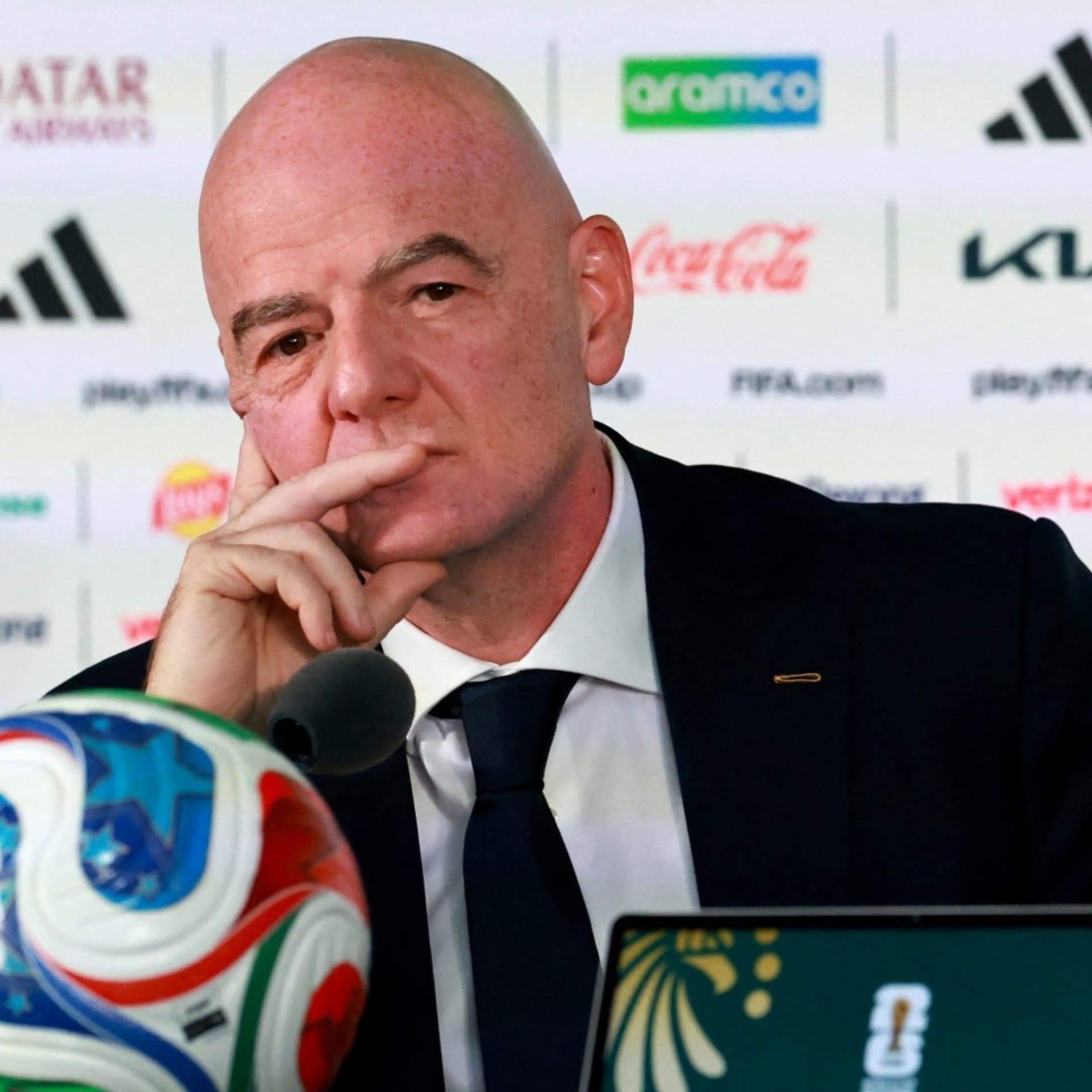
The Global News Podcast brings you the breaking news you need to hear, as it happens. Listen for the latest headlines and current affairs from around the world. Politics, economics, climate, business, technology, health – we cover it all with expert analysis and insight. Get the news that matters, delivered twice a day on weekdays and daily at weekends, plus special bonus episodes reacting to urgent breaking stories. Follow or subscribe now and never miss a moment. Get in touch: globalpodcast@bbc.co.uk Photo: Fifa President Gianni Infantino during World Cup 2026 press conference Credit: Reuters/Henry Romero