
In short
Renewed US-Iran violence in the Middle East, plus other global headlines (Japan earthquake, FIFA World Cup private investment, West Bank settler attacks, France/Spain wildfires, Peru’s new president, and a museum’s viral PR from a bad review).
Guests
None named as guests in this episode. Reporting is done by BBC correspondents and interviewees: Kashyar Janeidi (monitoring US-Iran talks, with Steve Lye), David Willis (Trump-Netanyahu meeting), Jake Kwon (Japan earthquake), Martin Ziegler and Simon Stone/Oliver Conway (FIFA investment plan), Lucy Williamson (West Bank settler attacks), James Waterhouse (Bordeaux wildfires), Mimi Swaby (Peru inauguration), and Rory Sutherland (museum PR interview with Evan Davis).
Key claims/examples
- CENTCOM: IRGC launched ballistic missiles from Iran; all intercepted; IRGC says it struck a US base in Jordan.
- US/Saudi strikes hit Iran-aligned proxies in eastern Iraq; 30 drone attacks in 72 hours.
- Iran media: three oil tankers halted in Strait of Hormuz.
- Japan quake: 13 dead; rescues at a shopping centre; aftershocks and heat complicate shelters.
- FIFA: plan to sell future World Cup revenue shares to private investors; UEFA warns it threatens governance.
- West Bank: UN OCHA says Jewish settler attacks highest on record; BBC reports alleged soldier-settler coordination in Almogaya.
- Wildfires: evacuations near Bordeaux; fires may last months.
- Peru: Keiko Fujimori sworn in; military to lead security in high-crime areas; protests erupt.
- PR example: Bedford Whaling Museum prints a bad review on T-shirts; Rory Sutherland argues “leaning in” can turn ridicule into branding.
Written by AI. May contain mistakes. Listen to the episode to check what was said.
Chapters
Tap a time to open that second in VORenewed Conflict Between the US and Iran
1:24 to 2:05
Discussion on the escalating tensions and recent attacks between the US and Iran.
“It would be private investors coming in, taking a share of the proceeds of future World Cups and you would imagine having a significant influence on how those tournaments were run.”
US Military Response
2:11 to 3:22
Overview of the US military's operations and responses to Iranian attacks.
“And Iranian media is reporting that the Revolutionary Guards have struck and halted three oil tankers in the Strait of Hormuz.”
Diplomatic Talks and Tensions
3:24 to 4:48
Insights into the diplomatic engagements and statements from both the US and Iran.
“The CENTCOM again announced that American and Saudi planes had conducted precision strikes against Iranian proxies in eastern Iraq, accusing them of attacking U.S.”
Netanyahu and Trump's Meeting
4:58 to 7:06
Discussion of the meeting between Netanyahu and Trump amidst the conflict with Iran.
“Kashi Arjaneidi in Washington speaking to Steve Lye.”
Impact of Japan's Earthquake
7:12 to 8:31
Reporting on the devastating earthquake in Japan and the ongoing rescue efforts.
“in Tuesday's powerful earthquake that struck Kyushu Island in the south of the country.”
Preparedness and Response to Earthquakes
8:31 to 11:15
Analysis of Japan's preparedness for earthquakes and current response actions.
“Now, this earthquake, it is still, you know, about 10 ,000 people in the area are still in the shelter.”
FIFA's Plan for Private Investment
11:17 to 13:55
Examination of FIFA's proposal to allow private investments in World Cup tournaments.
“Many football fans already dislike FIFA and its boss Gianni Infantino, not least over the handling of the Men's World Cups in North America, Qatar and Russia.”
Upcoming Topics Preview
14:02 to 14:16
An introduction to various topics that will be covered in the podcast.
“Decontextualised scores are actually quite dangerous.”
Upcoming Topics Preview
15:27 to 15:41
An introduction to various topics that will be covered in the podcast.
“With the new Schwab Teen Investor Account, teens can gain hands-on investing experience and build positive money habits.”
Upcoming Topics Preview
16:18 to 16:49
An introduction to various topics that will be covered in the podcast.
“to create professional quality cookware, knives, and kitchen tools.”
Show all 19 chapters
Settler Attacks in West Bank
16:52 to 17:28
Discussion on the rise of attacks by Jewish settlers on Palestinians.
“the number of Jewish settler attacks on Palestinians in the West Bank, which has been occupied by Israel for almost 60 years, was the highest on record.”
On-the-Ground Report from Lucy Williamson
17:28 to 17:43
Lucy Williamson reports from a Palestinian village experiencing violence.
“which is the most right-wing in the country's history.”
Eyewitness Accounts
17:43 to 19:17
Details of an attack on the Abu Aliyah family home by settlers.
“Israeli settlers have entered the village and surrounded the Abu Aliyah family home, bashing at their gate with sticks.”
Paramedics and Military Response
19:17 to 21:49
Discussion on the challenges faced by paramedics in conflict zones.
“The army is the settlers, but the clothes of them is green.”
Casualties in Settler Violence
21:49 to 22:21
A report on the death of a young footballer during a conflict.
“the body of a 17-year-old footballer, Fadi Hamdallah al-Nassan, was carried through the village for burial.”
Wildfires in France and Spain
22:21 to 24:48
Update on the wildfires affecting large areas in France and Spain.
“Firefighters working through the night to try to tackle wildfires which continue to burn across big areas in both countries.”
Keiko Fujimori's Presidency in Peru
24:48 to 28:00
An overview of Keiko Fujimori's inauguration and policies as president.
“and other parts of southern Europe have become more frequent.”
Political Reactions in Peru
28:00 to 29:07
Learn about the diverse reactions to Peru's new leadership and regional alliances.
“have already started taking the streets.”
The Power of Negative Reviews
29:33 to 32:25
Explore how businesses can leverage negative reviews for branding benefits.
“as to what this says about public relations and branding.”
Transcript
Automatic transcript. May contain errors.0:00This BBC podcast is supported by ads outside the UK.
0:30Washington Wise is an original podcast from Charles Schwab that unpacks the stories making news in Washington right now and how they may affect your finances and portfolio. Listen at schwab.com slash Washington Wise. That's schwab.com slash Washington Wise. This is the Global News Podcast from the BBC World Service. I'm Pete Ross and in the early hours of Wednesday the 29th of July these are our main stories. There's renewed fighting between the United States and Iran. Thirteen people are now known to have died and many are still feared trapped following an earthquake in Japan. Keiko Fuyamori, the latest conservative leader to come to power in Latin America has been sworn in as President of Peru.
1:22Also in this podcast... It would be private investors coming in, taking a share of the proceeds of future World Cups and you would imagine having a significant influence on how those tournaments were run. FIFA comes up with a plan to allow private investment in World Cup tournaments.
1:44At the weekend, President Trump had ordered US forces to stop attacking Iran as talks continued with Tehran. But it appears this was a lull in the fighting, which has now resumed. US Central Command said that Iran had launched multiple ballistic missiles in an attack on American forces, but that all were intercepted. Iran's Revolutionary Guards later said that they had targeted a US military base in Jordan. The US military also said that together with Saudi Arabia, militant groups in eastern Iraq aligned with Iran had been hit. And Iranian media is reporting that the Revolutionary Guards have struck and halted three oil tankers in the Strait of Hormuz.
2:25BBC President's Kashyar Janeidi is monitoring developments. Well, for the first time since Friday, where we witnessed a pause in attacks between Iran and the U.S., it seems again that the Middle East has witnessed renewed violence on Tuesday night. IRGC issued a statement announcing attacks on a U.S. base in Jordan with several ballistic missiles, saying that threats by American officials and illegal interventions against our interests must stop. The CENTCOM, the U.S. Central Command, also issued a statement in which it says, at 5.45 p.m. Eastern Time Tuesday, which is 1.15 a.m. Iran time, Islamic Revolutionary Guard Corps forces launched multiple ballistic missiles from Iran in an attempted surprise attack on U.S.
3:14forces in the Middle East. All Iranian missiles were successfully intercepted. And of course, this is not the only instance of violence reporting on Tuesday night. The CENTCOM again announced that American and Saudi planes had conducted precision strikes against Iranian proxies in eastern Iraq, accusing them of attacking U.S. forces and Saudi energy facilities with drones. They said that in the past 72 hours, 30 IRGC-directed aerial drone attacks have been conducted against these targets in Saudi Arabia. Yeah, Kashia, you mentioned that these strikes come at a time when there had been sort of a pause in fighting so talks could continue.
4:00Any update on where those talks are from the Iranian side? Well, we heard from the U.S. president that there are deep talks between Iran and the U.S. The Iranians say that they had not approached the Americans to ask them for continuation of talks. That's what the Americans were saying. But Iranians are not denying that there have been contacts with the intermediaries. So there is some sort of talks, although the Iranians do say that they have had no direct contact with the Americans. President Trump was saying that the Iranians directly and indirectly had asked for talks. And actually yesterday, on Tuesday, when he was talking about this in an interview with Fox News, he hoped that the talks will lead to an arrangement that Iran will have no nuclear weapons.
4:48Otherwise, he renewed his threats that if that doesn't happen, then the U.S. will attack Iran's pickaxe mountain, as well as bridges and power plants in the country. Kashi Arjaneidi in Washington speaking to Steve Lye. Donald Trump and Benjamin Netanyahu had been the closest of allies with Israel's Prime Minister once describing the US President as the greatest friend Israel has ever had in the White House. But their war against Iran and Israel's war in Lebanon has put a huge strain on the relationship. Mr Trump has admitted to swearing at Mr Netanyahu and calling him crazy. On Tuesday, they met for the first time since the conflict with Iran began, and just hours before, an escalation in the fighting in the Middle East.
5:32Photos of the two leaders in the White House showed them smiling. Afterwards, Israel's Prime Minister had this to say.
5:42I just finished an excellent meeting with President Trump, a conversation with full partnership and mutual support, with an understanding of a shared goal, to ensure that Iran does not have nuclear weapons and other goals as well. One of the best conversations I've had with the President of the United States. The meeting lasted just over an hour. For more on the talks with Mr Netanyahu, here's our North America correspondent, David Willis. The White House said that the meeting between Benjamin Netanyahu and President Trump had gone well, and Mr Netanyahu went further than that. Certainly the Israeli leader seemed to leave the Oval Office convinced that he does continue to enjoy the support of Israel's closest ally, despite those strains that you mentioned, the strains that have arisen in that relationship in the five or so months since the war with Iran got underway.
6:37But whilst Benjamin Netanyahu came here keen to reset, if you like, his relationship with Donald Trump and boost his popularity ahead of national elections in Israel later this year, the two leaders have different goals. Mr Netanyahu is in no hurry, of course, to end the conflict with Iran. Donald Trump, for his part, wants to wind it down as quickly as possible ahead of elections that are due here in November. David Willis. Japan's Prime Minister, Sane Takeichi, says at least 13 people are now confirmed to have died in Tuesday's powerful earthquake that struck Kyushu Island in the south of the country.
7:22At least three of the fatalities were at a shopping centre that was rocked by the quake and a subsequent explosion. And there are fears that more people remain trapped inside the partially collapsed building. Jake Kwon gave me the latest. We have just heard from the Japanese Prime Minister Sanae Dakaichi, and she said that Japan is now in a race against time to save those trapped under the rubble. And she said in the latest briefing that, yes, the death toll is now 13. Many are still missing, especially inside the shopping centre, where we have heard from the eyewitness saying that a strong explosion happened just after the tremor and then the entire second floor had collapsed.
8:04Now, rescue workers have been working overnight digging through the rubble and they brought out eight people. Three of them were declared dead and the others were injured. And they're still making a tally of those who are unaccounted for. Now, about a little further south of that, in the town of Yasashiro, a paper factory, the chimney over there had fell, trapping workers beneath. So the rescue workers are also digging through the rubble, trying to save these people. Now, this earthquake, it is still, you know, about 10 ,000 people in the area are still in the shelter. And they have been experiencing these aftershocks, the tremors, and almost 37 ,000 homes have still lost electricity.
8:46And right now, Japan, as you can imagine, it is very humid, searing heat. And these people don't have the air conditioning. It's a very difficult situation for them. But what the prime minister is saying that, you know, she has deployed 3 ,600 troops to help with the search and rescue and the recovery. And what about the residents of some of the areas which have been particularly badly affected? Has anyone been evacuated? And we've heard about some aftershocks. Are authorities warning that there could possibly be more on the way? Exactly. I think this is the reason why a lot of people are still in shelter, because what the authorities are warning is that, you know, these powerful earthquakes are usually followed by even more powerful one in the days following.
9:30And this is exactly what happened in 2016. You know, many people in Kumamoto area are probably thinking of that devastating earthquake, which killed 278 people. And at that time, the first earthquake was actually the smaller one. And in the next three to four days, there was even more powerful ones that struck these already weakened structures and more devastation happened following. So what the authorities are saying is that these people, the citizens, they need to keep their eyes and ears close to the radio and for any other evacuation orders. And earthquakes are not uncommon in Japan, Jake.
10:08Do we know how prepared authorities were or if there's been any reaction to the response from authorities so far? Well, the authorities have suspended the rail connection and they have, of course, looked into the nuclear power plant. And, you know, thankfully, the nuclear power plant says everything is operating normally. Now, Japan is one of the most earthquake prone country in the world. And they have taken decades to really prepare, make sure all their buildings are earthquake resistant. And if this were in any other country, we would be seeing, you know, huge amount of casualties, as we've seen in Venezuela, where a similar magnitude and similar depth earthquake have struck recently.
10:47But, you know, there is a level of devastation, a level of earthquake so strong that even, you know, no amount of preparation could really prepare for. And this is something that Japan does experience quite regularly. two years ago on the Noto Peninsula, we were there on the ground where more than 200 people were killed and eventually they were saying that with everything, hundreds of people more killed afterwards. But this is something that the government is always preparing for. Jake Kwon reporting from Seoul. Many football fans already dislike FIFA and its boss Gianni Infantino, not least over the handling of the Men's World Cups in North America, Qatar and Russia.
11:27Now it seems the men's and women's tournaments could get even more commercialised after it was revealed that world football's governing body wants to sell a slice of them to private investors. The idea was first reported in the Financial Times and the Times of London, which claims it could potentially earn Mr Infantino himself tens of millions of dollars. Martin Ziegler is the Times' chief sports reporter. It would be private investors coming in, taking a share of the proceeds of future World Cups and you would imagine having a significant influence on how those tournaments were run. FIFA says it wants to grow the game.
12:04Our chief football news reporter Simon Stone told my colleague Oliver Conway more about the plan. Infantino says that on behalf of FIFA he has an obligation to look at any proposal that is put to FIFA that he feels, the FIFA executive feel, will benefit the game globally. In this long statement that FIFA released, they kept referring to the riches that come into football and the fact that everybody should be able to share in this. As part of the pitch, FIFA said all member associations will be able to access up to$20 million to fund development. Skeptics will say that if there's 211 member nations, $20 million is enough to effectively make sure that the vote, when it's eventually held in March at the next FIFA Congress in Morocco, will go Gianni Infantino and FIFA's way.
13:07Now, UEFA, European football's governing body, says this threatens the soul and governance of the game. Can it do anything to stop it? UEFA has 55 votes within FIFA, so it doesn't have a majority. But what it does have is the current world champions. They also have the countries who, in most cases, broadcasters, commercial operations want to be associated with England, Germany, France, all of the European countries as a bloc that is quite a formidable force. And if those countries block together and say we're not going to be part of this, I'm not sure what kind of competition FIFA would have to sell.
13:55But that feels like a pretty nuclear option. Simon Stone.
14:02Still to come in this podcast. Decontextualised scores are actually quite dangerous. Anybody's allowed to complain about a business, but businesses aren't really allowed to complain about their customers. And 5 % of customers are mad. How a museum made the most of a terrible online review.
14:28The U.S. Virgin Islands invites you to discover the stunning beauty of St. Thomas, St. Croix and St. John. The U.S. Virgin Islands is truly a magical place, one of a kind and unlike any other destination, With incredible food, warm hospitality, vibrant culture, and breathtaking beaches. It's everything you could want in a vacation. And the best part? No passport is required when traveling from the U.S. No hassle, just easy travel. Whether it's the world-famous Trunk Bay in St. John that was voted the best beach in the world, the picturesque Megan's Bay Beach, or the stunning Point Udall, America's easternmost point, USVI will take you to a place that no other Caribbean destination can match.
15:11For most, the U.S. Virgin Islands is just a quick nonstop flight or a simple connection away. Start planning your getaway to America's Caribbean at visitusvi.com. That's visitusvi.com. USVI, naturally in rhythm. With the new Schwab Teen Investor Account, teens can gain hands-on investing experience and build positive money habits. It's an account co-owned by you and your teen, so you can monitor and engage with the account while your teen learns how to invest and manage money. Learn more at Schwab.com. Hey, it's Ryan Seacrest for Jewel Osco. Take care of yourself this summer and stock up on some tasty nutrition essentials.
15:49Now through August 25th, shop in-store and online to earn four times the points on items like Cliff Bars, Power Crunch Bars, RX Bars, Boost Protein Shakes, 5-Hour Energy, Vital Proteins, Collagen Peptides, and Optimum Nutrition Whey Powder. Points can then be used for discounts on future groceries or fuel purchases. Offer ends August 25th. Restrictions apply. Offers may vary. Visit Jewelosco.com for more details. This podcast is sponsored by Made in Cookware. Made In partners with multi-generational artisans and some of the world's best chefs to create professional quality cookware, knives, and kitchen tools.
16:26Their products are trusted in Michelin-starred restaurants worldwide and designed to perform just as well in your kitchen. From five-ply stainless clad to carbon steel, every piece is built to last and made to actually make you a better cook. Discover award-winning cookware at MadeInCookware.com.
16:49This is the Global News Podcast. The UN's Office of Humanitarian Affairs has said that last month, the number of Jewish settler attacks on Palestinians in the West Bank, which has been occupied by Israel for almost 60 years, was the highest on record. The office said there were an average of six attacks per day, causing casualties or damage to property. These have risen along with an increase in settler outposts, which are illegal under both Israeli and international law. But Israelis who monitor these say that more than 230 outposts have appeared across the West Bank under the current government in Israel, which is the most right-wing in the country's history.
17:30Our Middle East correspondent, Lucy Williamson, sent this report from the West Bank.
17:39It's Saturday morning in the Palestinian village of Al-Muraya in the occupied West Bank.
17:47Israeli settlers have entered the village and surrounded the Abu Aliyah family home, bashing at their gate with sticks. The Israeli army is in the streets. Residents are blocking roads and running from their jeeps. We've just heard two shots fired from down below in this village. The army and the settlers are both down near the Abu Aliyah house. The mosque is calling on people to come and protect the families.
18:25From inside the Abu Aliya compound, family members film scowling teenagers smashing the metal gate. Again and again with large sticks. Israeli soldiers stroll up and gently move the settlers away. but there's no attempt to question or detain them or even to confiscate their clubs.
18:51Rafiq Abu Alia was inside the house during the attack. He told me settlers had come in the morning, some of them armed, and that Israeli soldiers accompanying them had entered the family house and beaten people inside. Israel's army said it had entered a house to arrest suspects throwing stones and was investigating claims of violence against Palestinians. Many Palestinians here say Israeli soldiers often support settlers during attacks. The army is the settlers, but the clothes of them is green. You're saying that the soldiers and the settlers are the same? Are the same. Abu Wahid is a member of the village council.
19:34How often do the settlers come here to Almagaya? Every day. Every day. here and here and here and here and with the army and with the cars of the army. One Israeli soldier who served in the West Bank recently said extremist settlers saw him as the enemy for not supporting their attacks. He's asked us to hide his identity. There are teenagers there, look at you with hate. There was one who told us, I will put a bullet in your head. It's clear that it's not just few radical teenagers. In the Palestinian faces, I saw only fear, and I never saw any fear on any Jew that lived there.
20:23Witnessing settler attacks firsthand can be difficult. As we approached the Abu Aliya house that day, soldiers appear in the road, meters ahead. You see the soldiers? It's pointing, it's pointing. One raises a weapon. Israel's army said it was responding to reports of a confrontation between Palestinians and Israeli civilians in Almogaya that day and that masked Palestinians had later used slings to hurl stones at soldiers. It said forces fired at a suspect and that a hit was identified. Shall we just check with the ambulance what's going on? Arriving to reports of an attack here the previous day, We met a paramedic with the Palestinian Red Crescent who said Israeli forces had blocked his ambulance from reaching the scene.
21:13Yesterday they turned off two ambulances and took the keys from them. If they tell us to stay there, we have to stay there and wait, regardless of the situation. How often does that happen? I mean, it's daily. It's something that we face all the time, the ambulance. How often do you come here to Al-Mahaya? I mean, we can say every Friday, maybe. It's something weekly. The Israeli military didn't respond to our question about this.
21:48A week after we left Al-Moghaia, the body of a 17-year-old footballer, Fadi Hamdallah al-Nassan, was carried through the village for burial. Shot with a fragmenting bullet, doctors said, during the confrontation at the Abu Aliya house. This is what passes for a normal weekend now, in villages across the West Bank.
22:13That report from Lucy Williamson, and you can watch her full documentary on the BBC News YouTube channel. It's become a familiar theme across France and Spain in recent days. Firefighters working through the night to try to tackle wildfires which continue to burn across big areas in both countries. There has been progress in containing some of the fires, but with another heatwave expected on Wednesday, there are fears that further outbreaks will put the authorities in both countries under even more pressure. In France, emergency workers are still trying to bring under control a huge blaze close to the city of Bordeaux in the south-west.
22:53Many businesses and schools are closed. Our correspondent James Waterhouse is there and gave me this update. We're on the outskirts of Bordeaux. We travelled around 10 kilometres from here towards the wildfires themselves and that journey sees the roads gradually drain of traffic and the airfield with smoke. I mean, we could see emergency teams driving at speed. We had our IDs checked because the police are trying to make sure people stay away. 4 ,000 more people were evacuated along the coastline and we've met people on the fringes of Bordeaux who are anxious about being forced to do the same.
23:29Now, some good news, 60 ,000 people have been told they can go back, but that's only really around the city. The area outside is still very much unsafe. And those tens of thousands of people that haven't been allowed to return to their homes, what's happening to them? There are evacuation centres in the centre of Bordeaux. There are bunk beds, there are people with packed suitcases, suitcases, belongings, pets in cases. It's an incredibly anxious time. The messaging today from the officials is that they have the fires under control. I mean, it's very smoky today, and it's at the mercy of the unpredictable Atlantic winds.
24:07But if the wind was to blow in the wrong direction, of course, that would have further implications for Bordeaux and its residents. What strikes you is just the scale of the thing. I mean, we're seeing thousands of firefighters try to take on the flames. They're being supported by mostly farmers who are trying to refill water tanks and load up fire trucks before they make their way back to the fiery front line. I mean, it's a huge community effort here, and I think people are gradually processing that this is a battle with fires that are expected to last months. And, you know, France, Spain, after everything it's gone through, its European neighbours, they now know that more moments like this lie ahead.
Read the full transcript
24:43And these wildfires are something that people in this part of France and Spain and other parts of southern Europe have become more frequent. But you say yourself that this is something that they're going to be battling not just for weeks but for months, and that's pretty unprecedented. The duration of these wildfires certainly feels new. I think there's been a direction of travel for some time with wildfires happening earlier in the year and scientists are saying they're only going to become more intense. I mean, many in Bordeaux remember an intense fire in 2022. There are a lot of political frustrations where they say, you know, lessons haven't been learned.
25:16And I think a lot of people are frustrated that more defensive measures weren't put in place. This is part and parcel of a European summer. And, you know, we're seeing wildfires closer to the French capital, Paris. You know, they're not just limited to southern France anymore. So they're no less devastating, they're no less disruptive, but they are going to become more common. James Waterhouse near Bordeaux. And now to Peru.
25:45That's music from a ceremony as Keiko Fuyamore arrived at the government palace after being sworn in as Peru's first elected female president. She's the latest conservative leader to be elected in Latin America. A number of them were at the ceremony in Lima. In her speech, Keiko Fuyamore said the military would be deployed in areas where crime, drug trafficking and illegal mining are rife.
26:11During states of emergency, the armed forces will temporarily take the lead in security operations and internal control, in close coordination with the national police, until state authority is fully restored and those territories are returned to the citizens. I heard more from our global affairs reporter Mimi Suebi. So in her first address as president, Keiko Fujimori said she'd received Peru in a catastrophic condition, but she did say the country had infinite potential and undo all the damage that she said had been done by an unorganized government, heavily emphasizing her hard campaign against insecurity, especially in organized crime.
26:52She announced that the military would take charge of maintaining order in areas with high crime. Now, that is a statement that echoed back to the role of the military under her father, Alberto Fujimori, who's actually jailed for corruption and crimes against humanity in the fight in what he called was against rebel groups in the 1990s. Now, that will worry quite a few people, but it does kind of outline what a strong start she's taking. And she's promised this all the way through her campaign. She said that she's going to fight crime. She's going to tackle the weak economic growth that Peru is suffering and the political instability that has been an ongoing thing for Peru now for a decade.
27:26Has there been any reaction yet to this pretty strong opening statements from the president? As you probably can imagine, there have been two very different reactions on the scale of extremities. Her supporters lapped it up. They were cheering, clapping, kind of saying this is what Peru needs. And as Fukimori said, Peru has the highest inequality rate in Latin America currently. So her supporters, on one hand, were very excited by this, really kind of getting behind the new leader as she made the speech. However, on the flip side, the opposition and people who aren't in agreement with these very strong policies have already started taking the streets.
28:03Hundreds of protesters marched through Lima protesting against their new leader. So as you probably can imagine, they're two very different reactions. Also, she has a lot of regional alliances as well. It was very interesting to see that many familiar faces, right-wing leaders were present at the ceremony. There was Argentinians, Javi Malay, Chile's recently elected president, José Antonio Cast, as long with a whole other kind of array of faces, the Spanish king as well. He also was quite a prominent feature in it. But that kind of support from day one is really publicly emphasising that there is a lot of effort going with Peru, Bolivia, all these right-wing countries in Latin America to strengthen that conservative collaboration in the region and really form a pact where all these countries will have similar policies, kind of uniting together and create one kind of mega policy, so to speak, many of whom, like I said earlier, are inspired or kind of based off or featured around the US policies implemented by Donald Trump.
29:08Mimi Swaby. These days, online reviews can be crucial for a business. Receiving too many dreaded one-star reviews can spell disaster, putting off potential customers. But a museum in the US has made the most of a terrible review. Instead of simply ignoring the criticism, staff at the new Bedford Whaling Museum printed it on a T-shirt, and sales are now booming. Evan Davis spoke to the advertising executive, Rory Sutherland, as to what this says about public relations and branding. In some ways, you can benefit enormously from negative reviews from ridiculous people. It's difficult to tell in this case whether that was meant ironically or whether it was serious.
29:50I actually think the worst aquarium ever is a joke, I'm sure. I think it's a deliberate joke. I think it's a joke. My favourite and maddest review of all time, which I discovered myself by accident, was a three-star review of an extremely eminent Los Angeles oncologist, which simply said, three stars, parking very difficult. The idea that someone who might be helping cure you of cancer gets marked down for the poor parking facilities seems ridiculous. The message is you can lean into those reviews if you get one of those bad reviews. If it's almost comically bad, you lean into it and then people feel more on your side than on the reviewer's side.
30:29Oh, no, there are cases of pubs which leave negative reviews on a kind of sandwich board outside, simply because, you know, if it's completely ridiculous or if the person has obviously got the wrong end of the stick. There are, of course, famous reviews of, you know, the Great Pyramid of Cheops, which just say, it's just a pile of old stones, I don't understand what all the fuss is about, and so on. And so I once chose a hotel in Italy on the grounds that it had quite a lot of negative reviews from ridiculous people. And it struck me that this was making the hotel considerably cheaper than the hotels nearby because it only scored a 3.8.
31:05And when I looked at the reviews, there were reviews from Americans saying things like, you open your room door with a big brass key, not with a card. And I'm going, it's a 17th century Tuscan farmhouse. This seems only appropriate. And there's a famous collection online of these. It's difficult, by the way, because in a way, the act of aggregation of scores loses quite a lot of the data. And I once stayed in a hotel in East Berlin where it was a former police station in East Berlin. The rooms were in the cells. They were tiny. And there was one black and white television in the room which only showed the big Lebowski on continuous loop.
31:43Now, I love this place. Now, in fairness, if you'd turned up expecting the Marriott, you would have been incandescent. OK, so one of the things to remember is that people's enjoyment of things is often a product of their expectation, as much as it is of any objective reality. But actually, what it tells you is, don't look so much at the average stars. Just read a few of the reviews, and you'll very quickly see if there's some feature that everybody hates. And you can see through all the kind of nonsense to some extent, can't you? I agree that decontextualised scores are actually quite dangerous.
32:17Anybody's allowed to complain about a business, but businesses aren't really allowed to complain about their customers and 5 % of customers are mad. Advertising executive Rory Sutherland. And that's all from us for now. If you want to get in touch, you can email us at globalpodcast at bbc.co.uk. You can also find us on X at BBC World Service. Use the hashtag Global News Pod. And don't forget our sister podcast, The Global Story, which goes in-depth and beyond the headlines on one big story. This edition of the Global News Podcast was mixed by Mark Pickett and the producer was Mzaffar Shakir. The editor is Karen Martin.
32:57I'm Pete Ross. Until next time, goodbye.
From the publisher
US targets militant groups in eastern Iraq aligned with Iran, in strikes co-ordinated with Saudi Arabia. It comes after Iran said it targeted a US military base and command centre in Jordan with ballistic missiles. Also: Donald Trump meets Benjamin Netanyahu in Washington for the first time since the conflict with Iran began; the death toll mounts in Japan's earthquake; FIFA boss, Gianni Infantino, criticised for commercialising football; Jewish settler attacks on Palestinians in the Israeli occupied West Bank reach a record high, according to the United Nations; Keiko Fujimori is sworn in as Peru's first elected female president; and a museum in the US makes the most of a terrible online review.
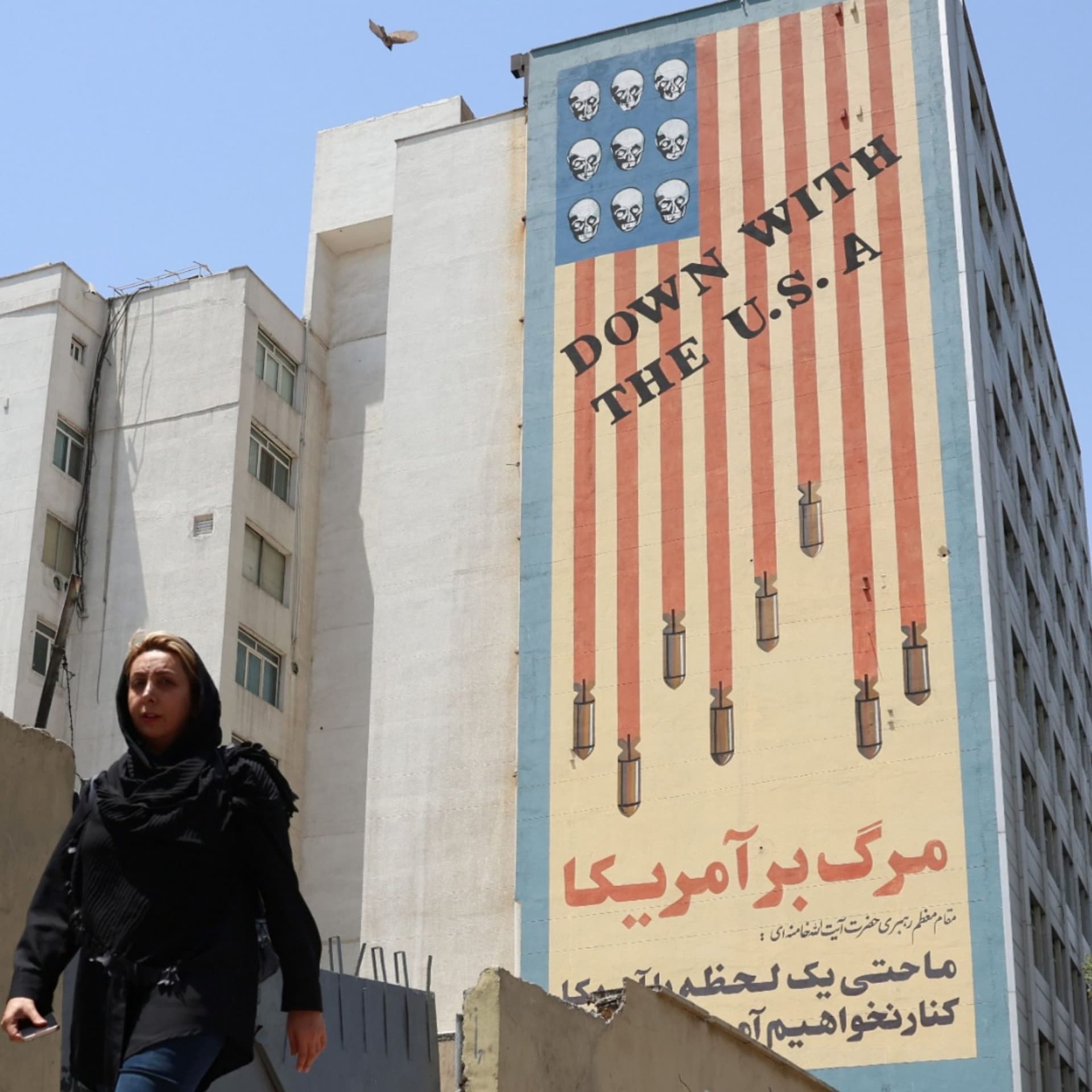
The Global News Podcast brings you the breaking news you need to hear, as it happens. Listen for the latest headlines and current affairs from around the world. Politics, economics, climate, business, technology, health – we cover it all with expert analysis and insight. Get the news that matters, delivered twice a day on weekdays and daily at weekends, plus special bonus episodes reacting to urgent breaking stories. Follow or subscribe now and never miss a moment. Get in touch: globalpodcast@bbc.co.uk Photo: An Iranian woman walks near an anti-US mural in a street in Tehran. Credit: Abedin Taherkenareh/EPA/Shutterstock