
In short
Global News Podcast roundup focused on (1) five men arrested in the UK over suspected explosives/terrorism plot targeting RAF Fairford, a US military staging base; (2) intensifying Yemen fighting near Taiz as Houthis advance toward the Bab al-Mandeb Strait; (3) Ireland beating Israel 3-0 in a Nations League match amid Gaza-related controversy; (4) Venezuelan protests demanding return of exiled opposition leader Maria Corina Machado; (5) South Africa mass shootings; (6) Russia’s forest history winning a major literary prize; (7) Route 66 centenary tourism and nostalgia.
Guest backgrounds
No podcast guests named; reporting is by BBC correspondents (Nick Miles; James Lander; Nawal al-Maghafi; Kevin Sharkey; Will Grant; Thomas Mukwana; Owen Bennett-Jones; Victoria Craig; Ambrasan Etta Rajan).
Key claims & notable examples
UK arrests followed a public report of three vans; Iran and Russia are discussed as possible threat sources. Yemen: Houthi advances and a naval blockade threaten oil flows; Taiz fighting displaces 100,000+. Ireland-Israel: Ireland players protested (black armbands; no handshakes) yet won 3-0. Venezuela: Machado supporters cite multiple denied return attempts; Delcy Rodriguez promised elections without dates. South Africa: 27 killed across two bar/venue shootings. Russia: Sophie Pinkham’s The Oak and the Larch won the Pushkin House Book Prize. Route 66: centennial boosts motel/museum sales; heritage tourism research estimates up to $450,000 per mile annually.
Written by AI. May contain mistakes. Listen to the episode to check what was said.
Chapters
Tap a time to open that second in VOMain Stories Overview
1:18 to 2:18
Explore the latest news including arrests in terrorism plot and international conflicts.
“I'm Nick Miles, and in the early hours of Monday 28th September, these are our main stories.”
Terrorism Plot in the UK
2:18 to 3:23
Details on the arrests related to a suspicious plot near a military base.
“As the famous road celebrates its centenary, we take a ride down memory lane.”
Threats from Iran and Russia
3:23 to 4:52
Analysis of potential threats from Iran and Russia regarding military activities.
“Our diplomatic correspondent James Lander told us more about how this story unfolded.”
Houthi Advances in Yemen
4:52 to 6:00
Report on the escalating conflict in Yemen and its global implications.
“We know that Russia has been threatening to step up its hybrid activity and attacks against NATO countries.”
Human Cost of the Yemeni Conflict
6:00 to 8:23
Story of the humanitarian impact of the Yemeni conflict through personal accounts.
“and her team are the first international news organisation to reach Taiz since those Houthi advances.”
Ireland vs. Israel Controversy
8:23 to 9:30
Discussion on the controversial UEFA match between Ireland and Israel amidst political tensions.
“And now I'm alone, out here in the cold.”
Match Overview and Reactions
9:30 to 12:02
Insights into the match dynamics and players' responses to the surrounding controversy.
“in honour of the tens of thousands of mainly Palestinians who've been killed in the conflict.”
Avalanche in Nepal and Rescue Efforts
12:02 to 14:00
Coverage of the devastating avalanche in Nepal and ongoing rescue operations.
“not to sell any tickets for the match, so that ruled out Republic of Ireland supporters.”
Impact of Monsoon Season on Communities
14:00 to 14:50
Learn about the devastating effects of the monsoon season in various regions.
“So the rescue effort will continue on Monday morning.”
Detox Trends and Health Insights
14:50 to 16:37
Explore the reasons behind the popularity of detox trends in society.
“of people who are being politically repressed by the government moving deeper into the forest in order to evade political control.”
Show all 17 chapters
Protests in Venezuela: Support for Machado
18:41 to 21:18
Discuss the protests in Venezuela and the support for exiled leader Maria Corina Machado.
“waving giant flags and banners in support of Ms Machado.”
Violent Incidents in South Africa
21:18 to 23:19
Examine the recent mass shootings in South Africa and their implications.
“less prone to some of these shocking moments that Venezuelans have been through this year.”
Gang Violence and Murder Rates in South Africa
23:19 to 24:29
Insights into the high murder rates and gang violence challenges faced in South Africa.
“The BBC's Thomas Mukwana gave us more details about these shootings.”
Literary Significance of Forests in Russia
24:29 to 28:00
Discover the cultural and historical importance of forests in Russian literature.
“and gang activity that the police there found hard to end thomas mcwana a book about the centrality of the forest in Russian culture has won a prestigious British Literary Award.”
Stalin's Plan for Nature and Route 66 Introduction
28:00 to 28:54
Learn about Stalin's environmental initiatives and an introduction to the iconic Route 66.
“And part of that plan was in fact to plant large numbers of trees in order to protect Russian land from what were imagined as the uncivilized Central Asian steppe winds and thereby help agriculture.”
The Nostalgia of Route 66
28:54 to 31:01
Discover how Route 66 has shaped American culture and its modern significance.
“The highway weaves its way through towns all the way from Chicago to Los Angeles and helped create the classic American roadside economy with all its diners, neon signs and quirky motels.”
The Economic Impact of Route 66
31:01 to 32:51
Explore the economic benefits of Route 66 and its historical context during the Dust Bowl.
“During the depths of the Great Depression in the 1930s, an environmental disaster known as the Dust Bowl swept through America's southern plains.”
Transcript
Automatic transcript. May contain errors.0:00This BBC podcast is supported by ads outside the UK.
0:30we do the things we do, and how to make better choices to help avoid costly mistakes. Each episode covers the latest research in behavioral science and dives into themes like the power of self-control, shaping your mindset for success, navigating new beginnings, and why starting over can feel so hard. Listen to choiceology at schwab.com slash podcast, or wherever you listen. Odoo, providing tools for businesses across industries into one fully integrated platform. Whatever your business needs, Odoo is committed to providing it. Learn more at odoo.com. This is the Global News Podcast from the BBC World Service.
1:18I'm Nick Miles, and in the early hours of Monday 28th September, these are our main stories. Five men are arrested in Britain on suspicion of explosives and terrorism offensive after suspicious vehicles were reported near an airbase used by the US military. We have an exclusive report from Yemen where fighting is intensifying as Iranian-backed Houthis continue to advance on the key city of Thais. And politics and sport collide as Ireland's football team beats Israel in a match overshadowed by the Gaza conflict. Also in this podcast, Venezuelans take to the streets demanding the return of the opposition leader Maria Corina Machado.
2:02Will she ever be allowed backing? And the early days of Route 66 are not a fun story. Where people really want to talk about it is that post-war, that open road represented freedom and Route 66, it just kept reinventing itself. As the famous road celebrates its centenary, we take a ride down memory lane.
2:27Speculation is growing over who was behind an attempted attack on an Air Force base here in the UK, which is also used by the US military. Five men have been arrested on suspicion of explosives and terrorism offences after suspicious vehicles were reported near the base in rural England. Earlier this year, the British government gave US warplanes permission to use RAF Fairford as a staging post for strikes on Iran. Donald Trump praised British police for arresting the five men. Working with Britain, it was an amazing job. We had them under investigation. They were looking to do big damage to our fort.
3:07And working with the British worked out great. It may have been Scotland Yard. I don't know. We worked with a lot of them. We had them under view for a long time and we got them. Well, despite President Trump's claims that the men were under view for a long time, Local police have said the arrests occurred after a member of the public contacted them. Our diplomatic correspondent James Lander told us more about how this story unfolded. Well, it began with a telephone call to the local police in the early hours of the morning from a driver passing by who saw these three vans parked in a strange way and alerting the authorities, and then it followed from there.
3:47It is a global story simply because this kind of threat against military infrastructure across Europe is now something that is forming a pattern. The idea of hostile activity spilling out of conflicts around the world back to European capitals and countries, back even to the United States. So the interesting question will be, what was the threat? Where did these men come from? Because at the moment, there's an awful lot of information we don't know. We know that the Iranians have directly threatened the British authorities for allowing the Americans to use the base. There was a formal statement by the Ministry of Foreign Affairs in Tehran in July making that threat.
4:26We also know that in the last few days, the UK Foreign Secretary, Ed Miliband, met the Iranian Foreign Minister, Mr. Raggi, and explicitly warned him against the hostile activity of foreign states in the UK and reinforcing UK resolve against such threats. So, you know, the idea of Iran being a potential line of inquiry for this investigation is clear and it's obvious. Some people are looking to Moscow. We know that Russia has been threatening to step up its hybrid activity and attacks against NATO countries. The Danish intelligence warned about that only a few days ago. Germany has now formally blamed Russia for a drone attack against Leipzig airport.
5:10And we know that the Russian embassy in London over the summer formally warned the UK of an increasingly higher price that it would pay for its support for Ukraine. So that might be a line of inquiry too. James Landau. Earlier this month, Houthi fighters made dramatic advances against government forces, taking control of hundreds of kilometres of Yemen's coastline close to the Bab al-Mandeb Strait, declaring, as it did so, a naval blockade for Saudi shipping. That's of huge concern around the world because the Houthi advances mean they can threaten the millions of barrels of oil that flow through the strait every day.
5:49Yemeni government forces are now pushing back. Fighting is intensifying around the city of Taiz. Our senior international investigations correspondent, Nawal al-Maghafi, and her team are the first international news organisation to reach Taiz since those Houthi advances. She travelled with government forces to one of the closest positions to the Houthis. Locked and loaded, the Yemeni troops are heading for battle, unsure of whether they'll return. They're taking us with them through the valleys of Taiz. It's not long before we're confronted with the reality of this war. The sound of artillery echoes from afar, but the threat is very close.
6:34Head to deck, head to deck. Go, go, go. We can hear a drone above and we've been told that it's a Houthi drone, so we're just taking cover. Go up the pathway there and come straight down to the road to the cause.
6:55As we're leaving, we came across Ali, who's chosen to stay. He fears what would happen if the Houthis take over, and they're getting close. It's terrifying, but we can't afford to leave our home. Have they ever bombed close to your home? Yes, the shells fell here down the valley, behind the school. Aren't you afraid that any day they might take this area while you're here? It's in God's hands. Nestled in these mountains, the Houthis lie in wait. Their recent capture of Mokka and the Bab al-Mendab Strait has transformed this battle. Now they're pushing inland towards Ta 'ez. If this city falls, their grip on the western coast will be much harder to reverse, and this war will be felt far beyond Yemen.
7:49The latest fighting has displaced more than 100 ,000 people to places like the El Muni camp around 20 kilometres from the front line. In just 10 days, 200 families arrived. Most of them had been displaced before. It took Fatima two days to get here from Muqqa. As the fighting closed in, her sons were forced to make an impossible decision, leaving her behind to save their children. I lost my sons. I don't know where they are. And now I'm alone, out here in the cold. The human cost doesn't end there. Racing towards the city, one ambulance after another. 24 casualties within 24 hours, to this hospital alone.
8:39We've just been told that a 12-year-old girl was brought here two hours ago because she was hit by shrapnel. This war is costing lives and it's not just militants, it's civilians too. Rana lies here alone. She was at home when the mortar hit. But Yemen's battlefield doesn't have boundaries and this war has a way of finding those who never chose to be a part of it. Nawal al-Maghafi reporting. Ireland has beaten Israel 3-0 in a hugely controversial UEFA Nations League match that took place in Hungary. The game almost didn't go ahead because of opposition to Israel's war in Gaza, but after days of intense discussions, most of the Irish football squad agreed to take part.
9:27The goalkeeper, Gavin Bozzunu, refused to play and the rest of the team wore black armbands in honour of the tens of thousands of mainly Palestinians who've been killed in the conflict. Before the match, the Israeli Football Association insisted that politics and sport should remain separate. Our sports correspondent Kevin Sharkey was at the match and he told me more about the drama in the build-up to the game. The lead-up to this match was shrouded in controversy. There was a clamour back home in Ireland for the footballers of the Republic of Ireland not to participate in this match for weeks and indeed months beforehand ever since the two sides were pitted together in this tournament.
10:06Came to a head on Saturday when the Republic of Ireland delayed a press conference and delayed training as the players deliberated. They ultimately decided to play the match and it wasn't an easy decision. A vote had to be taken among players. One player left the squad because of the controversy and the Republic of Ireland players came. They gave an emphatic performance and they won 3-0. So perhaps from their point of view, there will at least be some vindication in their decision to go ahead and play the match. But notwithstanding that, the controversy leading up to this match will not have gone away because there are still very many fans of the Republic of Ireland who believe they should not be playing Israel under any circumstances.
10:52Kevin, tell us how the match actually went. Was it tense at times? That was what was particularly noteworthy about the match. There was none of the tension we had leading up to the match in the actual match itself. On the field of play, it was very much a normal football match, played in good spirits. There was one particular flashpoint, but it was over almost before it began. And from a footballing point of view, it was a competitive match, notwithstanding the fact that the Republic won by three goals to nil. It was played in a good spirit. But of course there were matters before the match where some traditional protocols were not adhered to.
11:33The Irish camp bowed their head during the playing of the Israeli national anthem. There were no handshakes between the captains before the match and there were no traditional penance exchanged before the match. So it was clear that the Irish players, having decided to play the match, they still wanted to register their protests before the match and before kick-off. and they did. And Kevin, the ground itself was relatively empty. Was that perhaps due to the controversy surrounding the match? Well, the Football Association of Ireland had decided not to sell any tickets for the match, so that ruled out Republic of Ireland supporters.
12:09Israel had sold about 150 tickets, but bizarrely there were also at least a couple of dozen Republic of Ireland fans who somehow found the wherewithal to find tickets and it was quite remarkable because the stands were by and large empty, but for the 150 Israeli fans in one small section, and then a couple of dozen of Irish fans 50 metres or so apart, and the small number of Irish fans were making quite a noise. But also the Israeli fans, they were very vociferous in terms of supporting their team. Kevin Sharkey. Israel and Ireland are set to have a rematch next week. A month on from catastrophic floods in Nepal.
12:55Twelve climbers and support staff are missing after an avalanche hit a Himalayan mountain on Sunday morning, blanketing the base camp of Himlung, Himal, near Nepal's border with Tibet. Our global affairs reporter, Ambrasan Etta Rajan, has the details. A foreign team is expected to come in the first week of October. So this team was sent, all of the Nepali nationals, to prepare the base camp, maintain the route and also fix the rope all the way up to the peak. There was a huge avalanche that basically, you know, a blanket of thick snow fell on this base camp. And according to several expedition teams, up to 14 people are said to be missing.
13:38The rescue team was rushed from the Kathmandu immediately. And now what we understand, according to various Nepali media reports, that they had recovered some bodies, but the condition of other missing climbers and support staff, it's not very clear. At the same time, some of the rescue team members contacted the teams in Kathmandu saying probably four to five metres of snow in parts of the base camp they could see. So the rescue effort will continue on Monday morning. This is the annual monsoon season. Heavy rains are not uncommon, but it came after this flash-flash that swept through villages and towns about a month ago, killing at least 1 ,400 confirmed dead and nearly 6 ,000 missing.
14:21And again, on the Chinese side, on the Tibetan side, about 200 to 300 people are still missing. And following that, the monsoon rain started. Even in the past few days, several houses were damaged. At least seven to ten people are reported to have been killed in this latest round of reigns. Ambrose Aneta Rajan. Still to come in this podcast. There's a very long history continuing up to the present of people who are being politically repressed by the government moving deeper into the forest in order to evade political control. How a book about trees in Russia has picked up a special literary award.
15:10Do we all need to be detoxing ourselves? Before I go asking, how can I detox? I have to look inward. Okay, what am I doing? Can I identify at least three ways that my body detoxes and ways to support that? I promise if my message was more dramatic like that, I would have millions of followers and make millions of dollars. But I cannot sleep at night trying to sell someone something that their body already does naturally. We're living in a crazy world now. I think it's a lot of people fear a lack of control. And as a result of this, this is the way of them trying to make sense of the world and try to take control over their own bodies.
15:46So by actively doing something, I'm going to detoxify things. Therefore, I'm going to feel better, I think is absolutely one of the reasons that detoxifying has become so popular. Listen to the full episode of Health vs. Hype with the American Medical Association on the iHeartRadio app, Apple Podcasts, or wherever you get your podcasts.
16:28No matter your goals, investing style, life stage or experience, Schwab has everything you need, all in one place, so you can invest your way. Visit schwab.com to learn more. This is Steve Covino from Covino & Rich. All right, quick round of trivia before we get back into the show. But we're doing it differently this time. Every guy listening right now, you're a contestant. No buzzers, no calling in. Just answer honestly to yourself. Here we go. You got a belly and a little chest that won't go away no matter what you try. Gassed by the middle of the afternoon, no drive left in the tank, and lastly, you lack that confidence and mental edge.
17:05Fellas, here's the thing. Those are classic signs that your testosterone's been sliding. And nothing drags it down faster than extra weight. The good news? Emerging research suggests that getting rid of it may actually be more effective than TRT. So why not take matters into your own hands? Strip off the weight that tanks your testosterone with Bioma GLP-1 Booster. Every serving is packed with science-backed and third-party tested ingredients that crank up your natural GLP-1 production. So you can enjoy a leaner physique, surging energy, and increased drive. Visit bioma.health slash GLP-1 and use code CRSHOW to get 15 % off your first order.
17:43That's bioma.health slash GLP-1, code CRSHOW for 15 % off. choiceology an original podcast from charles schwab is a show about the psychology and economics behind our decisions join host katie milkman an award-winning behavioral scientist and author of the best-selling book how to change as she shares true stories from nobel laureates authors athletes and everyday people about why we make the choices we do and how to make better ones to help avoid costly mistakes listen to choiceology at schwab.com slash podcast or wherever you listen.
18:24This is the Global News Podcast. Protests have been held in Caracas and other parts of Venezuela, demanding the return of Venezuela's exiled opposition leader, Maria Corina Machado.
18:40Well, that is the sound of dozens of motorbikes and cars full of demonstrators waving giant flags and banners in support of Ms Machado. She left Venezuela secretly nine months ago to accept her Nobel Peace Prize award. Her supporters say she's tried seven times to return since then, but not been allowed back into the country. So, with elections promised by the country's interim president, Delcy Rodriguez, how much broad support is there for Ms Machado to come home? A question I put to our Latin America correspondent, Will Grant. Protests like this one tell us about two key elements of the complaints of the demonstrators.
19:18The first is, as you say, the support that still exists for Maria Corina Machado. The hopes of the opposition supporters in Venezuela are really pretty much solely pinned on her as an individual, that she seems like the person who would be president, and they want to see that happen. We've known that she has support, and that support remains. And I think that's what that demonstration does. It shows that it is still there. But of course, the other thing that it does is show the rejection of Delcy Rodriguez, the interim president, and her burgeoning relationship with Donald Trump. There was no coincidence that Delcy Rodriguez was meeting with Donald Trump as Maria Corina Machado was unable to return to Venezuela for what we understand were the fifth, sixth and seventh attempts this year.
20:04So she's been attempting via sea, via air. She's constantly turned back. One thinks, given the key control that Washington continues to exert over Del Cid Rodriguez, her administration and Venezuela as a whole, there's clearly resistance coming from Washington as well as Caracas. And I think that that is partly what these protesters were saying. You know, not only do we want Maria Corina Machado to come home to Venezuela, we want an end to this relationship, which they see as simply the remnants of the Maduro regime in bed now with the Trump administration. Having said that, there must be people in Venezuela, Will, who see the relative economic stability returning to Venezuela under this relationship between Delce Rodriguez and President Trump and say, well, this is the situation.
20:54We don't want to rock the boat now. I think you're right. I think the problem is, though, that that pragmatism perhaps comes from a sense of stability, not necessarily economic stability, because the country's economy is still in difficulties. It's not fixed yet, but there is more calm in the international relationship with the most powerful nation in the hemisphere, that things feel more stable, less prone to some of these shocking moments that Venezuelans have been through this year. Now, several days ago in New York at the United Nations, Delcey Rodriguez promised elections. She didn't say when they would take place.
21:30What is your assessment as to when and if that will happen? It's hard to read that one, isn't it? My feeling is that this is simply something that the Trump administration needs to now be bringing to bear on Delcey Rodriguez and her administration, that they can't simply continue to work with her with absolutely no movement towards free and fair elections as pushed for by the diaspora community in Florida, which are so influential in terms of Donald Trump's support in that state. And more broadly, the Trump administration has sent in troops to remove Nicolas Maduro from power and seems so comfortable working with his vice president.
22:07That only gets them so far, I think. And Marco Rubio, the Secretary of State, has been quite clear about that. They've basically said, look, they don't consider Venezuela to be ready yet, as Donald Trump put it. Ultimately, Delcy Rodriguez, the Trump administration have to get it to a point eventually that those elections will take place. We don't yet know whether Delcy Rodriguez would be a candidate in those. We don't know if Maria Corina Machado will be able to get back for them and be a candidate. But I think we've seen all of the context around this is the huge energy deal between Washington and Venezuela to the tune of 65 billion barrels of oil.
22:45So, of course, the Trump administration continues to be quite comfortable working with Delcey Rodriguez under those terms. But Venezuelans are beginning to really clamour for now the opportunity to choose their own country's leadership. Will Grant. Two mass shootings in South Africa have left 27 people dead. 17 were killed when eight government stormed a bar close to Johannesburg on Saturday night. Then, in the early hours of Sunday, 10 people died in another shooting outside an entertainment venue near Cape Town. Dozens more were wounded in the two shootings. The motive is not yet known, but South Africa has a huge problem with gang-related gun violence and a very high murder rate.
23:26The BBC's Thomas Mukwana gave us more details about these shootings. The one in Johannesburg occurred in a tavern and it said that eight gunmen in two vehicles came out and shot at people outside the venue. and then also entered and shot people inside. And thereafter, taking the cell phones that they had and then escaping in those two unidentified vehicles. And in Cape Town, there was an entertainment event happening and they entered the venue and a similar shooting occurred, killing 10 and injuring many more. South Africa has one of the highest murder rates in the world. Just between April and June this year, South African police said over 5 ,400 people have been murdered, being murdered are of malicious intent and then it compounds when you realize that the murder rates and the conviction rates for investigations are much lower so the investigations that lead to actual conviction for people who are murdered are much lower and that means basically justice isn't served to the victims of such shootings and south africa is awash with illegal weapons and gang activity that the police there found hard to end thomas mcwana a book about the centrality of the forest in Russian culture has won a prestigious British Literary Award.
24:43The Pushkin House Book Prize was given to Sophie Pinkham's book, The Oak and the Large, a forest history of Russia and its empires. There are lots of references to trees in Russian literature, from the gnarled oak in Tolstoy's War and Peace to Pushkin's Reflections on Pines, But this prize is for the best nonfiction writing on Russia in the English language. Owen Bennett-Jones asked Sophie Pinkham why she found the theme of Russian forests so interesting that she wanted to write a book about them. Well, I am a specialist in Russia, Ukraine and the former Soviet Union, former Russian imperial territory.
25:23I started thinking back to all of the ways that forests appear in Russian literature. So I'm primarily a specialist in literature and film. And I began to realize how absolutely central the forest was not only to Russia's historical development and political development, but also to its, we could say, national imagination, sort of standing for fear, but also a sense of home and protection for nourishment and riches, and also as a place from which Russian culture had arisen. The way that I structured my book, The Oak and the Larch, was as a kind of an alternative history of Russia before there even was a Russia.
26:05So when you say it's a source of protection, what do you mean by that? Well, over the centuries, the forests of Russia, which are, of course, immensely, immensely large even now, and many of them very remote, have often been a place of refuge. So sometimes they provided a place of refuge from the steppe invaders many centuries ago. Later on, they served as a very important place of escape from political repression. So there's a very long history continuing up to the present of people who are being politically repressed by the government moving deeper into the forest in order to evade political control.
26:42I think it's fair to say that the communist Soviet period, there was a policy of conquering nature to some extent. Did that extend to the forests? Were the Soviets big on deforestation? Absolutely. There was a moment under Stalin when they even declared a war on the forest. Oh, really? Yeah. And the Soviet attitude towards nature was indeed, as you say, that it had to be completely subjugated to human ends. And this is not a uniquely Soviet idea. It's something that appears already in the book of Genesis. Man is tasked with subjugating nature, but the Soviets, as was their want, took it to a really extraordinary extreme, rerouting rivers, for example, draining seas, and also deforesting very intensely.
Read the full transcript
27:24The idea was that any part of nature that wasn't serving the Soviet project, Soviet industrialization was lazy and useless. Yeah, but when Stalin said, we've got to get rid of the forest, did people see that at the time? I mean, they probably didn't dare say so, but would they have seen it as an attack on the Russian soul or something like that? Yes, they did see that. And actually, they did say it. And it's quite remarkable because although Stalin was so repressive, there were a lot of people over the decades who stood up to him. Some of them were foresters, actually, who opposed his practices and in fact risked their lives in order to try to protect forests.
28:01I should add also that under Stalin, there was a sort of a strange duality to it because late in his life, Stalin developed this bizarre plan called Stalin's Great Plan for the Transformation of Nature, sort of typical Stalinist grandiosity. And part of that plan was in fact to plant large numbers of trees in order to protect Russian land from what were imagined as the uncivilized Central Asian steppe winds and thereby help agriculture. But there too, there was a very strange ideological element to it because at that point they were relying on this bogus biological idea that you could even indoctrinate acorns to sort of build these communist walls of trees.
28:48Sophie Pinkham, to the United States now, where the famous Route 66 turns 100 this year. The highway weaves its way through towns all the way from Chicago to Los Angeles and helped create the classic American roadside economy with all its diners, neon signs and quirky motels. But a century after it first captured our imagination, does the ultimate American road trip, which is also known as the Mother Road, still have the same pull? Victoria Craig headed west across the United States to discover whether nostalgia is still drawing tourists and their dollars to towns along the route. Route 66 is a 2 ,500 mile stretch of concrete and pavement that runs from the bustling metropolis of Chicago, Illinois, all the way to the sandy West Coast shores of Santa Monica, California.
29:41Our first stop is in Cuba, Missouri, and the Wagon Wheel Hotel. Hi, welcome to the Wagon Wheel. It's been operating here for more than 90 years. It's where we meet Roman Rich Dinkala, a lifelong Route 66 enthusiast. He bought this historic Mother Road property, which is his second in April this year. This place represents so much. You've got the Ozark stone cottages, and people can come here. They can get a glimpse of what it was like in the 30s and 40s. Do you worry if there isn't more awareness raised, particularly for younger generations, who will eventually be the ones staying in this motel and others?
30:18I've been extremely worried about the centennial, that we're going to see a lot of bad decisions, and we have. Several hours west in Clinton, Oklahoma, there's been a boom in visitors to the city's Route 66 museum. The centennial gives us an opportunity to put our story back into a national conversation. That's museum director Corey Cart. Sales in our gift shop are up over 300 percent. We're also celebrating America's 250th and that is giving us a chance to tell the story to audiences that before have never considered Route 66. Indeed, Oklahoma's relationship to the Mother Road runs deep. Our parts of Oklahoma, Texas, Kansas, and other states look like moonscapes after huge dark clouds of dust slipped across fields and towns.
31:11During the depths of the Great Depression in the 1930s, an environmental disaster known as the Dust Bowl swept through America's southern plains. Tenant farmers pushed deep into poverty by severe drought and rapid agricultural modernization were forced off their land. Many of them went west along Route 66, searching for a better life in California. But they faced bitter class prejudice and hostility every step of the way. The early days of Route 66 are not a fun story. Where people really want to talk about it is that post-war, that open road represented freedom and Route 66, it just kept reinventing itself.
31:51So how important now is Route 66 to Clinton's economy, would you say? If you look at the amount of restaurants and gift shops and things here in town that are either named after Route 66 or sell Route 66 souvenirs, it is a huge part of it. Lightning McQueen, the famous race car. We love you, Lightning! Pixar's 2006 animated hit cars captured the nostalgia of the 1950s-era road trip culture for a new generation. Research from the National Travel Center organization shows the power of heritage tourism. It found that secondary roads like Route 66, if promoted, can drive up to$450 ,000 in visitor spending per mile each year.
32:36That's around$280 ,000 per kilometer. Though for remote stretches of road, capturing even a fraction of that is still a constant battle. Victoria Craig. And that's all from us for now. If you want to get in touch, you can email us at globalpodcast at bbc.co.uk. You can also find us on X at BBC World Service. Use the hashtag globalnewspod. And don't forget our sister podcast, The Global Story, which goes in-depth and beyond the headlines on One Big Story. This edition of the Global News Podcast was mixed by Derek Clark and produced by Emma Joseph. The editor is Karen Martin. I'm Nick Mars and until next time, goodbye.
From the publisher
Five men have been arrested over a suspected plot to attack a UK air base also used by the US military. Donald Trump said the men had planned to cause significant damage. Since March, the US has been launching attacks against Iran from the base in southern England. Police say they received a call during the night about three suspicious vehicles driving towards the area. Counter terrorism police are reportedly investigating whether Iran is linked to the incident. Also: We take you to the front lines of Houthi attacks in Yemen as the armed group makes more strategic advances; Twelve people are missing after an avalanche in the Himalayas; Venezuelans take to the streets demanding the return of the opposition leader Maria Corina Machado; And we look at the enduring allure of Route 66 as the famous highway celebrates its 100th birthday.
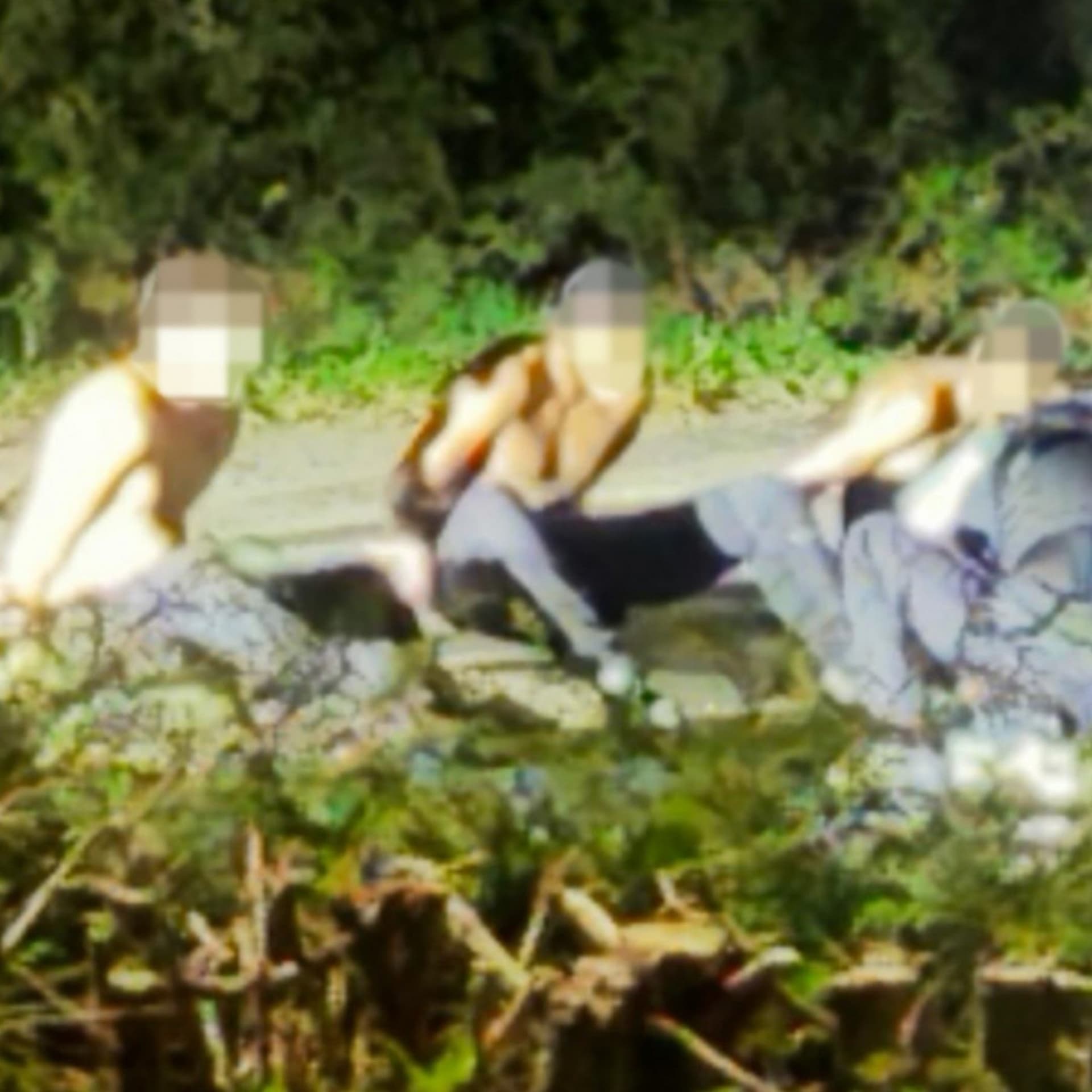
The Global News Podcast brings you the breaking news you need to hear, as it happens. Listen for the latest headlines and current affairs from around the world. Politics, economics, climate, business, technology, health – we cover it all with expert analysis and insight. Get the news that matters, delivered twice a day on weekdays and daily at weekends, plus special bonus episodes reacting to urgent breaking stories. Follow or subscribe now and never miss a moment. Get in touch: globalpodcast@bbc.co.uk Photo: An image that circulated on social media following the arrests of five men near RAF Fairford Credit: The BBC is unable to verify the original source but has geolocated it and has confirmed it appears to be authentic.