
In short
Global News Podcast (BBC World Service) covering: Amnesty International’s report on RSF atrocities in Sudan’s Al-Fashir/Al-Fashir siege; China’s new ethnic-harmony law; Japan’s yen hitting a 40-year low; record ocean surface temperatures; Venezuela earthquake rescue anger; and World Cup fallout including racist abuse after Dutch players missed penalties.
Guests/backgrounds
No recurring guests; featured correspondents and interviewees include Africa correspondent Barbara Plett-Usher; Mickey Bristow (China law explainer); correspondent Will Grant (Venezuela); oceanographer Prof. Helen Chersky (Blue Machine); sports journalist Revke Op Hetveld (Dutch racism); plus World Cup defender Sidney Lopez Cabral (separate promo).
Key claims
RSF deliberately targeted civilians, including children, with ethnic targeting of Zagawa; China’s law forces Mandarin schooling and can prosecute parents/overseas critics; yen weakness driven by interest-rate differentials; ocean warming from accumulated heat; Venezuela’s Chavez-era housing was poor quality.
Notable examples
Amnesty interviews 200+ survivors; hospital killings/sexual violence allegations; El Obed drone strikes and fuel/water targeting; deportees housed at “El Santuario” hotel; racist monkey images toward Dutch players (Cluivert, Sinerville, Timber).
Written by AI. May contain mistakes. Listen to the episode to check what was said.
Chapters
Tap a time to open that second in VOAtrocities in Sudan's Civil War
1:04 to 1:51
Exploring the recent report on atrocities committed by RSF in Sudan.
“carried out atrocities when they took the city of Al-Fasha last year.”
Survivors' Accounts of Atrocities
1:51 to 3:08
Hearing harrowing stories from survivors of the violence in El Fasher.
“seized the southern city of El Fasha last October, there were almost immediately reports of atrocities carried out by its troops against civilians.”
Amnesty International's Report on RSF
3:08 to 4:25
Overview of Amnesty's findings regarding the RSF's actions in El Fasher.
“She told me why this new report matters.”
Preparations for Further Attacks
4:25 to 6:39
Discussion on RSF's plans for potential attacks in El Obed and implications.
“I should say, as we've reported before, that the RSF has admitted there were some violations in El Fasher, but it says the scale of them were wildly exaggerated by its enemies.”
China's New Ethnic Harmony Law
6:39 to 8:02
An analysis of China's ethnic harmony law and its potential impacts.
“Next, to China, where a law has come into effect focusing on the country's different ethnic groups.”
Criticism of the Ethnic Harmony Law
8:02 to 9:46
Exploring the criticisms regarding the implications of the new law.
“And thirdly, there is a provision where people can be prosecuted, individuals and organisations overseas.”
Impact of Earthquakes in Venezuela
9:46 to 11:04
Reporting on the aftermath of recent earthquakes in Venezuela and community responses.
“It's six days since two earthquakes hit Venezuela.”
Search for Survivors in Venezuela
11:04 to 13:56
Describing the ongoing search efforts for survivors after the earthquakes.
“His wife and their two children, aged three and four, are also missing.”
Building Safety Concerns in Venezuela
14:00 to 14:51
Discussing the aftermath of unsafe buildings in La Guayra, Venezuela.
“Lorena says the buildings, built by Hugo Chavez and donated to the poorest, were simply not up to code.”
The Climate Change Podcast
14:51 to 15:37
Introducing the Global Story podcast and its focus on American influence.
“is accumulating energy and most of that extra accumulated energy goes into the ocean Why ocean surface temperatures are hitting a record high.”
Show all 15 chapters
Cape Verde's Historic World Cup Journey
15:41 to 16:15
Cape Verde's experience in the World Cup and facing Argentina.
“They've already made history by reaching the knockout stages in their debut tournament, and now they're ready for their biggest test yet, Lionel Messi's Argentina.”
Global Currency Trends: The Yen
16:20 to 19:40
Analyzing the fall of the Japanese yen and its economic implications.
“Listen now wherever you get your BBC podcasts.”
Ocean Temperatures and Climate Change
19:40 to 23:02
Discussing record high ocean temperatures with Professor Helen Chersky.
“New data shows that global ocean surface temperatures last month were the highest on record.”
Racism in Sports: Dutch Players' Abuse
23:02 to 27:05
Exploring the online racism faced by Dutch football players after a penalty shootout.
“Now, the Men's World Cup has entered the knockout phase, so the penalty shootout is once again a thing.”
The Netherlands' World Cup Disappointment
27:05 to 28:00
Discussing the mood in the Netherlands after their World Cup elimination.
“And that's the Dutch sports journalist Revke Opheppveld.”
Transcript
Automatic transcript. May contain errors.0:00This BBC podcast is supported by ads outside the UK. If you are currently overpaying on software to run your business, remember this number, 10 ,000. That's the number of new businesses that join Odoo per month. Join Odoo today at odoo.com. That's O-D-O-O dot com. Say big on your next project at Menards. Check out our huge selection of Richmond water heaters. Whether it's electric or gas, tank or tankless, Menards has what you need in stock. Ensure that you have hot water for when you need it most with a new Richmond water heater from Menards. Plus, check out our weekly flyer on menards.com for all the great deals happening now.
0:47Save big money at Menards. This is the Global News Podcast from the BBC World Service. I'm Andrew Peach and at 15 Hours GMT on Wednesday 1st July, these are our main stories. A new report adds to the growing evidence that the rapid support forces in Sudan's civil war carried out atrocities when they took the city of Al-Fasha last year. A law that aims to promote ethnic harmony has come into force in China, but critics say it undermines the rights of minority groups. And Japan's currency falls to its lowest level against the dollar for 40 years. Also in this podcast... You need to hire earth-moving equipment, and all of that has been used on the houses of the rich and important people.
1:34But these are people in here too, not dogs or animals, and they deserve help. After two devastating earthquakes in Venezuela, there's anger over the lack of equipment to help search for survivors. Let's begin with the ongoing civil war in Sudan. When the Rapid Support Forces, known as the RSF, seized the southern city of El Fasha last October, there were almost immediately reports of atrocities carried out by its troops against civilians. One of the most shocking allegations was that patients and staff were killed at a hospital. Residents who fled the city had terrible stories to tell. There are violations taking place on the roads, including looting and shooting, with no distinction made between young or old.
2:20Thanks be to God we managed to reach Tawila.
2:26I am a displaced woman who fled al-Fashir. They left us with nothing, not even food. They beat my two-year-old child right in front of me and I nearly lost my mind when I saw that. People who escaped al-Fashir speaking last year. The United Nations has already said the attack on the city bore the hallmarks of genocide. Now a report by the rights group Amnesty International has provided more details about what went on. Among other accusations, Amnesty says the RSF deliberately targeted children. The RSF now seems to be preparing an attack on another city in the south, El Obed, and there are fears that similar atrocities could be carried out there.
3:05Our Africa correspondent is Barbara Plett-Usher. She told me why this new report matters. I think this report essentially strengthens the evidence we already had about mass atrocities being committed in El Fasher, not just when the RSF took it over and captured it last October, but also in the siege of the city and the campaign in the surrounding areas. So Amnesty interviewed more than 200 survivors. They talked about witnessing mass killings, detentions, beatings, sexual violence, the kind of thing that we have heard before. Amnesty very much emphasized that there was an ethnic element to this.
3:42The armed groups that were defending the city came from the local Zagawa tribe, And so the RSF seems to have targeted the Zagawa civilians just as it did the fighters. One thing that struck me is that they said that the children were not collateral damage of the violence. There were cases of them being deliberately targeted. And so they mentioned specifically shootings, abductions in particular, also rape. And they said that they had identified RSF commanders who had carried out violations of international law and they urged accountability. I suppose a takeaway that I had was, as the evidence mounts, calls for accountability grow, and yet the violence is still being committed with impunity, which it is.
4:25I should say, as we've reported before, that the RSF has admitted there were some violations in El Fasher, but it says the scale of them were wildly exaggerated by its enemies. Obviously, it's important to document the truth and the full horrors of what happened. But does this report lead to anything? Does it change anything? It adds to the calls for criminal investigations, for monitoring, for eventually using the bodies that do international accountability, such as the International Criminal Court, to try to bring people to book for what has happened. And the other thing it does is it also strengthens calls for some sort of civilian protection mechanism, an international protection force, especially as the RSF does appear to be preparing to launch an invasion of another city, the strategic city of al-Obeid in central Sudan, which has led to lots of international expressions of concern that there could be more civilian killings.
5:19And in terms of where we are now with this ongoing conflict between the RSF and the Sudanese military, what's happening today? The RSF does appear to be preparing to launch an invasion of this other city, the south central city of El Obed, which is at a strategic transport and location junction. It has essentially had the city under siege for a large part of the war, but it has increased drone strikes in recent months, and it has started to mass troops there. El Obed is different than Al-Fashir in the sense that the local population there is not one major ethnic group that the RSF sees as an enemy, which it did in Al-Fashir.
5:54There's people from all over Sudan in Al-Ubaid. But nevertheless, the increase in drone strikes have really been targeting things like fuel and water and power and supply trucks. So there's a humanitarian crisis. I was speaking to somebody whose family is in Al-Ubaid and I said, are they preparing to flee if the RSF looked like it was actually going to be able to launch a ground invasion? She said, not really. She said the feeling in Al-Ubaid is they don't believe the RSF will be able to come in by ground. But also, I think just the effort of leaving is huge. If you manage to get to another so-called safe city, rent is just over the top.
6:28Displacement camps are not a place you want to be. About 200 ,000 people in El Abed are already displaced, so people are quite reluctant to move. And that's our Africa correspondent, Barbara Plett-Usher. Next, to China, where a law has come into effect focusing on the country's different ethnic groups. The Chinese government claims the legislation, with more than 60 articles, will promote ethnic unity and harmony. Critics say it will further impose the culture of China's dominant ethnic group, the Han Chinese, on the rest of the population. The law makes it clear that all children now have to study using Mandarin Chinese regardless of what language they speak at home.
7:05I asked Mickey Bristow what the law says and what the Chinese government is trying to achieve. It's quite a long law with lots of provisions, but a couple of things stand out. Firstly, the law about language, which you mentioned there. Previously, Chinese governments have emphasised that ethnic minorities can learn, study children at school in their own languages so that they get a proper grounding in that language. That's now flipped. So all children have to learn in Mandarin Chinese. The Chinese government says that's to help them integrate with the rest of China and to help them get jobs in the future.
7:38A couple of other things also shine out of this document. Firstly, that parents could be prosecuted for not teaching their children properly about ethnic harmony. They've got to teach them to love the Chinese Communist Party and to love China or the China that the Communist Party defines as being China and that they can be prosecuted for not doing that. That's kind of an odd idea. And thirdly, there is a provision where people can be prosecuted, individuals and organisations overseas. So you might say something about China's ethnic situation overseas and face prosecution. It's difficult to see how China could prosecute people whilst they are abroad.
8:17They don't have the legal basis to do that. But when people perhaps say things outside of China, go back to China, they might be prosecuted there. And there's already evidence that's already happened. Okay. And perhaps inevitably, with what you've just outlined, lots of criticism of this. There is primarily about the language. If you think about China, it's a vast country and a lot of minority groups are ethnically, linguistically, culturally very different to Han Chinese people they make up about 90 % of the population. So not allowing them to use their own language really undermines everything about their culture.
8:52A couple of years ago, I did a radio documentary about the situation in Tibet where children as young as three and four, they were going to kindergartens and schools. And because Tibet is a wide area with not many people, schools are often centrally placed and people have to go on board there. So they're learning all the time in Mandarin, going home and not being able to speak to their parents or their grandparents. So really it's undermining, this is what the critics argue, the very basis of what an ethnic culture is about. And the concept of ethnic unity, it sounds like it means something different to the Chinese authorities than it might to many other people around the world.
9:29In many countries we basically feel that the individual and groups have a right to express themselves, speak in whatever language they want and have that enshrined in legislation. They might go to school, be able to interact with government organisations signposting that language. In China, they don't see it like that. They fear the country splitting apart. And what they want to do, the Chinese government under Xi Jinping, is essentially bring everybody together under one dominant ideology, one dominant culture, the Han Chinese culture, and essentially allow people to dance and sing and wear ethnic costumes, but not go too deep into their culture.
10:07Mickey Bristow reporting. It's six days since two earthquakes hit Venezuela. The full extent of the destruction still isn't known, and few Venezuelans believe the official figures reflect the true number who died beneath a rubble. Along the northern coast, some of the affected communities live in social housing, built under the late President Hugo Chavez, and victims' families say those houses were of poor quality. Our correspondent Will Grant met the relatives who are refusing to give up the search.
10:39Almost a week on from the dual earthquakes which flattened entire communities of northern Venezuela, 15-year-old Samuel Ordonez is still calling out his older brother's name into the rubble. Edward is somewhere inside, entombed in the concrete and broken glass of a collapsed 12-storey housing block built by the government of the late socialist leader Hugo Chavez. is. Edward isn't alone in there. His wife and their two children, aged three and four, are also missing.
11:14We know we've found his apartment, Samuel tells me. We've found his crockery, pointing at a set of broken purple bowls and plates at our feet. Samuel, his young face stained with dust and ash, says the responsibility of crawling into dangerous spaces, searching for his brother's family should not fall to a teenager.
11:38I'm 15 and I'm giving it everything I can, he says. But you need to hire earth-moving equipment and all of that has been used on the houses of the rich and important people. But these are people in here too, not dogs or animals, and they deserve help. That sense of anger at the authorities will be particularly acute among one set of relatives. In the morning of the earthquakes, a deportation flight returned to Caracas from the United States with 147 Venezuelans, of which seven were children. The authorities took the deportees to a hotel near the airport, which is where they were housed when the earthquake struck and the building crumpled.
12:19Only 12 of the deportees have been found alive. As we drove up to the site, we were stopped by the security forces. Not generic National Guard troops, however, but officers of the Sebin Intelligence Police. No one was authorised to visit the site, they said. The hotel's name, with terrible irony, was El Santuario, meaning the sanctuary. An unknown number of the deportees and the residents of the Chavez housing complex have ended up at the port in La Guaida, now a makeshift morgue. Inside, on the open courtyard, body bags are laid out one after another. Family members are driving up. There is a constant flow of hearses or of vans that are being waved in.
13:10I spoke to one official, asked him to give me some kind of indication of how many bodies are coming in, and all he would say is muchísimos, lots and lots.
13:26Back at the devastated housing complex, silence has been called for, so that rescue workers can listen carefully for a voice or a sound to confirm life prevails beneath the cement and metal.
13:41As we wait for an answer, one woman spots my microphone and asks to say her piece.
13:50I think I'm going to say something quite strong, she says, but these buildings were cages of death. She is Lorena Lair and is digging in the ruins for her father, stepmother, 14-year-old brother and 6-year-old sister. Lorena says the buildings, built by Hugo Chavez and donated to the poorest, were simply not up to code. They put the poorest in here, but the structuralists, engineers and officials who signed off on the plans are largely the reason that today we're looking for our loved ones. The silence has gone on for several minutes with no answer from the rubble. It is another false alarm. the families get back to their search most have vowed to keep looking until all hope is lost there will be many more raised spirits and broken hearts in la guayra before they're finished that's that correspondent will grant in la guara in northern venezuela still to come in this podcast the major consequence of climate change is that earth is accumulating energy and most of that extra accumulated energy goes into the ocean Why ocean surface temperatures are hitting a record high.
15:10The United States is about to mark its 250th anniversary. And so on the Global Story podcast from the BBC, we're telling surprising tales of American influence on the world stage and in ordinary people's lives all across the globe. We have this ability to export our story. and a lot of people have bought it. I feel like the American dream is alive, but not well. From the BBC, it's the United States at 250. Listen on bbc.com or wherever you get your podcasts. Cape Verde have captured the imagination of fans at the World Cup. They've already made history by reaching the knockout stages in their debut tournament, and now they're ready for their biggest test yet, Lionel Messi's Argentina.
15:56And ahead of the game, defender Sidney Lopez Cabral has been speaking to me, Manny Jasmi, for more than the score. They're all asking me questions like, hey, how are you going to stop Messi? How are you going to do this? How are you going to do that? And I answer, they're all the same. I don't know. I'm focused on myself. We will see what will happen in the game. For the stories beyond the scorelines, more than the score from the BBC World Service. Listen now wherever you get your BBC podcasts. Is the American dream still possible? I'm Asma Khalid, one of the hosts of the Global Story podcast from the BBC.
16:33One of the most successful exports the United States has ever sold the world is the American dream, that tantalizing promise of a better, freer, richer life. But is it still attainable? I feel like the American dream is alive, but not well. For more, listen to the Global Story on BBC.com or wherever you get your podcasts.
16:58The Japanese currency has fallen to its lowest level against the dollar for 40 years. The Japanese government has previously intervened when the yen has dropped in value. I found out more from our correspondent in Tokyo, Kurumi Mori. It's basically happening because the Japanese interest rates have been kept low for decades. It was to help the economy grow. But countries like the U.S. and other major economies have much higher interest rates. So investors can earn better returns by saving or investing in other currencies besides Japan. And that encourages investors to sell the yen and buy USD instead, for example.
17:39So as more people do that, the demand for the Japanese yen falls because it's not worth as much to them in terms of investment. And then its value drops. Now we're seeing this weakness in the Japanese currency. It sounds like one option for the authorities might be to put interest rates up. Yeah, well, absolutely. However, it's not so simple. The Bank of Japan has started slowly raising interest rates after just years of ultra loose monetary policy. And that basically means that they've been keeping the interest rates really, really low for many years. And they've intervened in the foreign exchange market and also stepped up several times to try to prop up the yen by buying when the yen has fallen too quickly.
18:26But officials also warn traders against pushing the yen down too fast in a way to try to calm the markets. I mean, so when they raise interest rates, they have to do it really slowly and really carefully because otherwise it disrupts the market. It's very, very sensitive to these changes. And what happens if this low yen persists for longer? Well, the longer it goes, I mean, the worse the effects get. So Japan will have to keep paying more and more for many of the things that it buys from overseas. So it really impacts things that we import from abroad, like fuel and food. And that will affect prices for everyday things that we buy.
19:10They can remain high. And so that really pinches consumers, the everyday people, household spending. And if people are spending more on essentials, then they have less money to spend on other things like investments. And that can slow down the economy. So they might not be splurging on big ticket items, right, because now they feel like they need to save because they're spending more at the grocery store. And so that doesn't help the economy grow. That will hurt the Japanese GDP. That was Karumi Mori with me from Tokyo. New data shows that global ocean surface temperatures last month were the highest on record.
19:47Scientists from the European Union's climate monitor, Copernicus, say the latest figures are the culmination of an unprecedented period of ocean warming this year, which they say looks to continue. So what does that mean for the world's oceans and weather patterns? James Menendez has been talking to oceanographer Professor Helen Chersky, author of Blue Machine, How the Ocean Shapes Our World. It's definitely not a surprise. You know, the ocean is a liquid engine. It completely defines the way our planet works. And we know that we are adding energy to it all the time. The major consequence of climate change is that Earth is accumulating energy, and most of that extra accumulated energy goes into the ocean.
20:28And it comes out in the form of heat. So, of course, temperatures are going to rise, but, you know, it changes a little bit from year to year. So, yes, not unexpected, but definitely serious and something to worry about. But the long term trend is clear. And is it likely to get worse? I mean, we've been told in recent weeks they were about to enter or are entering a new El Nino event in the Pacific. Are those temperatures, those surface temperatures likely to go up in the next 12 months? So El Nino is a phenomenon that happens every few years. It does have a big impact on weather patterns, especially around the Pacific.
21:09But El Nino kind of comes and goes over the years anyway. And what the additional heat in the ocean and these continual marine heat waves we've seen over the past few years are doing is they're actually changing how the ocean itself functions. The water itself just being warm actually increases sea level rise. About half of sea level rise up until now has been caused by water that just expands because it's warmer. so the impacts go far beyond what happens on the land they they impact how the ocean itself works we don't need to wait uh for some currents to make things even worse in the future so so i tend to think we ought to worry about what's happening right now do what we can to stop that and when you say do what we can to stop that i mean what does that mean that just means again trying to reduce the amount of carbon dioxide going into the atmosphere that's right carbon dioxide and other greenhouse gases like methane.
22:02And the thing is, we do have the technology to do this. And increasingly, these technologies are cheaper than the alternative. So actually, of all the times we've been having this discussion over the past two decades, now is really the time when we can absolutely see a route that is not just better for the climate, it's better for human society, because it's cheaper and it's more effective. And yet we sometimes hear about tipping points, people talking about vicious circles. I mean is it possible that there is so much extra energy in the oceans now that they've reached their limit and the effects will play out anyway?
22:37It absolutely isn't the case that it's all going to be awful anyway and we should just give up. The thing to hold in mind I think is that there are serious impacts coming down the line we definitely have to prepare already but every single thing we can do to prevent those impacts going getting worse is absolutely worth it because it is cheaper and more effective than patching up the problems afterwards. And that was Professor Helen Chersky, author of Blue Machine, How the Ocean Shapes Our World. Now, the Men's World Cup has entered the knockout phase, so the penalty shootout is once again a thing.
23:10Deciding a football match in this way is dramatic, but it does put huge pressure on the penalty taker. It takes enormous courage to step up for your country in front of tens of thousands of people in a stadium and millions of TV viewers. A few years ago, three England players faced online racist abuse after missing penalties. And this week, the same thing has happened to several Dutch players after the Netherlands were eliminated from the World Cup. The Dutch sports journalist, Revke Op Hetveld, told us about the racist abuse the Dutch players have faced. There are three Dutch players that have missed a quite dramatic penalty shootout that got the Dutch eliminated against Morocco a couple of days ago.
23:52The three players that missed are Justin Cluifert and Crescensio Somerville, two Premier League players, and Quint and Timber. Yeah, they have unfortunately received a lot of racial abuse on their social media, including pictures of monkeys. Cluifert and Somerville have both turned off the ability to react on their Instagram after that, so it's hard to tell how many people responded to them exactly. But Timber's Instagram account is still open and we can see dozens of people who have written racist comments. And thankfully, also a lot of people telling those people off, but it's still horrible, obviously.
24:24So this is becoming a trend now, I guess, because there's such attention on the individual player if they miss a penalty, which the sort of presumption is that players will score. Fans are angry. They're looking for someone to blame. They're looking for some reason and seem to alight on this whole business of race. What's the Dutch Football Association saying? saying? So they've responded last night from the United States where they still are and they are horrified. They say they are drawing a line. They've also said that they will report at a website where you can report online discrimination.
Read the full transcript
24:59So this is kind of like a contact point that will then look into the allegations and see if said comments are still online and if the comments are a particular criminal offence. We've also already heard that before the FA reported this, there have already been dozens of people reporting this specific racial abuse after the game. Okay. And you probably know there's been a prosecution in the UK for online abuse of a black player. This is from the England women's team. Have there been any prosecutions of that sort in the Netherlands? Not exactly, no. So there has been a campaign actually from the start of the World Cup here on national television starring Ruud Gullit, trying to create awareness on online abuse and trying to make sure that fans actually have a positive attitude towards the players.
25:46The online platform that I mentioned just now, where the FA will report this case, has been able to get, in previous cases, comments removed off of social media platforms. But as far as prosecutions, I couldn't really find much. I do know that last month a TV presenter in the Netherlands of a far Right Network has been convicted of community service for racist abuse on social media platform X a few years ago. But as for an actual prison sentence like happened with the abuser of Jess Carter that you just talked about, I don't think that has happened yet in the Netherlands. Okay. And just finally, Revke, stepping away from what's obviously a relatively small number of people using this as an excuse for racism.
26:29What's the more general mood in the country about the fact that the team are out? Not very good as you can imagine. Yeah, getting to the last 32 is not at all what the Netherlands were hoping for, both the team and the country. Everyone is really disappointed, not just with the fact that they lost against Morocco, but also with how they play. There's a lot of criticism on Ronald Koeman, the head coach who actually stepped down this morning or last night. Yeah, he's not a very adventurous coach. He played a very defensive kind of play all of a sudden in the round of 32. So the mood is not great when it comes to football these days.
27:05And that's the Dutch sports journalist Revke Opheppveld. And to get much closer to the World Cup, don't forget the BBC World Service sports podcast, More Than The Score. The latest episode features Cape Verde defender Sidney Lopez Cabral ahead of the biggest game in their history. Cabral discusses his excitement ahead of facing Lionel Messi in Argentina and says they're taking inspiration from Paraguay's shock win over Germany. So search for More Than The Score wherever you get your BBC podcasts. And that's all from us for now. If you'd like to get in touch, do drop us an email, globalpodcast at bbc.co.uk.
27:46You'll find us on X at BBC World Service. Just use the hashtag globalnewspod. And let me remind you about our sister podcast, The Global Story, which goes in-depth and beyond the headlines on one big story each day. This edition of the Global News Podcast was mixed by Chris Murphy. The editor is Karen Martin. My name's Andrew Peach. Thank you for listening. And until next time, goodbye.
28:18Is the American dream still possible? I'm Asma Khalid, one of the hosts of the Global Story Podcast from the BBC. One of the most successful exports the United States has ever sold the world is the American dream, that tantalizing promise of a better, freer, richer life. But is it still attainable? I feel like the American dream is alive, but not well. For more, listen to The Global Story on BBC.com or wherever you get your podcasts.
From the publisher
A report by the rights group Amnesty International has further allegations of atrocities carried out by the Rapid Support Forces when they seized the city of El Fasher last October. The RSF has admitted abuses - but says they've been exaggerated. Also: China introduces a new law to promote ethnic harmony - but will it? Venezuelans want more equipment to search for the missing following two earthquakes last week. The Japanese yen falls to its lowest level against the US dollar in 40 years. And football players from the Netherlands have experienced racist abuse for failing to win a penalty shoot-out against Morocco.
The Global News Podcast brings you the breaking news you need to hear, as it happens. Listen for the latest headlines and current affairs from around the world. Politics, economics, climate, business, technology, health – we cover it all with expert analysis and insight. Get the news that matters, delivered twice a day on weekdays and daily at weekends, plus special bonus episodes reacting to urgent breaking stories. Follow or subscribe now and never miss a moment. Get in touch: globalpodcast@bbc.co.uk
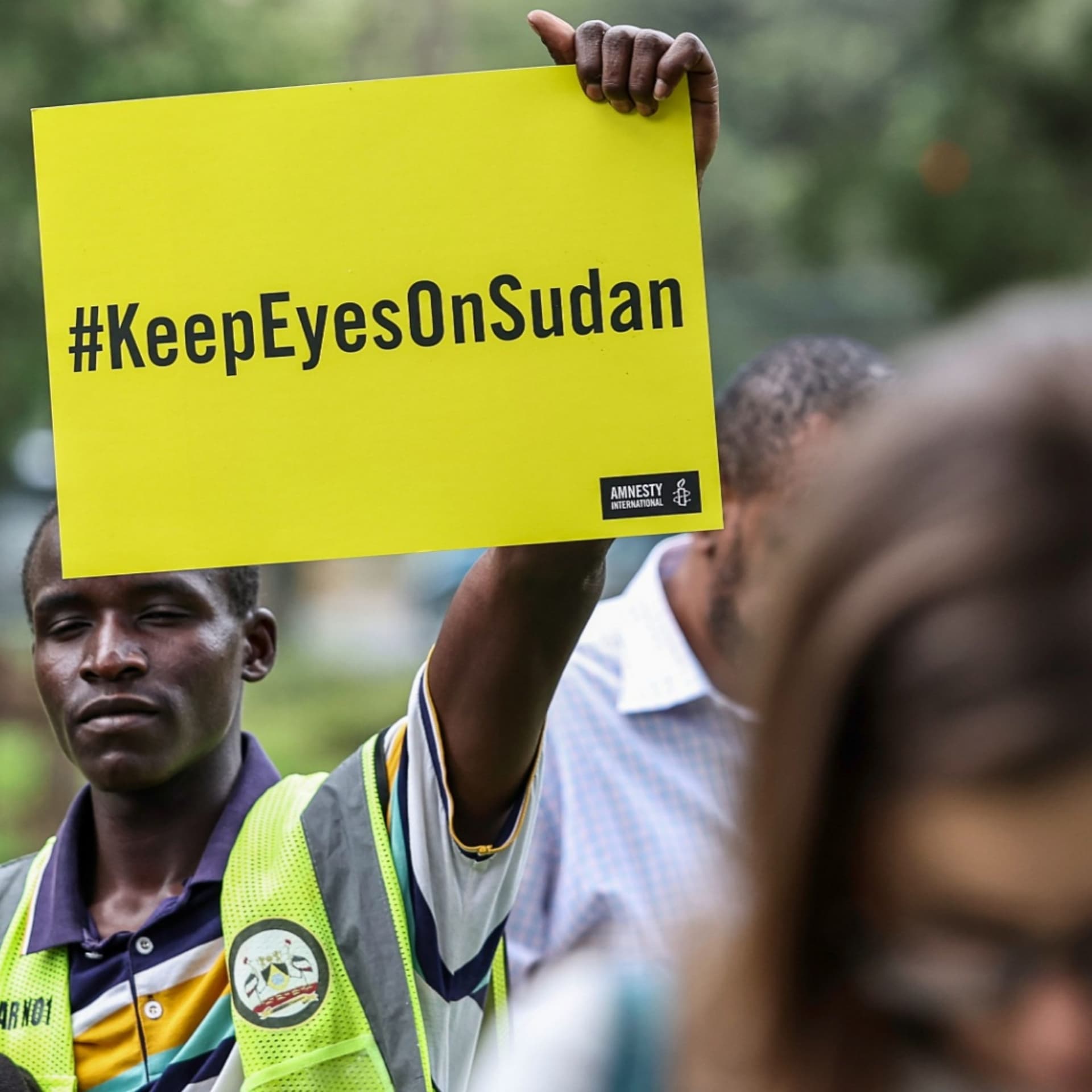
Photo: Sudanese civilian refugee in Nairobi, Kenya at a gathering to mark the third anniversary of the war in Sudan in April 2026 Credit: DANIEL IRUNGU/EPA/Shutterstock