In short
Global News Podcast - Episode Summary: Fury after Trump's 'insult' to NATO troops
Podcast Overview The Global News Podcast from BBC World Service provides timely news and expert analysis on current affairs, covering a spectrum of topics such as politics, economics, climate, technology, and health. The podcast is released twice daily on weekdays and once a day on weekends, with special episodes for breaking news.
Episode Details
- Title: Fury after Trump's 'insult' to NATO troops
- Release Date: January 23, 2023
Key Stories Covered
- Trump's Remarks on NATO Troops
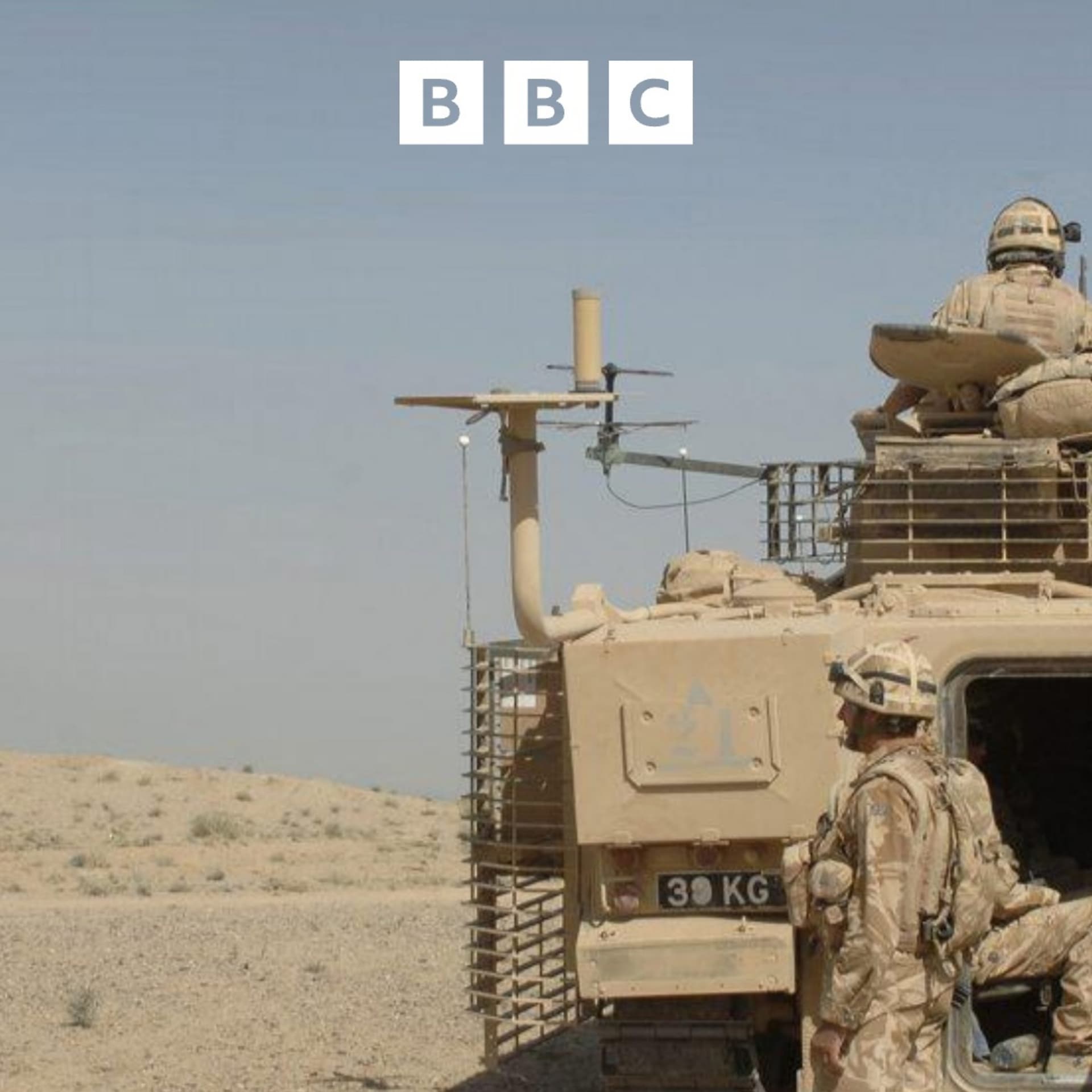
- Incident: President Donald Trump claimed NATO allies avoided frontline duties during the Afghanistan conflict, which sparked outrage among British officials and citizens.
- Response:
- UK Prime Minister's spokesman stated that Trump was wrong to belittle NATO troops, emphasizing the importance of their contributions.
- British politicians and veterans expressed offense, highlighting the sacrifices made by non-American NATO soldiers, including significant numbers from the UK and Canada.
- Diane Durney, a mother of a severely injured veteran, labeled Trump's comments as disgraceful.
- NATO's Role in Afghanistan
- Historical Context:
- NATO forces joined the Afghanistan conflict shortly after the 9/11 attacks.
- British troops played a crucial role in combat, particularly in the dangerous Helmand province.
- A significant portion of NATO casualties were from non-American countries, countering Trump's claims.
- Updates from Ukraine
- Nuclear Power in Ukraine:
- In light of the ongoing conflict, the podcast highlights the critical role of Ukraine's remaining operational nuclear power plants in providing energy, amidst Russian attacks on conventional power infrastructure.
- The Khmelnytsky nuclear power plant is discussed as vital for Ukraine's energy supply during winter.
- Court Ruling on Nelson Mandela Memorabilia
- Story: South Africa's Supreme Court dismissed an appeal against the auction of personal items belonging to Nelson Mandela, including significant artifacts like a broken prison key and signed books.
- Historical Significance: The items represent Mandela's legacy and are tied to South Africa's history.
- Women's Health at the World Economic Forum
- Discussion: At the World Economic Forum, the podcast addresses the underfunding of women's health issues, which receive only 6% of private healthcare investment.
- Key Issues:
- Diseases that disproportionately affect women, such as heart disease and menopause, are largely overlooked by investors.
- Changes at Heathrow Airport
- Announcement: Heathrow Airport has lifted limits on liquids in hand luggage, allowing up to two liters, thanks to new advanced scanning technology.
- Retirement of Novelists
- Discussion: A conversation on whether novelists should retire, featuring perspectives from authors on the compulsive nature of writing versus the fear of not meeting past successes.
Conclusion The episode encapsulates significant political and social issues, from the implications of Trump's remarks on NATO to the pressing concerns of women's health and energy infrastructure amid warfare. Each story is tied together by overarching themes of sacrifice, legacy, and the need for continued advocacy in health and policy sectors.
For more episodes and detailed discussions, listeners are encouraged to subscribe to the Global News Podcast. For comments or inquiries, they can reach out via email at globalpodcast@bbc.co.uk.
Written by AI. May contain mistakes. Listen to the episode to check what was said.
Chapters
Tap a time to open that second in VOFlawed Journalism and Historical Mysteries
0:05 to 0:42
Explore the implications of flawed journalism through a historical mystery.
“If journalism is the first draft of history, what happens if that draft is flawed?”
Trump's NATO Comments and Backlash
0:47 to 0:58
Discussion of Trump's comments about NATO troops and the resulting outrage.
“Britain says Donald Trump was wrong to diminish the role of NATO troops during the war in Afghanistan.”
Consequences of Trump's Statement on NATO
0:58 to 1:41
Analyzing the strong reactions from British politicians to Trump's NATO remarks.
“There's been an angry backlash to the US president's claim that NATO allies avoided the frontline during the conflict.”
The Role of NATO Troops in Afghanistan
1:41 to 2:10
A detailed overview of NATO troops' contributions and sacrifices in Afghanistan.
“we report from inside one of the dwindling number of power stations fighting a freezing winter.”
Veterans' Voices: Hurtful Remarks
2:10 to 3:02
Hear the emotional response from veterans and families to Trump's comments.
“The US president made the comments on Thursday while he was at the World Economic Forum in Davos during an interview with Fox News.”
Political Reactions and Statements
3:02 to 4:03
Review of the official responses from British politicians regarding NATO remarks.
“There's been strong condemnation amongst British politicians, as our political correspondent Damien Grammaticus explains.”
NATO’s Involvement in Afghanistan War
4:03 to 4:21
Understanding NATO's critical role throughout the Afghanistan conflict.
“So that's quite strong stuff from Downing Street.”
Veteran Insights on NATO Troops
4:21 to 5:15
Veterans share personal experiences from the Afghanistan war and reflect on Trump's claims.
“They were there at the very start when America invaded Afghanistan following those attacks, 9-11, and British troops were there right at the end, that chaotic exit 20 years later.”
Current Events: Trilateral Talks
5:15 to 5:48
Overview of the ongoing trilateral talks between Russia, Ukraine, and the US.
“And we can see that from the reaction of so many veterans.”
Civilian Toll and Energy Crisis in Ukraine
5:48 to 6:34
Analyzing the impact of the war on Ukrainian civilians and energy infrastructure.
“President Zelensky has said he hopes the negotiations could be the start of the process of ending the war in his country.”
Show all 18 chapters
Inside Ukraine's Nuclear Power Plants
6:34 to 8:01
Exclusive coverage of the operational nuclear power stations in Ukraine during the war.
“which are now providing most of the country's electricity.”
Concerns Over Zaporizhia Nuclear Plant
8:01 to 9:18
Discussing the risks associated with the Zaporizhia nuclear plant under Russian control.
“And that is why this huge nuclear power plant at Chemelnitsky and two others are critical to the country's energy needs.”
Nelson Mandela Artifacts and Auction Background
9:18 to 10:46
Exploring the auction of personal items related to Nelson Mandela and its implications.
“There were others, he says, who were taken and then went missing.”
Attempts to Halt Sale of Mandela Artifacts
10:46 to 13:30
Reviewing the legal challenges surrounding the auction of Mandela's artifacts.
“It follows a court ruling by South Africa's Supreme Court of Appeal on an attempt to halt the artifacts being auctioned and exported.”
Exploring Underfunding in Women's Health
14:00 to 14:32
Learn about the alarming underfunding in women's health and its implications.
“But even now, we still don't know for sure who did it.”
Insights from Davos on Women's Health
14:32 to 18:21
Hear from Shai Ambishan about critical health issues affecting women globally.
“a gathering of presidents and world leaders that has been dominated by diplomacy and geopolitics and the futures of Greenland, Ukraine and Gaza.”
Advancements in Airport Security Regulations
18:21 to 20:38
Discover how Heathrow is revolutionizing airport security with new liquid rules.
“Now, Britain's biggest and busiest airport, Heathrow, has announced it's scrapping the current limits on liquids and will allow passengers up to two litres in containers in their bags.”
The Debate on Retirement Among Novelists
20:38 to 24:26
Delve into why some authors consider retirement and the impact on their legacy.
“At the moment, they're the only two I do know.”
Transcript
Automatic transcript. May contain errors.0:00This BBC podcast is supported by ads outside the UK. If journalism is the first draft of history, what happens if that draft is flawed? In 1999, four Russian apartment buildings were bombed, hundreds killed. But even now, we still don't know for sure who did it. It's a mystery that sparked chilling theories. I'm Helena Merriman, and in a new BBC series, I'm talking to the reporters who first covered this story. What did they miss the first time? The History Bureau, Putin and the apartment bombs. Listen on BBC.com or wherever you get your podcasts. This is the Global News Podcast from the BBC World Service.
0:46Hello, I'm Ankur Desai and at 16 Hours GMT on Friday the 23rd of January, these are our main stories. Britain says Donald Trump was wrong to diminish the role of NATO troops during the war in Afghanistan. There's been an angry backlash to the US president's claim that NATO allies avoided the frontline during the conflict. While the World Economic Forum has been dominated by geopolitical rankling, we'll be talking about women's health, another important topic that leaders have been addressing. And a court in South Africa has dismissed a government appeal to block the auction of personal items belonging to former President Nelson Mandela.
1:25Also in this podcast... This plant alone provides a huge proportion of Ukraine's energy needs. And the boss of Ukraine's nuclear industry says this too is a target for the Russians. As high-level talks to end the war in Ukraine continue, we report from inside one of the dwindling number of power stations fighting a freezing winter.
1:51The once so-called special relationship between the US and UK has, it's fair to say, had a few speed bumps on the road. And now there is another one you can add to that long stretch. Donald Trump has sparked outrage here in Britain after claiming that NATO troops stayed away from the front line during the war in Afghanistan. The US president made the comments on Thursday while he was at the World Economic Forum in Davos during an interview with Fox News. We've never needed them. We have never really asked anything of them. You know, they'll say they sent some troops to Afghanistan or this or that.
2:26And they did. They stayed a little back, a little off the front lines. While the majority of NATO soldiers who died while serving in Afghanistan were Americans, roughly a third were mainly from the UK and Canada. Diane Durney's son, Ben Parkinson, is a former paratrooper and he was severely injured. She told the BBC that President Trump's comments were hurtful. Ben went to Afghanistan as a member of ISAF. He wore the ice SAF badge which makes him part of the NATO forces. Ben's life changed completely. He and his family lost everything. He lost his career, he lost his chance at a normal life but Ben was proud and happy to do it and we were proud of him and to have that then negated by somebody who neither their nor their family have ever served on the front line, making his comments about the effort that they put in and the sacrifices that they made is absolutely disgraceful.
3:31There's been strong condemnation amongst British politicians, as our political correspondent Damien Grammaticus explains. We've had this morning from Downing Street, officially through the spokesman, a statement saying The president was wrong to diminish the role of NATO troops and Downing Street making very clear that it says we are incredibly proud of our armed forces. Their service and sacrifice will never be forgotten. Now, of course, the government has had to tread carefully around an American president who many view as thin-skinned and unpredictable. So that's quite strong stuff from Downing Street.
4:06We've had those calls for an apology from the leader of the Conservative Party, the leader of the Liberal Democrats, Many more MPs have been out expressing their outrage too. So what role did NATO soldiers actually play during the Afghanistan war? Here's our defence correspondent, Jonathan Beale. They were there at the very start when America invaded Afghanistan following those attacks, 9-11, and British troops were there right at the end, that chaotic exit 20 years later. But I think more importantly, they were on the front line because they were in Helmand province for about eight years. Now, that is the most dangerous territory in Afghanistan.
4:44I was there covering that war and British troops would go out on patrol in ground that was infested with IEDs, roadside bombs. Not sure whether they'd come back. They were involved in heavy gunfights, heavy firefights with Taliban forces, too. Helmand is the heartland of the Taliban. And most of those 450 British troops lost their lives in Helmand. So what President Trump has said is clearly not accurate. More than that, it is clearly offensive. And we can see that from the reaction of so many veterans. And let's remember, it's not just those who lost their lives there, but the hundreds who've also had to live with life-changing injuries, essentially lost limbs.
5:28So you can understand the outrage. Jonathan Beale. In a statement to the BBC, the White House Deputy Press Secretary said that President Trump was right and that America's contributions to NATO dwarf that of other countries. Now, as we record this podcast, the first trilateral talks between Russia, Ukraine and the US have just begun in the United Arab Emirates on Donald Trump's peace plan. President Zelensky has said he hopes the negotiations could be the start of the process of ending the war in his country. Quite apart from the loss of life on the front line, it's the toll exacted on the civilian population, which is also worrying Mr Zelensky.
6:07It's currently minus 8 Celsius in the Ukrainian capital of Kiev. Dangerously cold unless you have access to heating and hot water. But the very energy infrastructure that enables those necessities across Ukraine are being targeted by Russia almost every night. Poland is moving almost 400 electricity generators to Ukraine and helping coordinate another 400 from the EU. Ukrainian efforts to generate its own power continue, though. The BBC's Wira Davis has been given exclusive access to one of its few operational nuclear power stations, which are now providing most of the country's electricity. Driving towards the Khmernytsky nuclear power station in western Ukraine, it is critically important to the country's energy matrix and the war effort, and we were given rare access inside its very secure perimeter.
6:58The first thing you notice is how ridiculously loud it is in here. But to put air defenders on, we're not really going to be able to speak to anybody here. Sound of Chiamnitsky's giant turbine hall. At least 60 % of Ukraine's electricity now comes from here and to other nuclear plants because nearly all conventional power plants have been damaged or hit in Russian airstrikes. This is the nerve centre, the control room of the Chiamnitsky nuclear power plant in western Ukraine. There are only five technicians in here in front of an array of computers, switches and control panels. This plant alone provides 40 million kilowatts per hour per day.
7:43That's a huge proportion of Ukraine's energy needs. And the boss of Ukraine's nuclear industry says this too is a target for the Russians. The Ukrainian government says that most of its conventional power plants have either been hit or damaged by Russian airstrikes. And that is why this huge nuclear power plant at Chemelnitsky and two others are critical to the country's energy needs. They now provide most of Ukraine's electricity. But of course, the country's biggest power plant at Zaporizhia in the south of the country has been under Russian occupation and control since the start of the war.
8:28Zaporizhia was attacked and occupied on the 3rd of March, almost four years ago. It is Europe's largest nuclear power plant, but is now in shutdown mode. Sources still working there under Russian occupation have told us it's now full of military hardware, and there have been missile launches from within the complex. Some Ukrainian workers got out of Zaporizhia and now work at the Himalitsky complex. They're safe, but the fate of others is unknown. It was a scary time when the Russians occupied, says Daria, who, like her husband, was a technician at Zaporizhia. He says we know cases where people were taken to the basement for interrogation.
9:18There were others, he says, who were taken and then went missing.
9:25Ukraine says that ponds that supply water to prevent Zaporizhia's reactors overheating have been allowed to run dangerously low by the Russians. And although IAEA inspectors do sometimes cross into Russian-occupied territory to check the plant, there's concern the site is being neglected. In the high-pressure surroundings of the Chemelnytsky nuclear plant, it's unthinkable of what could happen at Zaporizhia if it's not restored to Ukrainian control. Here, they don't want a repeat of history. I know that Chernobyl is not an idle threat. I heard it mentioned three times on this trip by experts in their field.
10:06In the immediate future, petrol generators, not nuclear plants, are the biggest concern for most Ukrainians. With tens of thousands of people without power or heating because of the Russian airstrikes, keeping warm in this bitter winter is a real challenge. But the future of Zaporizhia's nuclear plant and who controls it should concern everyone and will have repercussions far beyond these borders. We're at Davies reporting. Now for more on this story, you can head to YouTube. Just search for BBC News and then click on the logo. And then you can choose podcasts and then the Global News podcast.
10:42And there's a new story available every weekday. A broken key to a prison cell at Robben Island and a signature floral shirt are among a collection of various items connected to the former president of South Africa, Nelson Mandela, that could now be sold on the open market. It follows a court ruling by South Africa's Supreme Court of Appeal on an attempt to halt the artifacts being auctioned and exported. Our Africa correspondent, Mayone Jones, told us more about them. A lot of these items are very personal to South Africa's former president, Nelson Mandela. They include a beige floral shirt. He was known for wearing these shirts called Madiba shirts.
11:22One of them is up for auction. They're signed books and photos by him. They're gifts from other global leaders. There's a pen that was gifted to him by President George Bush. There's a gift from the former US President Barack Obama and his wife, Michelle. And there's also a broken cell key that was from Robben Island, where he was imprisoned for more than 15 years. And a copy of South Africa's 1996 constitution that was signed by him. And this is a copy from before the constitution was kind of passed into law. So they're important historical objects and they're owned by his eldest daughter. Dr.
12:05Makaziwi Mandela and Crystal Brand, who was a prison warden at Robben Island when Mr. Mandela was there. OK, and the attempts to prevent them being sold and exported. Just tell us a bit of the background to that. Yeah, initially, some of these objects, so the key and the Constitution, the signed copy of the Constitution, they belong to Crystal Brand, the prison warden. And they'd been exhibited in 2018 in this global touring exhibition showing some of these objects. And then in 2021, a few years later, he was approached by Dr. Mandela, Mr. Mandela's daughter. She said she wanted to build a garden at his burial plot, a memorial garden.
12:49and so she approached him and asked if he would donate his key and he signed a copy of the constitution which he'd seen in the exhibition so that it could be sold to help build his garden and he agreed to that but the South Africa's kind of heritage protection agency the heritage resources agency they caught wind of that by reading an article in a British newspaper actually and they tried to stop that from happening so in 2022 this auction was supposed to happen in New York City, they stepped in and said it couldn't happen because these objects were part of South Africa's heritage and therefore they couldn't be exported and sold.
13:25Manny Jones reporting. Still to come on this podcast. And I think there are two kinds of writer. One who hates writing but likes having written, in which case I can completely visualise a moment when they would retire. And people like me where it's just a compulsion and I don't see that going away. Should there be a retirement age for authors?
13:52If journalism is the first draft of history, what happens if that draft is flawed? In 1999, four Russian apartment buildings were bombed, hundreds killed. But even now, we still don't know for sure who did it. It's a mystery that sparked chilling theories. I'm Helena Merriman, and in a new BBC series, I'm talking to the reporters who first covered this story. What did they miss the first time? The History Bureau, Putin and the apartment bombs. Listen on bbc.com or wherever you get your podcasts.
14:31Today is the final day of the World Economic Forum in Davos, a gathering of presidents and world leaders that has been dominated by diplomacy and geopolitics and the futures of Greenland, Ukraine and Gaza. But the topic on the agenda today is women's health, a sector which gets just 6 % of private healthcare investment. So what does this mean for the economy, investment and women across the globe? My colleague Ansoi spoke to Shai Ambishan, head of the Centre for Health and Healthcare at the World Economic Forum, who is in Davos. There are diseases that are not gender specific, but then there are diseases which are very gender specific, Whether it's endometriosis, it's cancer of breast, it's ovarian cancer, you have menstrual related diseases and some others that are very specific to women or that mostly affect women and less for men.
15:28So there are some diseases that are specific to men that we are looking at. And which conditions are most overlooked by investors right now? So the investors are mainly overlooking cardiovascular diseases for women, osteoporosis, menstrual related, menopause related diseases, as well as Alzheimer's in women. Most of the funding that we have right now that flows into cancer for women, then maternal health, the current investment is mainly focused on the areas I just mentioned. And you say that women's health is generally underfunded. How underfunded? Do you have numbers? Yes. So only 6 % of private healthcare investment goes into women's health, despite women accounting for nearly half of the world's population.
16:31So there's a very small amount of funding that goes into women's health, R &D. Out of that 6 % of funding that goes into R &D, 90 % of that funding goes into the areas I mentioned women's cancer, reproductive health, and maternal health. All other high burden, high prevalence conditions that impact women are not well-funded. And just to mention to our listeners, R &D, by that you mean research and development. And, you know, menopause is one of those that would affect virtually every woman. And you say it is one of those that is underfunded. You have been trying to address this through the Women's Health Investment Outlook.
17:19What kind of a difference could it make? And how do you achieve that? So this could make a huge difference. You know, we have just looked at the four areas. If we focus on cardiovascular diseases, more women die from heart attack, from cardiovascular diseases than men. If we focus on that, if we focus on osteoporosis, menopause and Alzheimer's, I think we could make a very big difference in women's health in trying to fill the gap for women's health. And we have also done some analysis which shows that this can unlock more than$100 billion in market value. So basically through our work, through Global Alliance for Women's Health work, this is an alliance that World Economic Forum launched with Gates Foundation.
18:11We are showing the economic impact of looking into some of these diseases. Anne Soy speaking to Shyam Bishan. Now, Britain's biggest and busiest airport, Heathrow, has announced it's scrapping the current limits on liquids and will allow passengers up to two litres in containers in their bags. Now, it's thanks to new security scanners that have finally been installed. Heathrow now says it's the biggest airport in the world to have the new equipment fully rolled out across all its terminals. Johnny Diamond found out more from Lisa Minow, travel editor for the British Sun newspaper. that? It's 20 years since these rules were first introduced in response to some bomb threats that involved using liquids on planes.
18:54And because of that, we then have had the last 20 years of these rules that we've had in place. What has changed is that across the UK, all of our airports are now upgrading to new, ever more sophisticated scanners. These CT scanners can detect liquids that are a problem in much, much better detail. So this means that no longer are we going to have to take our liquids out of our hand luggage. And now with Heathrow, this is the first big airport in the world that will allow you to take up to two litres in your hand luggage. And that's a real game changer. It's been a long time coming, hasn't it?
19:29And there've been a fair number of false starts. It has, yes. I mean, it was 2019 when Boris Johnson first said that he wanted this to happen at all UK airports. Of course, we then had the pandemic and like much of the travel industry, airports were devastated by that and so because of that the rules were then basically okay we'll give you a bit more time the likes of Heathrow they've had to spend a billion pounds on this new system because not only are these CT scanners obviously very expensive bits of kit but they're also extremely heavy so there was a lot of work involved in the infrastructure at the airport to make sure that the floors could support the weight of them so it's cost a lot of money but it does mean now that hopefully the system will be much easier for us travelling out of the UK.
20:14Of course, always to remember that not everybody has them coming back in. Yes, I mean, before you pop your two litre bottles of cider in and think that that's it, you may well run into an airport on the other end that wants the little plastic bags and all your little pots in there. Exactly. So it's always best to assume that that is going to be the case abroad, unless you know definitely yourself that that is going to be the case. I think Rome and Dublin are the two airports that I know where you are still allowed to have those two litre rules in place as well. At the moment, they're the only two I do know.
20:44Lisa Minow, travel editor for the British Sun newspaper. Finally, can novelists retire? Should they? Julian Barnes says his latest novel is to be his last and he is 80. Geoffrey Archer is stopping too. He's 85. Justin Webb spoke to two much younger authors, Kate Moss, whose novels include the Jouer Family Chronicles and the Languedoc Trilogy, and Joanne Harris, whose most famous book is Chocolat, which was later made into a film. So did the thought of retiring ever cross their mind? I don't think it does. I think when you're an author, you're in charge of the time that you spend writing. You don't really have weekends, you don't really have holidays or retirement unless you impose it on yourself.
21:24And I think there are two kinds of writer. One who hates writing, but likes having written, in which case I can completely visualize a moment when they would retire. And people like me, where it's just a compulsion and I don't see that going away. Kate Moss? Absolutely. I mean, it's just if you've got a story you want to tell, it's that amazing feeling when you have the prickling on the back of your neck and you think, oh, my God, this is the story that I want to write down. And you become obsessed with it. And the idea that you wouldn't do that. But the thing is, Geoffrey is 85. Julian is 80.
21:57Who knows what any of us would feel? And as I understand it, what Geoffrey Archer has said is that he's writing a huge book. And Joanne knows what that's like. I'm writing a huge Norman novel now. And he says he can't imagine there being anything as big again. And therefore, he probably wouldn't write again. And I do understand that, the idea that you're doing this big piece of work. It might not also be a fear, Joanne, that you're going to write something that isn't as good as what you've done before and in a sense damage your legacy or just do something that you're not happy with. I think that's always the fear with a writer.
22:33I think a writer lives with the fear of not being as good as the last book, not getting across their message to the audience. I think we have to work through it. I've always felt it. I feel it with every single book that I write. Is this going to work? Are people going to get it? Am I ever going to get another idea again? And I completely understand that people might want to draw a line. But of course, history is full of writers who have drawn that line and have gone back to that itch of writing. Yeah, it's true, isn't it? Didn't Kate Agatha Christie do some sort of effort to make sure that if something happened to her, we'd all be okay anyway?
23:09Yes, that's exactly right, because I think partly what this thing about announcing retirement is, is being in control of your own narrative, saying, this is it. Readers, don't expect anything from me. Not having that awful moment of people saying, God, whatever happened to Geoffrey Archer? You know, this sort of thing. Agatha Christie was quite determined that she wouldn't let her readers down with Marple and Poirot. So during the Blitz, she wrote a final Poirot novel, Curtain, and a final Miss Marple novel, Sleeping Murder, just in case she didn't make it through the war. So she didn't leave her readers hanging.
23:43The Poirot was published in 1975 before she died. The Miss Marple was published in the autumn of 1976, several months after she had died. And of course, it is therefore out of sequence because it's a much younger Miss Marple that we meet in Sleeping Murder. But I think it's the same thing, the idea that you are in control of the story about your writing career by saying, OK, I'm putting a stop on it. And as Joanne says, none of us wants to let our readers down, either by just fading away or by writing books that are not as good. So it is about control in a funny sort of way. And I'm sure that's partly why both Julian and Geoffrey have announced this rather than just doing it.
24:23Might it also be slightly the publishing industry and the kind of fetishisation of the young John Harris that feeds into this? I think that exists, certainly. And I don't know what it's like to be right at the end of a career. But Richard Bach, who was an author I loved as a child, said in one of his books, you know, there's a test to find out if your mission on Earth is finished. If you're still alive, it's not. And I don't know if he was talking about writing at that time. but that's the way I feel. Yeah. And both of you are intending then, Joanne and Kate, to carry on forever. Absolutely. Absolutely.
25:02We will die at our desks, Justice. Best way to go. The BBC's Justin Webb speaking to authors Kate Moss and Joanne Harris. And that's all from us for now, but there will be a new edition of the Global News podcast later. And don't forget our sister podcast, The Global Story, which goes in-depth and beyond the headlines on One Big Story, which is available wherever you get your podcasts from. And if you want to comment on this episode or the topics covered in it, you can send us an email. The address is globalpodcast at bbc.co.uk. And you can also find us on X at BBC World Service. Use the hashtag Global News Pod.
25:40This edition was mixed by Holly Smith and the producer was Judy Frankel. The editor is Karen Martin and I'm Anka Desai. Until next time, goodbye.
25:55If journalism is the first draft of history, what happens if that draft is flawed? In 1999, four Russian apartment buildings were bombed, hundreds killed. But even now, we still don't know for sure who did it. It's a mystery that sparked chilling theories. I'm Helena Merriman, and in a new BBC series, I'm talking to the reporters who first covered this story. What did they miss the first time? The History Bureau, Putin and the apartment bombs. Listen on bbc.com or wherever you get your podcasts.
From the publisher
A spokesman for Britain's prime minister, Keir Starmer, has said President Trump was wrong to diminish the role of NATO troops during the war in Afghanistan. There's been an angry backlash to the US president's claims that NATO allies avoided the frontline during the conflict. The Polish defence minister said the sacrifice of their troops should not be forgotten. The Dutch foreign minister described Mr Trump's comments as false. Roughly a third of coalition soldiers killed in Afghanistan were non- American. Also: the BBC is granted rare access to one of Ukraine's few operating nuclear power plants; South Africa says Nelson Mandela memorabilia can be auctioned; women's health is on the agenda at the World Economic Forum; limit on liquids is scrapped at London's Heathrow airport; and can ageing novelists retire?
The Global News Podcast brings you the breaking news you need to hear, as it happens. Listen for the latest headlines and current affairs from around the world. Politics, economics, climate, business, technology, health – we cover it all with expert analysis and insight. Get the news that matters, delivered twice a day on weekdays and daily at weekends, plus special bonus episodes reacting to urgent breaking stories. Follow or subscribe now and never miss a moment. Get in touch: globalpodcast@bbc.co.uk