
In short
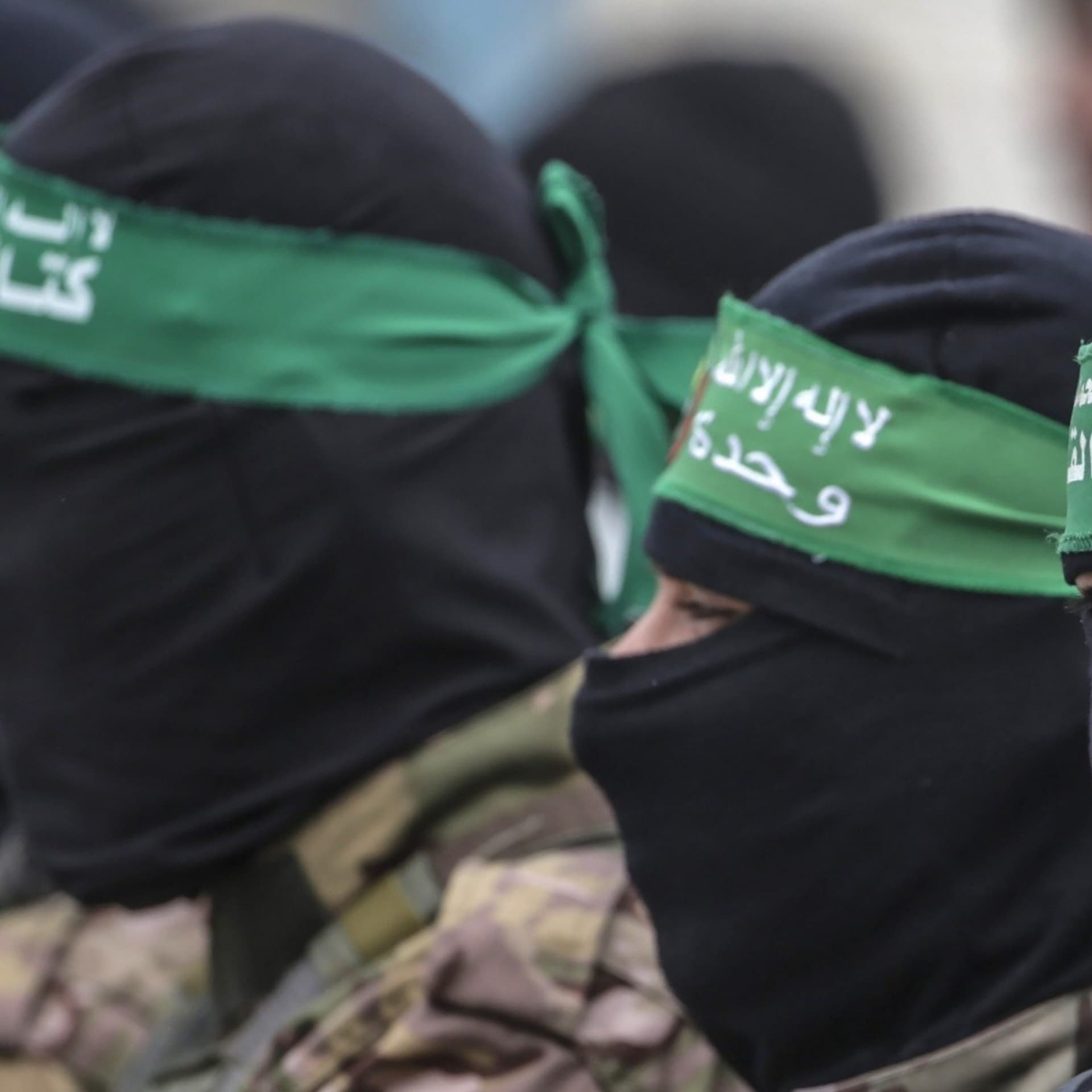
The episode covers: Hamas says it has accepted a Gaza peace deal to lay down arms, with weapons stored under Palestinian oversight and Israel gradually withdrawing from about 60% of the Strip; Israel has not yet confirmed. Key claims include Hamas leadership changes after Israel killed Yahya Sinwar, and that Hamas is acting due to losing leverage expectations tied to wider regional conflict.
Notable examples
dismantling Gaza tunnel networks; Hamas says Israel must allow 600 aid trucks daily (including fuel) and that hospitals, water, and electricity are largely destroyed. It also reports rising West Bank settler violence after a deadly confrontation near Nablus; a resident of Havat Gilad justifies revenge attacks.
Guests
none named as interview guests; sources include Gaza correspondent Rushdie Abbaalouf, Middle East correspondent Lucy Williamson, sports reporter Adam Wild, correspondent Nick Beak, Middle East analyst Sebastian Usher, reporter Ambarasan Etirajan, correspondent Ionee Wells, and library manager Michelle Hudson.
Written by AI. May contain mistakes. Listen to the episode to check what was said.
Chapters
Tap a time to open that second in VOHamas Accepts Peace Deal
0:47 to 2:12
Discussion about Hamas agreeing to a peace deal and its implications.
“This is the Global News Podcast from the BBC World Service.”
Insights from Gaza Correspondent
2:12 to 4:12
Rushdie Abbaalouf shares insights on the peace deal and its significance in Gaza.
“Let's get more from Rushdie Abbaalouf, our Gaza correspondent, who's in Cairo.”
Concerns and Hopes for Gaza's Future
4:12 to 6:20
Discussion on the impact of the peace deal on Gaza’s reconstruction and daily life.
“We are not sure if this is enough for Israel to claim victory, because, you know, we have seen Israeli prime minister many times saying that we will not allow even small arms by Hamas.”
Settler Violence in the West Bank
6:20 to 11:19
Exploration of rising violence against Palestinians in the West Bank and settler perspectives.
“The deal was announced overnight and most of the people in Gaza, they don't have electricity.”
UEFA vs FIFA: The World Cup Controversy
11:19 to 14:01
Coverage of UEFA's strong opposition to FIFA's proposed changes to the World Cup.
“It's not even two weeks since the 2026 Men's World Cup ended, a tournament which FIFA described as a huge success.”
Opposition to FIFA's Plans
14:01 to 16:01
Discussion on the growing opposition to FIFA's controversial plans and its implications for Gianni Infantino.
“CONCACAF, which represents bodies in North America, Central America and the Caribbean, they have 41 associations.”
Migration Crisis in Ceuta
16:02 to 20:08
Details about the recent migration surge in Ceuta, Spain, and the government response to the situation.
“To the Spanish enclave of Suta at the northern tip of Africa now.”
Migration Crisis in Ceuta
20:56 to 21:22
Details about the recent migration surge in Ceuta, Spain, and the government response to the situation.
“Find on-trend shoes from the brands you love, like Birkenstock, Nike, Adidas, and more at DSW.”
Saudi Arabia's Economic Downturn
21:28 to 24:19
Analysis of Saudi Arabia's economy amidst the ongoing conflict in the region and its implications.
“Saudi Arabia has one of the largest economies in the Middle East, but its wealth still comes largely from the country's huge oil reserves.”
Avalanche at Broad Peak
24:20 to 28:08
Report on the missing mountaineers following an avalanche at Broad Peak, including details of rescue efforts.
“A renowned Nepalese-born mountaineer, Nirmal Purja, is among a team of 10 who are feared missing on one of the world's highest mountains in Pakistan after an avalanche.”
Show all 12 chapters
Brazil's Electoral Integrity Concerns
28:08 to 30:06
Learn about the Brazilian government's concerns over election integrity amid allegations of misinformation.
“It's understood they were seeking meetings with some of the electoral authorities, but also with Flavio Bolsonaro, the right wing candidate in the presidential election.”
The Return of an Overdue Library Book
30:08 to 32:42
Discover the intriguing story of a 150-year overdue library book returned in Australia.
“And it's not uncommon to hear of some library books being returned a few years late.”
Transcript
Automatic transcript. May contain errors.0:00This BBC podcast is supported by ads outside the UK.
0:30that unpacks the stories making news in Washington right now and how they may affect your finances and portfolio. Listen at schwab.com slash Washington Wise. That's schwab.com slash Washington Wise. This is the Global News Podcast from the BBC World Service.
0:53I'm Pete Ross and in the early hours of Friday the 31st of July, these are our main stories. The Palestinian militant group Hamas says it's accepted a peace deal for Gaza, which will see it lay down its arms. President Trump has called the breakthrough historic. There's mounting opposition to FIFA's plans to part-privatise the Football World Cup.
1:17Also in this podcast... The team went missing after a massive avalanche. What they are saying is the next few hours they will be launching a rescue effort. Ten experienced climbers are feared missing following an avalanche in Pakistan.
1:39We start in Gaza. Hamas, which has ruled the Strip for nearly 20 years, says it's agreed to lay down its arms as part of a peace plan put forward by President Trump's Board of Peace. It says its weapons will be put in storage under Palestinian oversight. In return, the Israeli army will gradually withdraw from Gaza. It currently holds around 60 % of the Strip's territory. The US president has described the deal as an historic agreement, but importantly, Israel has yet to say whether it's signed up. And in Gaza, there's little enthusiasm. People there know that agreements between Palestinians and Israel have been made and broken before.
2:18Let's get more from Rushdie Abbaalouf, our Gaza correspondent, who's in Cairo. I think there was two major developments in the last couple of months. Firstly, Hamas was not elected a leader for about a year since Israel killed Yahya Sunwar. And now they have a new leader who is from Gaza, who is backed by the militants in Gaza. And I think this gives him the power to take the decision. Second, when I spoke to Hamas in the last couple of days, it seems that they were relying a lot on the Iran-American war, believing that wind in Hamas will have leverage over this. And they seem to be losing hope about this.
3:00When I spoke to one of the Hamas members of the negotiation team, they said, we have made this step because we care about the people of Gaza and the suffering of the people of Gaza. He was trying to push for using wording that Hamas will not hand over the women to Israel and the women will be under a Palestinian National Committee control. It is a significant step. This is a major development since the agreement in October, the U.S. President Donald Trump peace map back in October. This is the most significant, I think, step towards going forward in this plan because for months, Hamas leaders have been coming to Cairo, Turkey and Qatar to discuss this.
3:47And all the time they were saying that we will not allow disarmament, but this time it is significant because the agreement talked clearly about infrastructure, weapon manufacturing, and most important, the network of tunnels in Gaza that will be dismantled. So it's an important moment, but of course, for it to be truly significant, we need to hear from Israel. Have we got any sense what the Israeli government thinks of this deal? We are not sure if this is enough for Israel to claim victory, because, you know, we have seen Israeli prime minister many times saying that we will not allow even small arms by Hamas.
4:27And there is in this agreement, it was not clear whether Hamas militants will they will keep their, you know, small firearms because they were all the time concerned that revenge might be against their people. Many Gazans accused Hamas during the war of, you know, killing their opponents and maintaining by force law and killing some of the people. Also, there is a militia backed by Israel operating in some of the areas that are under Israeli control, and this is a big concern for Hamas. They raised this issue many times during the negotiation, and part of the deal is that these militia, four or five militia in Gaza, they will be dismantled before Hamas handing over their weapon, according to this senior Hamas official who spoke to the BBC tonight.
5:18Many of the buildings in Gaza have been reduced to rubble, destroyed by the Israelis over the last few years. Does this deal give people their hope that the buildings and things can be rebuilt? Well, yes, they hope, because the second stage of the ceasefire is talking about, you know, rebuilding Gaza, allowing reconstruction. Now what the people are need are, you know, very quick response to the essential services like electricity, water, medical facilities. You know, most of the hospitals in Gaza are destroyed. There is no Internet in most of the area in Gaza. There is no water and people will have to queue every day, every morning for hours to get water.
6:03There is no running electricity in any part of Gaza. If the people are looking for any progress in this, well, part of the deal, Hamas said, that Israel will have to allow 600 trucks of aid every day, including fuel, which is very essential for running, you know, the hospitals in Gaza. The deal was announced overnight and most of the people in Gaza, they don't have electricity. Probably many, even they haven't heard of the announcement, but very little people who have access to an online website, they were sharing their feeling about it and people don't seem to be very happy yet. They are waiting to see what will happen next.
6:45Our Gaza correspondent Rusti Abba-Aloof. To the West Bank, where violence is on the rise. Earlier this week, the United Nations warned that Israeli settler violence had hit an all-time high. Now, a British government minister has described the attacks on Palestinians in the territory as appalling and has called on Israel to protect Palestinians there and take meaningful action to prevent and prosecute settler violence. It follows a wave of attacks against Palestinian villages near Nablus in an apparent retribution for a lethal confrontation between Israelis and Palestinians last weekend. Four Palestinians and two Israelis were killed during that confrontation, including an Israeli security guard from the nearby settler outpost of Havad Gilad.
7:30Israeli outposts in the West Bank are illegal, both under Israeli and international law. Our Middle East correspondent Lucy Williamson has gained rare access to the outpost to speak to one of its residents about the violence.
7:47We've just driven into the outpost of Hevat Gilad. I'm standing on one of the hilltops and I can see shacks and temporary housing spread all the way up to the next hilltop. On one side of this outpost is the Palestinian village of Sara. And on the other, a view stretching for miles across the West Bank. I don't go to the Palestinian people and burn the houses of Palestinians. But that's exactly what happened on Friday. Yes. Six houses in Salwa. But it's revenge. Yehuda Shimon is a resident here and a lawyer with an organization that defends Israelis accused of settler violence. He spoke to us days after an Israeli security guard from Havat Gilad was killed by a Palestinian man who snatched his weapon in a confrontation nearby.
8:41Four Palestinians and another Israeli man were also killed in that confrontation. It triggered a wave of settler attacks against Palestinian villages here. I think now, after they kill one Israeli people, we need to kill all the people in Tel and Sara, even Jit and Farata. Why? Because we don't want it to happen again. It sounds like you're saying one Jewish life is worth hundreds or thousands of Palestinian lives. A million. One Jewish life, it's 10 million, OK? That just sounds racist. Yes, I know, I know. But this is the truth. Because God chose us. Because of this, you are jealous. These extreme views, rejected by many Israelis, are crucial to understanding the growing violence in the West Bank, which many Israeli settlers see as land given to them by God.
9:36The Bible is authorising that this land belongs to us. Israel occupied it militarily. And under international law, that means that no civilian settlements can be built here. Yes, but the God not writing the Bible, the international law. So you're a lawyer. Yeah. And you're saying the only law that really counts for you is the Bible. Yeah, of course. So what happens to the Palestinians who live here? There is three options. One option, they said, OK, I like you. I want to make peace with you. I know that it's your land. I'm not trying to kill you, to rape you. I just want to live here in quiet.
10:22This is the best. If not, I said to all of them, you could go whatever you want to go. There is, I think, 52 countries of the Arabs, Muslim countries all over the world. go there. And the next option, if you don't want to make peace with us, you don't want to get out from here, I don't have a choice. I must kill you. And I kill you all. Some former Israeli military leaders have said certain members of Israel's current government are orchestrating settler violence and shielding their armed and messianic followers from law enforcement. Palestinians I've spoken to in villages across the occupied West Bank say they feel unprotected by their own security forces, threatened by Israeli ones and abandoned by the world.
11:16That report from Lucy Williamson. It's not even two weeks since the 2026 Men's World Cup ended, a tournament which FIFA described as a huge success. But now its boss Gianni Infantino is facing his biggest challenge. European football's governing body, UEFA, says it will boycott all FIFA competitions, including the World Cup, if Mr Infantino pushes forward with his proposals to sell parts of the competition to US-based private investors. In a statement issued on behalf of its 55 member nations, UEFA said that the World Cup is not for sale. Laura McAllister is a vice president of UEFA. This was an historic moment for football.
11:58We've certainly issued very powerful statements expressing our opposition to the proposal this week, but it came to the moment where we really had to be on the right side of history, and we were prepared to do whatever it takes to stop a really catastrophic intervention by FIFA in our game. Now, a second football confederation from North and Central America and the Caribbean, CONCACAF, has also rejected FIFA's plans, but stopped short of threatening a boycott. So, what's going to happen now? That's a question I put to our sports reporter, Adam Wild. That is the million dollar question, I guess.
12:34What will happen is they will have to wait and see if other international football bodies follow suit, follow what UEFA and CONCACAF have said. Obviously, UEFA have come out very, very strongly, as you were hearing there, that they will boycott any potential future FIFA competitions if these proposals are pushed through. Now, CONCACAF have not gone quite as far, but they've also said they will reject the proposal. And the sources that we have spoken to at the BBC have begun suggesting that whilst they haven't lost faith in Gianni Amfantino yet, that they are beginning to lose faith in the FIFA president's ability to govern the game or indeed have lost it altogether.
13:20So if other international federations follow suit, then I suspect this plan may well be dead before it even gets going. Who else has come out in support of UEFA? Because obviously it needs votes apart from the 55 votes that it has to vote against this proposal. Right. Have we not heard something from Asia as well, which suggests that support is kind of building behind UEFA? Yeah. So, I mean, what we've heard so far, just put the definite numbers together. Gianni Amfantino, the president of FIFA, has said that he needs a majority of the 211 members of FIFA to back these plans. So you do the quick maths, they need 106 to back these plans.
14:00Now, UEFA, they have 55 national associations, all of which have said they won't back the plans. CONCACAF, which represents bodies in North America, Central America and the Caribbean, they have 41 associations. So already the numbers who are opposed to these plans are backing up. Now, as you say, there are plenty of other federations. The Asian Federation said it's so far disappointed it's not been consulted before the plans entered the public domain. So that is falling very short of an outright rejection. The Confederation of African Football says it's going to host a meeting of its executive committees next week.
14:40They say to assess and evaluate the proposals. So again, that isn't a rejection. So the numbers may still be there for FIFA. But as I say, the numbers rejecting it are beginning to stack up as well. So it's going to be very interesting what happens over the next few days and whether Infantino can get enough numbers to get these controversial plans over the line. And where does this all leave Gianni Infantino himself? I mean, he's been in the role for 10 years now and there's obviously elections for him around the corner, which prior to perhaps the last couple of days, it would have been expected for him to win quite handily.
15:17Is that still perhaps the case now? Yes, well, look, he has always been a hugely controversial character, hasn't he, even before this summer's World Cup. And I think those incidents around the World Cup, particularly, you'll remember those incidents with Donald Trump and Balogun's suspension that in the end didn't happen. the USA striker. I think that has only cemented those people who feel that perhaps he isn't the right man to lead the most powerful organisation in world football. And I guess things like this and the fallout from this and the controversy that this has caused over the last few days will only add to those who already think that he perhaps isn't the man to lead FIFA into the future.
16:00Adam Wilde. To the Spanish enclave of Suta at the northern tip of Africa now. where there were chaotic scenes on Thursday. Footage online showed migrants swimming or crammed into large dinghies crossing from Morocco. As they made it to land, many celebrated shouting Viva España, long live Spain. España!
16:26Viva España!
16:31Others ran through a gate in the border fence and in doing so crossed into European Union territory. The enclave represents the European Union's only land border with Africa. In response, the Spanish government says it's sending extra troops to Suta. The Italian Prime Minister, Giorgia Maloney, has described the scenes as shocking, adding that Italy was prepared to intervene with extraordinary measures. Our correspondent Nick Beak took me through the day's events. The images captured some people making quite a quick journey, coming to shore other people really struggling and there were lifeboats and there were inflatables being thrown out to people but really there was this mass movement of people which the authorities on this spanish enclave are saying has caused an emergency really and they're calling on the spanish government in madrid to declare this as a national emergency the authorities there say that they don't have the power to do that.
17:30It's only if it was an earthquake or some sort of wildfire that they can do this. But they are sending hundreds of extra troops and soldiers to deal with what's happening. We're talking about quite a significant number of individuals that have made this journey. Do we have any idea of the sort of numbers? And do we have a sense or any idea of what's triggered this? Periodically down the years, there have been attempts, some of them small, for people to move from Morocco into the EU, into Ceuta itself. And often the numbers depend on the relationship between Spain and Morocco at any given time.
18:08What seems to have triggered it this time is that this month, the highest court in Spain, the Spanish Supreme Court, came out with this ruling saying that migrants who are intercepted trying to reach Spanish land in northern Africa, they wouldn't be, in the words of the court, summarily returned. So they wouldn't be immediately turned back. And it does seem that this is incentivized hundreds, maybe thousands of people. We haven't got exact figures. Some people are talking about maybe 3 ,000, certainly the Spanish media, Spanish television. And so there has been this big attempt for people to get across.
18:44But the question is, what happens to them once they're there because you know obviously they're not in mainland Spain that the Strait of Gibraltar divides them so this is what's happened today and as is so often the case with migration stories and great movements of people this has also prompted a political reaction a strong one you've got the Vox party the far-right party in Spain calling this an invasion and I've just seen that And tonight, Italy have said that Spain should be temporarily suspended from the EU Schengen zone. So in other words, the area where they've got borderless travel, where you don't need to show your passport.
19:21But of course, on the human level, thousands of people now in this particular place. And what about the Spanish government? What happens next as far as they're concerned? Well, the Spanish government say they're taking immediate action. The interior minister is going to be visiting tomorrow. Of course, that's, you know, a symbolic move. But what is not symbolic is the movement of troops and more members of the Civil Guard. But, I mean, unless there's a huge deployment, people would be massively outnumbered. And you've got the authorities that run this Spanish territory saying that they're overwhelmed, that there are reception centres which were already full up, that if anyone needs medical treatment, that the hospitals will be full.
20:03And also they say they're worried about the security side of things. Nick Beak.
20:11Still to come in this podcast... You could only borrow one book at a time unless you could prove that there were other members in the family that were able to read. What a book that's overdue by 150 years reveals about library rules in the 19th century.
20:56We'll be right back. Find on-trend shoes from the brands you love, like Birkenstock, Nike, Adidas, and more at DSW. With the new Schwab Teen Investor Account, teens can gain hands-on investing experience and build positive money habits. It's an account co-owned by you and your teen, so you can monitor and engage with the account while your teen learns how to invest and manage money. Learn more at schwab.com.
21:27This is the Global News Podcast. Saudi Arabia has one of the largest economies in the Middle East, but its wealth still comes largely from the country's huge oil reserves. So it's no surprise that the massive disruption as a result of the US and Israel's war with Iran has led to an economic downturn. It shrunk by almost 5 % between April and June compared to the same period last year. and much as Saudi Arabia would prefer for the war to end, it's being dragged further into the conflict. For more on the economic downturn, I spoke to our Middle East analyst, Sebastian Usher. It's down to the impact it's had on the absolute key oil sector in Saudi Arabia.
22:09I mean, the fact that Saudi cargoes of oil haven't been able to go through the Strait of Hormuz is a major factor. There are other routes that they've been taking, but those also have been put under threat as well. So that's the hit. I mean, in the oil sector, there's been about a 25 % fall in activity. And so I think that is directly responsible for a 5 % decline since last year for this quarter. There was growth this time last year. So given all that, you'd think that the Saudis would want to get themselves out of this war, perhaps quicker, sooner rather than later. But that's not what's been happening.
22:48Yes, I think Saudi Arabia has been pulled in to some extent against its will. It's carried out attacks with the US just this week on a militia in Iraq in response, it said, to rockets that were being fired towards Saudi Arabia from there. So that's something that the Saudis wouldn't necessarily want to get involved in. And of course, in Yemen, where a Saudi led coalition fought a war with the Houthi movement for years, which has been in abeyance for the past two or three years, that looks like it could suddenly be going to erupt again. And that's because the Houthis have, for the first time really, since the Iran war started, have played the card that the Iranians have threatened that they can close down another key waterway, the Bab-o-Mandeb Strait.
23:40And they have made moves towards doing that. And that's what the Saudis have reacted to. They have carried out strikes on the capital Sanaa, which is held by the Houthis. there's been some to-and-throw attacks between the Houthis and the Saudis. There are reports that the Saudis may be planning a much bigger offensive which could reignite that war. Again, not something that the Saudis really wanted to get away from that, wanted to close that front down completely because it had gone nowhere. It didn't want to be involved any more deeply in the war with Iran, but just events have forced it into this position.
24:17The pressure is building on Riyadh. Sebastian Asher. A renowned Nepalese-born mountaineer, Nirmal Purja, is among a team of 10 who are feared missing on one of the world's highest mountains in Pakistan after an avalanche. More details now from Ambarasan Etirajan. The team went missing after a massive avalanche hit the Broad Peak, which is about 8 ,047 metres. And so far, there has been no communication from the team. and I spoke to one of the Alpine Club of Pakistan officials, Karar Haidri. He was saying that they had lost all communication. Purja's colleagues at the base camp, they are now trying to establish contact.
25:01So this happened on Thursday afternoon. So what they are saying is the next few hours they will be launching a rescue effort. And in all, 10 members of this international mountaineering team are missing. Can you tell us a bit more about some of the others that are part of that group? Yes, Mr. Porja normally leads various teams. There are people from around the world who go to his team. He's basically based in Nepal, but he takes mountaineers to Pakistan or even on the Chinese side of the Everest. So what we know, according to the Alpine Club of Pakistan, an American, a Chinese national, an Omani, and five Nepalese are said to be part of this climbing group.
Read the full transcript
25:48And we don't know the details about one more climber. What we understand is they were actually going up the mountain when this incident happened. And they're only feared missing. We don't know anything about survivors or casualties. There is a possibility, you know, if by chance they may be stuck in some pockets. This has happened before where you can if you have the NF equipment, you can withstand the cold. There is a possibility that you can survive if there is any pocket or maybe only the communication was lost and they're waiting for a time, a good time to come back. I mean, these are all some of the hopes of this base camp teams and also the Pakistani officials.
26:35But there is also a danger that if you are swept away and far away, and then if you fall into any crevasse or any of the slopes in the mountain, then it is difficult to climb up. You need to have a lot of stamina, experience and energy. But Nirmal Purjaya is a very experienced mountaineer. And he's like one of the stars of the mountaineering field. So we are just waiting for information. And what the Pakistani authorities are saying is that, especially the mountaineering officials are saying they are coordinating with the government. They want to send a couple of mountaineers on the rescue effort.
27:12And if the weather permits, they will also use a helicopter in the next few hours' time. I'm Barisan Etirajan. Already tense relations between Brazil and the United States have just become a little more strained. President Luis Inacio Lula de Silva confirmed on Thursday that his government had denied visas to two US officials, accusing them of seeking to interfere in October's election. Tim Franks has been speaking to our South America correspondent, Ioni Wells, who's in Sao Paulo. We understand that these were two senior State Department officials who have been identified as Riley M. Barnes, an Assistant Secretary of State for Democracy, Human Rights and Labour, and another man called Samuel Sampson, a deputy assistant secretary in the same department.
27:58Now, they were essentially meant to be visiting Brazil at the end of July for what they described as a visit to look at both election integrity, but also freedom of expression, freedom of religion. It's understood they were seeking meetings with some of the electoral authorities, but also with Flavio Bolsonaro, the right wing candidate in the presidential election. The concern of the Brazilian government run by President Lula da Silva, who will be challenging Flavio Bolsonaro in the election, is that just earlier in July, Flavio Bolsonaro had addressed a group of foreign diplomats and essentially at one moment cast doubt on the integrity of Brazil's electoral system, comparing the machines to those used in Venezuela, which is false.
28:43They aren't of the same origin. And Brazil's system, in fact, is considered one of the most secure in the world. As a result, there were concerns from the Brazilian government that this delegation from the US were essentially coming to try to sow doubt on the integrity of the electoral system. Now, Flavio Bolsonaro, after allegations that he was trying to spread misinformation about the election, denied that he was casting doubt on the system and said he was simply encouraging more international election observers to come to Brazil for the election. But I think that has certainly drawn the ire of the Brazilian government to feel like the US is trying to meddle in Brazilian affairs, something which the US says is baseless.
29:21And just in terms of that October election, the presidential election, Lula looking for another term in office. He's up against Flavio Bolsonaro, the oldest son of the jailed former leader, Jair. Are they the two leading contenders? Yes, it certainly at the moment looks pretty close between those two contenders. Lula, as you say, 80-year-old incumbent president who's seeking a fourth term, although he had a period out of office in between, running against Flavio Bolsonaro on the right, who has been endorsed by his father, Jair Bolsonaro, who, as you say, is currently still serving a 27-year prison sentence after plotting a coup to try and overturn the results of the last election that he lost.
30:05Ionee Wells speaking to Tim Franks. Now, it's probably fair to say that most of us have returned a library book late at least once in our lives. And it's not uncommon to hear of some library books being returned a few years late. But how about 150 years overdue? That was the case for stunned librarians in New South Wales in Australia. Chantelle Hartle has the story. The Odyssey with a twist. That was the reaction of librarians in the town of Kiama, south of Sydney, when one of the oldest books in their collection made its way back to them. The book, The Antiquities of Athens, was published in 1858, recognised at the time as the first accurate survey of classical Greek architecture.
30:50It was last taken out sometime in the 19th century by a borrower whose identity remains a mystery. But it was turned in by a man who had unknowingly had it in his possession for some time, as library manager Michelle Hudson explains. A gentleman approached me with this lovely old book in his hands. He has been doing some renovations and he found it in a tea chest amongst other books. When he flicked through it, he found that it had our Kiama Library ownership stamp in it. It's just as well the library doesn't charge fines for late books anymore. At a rate of three pence per week for every week the book is overdue, the invoice would have been around 19 ,500 US dollars, accounting for inflation.
31:36Despite a bit of water damage, the book is still in good condition. And a note printed on the inside cover gives a fascinating glimpse into 19th century library rules. You could only borrow one book at a time, unless you could prove that there were other members in the family that were able to read. And in that case, it was left up to the librarian's discretion. We don't need proof that you can read nowadays to come into the library. Also, books were unable to be issued to anyone that was intoxicated. The book is now in the library's local history collection, but it won't be available on loan again.
32:14Staff are, understandably, not prepared to wait another 150 years for it to resurface if it goes missing again. But other librarians have waited much longer for a book to be returned. Cambridge University holds the Guinness World Record for the most overdue library book. Borrowed in 1668, it was returned 288 years later. Chantelle Hartle.
32:43And that's all from us for now. If you want to get in touch, you can email us at globalpodcast at bbc.co.uk. You can also find us on X at BBC World Service. Use the hashtag Global News Pod. And don't forget our sister podcast, The Global Story, which goes in-depth and beyond the headlines on one big story. This edition of the Global News podcast was mixed by Masood Ibrahim and the producer was Ed Horton. The editor is Karen Martin. I'm Pete Ross. Until next time, goodbye.
From the publisher
Hamas says it's agreed to a plan put forward by President Trump's Board of Peace to completely disarm in Gaza. The BBC understands that the proposal provides for the inventory and storage of Hamas's remaining heavy weapons under Palestinian oversight. There's been no comment yet from Israel, but Mr Trump said they would eventually withdraw from Gaza. Also, we hear from a settler in the occupied West Bank who says that God chose Jews to live there and not the Palestinians. Uefa votes to boycott the World Cup if Fifa goes ahead with a plan to sell off a stake in the tournament. Thousands of migrants from Morocco overwhelm border controls to get into Spain's African enclave of Ceuta. A team of experienced mountaineers is feared missing on one of the world's highest mountains in Pakistan. And the library book that's returned after being loaned out for 150 years.
The Global News Podcast brings you the breaking news you need to hear, as it happens. Listen for the latest headlines and current affairs from around the world. Politics, economics, climate, business, technology, health – we cover it all with expert analysis and insight. Get the news that matters, delivered twice a day on weekdays and daily at weekends, plus special bonus episodes reacting to urgent breaking stories. Follow or subscribe now and never miss a moment. Get in touch: globalpodcast@bbc.co.uk
Photo: Armed fighters from Hamas' Izz ad-Din al-Qassam Brigades, Gaza Strip, February 2025. Credit: Mohammed Saber/EPA-EFE/REX/Shutterstock