
In short
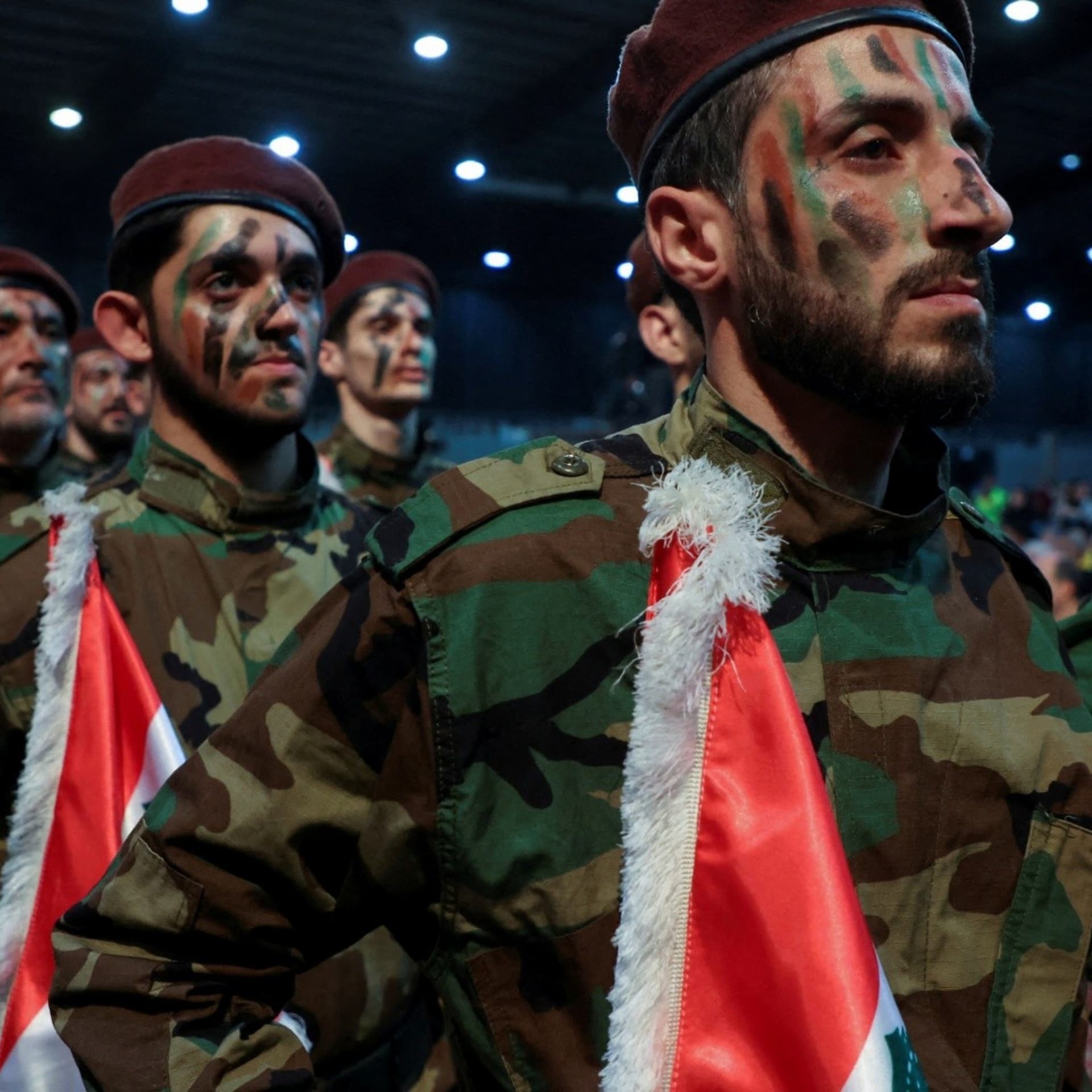
This BBC Global News Podcast episode covers multiple headlines. Main focus: Hezbollah rejects a US-brokered Israel-Lebanon ceasefire. Hezbollah leader Naim Qasim says the deal is “shameless” and amounts to surrender because Israel continues bombing Lebanese villages; Israel’s defence minister says fighting Hezbollah can continue in southern Lebanon. The Lebanese government wants a ceasefire but lacks ground control; WHO says 600+ have died in Lebanon since mid-April. Notable example: reports of a Hezbollah attack on Israeli forces before Qasim’s statement.
Other segments
BBC Monitoring reports Ukrainian drone strikes in Crimea killing at least four; EU begins preparations for Ukraine’s accession talks. SpaceX files for about $75bn IPO; Constellation Research links it to AI/space/defence demand. Fiji rejects an Australian rubbish incinerator plan (“waste colonialism”). FIFA bans reusable water bottles at the World Cup, criticized as late and risky for hydration.
Guests
Lina Sinjab (Beirut correspondent), Vitaly Shevchenko (BBC Monitoring chief analyst), R. Ray Wang (Constellation Research), Phoebe Hobson (BBC reporter), Katie Gornall (sports correspondent), Pete Ross (BBC), Oliver Wainwright (Guardian design/architecture journalist), James Kumrasamy (Guardian), Joanna Keane (global affairs reporter).
Written by AI. May contain mistakes. Listen to the episode to check what was said.
Chapters
Tap a time to open that second in VOHezbollah Rejects Ceasefire
1:19 to 2:10
Hezbollah's rejection of a US-brokered ceasefire with Israel and Lebanon.
“The Iran-backed militant group Hezbollah flatly rejects a US-brokered ceasefire deal between Israel and Lebanon.”
Israeli Responses and Situation Update
2:10 to 3:06
Israeli defense minister's comments and ongoing violence in Lebanon.
“Hezbollah has flatly rejected a US-brokered seaside fire deal that Israel and Lebanon agreed in Washington on Wednesday.”
Hezbollah's Position and Internal Pressure
3:06 to 4:22
Analysis of Hezbollah's role and internal pressures in Lebanon regarding the ceasefire.
“James Menendez got this update from Lina Sinjab in Beirut.”
Ukrainian Strikes in Crimea
4:22 to 5:51
Updates on the Ukrainian drone strikes and their impact in Crimea.
“Yeah, Lina, is there pressure on the group from within Lebanon to stop what they're doing?”
European Union and Ukraine's Accession Talks
5:51 to 7:56
Discussion on EU's preparations for Ukraine's potential accession.
“The authorities in the Russian-occupied region of Crimea say at least four people have been killed in the latest wave of Ukrainian strikes.”
SpaceX's Historic IPO Plans
7:56 to 10:55
Details on SpaceX's IPO and implications for Elon Musk and the market.
“It's hugely symbolic for Ukraine because this is something that Ukraine has been trying to achieve for, well, more than a decade.”
Tiananmen Square Anniversary and International Reactions
10:55 to 13:00
Commemoration of the Tiananmen Square events and responses from Taiwan and the US.
“But the plan is for him to roll up Echo Star, which is this telecommunications satellite giant, and of course with Cursor after the acquisition.”
Commemorations Around the World
13:00 to 14:01
Discussion on global commemorations for Tiananmen Square and local bans.
“US Secretary of State Marco Rubio has weighed in.”
Hong Kong Commemorations
14:01 to 14:30
Learn about the attempts to commemorate victims in Hong Kong despite police intervention.
“As I said, they used to hold widespread commemorations there until they were banned in 2020.”
Chicago's New Landmark
14:30 to 14:49
Discover the controversial new landmark for Barack Obama's presidency in Chicago.
“places like Berlin, London, New York, those kind of places.”
Show all 16 chapters
Fiji Rejects Waste Proposal
15:40 to 16:43
Explore Fiji's rejection of a waste shipping proposal due to environmental concerns.
“Welcome to Stateside with Kai and Carter.”
Waste Colonialism Issues
16:43 to 18:33
Discuss the broader implications of waste colonialism and its global context.
“The BBC's Phoebe Hobson has been looking into the story.”
FIFA's Water Bottle Controversy
18:33 to 21:21
Examine FIFA's decision to ban reusable water bottles at the World Cup and its implications.
“With the Football World Cup just a week away, FIFA has announced it will ban fans from taking reusable water bottles into stadiums in an apparent U-turn on the issue.”
Obama Presidential Center Overview
21:21 to 25:12
Learn about the unique features and criticisms of the Obama Presidential Center.
“After a US president leaves office, their papers are preserved in what is known as a presidential library.”
Tribute to Marjan Satrapi
25:12 to 28:59
Reflect on the life and legacy of Marjan Satrapi, the author of Persepolis.
“The graphic memoir Persepolis tells the story of restrictions imposed on a young girl in Iran after the 1979 revolution.”
Upcoming Show Announcement
29:40 to 30:10
Announcement of the new podcast 'Stateside with Kyan Carter'.
“We don't have billionaires telling us what to say.”
Transcript
Automatic transcript. May contain errors.0:00This BBC podcast is supported by ads outside the UK.
0:30for easy pickup or delivery. Restrictions apply. See the website for full terms and conditions. Yep, he's planning another project. So this Father's Day at Lowe's, tap into free gifts for Dad. Get a free Select Craftsman power tool when you buy a Craftsman V20 charger with 2-amp hour and 4-amp hour batteries. Plus, get a free DeWalt power tool when you buy a Select 20-volt Max XR 4-amp hour battery kit. Dad knows our best line-up is here at Lowe's. Valid through 714, while supplies last. Selection varies by location. This is the Global News Podcast from the BBC World Service. I'm Alex Ritson, and at 15 hours GMT on Thursday, the 4th of June, these are our main stories.
1:20The Iran-backed militant group Hezbollah flatly rejects a US-brokered ceasefire deal between Israel and Lebanon. Ukraine is accused of killing four people in Russian-occupied Crimea with a drone attack. SpaceX reveals the price for what's likely to be the biggest stock market flotation in history, which could make Elon Musk the world's first trillionaire. Also in this podcast, the government of Fiji says no to an Australian company's plan to send rubbish to the Pacific nation. These projects, many people consider sort of like a bit of a colonial legacy of a much wealthier nation sending what they over-consume to places that don't actually produce that much waste.
2:03By environmental activists, it's called waste colonialism. And FIFA bans football fans taking water bottles into World Cup stadiums in a U-turn which has alarmed health campaigners.
2:18Hezbollah has flatly rejected a US-brokered seaside fire deal that Israel and Lebanon agreed in Washington on Wednesday. If it's to have any chance of success, the Iranian-backed group must stop attacking Israel and withdraw from southern Lebanon. Hezbollah's chief, Naim Qasim, said that as long as Lebanese villages were being bombed and people were being killed, northern Israel would not be safe, and the deal amounted to surrender and defeat. A truce was already meant to have been in place since mid-April, but more than 600 people have been killed in Lebanon since then, according to the World Health Organization.
2:54And on Thursday morning, Israel's defence minister, Israel Katz, said that under the terms of the latest ceasefire agreement, fighting against Hezbollah could continue in southern Lebanon. James Menendez got this update from Lina Sinjab in Beirut. She explained that Lebanese government officials wanted a ceasefire but could do little without Hezbollah's support. The government is adamant in its position to find a solution and end to the war, but they have no say on the ground. We've heard from the leader of Hezbollah, Nayib Qasim, basically calling these kind of talks are shameless and humiliating for the nation and rejecting the terms of this ceasefire.
3:37And in fact, before his statement came out, we've already heard report of a Hezbollah attack on Israeli forces inside Lebanon. So, you know, they are the ones on the ground dictating the situation, despite government's efforts to find a solution. The terms of having the Lebanese army to be in control of the south were already discussed in 2024, but never implemented. And even with this new detailed agreement of creating some sort of zones to have the Lebanese army in control and make sure that there is no presence of Hezbollah, Hezbollah is rejecting them. So unless they agree to this, it's hard for the government to proceed with this kind of agreement sponsored by the Americans.
4:22Yeah, Lina, is there pressure on the group from within Lebanon to stop what they're doing? There is certainly mounting pressure from many people, but there is at the same time support among the Lebanese Shia community of the south, because they also see that this severe aggression conducted by Israel on their land, the occupation of their land, the destruction of the infrastructure of the houses. Basically, they feel that Hezbollah is the only one who is able to stand up and not the government. But the reality is, you know, the more Hezbollah attacks and, you know, fights back the Israelis, the more the Israelis are attacking and destroying.
5:01And as the Lebanese president today said, that probably this is the best option for Lebanon to find a way for gradual lasting solution for the south. Yes, I think he called it a last chance, didn't he? Is the fighting still going on today? It's still going on, but definitely not with the same scale that in the past few days. Mind you, the deal announced, it did not specify exactly when it's going to take effect, if it is starting today or tomorrow. Also, we heard earlier from the President Joseph On saying we're waiting for answers from the parties involved. And the answer came from Naim Qasim in the afternoon, rejecting the terms of this ceasefire.
5:43So we'll have to wait and see if there's any other development or if this is going to be cancelled at all. Lina Sinjab. The authorities in the Russian-occupied region of Crimea say at least four people have been killed in the latest wave of Ukrainian strikes. In recent days, local residents have been reporting increasingly loud explosions. I heard more from our chief analyst at BBC Monitoring, Vitaly Shevchenko, who's in the Ukrainian capital, Kyiv. One Ukrainian strike appears to have targeted facilities in Sintiropoul, which is the administrative capital of the occupied region of Crimea. The local Moscow-installed authorities are saying that the attack targeted non-residential facilities.
6:34One representative of Crimean Tatars, which is the indigenous population living there, who is now in exile, he says that it was Russian military bases that were attacked. Now, that claim is unconfirmed. But what is unusual about this strike, that this is the first instance of the local mosque-backed authorities publicly reporting fatalities from the region's capital. Elsewhere, they're saying a commuter train travelling to the city of Kerk, which is in the east of Crimea. It was hit by a Ukrainian drone, allegedly killing one person. We've been speaking over the last few days about Ukraine taking the initiative in terms of drone strikes in Russia.
7:25They're having quite an effect, aren't they? They are, and local residents have been reporting increasingly loud explosions at night. And this campaign has had an impact on what residents of Crimea can buy. There's been a widespread shortage of fuel, for example. Vitaly, while we've got you, I'd really appreciate your thoughts on this news that the European Union has begun preparations for talks on the accession of Ukraine to the bloc. It's hugely symbolic for Ukraine because this is something that Ukraine has been trying to achieve for, well, more than a decade. You remember the first so-called revolution, the Orange Revolution in Ukraine.
8:10It was called Euromaidan because this is how Ukrainians try to make progress towards joining the EU. And now they are one step closer. But before this happens, all sorts of steps will need to be taken, such as Ukraine asking various laws to comply with EU legislation. So at the moment, I would say, Alex, that the symbolic or potential symbolic benefits outweigh practical benefits hugely. Vitaly Shevchenko. It's been in the pipeline for some time, but the US company SpaceX has now officially filed for what's expected to be the largest stock market flotation ever. It's seeking to raise about$75 billion if the flotation expected to take place next week goes to plan.
9:05The firm's founder, Elon Musk, already the world's richest man, could make history by becoming the first ever trillionaire. R. Ray Wang is the chief analyst at Constellation Research, a Silicon Valley firm that studies technology trends. He told us more about the IPO. To infinity and beyond, here's where we go. This is the first of three giga IPOs. And what's going on here is basically a huge market demand for AI, space, defence, and of course, the future space tech going out to the frontiers. And I think this is what's happening here. I would say that the IPO at this moment has been checked through Wall Street.
9:44There's an interesting factor in this IPO. Unlike other IPOs, 33 % is being left for retail investors. One might argue that the retail investors are the only ones left to participate in the deal. But it's a$1.77 trillion valuation at$135 per share. And I think there's a lot going on here. Not just space telecommunications and AI all coming together and converging. A lot of Elon's companies are very collaborative in a sense because there's a lot of opportunities for coexistence. What they're doing in each of these companies is if you think about all the things that you need to do to get to space and all the things you need to do to get to Mars, you've got to have power.
10:19You've got to have automated manufacturing. You've got to have AI. You've got to have space telecommunications. They are building the infrastructure piece by piece. And that's the brilliance of Elon's strategy, because what he's gotten everyone to do is to pay for the ability to get to Mars by providing all the things that people need today as a foundation for what's about to happen in the future. And so there is a lot of talk about potentially Elon buying Tesla after they go public and rolling those operations into SpaceX. Or it could be more valuable keeping all these different companies public and creating new companies and continually raise money by going to the markets in an IPO.
10:54So we're going to see what happens in the strategy. But the plan is for him to roll up Echo Star, which is this telecommunications satellite giant, and of course with Cursor after the acquisition. R. Ray Wang from Constellation Research. On June 4th, 1989, the Chinese military was sent to Tiananmen Square to end weeks of student-led protests. Soldiers opened fire on the protesters, killing hundreds, possibly thousands of people. The Chinese government doesn't let anyone inside the country commemorate the anniversary. Hong Kong used to hold annual vigils, but those too have now been banned. But in Taiwan, the anniversary of the massacre is remembered.
11:35The island's president, Lai Qingde, has now pressed Beijing to recognise the deadly crackdown. Pete Ross told me more about what he said. Taiwan's president said earlier in a Facebook post that China should acknowledge the truth about the events that happened 37 years ago. He said that he sincerely hoped that China could face up to the incident, acknowledge the truth, soothe the pain and open the door to reconciliation and dialogue. Now, as you've mentioned, Alex, the events on and around the central Beijing square on June 4th, 1989 are not publicly discussed in China. The anniversary is not officially marked.
12:14And at the time, China blamed the unrest on counter-revolutionaries seeking to overthrow the Communist Party. it's never provided a full death toll. However, human rights groups would suggest hundreds if not thousands of people died that night. Lai went on to warn against what he described as blindly believing in militarism and in comments perhaps aimed at Beijing, he went on to say a healthy government and society. In his words, should not use violence, surveillance or other means to strangle the dreams and erase the opinions of a country's citizens. China, of course, considers Taiwan part of its territory.
12:49It's not responded directly to these comments by the Taiwanese president, but Beijing has in the past branded him as a separatist and has rebuffed several attempts and offers for talks. US Secretary of State Marco Rubio has weighed in. Is that a surprise? Well, he's made very similar comments in the past. This time he said censorship cannot erase the past. That's likely to be reassuring to Chinese dissidents and pro-democracy supporters at a time when President Trump has repeatedly touted his good relationship with Chinese leader Xi Jinping. He was in Beijing, of course, last month to meet with him.
13:26The US Secretary of State's comments are perhaps not entirely unexpected, given what he said before, but they do come at a delicate time for US-China relations. They've entered a bit of a standoff following that meeting in Beijing, where he and President Xi, Donald Trump, maintained a fragile trade truce. Where is the anniversary being marked? Well, again, as you mentioned, they used to have widespread commemorations in Hong Kong. They've been widely snuffed out. The largest vigils there are now taking place elsewhere. However, yesterday in Hong Kong, a performance artist tried to honour the victims but was quickly stopped by police.
14:05In a video widely circulating online, Sam Nguyen tried to tie a symbolic red thread, which was 6.4 metres long, a reference to the date, June 4th, to a signpost in Causeway Bay, which is a very busy area of Hong Kong nearby the squares where the Vinchels used to be held. As I said, they used to hold widespread commemorations there until they were banned in 2020. Now other major cities around the world holding commemorations, places like Berlin, London, New York, those kind of places. The BBC's Pete Ross. Still to come in this podcast, the new Chicago landmark built to house records of Barack Obama's presidency doesn't seem to be loved by everyone.
14:51It's been locally nicknamed the Klingon Jail. It's been compared to a World War II flak tower. It's a very aggressive, looming, mostly windowless object.
15:09Hey, it's Ryan Seacrest for Jewel Osco. For you, Save Days are here now through June 23rd. Find hot deals throughout the store and earn four times the points. Look for in-store tags to earn on eligible items from AngelSoft, Silk, All, Spam, Hormel, Planters, and Canada Dry. Then, clip the offer in the app for automatic event-long savings. Stack up those rewards to save even more. Enjoy savings on top of savings when you shop in-store or online for easy pickup or delivery. Restrictions apply. See the website for full terms and conditions. I'm Kai Wright. I'm Carter Sherman. Welcome to Stateside with Kai and Carter.
15:43We're a new show from The Guardian. We're talking to big thinkers and the best journalists, just trying to understand the world through smart conversation and honest reporting. We don't have billionaires telling us what to say. Stateside with Kyan Carter will come out three times a week, Monday, Wednesday and Friday, starting May 13th. Subscribe on YouTube or wherever you get your podcasts.
16:10This is the Global News Podcast. Fiji has rejected a proposal by an Australian recycling company to ship thousands of tonnes of rubbish from all across the region to the Pacific nation to be burned for energy. It comes after a backlash from landowners and tourism operators. The plan to build an incinerator on the island archipelago capable of consuming 900 ,000 tonnes of waste a year was blocked over environmental and public health concerns. Some called it waste colonialism. The BBC's Phoebe Hobson has been looking into the story. This project was the brainchild of two men. Rob Crum, who is the managing director of the fashion label Kakae, which is based in Paris, and Ian Malouf, who is a man who has made his fortune from rubbish disposed on this kind of transaction that, you know, you send your rubbish elsewhere for cash.
17:01Their promise was that Fiji could receive 900 ,000 tonnes of waste and that would then help produce 40 % of the country's electricity, weaning them off their reliance on diesel. And as you say, people were against it. It was even labelled the Pacific ashtray. Yeah, very strong words, lots of kickback on this. So this idea that you can send non-recyclable waste and then burn it, sometimes it's seen as a bit of a green solution to this problem, but actually it can increase a country's emissions. There's health concerns. They were going to build a whole different port for this project. And so also Fiji, it's a small country, about a million people.
17:36They rely so heavily on tourism. And the city where it was going to be built near Nadi is the sort of entry point for the tourism where people go in and explore, you know, these stunning sort of beaches and amazing landscapes. And so an incinerator, you can imagine, would be a bit of an eyesore. But also people were worried about what's the impact of this, especially these projects that many people consider sort of like a bit of a colonial legacy of much wealthier nations sending what they overconsume to places that don't actually produce that much waste. Yeah, I'm told it would have pushed up emissions in Fiji by about a quarter.
18:05And it's not the only example of a rich country trying to do this sort of thing. No, it's not. I think it's important to recognise this is non-recyclables that will be burnt for energy. But in general, this idea of waste being sent elsewhere by environmental activists, it's called waste colonialism, is so widespread. The United Kingdom does it, the US does it, Australia does it. And you send it to the global south, you have huge issues by this being slightly unregulated, waste ending up in large dumps. is it probably being managed? So yeah, it's a very controversial issue. Phoebe Hobson. With the Football World Cup just a week away, FIFA has announced it will ban fans from taking reusable water bottles into stadiums in an apparent U-turn on the issue.
18:46The sports governing body said the decision was due to safety concerns. It's worried that bottles could be used as missiles and thrown at players and officials. FIFA has assured fans that they'll be able to buy water in the stadium, promising not to charge above their usual venue prices. With games being held across the US, Canada and Mexico at the height of summer, health experts have criticised the late policy change. I spoke to our sports correspondent, Katie Gornall. We know that heat and humidity, as you say, Alex, is expected to be an issue at this World Cup, particularly in places like Monterey, Miami, where Scotland play Brazil.
19:25Fans should be drinking multiple litres of water to avoid heat stress. So there are concerns that banning reusable bottles creates a barrier to staying hydrated. Now, I think it's intriguing that FIFA's position on this has changed multiple times. It was only a little over two weeks ago, I did a story on heat and received a statement from them saying that spectators will be allowed to bring a factory sealed water bottle into matches when forecasts indicated elevated temperatures. Now the stadium of Conduct, sorry, the Stadium Code of Conduct makes no reference to that at all. So that's changed.
20:02There's been this U-turn on reusable bottles too. And it's a U-turn with potentially significant consequences because people believe this will increase the risk of heat stress. And one scientist described it to me as a reckless rejection of FIFA's duty of care. Yeah, FIFA says safety, but a lot of people will look at it and say this is probably price gouging. FIFA has, of course, suffered other accusations of that sort during this tournament. You're right. FIFA has come under fire. There's been complaints that fans are being hit by ticket prices, inflated train fares. And as you say, this U-turn, they say, comes down to safety.
20:38They're worried about water bottles being used as missiles by fans. So they say that people will be able to buy water in the stadium. They're not going to inflate the prices beyond what you would usually pay at those venues. And they say this move will lower the risk of injury caused by potentially fans throwing missiles. They said in a statement that they're committed to protecting the health and safety of all the players, referees, fans, volunteers and staff. And they added that they're working closely with the host cities, the local authorities to put heat mitigations in place for fans travelling to the stadium.
21:11And that could include things like misting stations, stations, cooling tents, and putting more of those hydration facilities around the stadium footprint. Katie Gornall. After a US president leaves office, their papers are preserved in what is known as a presidential library. Barack Obama is now opening his, except it's a bit different from the other 16 currently administered by the National Archives. We didn't build the Obama Presidential Center to celebrate my ability to bring about change. We did it to unlock yours. As a young community organizer on the South Side, I learned that all of us had the ability to make a difference.
21:52So we built an entire campus dedicated to supporting future changemakers. The$850 million building officially opens in Chicago in two weeks' time. Even though it's more of a community hub, it follows in the grand tradition of previous presidential libraries. James Kumrasamy heard more about it from Oliver Wainwright, design and architecture journalist for The Guardian, who has visited the centre. It's been nicknamed the Obamalisk because it rises above the south side of Chicago like a chiselled granite obelisk that's been hewn and cleft from a mountainside. It's a very kind of intriguing sculptural presence, but it's been locally nicknamed the Klingon Jail.
22:36It's been compared to a World War II flak tower. It's a very aggressive, looming, mostly windowless object that now towers above what's a predominantly low-income neighborhood. The symbolism is surprising because when Obama was in the White House, most people, he seemed relatively humble as U.S. presidents go. This is probably the biggest, most expensive, most audacious presidential library that's ever been conceived. It's also the first presidential library that's not actually a library. He bucked the tradition. It's run by his private foundation rather than by the National Archives, which is the usual system in the US.
23:13So it doesn't actually contain the presidential records. The foundation argues that because about 90 % of his archive was already what they call born digital, i.e. emails and digital documents, there was no point in printing everything out to have a physical archive. So what of other presidential libraries? What can you tell us about them? Well, it was begun back in 1940 by Franklin D. Roosevelt, who was a kind of obsessive collector and record keeper. And he actually visited the pyramids in Egypt and was amazed, but also approved the kind of sheer monumentality and scale of them and wanted something similar.
23:48So he built his own presidential library in upstate New York. And actually in a relatively kind of modest Dutch colonial style, that was what kicked off this trend. And every single president since him has built a kind of ever bigger, ever more elaborate complex, which is also often their final resting place, which kind of adds to the slightly ghoulish quality of these places. Each time the architecture tries to kind of embody the vision and the values of the president. So we have Lyndon B. Johnson commissioned this very aggressive, brutalist building by Gordon Bunshaft in Texas. Reagan has a kind of sprawling California hacienda built in the kind of Spanish style that has its own aircraft hangar to display Air Force One.
24:29Clinton built a much more modern and kind of sleek cantilevered bridge-like building. He was trying to build a bridge into the 21st century. So you get a lot of these kind of slightly hackneyed architectural cliches. And of course, the incumbent, he's got buildings in his name all over the world, hasn't he? So do we have any idea what he might come up with? Yeah, well, he's determined to trump Obama and build something even bigger and more expensive. His current plan is a skyscraper in New York that's going to have a gilded statue of Trump in the lobby. That's the downside, I would say, of the Obama Presidential Center is that it has set a precedent for these things to be privately run and privately managed.
25:07And so Trump is going to take that model and put it on steroids. Oliver Wainwright. The graphic memoir Persepolis tells the story of restrictions imposed on a young girl in Iran after the 1979 revolution. It was later made into a highly successful movie, which won a prize at the Cannes Film Festival in 2007 and was then nominated for an Oscar.
Read the full transcript
25:43Now the author of the comic book and the director of the film, Marjan Satrapi, has died. She was only 56. I heard more about her and the film from our global affairs reporter, Joanna Keane. Well, this film's an animation. It was actually released over 20 years ago. Now, in 2008, that Oscar nomination that you mentioned there, Marjan Satrapi became the first woman to be nominated in the Best Animation Feature category. And when it won the prize in Cannes in 2007, she said, even if this is a universal film, I want to dedicate this prize to all Iranians. Now, it follows a character called Marji, as you mentioned, growing up in Iran.
26:24She's battling with these restrictions. For example, we see her buying Western clothes and music on the black market. She's outspoken, as Marjan was in real life. At one point, she's expelled from school for questioning the teacher's account of the government. Marjan Satrapi said of the film it was a reminder that Iranians are just like everyone else. She said, what we wanted to say is if these people scare you, look closer. They have parents, they have lovers, they have hope, they have stories. Yeah, it was an extraordinary film. Tell us about Marjan Satrapi herself. Well, like her character, she grew up in Iran.
26:59She was sent to Austria by her parents to finish her studies in the 1980s. She returned to Iran and then in her 20s she went to live in France where she became a voice for Iranian women. Now, after the death of an Iranian Kurdish woman in protest in Iran in 2022, She said it's very important that this regime disappears. She said it wouldn't happen overnight, but she said, I think it's important to remain hopeful. And here she is talking to the BBC in 2022. Well, I know what is the role of the diaspora is. I mean, if we think that after all these years that we have not been in Rihon, we go and we decide for them what they have to do because we know better, then we are very extremely arrogant and stupid people.
27:41This is not the way it goes. The best that we can do is that we can be the loudspeaker of our people, also to give them courage. And Joanne, she was also a French citizen, but quite critical of the government there. That's right. Well, only last year she turned down the Légion d 'honneur. Now, she made it clear that she meant no disrespect to the reward itself. But she said the French government had a hypocritical attitude towards Iran with its visa policies. In a letter she said, I can't continue seeing the children of Iranian oligarchs come to spend their holidays in France, even become naturalised, while at the same time young dissidents have difficulty in obtaining a tourist visa to come to see what the country of the Enlightenment and human rights looks like.
28:26Joanna, do we know how she died? Well, her family have released a very short statement. They said actually that she died of sadness a little over a year after the death of her husband. He was a Swedish producer and a collaborator on many of her projects. And in a series of recent social media posts, she talked about losing the love of her life. Now, the French president, Emmanuel Macron, is among those to have paid tribute. He called her a remarkable artist who transformed an Iranian childhood into a universal fable. Joanna Keane on Marjan's satrapi, who's died at the age of 56. And that's all from us for now.
29:08If you want to get in touch, you can email us at globalpodcast at bbc.co.uk. You can also find us on X at BBC World Service. Use the hashtag Global News Pod. And don't forget our sibling podcast, The Global Story, which goes in-depth and beyond the headlines on one big story. This edition of the Global News Podcast was mixed by Holly Smith, and the producer was Mickey Bristow. The editor is Karen Martin. I'm Alex Ritson. Until next time, goodbye.
30:00We don't have billionaires telling us what to say. Stateside with Kyan Carter will come out three times a week, Monday, Wednesday, and Friday, starting May 13th. Subscribe on YouTube or wherever you get your podcasts.
From the publisher
Israel and Lebanon agree to a truce - but Hezbollah, backed by Iran, refuses to stop fighting while villages are under attack. The Lebanese President, Joseph Aoun, says this is the last chance for meaningful peace. Also, Ukraine is accused of killing four people in Russian-occupied Crimea in a drone attack. SpaceX reveals the price for the biggest stock market flotation in history - which could make Elon Musk the world's first trillionaire. Fiji says no to an Australian company's plan to send rubbish to the Pacific nation, in what some are calling "waste colonialism". Fifa bans football fans taking water bottles into World Cup stadiums, in a U-turn that's alarmed health campaigners. And the French-Iranian author and artist, Marjane Satrapi, best known for the book and film Persepolis, has died.
The Global News Podcast brings you the breaking news you need to hear, as it happens. Listen for the latest headlines and current affairs from around the world. Politics, economics, climate, business, technology, health – we cover it all with expert analysis and insight. Get the news that matters, delivered twice a day on weekdays and daily at weekends, plus special bonus episodes reacting to urgent breaking stories. Follow or subscribe now and never miss a moment. Get in touch: globalpodcast@bbc.co.uk Photo: Hezbollah members marking al-Quds Day in Beirut’s southern suburbs. Credit: Reuters/Mohamed Azakir File photo



