
In short
The episode covers: US-Iran talks in Islamabad ending without a deal after 21 hours; the US says Iran rejected an “affirmative commitment” not to seek a nuclear weapon or the tools to quickly achieve one, despite prior destruction of enrichment facilities. Iran’s foreign ministry called US demands excessive. A ceasefire was agreed for two weeks, but next steps are unclear. It also reports Israel-Lebanon violence undermining the ceasefire: Israel says it never included Lebanon and strikes 200+ times in 24 hours; Lebanon says deaths exceed 2,000; ambassadors plan talks in Washington next week. Hungary’s election: Viktor Orban vs Peter Magyar, with turnout high. Other segments: Easter in Kharkiv under low expectations; UK shelving a Chagos/Mauritius sovereignty deal over Diego Garcia base; Artemis II crew’s Houston welcome home; and a book interview on the Cambridge Five spies.
Guests
none in this transcript (only correspondents and Artemis speakers).
Written by AI. May contain mistakes. Listen to the episode to check what was said.
Chapters
Tap a time to open that second in VOUS-Iran Talks Overview
1:14 to 2:36
Discussion on the recent US-Iran talks in Pakistan and their outcomes.
“Hello, I'm Ankur Desai and in the early hours of the 12th of April, these are our main stories.”
Analysis of Negotiation Sticking Points
2:36 to 4:00
Insights into the key issues preventing an agreement in US-Iran talks.
“Vance, it's come to a crashing halt and the Americans are flying home.”
Press Conference Insights
4:00 to 5:45
Details from the press conference following the US-Iran negotiations.
“to refrain from excessive demands and unlawful requests.”
Hezbollah Protests in Lebanon
5:45 to 8:07
Coverage of the protests in Lebanon against talks with Israel.
“But still the fact that there were such senior delegations here in Islamabad that both sides were clearly taking these talks seriously.”
Hungary's Parliamentary Election
8:07 to 10:52
Overview of the political landscape and election in Hungary.
“Outside the Prime Minister's office in central Beirut, Hezbollah supporters gathered in protest.”
Life in Kharkiv Amid War
11:41 to 14:05
A correspondent's report on the situation in Kharkiv during a ceasefire.
“Welcome to The Interface, the show that decodes the tech that's rewiring your week and your world.”
Easter Amidst War: A Glimpse of Hope
14:05 to 15:00
Learn how Easter celebrations in Ukraine are impacted by the ongoing war.
“that they're bringing to be blessed by the priests here.”
Ceasefire Illusions: The Reality of Conflict
15:00 to 16:20
Understand the fleeting nature of the Easter truce in Ukraine amidst ongoing tensions.
“Larissa tells me there may well be a pause in the fighting, but she's sure the Russians will then hit even harder.”
Sovereignty Struggles: The Chagos Islands Issue
16:20 to 17:30
Explore the geopolitical complexities surrounding the Chagos Islands and UK-Mauritius relations.
“Next to a story developing in the tiny Chagos Islands in the Indian Ocean.”
Diego Garcia: A Strategic Military Base
17:30 to 19:00
Learn about the significance of Diego Garcia in military strategy and US-UK relations.
“The US has called it all but indispensable.”
Show all 13 chapters
NASA's Artemis II Mission: A Historic Journey
19:00 to 21:00
Discover the highlights and significance of NASA's Artemis II mission and its crew's experiences.
“I mean, what do people connected with these islands think about all of this?”
The Cambridge Five: Spies of a Bygone Era
21:00 to 23:10
Delve into the history and actions of the Cambridge Five spies and their impact during the Cold War.
“And honestly, what struck me wasn't necessarily just Earth.”
Betrayals and Ideologies: The Cambridge Five's Legacy
23:10 to 26:31
Examine the ideological motivations and consequences of the Cambridge Five's espionage activities.
“The first was diplomatically by giving him all the gap between the rhetoric of Churchill and Roosevelt at the end of the war and their real thoughts about everything that was going on.”
Transcript
Automatic transcript. May contain errors.0:00JD Vance:This BBC podcast is supported by ads outside the UK.
0:30Make your next financial move with confidence. Follow NerdWallet's Smart Money Podcast on your favorite podcast app. You ain't heard about Moto Casino? Moto has real Vegas slots. Any game you can find on the floor in Vegas, you can play it on Moto. I like my slots hot. Moto's free to play, like food stamps, in line at the grocery store, at a funeral, in traffic, keep your eyes on the road. I phone Moto Casino. Moto Casino got jackpots that are bigger than my belly. Moto, America's hottest free-to-play social casino. Download the Moto Casino app today. Moto Casino is a social casino.
0:58JD Vance:This is the Global News Podcast from the BBC World Service. Hello, I'm Ankur Desai and in the early hours of the 12th of April, these are our main stories. The US Vice President, Jody Vance, has said marathon talks with Iran in Pakistan have not ended in a deal to end the conflict in the Middle East. Hungarians are voting in a parliamentary election that's been keenly watched far beyond the boundaries of Europe, with Prime Minister Viktor Orban facing a concerted effort to unseat him. Also in this podcast. I may have not learned everything that this journey has yet to teach me, but there's one new thing I know.
1:48Planet Earth, you are a crew. The four crew members of the Artemis Moon mission have been given an emotional news conference at a welcome home ceremony in Houston.
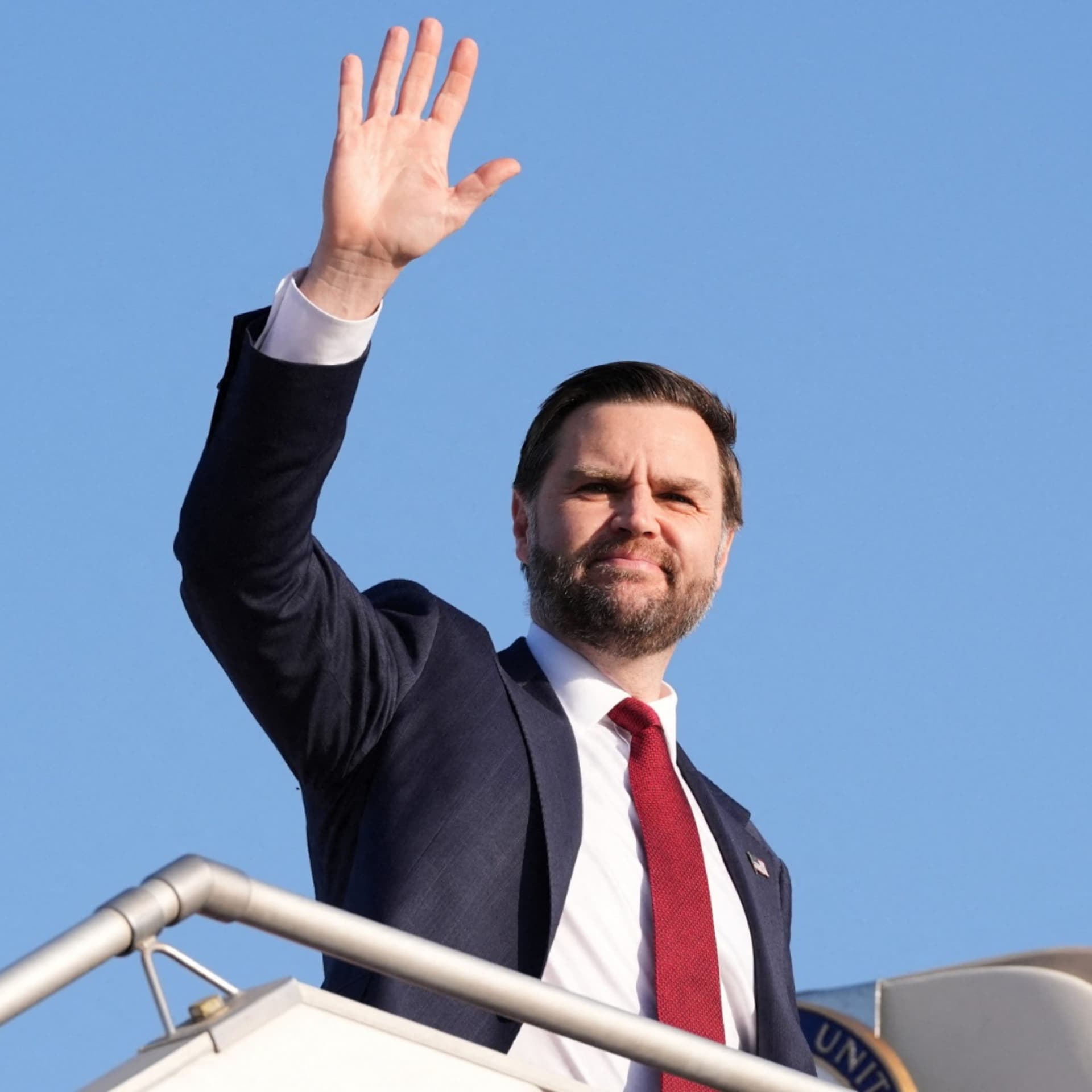
2:05Well, of course, all day it's been all eyes on Islamabad in Pakistan, where American and Iranian officials have been locked in hours of truly historic talks. Talks aimed at not just bringing to a permanent end almost six weeks of war, but at resetting relations between two countries, antagonizing each other for 47 years since the Iranian revolution. A reset with huge implications for the Middle East and possibly even more widely. But after 21 hours, according to the U.S. Vice President J.D. Vance, it's come to a crashing halt and the Americans are flying home.
2:41JD Vance:We've had a number of substantive discussions with the Iranians. that's the good news. The bad news is that we have not reached an agreement, and I think that's bad news for Iran much more than it's bad news for the United States of America. So we go back to the United States having not come to an agreement. We've made very clear what our red lines are, what things we're willing to accommodate them on, and what things we're not willing to accommodate them on. And we've made that as clear as we possibly could, and they have chosen not to accept our terms. Questions? Precisely what have they rejected here?
3:15Can you help us understand it a little bit?
3:17JD Vance:The simple fact is that we need to see an affirmative commitment that they will not seek a nuclear weapon and they will not seek the tools that would enable them to quickly achieve a nuclear weapon. That is the core goal of the President of the United States, and that's what we've tried to achieve through these negotiations. Again, their nuclear programs, such as it is, the enrichment facilities that they had before, they've been destroyed. But the simple question is, do we see a fundamental commitment of will for the Iranians not to develop a nuclear weapon, not just now, not just two years from now, but for the long term?
3:53JD Vance:We haven't seen that yet. We hope that we will. Iran's foreign ministry said the talks were intensive and called on Washington to refrain from excessive demands and unlawful requests. Shortly after that press conference from the US Vice President, I spoke to our Pakistan correspondent Caroline Davies, who's in Islamabad. I think the key takeaway, of course, is the fact that he is leaving Islamabad without a deal between the US and Iran. When asked about what seemed to be the main reason for why that deal had not been possible, he said that this was to do with Iran's ability to seek a nuclear weapon.
4:30In particular, he said that they needed to have an affirmative commitment that they would not seek a nuclear weapon and they would not seek the tools that would enable them to quickly achieve a nuclear weapon. That has, of course, been a key sticking point in previous talks. Of course, Iran has always maintained that it does not seek a nuclear weapon, that it wants to have the ability to enrich its uranium. But at the moment, I think there was a real palpable sense of disappointment in the hall. I was watching this in the press conference centre where the media have been have been put just across the road from the hotel where these talks are being held and as soon as the press conference was over we and other journalists ran to try to see what was happening with that delegation and by the time we even reached outside we could see that the cars were already lined up but the convoy was lined up ready to go and moved off fairly swiftly with a car flagged with the American flag in the centre of them so we can assume that Vice President J.D.
5:25advances on his way out of town. It was always thought to be quite a big ask to try to find some form of deal. The two sides seem to be polar apart. They seem to have very big gaps between what they were demanding and a lot of the demands seem to be unacceptable on the other side. But still the fact that there were such senior delegations here in Islamabad that both sides were clearly taking these talks seriously. I think that there was some hope that they might be able to navigate and find some form of agreement through. But as we have heard from J.D. Vance, there is no deal between the US and Iran exactly what that means next.
6:09Initially, the ceasefire that was agreed upon was agreed for two weeks. That two weeks is not yet up. So it is still not entirely certain what will be the next steps in this process. But yes, key takeaway, of course, that there is no deal between the US and Iran. Was there a sense when he left or in his final few words that there could be some sort of resumption or resurrection of talks? And regarding the ceasefire, did he make any comments regarding that? And what could happen next? There were no comments regarding the ceasefire. There was no direct mention of having future talks at the moment.
6:51What they did say was that there were, he said they'd had a number of substantive discussions with the Iranians. He said that was the good news. So relatively brief good news, followed by quite a substantial amount of what he described as being bad news, the fact that they did not reach an agreement. So I think that there's been no indication at the moment that this is just the first step and that that dialogue will continue. That's really not clear at all at the moment. He didn't, on the other hand, completely and explicitly rule out any further communication, but there's certainly not been any laid out.
7:23There's been no groundwork that we have heard of or suggested that this is just the first of many. Caroline Davies reporting from Islamabad. There is another huge sticking point that needs to be overcome if there is to be a full end to this war, and it's the violence between Israel and Lebanon. The ceasefire has had no impact, with Israel saying it never included Lebanon and striking more than 200 times there in 24 hours. Lebanon says its death toll since the start of the conflict has now gone above 2 ,000. And if there are to be any meaningful peace talks, the killing needs to stop. Still, both countries' ambassadors to the US have agreed to meet in Washington next week.
8:01But in Beirut, supporters of Hezbollah have been demonstrating against the talks. Our Middle East correspondent, Hugo Bichega, was there. Outside the Prime Minister's office in central Beirut, Hezbollah supporters gathered in protest. They are against the prospect of direct talks with Israel. It was an offer by the Lebanese government to try to put an end to the war and find lasting peace. The crowd carried Hezbollah's flag, the flag of Iran, which is the group's main supporter, and pictures of the late Hezbollah leader, Hassan Azrala. Sarah waved a Lebanese flag. I'm proud to be here because Hezbollah, it's the only, only resistance against these evil ones, this Netanyahu one, who is stealing our country, killing our people.
8:50This is a divided country. Many here blame Hezbollah for dragging Lebanon into conflicts and support negotiating with Israel. Lebanon, however, has demanded a ceasefire before any talks. But Israel says its war against Hezbollah will continue. Hugo Bacchega reporting from Beirut. Voting booths have opened in Hungary as the country begins the process of choosing the next ruling political party. It could also see one of Europe's longest-serving leaders lose his grip on a country after being in charge for 16 years. Paul Scho, the far-right nationalist Fidesz party of the Prime Minister Viktor Orban, is trailing the centre-right Tiza party of Peter Maggia.
9:31He's promising a more liberal and inclusive Hungary with closer ties to the European Union. President Trump has said he will give the country economic support if Mr Orban and his Fidesz wins the parliamentary elections. The two parties held their final campaign events in Budapest on Saturday night. Our Eastern Central Europe correspondent Nick Thorpe sent this report from the Hungarian capital. The final rally of what has been for Viktor Orban a very long campaign. He's been a leading politician for 38 of his 62 years, an astonishing 20 of those as Prime Minister. And looking at him tonight, listening to him here, he does sound tired, very tired.
10:14Has he finally met his match in Peter Madhya, a politician 17 years his junior? Will Viktor Orban's promise of a safe pair of hands, a captain of a ship in turbulent waters, prevail? or Peter Madhya's promise of a better functioning, kinder country in which the government is not constantly looking for new enemies. One thing seems certain. With passions running so high in this country, a big turnout, possibly a record turnout, we can expect on Sunday. Nick Thorpe reporting from Budapest. still to come in this podcast all were committed communists there was a kind of toxic meeting of firm ideology and total narcissism and arrogance there's new analysis on the uk's most notorious spy ring
11:40We'll be right back. Moto.us for more details. Must be 21+.
11:43JD Vance:Moto Casino. America's social casino. Welcome to The Interface, the show that decodes the tech that's rewiring your week and your world. On this week's episode, we'll look at the way that algorithms could change how much you're paying for your groceries, how even astronauts have issues with Microsoft Outlook, and whether the next trend in tech is less tech. Listen on BBC.com or wherever you get your podcasts.
12:39A correspondent Sarah Rainsford spent the day in the eastern city of Kharkiv. It's 10.30 in the morning, a few hours before the ceasefire is supposed to kick in and the air raid's just gone off here in Kharkiv. It's already sounded several times today as it does pretty much every day. And all around me are residential blocks of flats which have been shattered in previous attacks. The one just to my right has the whole end of it smashed away and the only thing that survived is a Soviet rug hanging on the wall. It's easy to understand why people need a ceasefire here when you look at the massive destruction all around here and the attacks haven't stopped.
13:37We'd just made it to the corridor when the second missile hit. Eleven bodies were identified here. With this truce, at least we'll rest a bit, because every second you expect to die. We really want peace, not for one and a half days, but for good. We're at a church on the outskirts of Kharkiv city, and people just arriving here with Easter baskets full of eggs and Easter cake and sausage meat that they're bringing to be blessed by the priests here. But the war has changed everything, even Easter. This service should be taking place at midnight with a procession around the church. But because of the curfew, because of the war, it's happening in the middle of the afternoon.
14:24This year, Russia and Ukraine have agreed an Easter ceasefire until Monday. But expectations are really low. The priest has come out of the church now and he's blessing people who've lined up with their Easter baskets. Everyone here is laughing because he's soaking them with water and they're asking him for more. Easter's all about hope and optimism and that's been in pretty short supply in Ukraine lately. But here, people are smiling, they're laughing and I guess they are hoping that at least for a day they'll be spared the Russian missiles and drones. Larissa tells me there may well be a pause in the fighting, but she's sure the Russians will then hit even harder.
15:07We're just driving on the Ring Road around Kharkiv city and it's now completely covered with protective netting. It's like we're heading through a tunnel and this is to protect the roads and vehicles from Russian drones. We've just passed through a military checkpoint and we're heading to a village that was occupied in 2022 by Russian forces. And it's now where some Ukrainian soldiers have their base.
15:41The drone unit from the Khartya brigade were busy testing new kit for the front line, practicing sending kamikaze drones at a target. The soldiers admit they're exhausted after four years of fighting. But their commander, Georgi, is also sure that this truce won't last. I gave my people order to be ready. ready for ready for an MS fire because you think that they will yeah I'm sure
16:14you can hear the air raid siren in the background there it's just 38 minutes into what's supposed to be this Easter truce and already this ceasefire seems to have been broken
16:30Sarah Rainsford reporting from Ukraine. Next to a story developing in the tiny Chagos Islands in the Indian Ocean. The foreign minister of Mauritius has vowed to spare no effort to gain sovereignty over the 60 small islands currently controlled by Britain. He was speaking after the UK confirmed it was shelving a proposed deal with Mauritius that would have seen it hand back sovereignty to the country and then lease back an island. The main island in the Chagos Islands chain is Diego Garcia, which hosts a joint US-UK military base. My colleague Celia Hatton asked our UK political correspondent Nick Hurdley to give us more about the background to the story, especially Diego Garcia.
17:13I think it's the one. It's Diego Garcia. That's the thing that really matters to the UK and the US. That air base that they have there has been really important over the last 30, 40 years, partly for refueling, partly because of just where it is in the middle of the Indian Ocean. The US has called it all but indispensable. And it's worth pointing out it has been used recently. It's been used in some of the US attacks on Iran. It was used in Yemen last year. So it's absolutely seen as this key strategic base. and the big question for the UK was how you secure the long-term future of that and I suppose that's the big question for the US as well.
17:56They just disagree on the answer. I mean you've just outlined why it's important strategically so why has the UK even been considering a plan to hand over control of these islands and then why did the Americans not want that to happen? There was an international court of justice ruling a few years ago which said that the UK had no claim to the Chagos Islands and the UK is worried that if it doesn't abide by that ruling, it's a non-binding ruling, but if it doesn't act to kind of fulfil its wishes, that ultimately it will lose control of all of this. So the plan was to give the Chagos Islands, the vast majority of which the UK isn't really that fussed about, back to, or to Mauritius I should say, but then lease Diego Garcia for 100 years for around£100 million a year.
18:44The UK says that would secure the future of the base. And it had US backing for that plan for quite a long time. President Trump, though, has changed his mind. And as a result, the UK said, well, look, our plan can't proceed. And the legislation that was going through the UK Parliament is now on hold, it seems, until there's a change of heart in the White House. I mean, what do people connected with these islands think about all of this? There has been a lot of opposition to Gossians trying to go to these islands to say, look, we have a claim to sovereignty here. We want to stay British. We're not going to let it go.
19:19Nick Erdly. For nearly two weeks, NASA's Artemis II mission, taking four astronauts further into space than ever before, has captured the imagination of the world. Now those four astronauts are back on Earth and have given an emotional news conference at a welcome home event. Less than 24 hours after splashing down in the Pacific Ocean, the crew received a rapturous reception at the ceremony in Houston.
19:43JD Vance:After a brief 53-year intermission, the show goes on and NASA is back in the business of sending astronauts to the moon and bringing them home safely.
19:58JD Vance:this is why it is now my great privilege to welcome to the stage commander reed wiseman pilot victor glover mission specialist christina coke and mission specialist jeremy hansen ladies and gentlemen your artemis 2 crew
20:18the crew flew more than a million kilometers seeing parts of the moon only ever glimpsed by robotic cameras before now. One of the astronauts, Christina Koch, made history as the first woman to travel around the moon. She said the trip had altered her perspective on what it meant to be human. A crew is a group that is in it all the time, no matter what, that is stroking together every minute with the same purpose, that is willing to sacrifice silently for each other. and a crew is inescapably, beautifully linked. So when we saw Tiny Earth, people asked our crew what impressions we had. And honestly, what struck me wasn't necessarily just Earth.
21:12It was all the blackness around it. Earth was just this lifeboat hanging undisturbingly in the universe. I may have not learned, I know I haven't learned, everything that this journey has yet to teach me. But there's one new thing I know. And that is, planet Earth, you are a crew. Thank you. The Canadian Jeremy Hansen also made history as the first non-American to travel around the moon. He reflected on the significant public attention that the mission has attracted. What you saw was a group of people who loved contributing, having meaningful contribution and extracting joy out of that. And what we've been hearing is that was something special for you to witness.
22:10And I would suggest to you that when you look up here, you're not looking at us. We are a mirror reflecting you. And if you like what you see, then just look a little deeper. This is you. Canadian astronaut Jeremy Hansen speaking at the Welcome Home Ceremony for the Artemis II mission in Houston. Burgess, McLean, Philby, Cairncross, Blunt. Names of a bygone age, but seared into the memory of Britain's intelligence services. They were the Cambridge Five, university intellectuals who chose to spy for Russia and got away with it because their defected or their discovery as spies was kept hidden. Countless books have been devoted to them, and you might be forgiven for thinking there was nothing more to say.
22:56But now a new book called Stalin's Apostles, the Cambridge Five and the Making of the Soviet Empire, has been published, shedding fresh light on their activities. My colleague Owen Bennett-Jones spoke to the author Antonia Senior and asked her how the Cambridge spies helped the Russian leader Joseph Stalin create his East European empire. The first was diplomatically by giving him all the gap between the rhetoric of Churchill and Roosevelt at the end of the war and their real thoughts about everything that was going on. And the other was by betraying all attempts to send men, money and arms to the partisans of Eastern and Central Europe who were trying to carve some measure of agency at the end of the war.
23:40And they were incredibly useful to Stalin in both respects. I mean, a bit of that has been known, hasn't it? In Albania, wasn't there a terrible thing of partisans being killed as soon as they got there? Philby's taking part in the Albanian operations has been part of the story for a while. But the Albanian secret police archives, the Sigurumi archives, only began to open up in 2016. So I was incredibly lucky to have a researcher help me wade my way through those and try and look for traces of his betrayals from the other side. And that hasn't been done before. And that was really exciting. The five were quite different characters.
24:17And did some show more doubt than others? None of them showed very much doubt at all, to be honest. And that's one of the things that I found really fascinating about them. All were committed communists. there was a kind of toxic meeting of firm ideology and total narcissism and arrogance, which kind of propelled them forward. There were moments where other people who had been recruited by the Soviets did pause when the terror was happening and all the illegal agents who'd recruited men like Philby and Burgess and Blunt and the rest, all of those got kind of caught up in the terror and they were purged.
24:53And some of them had massive doubts about the project they'd been embarked upon, not the Cambridge Five. The other moment was when Hitler and Stalin signed the Nazi Soviet Pact. And that was later spun by Stalin as a kind of cunning wheeze to sort of buy time before the inevitable showdown with Hitler. But actually, at the time, nobody saw it like that. Loads of Communist Party members all over the world tore up their Communist Party memberships. A number of the men who had been recruited in the 1930s by Soviet intelligence were so disgusted by the Nazi Soviet pact that they stopped spying for Stalin, not the Cambridge Five, they doubled down.
Read the full transcript
25:30One of the reasons they are so fascinating, isn't it, is that they did come from within the heart of the UK establishment and turned on the establishment. And that is interesting and important. I think if you just keep framing it as posh boys betraying other posh boys, being protected by more posh boys, it's only one facet of the story. And it's a very Anglo-centric facet of the story. and these were really Anglo-centric men. When Philby is running the Albanian operations, he says in his memoir that him and his American counterparts never forgot that their Albanian agents had just come down from the trees.
26:07These were the men that he was betraying. They weren't worth worrying about because they weren't British, because they weren't establishment. I mean, they were even scathing about the Russians. They thought the Russians were terrible oiks too. so their British exceptionalism is also reflected in how we tell the stories about them. That was Antonia Senior whose book about the Cambridge Five Spies has just been published. And that's all from us for now. If you want to get in touch you can email us at globalpodcast at pbc.co.uk and you can also find us on X at BBC World Service. Use the hashtag globalnewspod.
26:42And don't forget our sister podcast The Global Story which goes in depth and beyond the headlines on one big story. This edition of the Global News Podcast was mixed by Johnny Hall and the producers were Will Chalk and Guy Pitt. The editor is Karen Martin. I'm Ankur Desai. Until next time, goodbye.
From the publisher
Marathon talks between senior US and Iranian officials on ending the Middle East conflict have ended in failure. Speaking after the negotiations in Pakistan, US Vice President, JD Vance, said they could not reach an agreement, and he was leaving after putting forward a 'final and best offer'. Iran said the talks were 'intensive' but the US made 'unreasonable demands'. Meanwhile, Israel has continued to attack the Iranian proxy militia, Hezbollah in Lebanon with more than 20 people reported to have been killed on Saturday. Also: parties in Hungary have held their final rallies, ahead of Sunday's parliamentary election, concluding what has been an acrimonious campaign with Prime Minister Viktor Orban trailing in the polls; NASA welcomes home the four astronauts of the Artemis mission, at a rapturous reception in Houston, after they made it safely back to Earth from the far side of the Moon. And, the new book shedding fresh light on the infamous five British intellectuals who were recruited at Cambridge University to spy for Russia in the 1930s.
The Global News Podcast brings you the breaking news you need to hear, as it happens. Listen for the latest headlines and current affairs from around the world. Politics, economics, climate, business, technology, health – we cover it all with expert analysis and insight. Get the news that matters, delivered twice a day on weekdays and daily at weekends, plus special bonus episodes reacting to urgent breaking stories. Follow or subscribe now and never miss a moment. Get in touch: globalpodcast@bbc.co.uk