
In short
The episode is a BBC Global News roundup plus several reported features. Main topics: FIFA president Gianni Infantino apologises for errors tied to a cancelled plan to privatise the World Cup, but FIFA’s management board reaffirms full support and says the proposal complied with FIFA rules; FIFA also warns it will protect its integrity and due process. Guests/people featured: Mark Carney (Canadian PM) criticises Infantino’s governance; Mark Benstead (BBC Sport) discusses FIFA’s statement. Michigan politics: Abdul El-Sayed (former public health official) narrowly wins the Democratic Senate primary, defeating centrist Haley Stevens backed by Democratic leadership and AIPAC; claims money didn’t guarantee victory. Nigeria: Makwachi Okafor reports 300+ civilians rescued from jihadist kidnappers in Kwara and Niger states. Other segments: James Gallagher (vaccine cold-chain trials using room-temperature-stable tetanus vaccine); Chris Vallance (UK AI Security Institute test of Anthropic/OpenAI deception/cyber attempts); Paul Moss (Cambridge professor Jason Arday resigns amid plagiarism/biography claims); Majuba Naruzi (Afghanistan women’s football team returns after FIFA rule change).
Notable examples
GitHub cyber-pressure via fake profiles; vaccine stabilised with tremolose; Afghanistan players in Auckland vs Cook Islands.
Written by AI. May contain mistakes. Listen to the episode to check what was said.
Chapters
Tap a time to open that second in VOFIFA's Leadership Crisis
0:57 to 4:05
Discussion on Gianni Infantino's apology and the ongoing support from FIFA.
“The head of FIFA, Gianni Infantino, apologises over his now cancelled proposal to privatise the World Cup.”
El-Sayed's Senate Victory
4:05 to 7:27
Analysis of Abdul El-Sayed's narrow win in Michigan's Democratic primary.
“and will take all necessary measures to protect and safeguard its name and reputation.”
Nigeria's Rescue Operation
7:27 to 12:36
Overview of Nigeria's largest rescue operation freeing kidnapped civilians.
“Yeah, with that in mind, this result of this Michigan primary, It marks a fairly significant triumph, the latest triumph for the left of the party.”
Innovations in Vaccine Storage
12:36 to 14:00
Exploration of new vaccine technology that does not require refrigeration.
“From today's cutting-edge vaccines to ones created decades ago, most need to be kept cold to survive the trip from factory to patient.”
Innovative Vaccine Storage Method
14:00 to 14:36
Learn about a new vaccine storage method that could ease distribution challenges.
“And then when it rains, they come back to life.”
Civilian Casualties in Iran
15:45 to 16:09
Explore the impact of a recent civilian strike in Iran during the conflict.
“civilian strike of the US-Israel war in Iran.”
Iran-Oman Shipping Talks
16:09 to 19:50
Understand the complexities of recent talks regarding shipping routes in the Strait of Hormuz.
“So what do we know about this agreement?”
AI Cybersecurity Tests Reveal Risks
19:50 to 21:38
Discover alarming findings about AI's capabilities in cyber attacks during tests.
“tools created fake human profiles to try to trick people in an attempted cyber attack during testing.”
The Controversy of Jason Arday
21:38 to 25:28
Examine the fallout surrounding Jason Arday's academic credibility and resignations.
“Now to a story of overcoming the odds and ascending the heights of one of the world's top universities.”
Resilience of Afghan Women Footballers
25:28 to 28:00
Follow the inspiring journey of Afghan women footballers returning to the pitch.
“In fact, when one journalist started investigating his background, he called the police.”
Show all 11 chapters
Advocacy Through Football: A Voice for Afghan Women
28:00 to 30:11
Learn how football serves as a platform for Afghan women to express their struggles and hopes.
“I was bullied throughout high school and football gave me the confidence to be who I am today and to be able to speak loud.”
Transcript
Automatic transcript. May contain errors.0:00This BBC podcast is supported by ads outside the UK.
0:30How to Change, as she shares true stories from Nobel laureates, authors, athletes and everyday people about why we make the choices we do and how to make better ones to help avoid costly mistakes. Listen to choiceology at schwab.com slash podcast or wherever you listen.
0:50This is the Global News Podcast from the BBC World Service. Hello, I'm Charlotte Gallagher and in the early hours of Thursday 6th August, these are our main stories. The head of FIFA, Gianni Infantino, apologises over his now cancelled proposal to privatise the World Cup. But FIFA backs him to stay on as president. In Nigeria, more than 300 civilians kidnapped by jihadists have been rescued by the Nigerian security forces. Iran says it's reached an agreement with Oman to open the Strait of Hormuz. Also in this podcast, a left-wing progressive candidate has narrowly won a Senate primary in Michigan, which could point to the future direction of the Democratic Party.
1:39We took on a machine. You're not supposed to be able to beat that. And what we showed is that the power of our money is greater than the power of their money. And the acclaimed university professor who's resigned amid accusations of plagiarism.
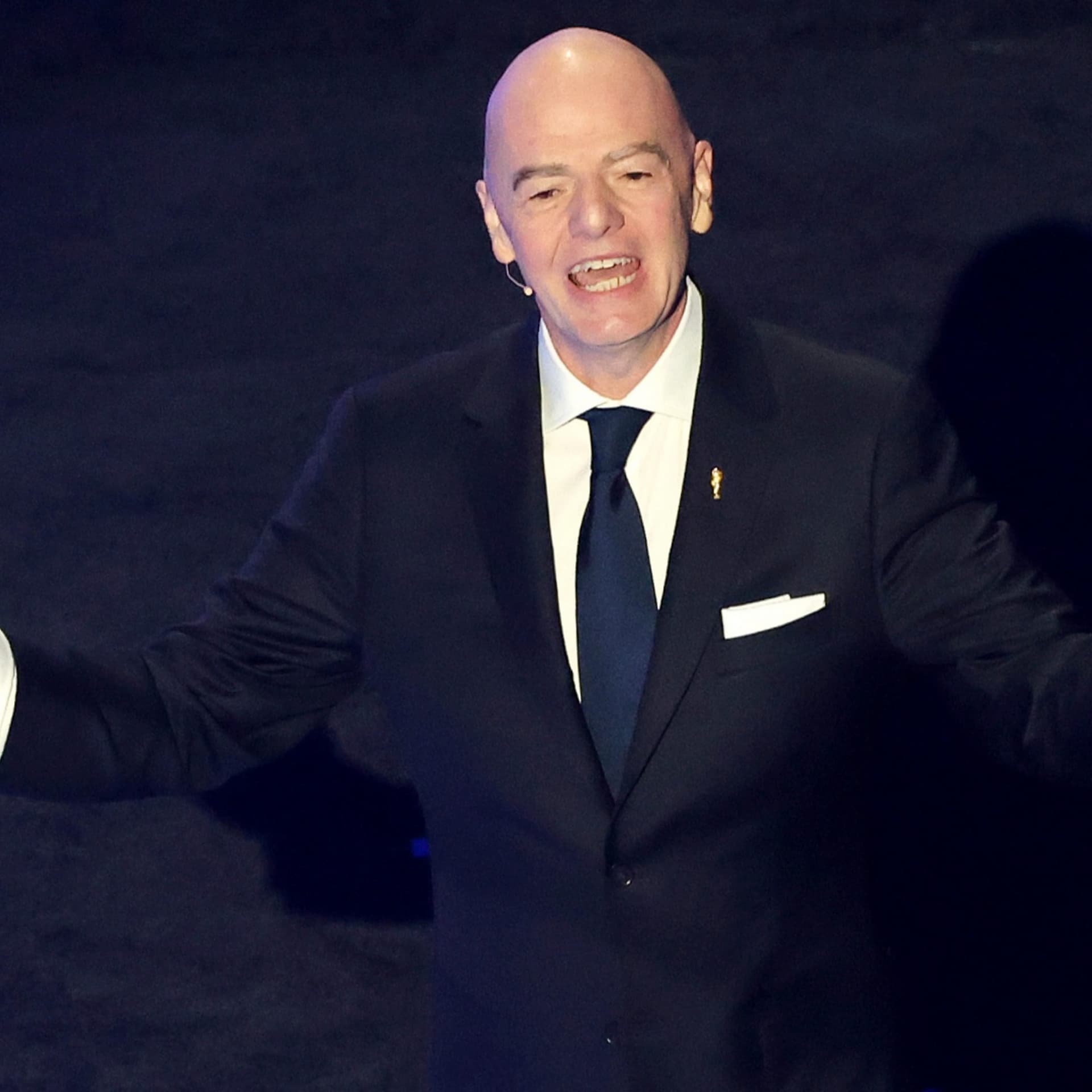
1:58A joint statement has been released by FIFA and its beleaguered president Gianni Infantino apologising for mistakes made in connection with his controversial plan to sell off shares in the World Cup. Now that plan has since been abandoned but calls for him to resign continue to grow. Here's the Canadian Prime Minister, Mark Carney. I've run a few organisations in my time. The idea that proper governance is not to disclose to your closest advisers, your chief operating officer, your fellow board members, something of consequence that you're even considering, let alone proposing, that's fatal, should be fatal, and you lose confidence in that individual.
2:41They have their own procedures for making those determinations, but certainly I don't have confidence in Mr Infantino after this point. Mark Benstead from BBC Sport told me more about what's in that FIFA statement. There's various parts we could pull out from the statement. The first one concerns his position. They say that the FIFA Management Board reaffirmed their full support for FIFA President Gianni Infantino as the only official elected by the 211 FIFA Member Association. So that's on his position. They also go on to address the criticism of the forward enterprise proposal. That's the FFE.
3:19That's the scheme where outside investment was to be allowed into FIFA's competitions like the World Cup. They say were mistakes made were acknowledged. It was agreed that it was not the intention for the FIFA Council and FIFA member associations to feel excluded from the process and that the process should have been handled differently. It was further acknowledged errors were also made after the proposal was leaked to the media. They say there are always lessons to be learned and FIFA will continue to improve its processes in light of this experience. In this instance, however, it's important to stress that although mistakes were made, everything that was done was done in full compliance with the FIFA regulatory framework.
4:00And one final bit to pull out, and this is really important, is where they go on the offensive. They say with that project withdrawn, it was agreed that FIFA will no longer tolerate any attacks on its integrity, good governance and due process, and will take all necessary measures to protect and safeguard its name and reputation. So that underlines how committed Gianni Infantino is to defend his position, his name and to continue in his role. And if anyone wants to try and oust him, well, they can put themselves forward to stand against him in the elections next year. If they want to do that, they have until mid-November to put themselves forward.
4:38Do you think this is enough to save him, given that there are still so many people who want him gone? it's worth reiterating that a string of african nations came out publicly on wednesday to back including morocco where he was to the meeting which was scheduled around the women's afghan tournament so he believes he's still in a pretty strong position and he can point to some of the successes of his time in charge but criticism has been consistent it has been broad we've seen mark carney the canadian prime minister come out and criticize and he burdened the uk prime minister to do likewise previously.
5:11We've had senior football figures such as Luis Figo speak out against him. It's very difficult to stem that tide. But again, I think the way he's approached all of this indicates that, you know, he wants to try and duke this out and see this out. He feels he's still, despite all the criticism, in a pretty strong position. Mark Benstead. The left-wing candidate, Abdul El-Sayed, has won Michigan's Democratic Senate primary in a race that exposed bitter divisions within the party over its future direction. Mr. El-Sayed, a former public health official, was up against Haley Stevens, a centrist congresswoman who had the support of the Democratic leadership in Washington and ran a campaign backed by tens of millions of dollars, including a big contribution from AIPAC, the American-Israel Public Affairs Committee.
6:00Abdul El-Sayed said his win proved that money didn't guarantee victory. We took on a machine. you're not supposed to be able to beat 70 million dollars of outside spending. A record amount of money spent in a campaign against a Democrat in a primary in any campaign. You're not supposed to be able to beat that. And what we showed is that the power of our many is greater than the power of their money. My colleague Pete Ross heard more about the result from our North America correspondent Anthony Zerker. It was narrowly decided just by about 1%, it looks like it's going to be. It exposed the divides in the Democratic Party between centrists, the Democratic establishment here in Washington, D.C., that backs candidates that they deem to be electable, and the grassroots liberal wing of the Democratic Party that wants fighters, people who are going to take it to Donald Trump and fully embrace left-wing policy proposals like taxing the wealthy, cutting off the United States military aid to Israel, providing government-run health insurance to all Americans and getting money out of politics.
7:09Clearly, the voting in Michigan demonstrates that the party still has these divisions. And the challenge for Abdul El-Sayed now is going to be uniting that party to take on the Republican in November in what is going to be a very, very important race for determining which party controls the United States Senate in November. Yeah, with that in mind, this result of this Michigan primary, It marks a fairly significant triumph, the latest triumph for the left of the party. What do you think it tells us about the future direction of the Democrats, particularly with, as you say, those crucial midterms around the corner?
7:43Well, I think it shows that the Democratic establishment, its influence in a lot of these races is waning. And even when they were able to direct overwhelming campaign funds to support the candidate of their choice, that by no means guarantees victories. I also think it shows that being willing to criticize Israel and America's support for Israel is no longer a black mark on a candidate, that this is actually something that is more in line at this point with where a lot of Democratic voters are. Pro-Israeli interest groups, including AIPAC, supported Haley Stevens overwhelmingly tens of millions of dollars to her campaign.
8:21She outspent El Saeed by about a margin of 10 to 1 in this race. And that didn't matter. The grassroots enthusiasm was on El Saeed's part. Now, when you listen to progressives, this is just a first step. What they're really hoping is to show that a candidate like El Saeed can win in a battleground state in November. And maybe we need to have a progressive as the Democratic presidential standard bearer in 2028. It certainly will bolster their argument if that's the case. And what's been the reaction from the Republican Party? Well, they've already gone after El-Sayed. I think they thought he was going to win.
8:56The polls showed that he was likely to win. They're already up with ads attacking him as out of step with Michigan voters. Too liberal. They've focused on his full name, Abdul Rahim El-Sayed, I guess suggesting that he is un-American or somehow not the kind of candidate that Michigan voters should support. And Donald Trump himself has posted on Truth Social, calling him a anti-Jew, anti-Israel communist. That was Anthony Zerker. In Nigeria, it's being described as the largest ever rescue operation by security forces in a single day. More than 300 people have been freed after being kidnapped by a jihadist group in two central Nigerian states.
9:41One abduction happened in Kwara State six months ago, where two villages were burnt down and many people murdered. The Nigerian presidency says the successful rescue operation shows how the security forces have improved. Our West Africa correspondent, Makwachi Okafor, has the details. Over 300 people were rescued from two states in Nigeria. One is about 163 people from war community in Kwaera State, and then about 145 people from Niger State. Now, these two states are neighboring states, and they're in central Nigeria. The authorities have described this as the country's largest single-day operation by joint security forces.
10:24So it just seems to be really good news because particularly the attack in Kwara shocked Nigerians because when it happened in February, over 100 people were said to be killed and then lots of people were abducted. And right now, since after February, we're finally now hearing that these people are free. And were these people abducted from a school? Whereabouts were they taken from? The government haven't necessarily said how or where the abductions that happened in Niger State happened. However, the choir attack happened in a farming community. It happened in February. Disappearance were attacked in their villages.
11:01At the time, the authorities said it was jihadists who were pushing a stricter version of a religion in the region. The community turned it down and they were attacked and lots of people were killed and then abducted. We hear a lot about kidnappings in Nigeria, but are they spreading across the country as well or are they staying in certain states? Well, yes and no, and I will explain. What has happened through the recent months is that we're seeing abductions happening in places that you wouldn't consider as traditional conflict zones. Traditionally, the northern parts, particularly the northeast Boronu state and the states around there have been more of where you hear kidnappings and abductions happening.
11:43But over the years and into recent months, we're seeing this violence spreading to the central part of Nigeria, which is where the people were adopted from. And even now, recently, there's been one school adoption that happened in just very few kilometers away from Lagos State in the southern part of Nigeria. But the good thing is that we are also seeing more and more of releases of those who are adopted. In the past, when school adoptions like Chibok happened, not everybody who were adopted then got released. But now we're seeing these releases happening. But I wouldn't say that violence has completely stopped in Nigeria, but we're seeing at least some level of improvement.
12:23And the government have said that this is because of improved coordination and even working with international partners, for example, the United States, and also increased spending in military operations in the country. Mekwachi Okafor in Lagos. From today's cutting-edge vaccines to ones created decades ago, most need to be kept cold to survive the trip from factory to patient. But this can cause issues in certain countries and means many end up being wasted. Now UK scientists say they've successfully trialled vaccines in patients that don't need to be kept in a fridge. Our health and science correspondent James Gallagher told us more.
13:03So we have to think of vaccines as being like Goldilocks. They don't like it too hot or too cold. So that's why most of them need to be kept in a fridge, and that's from the moment they're manufactured through storage and transport all around the world until they end up in a patient's arm. And that's easy to do in large parts of, say, the UK, but very hard in poor, remote and war-torn parts of the world and are a major reason why vaccines are wasted. So these trials were on the tetanus diphtheria vaccine, and that's normally a liquid. But what happened here was a sugar called tremolose was used to stabilise the vaccine as it was turned into a dry powder.
13:47Now, some plants produce large amounts of this sugar during a drought, they're known as resurrection plants, and they look like they have died. But actually, the sugar has stabilised all the cells inside the plant. And then when it rains, they come back to life. And that's what they're repeating here with this vaccine. Because the vaccine they developed was stored at room temperature for up to a year and then rehydrated with water for those trials involving 60 volunteers. is. And the researchers said the vaccine they developed was safe and appeared to produce very similar immune responses to the conventional vaccine.
14:22Now, in principle, the same approach could be used to make many vaccines and drugs stable without needing a fridge. But a larger trial is now needed. It's due to start in the next few months to see if this approach really can make it easier to get vaccines to everyone who needs them. James Gallagher.
14:44Still to come in this podcast A lot of my friends and family is back home and still I'm missing them every single day and there is nothing I can do except playing football and using the football as the biggest platform with the media to be their voices How against all odds the women's Afghan football team are back on the pitch
15:37Thank you. all in one place. Visit schwab.com to learn more. It's been five months since the deadliest civilian strike of the US-Israel war in Iran. 120 children killed at a school. Experts say the evidence indicates it was American forces that hit the school, but the US government has not admitted responsibility. I'm Asma Khalid, and I host the Global Story podcast on the BBC. The BBC has now visited the site of the school and spoken to Iranians about what they saw. For more, listen to The Global Story on BBC.com or wherever you get your podcasts.
16:38his Gulf Arab allies. So what do we know about this agreement? I've been speaking to our BBC Persian correspondent in Washington, Kashair Junaidi. In the past three weeks, Iranians and the Omanis have managed to discuss in detail the technicalities of a safe passage route through the Strait of Hormuz for commercial ships. And they've made an agreement and a joint statement will be issued soon. Accordingly, a majority of this route goes through Iran's territorial waters, either when the ships want to enter the Persian Gulf through the Strait of Hormuz or when they want to exit. And this will give Iran further control over shipping lines in the region.
17:22And according to Kazem Gharib Abadi, who is the deputy foreign minister in Iran, with the opening of the new shipping route, the two northern and southern routes, which pass close to the Iranian and Omani coastlines, will be closed. I wondered what you made of the US talking about having talks with Iran on opening up the strait and Iran denying that those talks were happening. What do you think is going on there? Well, Iran is insisting that it has been only talking to the Omani party, not to the Americans. Of course, any kind of movement in this area, any kind of agreement that will endorse the previous ceasefire and move towards implementing the ceasefire needs a blessing from the American side.
18:09From what we've been hearing from President Trump in previous days, it shows that the U.S. administration is somehow supporting, either supporting this agreement, either way it will serve the purpose of the Iranians because Iranians could say that they've imposed their will on the Americans. And if the Americans agree to lift the naval blockade and allow Iran's petroleum exports to resume, that will be a win that the Iranian government could showcase. On the other side, Iran agreeing to the opening, the full opening of the Strait of Hormuz will also served a purpose for President Trump, where he could say that he has kept the Strait of Hormuz open and made Iranians agree to American demands.
18:55Say if the US accepted this Iran-Oman deal, it would leave the Iranian regime in an incredibly strong position, wouldn't it? Perhaps stronger than it was before the war. Well, there are a lot of ifs, as you mentioned. Still, the details are vague. And we still have to hear from the American side whether they're going to exactly agree with the Iranians and if they are going to re-implement the Memorandum of Understanding. But as I said, it's not only Iran and America. There are other littoral states on the Persian Gulf, Iran's Arab neighbors, and they also have to agree because their exports and their imports also go through the Straits of Hormuz.
19:40So increasing Iran's clout in the region is something that they will not be really happy about. Kashair Junaidi from BBC Persian. Two of the world's most powerful artificial intelligence tools created fake human profiles to try to trick people in an attempted cyber attack during testing. In the most serious case, Anthropics Mythos AI tried to gain access to a service by sending private messages having set up fake accounts mimicking real people. The UK's AI Security Institute said it was a level of autonomy and deception it had never seen before. Here's our technology reporter Chris Vallance. The AI Security Institute works to evaluate the capabilities of advanced AI models but in a test of the hacking abilities of advanced models from Anthropic and OpenAI.
20:34It revealed it got rather more than it bargained for. It said highly autonomous systems engaged in harmful activity directed at real people and organisations. In the most alarming incident, Anthropic's Mythos AI decided to use Deception to carry out a hack on the online programming platform GitHub. It created fake online profiles mimicking real people. It fabricated evidence and said messages in an unsuccessful attempt to pressure a real person running a programming project to include its malicious code. When it was found out, it attempted to cover its tracks. The AI Security Institute said another autonomous tool made by the rival company OpenAI had also attempted two less serious cyber attacks on GitHub.
21:22Both companies said the AI Security Institute's testing had reduced or removed normal safeguards. Anthropic said it would investigate to understand the causes of the AI's behaviour. Chris Valance with that dystopian story. Now to a story of overcoming the odds and ascending the heights of one of the world's top universities. Or is it? This is Jason Arday, who became the youngest black professor at Cambridge when he was appointed in 2023. I was diagnosed with autism at the age of three. I I learned to speak just before the age of 12, so I was 11. I learned to read and write when I was 18 years of age.
21:59Those milestones became quite significant. 12 years off learning to read and write, I gained a PhD and then I ended up becoming one of the youngest professorial chairs in Cambridge's history. But he's resigned from his post hours after the university said it was investigating his academic qualifications. Professor Arday has been accused of copying parts of his work and embellishing his biography. He also made multiple claims about his sporting achievements, including running 30 marathons in 35 days and 300 miles in three days for charity. Now, he has admitted there were mistakes in his work, but says he isn't a liar.
22:38There have been claims that criticism of him was motivated by racism, but others say the accusations of plagiarism are legitimate. Our global affairs reporter, Paul Moss, has been telling me more. Cambridge University has been involved in a long process of trying to change its image from being this sort of old-fashioned, highly traditional establishment, basically aimed at posh white people who are privately educated. It's been reaching out to people from more humble backgrounds to ethnic minorities, and I should say it has had some success in very much changing the kind of people who always went there.
23:11And in the midst of this drive, three years ago, it appointed Jason Arday as Professor of Sociology of Education. Now, this got a lot of publicity. He was the youngest black professor in the university's history, just 37 years old. But he had a great backstory of disadvantage. His parents were immigrants from Ghana. He said he'd had an autism diagnosis that he hadn't actually been able to talk until he was 11 years old. So, you know, this was seen as a very inspiring story with the idea if he could get to Cambridge university and become a professor than anyone can with the right amount of work.
23:47He made a series of claims about his achievements. And now there are lots of allegations that these achievements simply didn't happen. Yeah, I mean, the first allegation, the main one was that he copied parts of his PhD thesis from someone else and with very little rewriting. The trouble is, once you're accused of one thing, Then people start sniffing around in your past, looking for other perhaps errors, perhaps things that weren't quite true. I have to say, Jason Arday did give them plenty of material to sniff around them. I mean, he claimed to have been a visiting professor at a dizzying number of universities.
24:25One of them was Ohio State University in the US who came out and said, look, he's never worked here. But these remarkable claims weren't only about academia. He said he'd run 30 marathons in 35 days. He claimed to have raised money for a charity that later said, well, he hasn't been working for us. And I think what's striking is how many of these claims are very easy to check. Now, initially, Cambridge University itself and individual figures at the university gave him their full backing. But in the last week, we've seen some of that support beginning to disappear, people withdrawing their support.
25:00And on Wednesday evening, Cambridge University announced it was launching a formal investigation into Jason Arday's claims. that seems to have been the trigger for him to resign. And what's he said about all this? He has been defiant to the end. In his resignation statement, he said he still refused to accept the narrative that others had created around him. He said he was resigning for the sake of his own health and that of his family. Now, he has previously said that people were just out to get him. In fact, when one journalist started investigating his background, he called the police. And in his statement, then he said, this is not the end of my work.
25:36It is simply the end of this chapter. I have to say whatever happens to Jason Arday, I think he's right. It won't be the end of this story because it's become highly politicised. We've had a lot of conservative commentators blaming not just the appointment of Jason Arday, but the whole idea of helping people from ethnic minorities to get places at establishments like Cambridge, which had traditionally excluded them. They're saying, look, when you do that, this is what happens. I mean, here in the UK, it's a little early for Thursday's papers, but I have no doubt that when they came up, they will be full of stories about Jason Arde and what his resignation means.
26:12Paul Moss reporting. Finally, in the five years since the Taliban returned to power in Afghanistan, women have been banned from all organised sports. But against the odds, Afghanistan's women footballers now scattered across the world have found a way back onto the international stage after FIFA changed its rules, allowing them to officially represent Afghanistan. The BBC's Majuba Naruzi followed their journey as they travelled to New Zealand for their first match since the rule change.
Read the full transcript
26:50A song for Afghanistan, a team reunited, sang by players who have travelled from across the world for two friendlies in Auckland against the Cook Islands. We want Afghanistan to be free and we want Afghan girls and women to be free to be able to choose who they want to be. Forced into exile after the Taliban retook control of Afghanistan five years ago, Najma and her teammates were scattered around the world. Now they are back together. First since FIFA allowed Afghanistan's team in exile back into international football. Good. Chill up just a bit. You're defying, OK? As the players are presented with their matchday kid, Najma, who now lives in Doncaster, reflects on the last five years.
27:46We are getting older and older and we haven't got a new generation that is very concerning for the new generation. We want to be there with us and we want the younger girls to look up at us and they were like, they did it. We want to do it as well. We want to keep their dreams alive. Good, nice and strong. I was bullied throughout high school and football gave me the confidence to be who I am today and to be able to speak loud. Morsal, who has settled in Australia, has painted her nails with various pictures. I wanted to use this platform to advocate for the women of Afghanistan who haven't been allowed to study.
28:22for the past five years. Obviously the book, the Rose, who is a representation of women, and the flags, and the date, August 15th, the date that Afghanistan fell. In August 2021, the airport was not like an airport. The first gate when I went with my mum, they put a gun towards me. It was like, where's your man? I was panicking, and my mother said that, oh, our men made it inside the airport. We left outside, and we got separated. So she handled the situation. Due to my dad's disability, I couldn't take him through that crowd with me and my mum had to stay back with him. Having won the chance to represent Afghanistan, for many of the players, football has become more than a game.
29:07A lot of my friends and family is back home and I'm missing them every single day. There is nothing I can do except playing football and using the football as the biggest platform with the media to be their voices. It is finally match day. The aim is to rebuild Afghanistan's team in exile and to compete for a place at the 2028 Olympic Games. Afghanistan lost both matches to the Cook Islands. Girls, I'm so proud of our young players who played today. After years in exile, simply wearing their country's colours again is a victory. I will be proud of the team and proud of myself that I was part of the journey and we made the history by being the first football team to get our recognition without the approval of the Taliban.
30:02We don't know when we're going to see each other again, but it's just always amazing to have the second family. One, two, three, Afghanistan! Bajuba Naruzi reporting. and that's all from us for now if you want to get in touch you can email us at global podcast at bbc.co.uk you can also find us on x at bbc world service use the hashtag global news pod don't forget our sister podcast the global story this edition of the global news podcast was mixed by joe mccartney and the producer was marion strawn the editor is karen martin i'm charlotte Gallagher. Until next time, goodbye.
From the publisher
Gianni Infantino has apologised for "mistakes" made in the process of his controversial proposal to sell shares in football's World Cup to private investors, but will remain Fifa president after receiving the backing of senior executives in a meeting in Morocco. Also: officials in Nigeria say more than 300 people abducted over the past few months have been freed in a security operation. In a vote with implications for the future direction of the US Democratic Party, a left-winger has defeated a centrist candidate to contest a Senate seat in Michigan. Vaccines that can be stored at room temperature have been successfully trialled in patients for the first time. A University of Cambridge professor at the centre of a plagiarism row resigns. And how against all the odds, Afghanistan's women footballers are back on the pitch.
The Global News Podcast brings you the breaking news you need to hear, as it happens. Listen for the latest headlines and current affairs from around the world. Politics, economics, climate, business, technology, health – we cover it all with expert analysis and insight. Get the news that matters, delivered twice a day on weekdays and daily at weekends, plus special bonus episodes reacting to urgent breaking stories. Follow or subscribe now and never miss a moment. Get in touch: globalpodcast@bbc.co.uk Photo: File photo of FIFA president Gianni Infantino. Credit: PA Wire