
In short
Global News Podcast Episode Summary
Episode Title
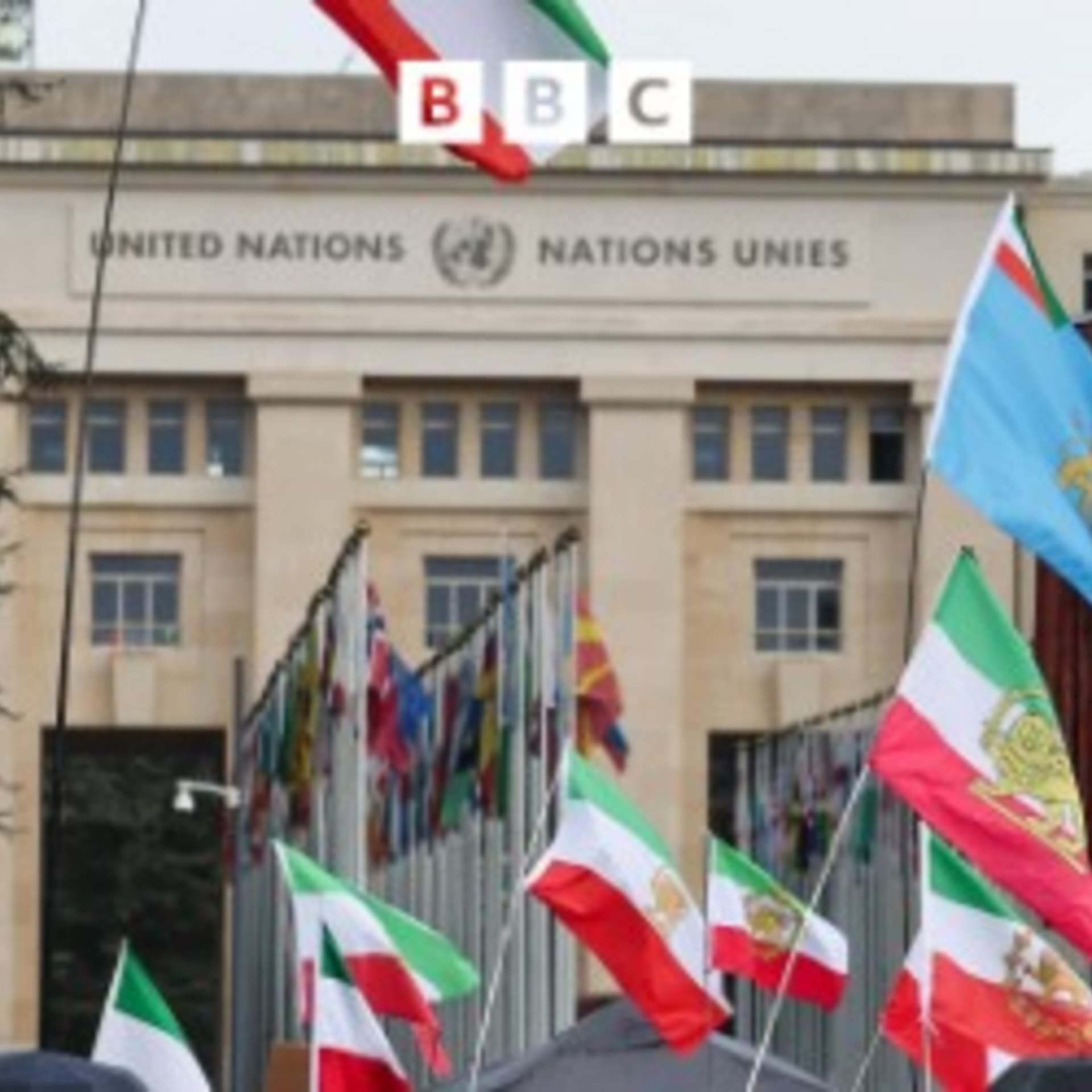
Iran Claims Progress in US Nuclear Talks
Episode Date
February 18, 2023
Overview In this episode of the Global News Podcast, the host Charlotte Gallagher presents a range of significant global news stories, focusing primarily on the developments surrounding the Iran-US nuclear talks. The episode also covers political upheaval in Peru, escalating tensions in Ethiopia, a major settlement by Bayer concerning Roundup, NASA's warnings about asteroids, and the death of renowned songwriter Billy Steinberg.
---
Key Topics Discussed
- Iran-US Nuclear Talks
- Progress Report: Iran's foreign minister announced that both countries agreed on principles that could lead to a nuclear deal during talks in Geneva.
- US Perspective: Vice President J. D. Vance expressed skepticism, noting that Iran has not accepted "red lines" established by former President Trump.
- Military Tensions: There is an ongoing military buildup in the region, raising concerns about the possibility of war.
- Negotiation Dynamics: Both sides express a preference for diplomatic solutions, although they are preparing for potential military conflict.
- Political Turmoil in Peru
- Congressional Action: Peru’s Congress voted to remove interim President José Heri over corruption allegations, marking the seventh presidential removal in a decade.
- Public Reaction: Protests erupted, reflecting widespread dissatisfaction with political corruption and instability.
- Upcoming Elections: With elections approaching in April, the legislature must appoint a new interim president.
- Potential Conflict in Ethiopia
- Rising Tensions: There are fears of a renewed conflict in northern Ethiopia, particularly involving the Tigray region, with rival forces mobilizing.
- Historical Context: The previous conflict resulted in severe humanitarian crises and mass casualties.
- Role of Eritrea: The deteriorating relationship between Ethiopia and Eritrea is a significant factor in the escalating tensions.
- Bayer’s Settlement Over Roundup
- Financial Settlement: Bayer has proposed a settlement of over $10 billion to resolve claims that its herbicide, Roundup, caused cancer.
- Litigation Background: This follows years of lawsuits linked to the product, which remains controversial despite regulators deeming it safe.
- NASA and Asteroid Threats
- Warning Issued: NASA cautioned that there is no known protection against thousands of untracked asteroids that could threaten Earth.
- Future Plans: Upcoming telescope missions aim to identify and categorize these asteroids to mitigate potential hazards.
- Billy Steinberg's Death
- Tribute: The episode pays homage to Billy Steinberg, a prominent songwriter known for hits like "Like a Virgin" and "True Colors," who passed away at the age of 75.
---
Key Takeaways
- The Iran nuclear talks signify a potential thaw in relations, though skepticism remains high on both sides.
- Peru's political instability continues, with citizens growing increasingly frustrated with corruption and ineffective leadership.
- The situation in Ethiopia remains precarious, highlighting the fragility of peace in the region.
- Bayer’s financial settlement over Roundup reflects ongoing public health concerns tied to agricultural products.
- NASA's inability to track certain asteroids underscores the need for enhanced space monitoring capabilities.
- The music industry mourns the loss of a key figure whose work shaped pop culture across decades.
---
Closing Notes The Global News Podcast continues to provide an essential overview of pressing global issues, delivered with expert insight and analysis to keep listeners informed about developments worldwide.
Written by AI. May contain mistakes. Listen to the episode to check what was said.
Chapters
Tap a time to open that second in VOIran-US Nuclear Talks Overview
1:14 to 1:39
Discussion on the current status of Iran-US nuclear negotiations.
“I'm Charlotte Gallagher and in the early hours of Wednesday, the 18th of February, these are our main stories.”
US Political Perspective on Iran Talks
1:39 to 2:57
Assessment of US sentiments regarding the negotiations with Iran.
“offers to pay more than$10 billion to settle claims that its weed killer Roundup caused cancer.”
Iran's Optimism Amid Tensions
2:57 to 3:56
Analysis of the Iranian viewpoint on the negotiations and military threats.
“Kazran Adji from BBC Persian is in Geneva.”
Domestic Challenges in Iran
3:56 to 6:48
Exploration of internal pressures faced by Iran amidst nuclear negotiations.
“fixed when the next round of talks is going to be held or where indeed.”
US Negotiations on Ukraine
6:48 to 7:36
Overview of the US's involvement in negotiations regarding Ukraine.
“It is a moment of great unpredictability and also of great peril.”
Ukraine's Military and Political Stance
7:36 to 10:54
Brigadier General Oleksandr Pivnenko discusses Ukraine's position on the war.
“To get a Ukrainian perspective on the push for peace, our international editor Jeremy Bowen spoke to Brigadier General Oleksandr Pivnenko, commander of the National Guard of Ukraine.”
Political Instability in Peru
10:54 to 13:20
Examination of the recent political turmoil and leadership issues in Peru.
“after Congress voted to remove its interim president, Jose Herry, on corruption charges.”
Potential Conflict in Ethiopia
13:20 to 14:06
Discussion on the risk of renewed conflict in Ethiopia and its implications.
“What, Luis, are the people of Peru looking for in a leader?”
Political Instability in Peru
14:06 to 14:33
Explore the growing political instability in Peru and its causes.
“And this is, according to many experts, part of the explanation for this political instability, the fact that people have really lost trust in a lot of Peruvian political institutions.”
Escalating Conflict in Ethiopia
14:40 to 15:34
Learn about the tensions brewing in Ethiopia and Eritrea.
“The last time that happened was in late 2020, resulting in an absolutely ruinous two-year war in which hundreds of thousands may have died.”
Show all 17 chapters
Tigray Conflict Dynamics
15:36 to 17:06
Understand the complexities of the Tigray conflict and its regional implications.
“But Tigray forces, as you mentioned, they have aligned themselves, apparently, with Eritrea.”
Bayer's Roundup Settlement
20:36 to 21:31
Understand Bayer's multi-billion dollar settlement over Roundup claims.
“The German drugs giant Bayer is offering to pay more than$10 billion to settle claims over the weed killer Roundup, which has been linked with cancer.”
NASA's Asteroid Threat Assessment
21:33 to 23:59
Learn about NASA's efforts to track and mitigate asteroid threats.
“asteroids which space chiefs say they can't track down.”
Russia and Belarus in the Paralympics
24:02 to 26:26
Explore the implications of Russia and Belarus competing in the Paralympics.
“things it's not so much the sport but the politics because the International Paralympic Committee has voted to allow athletes from Russia and Belarus to compete under their national flags at next month's Winter Games.”
Gruesome Criminal Case in Sweden
26:27 to 28:06
Delve into a shocking criminal case involving exploitation and trafficking.
“To Sweden now, which is being rocked by a gruesome criminal case.”
Discussion on Sweden's Prostitution Law
28:06 to 28:54
Learn about the implications of Sweden's law on prostitution and ongoing trials.
“Men should not be buying women's bodies.”
Tribute to Songwriter Billy Steinberg
28:56 to 30:29
Explore the career and impact of songwriter Billy Steinberg after his passing.
“He was a key figure behind a string of chart-topping hits, including Madonna's Like a Virgin.”
Transcript
Automatic transcript. May contain errors.0:00This BBC podcast is supported by ads outside the UK. We focus on the part of the internet that most people don't know about. It's called the dark web. Undercover in the furthest corners of the dark web, US special agents are on a mission to locate and rescue children from abuse. Move in now. Police! From the BBC World Service, World of Secrets, the darkest web follows their shocking investigations. Search for World of Secrets wherever you get your BBC podcasts.
0:59bbc.com or wherever you get your podcasts.
1:07This is the Global News Podcast from the BBC World Service. I'm Charlotte Gallagher and in the early hours of Wednesday, the 18th of February, these are our main stories. The ongoing Iran-US nuclear talks we hear from Geneva and our correspondent in Tehran. Congress in Peru votes to remove its interim president on corruption charges and why the prospects of war in northern Ethiopia are growing. Also in this podcast, the German drugs giant Bayer offers to pay more than$10 billion to settle claims that its weed killer Roundup caused cancer. And are Russian athletes about to be allowed back into the Olympics?
1:59Fears of a military conflict between Iran and the US appear to have eased after the Iranian foreign minister said the two sides had made progress in Geneva at the latest talks on some guiding principles that could pave the way for a nuclear deal. But the view from Washington is less optimistic, with the U.S. Vice President J.D. Vance giving a more downbeat assessment on Fox News. In some ways it went well. They agreed to meet afterwards. But in other ways it was very clear that the president has set some red lines that the Iranians are not yet willing to actually acknowledge and work through. So we're going to keep on working it.
2:37But of course the president reserves the ability to say when he thinks that diplomacy has reached its natural end. We hope we don't get to that point. But if we do, that'll be the president's call. Donald Trump has changed his position on Iran repeatedly in recent days and weeks, at times calling for regime change, then saying he believes a deal is possible. During the recent anti-government protests, for example, he initially pledged to help protesters, saying the US was locked and loaded, but then thousands of them were killed by their own government and the threat of an imminent US military strike receded, despite a rapid and significant build-up of American warships in the region.
3:17Kazran Adji from BBC Persian is in Geneva. He gave us this assessment. The talks have now ended and the Iranian side has commented on it. We have the Iranian foreign minister sounding positive, saying that the whole atmosphere was more positive this time and that the two sides are negotiating and the direction is a good direction. But he also adds that the differences are such that bringing them together takes a lot of work. So it seems that at least the Iranian side thinks that there's going to be another round of talks between Iran and the U.S., although the Iranian foreign minister says they haven't fixed when the next round of talks is going to be held or where indeed.
4:09But nevertheless, it seems that we are one step away from eventual war, if you might sort of call it, because the Americans are bringing in more military hardware. Another huge aircraft carrier is on its way here. So these talks were held under that massive sort of threat of military intervention. The Iranian side is aware of that, is very keen to say that they're going to talk about Iran's nuclear issue. But the Iranian foreign minister said what is not on the table is surrender. Our chief international correspondent Lise Doucette is in Tehran. I have to say that here in Tehran we had spoken to one of the top negotiators, the Deputy Foreign Minister, Majid Takravanchi, just before they left for Geneva.
5:05And he was really indicating that the Iranians understood now that they had to make compromises if they wanted to see sanctions lifted. And so we believe that they did make some compromise proposals and that may be helping to move the talks along. Both sides are saying they prefer a deal. They hope they can do it through diplomacy. But both sides as well are saying they're preparing for war. Yesterday, Iran announced that its elite Islamic Revolutionary Guard Corps were carrying out naval drills in the Strait of Hormuz. That's an absolutely critical waterway for the world's maritime traffic. So both of them are saying, for President Trump, he's saying, if you don't do a deal, I'm going to hit you again.
5:53And remember, Iran did see that 12-day war last year with Israel, which drew in the United States, attacking its nuclear sites. And Iran is saying, well, if you hit us, we're going to hit you back with even greater force. You really feel that this is the twilight zone where you have an 86-year-old Supreme Leader, Ayatollah Ali Khamenei. whose health is ailing. He's always been a very cautious leader, and now he has presided over. There was a war last year, so there's been this new wave of protests. Huge challenges facing the Islamic Republic. In fact, the biggest challenges that they have faced to their rule since their own uprising in 1979, which ousted the Shah.
6:37Is there going to be a deal? There are some signs in which there could possibly be a new deal. Will that be enough? Will it just be a pause or will there be another deadly war? It is a moment of great unpredictability and also of great peril. Lise Doucette in Tehran, where she's been allowed to report by the authorities on condition that none of her material is used on the BBC's Persian service. Straight after those talks in Geneva, the US took part in another set of negotiations in the Swiss city, this time on Ukraine, just days before the fourth anniversary of Russia's full-scale invasion. A major sticking point is Moscow's demand for Ukrainian forces to withdraw entirely from the eastern Donbass region, a red line for Kiev.
7:25And hours before the talks got underway, there was another wave of Russian attacks on Ukrainian energy facilities. Those talks will regime on Wednesday, but expectations are low. To get a Ukrainian perspective on the push for peace, our international editor Jeremy Bowen spoke to Brigadier General Oleksandr Pivnenko, commander of the National Guard of Ukraine. He began by asking him what victory for Ukraine would look like. For me personally, it means stopping the killing of our soldiers and the civilian population of Ukraine, in military terms, it means taking back our territories. I understand that perhaps this is not realistic today, but potentially in the future it is very important.
8:11I believe that at the moment the priority is a ceasefire and survival. The Americans seem to have an idea that it will require you to agree to the Russian demand to give up territory that you still hold in the east, which are considered to be important to Ukrainian defense? I actually believe that this is impossible at the moment. A ceasefire along the line of contact is something we can still understand, but no one will give up territories. If there is an order to withdraw, then we will withdraw. But will the population of our country accept that? Because we could have negotiated and simply given up, for example, Luhansk and Donbass and ended the war there.
8:54We have lost too many of our people and too much territory to simply stop and just give away land. Now, the Russians made a lot of mistakes early on in the war, but what I've read is that they've made a lot of advances with drones, and some analysts say that they're ahead of Ukraine in that. Is that correct? Yes, that is true. At the beginning, they did not pay attention at all, but now they act very intelligently. They know what they are doing and they know how to use the resources they have. I believe the enemy is very strong and learns very quickly. I've listened to Donald Trump a lot since he became president again.
9:31He believes that you have to make a deal because otherwise you are going to lose. We are losing territories, but you know we are a very difficult opponent in this war. The price Russia is paying for this war is very high. We may be losing territories, but we are striking their economy, their manpower and their equipment. For them, the wartime period may not feel as hard, but after the war it will be much harder, because they will have to explain to their people what this war was for and what the losses were. But do you think that Donald Trump is correct when he says unless you do a ceasefire deal very soon, that there's a risk you'll lose the war?
10:14Not entirely. We can fight for several more years. But I believe that, in general, killing people for territories and resources, this is not the Middle Ages. This war must end. Everyone feels this fatigue. But everyone wants the war to end. The main question for us is, at what price? A ceasefire. I think everyone would agree to that. But loss of territory? We will not give anything away. Every Ukrainian you ask will tell you the same. No one will give anything away just like that. That was Brigadier General Oleksandr Pivnenko speaking to Jeremy Bowen. Peru has been plunged into a fresh wave of political chaos after Congress voted to remove its interim president, Jose Herry, on corruption charges.
11:04It was an overwhelming vote against him, just months after he was chosen to lead the country, after the previous president was ousted over allegations of corruption and links to organized crime. Some took to the streets to protest about Harry's scandals, including allegations about the women he's appointed.
11:26He was incapable. Women entered all the time and left with high salaries. Who does this money belong to? The people. He said these women went to the palace for work. What work? What work have they done? I've been speaking to the BBC's Latin America expert, Luis Fajardo. Peru has been experiencing a very substantial amount of political instability. The last issue involving the interim president, José Heri, following a series of scandals, the latest which was called by the Peruvian media Chifagate, referring to the name given to Chinese restaurants, like the one where Heri was seen apparently meeting with a Chinese businessman.
12:06There were allegations of corruption. And as a result, a series of political events took place that finally led this Tuesday to the removal of Heri by the Peruvian legislature. This is only two months before the presidential election, which is due on April. And what has Jose Heri said? Jose Heri repeatedly had insisted in his innocence, as has been the case of nearly seven previous leaders in Peru who had been removed from office. All of them have said that they had done nothing wrong. However, they have been facing, again, this extreme amount of political instability. It is said that it is because of institutional design in Peru, the fact that it is relatively easy for the Peruvian legislature to remove presidents from office.
12:56and also a great deal of very negative public attitude towards politicians. There's a lot of belief that the political class in Peru is unresponsive to citizens' needs after this repeated scandal. And this has created this situation where Peru has experienced again multiple presidents over a short period of time of a few years. What, Luis, are the people of Peru looking for in a leader? What do they want them to change about Peru or improve about Peru? Peru is in an unusual situation in Latin America in the sense that its economy is doing relatively well. Actually, Peru is one of the leading exporters receiving a lot of investment, both from the US and from China and from other places.
13:41So the economic problems that are at the centre of the discussion many times in other parts of Latin America are not so intense in Peru. What people definitely are arguing against is against this sense of corruption in the public sphere, of impropriety from the leaders in Peru. And time and time again, they have elected outsiders who have promised to clean up Peruvian politics. And time and time again, they have been disappointed. And this is, according to many experts, part of the explanation for this political instability, the fact that people have really lost trust in a lot of Peruvian political institutions.
14:18So what happens now? Who's going to be in charge? The Peruvian legislature is due to meet on Wednesday to select a new interim president who would be in charge of the office until the elections in April. This is not unprecedented in Peru, again, contributing to the sense of political instability across the country. Luis Fajardo. To Ethiopia now, where there are growing fears that a major regional conflict could be about to break out. The last time that happened was in late 2020, resulting in an absolutely ruinous two-year war in which hundreds of thousands may have died. There was also mass sexual violence and systematic starvation.
15:01Once again, rival forces are gathering from both the federal government and the Tigray region. So what's caused this escalation? Gertzell Tromvol is a professor of peace and conflict studies at Oslo New University College and a specialist on the region. The main antagonist might be Eritrea and Ethiopia. Their relationship has been deteriorating since actually the peace agreement with the former war in Tigray in 2022. When they were allies in that war, they had now turned against each other. So that's the main confrontation. But Tigray forces, as you mentioned, they have aligned themselves, apparently, with Eritrea.
15:44So it is also a conflict brewing between Addis Abed-Bah, the federal government, and the regional authorities in Tigray. And what's the reason for the breakdown in relations between Ethiopia and Eritrea, who themselves fought an absolutely awful war, getting on for 30 years ago? Then there was a peace agreement just before the turn of the millennium. What's prompted this breakdown in relations? Well, according to Ethiopian authorities, they are accusing Eritrea of being on their soil as an enemy force. Eritrean soldiers are in Ethiopia, they claim, in northern Ethiopia. They are accusing Eritrea of abiding and abetting Ethiopian insurgencies, particularly the Fano Amhara insurgency, but also the Oromo.
16:33We have seen over the last year and a half that Ethiopia has been ticking off all the boxes to portray Eritrea as an enemy hostile state due to their destabilizing activity and also encroachment on Ethiopian territory. And this is done in a way, both in formal letters to the UN Secretary General, but also direct responses to the Asmara government in order possibly to justify the right of self-defense against Eritrea. You're saying, look, the main source of tension, we should be looking at an international conflict between Ethiopia and Eritrea. But the chances are is that it could play out in the north, which obviously would make sense geographically because they share a northern border.
17:25Well, the Pretoria Secession of Hostilities Agreement, which was signed in November 2022, ending the war on Tigray, has not been fully implemented. There are key issues of return of internally displaced people. There are about one million Tigrayans not being displaced from their homes. And also return of control of territories. West Tigray and parts of southern Tigray are not under the administrative control of the Tigrayan authorities. Kjetil Tronvål, a professor at New University College in Oslo, talking to Tim Franks. Still to come in this podcast Prosecutors in Sweden say they suspect a man may have exploited and sold his wife for sex with more than a hundred other men These are shocking and horrific accounts It's a form of slavery Men should not be buying women's bodies
18:29We focus on the part of the internet that most people don't know about. It's called the dark web. Undercover, in the furthest corners of the dark web, US special agents are on a mission to locate and rescue children from abuse. Move in now. From the BBC World Service, World of Secrets, the darkest web follows their shocking investigation. Search for World of Secrets wherever you get your BBC podcasts.
19:23bbc.com or wherever you get your podcasts.
19:29I want to put all the issues on the table that keep me up at night. The Interview, the best conversations from across the BBC. We're coming up against technology companies that are richer and more powerful than many nation states. With the people shaping our world. There are those that believe that the power of law should be replaced by the law of power. The interview from the BBC World Service. Listen now wherever you get your BBC podcasts. If you can't keep up with all the Epstein news, you're not alone. This week, the files have nearly but not quite brought down a British Prime Minister. There have been allegations that Epstein was a spy and surprising countries have been drawn into the scandal, from Norway to Poland to Israel to France.
20:18It's a lot. So we're recapping all the main developments and making sense of them. Listen to the global story on BBC.com or wherever you get your podcasts.
20:36The German drugs giant Bayer is offering to pay more than$10 billion to settle claims over the weed killer Roundup, which has been linked with cancer. Most of the settlement money would go to resolving current and future legal claims. Samira Hussain reports. Bayer has been dogged by the Roundup cancer claims after the German pharmaceutical firm bought Monsanto, the company that made the weed killer, a decade earlier. Over the years, the company has had to pay billions of dollars in lawsuits, despite glyphosate, the main ingredient in the weed killer, being deemed safe by regulators around the world.
21:15According to the proposal, anyone who can prove they were diagnosed with non-Hodgkin's lymphoma and were exposed to Roundup before February 17th of this year can file a claim and receive a portion of the settlement. That was Samira Hussain. NASA is warning there is no known protection against thousands of asteroids which space chiefs say they can't track down. The space debris of various sizes is shooting around close to our planet and they say it could cause damage if one were to hit a populated area on earth. Dr Hannah Wakeford is associate professor in astrophysics at the University of Bristol in England.
21:55We asked her what scientists are doing to mitigate the danger. We are looking for these what have been dubbed these city killers because they're asteroids in this middle-sized region. If you have something much much bigger it's a kind of cataclysmic event like what happened before the annihilation of the dinosaurs. And if you have something small, we see it break up in our atmosphere and we get small meteorites hitting the Earth many times a year and it does very little. There's this middle ground where something bad could happen that won't be a planet killer, but could very much cause significant damage.
22:32And those are the middle ground ones that are the hardest for us to find. Why haven't we done anything about it? We have been doing stuff about it for many, many decades now. So there are a number of different telescope missions as well as scientific investigations that are being done continuously to hunt for these. It's just a really hard thing to do. So there's still, we think, tens of thousands left that we need to discover and categorize and understand. So in the coming years, we've got a number of different surveys going online, like the Vera Rubin Observatory, which is in Chile, which will be surveying the sky every single night for 10 years.
23:05And we'll be able to find hundreds, thousands of these rocks. And we've got other telescopes like JWST, which is the biggest telescope we've ever sent into space, that is going to be surveying our nearby asteroid field and trying to understand and characterize these medium-sized objects. We had this really amazing experiment, which was launched in 2021 and actually impacted an asteroid, a nearby asteroid. It was a mission called DART. And the idea was that if we fly a spacecraft at high velocity into an asteroid, can we change its trajectory? Can we change where it's going to end up hitting? And this was a really successful mission.
23:44But it took four years for us to build DART. And it took 10 months for it to get out to the asteroid to impact it and change its position in the sky. So it takes a little bit of time. So what we always want for this is just pre-warning. That was Dr Hannah Wakeford. A major change in international sport and as so often with these things it's not so much the sport but the politics because the International Paralympic Committee has voted to allow athletes from Russia and Belarus to compete under their national flags at next month's Winter Games. It would overturn the ban imposed four years ago after Russia's full-scale invasion of Ukraine.
24:25Katie Forkingham is a BBC sports reporter at the Winter Olympics. We've been told that six Russian and four Belarusian athletes will be able to compete under their flags at the Winter Paralympics, which start next month. It's the first time that we'll have seen a Russian flag at the Paralympics since the Sochi 2014 Games, so well over a decade. How this has come about is basically the International Paralympic Committee lifted its ban on athletes from the two countries competing at the Games at the end of last year. The governing bodies that govern the specific sports said we're refusing to do that.
24:56In December, Russia and Belarus appealed to the Court of Arbitration for Sport against the decision made by the governing body for skiing and snowboarding. And they won that appeal, which meant that skiers and snowboarders from those two countries could start to compete and accumulate the ranking points that they would need for the Paralympic Games. The two countries have been awarded what are called bipartite invitations to compete at the Games. The one that's relevant in this case is that it allows athletes who haven't had the chance to qualify because of extraordinary circumstances. And it's important to know that these are given to the specific athletes.
25:29They're not given to the federations. The IPC has invited these athletes to compete. It's obviously been a massive story here at the Olympics where Russian athletes are competing as neutral athletes. They're not competing under the flag. They can't wear the colours. It does feel as if we are moving towards Russia and Belarus perhaps being reinstated. That could come as soon as the LA Games in two years' time, the summer games. The IPC have obviously moved first, so it'd be interesting to see whether that now piles pressure on the IOC going forward or whether the IPC will receive quite a lot of backlash for this.
26:00This will draw the eyes onto the Paralympic Games. We're two weeks out now until it starts, and I think everyone will be certainly looking towards and see what the reaction is from athletes that will be competing against these Russian and Belarusian athletes, if there are any medals won for those countries. Certainly the dames that are doing the rounds of who the athletes could be. They have Paralympic champions among them, world champions among them. So the chances of seeing these athletes on the podium seems really quite high. Katie Fawkingham at the Winter Olympics. To Sweden now, which is being rocked by a gruesome criminal case.
26:32A man in his 60s is suspected of exploiting his wife to sell sex with her to more than 100 other men. Stephanie Zacherson reports. In October of last year, a woman in northern Sweden contacted the police, accusing her husband of selling her to other men for sex. The man was arrested and investigators have been trawling through phones, looking at text messages, emails, bank transfers and videos. First, police said a handful of men were alleged to have been involved. Then it was 30, then 70. Now they say it could be as many as 120 individuals from across Sweden. Here's prosecutor Ida Annerstedt.
Read the full transcript
27:14What I'm saying is that he has exploited this woman financially and it should be considered an aggravated crime on the basis of the large scale of it, the big financial gains he's made, and because he's used this woman in a particularly careless way. Parts of the police investigation have now been made public, revealing details from some of the interviews with the woman. She says the alleged facilitation has been going on for over three years. And while prosecutors don't want to comment on whether she was drugged or otherwise indisposed, she says she has trouble remembering some of the days when this was all happening.
27:50The revelations have caused uproar in Sweden, with police and criminologists labelling it a unique case. This is Equalities Minister Nina Larsson. These are shocking and horrific accounts. It's a form of slavery. Men should not be buying women's bodies. It doesn't belong in society and it doesn't reflect the human values we want to have in Sweden. Sweden's law on prostitution bans the buying of sex and the trafficking or facilitating of others for sex, but not the person selling, in this case the wife of the suspect. The husband could face up to 10 years in prison if convicted. He denies any wrongdoing.
28:33The trial is expected to begin before Easter. Several of the suspected sex buyers are also facing charges, but trials against them have been postponed as the investigation has grown. Prosecutors say they will not be able to charge every sex buyer in the case since it would take years to bring them all to justice. Stephanie Zacherson. Finally, the Grammy-winning American songwriter Billy Steinberg has died at the age of 75. He was a key figure behind a string of chart-topping hits, including Madonna's Like a Virgin. Lisa Costello looks back at his career. Like a virgin, touched for the very first time.
29:16Alongside Tom Kelly, he wrote other classic 80s and 90s songs, including Whitney Houston's So Emotional, The Bangles' Eternal Flame and Cyndi Lauper's True Colors. But I see your true colours shine blue I see your true colours And that's why I love you He helped write five US No. 1 singles and won a Grammy for his work on the title track of Celine Dion's 1996 album Falling Into You. I'm falling into you This dream could come true He went on to co-write songs in the early 2000s, such as Jojo's Too Little Too Late and Demi Lovato's Give Your Heart a Break. In 2011, when he was inducted into the Songwriters Hall of Fame, Billy Steinberg was described as one of the most successful songwriters whose songs turned into enduring classics.
30:16Paying tribute, his family said he was a visionary lyricist who transformed deeply personal reflections into anthems in which millions found themselves. Oh, so many good songs. That was Lisa Costello. And that's all from us for now. If you want to get in touch, you can email us at globalpodcast at bbc.co.uk. You can also find us on X at BBC World Service. And don't forget our sister podcast, The Global Story. This edition of The Global News Podcast was mixed by Mark Pickett. The editor is Karen Martin. I'm Charlotte Gallagher. Until next time, goodbye.
31:02We focus on the part of the internet that most people don't know about. It's called the dark web. undercover in the furthest corners of the dark web. US special agents are on a mission to locate and rescue children from abuse. Moving in now. From the BBC World Service, World of Secrets, the darkest web follows their shocking investigations. Search for World of Secrets wherever you get your BBC podcasts.
From the publisher
Iran's foreign minister said the two sides agreed on a set of principles that could pave the way for a possible deal. But the US vice president, JD Vance, gave a cautious assessment telling Fox News that Iran had not agreed to "red lines" set by President Trump. Also, Peru has been plunged into renewed political chaos after congress removed the seventh president in a decade on corruption allegations, there are growing fears that a major regional conflict could be about to break out between the Ethiopian federal government and forces in Tigray in the north of the country. NASA warns that there's no known protection against thousands of asteroids which space chiefs say they can't track down and, the Grammy-winning American songwriter, Billy Steinberg, has died at the age of 75.
The Global News Podcast brings you the breaking news you need to hear, as it happens. Listen for the latest headlines and current affairs from around the world. Politics, economics, climate, business, technology, health – we cover it all with expert analysis and insight. Get the news that matters, delivered twice a day on weekdays and daily at weekends, plus special bonus episodes reacting to urgent breaking stories. Follow or subscribe now and never miss a moment. Get in touch: globalpodcast@bbc.co.uk