
In short
Global News Podcast - Episode Summary: Iran Crisis: Your Questions Answered
Podcast Overview
- Podcast Title: Global News Podcast
- Description: Delivers breaking news and expert analysis on global affairs, including politics, economics, climate, business, technology, and health. Episodes are released twice daily on weekdays and daily on weekends.
Episode Details
- Episode Title: Iran Crisis: Your Questions Answered
- Date: June 26, 2025
- Description: A special episode addressing listener questions regarding the Iran crisis, specifically Iran's nuclear ambitions, potential regime change, and the implications for the broader Middle East.
Key Topics Discussed
- Background of the Crisis
- The conflict began with Israel attacking Iran on June 13, 2025, just before nuclear negotiations were set to resume.
- Iran retaliated by launching missiles at Israel, followed by U.S. involvement, which escalated the situation.
- A ceasefire was established two days before the podcast episode, with casualties reported heavily on both sides.
- U.S. Involvement
- Question: Why did the U.S. get involved in the conflict?
- Technical Reason: The U.S. has the specialized military capabilities necessary to target Iran's fortified nuclear facilities.
- Conspiracy Theory: Speculation that President Trump wanted to be part of a successful military operation to align with Israel politically.
- Impact on Iran's Nuclear Program
- U.S. Claims: President Trump stated that Iran's nuclear program had been significantly set back.
- Iran's Response: Supreme Leader Ayatollah Ali Khamenei dismissed claims of substantial damage, suggesting the U.S. failed to achieve its objectives.
- Questions on Damage Assessment
- Military assessments regarding the extent of damage to Iranian nuclear facilities are contested, with varying opinions on the effectiveness of the U.S. strikes.
- Concerns remain about unaccounted enriched uranium and Iran's potential to recover or hide its nuclear program.
- Internal Dynamics in Iran
- Divergent Factions: Discussion on the varying opinions within Iran about continuing nuclear ambitions versus focusing on domestic issues and rebuilding infrastructure.
- Economic challenges and public opinion against the regime may influence future policies.
- Israel's Nuclear Capabilities and Regional Dynamics
- Nuclear Transparency: Israel's nuclear arsenal is acknowledged but not officially confirmed, creating a double standard in regional nuclear discourse.
- Concerns over a potential nuclear arms race in the Middle East if Iran continues to pursue nuclear capabilities.
- Diplomatic Relations and Future Prospects
- Iran's Stance: Iran does not officially recognize Israel, complicating potential peace negotiations.
- Diplomatic Channels: Backdoor discussions between the U.S. and Iran continue despite the lack of formal diplomatic relations.
- Long-Term Peace: The prospects for lasting peace in the region are deemed low given the complexity of ongoing conflicts, including those involving Hamas, Hezbollah, and the Houthis.
- Public Sentiment in Iran
- Desire for Change: Varied opinions on the regime, with some citizens seeking democratic reforms while others are skeptical of foreign intervention leading to positive changes.
- Reza Pahlavi's Influence: Mixed perceptions of Crown Prince Reza Pahlavi, with some supporting him and others questioning his calls for foreign military action.
Conclusion
- The episode concludes with reflections on the uncertain future of Iran, its nuclear ambitions, and the region's geopolitical landscape. The internal and external dynamics present a complex challenge for stability in the Middle East.
Key Takeaways
- The situation remains fluid with multiple factions influencing Iran's policy direction.
- The balance of power in the Middle East is shifting, and future conflicts may arise from unresolved tensions.
- Diplomatic efforts are ongoing but fraught with challenges, particularly regarding Iran's stance towards Israel and the U.S.
Written by AI. May contain mistakes. Listen to the episode to check what was said.
Transcript
Automatic transcript. May contain errors.0:00This BBC podcast is supported by ads outside the UK. If journalism is the first draft of history, what happens if that draft is flawed? In 1999, four Russian apartment buildings were bombed, hundreds killed. But even now, we still don't know for sure who did it. It's a mystery that sparked chilling theories. I'm Helena Merriman, and in a new BBC series, I'm talking to the reporters who first covered this story. What did they miss the first time? The History Bureau, Putin and the apartment bombs. Listen on bbc.com or wherever you get your podcasts. This is the Global News Podcast from the BBC World Service.
0:48Hello, I'm Oliver Conway. This is a special edition on the Israel-Iran crisis. It's Thursday afternoon on the 26th of June 2025, two days into the ceasefire brokered by President Trump after 12 days of conflict. We'll be answering your questions on what happened, what's next, and what it means for Iran and the wider region. Joining me are Behrang Tajdin from the BBC Persian service and our security correspondent, Frank Gardner.
1:17Israel attacked Iran on Friday the 13th of June, two days before a sixth round of talks were due to be held on curbing the Iranian nuclear programme. Iran responded by firing missiles at Israel. The US initially said it was not involved, but later joined the conflict, deploying what it described as bunker buster bombs on Iran's nuclear facilities. A ceasefire was announced on Tuesday by President Trump. Iran said more than 600 people had died in the conflict. At least 28 died in Israel. Well, let's start with our first question, which comes from South Sudan. I'm Dharmalek. What I want to know about the conflict between Iran and Israel is why did the USA get involved?
2:06Why is it really concerned? If you ask the Iranian Supreme Leader, Ayatollah Ali Khamenei, he said today that the US got involved in order to stop the destruction of Israel. Although this is one narrative. I'm sure there are other narratives, including what we've heard from the American officials And also President Trump implied that it was trying to stop the war from escalating and going on and on. Frank, why do you think America got involved when initially it said it wasn't having any part of it? So there's a technical reason and then there's a conspiracy theory. The technical reason is that Iran's hardest to reach enrichment facilities were buried nearly 100 meters below the surface of the ground in the mountain at Fordow in Qom province.
2:57The U.S. Air Force is the only air force in the world that has the bombers, the kind of ordnance, the kind of bomb, something called a GBU-57 bunker busting bomb that could penetrate down anywhere close to that. Israel doesn't have that. So in order to try and shatter that capability, which was out of sight, out of mind, but was highly suspicious, they needed the US to join in. and the conspiracy theory is that Donald Trump was getting, he was suffering from FOMO because Benjamin Netanyahu was going on Fox News and talking about the success of their mission and there are some people who think that Trump just wanted to be a part of what he saw was a successful military campaign waged by Israel.
3:42There may be other reasons too. We've had quite a lot of questions about Iran's nuclear capabilities and speaking after the ceasefire, President Trump said Iran's nuclear program had been totally obliterated and set back by decades. I don't see them getting back involved in the nuclear business anymore. I think they've had it. They've been at it for 20 years and I don't see that happening either. Now, if it does, we're always there. It won't be me. It'll be somebody else, but we're there. We'll have to do something about it. However, in his first public statement after the ceasefire, Iran's Supreme Leader Ayatollah Ali Khamenei said the American bombing had not done significant damage to the nuclear sites.
4:24The President of the United States exaggerated events in unusual ways, and it turns out he needed this exaggeration. Anyone who's heard these words has understood there is another truth behind them. The US has failed to take action and has not achieved their intended objective. Carmen Mendes in Spain had a question about that, saying, when will we know how much damage the US attack has done to the Iranian nuclear facilities and storage of enriched uranium? Frank. So we've got some idea from the Pentagon briefing that took place, what is today, the 26th of June, where you've got US Defence Secretary Pete Hegseth, followed by the chairman of the Joint Chiefs of Staff, both giving their very upbeat, optimistic assessment of how much damage was caused.
5:17And they've said that all the bombs, the six bombs dropped by the US Air Force B-2 spirit bombers went down the ventilation shafts. The first one took off the concrete cap that Iran had put on there to try and frustrate this attack. The other five all went down the ventilation shafts, deep down into the complex and then detonated far below ground with 13 and a half tons each of high explosive. So it's too early for bomb damage assessment. But their assessment is that this will have destroyed, obliterated, rendered incapable Iran centrifuges spinning away. Now, there are two schools of thought on this.
5:54One is how could they possibly know there's been no sign of radiation leak, which is slightly suspicious, and that it's possible that there was further concrete that would have protected them. Others have said, look, they would have set off a small earthquake. Centrifuges are quite sensitive. It's very easy to knock them off balance and they spin out of control. So others have said, actually, no, there's no way they could have survived that. Then there's the question of the roughly 408 kilograms of unaccounted for highly enriched uranium, which we don't know where that is. Iran could quite possibly have spirited that out of Fordow, hidden it somewhere else in a different mountain underground.
6:34The IAEA, that's the UN's nuclear watchdog, is very concerned about where that is. So how successful is it? I think the truth is somewhere probably between what Iran is saying and what the US is saying. The US is saying totally successful, obliterated, Fordow was gone, Trump said the Supreme Leader Ayatollah Alekh Khamenei is saying they failed. And the truth is somewhere in between the two. Behrang, obviously some damage has been done. Even the US Secretary of State Marco Rubio says anything can be rebuilt. Will the Iranians, will they still try to push for a weapon if that is what they've been doing?
7:11There are two parts to your question. The first part, we don't know the answer yet, because that decision will be made in the coming days, weeks, months, maybe, because there are different factions within the Islamic Republic. Some hardliners would push for Iran to stop working with the IAEA, even the parliament passed a law kind of permitting the government to stop cooperating with the IAEA. some may want Iran to actually leave the non-proliferation treaty, the MPT. And there are others who are, you could say, are more practical and want Iran to now focus on rebuilding the country and its depleted infrastructure.
8:00I give you one of the major things that really needs investment right now, and that is the power network. Because, you know, during Iran-Iraq war in the 1980s, we had regular blackouts in Iran. That basically stopped. But in the past year, most people in urban or rural areas have had regular blackouts. So there is a lot of infrastructure that needs investment. If that limited pot of money that the government has is spent on nuclear facilities or air defence or building more ballistic missiles, then people have to still face these blackouts. And it's not just residential areas. Many factories are shut down because their power is cut.
8:50But might there not be a dash to get a nuclear weapon given the country has been humiliated by Israel's supremacy in the air? That's a very good question. But, you know, having the enrichment facilities and enriching uranium is only one part of this. Frank probably knows this better than I do. But getting from hexafluoride uranium, which is a gas, to a nuclear bomb needs quite a few other stages and quite a few other capabilities that we are not sure whether Iran has all of them or not. There is a long term risk for both countries, Iran and Israel. The risk for Israel is, as Behrang says, that the hardline faction, if they win out, they could well convince the supreme leader and the Supreme National Security Council in Tehran that the best defense for their country, for the Islamic Republic and the best means of survival for the regime is to race for a nuclear bomb.
9:56And they'd have to try and do it in secret somehow because they look at North Korea, which has done that. And no one's attacking North Korea. The risk for Iran, though, is that if Israel suspects this, they could do this again. They could just simply launch this attack again. They've shown that they can do it. They've shown that they can penetrate Iran's air defenses with ease. And there's no longer the first line of defense that Iran had in the form of Hezbollah and all its rockets. Hezbollah is very much a reduced force now. There's a risk, I think, for both countries. Well, Joe from Kenya and Carolina from Iceland both asked questions about Israel's nuclear capabilities.
10:37What do we know about them? And do other nations want more transparency from the Israelis? Yes. So Israel is not a signatory to the non-proliferation treaty, the NPT. Iran is, ironically. And a lot of people have said, this is utter hypocrisy. Why is everybody picking on Iran when there's only one country in the Middle East that is known to have nuclear weapons? Israel. Now, Israel has never publicly admitted that it's got nuclear weapons, but everybody knows that it does. And defenders of Israel would say, yeah, OK, so the country's probably got somewhere between 700 and 200 nuclear warheads, but it's never threatened or it's never used them.
11:17It's been attacked many times in 67, 73 and so on, but it's never used them. Whereas Iran has vowed to destroy the state of Israel and therefore it's not a fair comparison. But I think a lot of people would like to see some transparency, some clarity. It's extraordinary that Israel has managed to keep its undoubted nuclear weapons capability somehow hidden from prying eyes all this time. And that suits Israel. But there is a fear here that if it's suspected in the region that Iran is getting close to building a nuclear weapon, the Saudis will want one and the Emiratis and the Turks and the Egyptians.
11:56And suddenly you've got a nuclear arms race in the Middle East. Let's turn to diplomacy at this point. In the aftermath of the conflict, what is Iran's stance on talks with the US and Israel? And how does it see its role on the world stage. This question comes from Starling Foster in Minneapolis in the United States. It's my understanding that Iran does not recognise the state of Israel. So how does that work? How do you negotiate peace with a country you do not recognise? And we had this from Kyra in London. My question is, conflicts between states like Iran and Israel seem to show a shift away from diplomacy as the first option, with military action now acting as the main tool to set the stage for talks.
12:41Is this becoming the new norm in foreign policy? And what could that mean for the long term prospects of peace? Well, we'll talk about the international rules based order in a moment. But Behrang, first of all, what is Iran's attitude to Israel after this? The state's attitude towards Israel remains the same. It doesn't recognize Israel. It sees itself in some sort of a religious crusade against Israel. It calls Israel either the Zionist regime or the country as occupied lands, the whole of Israel, not just the West Bank and Gaza. That hasn't changed. But the fact is, Iran has somehow had to come to some sort of ceasefire with Israel.
13:27with the hands of Americans, who Iran again, or the Islamic Republic of Iran, calls the great Satan. So there is some diplomacy going on. It is probably behind closed doors. But Frank, we've seen an example of what some people say might is right. The country that's the strongest can do what it wants. Has the international world rules-based order, has that gone now? Let me answer the first question first, because the question of how do you how do you negotiate with a country that you don't recognize? And the answer is you go through an intermediary. So Muscat in the Sultanate of Oman, the capital, has been the venue for five rounds of talks between the US, the team headed by Steve Witkoff, Donald Trump's golfing partner and former New York real estate developer, and the Iranians.
14:17And Witkoff says he speaks to Abbas Arachi pretty much every day, the Iranian foreign minister. Now, that may be an exaggeration, But there is a clear U.S.-Iran dialogue, even though there isn't a U.S. embassy anymore in Iran. There's a U.S. interests section in the Swiss embassy. So there are back channels and there are media or mediators. As to whether might is right, well, look, there are numerous examples in my lifetime where people have just decided we're going to go ahead and do this regardless of world opinion. In 2003, the US-led Iraq invasion would be a most obvious example when most of the world said, don't do it.
14:55Pretty much all the Middle East said, don't do it. I remember Amr Moussa, the Egyptian foreign minister at the time, said, look, we all want we'd love to see a nicer regime, a better regime in Iraq, but not on the back of an American, the barrel of an American tank. And of course, Iraq turned out to be a disaster after that invasion. Putin's invasion of Ukraine, the full scale invasion of February 2022, was a clear example of might is right. He decided he was just going to flaunt that and do it anyhow. But there are numerous examples in recent history of Western hypocrisy and double standards.
15:33We've had a question from John Yao in Hong Kong. What role did religion play in this recent conflicts and wider factions across the Middle East. Are there any other factors involved? So the Islamic Republic of Iran calls itself the sacred state. The official narrative is that basically the supreme leader is appointed indirectly by God or God's representatives. And it is important to remember this when you look at the Iranian state. There are lots and lots of elections held, but in elections, only people are allowed to stand who subscribe to this ideology. And there is a guardian council that is almost appointed by the supreme leader who oversees all the major elections, presidential, parliament, etc.
16:28Over the decades, it has broadened its definition, so has left much smaller space for political debate. So only people who really, really believe in this narrative are allowed to stand in the elections. And that's why the vast majority of public opinion is not in line with those in power. Because of this, When the supreme leader makes a, for example, says Iran defeated Israel and the United States in this 12-day war, if you say something that contradicts that, you could be prosecuted for basically going against the supreme leader because that's against the national security or even it's against God.
17:18So that's how the internal dynamic works in Iran. And when you have moderates or reformists getting into government, they have to be extremely careful what to say and how to react. If they go over the line, you can see the IRGC or other parts of the state, IRGC stands for Islamic Revolution God Cause, they can take over and basically kick you out of power without any need for any kind of legal route. And Frank, did religion play any role in Benjamin Netanyahu's decision here? No, I don't think so. He's not particularly religious, although he does rely to some extent politically in his coalition on religious parties.
18:06But no, this is for Israel. This was about national survival. They see Iran's nuclear program as an existential threat to the survival of their country. But Benjamin Netanyahu has been raising the specter of an imminent Iranian nuclear weapon since 1995. I'm not saying there wasn't one. I mean, there was a short period just before this when we were all scrambling around saying, oh, my goodness, what should we make of the IAEA's pronouncement that Iran is in breach for the first time in 20 years of its nonproliferation obligations? And that was pretty, pretty serious. So that's the UN, not Israel.
18:48That was the UN saying we are concerned about their secretive activities and the fact they can't account for this 400 kilos of enriched uranium. Can I add one more point? So for the Islamic Republic, making sure that all women wear headscarves, wear hijab, is part of showing that this is Islamic State. and being anti-Israel is also another way of showing that's why these two principles have become more important than anything else, more important than national interest, the economy and everything else.
19:35If journalism is the first draft of history, what happens if that draft is flawed? In 1999, four Russian apartment buildings were bombed, hundreds killed. But even now, we still don't know for sure who did it. It's a mystery that sparked chilling theories. I'm Helena Merriman, and in a new BBC series, I'm talking to the reporters who first covered this story. What did they miss the first time? The History Bureau, Putin and the apartment bombs. Listen on BBC.com or wherever you get your podcasts.
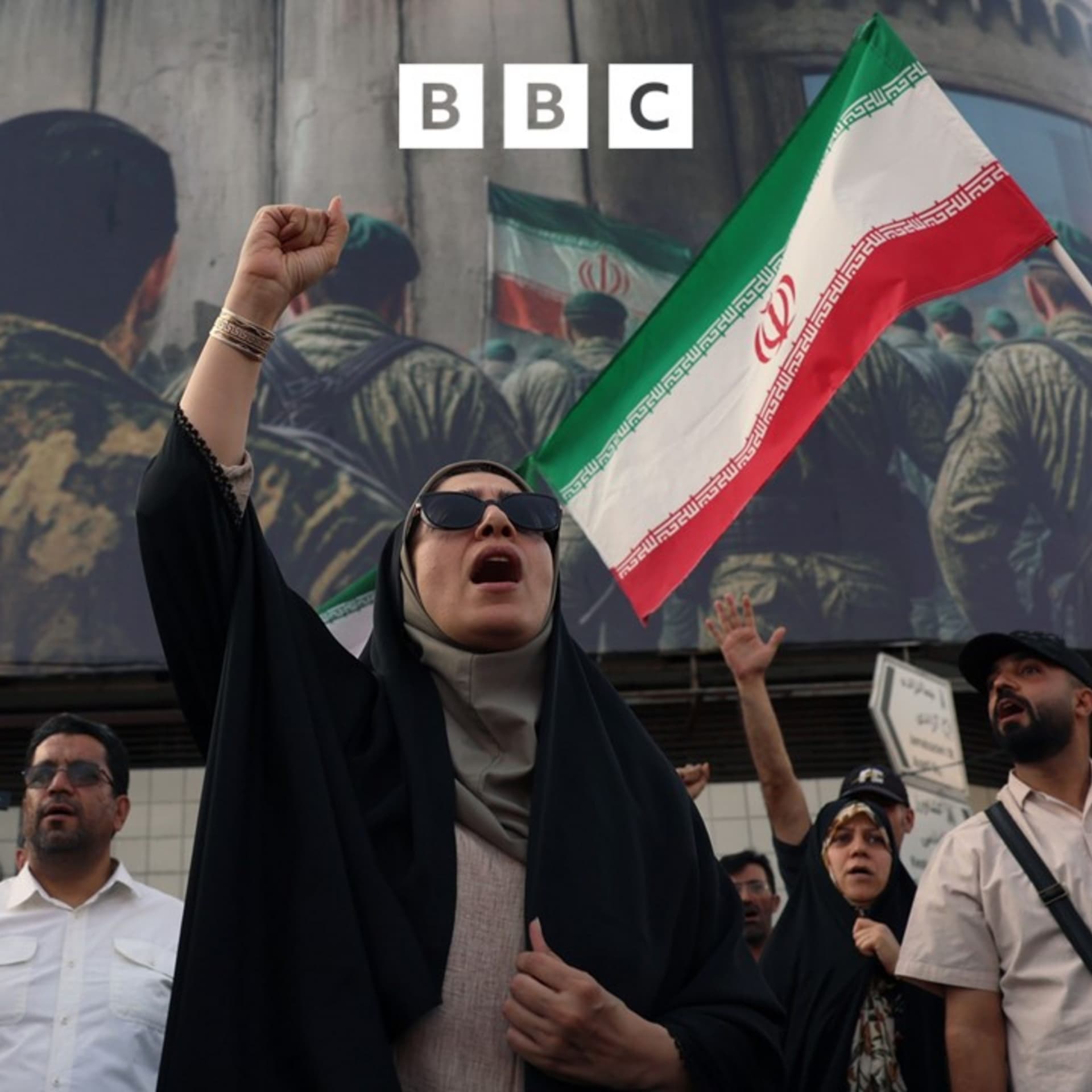
20:13Our next question is about how the conflict has influenced public opinion in Iran. This is Lana from Connecticut. Do the majority of Iranians want a secular and democratic free Iran as opposed to wanting the current Islamic regime to stay in power? How will the recent events impact the shift towards a free Iran? In addition, do we know the recent public sentiment towards current Crown Prince Reza Pahlavi? And Reza Pahlavi is currently living in the US, where he spent most of his life. And a few hours before the ceasefire was declared by President Trump, he expressed his belief that the conflict would mark the end of Ayatollah Ali Khamenei's regime.
20:54This regime is collapsing. The people are more and more ready to intervene. This is a historic chance, not just for the Iranian people, but also for the world, to guarantee that the main reason for a continued concern and threat will not be alleviated by means of negotiation. It will only finally come to terms by this regime no longer be there. Not because your foreign policy calls for it, because it's the ask of the overwhelming majority of the Iranian people. So what is the mood in Iran? So there isn't a single opinion in Iran. There is a small minority who believe in the narrative put out by the state.
21:37They believe the Islamic Republic is a secret state and it has to go and fight Israelis and Americans no matter what the cost. There is another minority that is so fed up with the Islamic Republic that thinks any price is worth paying to have regime change in Iran, even if it's one or two foreign powers bombing Iran. But you have probably tens of millions of Iranians who don't support the undemocratic nature of the regime. It's oppressive domestic policies, it's aggressive foreign policy, But they also don't believe that democracy is something that can be thrown from 30 ,000 feet. So they have looked at, you know, what happened in Iraq and other countries, and they don't think that war could make their lives any better.
22:37That is the overall opinion. And I have to say some many people are now more disappointed because for years and years, there was this joke that we don't have a great economy, but instead we have security. We have to wear hijab, but instead we have security. This conflict, this war showed that Iranians don't have security at home. There were no sirens in Tehran or other cities when Israelis attacked. There was no warning to the civilian population to take shelter. That's why over 600 people died in Iran, 20 times more than the number of casualties in Israel. And attitudes to Reza Pahlavi, son of the Shah who was overthrown in the revolution in 1979?
23:24There are some who love him, and these are mostly people who are in favour of regime change at any cost. But we have seen others questioning how he can support an invasion and war by foreign powers. So the opinion on him remains divided. There is no way for me or anyone else to come and say, this is the majority, this is the minority. you. Our final question comes from Nitin in India. My question is, given the recent chain of events, what are the realistic chances of long lasting peace in this region? So Frank, prospects for a long lasting peace? Well, you've got several different conflicts all running at the same time.
24:11There's the one in Gaza, the one that was in Lebanon, the one between the Houthis in Yemen and Israel. And then of course, you've got the Iran-Israel conflict. So what are the chances of all of those remaining calm, low. But the tectonic plates of power in the Middle East have shifted dramatically in the last year and a half in Israel's favor. It has neutralized Hezbollah effectively. It has reduced Hamas from being an army to small pockets of resistance inside the Gaza Strip. It has shown that it can penetrate all of Iran's air defenses and strike when and where it wants. The Houthis, I think, are still a threat, not just to Israel, but to international shipping.
24:53But there is, I think, a renewed push amongst countries like Saudi Arabia and the UAE to try and calm the region down. Saudi and the UAE, they don't particularly like the Islamic Republic regime. They don't like the revolutionary nature of it. They see it as antithesis to their own dynastic hereditary rule. But you can't change geography. And they realize they've got to live with this great big huge land mass on the other side of the Gulf, what Iranians call Khalid al-Fars, what the Gulf Arabs call al-Khalid al-Arabi. They're going to have to live with each other. And I think things will flare up from time to time.
25:32The big unsolved problem, of course, is still the Palestinian-Israeli question and hopes, I think, are very slim there because of what's going on, not just in Gaza, but in the West Bank, where settlers are encroaching again and again on a daily basis with the Israeli military and police turning a blind eye to what they're doing to try and dispossess Palestinian families who've lived there for generations of their heritage. It's a very sad situation there. Iran, a proud nation of 92 million people. What happens next? The decision hasn't been made yet. If you listen carefully to Ayatollah Khamenei's speech or message, it leaves the door open for becoming much more aggressive or going down the diplomatic route.
26:26We don't know which argument, which faction will prevail. What we do know is that the narrative will be that Iran triumphed, even though that I think most Iranians would look at what has happened and think that's not true. That's not what happened. So the framing is there. That framing may even leave some space for Iran to finally start normalizing its relations with the United States and with the world as a whole. But it doesn't mean that that's the story that will be told to the population or especially to the hardcore believers in the Islamic Republic. Behrang, Frank, thank you both. And that's it from this special edition of the Global News Podcast on the Iran crisis.
27:23Thanks to our correspondents, Behrang Tajdin and Frank Gardner, and to you for submitting your questions. Our regular episode of the Global News Podcast will be out later. This edition was mixed by Johnny Baker and produced by Holly Gibbs, Chantal Hartle and Ella Bicknell. Our editors, Karen Martin. I'm Oliver Conway. Until next time, goodbye.
28:10I'm Helena Merriman, and in a new BBC series, I'm talking to the reporters who first covered this story. What did they miss the first time? The History Bureau, Putin and the apartment bombs. Listen on bbc.com or wherever you get your podcasts.
From the publisher
A special episode answering your questions about the Iran crisis. BBC experts discuss Iran's nuclear ambitions, possibilities of regime change and the impact on the wider Middle East.